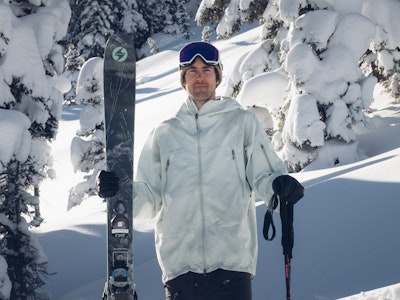
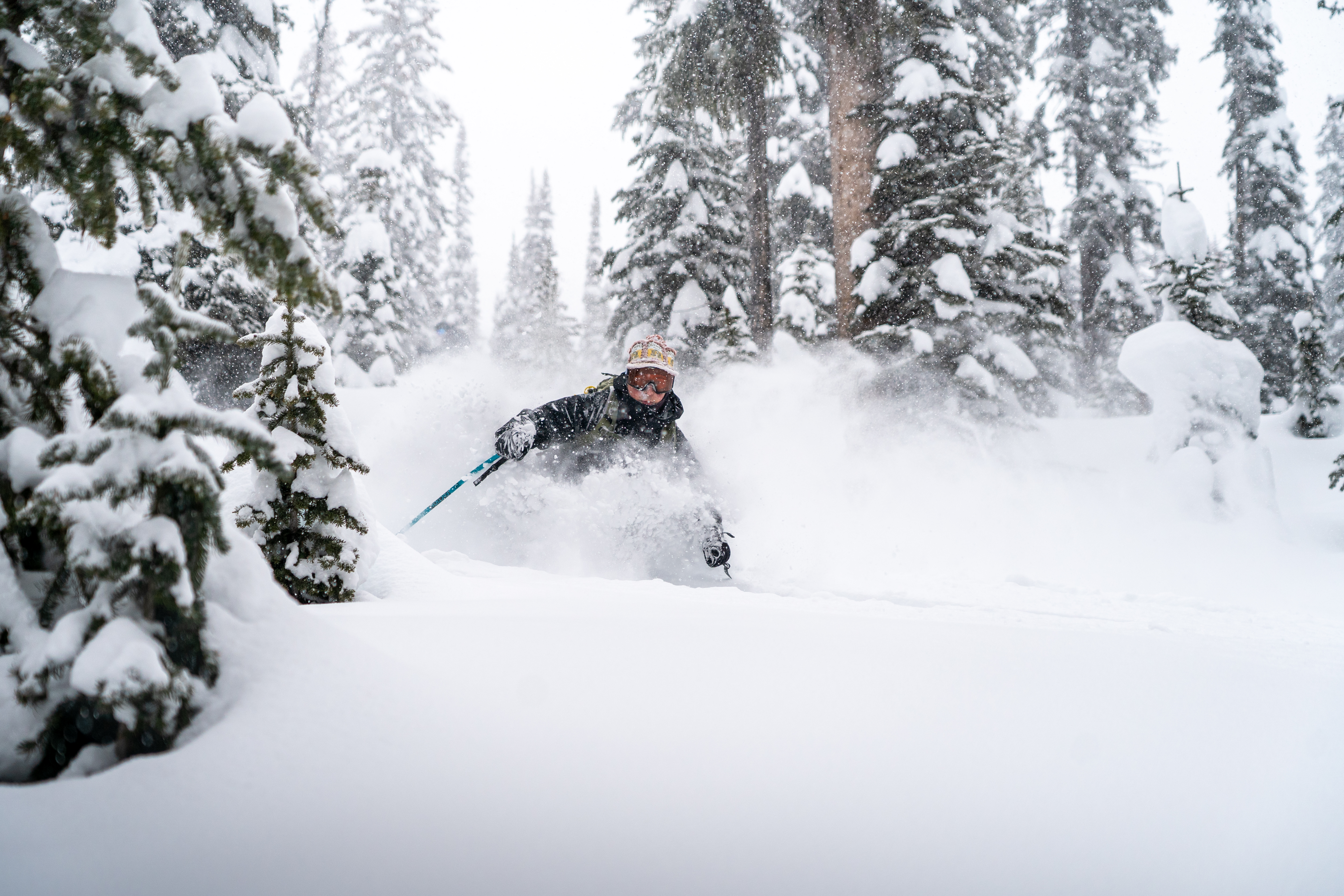
Featured Image: Frank Shine | Skier : Connery Lundin
Echoes of conversation spilled into the cold night. Even standing outside in the bitter March air, you could hear the discussion emanating from the wooden beams of Mittersill’s Kogler Hotel. A quaint establishment in a small Austrian ski village, it was far from the high-rise boardroom you might picture for a global company meeting—but exactly the kind of place you’d want one of the world’s preeminent ski brands to be plotting its next chapter. Here in Blizzard’s hometown, the team was deep in a heated debate, passionately dissecting alterations to a new ski line that will define the next era of the brand’s legacy: Canvas.

Marcus and Connery get the creative juices flowing at the Kogler Hotel | Photo: Rick Sorenson
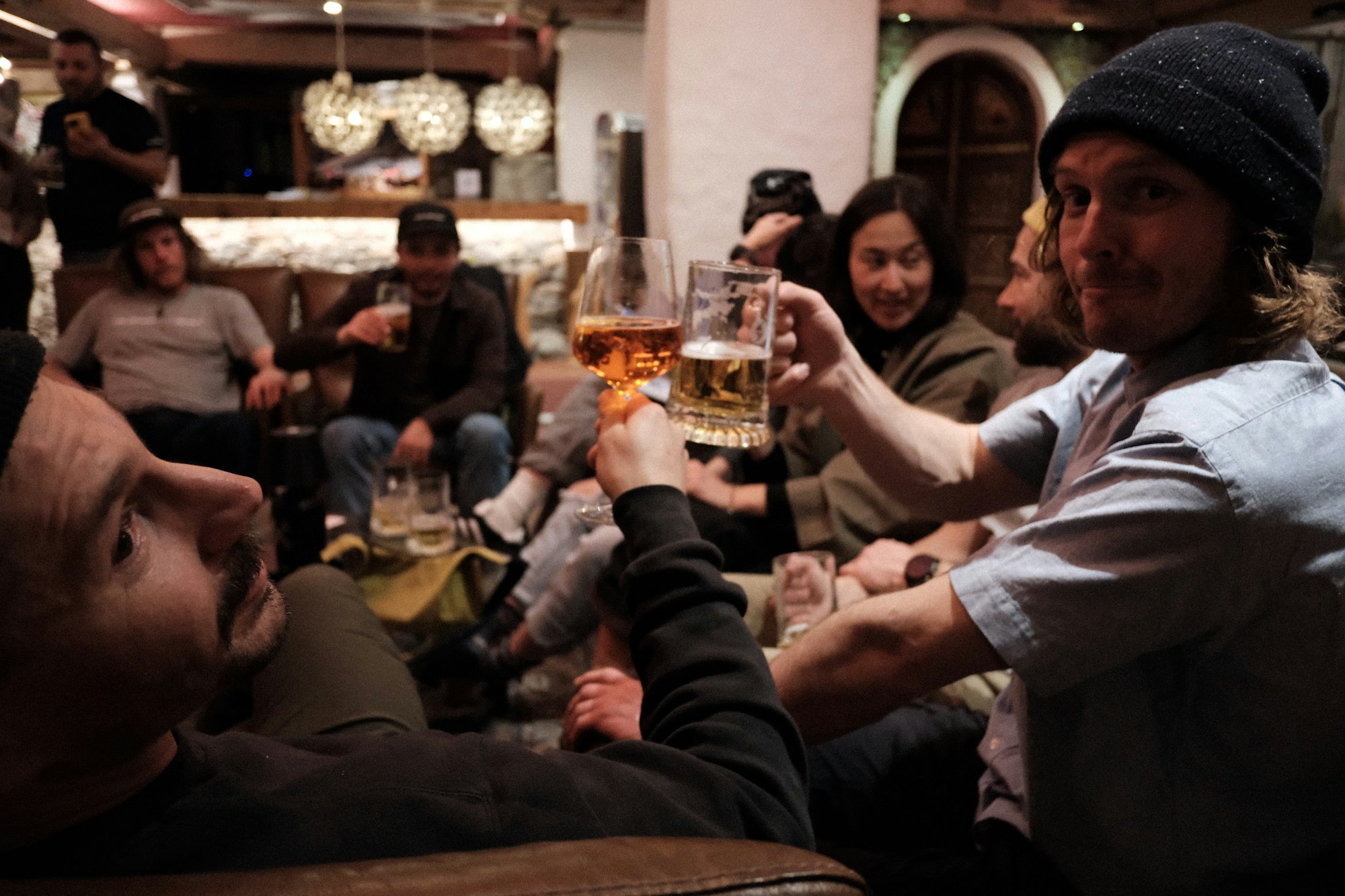
Marcus and Connery get the creative juices flowing at the Kogler Hotel | Photo: Rick Sorenson
The crew had gathered in Austria for the Global Blizzard Freeride Athlete Summit—the first of its kind in well over a decade. It’s no coincidence that this meeting aligned with the final stages of Canvas, a project more than two years in the making. It was crunch time, and the team needed to cover major ground to be ready for launch in winter 2025-26.
The Canvas line is made up of three skis, each a twin-tip shape and a flex profile far softer than anything Blizzard has built before—meaning there was plenty of room for debate. Conversations were intense and feedback from engineers and athletes was highly detailed. But a team isn’t tested when times are easy; the real trial comes when it’s time to buckle down. They weren’t flinching in the slightest. They’d come too far.
Adjacent to the hotel bar, the crew was surrounded by Blizzard Tecnica relics mounted decades ago: pairs of skis, knit sweaters, leather boots and more skis. If it weren’t for a few weathered locals sipping schnapps and playing chess, you might have thought this was the company headquarters. It certainly felt like it, especially with athletes like Elyse Saugstad, Marcus Caston, Joel Pollinger and Johan Jonsson at the table—a foursome that could pass as a certified ski film supergroup.
Additionally, Connery Lundin, Caite Zeliff and Tom Peiffer—a group that has impressively balanced their ski careers between freeride start gates and high-profile film segments—had arrived to weigh in. Collectively, these seven athletes have shepherded Blizzard’s freeride program through the past decade, each leaving an indelible mark on the brand’s evolution into the world of freeskiing and the sport at large. But the team has been steadily growing.

Athletes weigh in at the Blizzard factory in Austria | Photo: Rick Sorenson
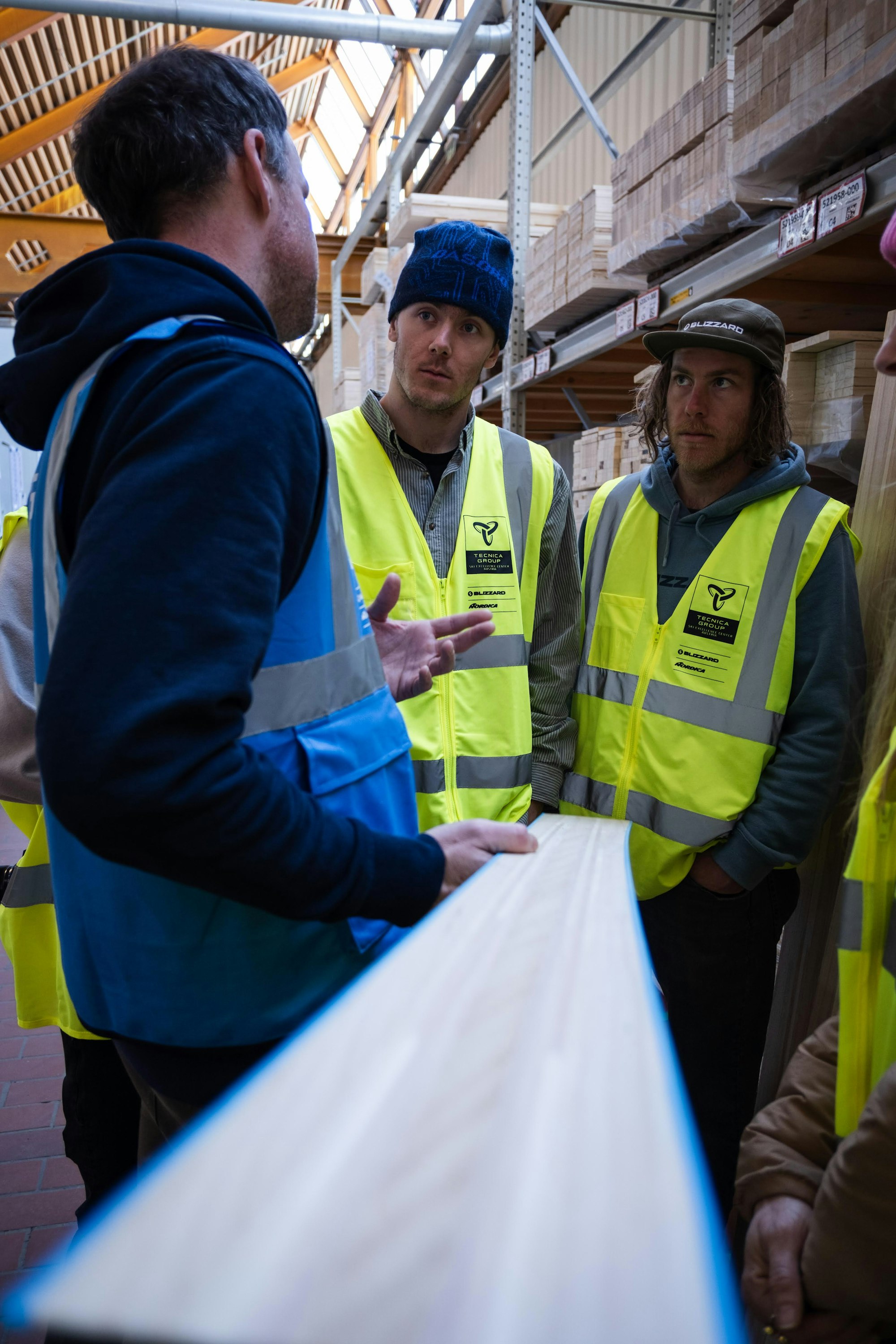
Athletes weigh in at the Blizzard factory in Austria | Photo: Rick Sorenson
Over the past 24 months, Blizzard has strategically added a four-pack of hungry skiers under the age of 25: Kaz Sosnkowski, Piper Kunst, Noah Gaffney and Zeb Schreiber. Each comes from a unique background and brings a youthful influx to Blizzard’s ranks, along with skiing styles that align perfectly with the Canvas project.
Sosnkowski left racing to pursue freeride, growing his skills exponentially over the last few seasons while earning an engineering degree on the side. Kunst comes from a less structured ski background, her work ethic and creativity landing her on the BlizzardPro Team, the Kings and Queens of Corbet’s roster and beyond. Gaffney hails from a family steeped in freeskiing tradition and proudly continues his late father’s legacy while forging his own path. Schreiber, the youngest of the group, is one of the brightest prodigies in Tahoe’s star-studded freeski scene, bringing composure (and a bag of tricks) far beyond his years.
These new athletes, alongside the aforementioned heavy hitters, have been pivotal throughout the long development journey of Canvas—providing feedback to engineers through numerous rounds of prototyping and helping to shape the final product. That level of active feedback is unique, not just for Blizzard, but for any ski brand.
“We’ve flipped the process on its head,” says Blizzard Tecnica’s Global Marketing Manager, Frank Shine, as we sipped Austrian lager and watched turn-enthusiast Marcus Caston entertain the late-night pack. “Ski design usually goes from engineer to manager to athlete, but we put that in reverse. It takes more time and resources, and honestly, it’s scary, because you don’t know where it will lead you. But it’s what we wanted to do to broaden our horizons.”


Left: Marcus Caston arcs yet another perfect turn in Engelberg | Photo: Frank Shine
Right: Kaz Sosnkowski plunders the goods at Mt. Baker | Photo: Rick Sorenson
“Broaden” is an understatement. Canvas represents a rebirth for Blizzard, a brand that has built its reputation on quality and precision. The challenge here lies in taking those two ingredients and infusing them into a ski that speaks to the current tides of freeskiing—a ski that can pop, float, and dance (not muscle) its way down the mountain. It takes more than a marketing slogan to do this successfully. That’s why for 730 days, Austrian engineers have been hand-building Canvas prototypes, and for 730 days, the athletes have been testing, reporting feedback and testing again.
“It’s a process that every skier dreams of, but it’s a lot of work once you start down that road,” says Lundin. “It takes time to incorporate so much feedback and go through a true trial-and-error process. I think everything about the final design will reflect the amount of time we’ve all put into it.”
The former Freeride World Tour champion was a key figure throughout the research and development process, lending his experience to the project while also amplifying younger voices and helping them accurately convey their thoughts to the design team. He’s seen numerous skis come to fruition during his 15-year tenure with Blizzard, including the iconic Gunsmoke and Peacemaker models. But even those skis, while ahead of their time, didn’t go through as rigorous a development process as Canvas.
“This started as a rumbling within the athlete circle and then went to the engineers. It’s usually the other way around,” Lundin says, echoing Shine. “Asking Blizzard to make a softer ski sounds counterintuitive,” he adds with a laugh. “But we all knew that if the day ever came when the factory in Mittersill made a freestyle ski, it would be better than anything else on the market.”

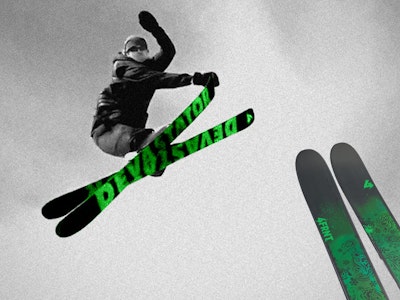
Skier: Connery Lundin | Photo: Frank Shine
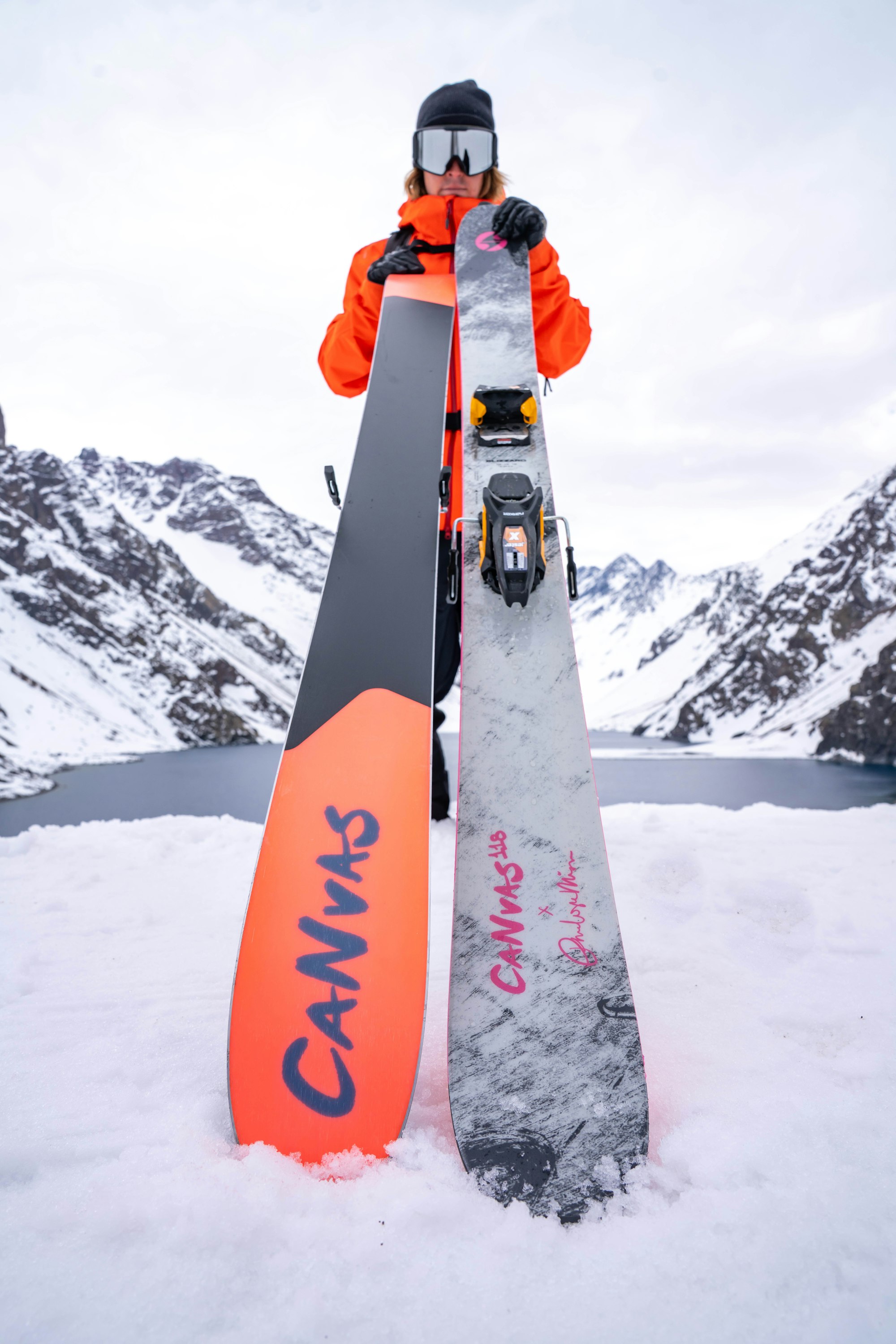
Skier: Connery Lundin | Photo: Frank Shine
The first prototypes arrived during winter 2023-24, featuring variations of each waist width: 100, 108 and 118 mm. Unique cores, alternate profiles, various shapes—there were no wrong answers. As Sosnkowski, Kunst, Schreiber and Gaffney joined the team, fresh input was added. By winter 2024-25, the final product began to take shape, though the work wasn’t done.
“For me, the first real test came at Mount Baker,” said Sosnkowski. Along with Kunst, Lundin and the quiet mastermind—Blizzard Marketing Content Director Rick Sorensen—Sosnkowski found himself in the middle of a massive storm, testing the latest Canvas 118 prototype in snorkel-worthy conditions. “It was the type of storm cycle you dream about,” he says, “but more importantly, it gave us time to connect in person. It never once felt like a work trip, yet it was the most productive experience we’d had in terms of exchanging real thoughts on how we wanted this skit o feel. Soft, enjoyable, something you could easily butter but still trust on a deep landing.”
With a degree in mechanical engineering from the University of Colorado Boulder, Sosnkowski found himself forced to abandon the technical jargon and speak from a place of feeling.
“We didn’t want anyone to be married to what [materials] they think should be in the ski,” says Sorensen, explaining the benefit of having athletes express their desires without industry language. “Different materials might be thought of as better or worse, so we wanted to know what everyone felt. That way, we could build without unintended bias.”

Ideal Canvas 118 testing conditions at Mt. Baker with Lundin, Kunst and Sosnkowski | Photo: Rick Sorenson
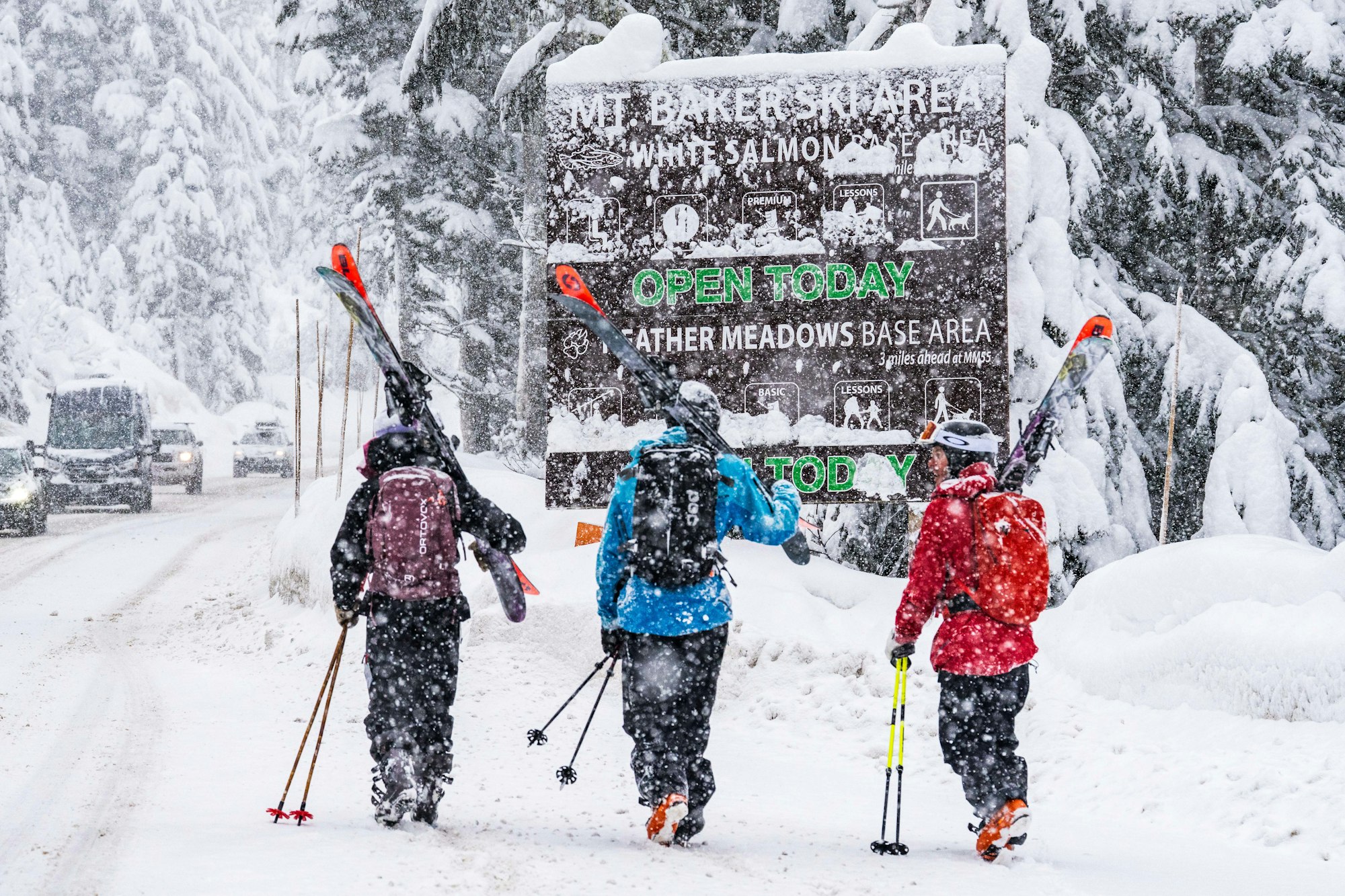
Ideal Canvas 118 testing conditions at Mt. Baker with Lundin, Kunst and Sosnkowski | Photo: Rick Sorenson
Two months later, as the team convened in Mittersill for the Athlete Summit, a final consensus had yet to be reached. The path forward still wasn’t entirely clear. Opinions were scattered as everyone returned from a day of testing on the famous Kitzsteinhorn Glacier. As the debate heated up, the focus turned to Schreiber, the youngest of the crew. After all, this project was about blazing a new path forward—and who better to turn to than a skier who, among others, carries the future torch of freeskiing?
It was a pivotal moment, as a room overflowing with seasoned athletes and engineers absorbed feedback from the youngest member of the team. With enthusiasm, Schreiber pulled on the day’s experience to paint a picture of what he envisioned: a ski that could easily release a turn, a ski that had a softer flex pattern in the tip and tail, a ski that encouraged the rider to look twice at every feature on the mountain. Above all, he emphasized that this ski needed to stand apart from Blizzard’s triumphant models of the past. His points brought cohesion, highlighting the gaps between how the ski felt at that moment and how the upcoming last batch of prototypes should feel.
“Leaving Austria, I was beyond grateful,” recalls Schreiber. “To be the grom of the team and have my thoughts heard meant everything. To me, it signaled that we were closing in on really making a ski that I could stand behind—a ski for my friends and me, something for the next generation.”
His hopes were quickly realized when updated prototypes were distributed and put to the jib test in the spring skiing haven of Palisades Tahoe. A stacked Cali crew Lundin, Sosnkowski, Schreiber and Gaffney, went to work, skiing top-to-bottom runs in the morning and park laps in the afternoon. Curious looks were common; watching someone rip through the park on a pair of Blizzard skis is a new sight, but one we’d all better get used to.


Left: The Canvas 108 receives the Caite Zeliff turn of approval | Photo: Frank Shine
Right: Rick Sorenson takes a leap of faith | Photo: Frank Shine
“It felt like the ski I had been dreaming about for the last five years,” says Lundin, who joined Zeliff, Sorensen, and Shine in August to test the final version in Portillo, Chile. Skiing through variable conditions above the iconic Laguna del Inca, Zeliff and Lundin were all smiles as the cameras flashed. Despite crashed drones and late-season weather woes, it was the realization of a vision that had taken the brand deep into uncharted territory—building and bonding the team along the way.
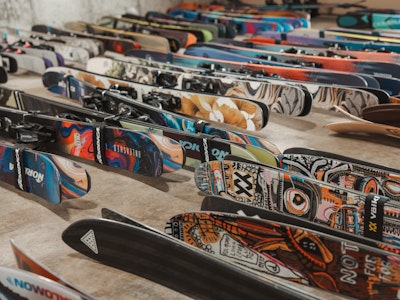
The construction of Canvas was certainly a new endeavor for the traditional European ski brand, but it wasn’t the only leap into new terrain. The ski had to look as different as it felt on snow. When Sorensen approached artist Penelope Misa about creating a distinctive topsheet to set the line apart, she didn’t hesitate.
“I’ve been skiing and making art my whole life. This was a dream come true,” says Misa.
In a rare move, Blizzard’s leadership—long known for keeping topsheet design and branding on a tight leash—connected Misa with the athletes, giving everyone a voice while letting her steer the ship. “I had full creative freedom to honor their evolving legacy,” she says. “It doesn’t matter what industry you’re in—that’s just not something you come across very often. It was special.”
The question of what to do with that artistic liberty proved more challenging than the ask itself. Misa works in many mediums—printmaking, painting, drawing and graphic design. Over several months, one form rose to the top: monotype printmaking. Eccentric, unique and inimitable, a monotype matched the ethos that Canvas represented.
“Woodcut, screenprint and lithography all allow you to reproduce nearly unlimited prints,” Misa explained. “By contrast, a monotype is a unique, one-of-a-kind print, where the image cannot be recreated. ”The parallel to skiing is obvious. Every turn is unique—each removes snow and leaves a mark that will never be repeated. With a nod of approval from the athletes, the monotype design became the perfect finishing touch to bring Canvas to life.

Artist: Penelope Misa | Photo: Rick Sorenson
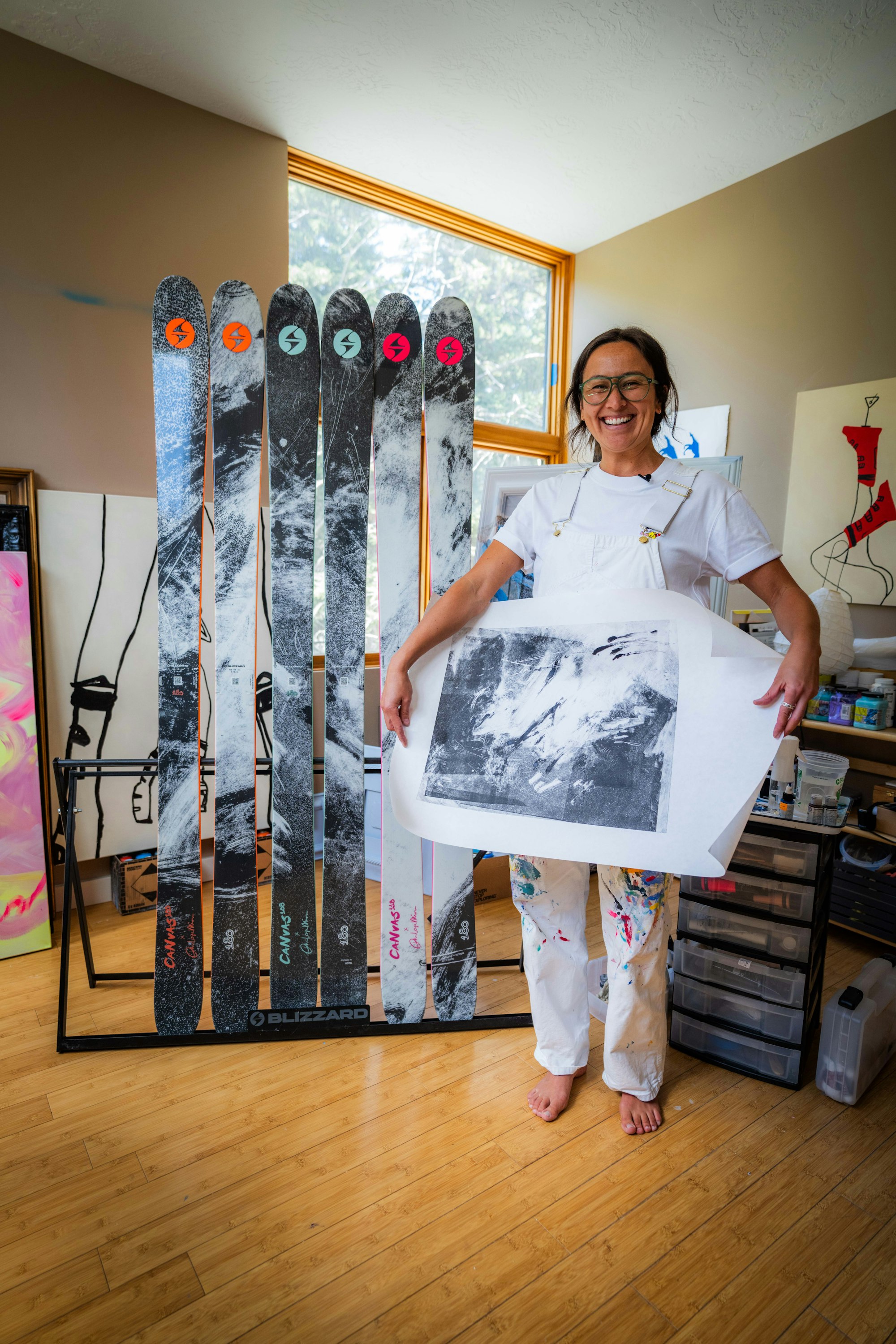
Artist: Penelope Misa | Photo: Rick Sorenson
There’s a common misconception in art that for something to be good, it has to be spontaneous. But more often than not, it’s the opposite. Picasso produced masterpieces out of spontaneity, yes—but only after years of practice, refining his craft. Canvas isn’t an overnight burst of genius. It’s the result of along, collective effort by skiers, engineers, marketers and artists—all taking a risk on something new.
“I think I speak for everyone on the team when I say I’m proud to be with Blizzard at this point in time,” Kunst says. An accomplished artist in her own right, she knows about personal risk on and off the snow. “Blizzard took a chance by trusting us. I mean, when was the last time a brand let a whole athlete group create a new line of skis? From the style of skiing that Canvas encourages to the creativity Penelope’s topsheet inspires, this whole project has been about giving people the tools to create in their own way.”
That creation—and the willingness to take a chance—is what gives the project meaning. For Blizzard, it appears to have worked. The result is a beautiful and playful line of new skis, a broader community of athletes and a blank canvas for the brand to draw a new legacy upon.