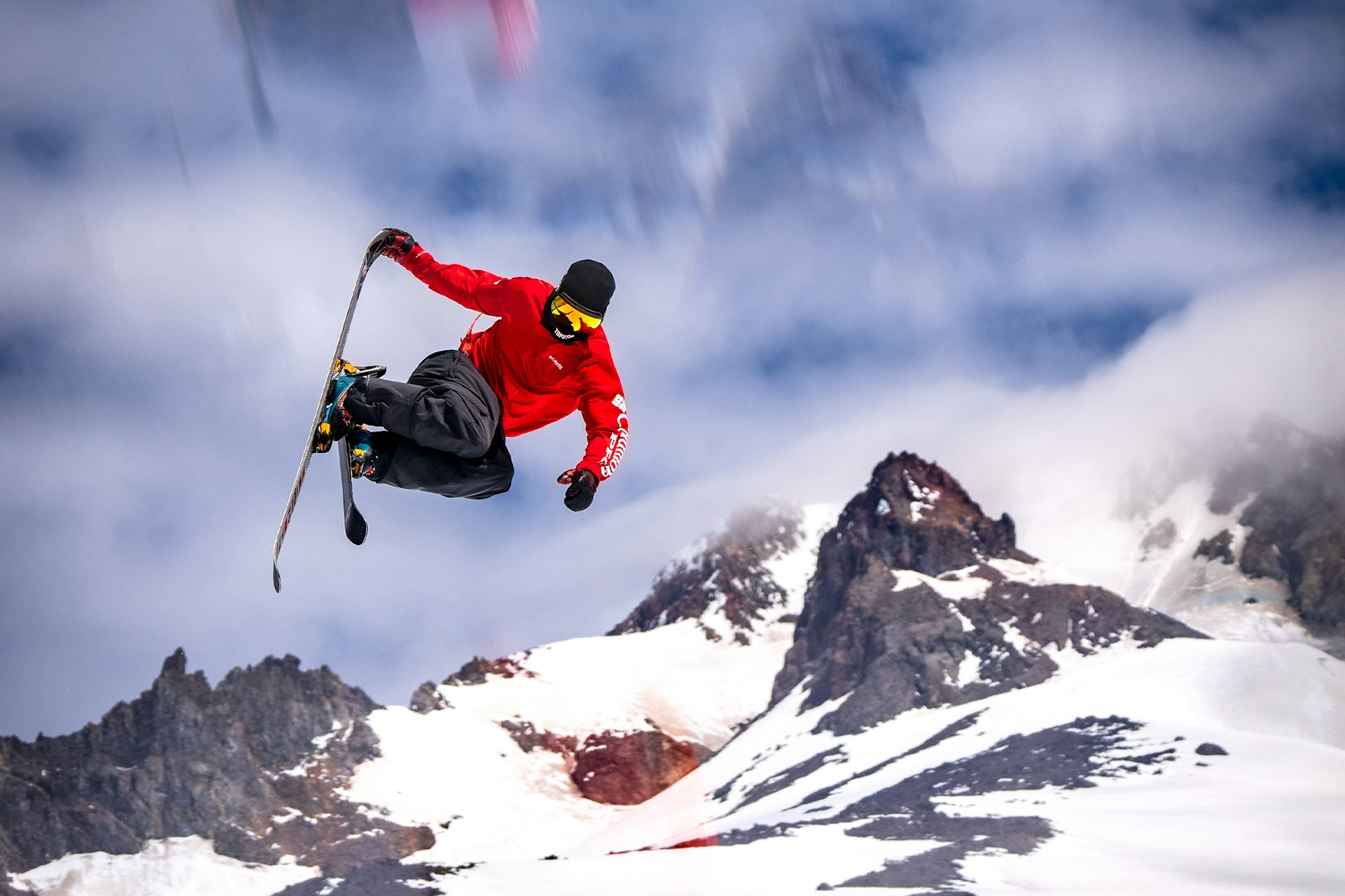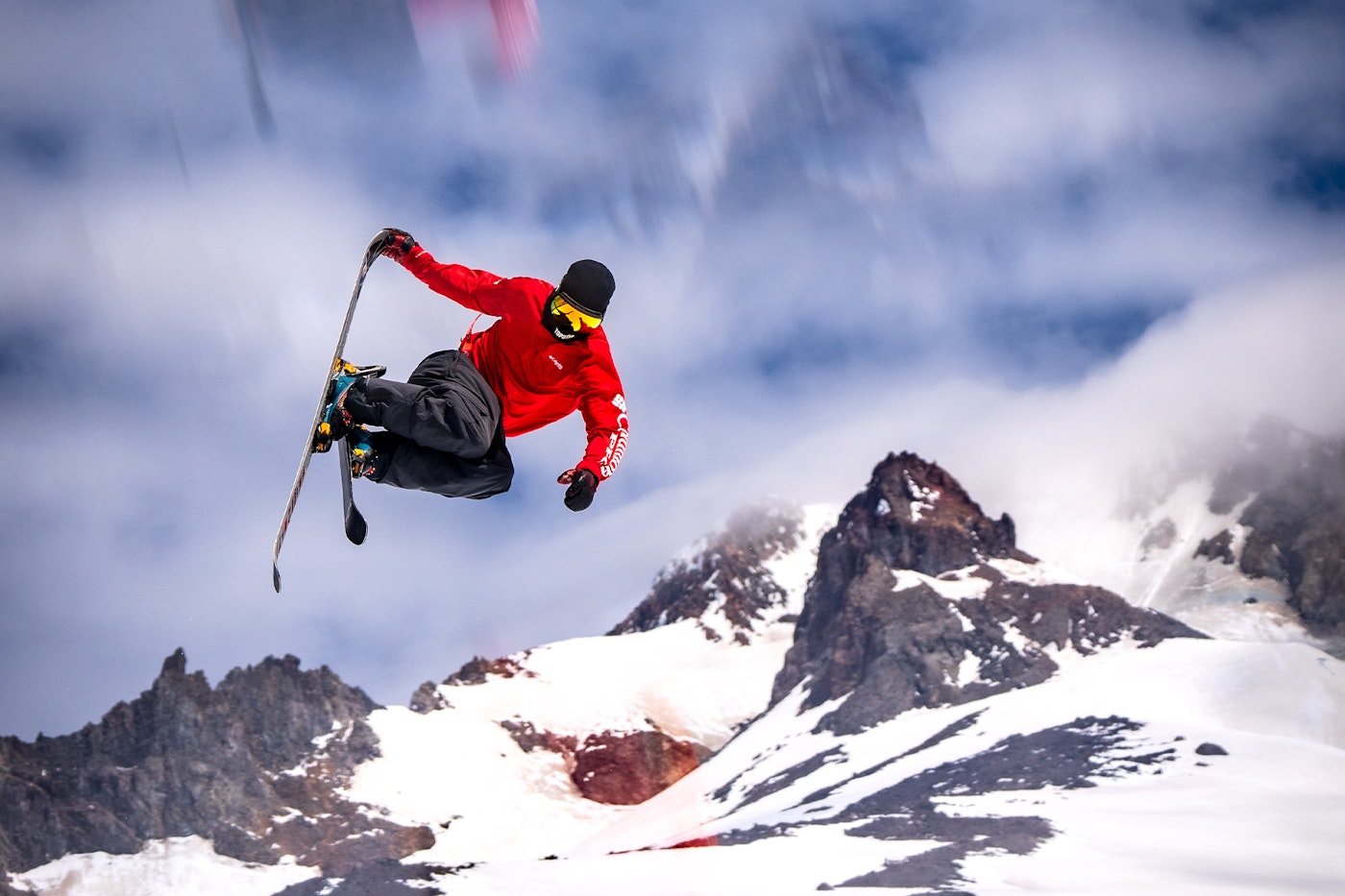
All Photos: Courtesy of the U.S. Freeski Team
To say the American halfpipe squad is stacked is a vast understatement. If you want to understand how deep their pool of talent is, consider this: Making the four-man U.S. team might be harder than actually medaling at the Olympic Games in Italy this February.
The team’s dominance is nothing new, however. Since halfpipe skiing made its Olympic debut in 2014, American men have controlled the discipline by claiming medals at every Winter Games (Sochi 2014, PyeongChang 2018, Beijing 2022) as well as the event’s biggest stages in non-Olympic years.
With such a loaded roster, the pressure will be on throughout the qualifying window. A single fall or a misread line could mean the difference between standing on the Olympic stage later this winter or watching from the couch. When each run carries this much weight, the competition can get cutthroat and the line between “teammate” and “rival” starts to blur.

Skier: Birk Irving (front) Ben Fethke (back) | Location: Aspen, CO
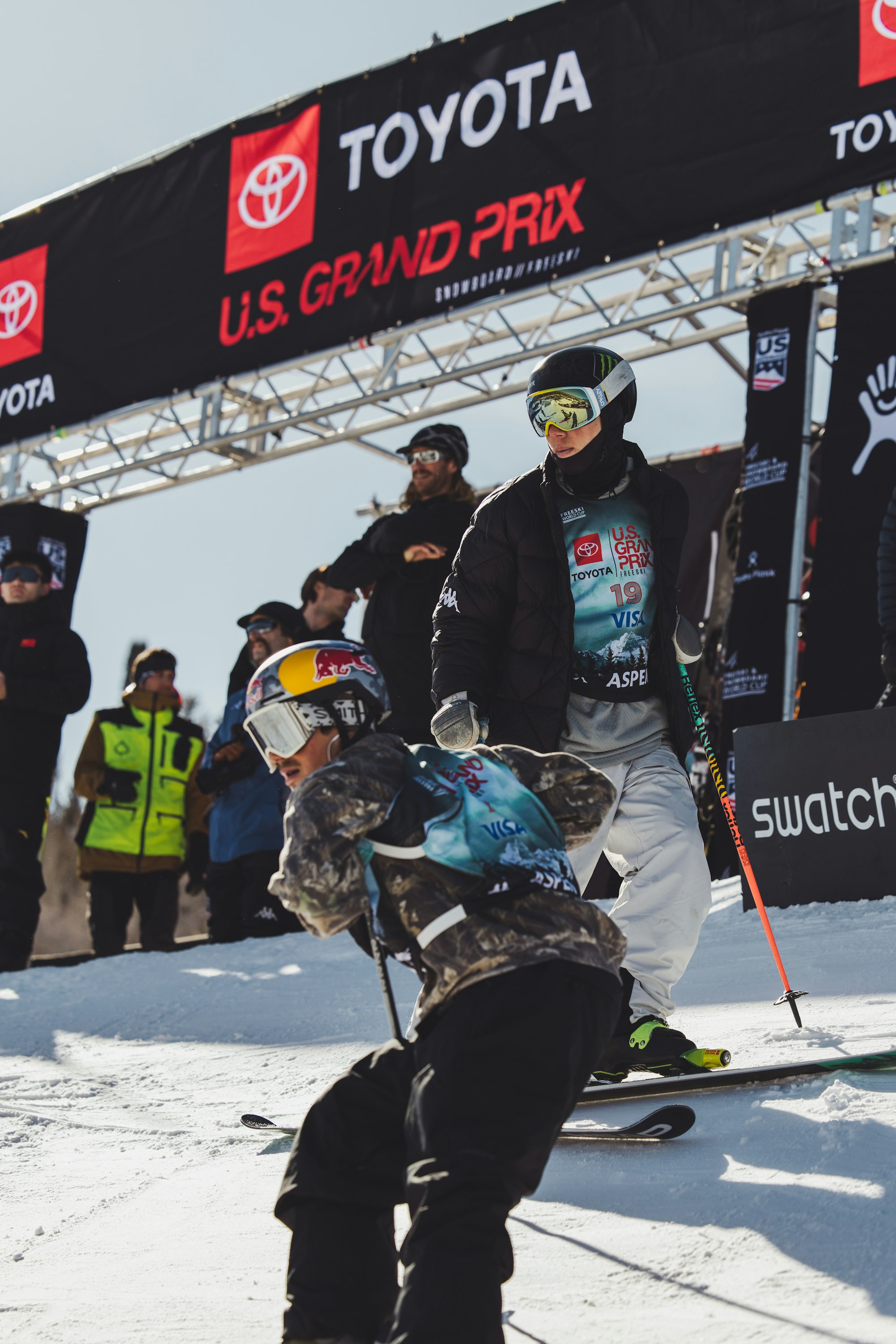
Skier: Birk Irving (front) Ben Fethke (back) | Location: Aspen, CO
When Teammates Become Competitors
Over years of travel and training, friendships are built as veterans mentor rookies and teammates push each other to progress. But once Olympic spots are on the line, those relationships can quickly shift when the drop-in signal comes. A friend can become an obstacle standing between a skier and their dream of competing in the Games.
Some guys are fighting to prove they can still match the sport’s relentless progression. Others are chasing the one medal that has always eluded them or carving out a second career, determined to show mastery of a new discipline. A couple of them carry the weight of leadership, hoping for one last Olympic run, while younger athletes are working hard to simply break through.

Skier: Nick geopper(left) Alex Ferreira (middle) Matt Labaugh (right) | Location: Aspen, CO
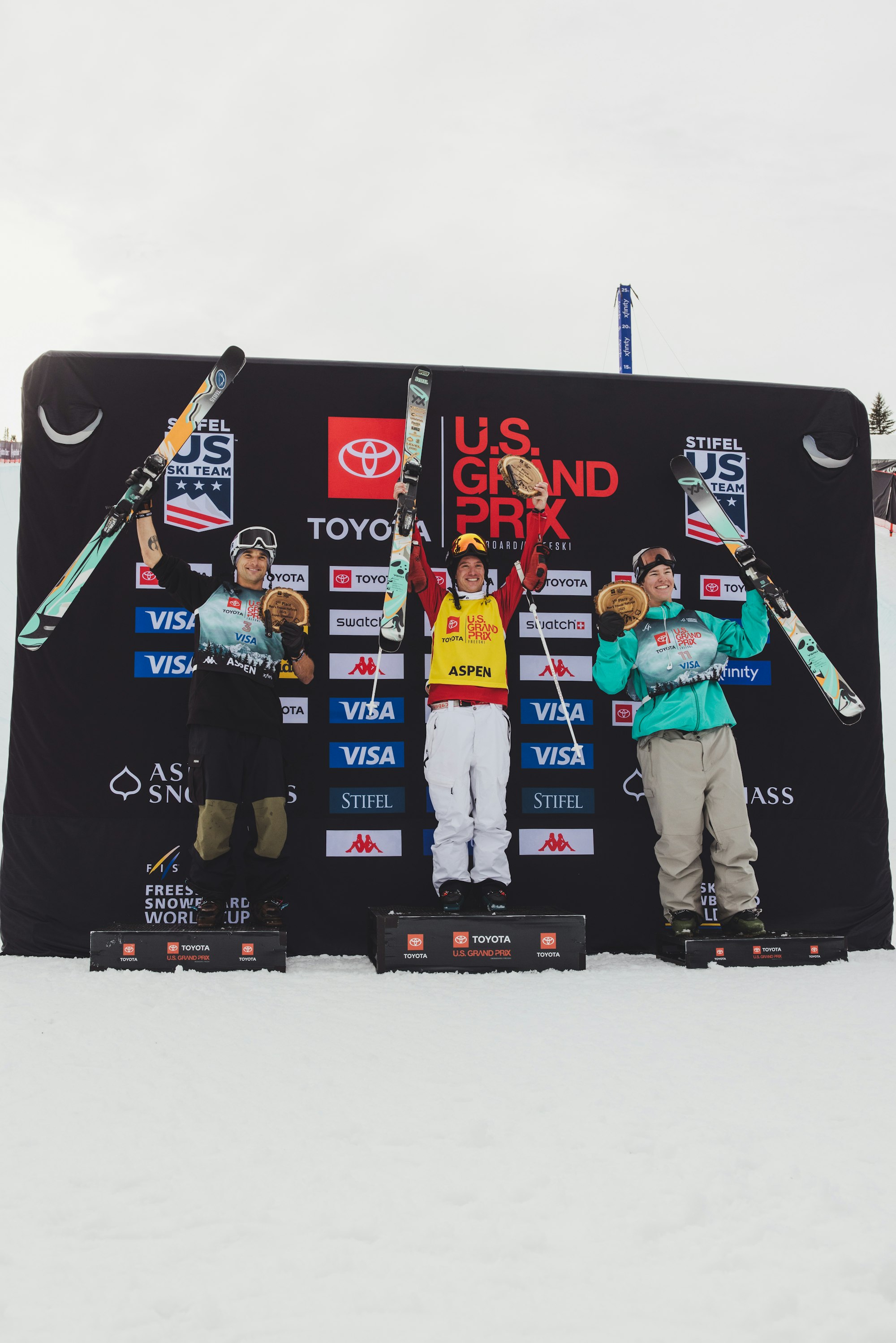
Skier: Nick geopper(left) Alex Ferreira (middle) Matt Labaugh (right) | Location: Aspen, CO
The Progression of Tricks
Halfpipe skiing continues to evolve quickly. Ten years ago, a clean double cork 1260 could top the podium. Today, judges aren’t overly impressed unless they see back-to-back double cork 1620s, switch takeoffs and innovative flatspin or flair variations; all launched 15 to 20 feet above the deck. This season’s scores will continue to rise, as will the pressure to push boundaries to best the competition.
Each American brings a different bag of tricks to the pipe. Alex Ferreira has perfected the art of consistency while adding a second double cork 1620 to his run, a combo that powered his winning ways last season. Nick Goepper, only three years into his halfpipe career after retiring from slopestyle, stunned the field by winning X Games superpipe gold with back-to-back double cork 1620s capped by a stylish bone-air 900. Birk Irving doesn’t just go big, he goes massive—often soaring more than 20 feet out of the pipe while threading together cork 1440 variations with effortless flow.
Veteran David Wise, the man who brought the first double cork 1260 to competition, may not match the newest spin counts, but his textbook execution of double corks and composed runs keep him in the hunt. Hunter Hess takes a different approach, blending his street-skiing creativity into the pipe with blind switch double 900s and back-to-back double cork 1260s that judges reward for both difficulty and style.
Aaron Blunck continues to regularly throw switch double corks, even attempting a switch double cork 1440, while still carrying the poise of a three-time Olympian. And then there’s 21-year-old Matt Labaugh, whose Aspen World Cup podium run included clean switch cork 1260s and 1080s, showing he already has the technical foundation judges want to see on the world’s biggest stage.
The truth is, every skier on this roster has a set of tricks capable of earning them a spot on the team. What will decide who makes the squad and heads to Italy is who can land them, run after run, when the pressure is bearing down.

Skier: Nick Geopper | Location: Aspen, CO
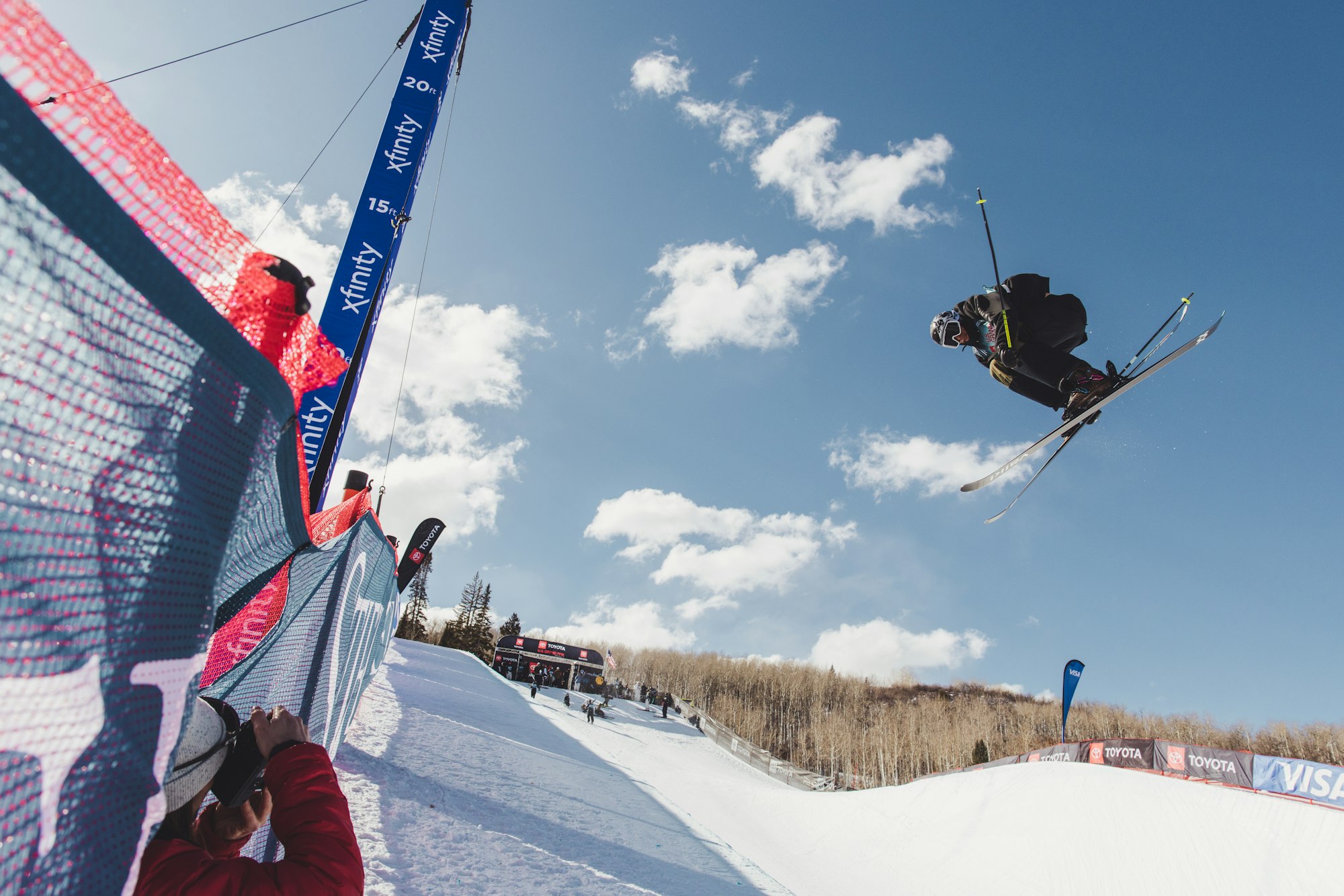
Skier: Nick Geopper | Location: Aspen, CO
The Qualifier Events
Each stop is more than a contest; it’s a pressure cooker. Keep in mind, riders are chasing more than just a single podium appearance, they are competing for Olympic survival in this high-stakes circuit that’s designed to test every aspect of each athlete’s skill, style and consistency.
It all begins in China’s Secret Garden on December 11, 2025. Familiar to veterans like David Wise, the Olympic venue from 2022 is where past glory will meet a far-east vibe. Next up is the Toyota U.S. Grand Prix at Copper, December 18-20. Home turf for Colorado athletes, a passionate local crowd filled with family and friends will surely give an edge to local skiers like Birk Irving. The new year starts off with a bang on January 1, 2026, in Calgary, Canada.
Look to see if newcomers like Matt LaBaugh can adapt to varying pipe conditions at this historically cold, technical and unpredictable venue. The final stop of the qualifying tour is the Toyota U.S. Grand Prix in Aspen, Colorado, where the team will be named on January 9 and 10. Steeped in history, the Aspen pipe is considered the best in the country and skiers who thrive under pressure, like Goepper, will try to cement their place on the team.

Skier: David Wise | Location: Mt. Hood, OR
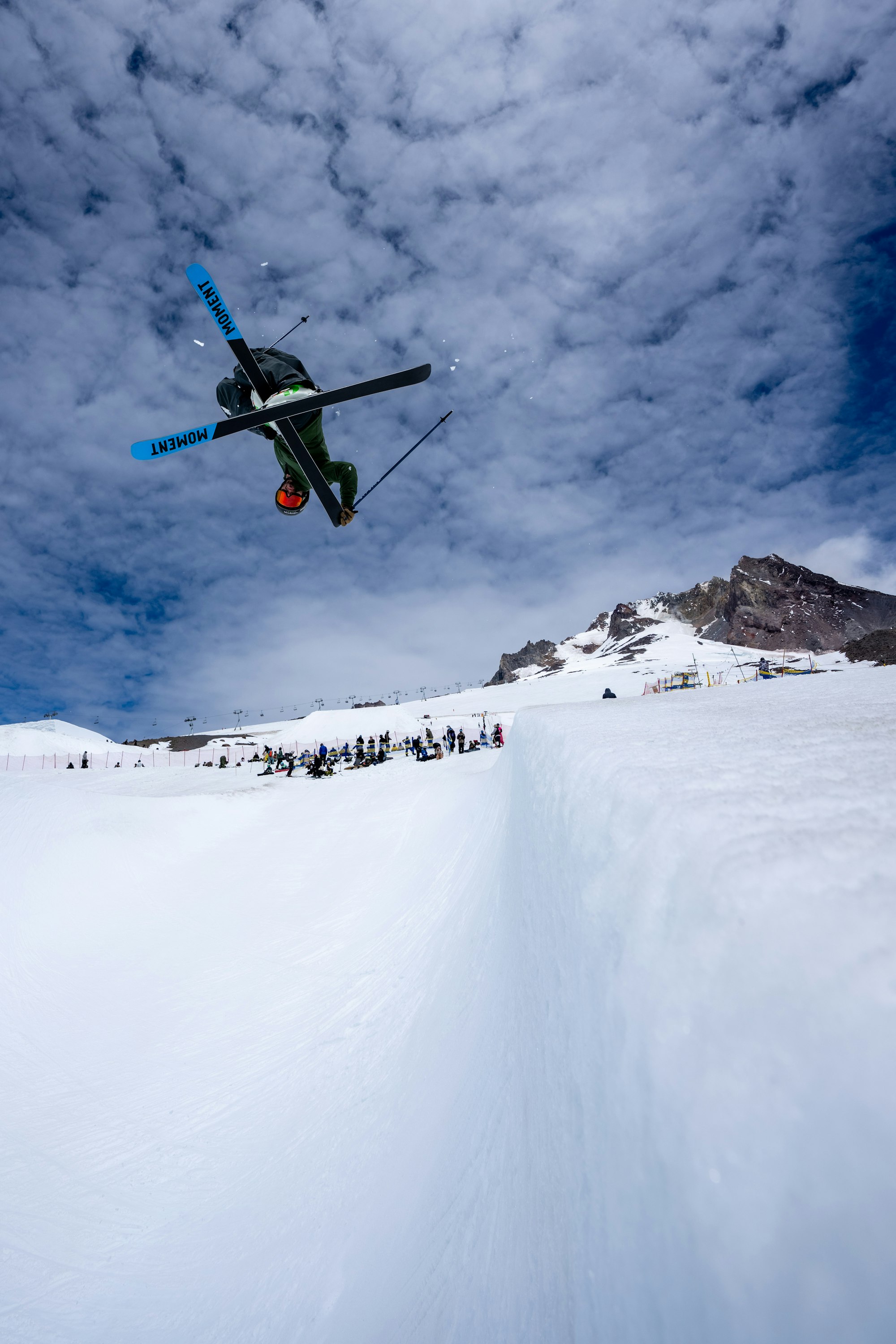
Skier: David Wise | Location: Mt. Hood, OR
The Impossible Team
When the world tunes in to the Olympic halfpipe in February, they’ll see American flags on the podium—that’s almost a guarantee given the depth of talent. But the real drama happens in December and January, when six or seven world-class athletes fight for one of only four tickets.
It’s an impossible team to make, and that’s the beauty of it. Every trick, every spin, every landing in the next couple months will decide who represents the United States in Italy.
This is what sport is about: Legends protecting legacies while young guns stake their claim as the next champ. For the U.S. Men’s Halfpipe skiers, the hardest battle isn’t against the world, it’s against each other. The fierce competition to make the team will be the most exciting and challenging subplot to follow in competitive freeskiing this winter.
Then, on February 19 and 20, we will see who rises to the top of the world’s biggest stage when the best pipe skiers from across the globe clash in Livigno, Italy, to determine who reigns supreme over the Olympic halfpipe.