Featured Image: Courtesy of U.S. Ski Team
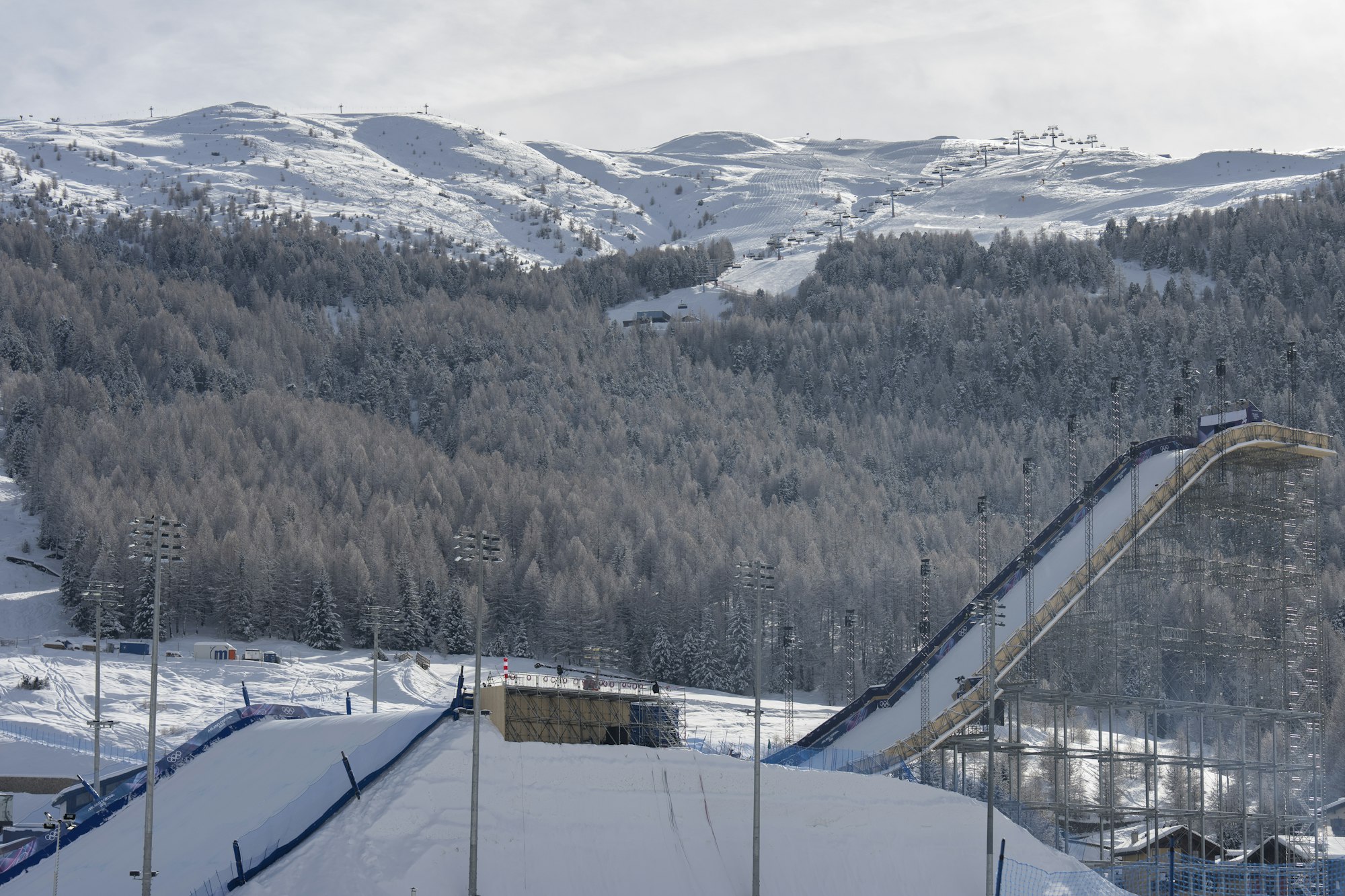
The women’s Olympic Big Air final unfolded under bright lights and steady snowfall, but only after a course hold that stretched close to two hours. When the wind finally eased, the ten-woman field climbed higher in the inrun to find speed through the fresh snow, laughing together at the top and feeding off a level of camaraderie that felt like a statement for the sport on the world’s biggest stage. It was a final where every athlete had a realistic path to the podium, and when competition began, the depth of the field was immediately undeniable. One of the defining storylines came before the competition began. Switzerland’s Mathilde Gremaud, the Olympic slopestyle champion and widely considered a medal favorite, took a heavy crash in practice. On the takeoff of a butter double cork, she caught an edge and went down hard. Her crash was a harsh reminder of how precise and unforgiving modern big air has become. Her absence reshaped the competitive landscape and opened the door for the stacked group behind her.
With three runs and the best two scores counting, the first jump separated the contenders. Austria’s Lara Wolf stomped a switch double misty 1260 safety for a 93.50 and the early lead. Italy’s youngest finalist, Flora Tabanelli, answered with a composed 90, while defending champion Eileen Gu opened with a right double cork 1440 safety for another 90-point score. Canada’s Megan Oldham, already the first woman to land a triple cork, matched the technical bar with a switch double cork 1260 safety. Ukraine’s Kateryna Kotsar continued her steady Olympic performance, keeping herself firmly in the mix. Run two reshuffled the standings. Great Britain’s Kirsty Muir landed a double cork 1620 safety—the same rotation that won Olympic gold four years ago—for a 93 that vaulted her into podium position. Gu’s left double cork 1260 tail came in at 61.25 after the judges docked the landing and grab, and Wolf fell attempting to back up her first score. At the halfway point, Oldham led, Muir sat second, and Tabanelli held third, with the rest of the field still within striking distance.
The final run delivered nothing but pressure. Lara Wolf needed an 80 for bronze but slid into fourth with a 76.25. Gu, dropping in as the reigning champion, needed a 90.75 for gold and delivered a held, fully controlled left double cork 1260 tail for an 89, enough to secure silver and make her the first women’s freeski athlete to earn five Olympic medals. Finland’s Anni Kärävä fell on her final attempt, and Kotsar switched to a new trick but finished just outside the medals. Then came the moment that decided bronze. Tabanelli, with one strong score in the bank, went for a double cork 1620 and went huge, stomping it clean for a 94.25. The score pushed her onto the podium, delivered Italy its first Olympic freeski medal, and knocked Muir into fourth after the Brit crashed attempting a never-been-done left double cork 1440. Last to drop was Oldham, already holding the winning total. In a victory lap, she attempted a switch double 1440, fell, and skied away with gold secured. The final standings: Megan Oldham with gold, Eileen Gu taking silver, and Tabanelli bringing home bronze. The women capped a night defined by resilience, progression, and a field so deep that every run carried podium implications. The wait was worth it for the second-ever women’s Olympic Big Air final.


![[GIVEAWAY] Win a Full 26-27 Ski Setup from Fischer](https://www.datocms-assets.com/163516/1790101711-00012060-edited.jpeg?w=200&h=200&fit=crop)


![[Q&A] "Actually, It Is Rocket Science," with Tim Durtschi](https://www.datocms-assets.com/163516/1791320016-keegan_rice-0073.jpg?w=200&h=200&fit=crop)