
WORDS — Matthew Tufts
“Wiyokpiyata takeya hoyewahyelo, Wakan Takanya uncimalayo… “
Connor Ryan’s voice pierced my foggy recollections, just as his singing had cut through our powder-muted footsteps earlier in the day. The lyrics were concrete but everything else about the past 36 hours was not—the long drive, an alpine start, a classic descent, soft powder, chicken-feather sastrugi, an hour nap, a gas station hot dog, an evening tour with an endless side-hilling slog. It melded together into an opaqueness inseparable from the whiteout beyond the windows, but the words, even in a language I’d never before heard, resonated with an uncanny familiarity. Again, Connor’s voice jolted me back into the present.
“Dude, I just want to pop up like the little Microsoft Office paperclip and tell other skiers, ‘Oh hey there! It sounds like you’re having trouble describing your connection to nature,’” he said with an exasperated laugh between bites of ahi poke ceviche. Our guide to alpine reverence wore a basketball jersey and backwards cap with long braided hair snaking out from the brim. He pointed at us with a tortilla chip. “Bro, what if I told you Native cultures have had words for that for thousands of years?”
We were one night removed from our descent of Mt. Aetna’s Grand Couloir and we feasted on Pepe Osaka’s while a foot of right-side-up snow smoothed the notorious moguled slopes of Winter Park Resort across the street. The steamy little restaurant hummed with the excitement of an impending storm and the conversation turned to the ever-clichéd inexpressible joy of powder but Connor wasn’t buying it.
“There’s an understood feeling that not only are these things hard to translate to English, but there’s something [the ski community] can feel is missing,” Connor explained. “The depth [of feeling] that seems ineffable is already there; it’s just a matter of having words for it. So many of us already recognize these feelings of connection—it just takes an Indigenous background and language framework to understand and express, out loud, what those feelings are.”
Connor isn’t out to alter the experience skiers already have with the mountains; rather, he sees an opportunity, through language, to enhance the depth and perspective of these experiences in a way that cultivates a healthier reciprocal relationship between skiers, the land and the Indigenous peoples upon whose land we so often recreate. He hopes to bring some of these Indigenous terms into the skier’s vernacular, integrating long-standing cultural practices into our daily experiences on the mountain. In doing so, the ski community can adopt a new understanding of, and appreciation for, our relationship with the natural world.
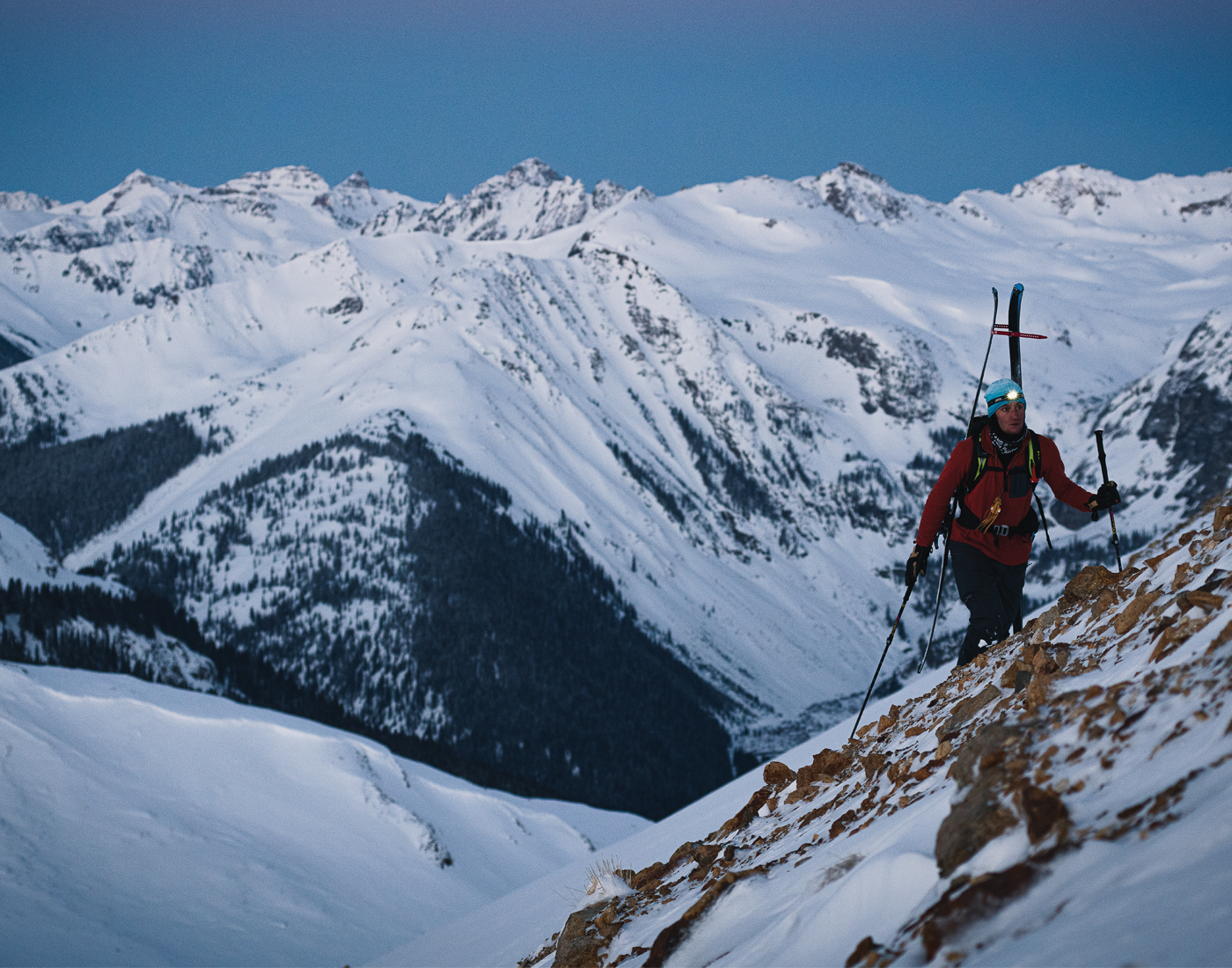
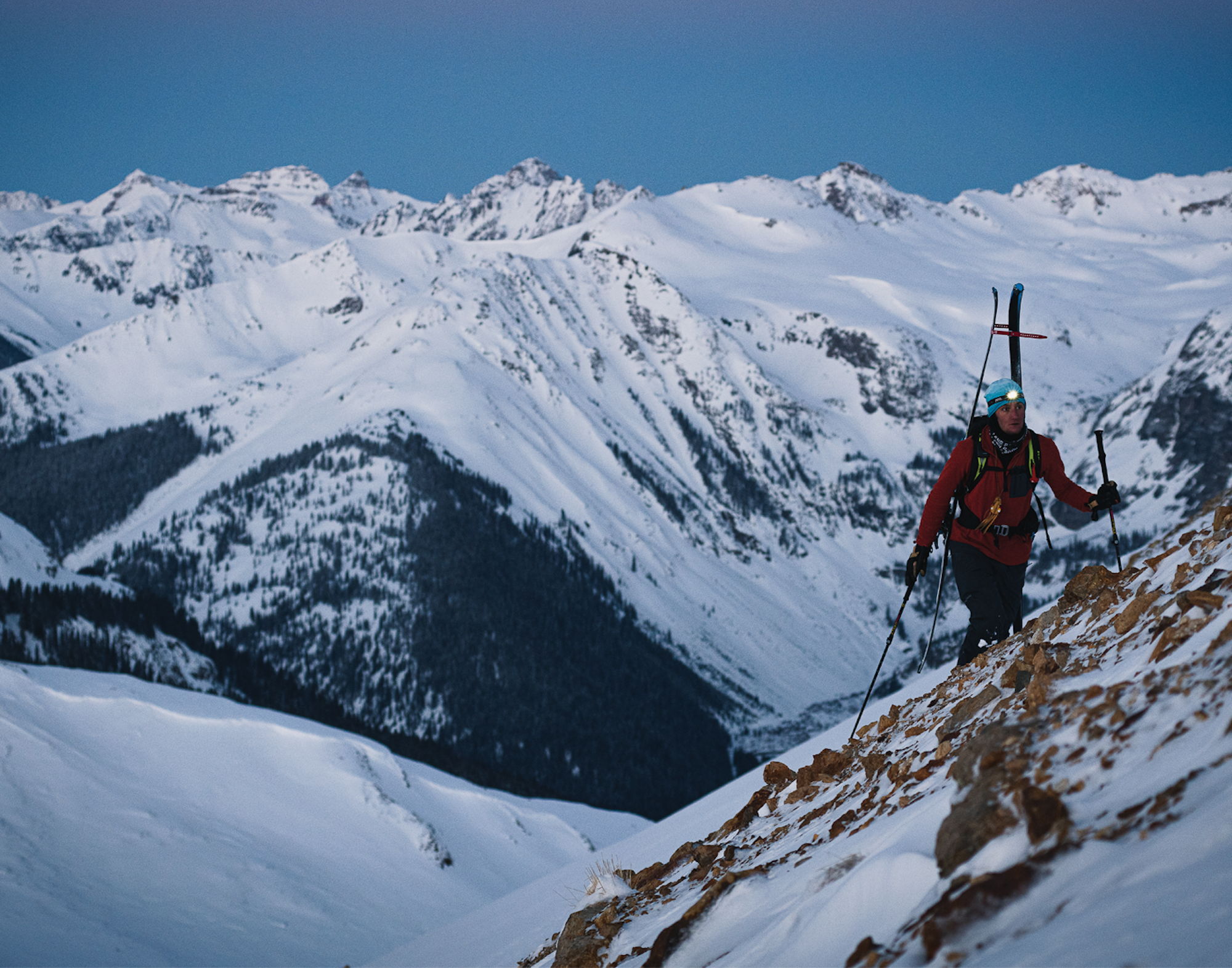
PHOTO: Matthew Tufts
Mitakuye Oyasin
(Mih-tahk-oo-yay Oh-yah-seen)
“all my relations”
Along the winding drive from the San Juans to Summit County on a mid-April storm chase, Connor recounted his introduction to skiing. Growing up in Boulder, he took his earliest laps at Eldora Mountain Resort—a short drive that followed the same switchbacks that would later become his commute to sweat lodge, a traditional Lakota cultural and spiritual practice. This innocuous link forged a connection between skiing and his cultural heritage when, after time off in his adolescence, he resumed skiing and started attending sweat lodge in earnest at the age of 21; his skiing rapidly improved over the next several seasons, as he found peace and flow in the steeps of The Cirque and Winter Park’s infamous Mary Jane bumps. As his skiing improved, Connor got more involved with Natives Outdoors, an organization that empowers Indigenous athletes and recreationists in the outdoor industry. His connections, ski skills and ability to convey complex topics in a relatable way led to an opportunity to participate in Cody Townsend’s “The Fifty” project, skiing a classic line on Mt. Tukuhnikivatz in the La Sals. Since then, he has garnered a handful of sponsors and focused his efforts on skiing professionally.
We crested Red Mountain Pass and dipped down the canyons toward Ouray, raced over pastoral plains by Montrose and wove parallel to the waters of the Gunnison River that cut the mighty Black Canyon. The rugged terrain of the Mountain West, from the Animas River, east to the Front Range, and west through Utah and the Wasatch, hosts the heart (or, at least, the wallet) of North America’s ski industry. But a glance at the words emblazoned on Connor’s beanie reflected in the rearview mirror told a different story: You are on Native Land .
When he skis, Connor, a Hunkpapa Lakota, sees himself as a visitor. He explained his “obligation of being in reciprocity with the people and the land” and how that led him from personal land acknowledgments and a desire to turn relations with the Ute people on whose land he recreated into a broader movement, lending this knowledge to the entire ski community. Now, Connor is helping lead an industry-wide transformation, working alongside industry leaders to give back to native communities. This year, Connor is taking his message one step further with a feature film, “Spirit of the Peaks,” sharing a simple, critical message: be a better relative.
“There’s this idea of seeing the place, seeing the land—whether that’s your immediate surroundings or Unci Maka , Grandmother Earth, as a whole—as our relatives,” Connor said with the calm assertiveness of someone who had discussed the topic at length hundreds of times. “It has spirit and consciousness of its own that needs to be acknowledged.”
However, fitting this concept into a westernized worldview is problematic—it directly undermines the framework through which colonial settlers viewed the land. In English, there is a resolute dichotomy between man and the natural world. English is built upon an ideology that stresses the duality of man and nature; Indigenous languages were cultivated to support an interconnectedness that places humans within their environment, not apart.
“We have this term: mitakuye oyasin —it’s a way of acknowledging that you’re related to everything in the landscape. It’s a word at the center of a lot of our ceremonies and it’s pretty similar to how you would greet a person, or a friend. And so speaking to that kind of familial bond that you build with nature—and the obligations and reciprocity that comes with that—is really important.”
In Lakota, Connor explained, they refer to animal species as Oyate —which roughly translates to nation . The Lakota are Oyate , but so are the bears, the eagles, and also the trees and the rocks. This intentional vocabulary provides a sort of sovereignty and animation to all things, equating them with human life, rather than subliminally enforcing a hierarchal system intent upon categorizing that which is like us and that which is not.
“You’re in a relationship with the place whether you like it or not,” Connor said, bluntly. “It’s where your oxygen comes from, where your water comes from, so you might as well participate in a way that acknowledges that, is empowering to yourself and helps you understand both the science and the spiritual sides of things.”
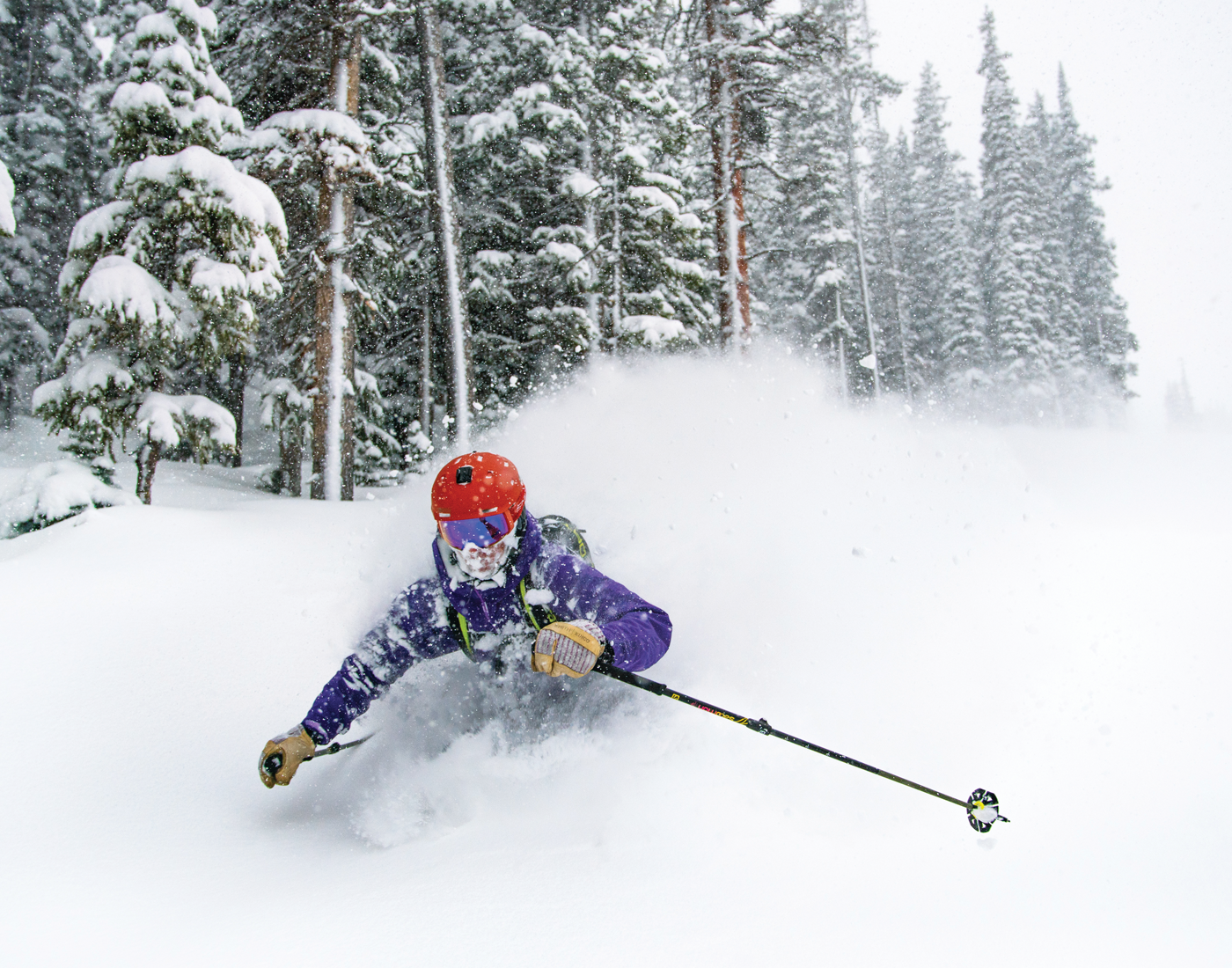
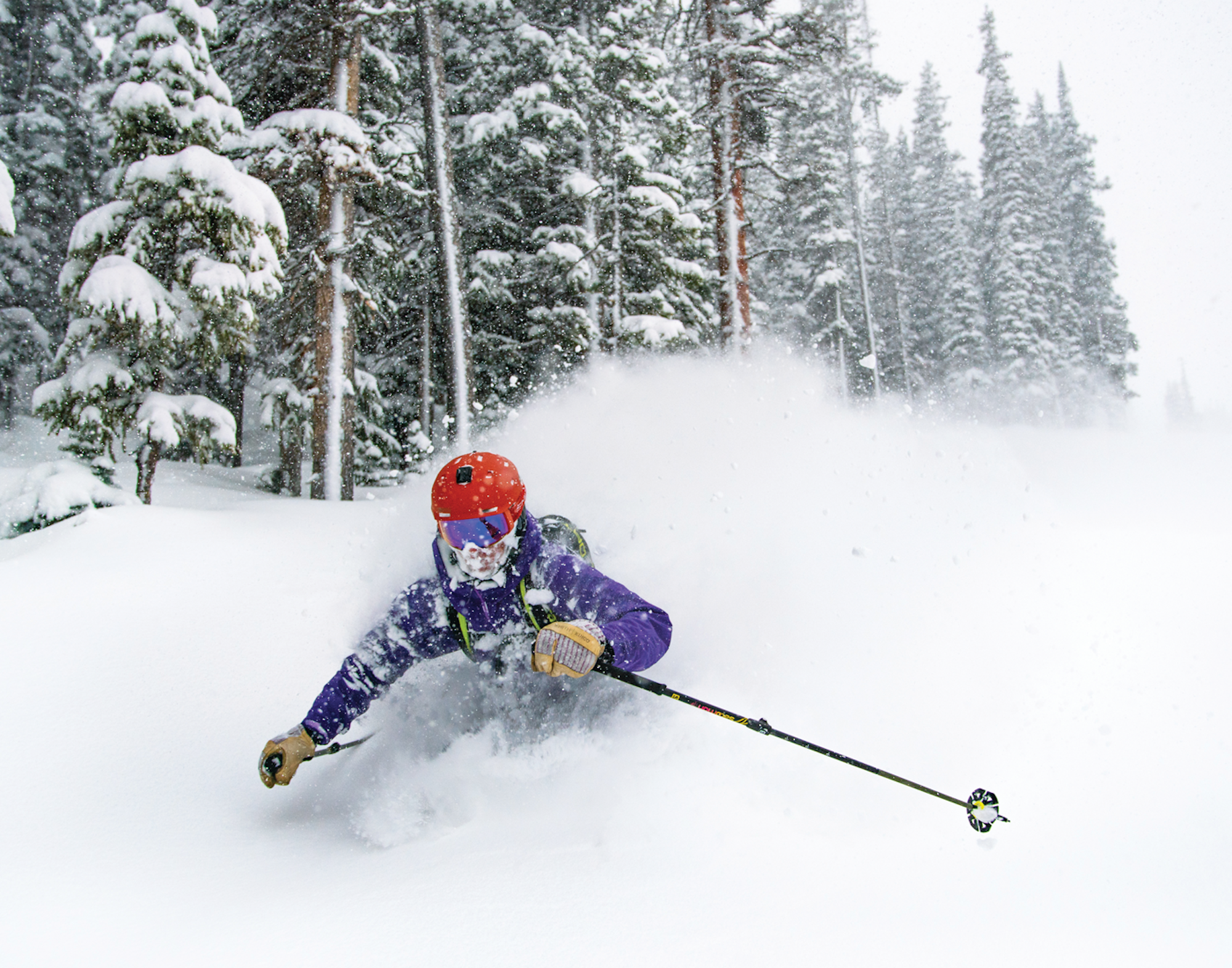
PHOTO: Courtney Long
Mni Wiconi Wicozani
(Mih-nee Wih-cho-nee Wih-cho-zah-nee)
“water is life, and that’s a good way of life”
Isaiah Branch-Boyle, a mestizo cinematographer and San Juan local, took the wheel from Gunnison as we made our way up Monarch Pass into the Sawatch during another leg of our trip. Connor slept with his “Land Back” neck tube pulled over his face in the passenger seat. I dozed in the back when a sharp turn onto a pull-off roused us.
“Alright Connor,” Isaiah said nudging him as he opened the door and stretched. “You ready to meet the water?”
We walked groggily toward a bubbling spring that poured from a steel pipe wedged in the rock wall beside the highway. A crude vessel had been placed to pool the water; the scene lacked a certain beauty, but Isaiah told us it was some of the best water in the state. Before we filled our bottles, Connor sang a song announcing his presence and offered a prayer as he drank the snowmelt. I asked him about the beliefs guiding the ceremony.
“It’s like quantum physics and organic chemistry, and at the same time it’s also sweat lodge,” he replied with a chuckle. He may have caught a hint of skepticism in my voice because he offered a follow up.
“To view [Indigenous practices] through the lens of spirituality or science—that it must be one or the other—comes from the English language,” Connor said as we piled back into the truck. “To put our cultural concepts through that filter doesn’t really work because we don’t have a word for religion or spirituality or science. When we say mni wiconi , water is life, that’s very spiritual; [but] water is also life because your body is 70 percent water and so is this planet. So I say a thank you prayer, but I’m also aware of what’s happening in my body at a cellular level and I think both those views are valuable.”
One of the greatest challenges Connor faces in bringing Indigenous perspectives into the ski industry is that, consciously or not, we push western framework around these concepts. Fundamental ideas can be lost in translation due to an incompatible interpretation.
“It’s a square way versus a circular way of thinking,” Connor continued. “In English, there are corners where this idea stops and the next idea starts: this is how far science goes, this is how far spirituality goes, then you gotta turn the corner into something else. And for us it’s on the continuum of a circle—where does a circle start and where does a circle stop?” He lifted his eyebrows and shrugged. “That’s where our boundaries between understanding the natural world through a scientific lens or a spiritual lens blurs.”
Connor’s eyes lit up and he began speaking more animatedly. He sees himself as a cultural bridge builder, a translator for the industry that can decode experiences skiers have been feeling since the birth of the sport but fail to put to words.
“What really stokes me up is reanalyzing the idea of what makes something sacred,” he told us. We’ve all shared those days—bottomless, blower powder billowing overhead in a nuking storm; perfect stability on the dream line you’ve been scoping for years; the hoots and hollers of your friends echoing through old growth. And something as simple—and as volatile—as frozen water is the divine vehicle for all those moments. “When you have those visceral experiences, it gives people a much greater emotional connection to a scientific idea and that’s where that really magical space resides.”
Connor is a member of Protect Our Winters and an outspoken advocate for the industry’s fight against the climate crisis. He sees consistent overlap between the Indigenous attitude toward the land and the modern environmental movement, even where the latter is focused primarily on academia and the implementation of data, and the former follows traditional practices. For thousands of years, Indigenous peoples have been observing, hypothesizing, testing and learning on (and from) the land. In today’s era, despite our technological advancements, there’s still an entire department of tangible knowledge (our innate feelings) that modern science seems to discount.
“Your emotional response to something is just as valid a piece of observation in your scientific method as anything else,” Connor said. “[Whether] this feels right or doesn’t,” he held his hand to the center of his diaphragm, “is a pretty powerful thing.”
Spirituality is felt; science is observed. But how often in the backcountry do we trust that gut intuition that tells us the snowpack is not right? It’s a disservice to our collective knowledge to discount emotional connection with a place as an act of observation. Indigenous knowledge offers a perspective that’s more malleable; there’s not only value in what we know, but how we come to know it.
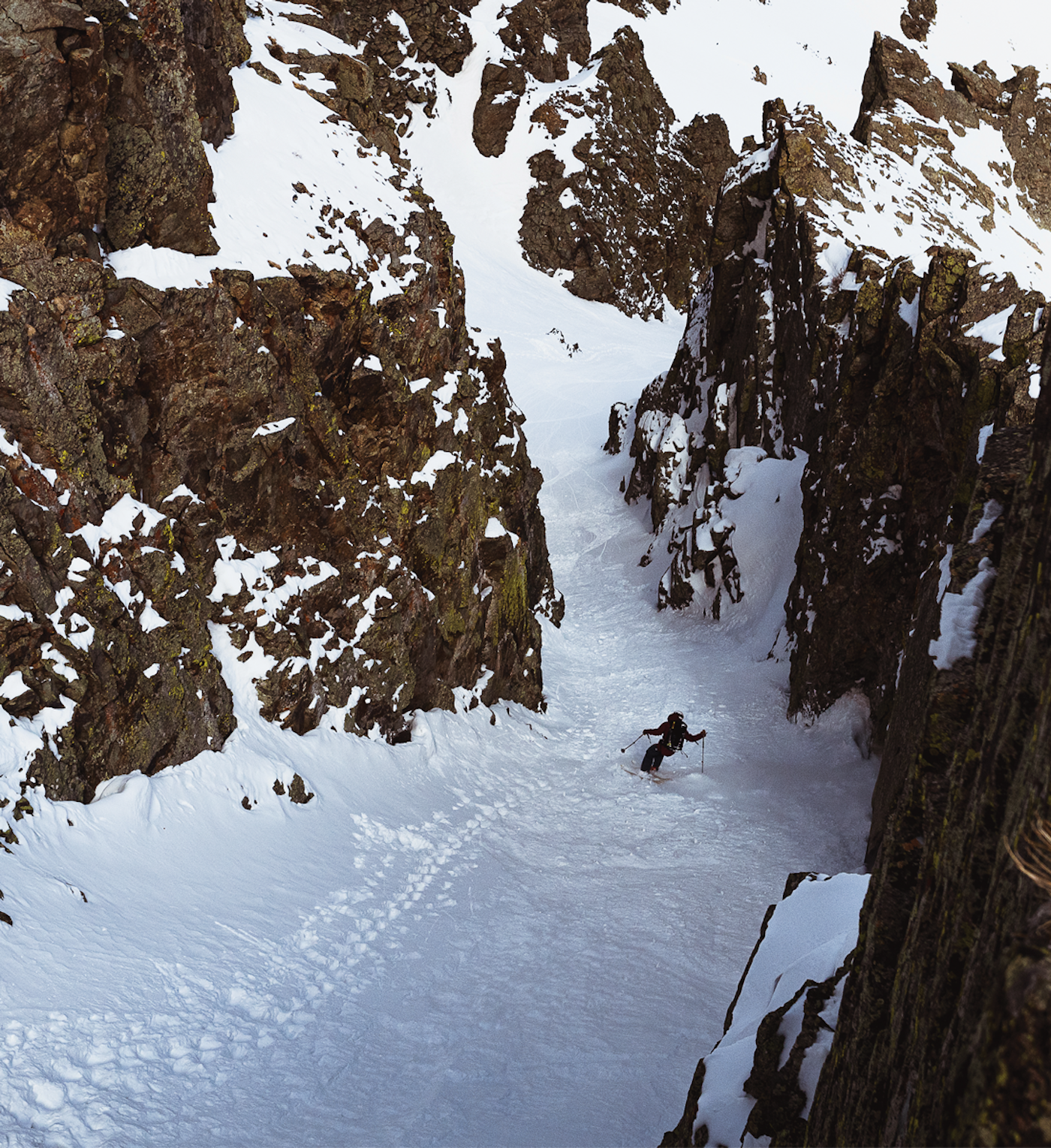
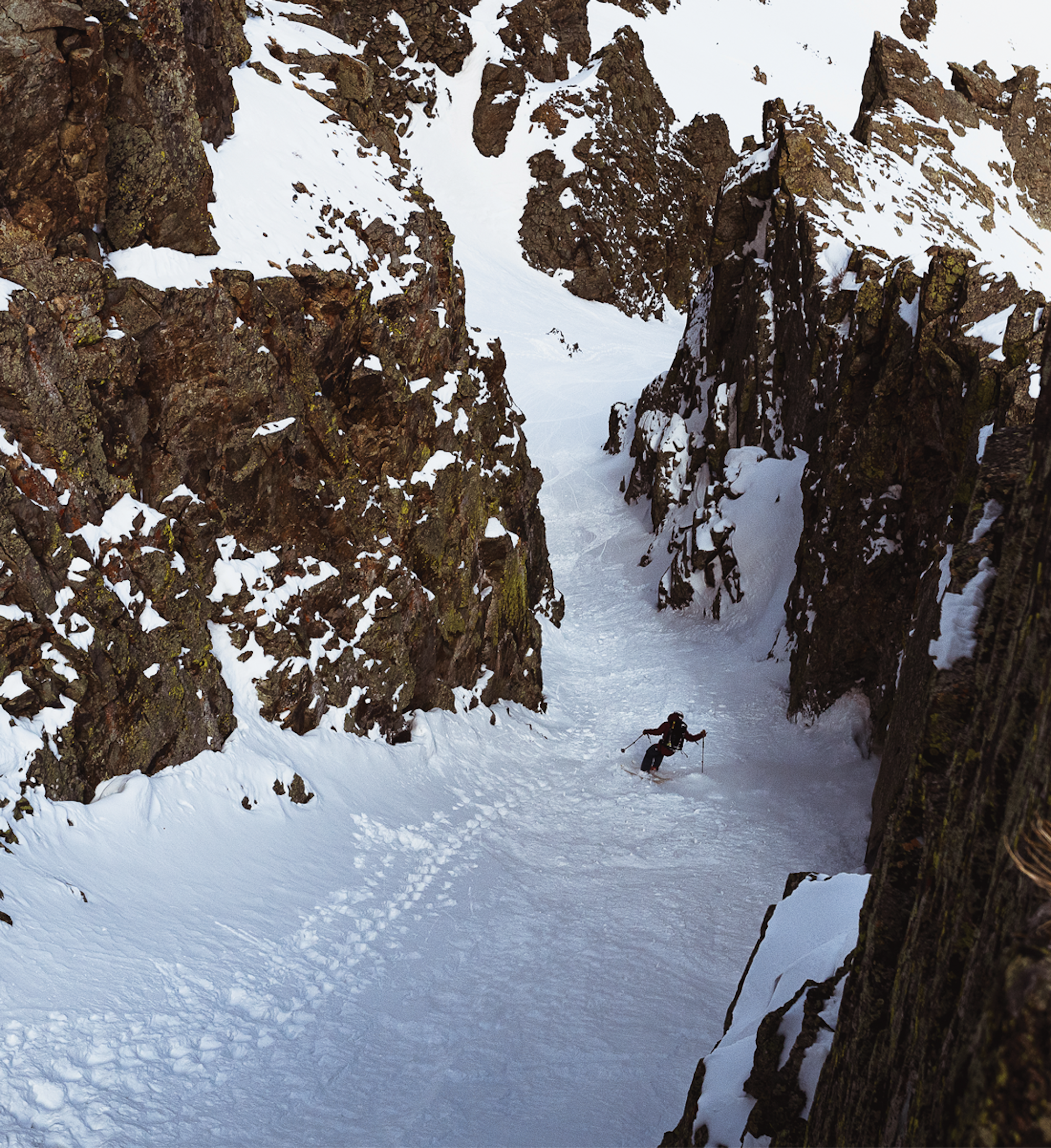
PHOTO: Matthew Tufts
Takhu Wakan Skan Skan (Tah-koo Wah-kahn Skahn Skahn) [Lakota]
Nanama (Nah-Nah-Mah) [Ute]
“natural rhythm”
April in the San Juans delivered more powder than corn, though that may be attributed more to our No Sleep Squad’s tenacious first light goals than serendipity—blower powder at the summit at 6:00 a.m. often became isothermal mashed potatoes on service road exits, but we had no complaints.
While our circadian rhythms were surely thrown for an adrenaline- and caffeine-fueled loop, our minds learned to embrace the undulating terrain of something Connor called Nanama (in Ute) or Takhu Wakan Skan Skan (in his native Lakota)—an acceptance of the natural rhythm of the world, in all its oscillations, cultivated by time on the land.
“I think there’s an arc of how people giving their lives over to these adventures and time on the land kind of get indigenized, if you will, by their experiences,” Connor told me over breakfast burritos at Silverton’s Coffee Bear. “The biggest thing people pick up from time on the land is this understanding that things can go much differently, for better or for worse, than the conditions and expectations we place on them.”
Our local liaison, Branch-Boyle, scoured aspects and trip reports all month to deliver us to the most promising conditions but we always maintained a rather “que sera sera” attitude toward our forecasts. Enough days of skinning across soft, wind blown powder only to encounter zipper crust at the top of an exposed line (and thankfully vice versa) reinforced the notion that we were better off leaving assumptions to the forecasters.
“In the letting go of your personal attachment to how things are supposed to go, you can allow for the natural rhythm of things to come together,” Connor shrugged. During our spring tour of Colorado we skied every kind of snow imaginable, often many different conditions in the same day. We discussed mornings we thought we’d arrived too early, and the more numerous days we felt we’d dropped in too late. But, with surprising frequency, we spoke about how often we ended up in the perfect place, dropping just the right line in just the right conditions. In English we might call it serendipity or synchronicity, but those words focus too narrow a lens on the result; Takhu Wakan Skan Skan is an approach—everything in harmony.
“In having continuous experience on the land, you come to understand all of that is just a part of life,” Connor mused. “And I think skiing gives us a really unique window into that. We have this intention, this goal we’re after, but we can’t get there on our own just by our best efforts, no matter how skilled we are, how knowledgeable we are, how fit we are. There’s some element of having to understand the perfect day comes from something outside yourself.”
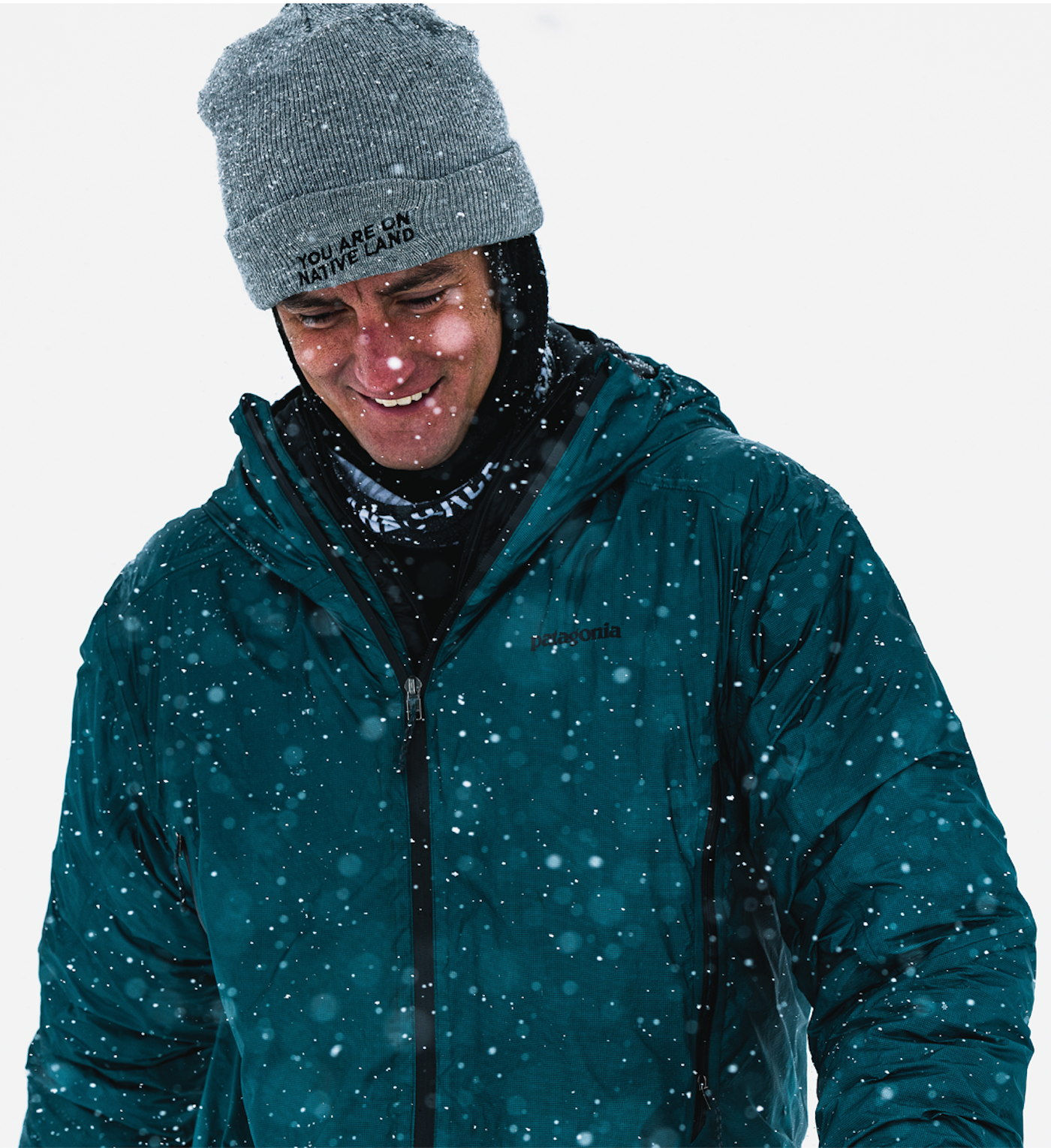
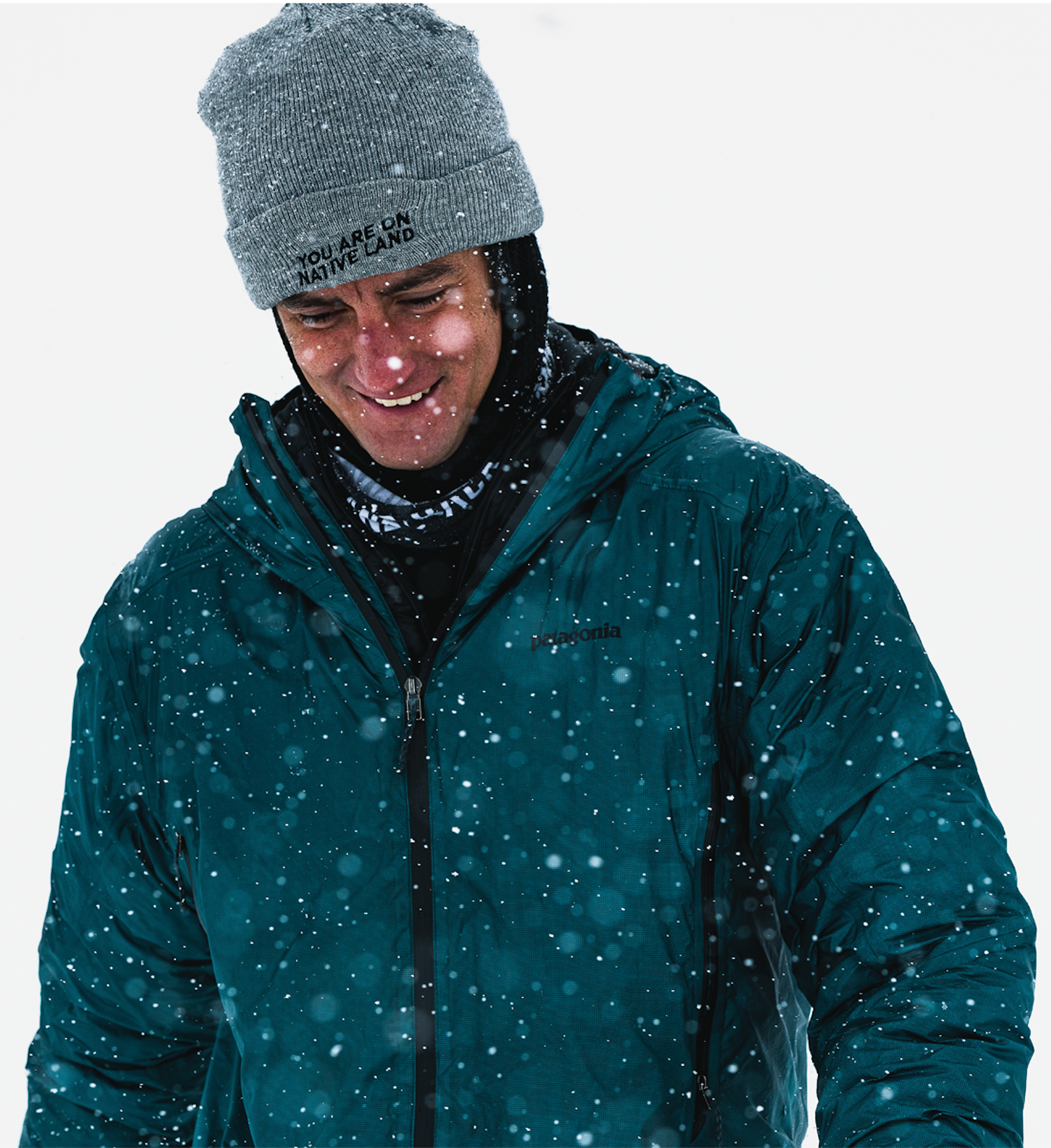
PHOTO: Matthew Tufts
Wakan (Wah-kahn) [Lakota]
Hozho (Ho-zho) [Diné]
“huge, powerful, sacred, mysterious in an incomprehensible way”
Back to the beginning of the trip, my first day out on skis with Connor was anything but perfect: We were presented with bitter cold and wind-scoured, boilerplate conditions, the occasional San Juan talus shark biting at our skis. After a bone-rattling descent of a refrozen couloir not far from Silverton Mountain Ski Area, our dreams of warm, creamy exit turns were dashed by a few miles of “roguls,” those daunting Volkswagen Bug-sized bumps created on warm days by snowmobiles on sled-friendly access roads.
Feeling thoroughly wrecked by our alpine start and the conditions, we begrudgingly peeled off our boots and socks in the mud of the Silverton parking lot, wondering how the valley’s warmth never made it to the high country. We had some choice words for the mountain; Connor shrugged and lit a spliff, unperturbed.
“You gotta respect the land, the weather and the sky being the way they are, the way you would respect an animal being the way that it is,” Connor said, explaining that you wouldn’t fault a bear for stealing food you failed to lock up properly. “Give the same grace we apply to what we can easily perceive as a living relative to the things that take a little more understanding and time to see.”
“You don’t look at a tree and try to change it,” Connor continued, with a literary nod toward Ram Dass. “As skiers, that’s something we have to work on. We look at a mountain, a snowpack, a weather forecast and we say, ‘This is how I wish it was different.’ At the same time we don’t have a mechanism for asking it to be different and communicating with it the way you would communicate with a living relative.”
A couple weeks later, on our final lap of the afternoon at Winter Park, we pulled to the side of the run a few hundred meters shy of the base. Snow had been falling for about an hour with varying intensity and a couple fluffy inches covered the groomer below us. We were eager to open up the soft turns and return to the lodge’s warmth, but Connor paused to perform a ceremonial tobacco offering and traditional song to the four compass points. He started with the west, per Lakota tradition—the direction of the thunder beings— Wakinyan , bringers of storms. He was through two directions when volunteer ski patrol pulled up on a sweep and asked us, with rapidly diminishing congeniality, to get a move on. Connor replied, diplomatically, that we would be on our way when he finished the song, but that we couldn’t leave after singing to only two directions and that, frankly, this was something above any of our pay grades. A few curt exchanges and a suggestion that if the song was not finished there could be an inch of rain atop a foot of blower the next morning led the slightly exasperated, confused patrollers to continue their sweep without us.
Connor finished his song, sprinkling tobacco that swirled and spiraled like dendrites in the storm. He shrugged and smirked. “That’s the magic of singing as a storm is rolling in. I’m not gonna say, definitively, whether it snows more when we offer tobacco and sing traditional songs; but I will say, definitively, that the way you feel the next day, if it has snowed, because you took that time to be in connection and reflection and relationship, gives you a whole new level of gratitude.”
He tucked his buckskin medicine pouch beneath his jacket and pulled his goggles over his eyes. “I think that alone is the reason to do it: to feel a deeper relationship with a place, to think ‘you might really listen to me,’ to be open to the perception that the place is capable of hearing you—that opens a lot of other doors emotionally and spiritually in our experiences in skiing, too.”
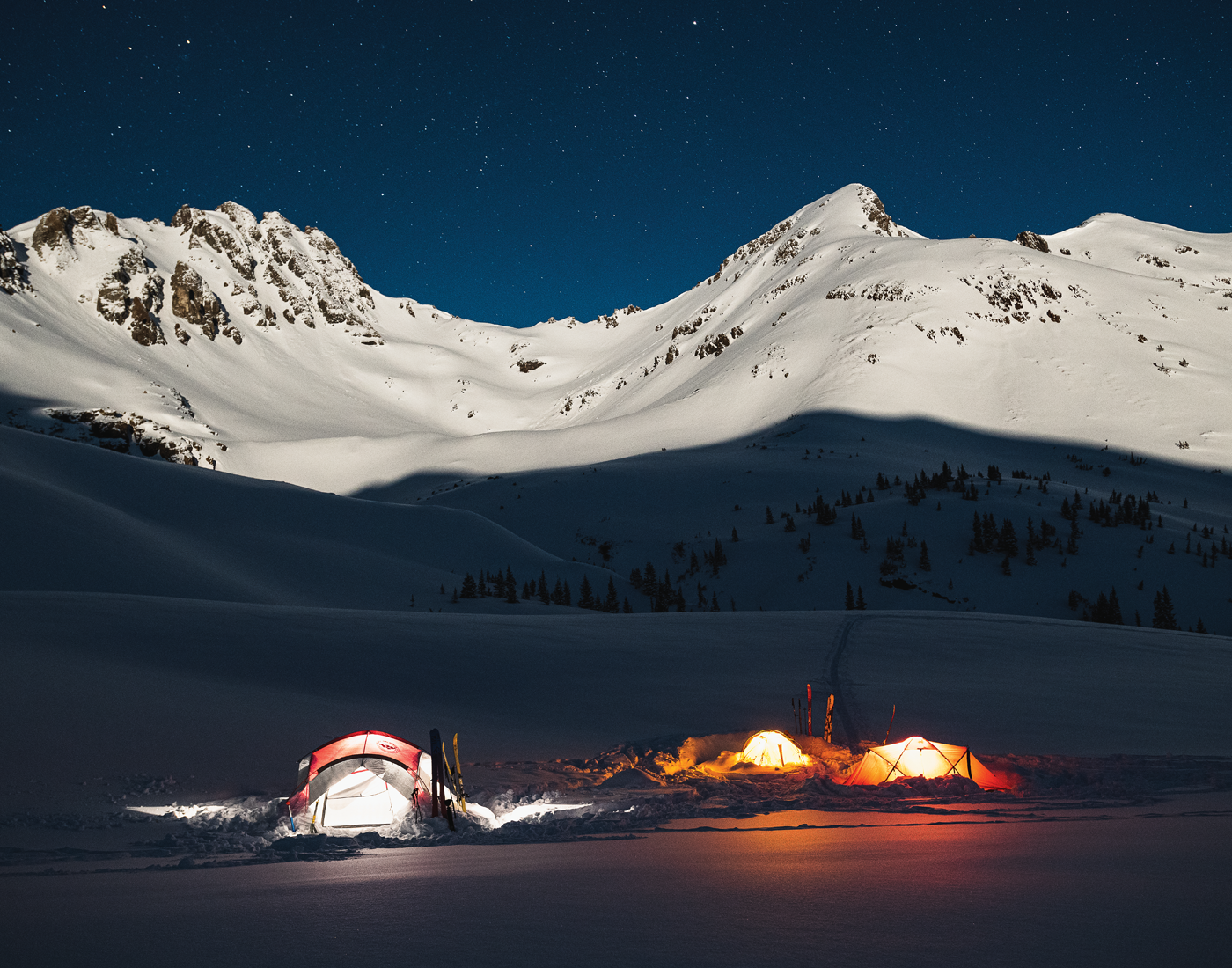
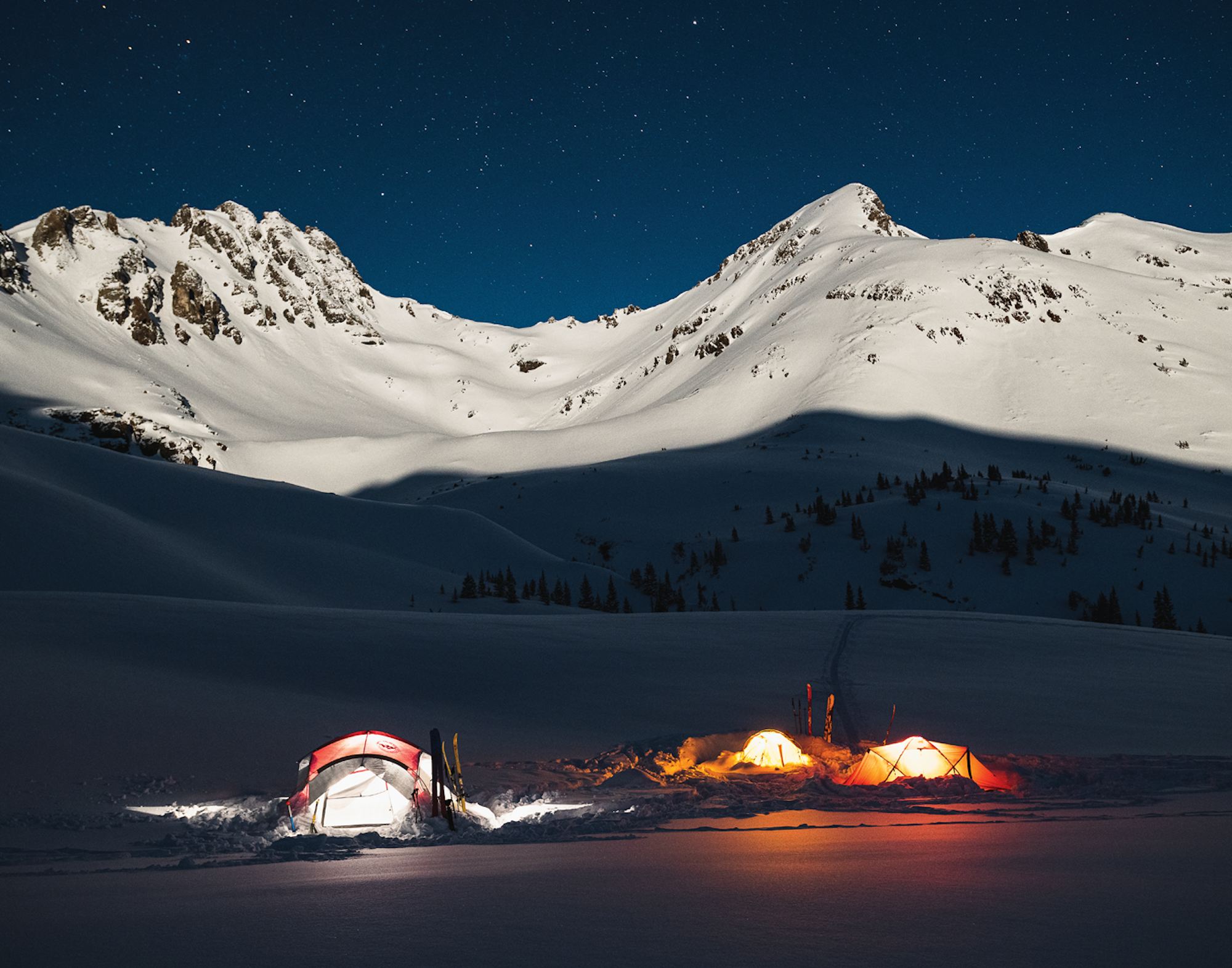
PHOTO: Matthew Tufts
We wrapped a month of shooting on a bluebird day in the San Juans. Soft, mellow wiggles led us back to the car. Leaning against the tailgate, I pulled my feet from steaming liners and socks as Connor came out of the cab with a braid of woven sweetgrass. It had become our ritual since our first day together—light sage before departing and sweetgrass upon a safe, fruitful return.
As we dropped altitude on the drive back to town, we saw much of what we’d skied only weeks prior had melted out. Old mining roads emerged from the snow on south faces like ink bleeding through a white canvas. A strip of icy refrozen slush snaked up the drainage of a popular exit route on a classic descent—ski compaction leaving its mark even as everything else about winter faded away. Realizing our attempts to tread lightly still had impact, I finally voiced the elephant in the room: Does recreation in the mountains fit into a harmonious relationship with the environment?
Connor took a moment before answering. Skiing is his life; stewarding the land is his heritage. “For a long time I struggled with feeling like skiing was a really selfish pursuit,” Connor finally said. “But the more I’m able to bring my own culture into skiing, the more I can see that there’s value to us being in these places, understanding them and having relationships with them. As humans, that’s what we’re meant to do: have relationships with the land.” He paused again, considering his words. “But if I’m going to have a relationship—just like any relationship I would have with a friend or family member—I want it to be reciprocal and I want communication to be able to move in whichever direction it needs to.”
Language is not only a tool for communicating intentions and relaying our actions, but also serves as a pillar in the framework of our interpretation of the world and its people. It’s largely held that a people defines its language; it is less frequently acknowledged that a language reciprocally shapes its people. We manifest into our perceptions that which we can speak aloud. English is a relatively new language, its growth inhibited by that rigid foundation in dualism. In turn, its ability to express connection to the land has not evolved. In a material subject-object existence, we’re more content to change our world rather than change ourselves. Indigenous language reverses that view. By crafting a more inclusive, more pliant vernacular, we can cultivate a more sustainable, reciprocal relationship with the environment and the mountains we choose to ski built upon the teachings of the original stewards of the land.
Author’s Note
Hoka
(Hoh-kah)
“ let’s go” (a rallying call)
Renowned author Michael Pollan wrote, “a platitude is precisely what is left of a truth after it has been drained of all emotion. To resaturate that dried husk with feeling is to see it again for what it is: the loveliest and most deeply rooted of truths, hidden in plain sight.”
Broad notions of universal flow and interconnectedness are often subject to cliché. They appear unoriginal, lacking novelty in a saturated sphere. Western
society moves forward—capitalism tells us the solutions to moral and environmental crises will be discovered through innovation.
Our skepticism is fueled by our inability to place these ideas outside our existing worldview. To try to put such concepts as Takhu Wakan Skan Skan and Mitakuye Oyasin within the confines of a western framework and language does a certain violence to the idea itself, stripping it of feeling and nuance. It’s an unavoidable flaw of translating these ideas to English.
Fortunately, we have means to communicate that transcend language: laps on the hill, miles on the skin track, nights camped in the backcountry—intentional time on the land is a vehicle for injecting empathy and reverence into those wrung out clichés, for seeing a way forward by looking back, for molding the rigid edges of our worldview into something more malleable that accommodates the practices Indigenous cultures have shared since long before we wiggled and carved down Western slopes.