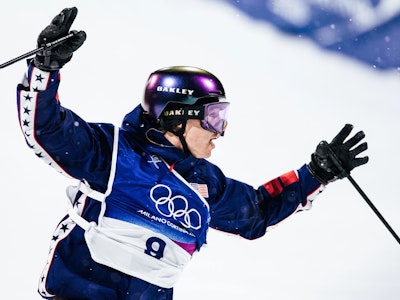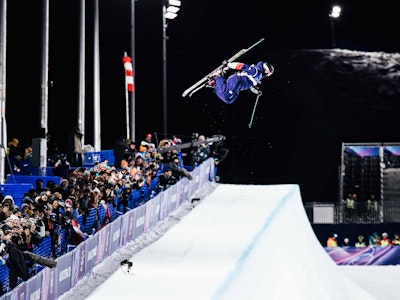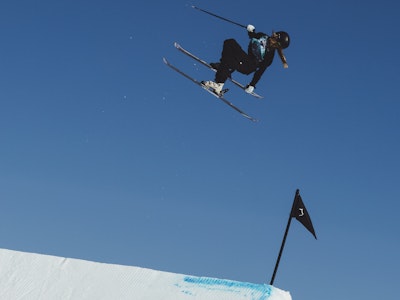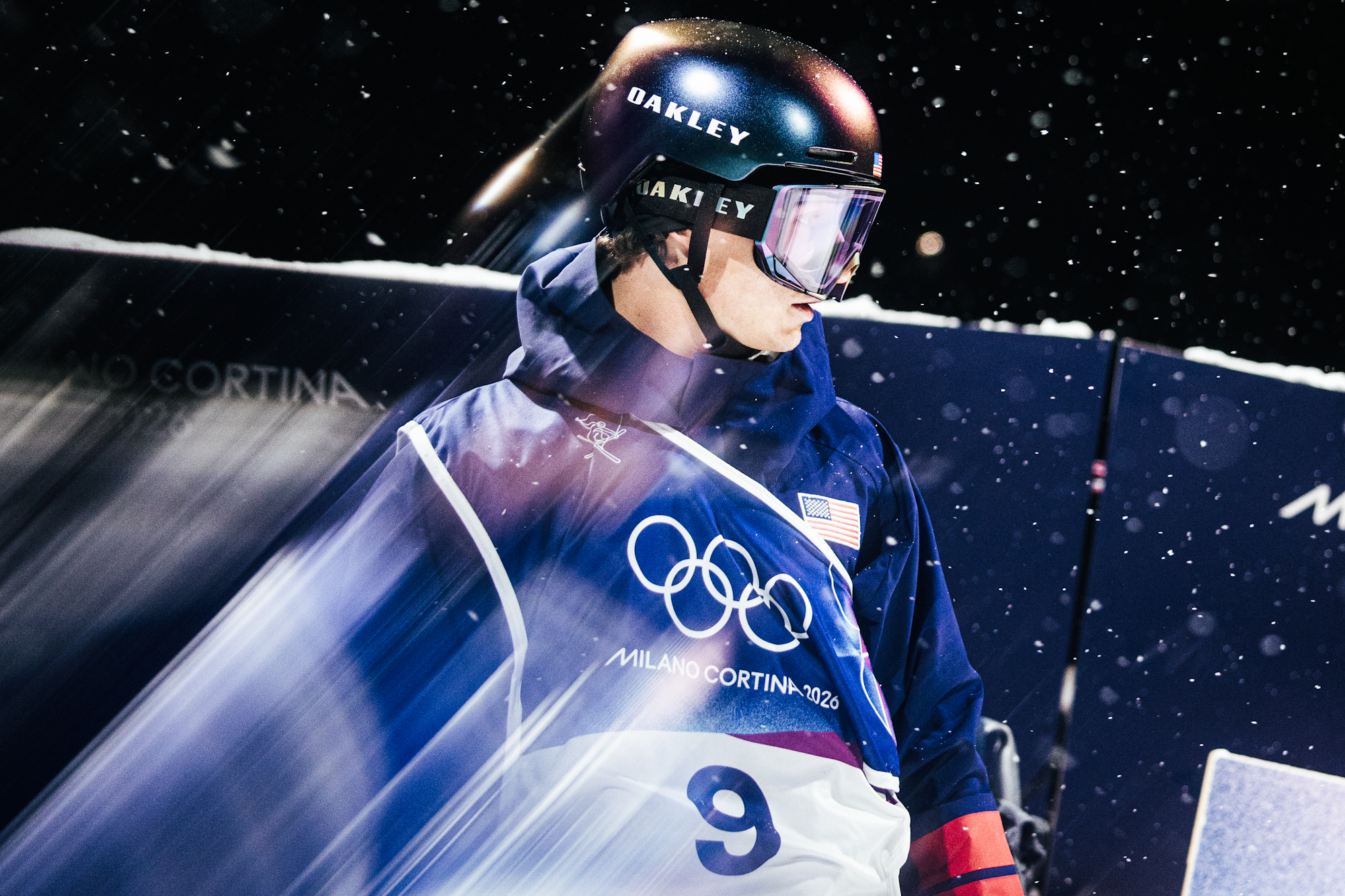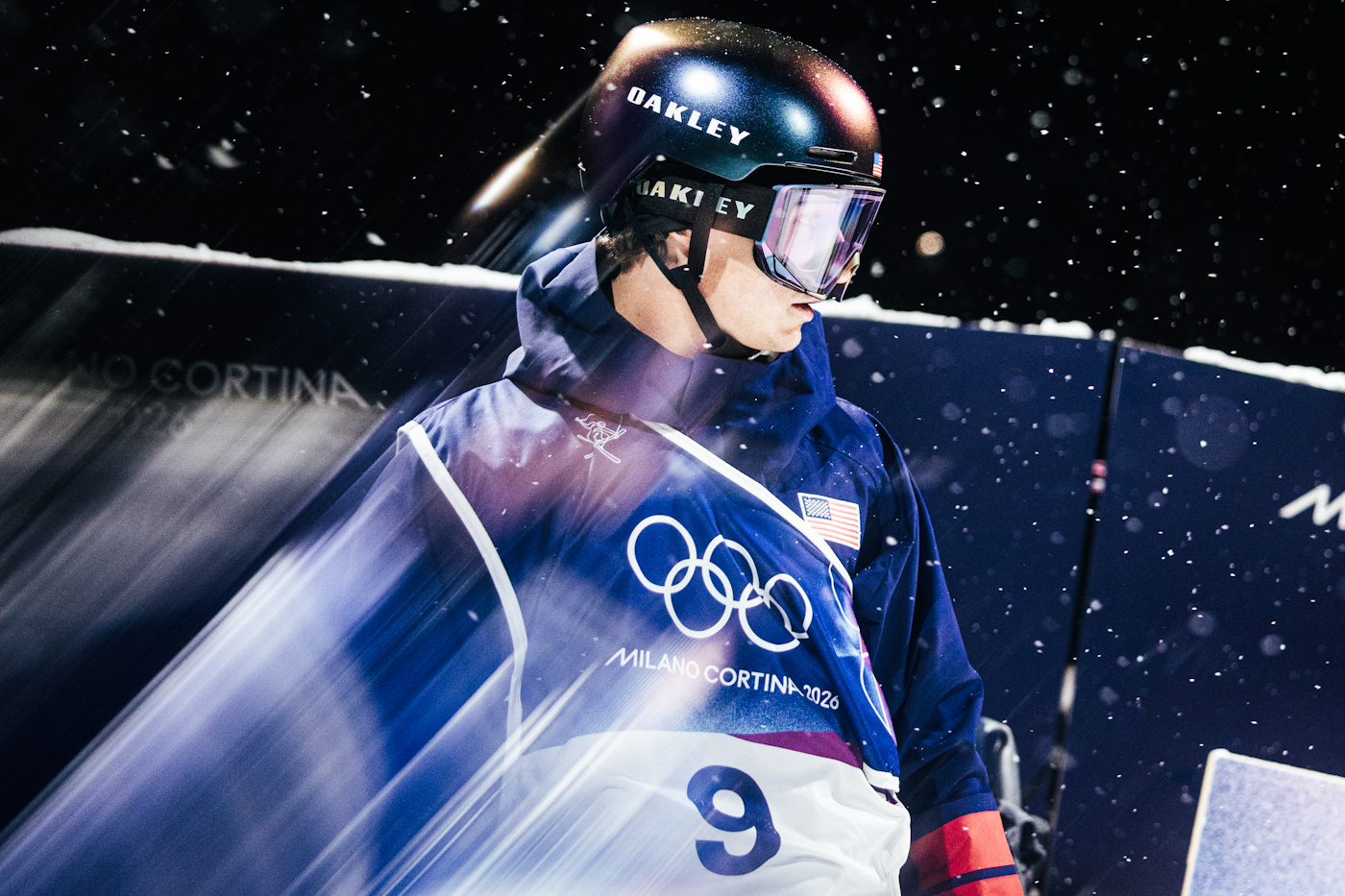
All Images: Courtesy of U.S. Ski Team | Featured Skier: Mac Forehand
The men’s Olympic Big Air final dropped into a snow globe. Heavy flakes filled the sky over the 140-foot jump, blurring the athletes from the television cameras and playing tricks on depth perception, yet the inrun stayed fast, and the tricks only got bigger. The 12-man field, with three runs and the best two scores counting, came out swinging, with top qualifier Mac Forehand leading a start list stacked with slopestyle medalists and X Games winners.
Round one immediately set a historic tone. Konnor Ralph opened with a switch triple 1440, quickly bested Troy Podmilsak, who stomped a switch right triple cork 1980 esco, both hands locked on safety, for a 90.50. Luca Harrington answered by landing deep at the last line of the knuckle on a matching switch triple 1980 for a 94. Then Norway’s Tormod Frostad rewrote the script with his signature switch nose butter double bio 1260 safety. This is by far the riskiest takeoff in competition, earning Frostad a 95.25 and the lead. Birk Ruud spun a switch 2160 triple cork mute down to 120 feet for a 95, Matej Svancer buttered into a triple 1440 for 91.75 and Forehand went enormous on a switch 2160 mute to slot into second with another 95.
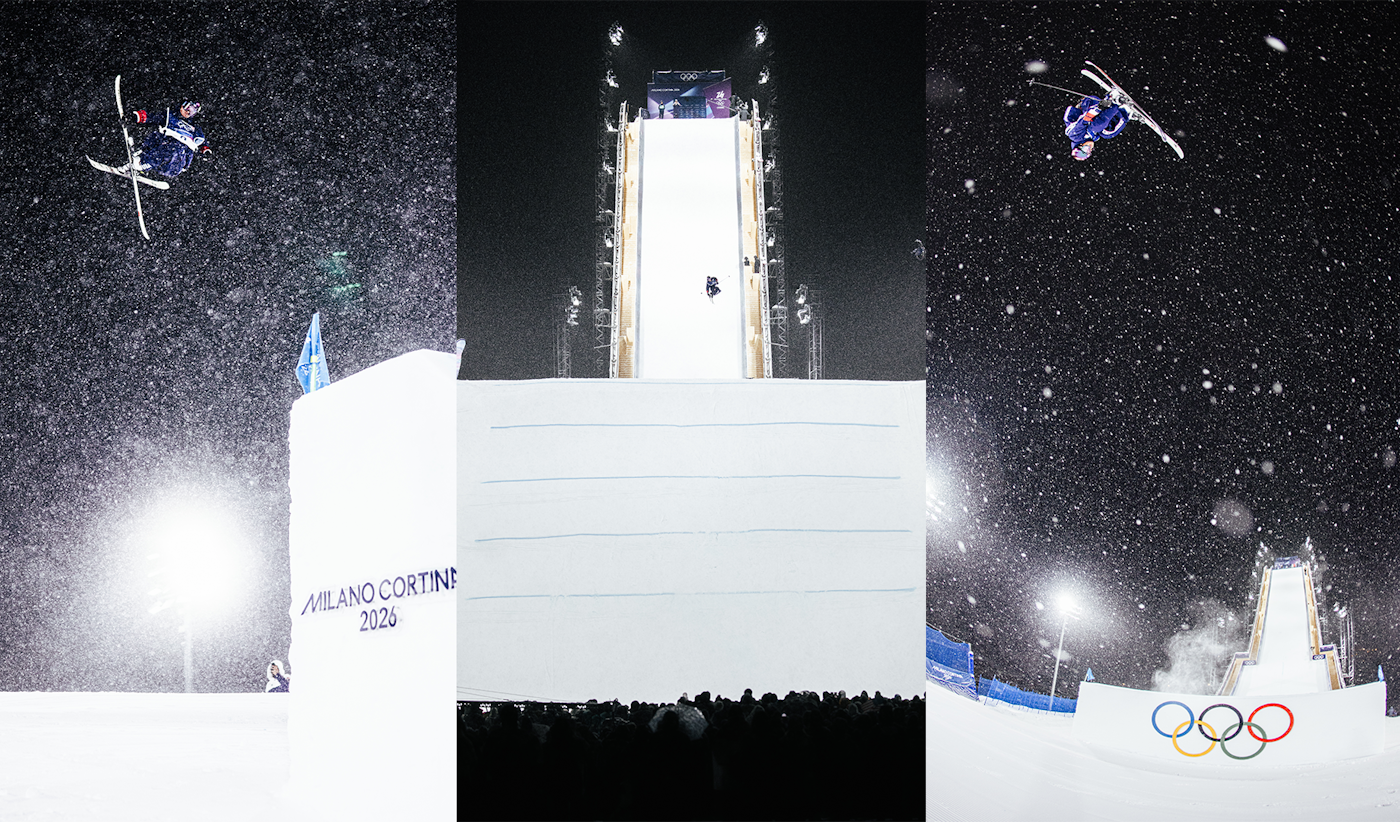
Skier: Mac Forehand
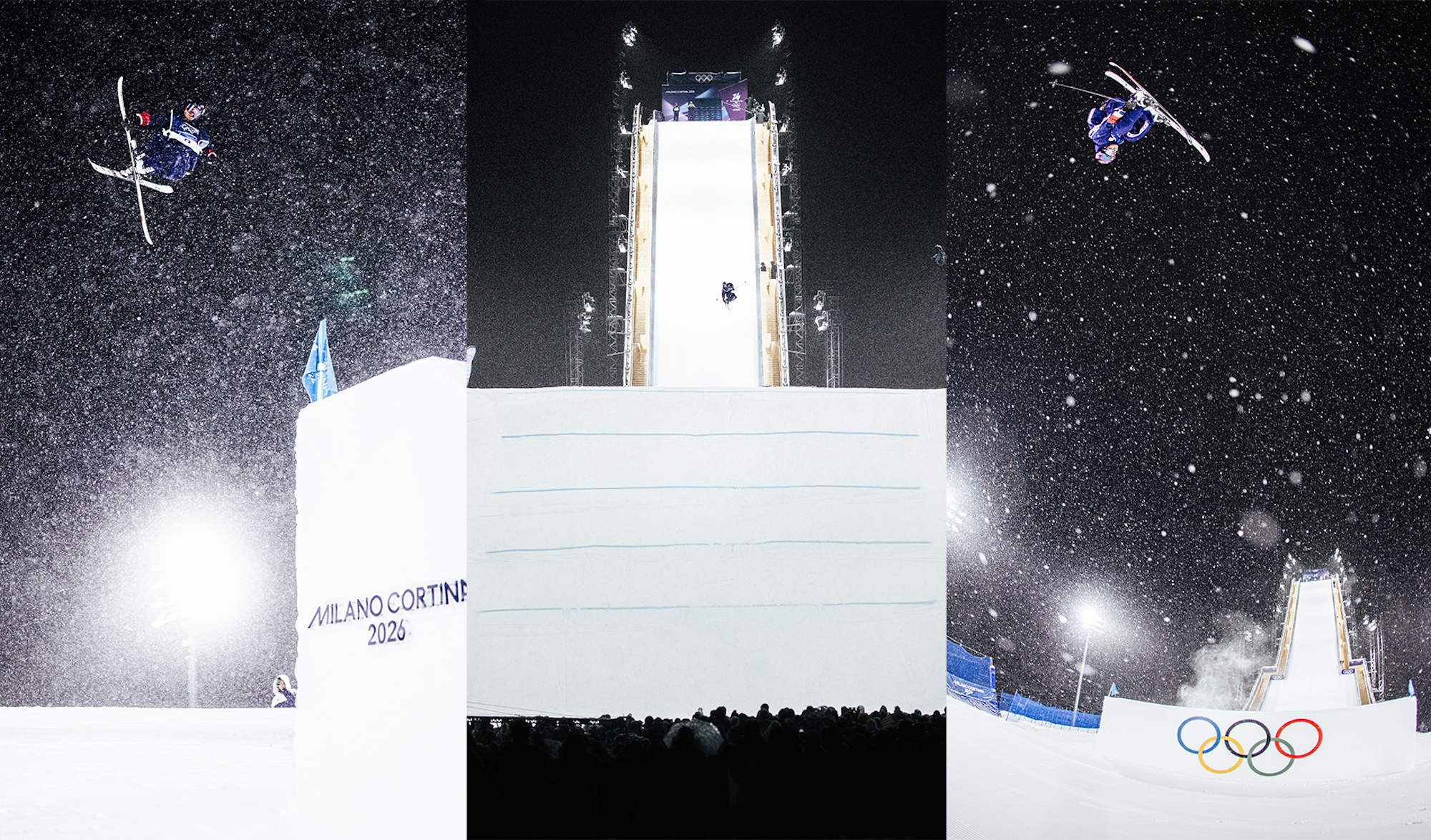
Skier: Mac Forehand
In round two it was clear these men were going for broke. Podmilsak nearly overshot the landing on a triple cork 2160 and had to absorb the impact for a score in the 70s. Harrington and Ruud both crashed, tightening the standings. Frostad doubled down on his creative style with a switch tail butter double bio 1620 safety grab that scored a 97, the highest score of the compition so far. Svancer carved the in-run and jibbed the side wall for joy, hand-dragged the takeoff, and put down a triple 1980 safety for 95.25 and second place. Forehand quickly answered with a nose butter triple 1980 safety, another 95, locking himself into silver position heading into the final round.
Round three was an all out battle for gold. Svancer earned a 96 and jumped back to second place with switch tail butter triple 2160 so smooth he looked shocked by his own landing. With two skiers left to drop, this guaranteed Austria first Olympic freeski medal. Now in third, Forehand dropped in needing a 97.25 to jump back to first. He delivered a never-before-done nose butter triple cork 2160 safety. The 98.25 put him in gold and sparked a group celebration at the bottom that captured the soul of the sport.
Last down, Frostad needed a 96.25 to win gold. In the clutch, he stayed true to his skiing with a nose butter double bio 1620 safety, all style, and originality. When the 98.26 came in and held, the decision carried far more meaning than the podium order. The judges rewarded creativity over spin count and, in doing so, honored the sport’s history, its present level, and its future direction in a single moment.
Frostad took gold, Forehand silver and Svancer bronze, but the result was bigger than medals. It was a statement that progression is not just about adding another 180 but about imagination, risk, and individuality. That choice will stand as a catalyst for the longevity of freeskiing, steering innovation toward style and originality rather than a race of rotations. At the bottom of the landing, the athletes hugged, celebrated and shared the moment together, the pride in this tight-knit community unmistakable.