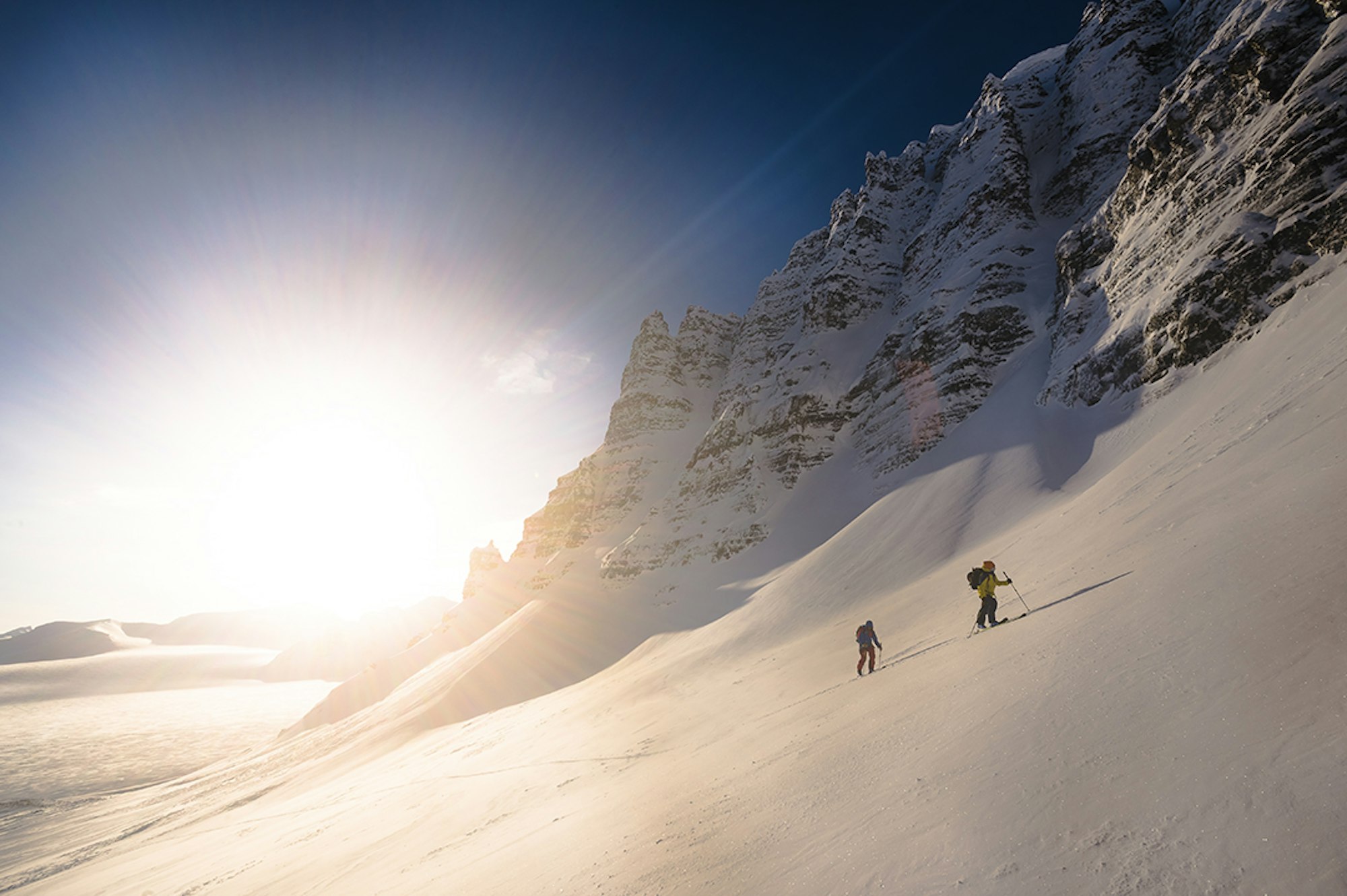
On November 3, Salomon Freeski TV unveiled the 31-minute short film Eclipse at the Banff Film Festival. The movie, which documents the efforts of Cody Townsend, Brody Leven, Chris Rubens and photographer Reuben Krabbe to capture skiing photos during a solar eclipse in Svalbard, Norway, took home the award for Best Snow Sports film. Today, the entire film has been released to the masses. We called up Cody Townsend, shortly after he took his first turns of the season at Squaw Valley last week, to discuss just how difficult and terrifying this project was. You’re going to want to grab your warmest blanket for this one, the interview gets cold.
Images courtesy of Salomon.
Phone ringing…
If you’ve reached this message, that’s because you haven’t reached Cody Townsend. That’s because I will be out of the country and out of cell service for quite some time. If you want to get a hold of me email me, or hit me up on Twitter, Facebook, Instagram, Pinterest, LinkedIn, MySpace or maybe there’s something really cool that I haven’t even heard about before. Try me there. Anyway, best of luck to you and have a great day.
Second attempt…
Hey, what’s up?
Hey Cody, how’re you?
Doing well.
You went skiing today, how was that?
It was awesome to just be in the snow and hiking, skinning around. We made a couple of turns but I wouldn’t really call it skiable. Definitely still a bit bony. We got a good heavy base down low, but it’s pretty light up top. There was like 12 to 16 inches of snow to go through. It’s staying cold, [Squaw Valley Alpine Meadows] is blowing a ton of snow, and next week some more snow is in the forecast.
Hallelujah. So, regarding Eclipse , you’ve said before that your goal for this past season was to push yourself outside of your comfort zone. You certainly did that with your film Conquering The Useless , but how did this Salomon Freeski TV project fit into that?
The project really fit into that goal, I’ve never truly winter camped before. The funny part was that I got invited on a trip to go heli-skiing up in BC and I couldn’t do it because of timing. Then [SFTV] threw this one out there and asked, “Have you ever winter camped before?” I just lied and was like, “Oh yeah, totally.” I had winter camped one night with Jeremy Jones in the Sierra Nevada and it was like sixty degrees and mellow. So, all of a sudden I was thinking about a three week trip to as close to the North Pole as you can get and still be on land, and I’d be in a tent for two weeks in the middle of winter. It was definitely a moment where I was like, “Holy shit, what am I getting myself into?”
What was the backstory of the project?
Well, to me, Salomon just asked, “Hey, you want to go to Svalbard?” So, I was like, “Yeah, definitely. I’ve seen Jeremy Jones go there, it looks sick.” But as far as the details, I wasn’t filled in on that until later, which was probably a smart thing. I think most of us weren’t filled in and when they told us what it was, we all reacted like, “this is insane. We’re going to go to the Arctic Circle in the middle of winter to try and capture an eclipse that lasts two minutes. Wait, what are we doing?” It’s hard enough to get footage for a ski movie, but counting on a clear day halfway around the world for a two-minute event, it was pretty absurd.
Yeah, the trailer kind of outlines that. Some of the commentary says that going that far north in March and expecting decent enough conditions to ski, let alone photograph a solar eclipse, is nearly impossible. What were your thoughts in regards to that objective once you arrived in Svalbard?
We showed up and it was completely stormy with more storms on the horizon for as far as we could see. To me, I was like “I personally don’t care about this eclipse shot. I’m here to ski and to try and camp for fourteen days in an Arctic environment.” I wanted to learn about climbing and learn about the whole process involved. I didn’t want to stress myself out about the eclipse part of it and I think all of those guys felt that way in general. We were itching to get out there, start skiing and exploring the mountains.
Speaking of the other people involved, I know you’ve worked extensively with Chris Rubens, but how much have you skied and worked with Brody Leven?
Besides a handshake at a trade show, it was pretty much my first time hanging out with Brody. For me, I just don’t know about climbing and ropes and a lot of the aspects of mountaineering, but Brody has a lot of knowledge about that. I was constantly trying to pick his brain about that kind of stuff. And [on the flip side] he never really shot for a ski movie before, so there were basic elements of light and where to make turns and how to make a shot look better than it actually is that I was coaching him through. I think we all learned from each other on the trip.
Watching the trailer, the first scene is of a snowmobile tipping over onto a burly patch of ice. Were spills like that a common theme throughout the trip?
Yeah, there were a lot of those instances. That one was particularly gnarly. They document it in the movie, but we had a massive rainstorm that hit the area. The glaciers will constantly be feeding water even though it’s minus twenty degrees outside. That spill was at the toe of a glacier where there’s a glacial break that, with all of the rain, had just barely re-frozen over. So there was like six inches of ice on top of open water right there. So we were having to pin it across that just to get out to camp. If one of us fell in there, the whole mission would have to be abandoned because we’d be soaked to the bone and hypothermic in minutes. Little things like that can be catastrophic in an Arctic environment.
The most terrifying thing for me on the trip, however, was when… our guide was telling us about how when we cross the open ocean, when we snowmobile the frozen bay, we need to be careful because the bays will freeze over but also break up in as little as fifteen minutes and be completely open water. With the wind storm, you won’t be able to see these patches way out on the horizon and all of a sudden you don’t know it, but the water underneath you is boiling and moving and breaking up the ice. Well, when we were driving this one time, we were crossing five miles of frozen bay and all of a sudden we stopped for a second to get a photograph and I see our filmer rise like three or four feet and all of a sudden sink down. And we, on our snowmobiles, rise three or four feet in this open ocean swell that had come through and lifted the ice. It was absolutely terrifying, just knowing that we were in the middle of the ocean and the ice could break apart at any moment. You could hear all of the ice moaning and groaning, and we were just like, “get us the fuck off this, now.”
And how much longer did you have to go before you arrived at camp?
We had about another mile and we were pinning it, so fast. And the most fucked up part about it is that the safe allowance for driving a snowmobile with a giant trailer on the back and all of the gear on it is twenty centimeters of ice.
How cold was it, really?
It’s as cold as you could possibly imagine. It was like 85-percent humidity, so imagine being on the East Coast, right next to the water—that kind of humidity—but with negative 24-degree temperatures and wind that would be in the fifty to sixty mile an hour range, that was completely relentless all day long. With wind chill, it got down to negative forty to fifty degrees. There were a couple of days that we had thoughts like, “I hope we come back to the tent with our toes in tact and not completely black.” We had to check on everyone to make sure there was no skin exposed. You’d get frostbite on your face in a matter of minutes. It was as cold as you could possibly imagine, it’s hard to comprehend it… you don’t feel like moving, every detail of everyday life becomes a challenge because it’s so cold.
So, building off of that, what was life like in camp?
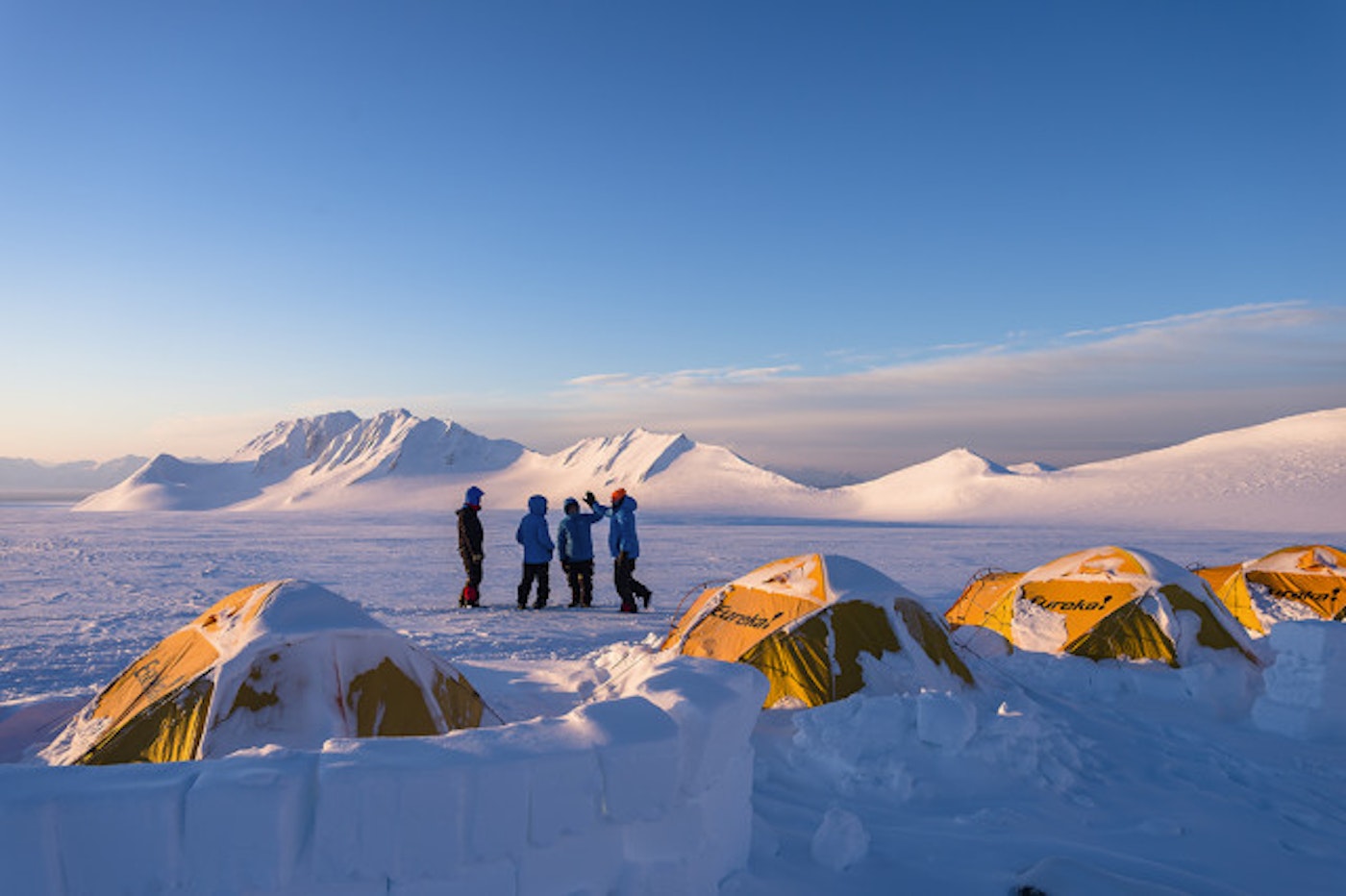
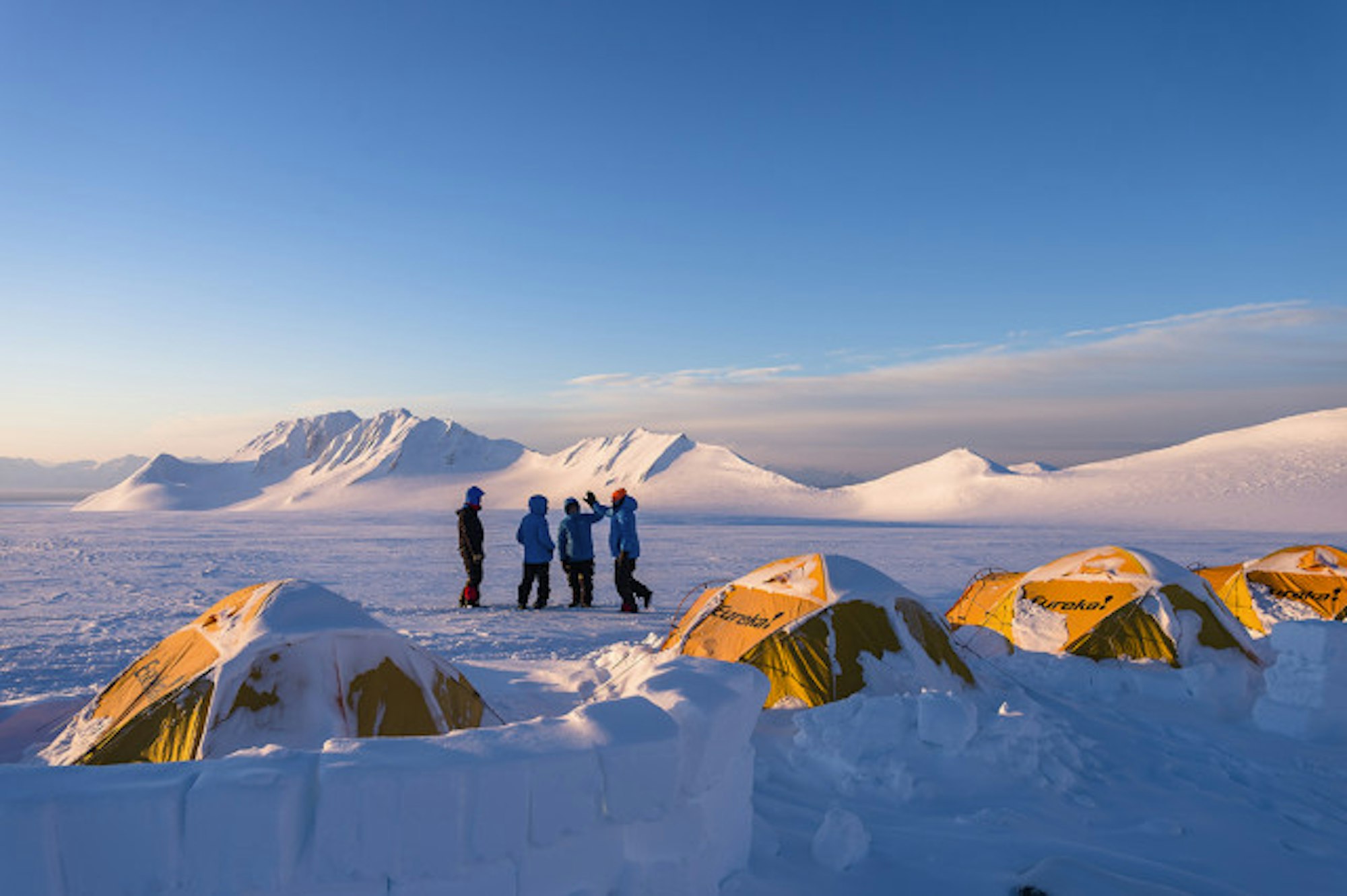
We’d try to be outside as long as possible, but mostly we would either be huddled in the main mess tent, the gathering tent, trying to just warm up with the one heater we had in there. We’d huddle around that, but by no means would it be warm in there, it’d still be minus five to minus 10 degrees in there and we’d still be wearing two puffy jackets each. After a week or so, you just get used to it, but just getting out of your sleeping bag in the morning is one of the hardest things to do. Putting on your ski boots in the morning is just an absolute nightmare. You’re constantly bundled up at all times and covered from head to toe. It’s hard but you just live through it.
What was the skiing actually like up there?
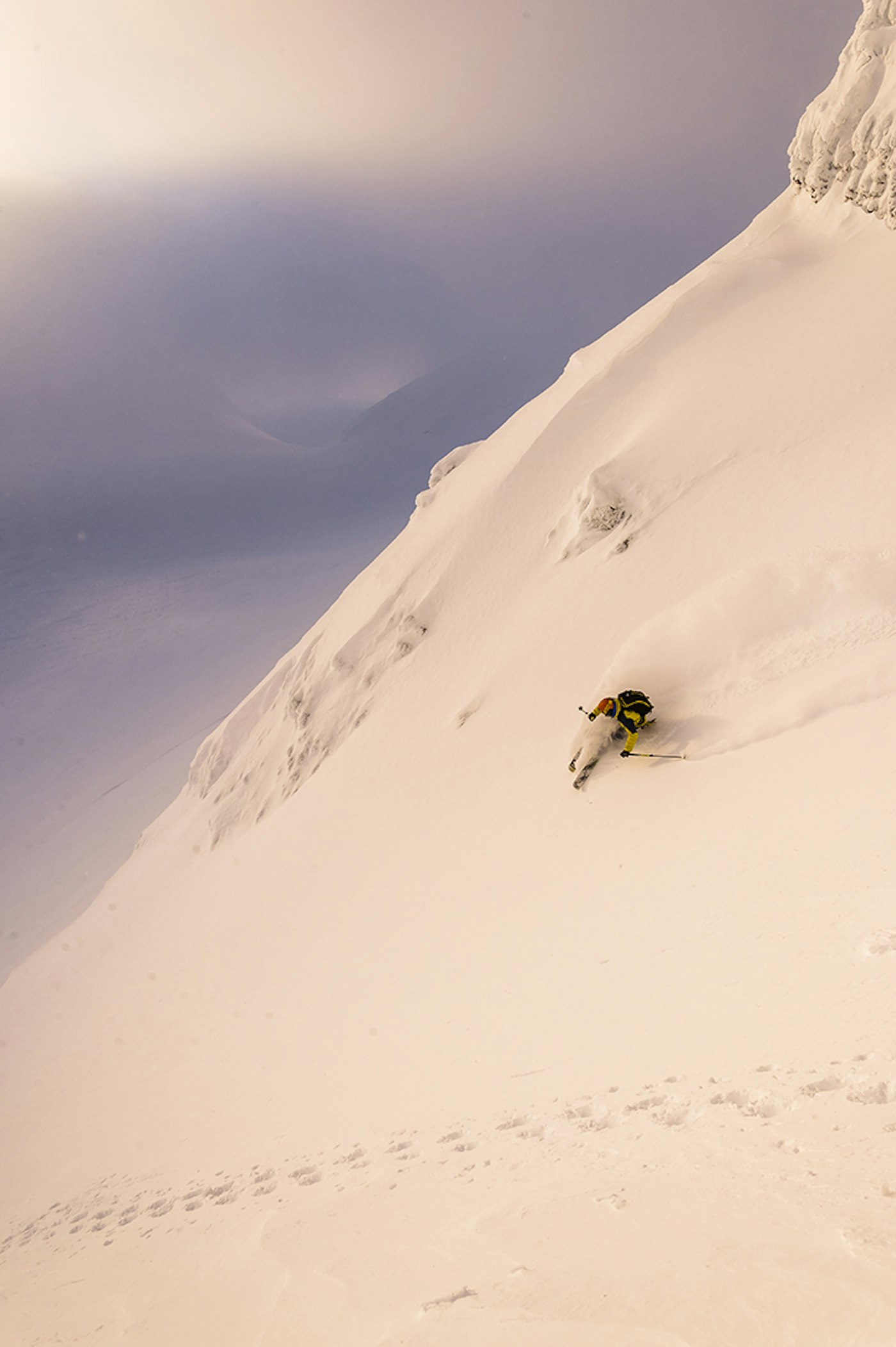
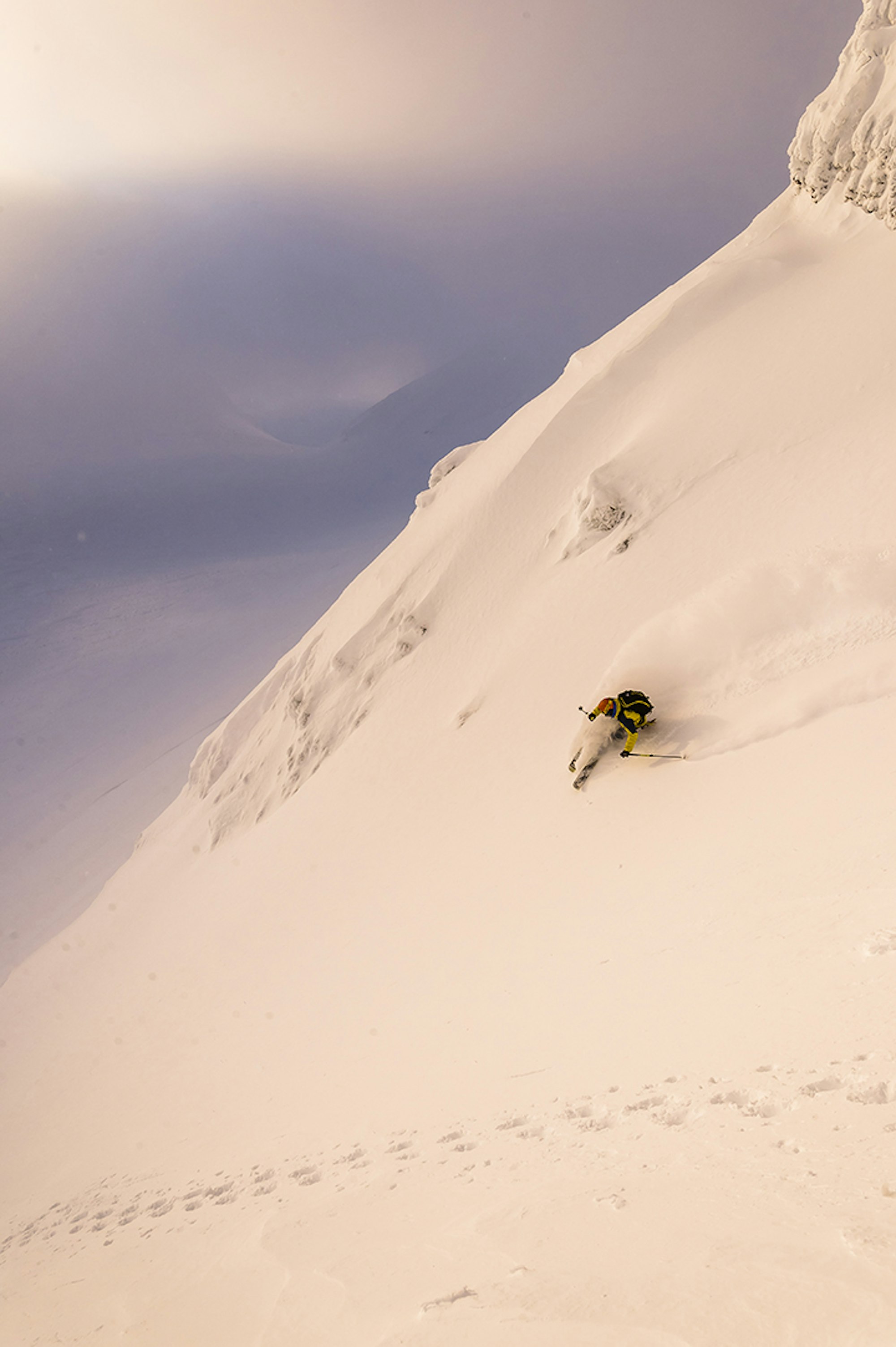
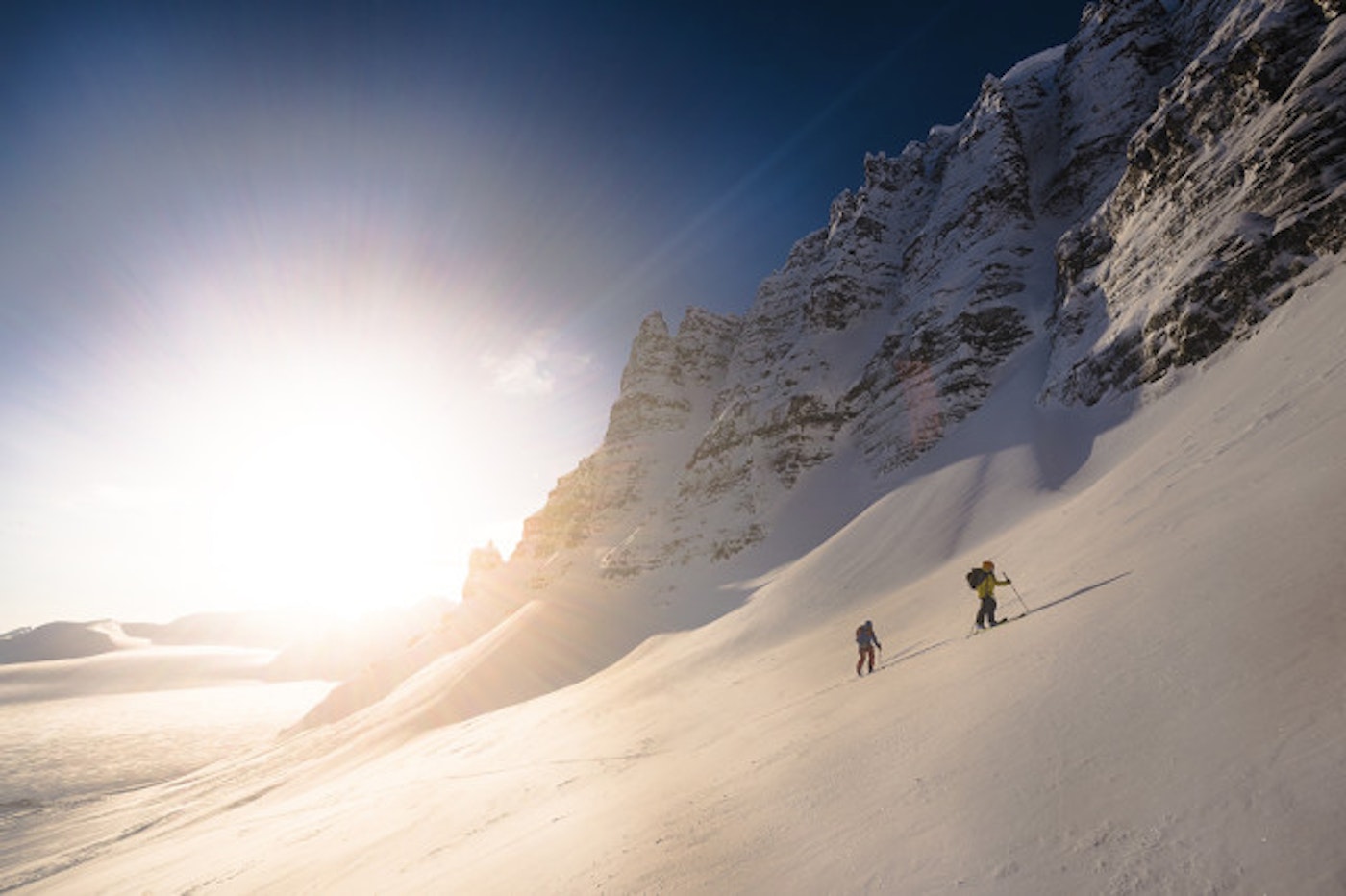
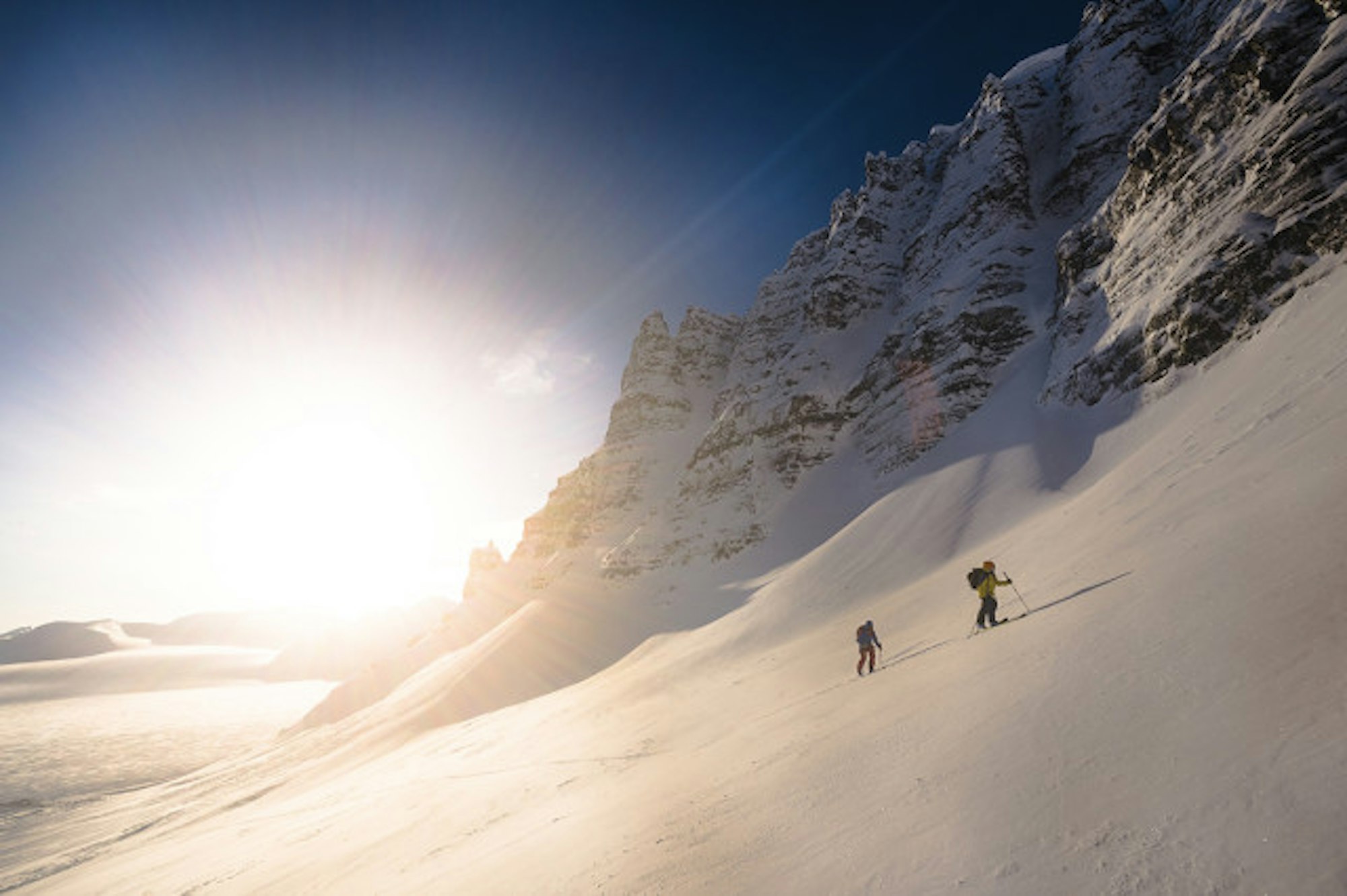
I guess Svalbard used to be an island that was on the same latitude as Hawaii and so it’s a quasi-volcanic island with jutting mountains that stick straight up out of the glacier. The features were ridiculous up there. As far as the snow, it was mainly chalky hardpack in many ways, but it was still really fun. It was edgeable, ripping snow. By no means was it pow, but we enjoyed the shit out of it.
You mentioned earlier that you were more focused on the skiing than the actual goal of bagging shots under the solar eclipse. However, that’s the main objective in the film… What was that process like?
Yeah, a solar eclipse only lasts about two and a half minutes. I think they say this in the film, but Reuben is probably one of the most awkward guys I’ve ever been in the mountains with. He’s a complete nerdy dork, math geek guy. But, I also think he’s a borderline genius. When he came into this aspect of planning the eclipse shot, he had every detail mapped out, every setting on his camera dialed, he knew exactly how far away he needed to be. He had it so planned out and we were just trying to find a spot that would work for that. Because of that preparation… if we had just went there and waited for the eclipse to start shooting it wouldn’t have worked, at all. We really needed to be super specific about it, so Reuben’s preparation and planning is what made it successful.
In the trailer, you say something like “I’m just hoping it’s here and done with.” How taxing was the project overall?
Well, that was related to the eclipse. As skiers we were going to Svalbard to go ski and all of a sudden we had multiple days in a row that were just left for scouting the location with no skiing involved. We just drove around on the sleds, hiked up and stood around trying to find the perfect location for the shot. You’re essentially working for somebody, you end up feeling like somebody’s monkey, just some model standing there. Meanwhile, you’re suffering; you’re cold as shit, you’re barely hanging on, your toes are beyond numb, your hands are beyond numb all day. We had that feeling of, “what the fuck are we doing here, let’s go skiing,” and instead we’re just planning out a shot that most of us didn’t believe would happen. So that’s what the quote was related to, there was tension related to that. We were essentially being somebody’s stunt monkey and it didn’t feel good, but you’ll see in the film how it all works out.
Skiers talk about the conflicts of filming for “Eclipse.”
Would you consider skiing up there again?
Yes, definitely. I would go back in a heartbeat. You’re in the middle of nowhere, on the edge of the Earth. You’re on the farthest northern land mass in the world, it’s not just the last frontier in terms of a place, it’s a last frontier in terms of what is possible. Can you survive in these elements? It’s pretty crazy.
Related: “Conquering The Useless” from Cody Townsend and Team Thirteen is well worth your watch