All Images: Courtesy of U.S. Freeski Team
This article first appeared in FREESKIER Volume 28 Issue 2. Click here to find a print copy of Skiing's Independent Magazine near you!
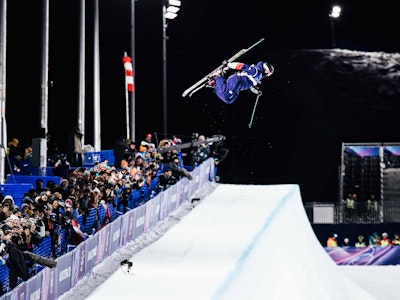
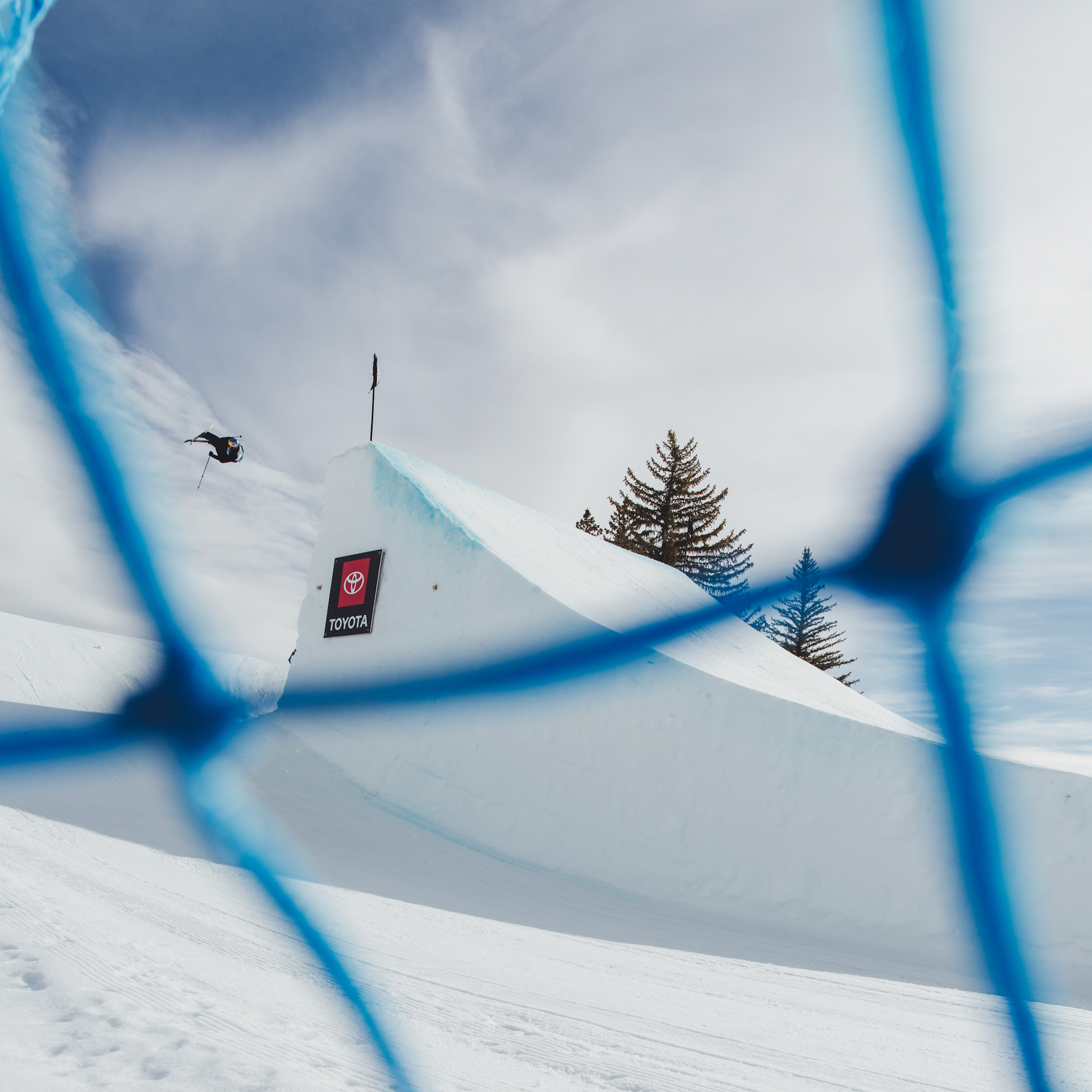
During the 2024 X Games in Aspen, American freestyle skier Troy Podmilsak was asked if he was nervous. His bluntly honest response was, “Yeah, I’m absolutely terrified. I do not want to be doing these tricks.” But fear did not hold him back. He landed the first-ever triple 2160 mute grab, which earned him a gold medal in the Men’s Ski Big Air event. He later shared that landing these high-consequence aerial feats isn’t the result of doing them a billion times. “If you understand it in your head, that’s how you’re going to get the most potential out of that trick,” he said. In recent years, mental preparation and overall well-being have become a priority in professional sports, particularly in the high-risk discipline of freestyle skiing.
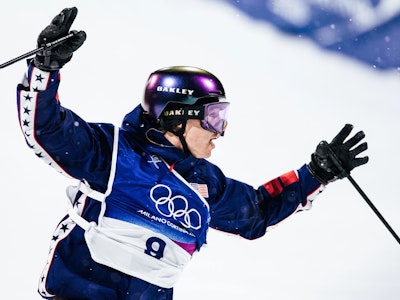
Athletes, including American Nick Goepper, Canadian Megan Oldham and Chinese-American Eileen Gu, have been vocal about the need to train both mind and body to shut out the noise, dig within and have the confidence to flawlessly execute dizzying moves they’ve practiced for months, if not years, in a competition setting. When that competition is the Olympic stage, the stakes are at an all-time high. Once shunned, focus-enhancing and stress-reducing techniques like visualization, meditation, positive affirmations and box breathing have become go-to practices of the U.S. Freestyle Ski Team as they look to gain an extra edge in an Olympic year.
All the athletes competing in the Winter Olympics represent the peak of human physical performance—but to beat the best of the absolute best, they must also have a much sharper mental edge. Having the mental fortitude to push for one more rotation or one more flip on the world’s biggest stage can be the difference between walking home with gold or no medal at all.

The Top of the Performance Pyramid
A solid physical foundation—movement mechanics, basic fitness, conditioning—forms the base of U.S. Ski & Snowboard’s (USSS) performance pyramid model. They work with cutting-edge technology—from GPS tracking to foot sensors—to analyze mechanics and efficiency. From there, coaches build upward, focusing on mental readiness, recovery, nutrition and discipline-specific training. “Everything ladders up to preparing the athlete for peak performance when it counts,” says Gillian Bower, vice president of high performance at U.S. Ski & Snowboard.
Working up to a triple cork 1440 or double pretzel flip is both a mental and physical journey. Coaches and athletes develop a plan together. They analyze the tricks the athlete can land today, where they need to go to progress and what it’s going to take to win a medal. The athletes start small, with lower-stakes work to build up confidence and readiness for the big stage by visualizing more complex moves and then sessioning them on trampolines and over foam pits. An athlete might do three to five minutes of box breathing to calm their nerves ahead of a first attempt on snow or even keep a journal of emotions, recording the first time they try a new trick and how they feel after the first attempt.
“Mental preparation is as essential as the physical—it’s what keeps everything together,” says Bower. To that end, Kirsten Cooper, a former professional alpine ski racer and performance psychologist working with the U.S. team, helped develop an eight-week mobile mental performance program that guides athletes through focus, confidence and mindset work.
Simulating Pressure
Occurring once every four years, the Olympics are the ultimate pressure cooker. Athletes devote a good chunk of their lives to one or two chances to show the world their talent. “It can feel like a do- or-die moment,” says Cooper. “We can’t control the anticipation, but we can train athletes how to build pressure tolerance, fear and nerves.” To cultivate resilience, coaches intentionally apply strategic pressure to athletes during the season when they are nervous or fatigued.
For example, they might have them hit the slopes for a surprise on-snow training session after a gym workout or after a day of travel to help them build mental resilience. Coaches encourage athletes to make fun bets with each other that raise the stakes and add a layer of consequence to practice. “Placing a $10 bet at the top of the hill adds a playful aspect to training and competition that feels approachable rather than threatening,” says Cooper. “The point is to turn pressure into a positive that athletes can channel in their favor.” She continues, “Feeling nervous can be a good thing.”

Recovery is Key
When it comes to A-game performance, everything has to connect. When athletes sleep better, they recover better and therefore perform better. “It’s holistic performance,” says Bower. “Sleep is a huge part of that equation,” she says. We’ve all experienced the effects of a poor night’s sleep. It leaves you irritable, emotional and foggy. Even simple acts like tying your shoes can feel like trying to complete a Rubik’s Cube. Skimping on sleep impacts everything from mood to focus to performance.
Factor in jet lag and athletes have an uphill battle. Travel is a major sleep disruptor and a big part of the ski season. Athletes are constantly moving around the world, crossing time zones and balancing competing demands. “They train on snow during the day, then shift into ‘business mode’—answering emails, doing interviews, handling sponsor obligations,” she says. “Suddenly it’s 10 P.M. before they’re winding down.”
USSS hired a sleep consultant to dial in athletes’ sleep hygiene and help them establish bedtime routines and morning schedules to optimize recovery. They are encouraged to maintain as close to a routine as they have at home on the road, avoid screen time an hour or two before bed, and some even adopt breathing exercises to help them doze off more soundly. “It’s been vital for specific athletes,” says Bower.
Using Visualization to Overcome Fear
If an athlete says they have no fear before attempting a left double cork 1620, Cooper has concerns. “On the day of competition, fear doesn’t just disappear,” she says. “It’s inherent in the sport. And from an evolutionary standpoint, fear is what keeps us alive. My job is to teach athletes how to work with fear and not let it drive the bus.” A crash or injury is obviously one of the biggest fears. It can become a mental block for many athletes. When a crash does occur, depending on the injury, USSS involves a sports psychologist right away, often even before the athlete returns to snow.
“The goal is to rebuild confidence and trust in their body,” Bower explains. Visualization plays a huge role in learning to manage fear. Cooper will ask an athlete to visualize the thing they are scared of—both on and off snow—and register how their body responds. The goal is to build a tolerance around fear and help athletes regulate their nervous system enough to let their brain control their reaction instead of defaulting to a primitive reaction. Before a training session, an athlete might close their eyes and recite positive affirmations, like “I am an Olympic champion,” or “I am strong,” in their head.
For other athletes, like Goepper, putting on headphones and cranking up tunes like EDM or hip hop helps them get in the zone. Oftentimes, Cooper asks athletes to visualize not just the trick they will perform but how they will feel executing it and landing it. The feeling of nailing a trick then becomes the driver, not the fear. In an Olympic year, athletes are willing to push how big they are willing to go, and visualization becomes a way for athletes to practice more difficult, higher-risk tricks. “By creating an image in their mind, we can train their neuromuscular system to create firing patterns to execute the needed skills,” Bower says. The combination of mental preparation and on-snow training imprints the mechanics of tricks into an athlete’s muscle memory. By competition day, it’s the mental composure that allows them to get into a flow state and execute to perfection.
![[GIVEAWAY] Win a Full 26-27 Ski Setup from Fischer](https://www.datocms-assets.com/163516/1790101711-00012060-edited.jpeg?w=200&h=200&fit=crop)