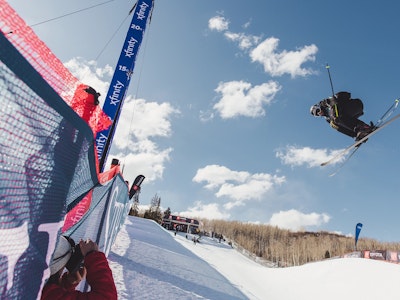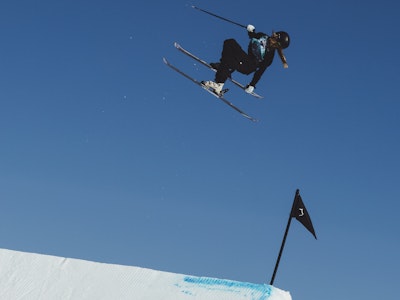
Featured Image: Brie Coops | Skier : Svea Irving
It’s easy to see Olympians as destined masters of their chosen craft, locked into a lifelong path of success. In truth, that vision diminishes the work these athletes put themselves through just to earn a shot at greatness. It’s not destiny, it’s 10,000 hours done over the course of years and years; that’s what lands them in the starting gate. We often hear from those who have completed this journey, but there are many skiers currently striving to make that Olympic dream a reality.
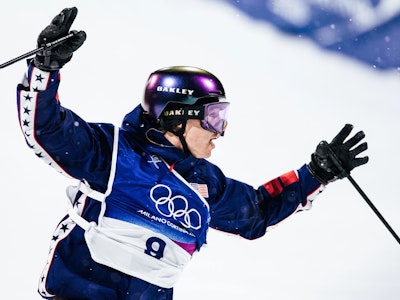
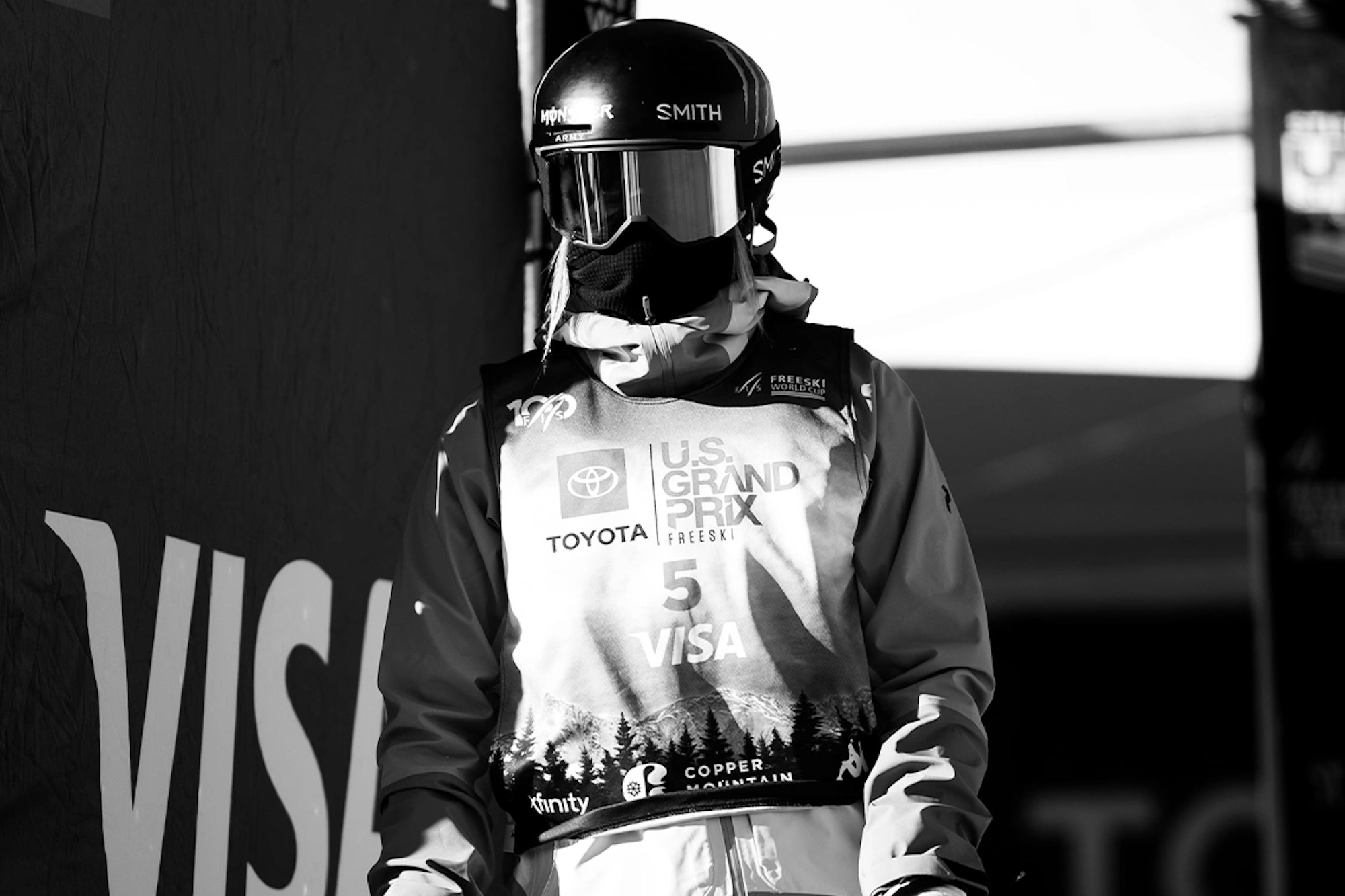
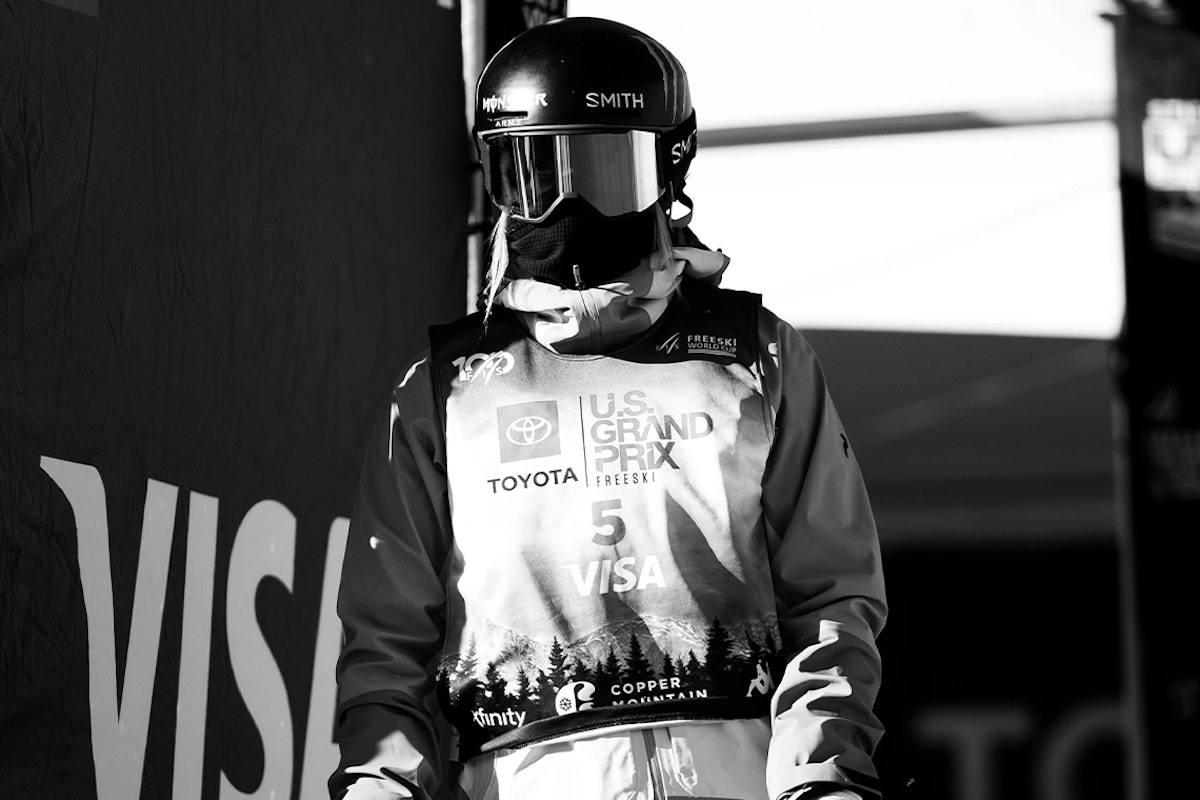
One of those skiers is Svea Irving , a prominent figure in the current halfpipe scene. As one of three skiers nominated to the 2026 U.S. Freeski Women’s Halfpipe Team, she’s a likely contender to qualify for the Milano Cortina Winter Games this coming February. After becoming the Women’s Halfpipe National Champion in back-to-back seasons, she’s climbed the ranks and gone from up-and-comer to established competitor regarded among the sport’s best.
But Irving has her sights set far beyond National Champion. With a calm demeanor and plenty of focus, she’s eyeing up her first ever Olympics, but there’s plenty of hard work between now and then. FREESKIER sat down with her to talk halfpipe hopes and dreams, the upcoming competition season, her recent success in the world of ski films and more.
Thanks for taking the time to talk, Svea. How’s summer been?
SI: It’s been good. I just got back to Colorado after a U.S. Team camp at Mount Hood.
How was Hood? I saw a lot of national teams have been through there this summer.
Hood was great, it’s one of my favorite places, but [Timberline] was the most crowded I’ve ever seen it since so many other teams were training. I have a lot of friends on those teams, so it was great to see everyone. Pretty much all of the heavy hitters were there because it’s one of the only reliable spots you can find a halfpipe this time of year.
With the Winter Olympics right around the corner, do you feel like your friendship with other athletes has become more strained or more competitive?
We train together a lot, and it feels like everyone is pulling for each other. So I definitely get the sense that while we all want to win, nobody is cheering against anyone. We’re all just focused on our own progression. We’ve got a big year coming up and it’s a lot of pressure, but it’s really exciting, too. I’m putting my all into qualifying.
Speaking of, can you shine some light on the Olympic qualification process on the U.S. Freeski Team?
Yeah, of course. There are a couple of different stages to it. To be confirmed right now, you have to be the top-ranked American out of the top three skiers in your discipline based on last winter’s results in the FIS Base List.
For the U.S. Freeski Team, which includes pipe, slopestyle and big air, [Alex] Hall and [Alex] Ferreira are the only ones who have already been confirmed. Everyone else is still aiming to qualify this winter through the World Cup events. Right now I’m sitting well and finished last season a the top-ranked American and fourth overall. But anything can change and we won’t have those final results until the end of January [2026], so I’m just trying to focus and ski my best.

Since those usual FIS World Cup events are used as Olympic qualifiers, is your competition schedule going to be similar to last year or will it be busier?
It’ll be a bit busier for sure. We’re going to New Zealand to train for all of September, and then heading to Europe to train in November. I’ll hopefully be back home for a bit before heading to China for The Snow League and the first World Cup event of the season. Then it’s right back to Copper for the first U.S. World Cup.
Right after Christmas, it’s back-to-back competitions. We head to Calgary and then Aspen for World Cups, and then we’ve got X Games. After that, it’s finally time for the Olympics.
Sounds packed! With more on the table than last year, and since you’re preparing for the Olympics, has your training changed at all?
I guess we’re training a bit more, but we train a lot every off-season. The difference would be that I’m working on a totally new [halfpipe] run right now. I’ll be keeping a few of my favorite tricks like an alley-oop flat 5, but mostly I’m trying to really refine those new parts. I’m very excited to come into the season with tricks that I’m proud of. I’m just focusing on what’s within my control and hopefully that will get me on a few podiums this winter.
Walk me through the process of crafting a halfpipe run. Are you adding and swapping out tricks throughout the season, or do you fine-tune the line you start the year with?
Typically, I’ll have a main run that I prioritize. That’s usually the one I’ve been practicing all year. I started putting together this new run at the end of last season. Now I’m working on the tricks individually and hopefully I’ll be able to put it all together in New Zealand this September. But I also like to have two other runs in the back of my mind. Sometimes the weather doesn’t cooperate, and you need to have that backup, the one you know you can land.
Overall, I’d say I like to come into a competition season with a couple of options, but when you break it down, there’s one goal; one run that you really want to land. It’s a grind and a time-consuming process, but in the end it’s so rewarding when you can land it and put together the pieces of what feels like an impossible puzzle. My hope is to work on it this fall and break it out at Snow League.
Snow League, as well as X Games, are not Olympic qualifiers, correct?
Yeah, that’s right.
Does anyone opt out of those non-qualifier events in a year like this?
I remember during the last Olympics, a few people didn’t go to X Games, but I definitely plan on doing it. It’s a great chance to compete and train in a world-class pipe, and I also just find the whole event to be so fun. It’s easily my favorite competition every year because skiers are a bit more relaxed. There isn’t the same pressure as there is at a World Cup. Everyone still skis incredibly hard but you can take on a bit more risk and get creative.

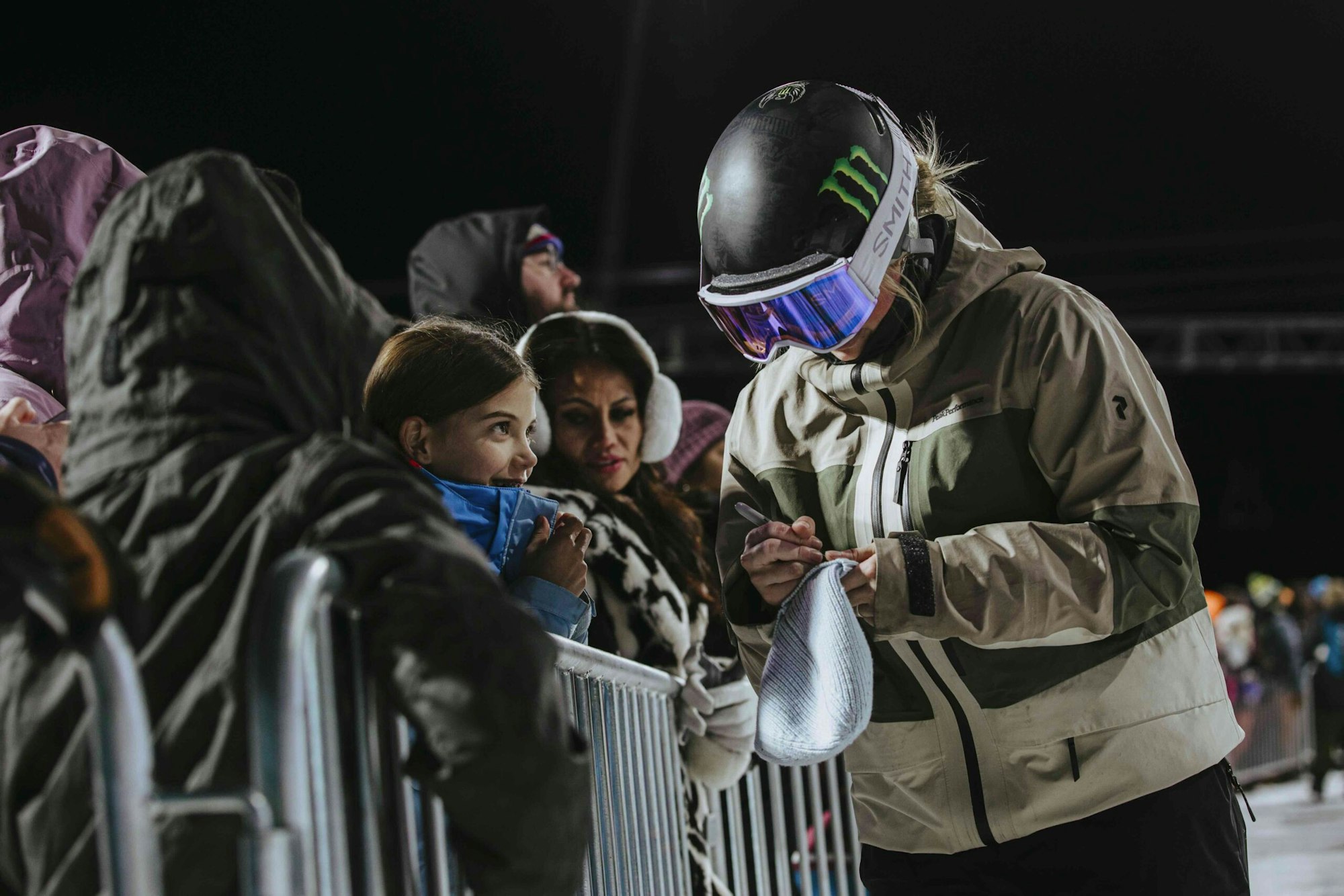
It isn’t east inspiring the next generation, but someone has to do it | Photo: Matt Roebke
Mostly excitement, that’s all I’ve heard. People probably already know, but the first [Snow League] comp happened in Aspen last winter. It was only snowboarders, and now skiers get to join starting this December. Like you said, it’s really different than anything before. I’m excited to experience this new format. It allows for a lot of runs, so that will be interesting to see how skiers adapt since we’re not used to that style of competition.
And the prize purse is insane. I think it’s $1.6 million [ laughs ]. I mean, that’s by far the most money up for grabs in any competition. It’s just cool to see an event where athletes can make a lot of money gain traction. That’s not very common in our sport outside of sponsorships, so maybe this will force other events to find more prize money. It’s just cool to see a whole new opportunity. It’s very different, and I think different is good in a sport that we’re trying to grow.
Speaking of different, I want to pivot and talk about your film from last year, “Stasis.” The general consensus around the freeski world seemed to be that it was different in the best possible way. Everyone at FREESKIER thought you and Griffin [Glendinning] blew it out of the water. How did you first link up with him, and what made you want to have him on as the director on this?
Thank you! Griffin’s filmed with a few different halfpipe skiers, so I’ve known about him for a while. He did a project with my brother [Birk Irving] in 2022, and the year after that, he put out “Con Artist” with the Milk Box Girls. That project was the one that really inspired me to work with Griff. I reached out to him right after I watched it. He has a very unique approach to filmmaking, and I think the final product we made just exemplifies that.
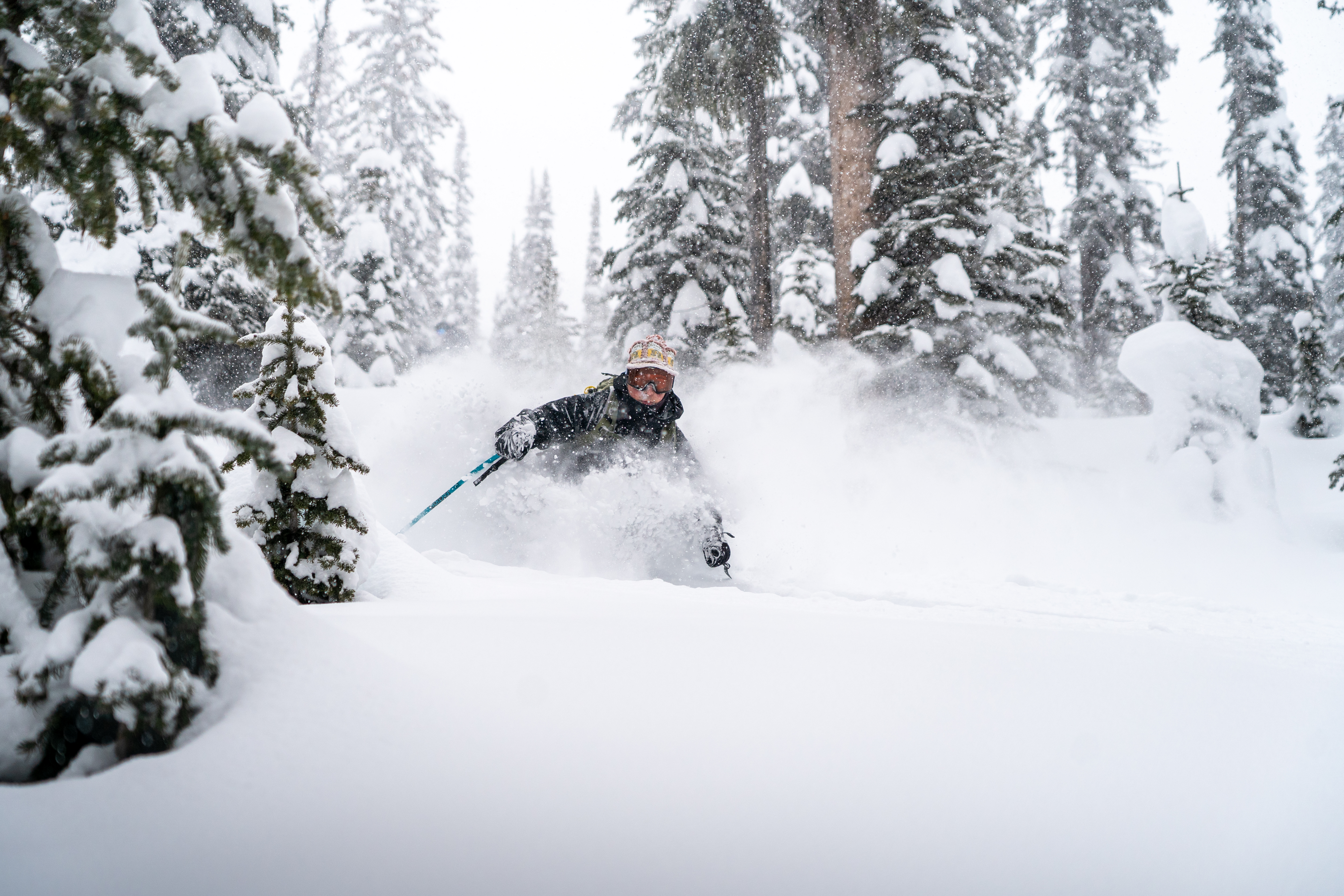
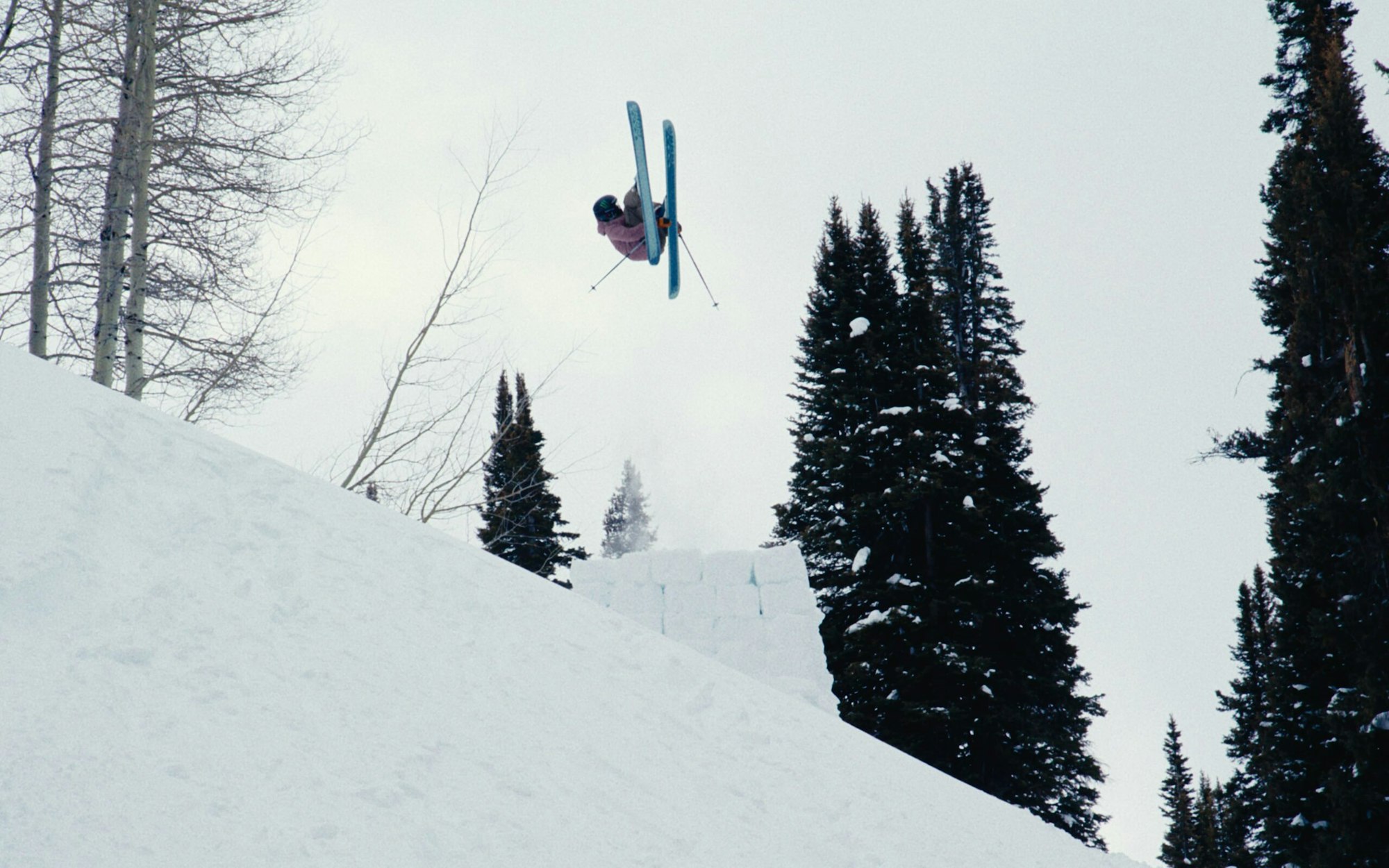
We brainstormed a bit going into last winter, but between my competition season and other filming commitments he had, we didn’t get to shoot as much as I had hoped. We filmed the pow segment in about a week, and the Mount Hood segment was shot over four days. This was my first time filming in the backcountry, so it was a big learning curve for me.
What was the biggest obstacle you guys had to overcome? Or should I say, what was the biggest surprise?
We were short on time to begin with, and it was a challenge finding snow safe enough to throw tricks into. Personally, my biggest takeaway was how time-consuming it can be to film beyond the resort. Everything takes longer, and you might not even get the shot you wanted that day, even if the snow is cooperating well. But despite all that, Griffin was able to bring our vision to life and I have so much gratitude for that.


How involved were you on the directoral side of things?
[Griffin] was making the actual changes, but we called every week and made edits. We really took our time during that part, especially when it came to the music. We went through so many songs because I think that’s arguably the most important piece at the end of the day. We worked together to bring it to life. There was a great mutual respect, so we were both free to give input. He’s easily one of the most creative filmmakers in skiing and I hope I can work with him again soon.
What were some of the big inspirations for you during that undertaking?
We poured over hundreds of movies before the winter because he wanted to gauge my style, so there are too many to name honestly. Looking back over my brother’s projects were very inspiring, but I’d say that [Griffin’s] film with the Milk Box Girls probably had the biggest impact on me. It was so out-there, and I wanted to replicate that same style, but with our twist on it and make something new. Musically, we settled on “Try a Little Tenderness” by Otis [Redding] largely because of MAGMA’s movies. I always love how they incorporate a lot of soul and R&B music.
There’s a stark contrast between the film and contest sides of skiing, and you have a knack for both niches. Do you enjoy balancing full creative liberty with structured competition, or do you see yourself swaying to one side versus the other in the coming years?
Ever since we finished “Stasis,” I’ve wanted to set aside a full year or two and focus on a film. The freedom to be creative while shooting and editing was an incredible feeling, something I’d never really experienced in that capacity. I want to dive into it later in my ski career. For right now, though, I love competing and I still have a lot of boxes I’m looking to check off.
Halfpipe is still my main focus, and this year is going to be all about competition. But in the near future, I’m going to work on maintaining that balance between the two. I’ll have my film camera on my this winter, so that will tie me over until the next big project!
With so much on the table over the next 10 months, what are you most looking forward to?
Honestly, I’d have to say I’m most excited about spending time with some of my close friends on the team. Riley Jacobs and Hannah Faulhaber have both been out with knee injuries, and it’s been tough not having them by my side throughout the competition season. We’ve been competing together since we were little, and if we’re able to qualify [for the Olympics] and share that moment together, it would be a dream come true.