
Things I’ve Learned is a regular freeskier.com column that gives ski industry veterans the spotlight to share personal experiences and insight gained while working in the sport. We pick the brains of athletes, brand reps and executives, cinematographers, photographers, mountain guides, product gurus, local legends and more.
Andrew “Coup” Couperthwait has been working with HEAD/Tyrolia since 2009, now assuming the role of Alpine Product Manager at the company’s headquarters in Boulder, CO. Prior to the present, Coup spent time with Specialty Sports Venture and Christy Sports as an Area Manager and General Manager. Flashback even farther, and the New York-native was living in Vail, shredding pow in the mid-to-late 90s, bagging ski magazine covers and generally living the life we all dream of. Having been with HEAD/Tyrolia for six years now, Coup has seen a lot—a brand relocation from Norwalk, CT, the brand’s resurgence in the freeskiing space as well as the rise of one of the best team rosters in the game today. We caught up with the man in the latest Things I’ve Learned.
Coup says…
Vail now, versus Vail then is tough to describe. Who doesn’t think their youth wasn’t the coolest time to be young? Vail is a machine now—a well-oiled marketing machine that does a great job of delivering what they offer: Great skiing in a beautiful setting. But, I can’t help feeling that it was a bit more personal, and a little less corporate, when I was living there. From a skiing standpoint, we had it made. We had a tight group of friends that all had a one-track mind: Skiing as much pow as possible. That tight group continues to be close today.
My first adventures in the backcountry [back then] took place on 66 mm wide, 203 cm GS skis, before fat skis were mainstream. Backcountry was not trendy then. There was no Facebook, Instagram or GoPros and we weren’t complaining [about it.] The less other people knew, the better. You could sit in East Vail and mark your lines from the previous four days. The surrounding backcountry was the perfect environment to test the very changing ski designs that came along from the late 90s to the late 2000s. I love the passion for the backcountry now, but I’m glad my big ski years took place when they did.
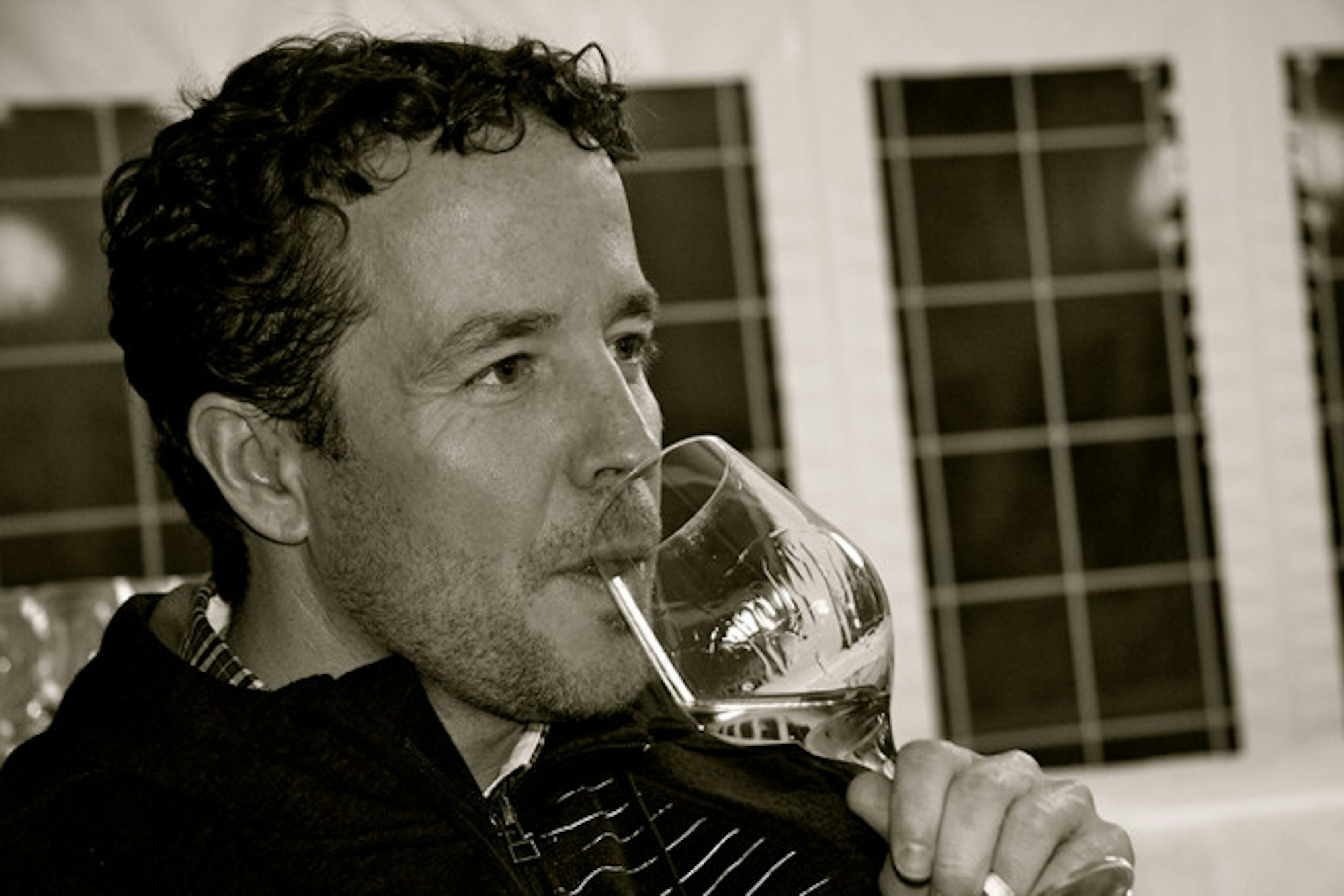
My late 90s haircut was awesome, let the fro go! My unruly ‘do persevered into the 2000s.
Working in Norwalk, CT was hard. Moving from Vail, CO to Norwalk was not easy, but it turned out to be a blessing in disguise. I think it’s healthy to be taken out of your comfort zone every once and a while; it builds character, or at least that’s what I kept telling myself when I lived in Connecticut. Working 65 miles outside of Manhattan was far outside of my comfort zone, to say the least. But, I met my future wife in Connecticut and I wouldn’t change that for the world. It also made me realize how strong my persona was linked to the mountains. There was a void in my life, and moving back to Colorado filled it.
Relocating a brand is not as easy as it sounds, even when you know it’s for all the right reasons. There are many individuals that make up the company, from sales and marketing to finance. A move across the country affects everyone; it’s a very personal change, but there’s no doubt that, in terms of the betterment of HEAD/Tyrolia, it has been a success.
Working in Boulder, CO is great. Ah… the bubble, the People’s Republic of Boulder. When I lived in Vail I didn’t get to Boulder much, but we have really enjoyed living here once we were settled in. It’s an inspiring place with a great vibe. The University keeps it feeling fresh and young. The athletic community is insane—from world class climbers to skiers to cyclists to triathletes, there is no shortage of pro athletes to keep you honest. There’s nothing more humbling than crushing it on the bike during a 10-mile climb, and then a 22-year-old female pro smokes you like you’re standing still.
Working the shop floor taught me so much. The retail floor is not an easy place to work. But, you get immediate feedback from people who love to ski and that is invaluable. It’s first-hand knowledge. The retail floor gave me the background to my job today. As a product manager, it’s given me an excellent “BS meter” in which to gauge new product proposals. Knowing the unique situations that occur on the sales floor helps me produce better product, and product that makes the salesperson’s job easier. Honestly, I’m surprised that manufacturers haven’t tapped into people with retail backgrounds more often.
Working for a large, global company feels surprisingly small. Working for HEAD has been nothing short of phenomenal. Whether I’m speaking about our management team in the United States, or my colleagues in Europe and around the globe, I feel like I’m part of a family. I have the chance to learn about skiing and how it relates to other cultures. It’s one of my favorite aspects of the job. Meeting and getting to know people who share the same passion for my sport, but experience it in different parts of the world is incredible. But, more than anything, working for a global company like HEAD has made me aware of the industry outside of the United States and how trends develop on a global scale. I appreciate the specific needs of different markets and the challenge of creating a product offering that can work for all markets. It’s not an easy feat.
The best moment of my career with HEAD is hard to nail down. There are so many fond moments and memories. The success of the company here in the U.S. is something that I’m very proud of. HEAD is one of the fastest growing ski brands in the U.S. and that’s the result of our work as a team.
Coup gives us the rundown on the Collective 105 at the 2015 Ski Test.
Ski and boot manufacturing has evolved and will continue to evolve. New materials will make products lighter and easier to use. Production will be refined and re-tooled to become more efficient. But it’s funny, we always seem to fall back on what we know works. We still build skis around the design that Howard Head pioneered in the 60s: A wood core, metal laminate construction. When you talk about high performance, this is still how 80-percent of the best skis in the world are made. Game-changing evolution like rocker only seems to come along every couple of decades. It will be interesting to see where technology will take us.
Ski boots will see more evolution, in my opinion. Boots have come a long way in the last 20 years. They will continue to evolve and become more comfortable as new materials are utilized and fitting concepts evolve. This will go a long way toward making the sport more accessible.
HEAD’s Flight Series include some of the best skis on the market. When people ski on them they understand.
The toughest thing I face on a weekly basis happens once the season gets going, [and involves] office work or time on the computer. Much of my winter is spent traveling and some of that travel is on snow. No matter where you are or what you’re doing, you always have hours of office work to do every day. No one waits for answers because you’re at the FREESKIER Test in Aspen, you have to keep up.
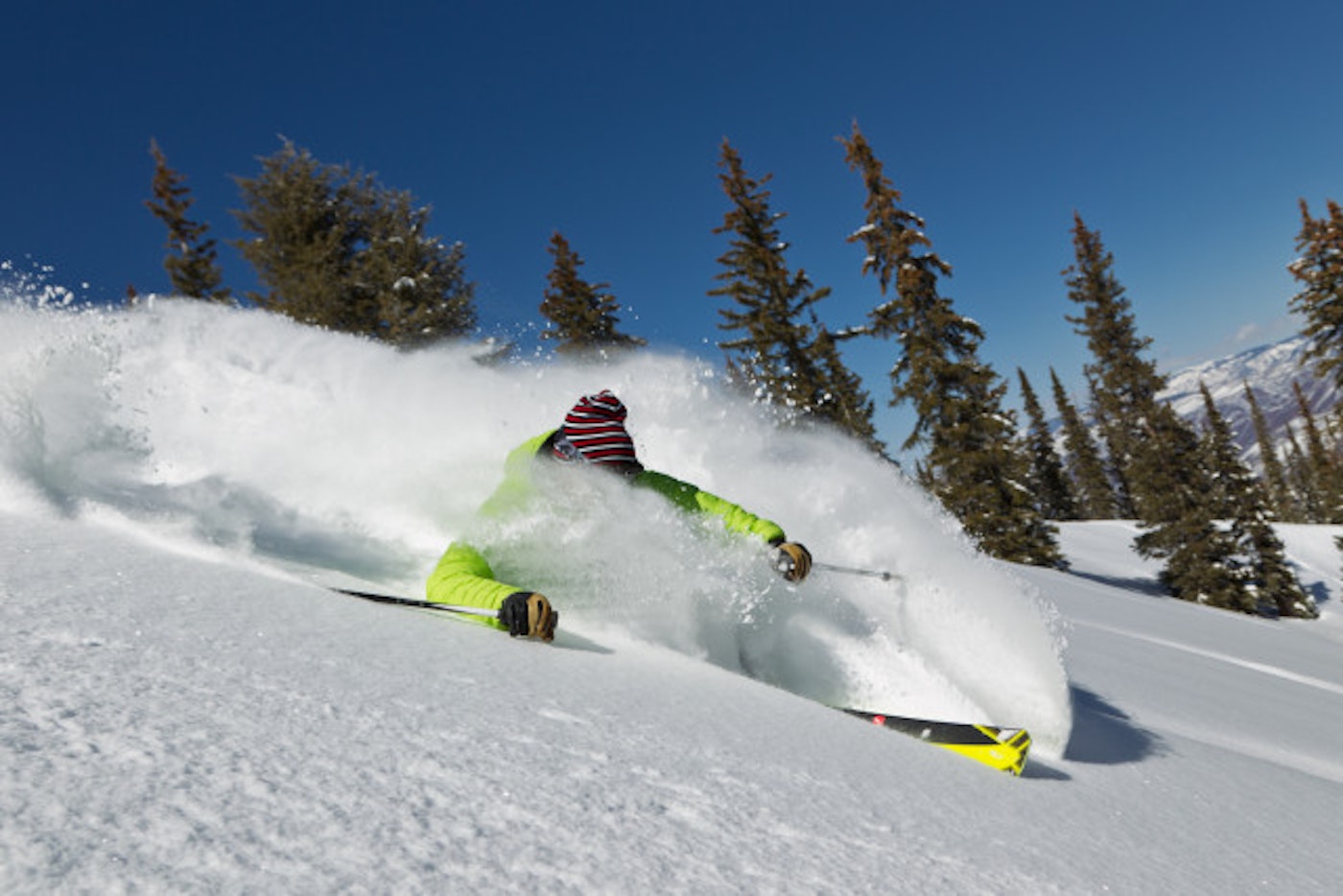
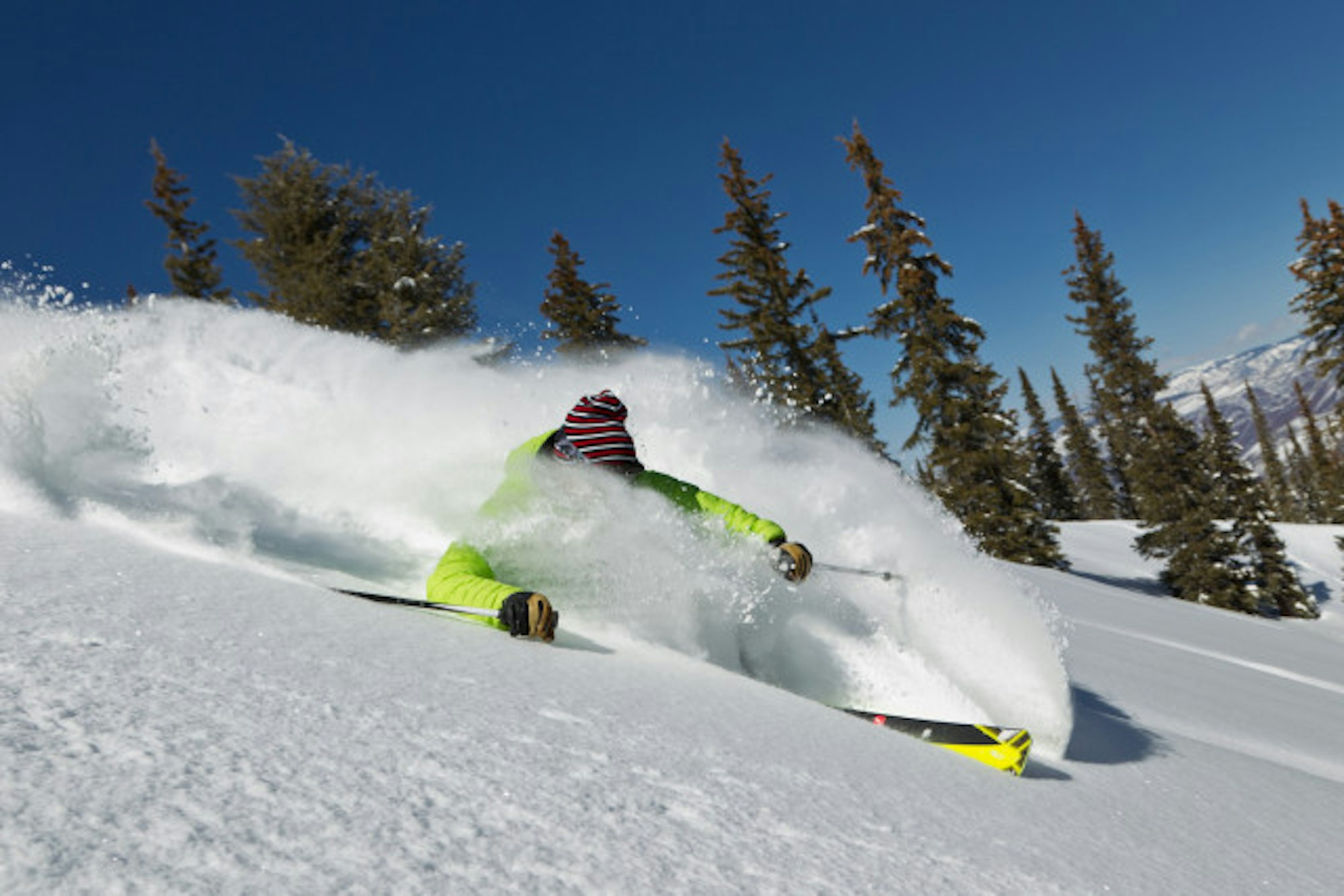
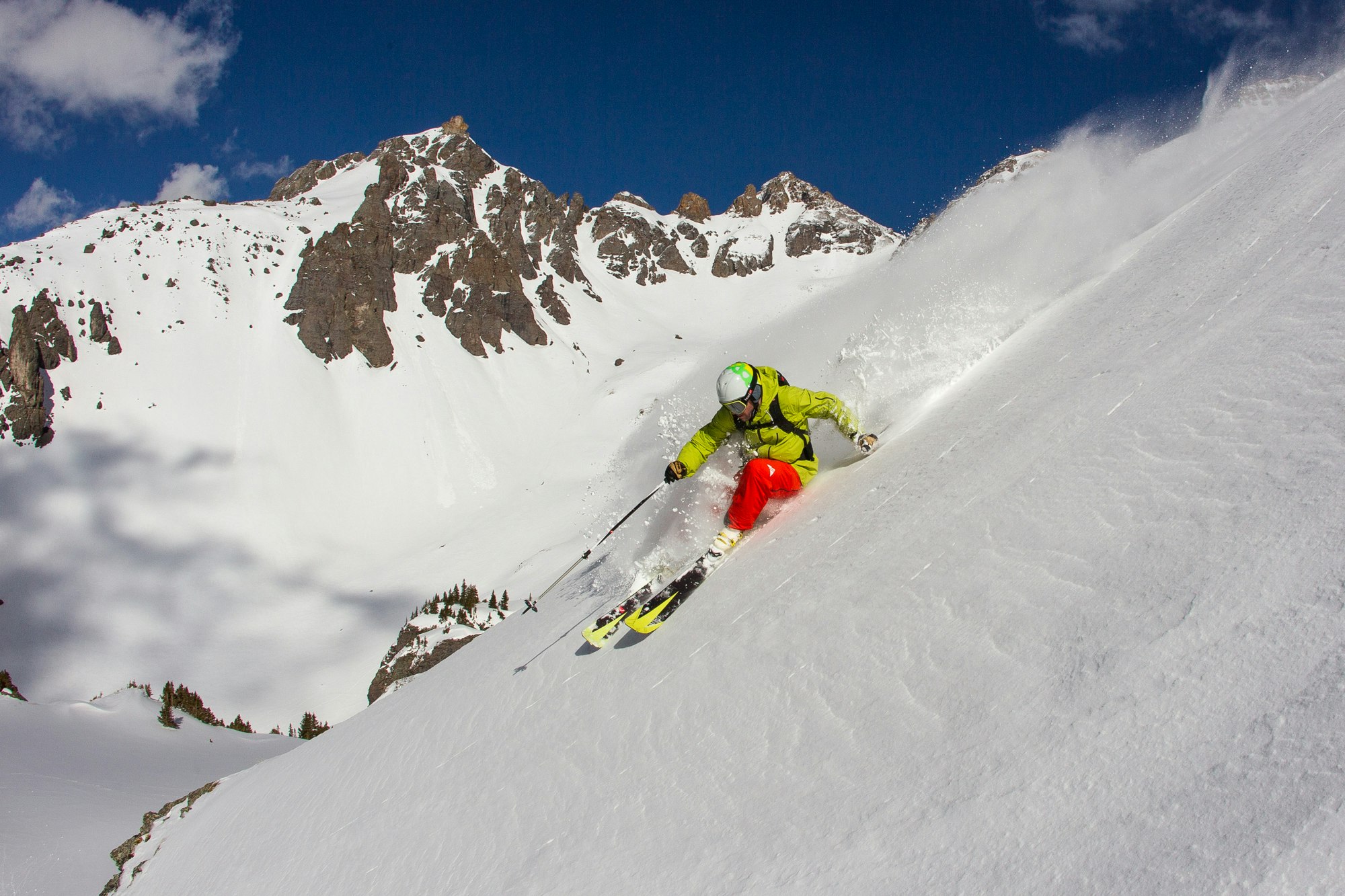
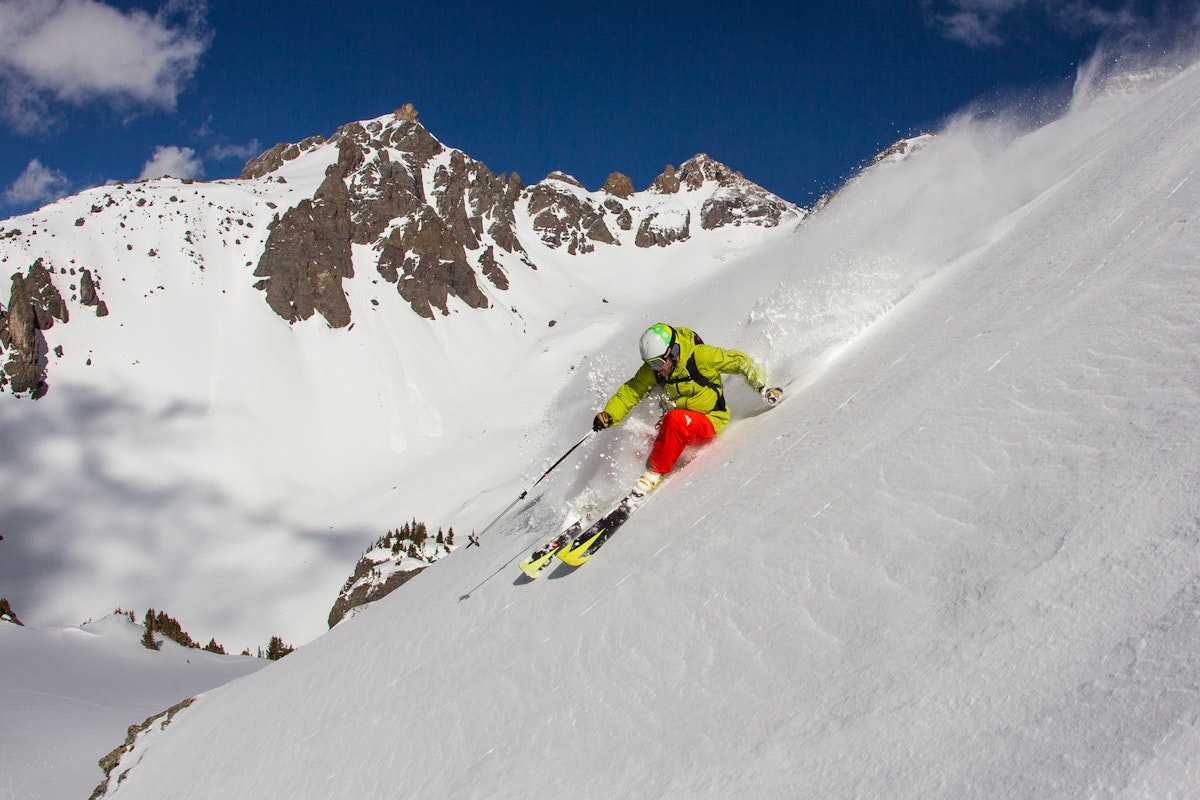
Coup enjoys a face shot at the 2015 FREESKIER Ski Test in Aspen. Photo by Matt Berkowitz
One thing we’re always juggling are the product lines. You have to stay grounded, while multi-tasking at the same time. We have 2015-16 product hitting the store now and it’s my job to educate the shop personnel on that. At the same time, we’re introducing the 2016-17 line to retailers. And at the same time, we are working on the 2017-18 product line. We must maintain a presence in what’s happening now, while simultaneously looking to the future to identify trends.
One thing people probably never think about is the question “who are we developing products for?” Every company’s product line is expanding to astronomical proportions and the ski sales have shrunk. We sold more skis when every manufacturer had a line of five models. As an industry we seem to take more stock in making products to heighten the experience of the top five percent of all skiers and we leave the rest floating in the breeze.
Don’t get me wrong, I know we need to make skiing sexy and exciting. And we constantly need to be pushing the technical envelope around ski product. But in an industry that has been flat for the past 10 years, we need to continue to enhance the experience of people who are new to the sport, we need to enhance the experience of families who struggle to bring a group of four or five to a ski resort on a middle-class income. I love to ski in the backcountry as much as anyone and have spent more time back there than most. But it’s not the future of our sport in relation to the masses. We need to make skiing more accessible, not less.
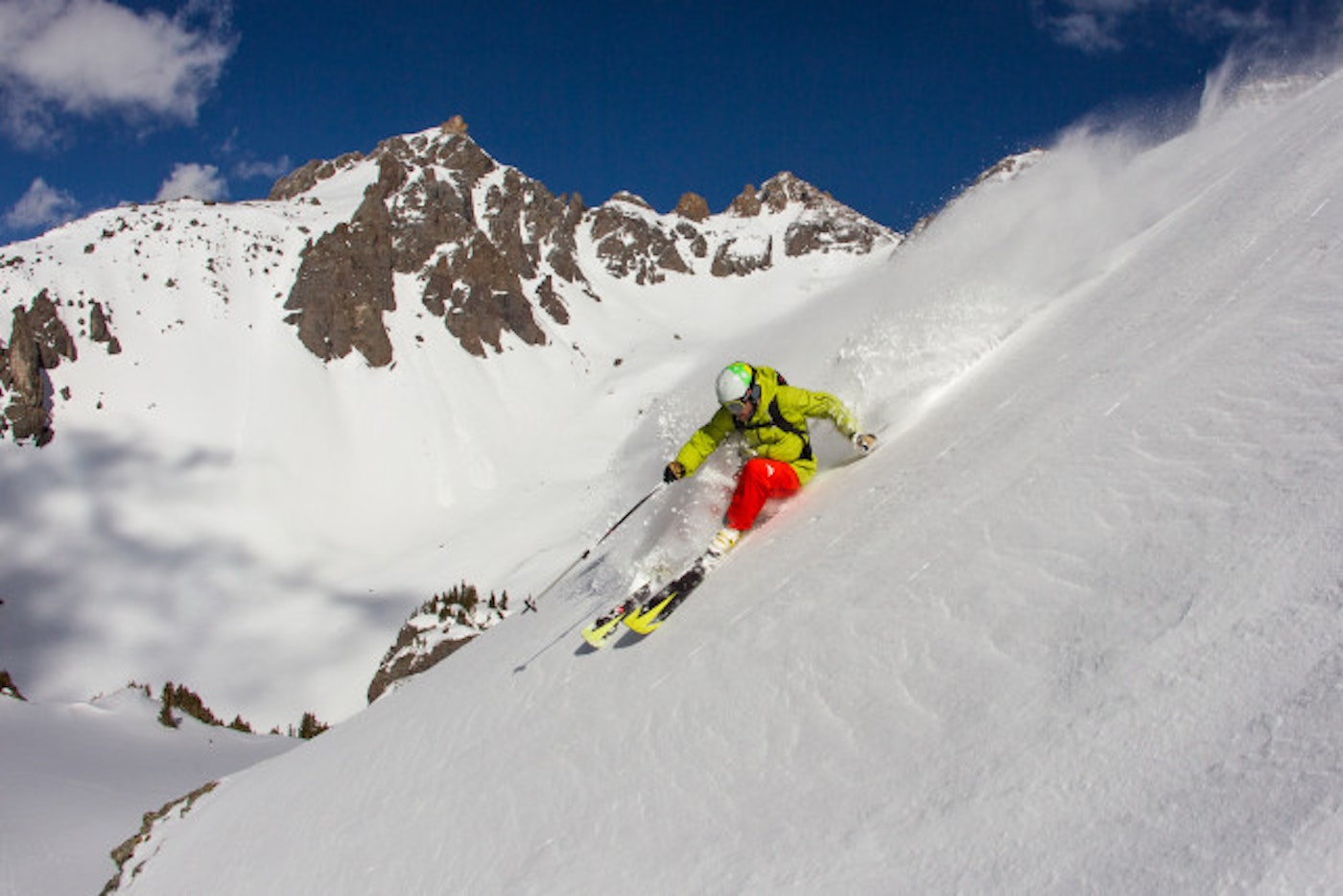
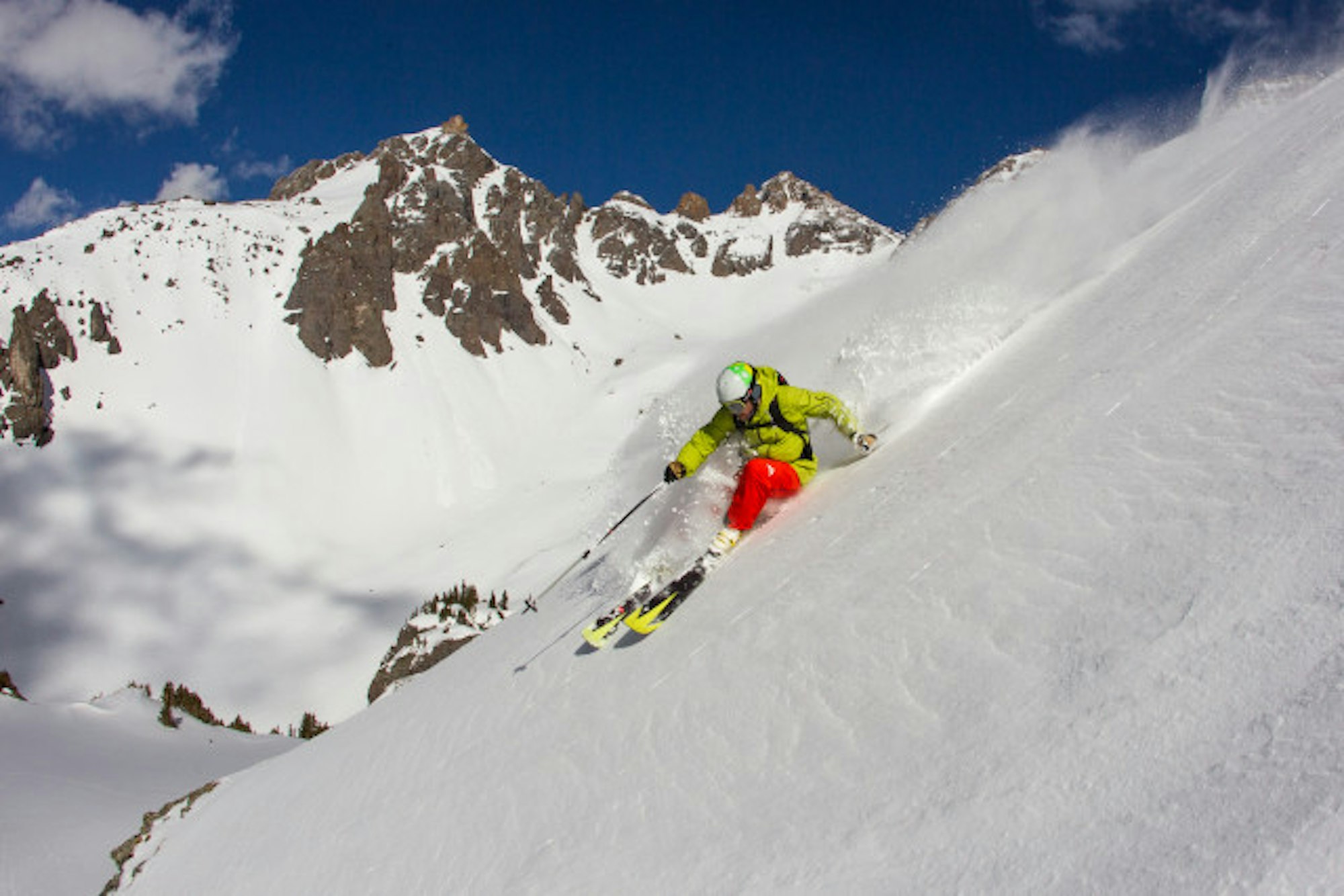
The most rewarding part of working with athletes is feeling their passion and being around their creativity. They keep you honest and true to the core of the sport. They are all unique and I’m fortunate to get to work with many different types of athletes in skiing, from the World Cup to big-mountain to park. They all bring unique outlooks and creativity, but they all share a passion for going downhill on skis. I will always dig that.
The most frustrating thing about working with athletes is that sometimes their sense of reality is a bit skewed. But I love them for that!
The ski industry alumni of St. Lawrence University is pretty cool. To look at familiar faces that I grew up with at SLU and see them as colleagues in such a small industry shows how much these individuals cared about and continue to care about the sport.
Having a history degree helps in everything. You can’t plot your future without first understanding the past.
The Bandit XXX skis were revolutionary. I was doing a lot of product testing when these skis came out—my brother helped develop the line. Can you believe the first fat skis were 85 mm underfoot?! It was the first collection to identify different width skis for different purposes. If you look at the ski industry now, this is what all ski product lines are based off of.
Being a magazine cover boy offered me another avenue into the ski industry. It afforded me opportunities that would not have normally been there for a guy from upstate New York, such as free trips and product sponsorships. I wouldn’t trade those experiences for anything. Working with photographers like Jeff Cricco, and meeting and getting to know other athletes along the way such as Chris Davenport and Seth Morrison, was truly amazing. Most importantly, it gave me priority access to the goods.
Skiing in Alaska for the first time was eye-opening. That place is crazy. Don’t go into your first experience with any plan or expectations ’cause AK will chew them up and spit them out. The place is just raw from a natural standpoint. It holds the reigns on your plans. My first trip was to Haines, which is a pretty intimidating place. Weather was tough and conditions were “spicy,” as our guide and friend Will Spillo described them. You’re on edge the whole time you’re there. It’s stressful even when you’re not skiing. “What’s the weather doing? Are we going up? What are avalanche conditions like? Are we on standby? Aggressive standby? All that said, I can’t wait to go back.
Something that I’m really looking forward to is the future and what it holds for the brand and myself. I’m constantly learning, and I look forward to seeing where my knowledge will take me.
Three things I’d say to the Coup of the future would be to find what inspires you in life, find what you’re passionate about. And use that to define yourself.
Related: Oakley’s Greg Strokes on brand growth, “Session 1242” and family life