
Featured Image: Samuel Confortola | Location: Livigno, Italy
It’s been a while since the Winter Olympics have generated such a palpable buzz.
Over the last few decades, the Olympics have started to lose some luster. But, Paris reignited the torch by hosting a reimagined Summer Olympics in 2024. Not only did the event garner record viewership—84% of the potential global audience followed along—but it also set new precedents for sustainability, gender equality and the use of urban venues. Riding the coattails of that success, the 2026 Winter Games is aiming to keep the energy going, embracing lessons learned from Paris while forging its own legacy in Olympic history.

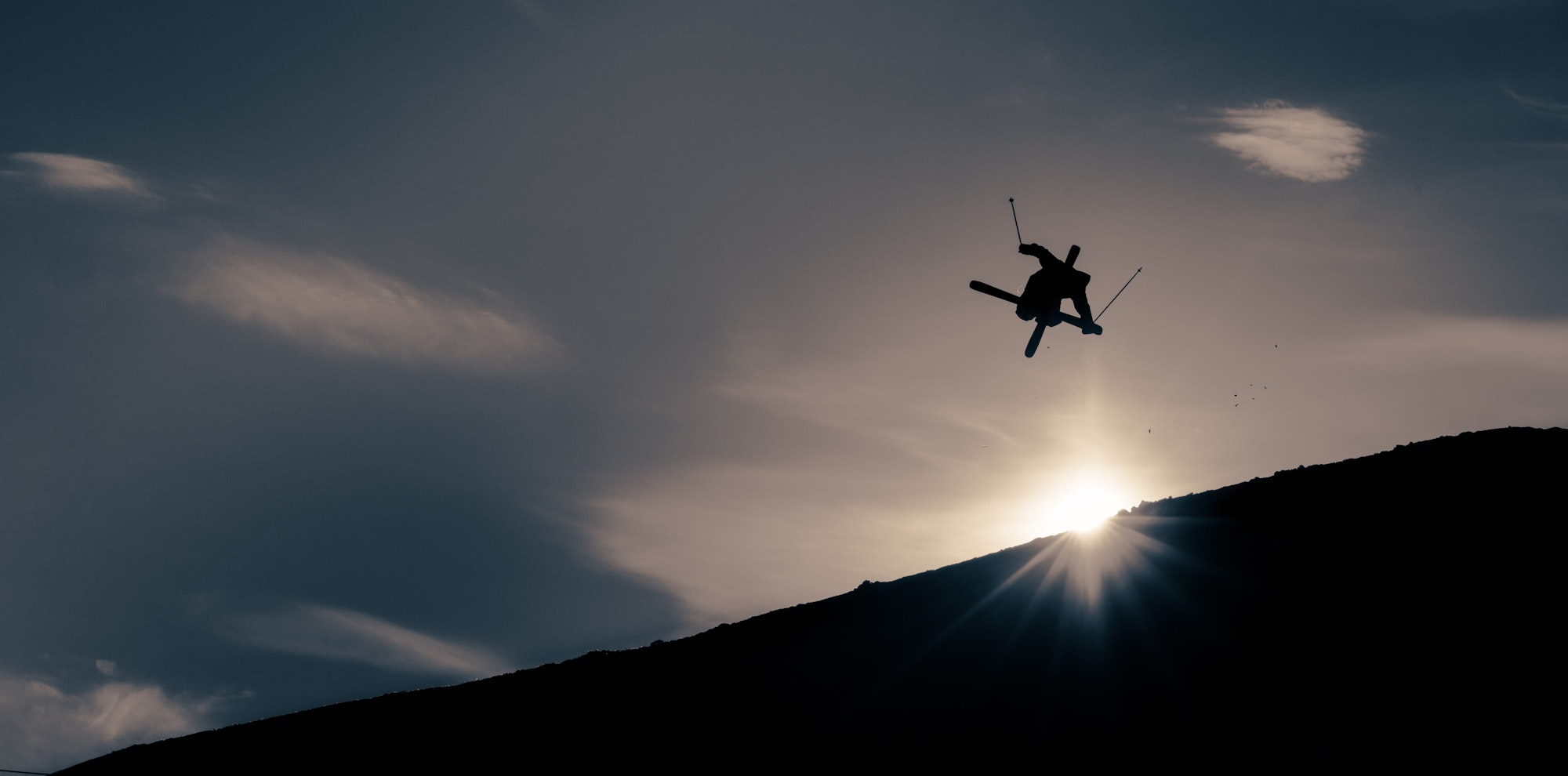
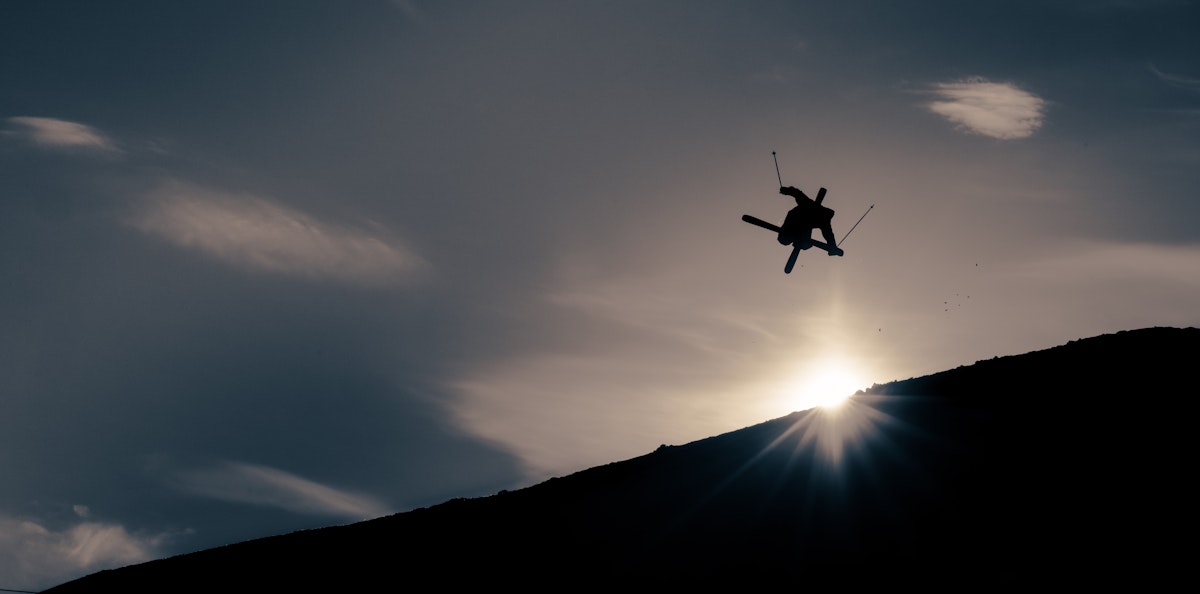
Photo: Samuel Confortola | Location: Livigno, Italy
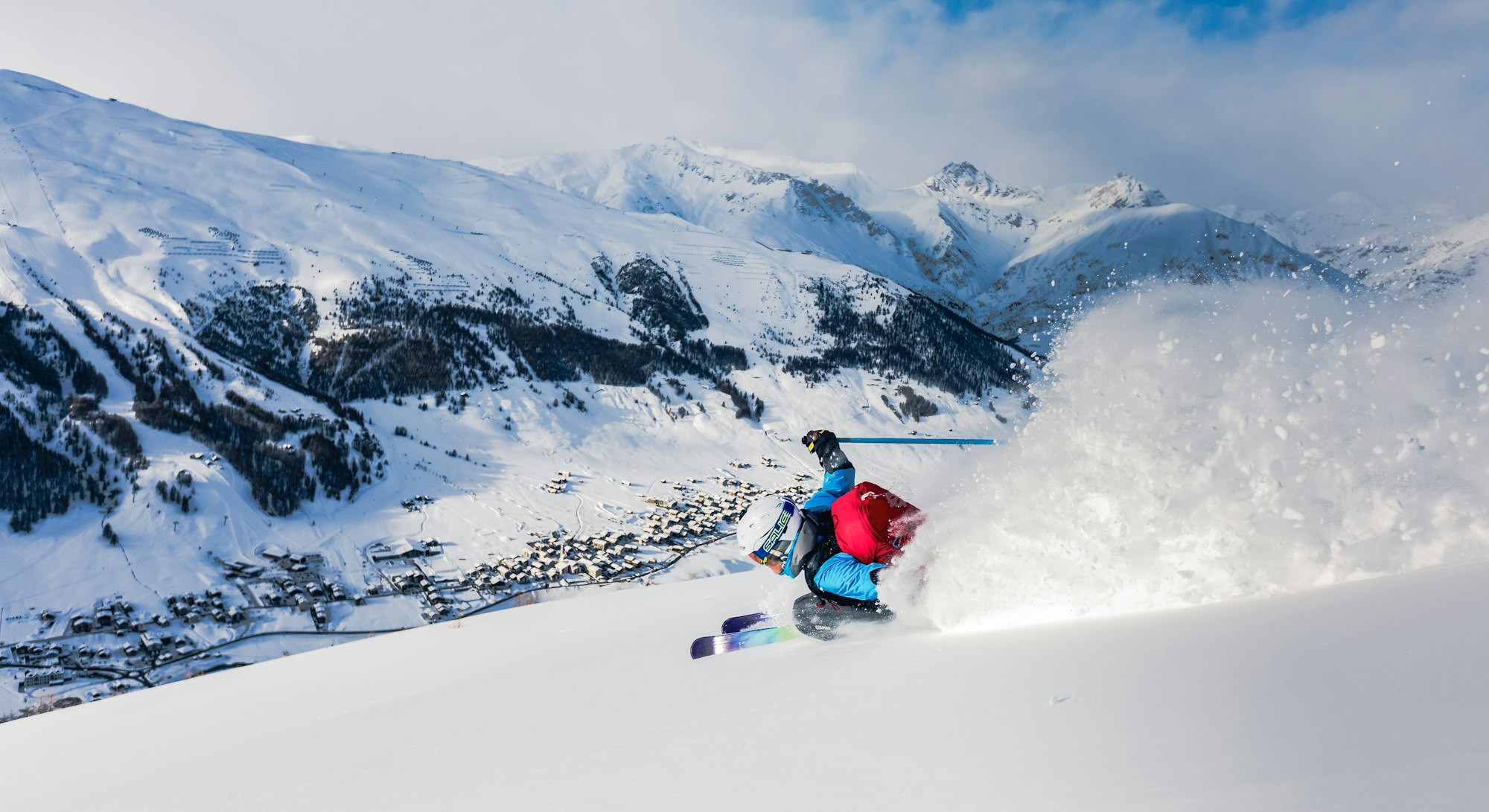
Photo: Samuel Confortola | Location: Livigno, Italy
One of the biggest reasons for the winter hype is the location. Most recently hosted in PyeongChang, Korea, in 2018 and Beijing, China, in 2008, the Winter Games are returning to one of the world’s most beloved ski destinations: Italy. This will be the fourth time Italy has been the backdrop for the Olympic Games and the third time it’s hosted the Winter Olympics. But don’t expect a repeat of 1956 (Cortina d’Ampezzo) or 2006 (Turin). This will be an Olympics of many firsts, including the first Games to have two host cities: The metropolitan city of Milan and the alpine town of Cortina, which is nearly unrecognizable 70 years after it last played host.
With venues stretching over 8,500 square miles across two regions (Lombardy and Veneto) and two provinces (Trentino and South Tyrol) this will be the most geographically expansive Winter Games in history. The mix of cultural landmarks, modern arenas, iconic cities and mountain villages will showcase Northern Italy’s incredible geographical diversity. Spreading the events across more than a half-dozen destinations, from the Antholz Valley—a biathlon mecca in South Tyrol—to the Nordic heartland of Val di Fiemme, allows Italy to reduce its environmental footprint by reusing existing sites as opposed to building new Olympic venues.
The storylines have never been more compelling, from American skier Lindsey Vonn’s remarkable ski racing comeback to American freestyle skier Nick Goepper’s impressive switch from slopestyle to halfpipe. The Games officially kick off beneath the lights of Milan’s San Siro Stadium on February 6, 2026, and wrap up February 22 with a closing ceremony at Verona’s 2,000-year-old Roman amphitheater.
Here’s our cheat sheet to navigate the action, below.

Photo: Levi Giovanni | Location: Mottolino, Italy
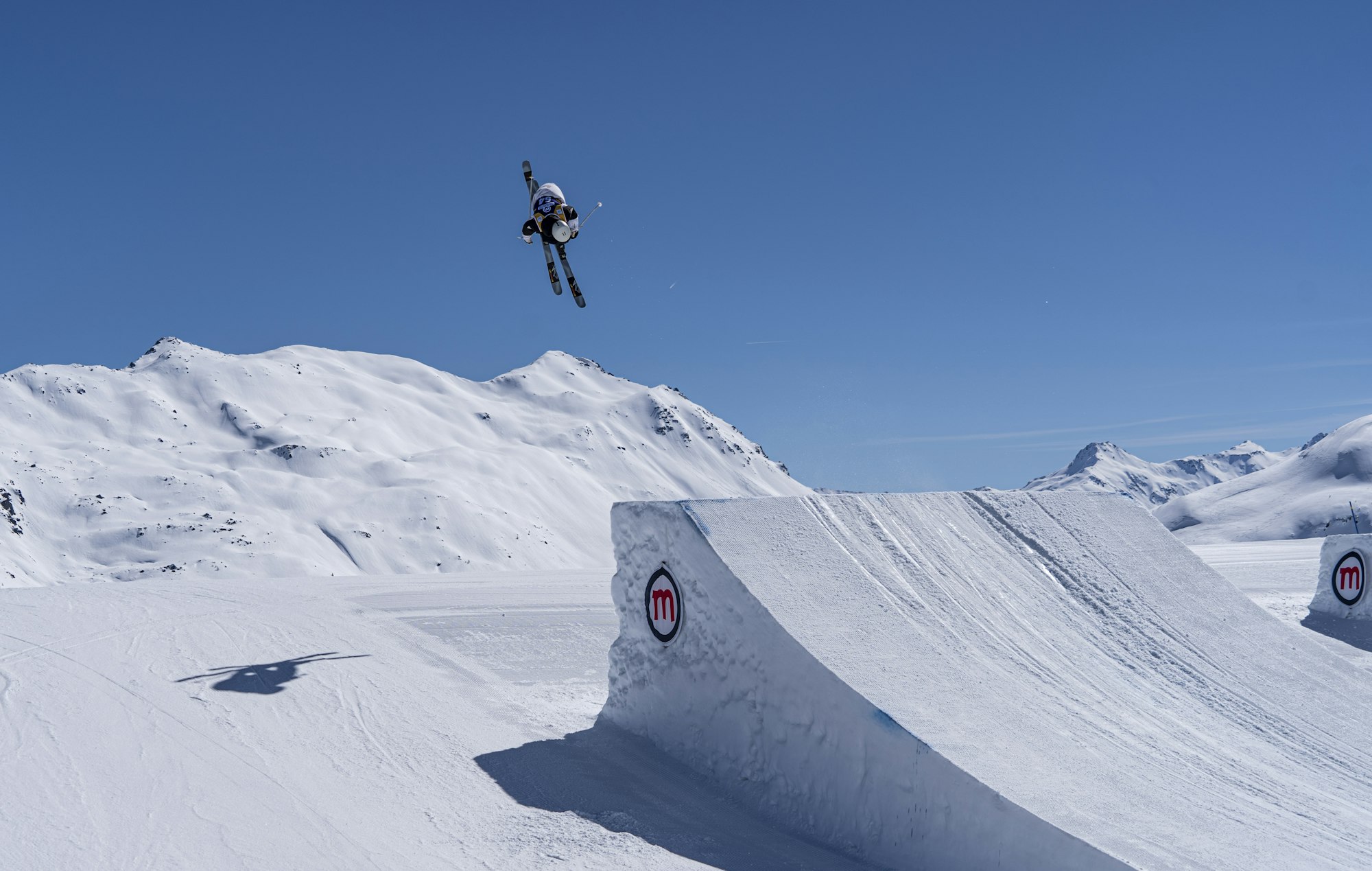
Photo: Levi Giovanni | Location: Mottolino, Italy
New & Noteworthy
SkiMo Makes its Olympic Debut
Anyone who spends time on the slopes will have noticed an increasing number of skiers slogging uphill. The growing popularity of uphill skiing has fueled the nascent sport of skimo, which is essentially up-hilling on steroids. Events will take place at the base of the men’s downhill course in Bormio. “There’s only one spot for a mixed relay team from North America and Canada and the U.S. are separated by one point going into the final qualifying even in December,” says Sarah Cookler, head of sport for USA Skimo. The results of the World Cup, being held at Solitude Mountain Resort in Utah on December 6 and 7, 2025 will determine which North American country gets to compete for Olympic glory.
Gender Equality Milestones
These Games will be the most gender-balanced ever, with 47 percent female participation. Women will finally compete in large hill ski jumping, doubles luge and dual moguls events, giving spectators a new head-to-head freestyle showdown. For the first time in Olympic history, men and women will race over the same distances in cross-country skiing.
Stoats Get the Spotlight
An adorable white tiger (PyeongChang) and an animated panda called Bing Dwen Dwen (Beijing) served as mascots for the last two Winter Games. This year, the world will be introduced to a lesser-known animal, the stoat. Primary and secondary students across Italy submitted some 1,600 entries for the mascots. A group of school kids in Calabria dreamt up the winning entry: Two sibling stoats, or European ermine, an alpine animal that resembles a weasel. Their names, Tina and Milo, are the diminutives of the two host cities, Cortina and Milano.

Photo: Samuel Confortola | Location: Livigno, Italy
Photo: Samuel Confortola | Location: Livigno, Italy
Key Venues
Cortina d’Ampezzo
Nicknamed the Queen of the Dolomites, Cortina is surrounded by UNESCO World Heritage-listed peaks and world-class slopes. In the lead up to the Games, its charming, pedestrian-only town has been transformed with new hotels and restaurants.
Events: Women’s Alpine Ski Racing, Bobsled, Luge, Skeleton, Curling
Built for Speed: Since hosting the men’s Olympic downhill event in 1956, the Olympia delle Tofane has become a regular stop on the Women’s Alpine World Cup Circuit. Stretching just over a mile and a half, with a vertical drop of 2,460 feet, athletes push speeds of 80 miles per hour coming down the course. With a record 12 World Cup wins on this course, Vonn is considered “the queen” of the iconic run. Will she keep her reign?
Improved for Safety: Cortina’s Eugenio Monti sliding track—named for Italy’s two-time Olympic gold bobsled champ—was famed for its cameo in the 1981 James Bond film, “For Your Eyes Only,” and for producing terrifying speeds of 90-plus miles per hour. Safety concerns over the century-old track nearly moved the 2026 sliding events 6,000 miles away to Lake Placid, N.Y. A $120 million reconstruction has brought the 5,675-foot-long track up to modern safety standards while retaining its 16 hair-pin turns.
Bormio
Located in the Lombardy region on the Swiss border, this ski area is renowned for its test-your-mettle slopes and serious vertical drop. Thankfully, athletes can soak sore muscles in the town’s historic thermal baths. Perched on the slopes of Monte Reit, just outside the town center, Bagni Vecchi di Bormeo dates to Roman times and features ancient Roman caves and pools carved into the rock and panoramic pools overlooking the valley.
Events : Men’s Alpine Ski Racing, Skimo
With High adrenaline racing and Bormio’s legendary Stelvio run as its stage, experts are predicting that this could be the best Olympic downhill event in a half-century. Nicknamed the Stairway to Speed, it’s one of the toughest, most technical downhill courses on the planet.
Stelvio by the Numbers —
Screaming speeds: The start drops at a 63-degree angle that can skyrocket racers from zero to 60 miles per hour in under three seconds, that’s Formula 1 fast.
More vert: From top to bottom, the Stelvio drops 3,356.3 vertical feet—over 500 feet more than the average Olympic men's downhill in the last half-century.
An extra stretch: The Stelvio is two-tenths of a mile longer than the Olympic men’s downhill courses of the last 50 years, which have averaged 1.93 miles long.
Bumps and jumps: Racing on Stelvio is comparable to an icy bull ride. Skiers’ legs take a beating, particularly on the San Pietro jump, where the course drops away at 50 degrees.

Photo: Samuel Confortola | Location: Livigno, Italy
Photo: Samuel Confortola | Location: Livigno, Italy
Livigno
Perched at 5,950 feet above sea level, this remote ski town in the Lombardy region is nicknamed “Little Tibet.” Its high-altitude snowparks have long served as the training ground for the planet’s top athletes, including Nick Goepper, Billy Morgan and Seppe Smits. And its party scene is just as rowdy as its terrain.
Events: Freestyle Skiing, Snowboarding
The Park Scene: When it comes to park riding, few places in Europe compare to Livigno. The resort’s four parks were created with progression in mind. Snowpark Amerikan, for example, caters to beginners with over 15 basic jumps, rails and boxes. Snowpark20 is a step up, with 20 features. The Beach, a funky, tropical aesthetic is filled with palm trees, surfboards and other themed obstacles. But Mottolino Snowpark is king when it comes to earning your freestyle chops. Recognized as one of the best parks on the continent, it has hosted the European Cup in slopestyle, as well international events such as the FIS Freestyle Junior World Championships. This winter, it will serve as the stage for the Olympic freestyle ski events. What’s the draw? The park features over 60 features over a half mile. The park’s pro line, for example, has two jumps in a row—62 and 72 feet, respectively—and a final cannon rail. This is where the planet’s top talents come to throw down.
The Après Scene: The slopes of Livigno end in the village, so you can ski straight from the party back home.
Stalet
Set at the base of the Carosello 3000 cable car beneath a huge circus tent, this après institution is known for its crazy costumes, tabletop dancing and DJ sets that kick off in the early afternoon and last way past sunset.
Camanel di Planon
Perched on the Mottolino slopes, this old-school mountain hut has a panoramic terrace where you can fuel up on delicious pastas while watching the daily 1 PM music-and-dance show performed by resident artists and musicians.
Kosmos
Nestled at the foot of the Mottolino slopes, skiers congregate here at day’s end to dance to DJs and live bands, and watch themed dancers perform on the outdoor stage.

Photo: Samuel Confortola | Location: Livigno, Italy
Photo: Samuel Confortola | Location: Livigno, Italy
The Other Venues
Val di Fiemme
Multiple villages make up this ski area in Trentino, all connected by intermediate terrain accessible with the Dolomiti Superski Pass.
Events : Nordic Combined, Ski Jumping
The Hub of Nordic Ski Training: Nordic skiing has been an Olympic discipline since the first Winter Games were held in Chamonix, France, in 1924 (women’s events were added in 1952). Over the years, the cross-country stadium at Lago di Tesero in Val di Fiemme has hosted the most storied athletes as well as the most prestigious events. It was originally built to host the 1991 World Championships. And it is the only venue on the Nordic ski circuit to have hosted the World Championships, World Cup, Universiade and now, the Olympics and Paralympics. The state-of-the-art facility was updated ahead of the Games with 20 waxing cabins and 20 changing rooms near the start/finish area and a newly renovated FIS laboratory dedicated to performance analysis, equipment testing and biomedical research.
The Antholz Valley
Surrounded by the majestic peaks of the Rieserferner-Ahrn Nature Park, this is considered one of the world’s most iconic biathlon venues.
Event: Biathlon
A Valley of Champions: Of all of the Winter Olympic sports, biathlon is arguably the craziest. Athletes must ski several miles, arrive at a shooting range with a heart rate soaring upwards of 180 beats per minute, then shoot at five targets within 25 to 35 seconds. Italians, it turns out, have a knack for pushing their absolute physical limits, then channeling extreme calm. The country has produced seven Olympic biathlon medals, including Dorothea Wierer’s individual bronze in Beijing. Many of its brightest stars, including Lukas Hofer who will be on the medal hunt in 2026, took their first snowy strides on the trails of the Antholz Valley. The Südtirol Arena Alto Adige is one of the sport’s most storied venues, so much so that it has its own dedicated mascot, Bumsi, a bear named after the iconic boom-boom of the rifle shots.