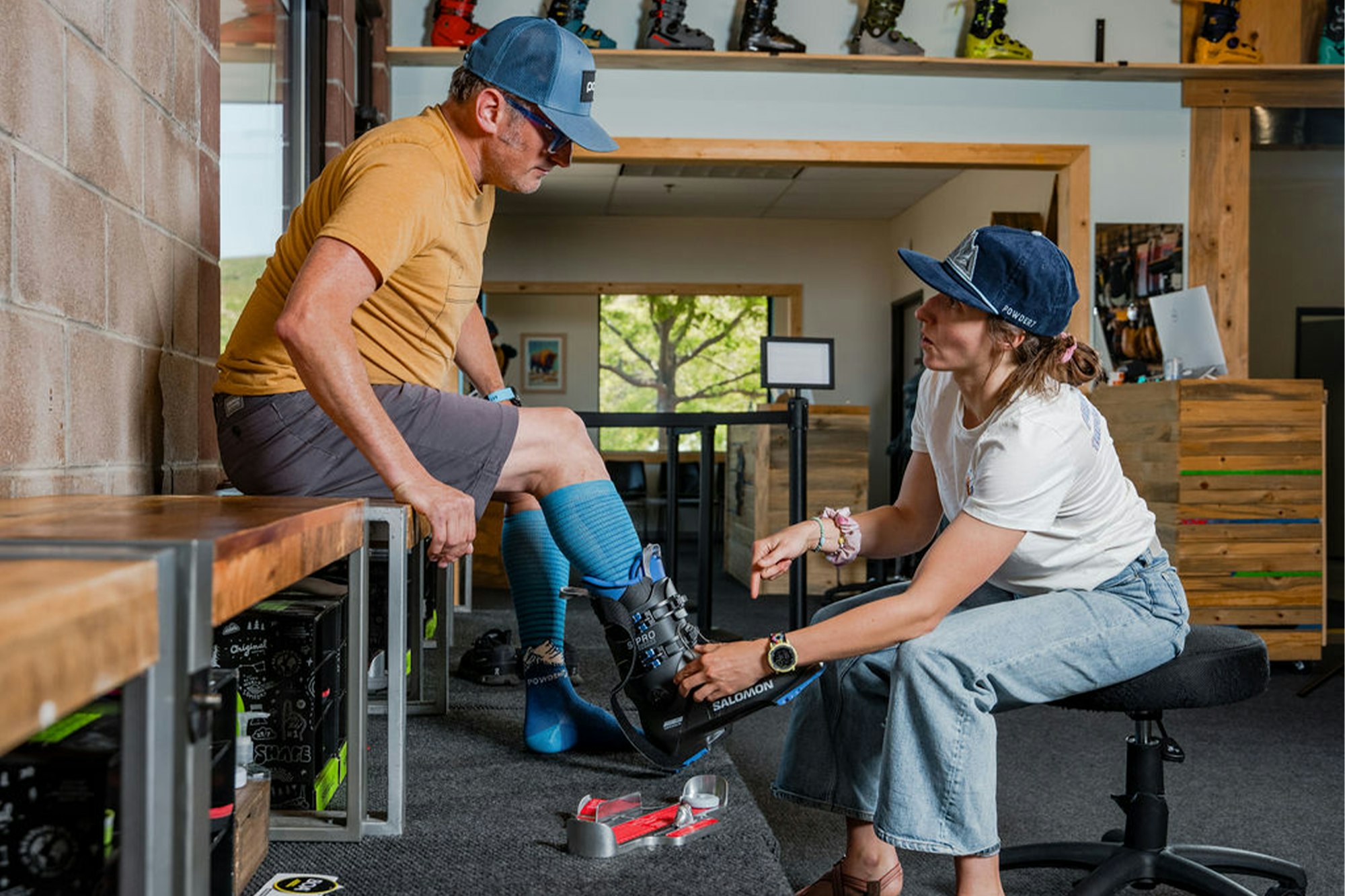
All Images: Courtesy of Powder7 Ski Shop
Sitting on the bench of a ski shop, staring at a wall of ski boots, can be overwhelming. All the colors, brand names and subtle differences in shape and construction can cause confusion, especially when you are staring down a costly purchase that will dictate your physical and mental well-being on the ski hill for the next two to five years, maybe even longer.
Buying ski boots is frustrating. There is no single correct answer, and it is one of the few pieces of sports equipment that can genuinely cause pain if done wrong. To make matters more confusing, there are several ways to approach the process. You can buy boots online, scroll Facebook Marketplace or walk into a ski shop and work with a bootfitter who helps guide you through the process.
Of the three options, I feel that bootfitting is by far the best solution to buying new boots. But bootfitting is not created equal. Some bootfitters have spent years honing their craft and take real pride in their work. Others treat it like any other retail transaction. That inconsistency is frustrating for consumers, especially given the stakes.
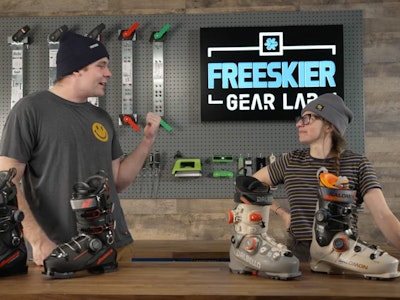
To better understand what separates a good bootfit from a great one, I sat down with Powder7’s lead bootfitter, Annabelle Cooper, and lead boot buyer, Chad Culler. Drawing on those conversations and my own 6 years of bootfitting experience, we broke down what a high-quality bootfit actually looks like from a bootfitter's perspective.
The Initial Conversation

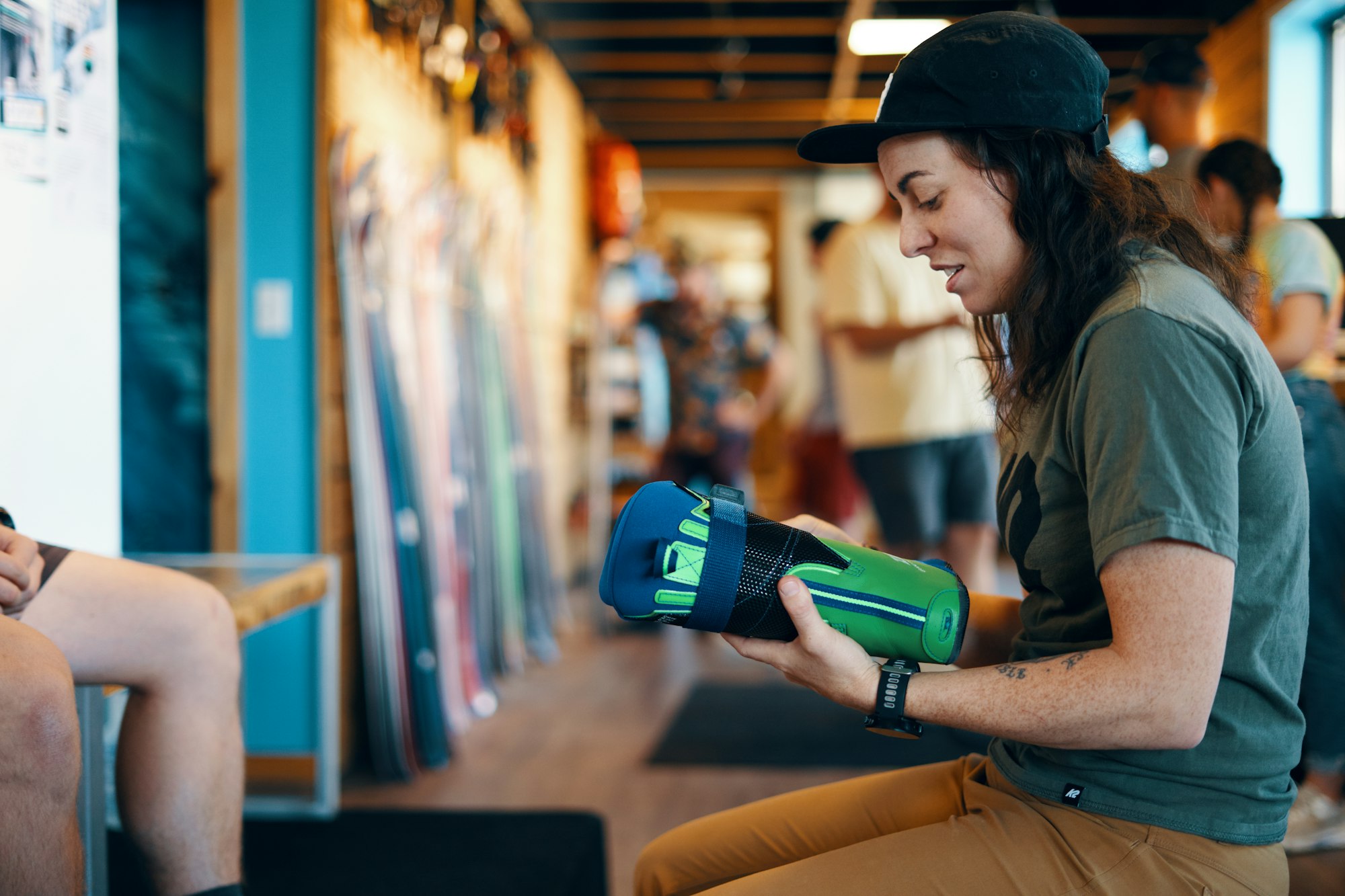
Every bootfit starts with a conversation, and it is by far the most important part of the entire process. This is where your bootfitter gathers the information that will dictate every decision that follows. While the exact questions may vary, the pillars of this conversation remain the same: your skiing experience and history, any foot or ankle injuries or concerns and your goals for the new pair of ski boots. The more honest and thorough you are here, the better your outcome will be.
During this conversation, your bootfitter will also take several measurements. First is foot length, measured in mondopoint, a ski-specific sizing system you likely have no reference for. Next is forefoot width, which typically places you in a low, mid, or high-volume category. Finally, your fitter will assess instep height and location, another key variable in overall volume and fit.
The Selection Process
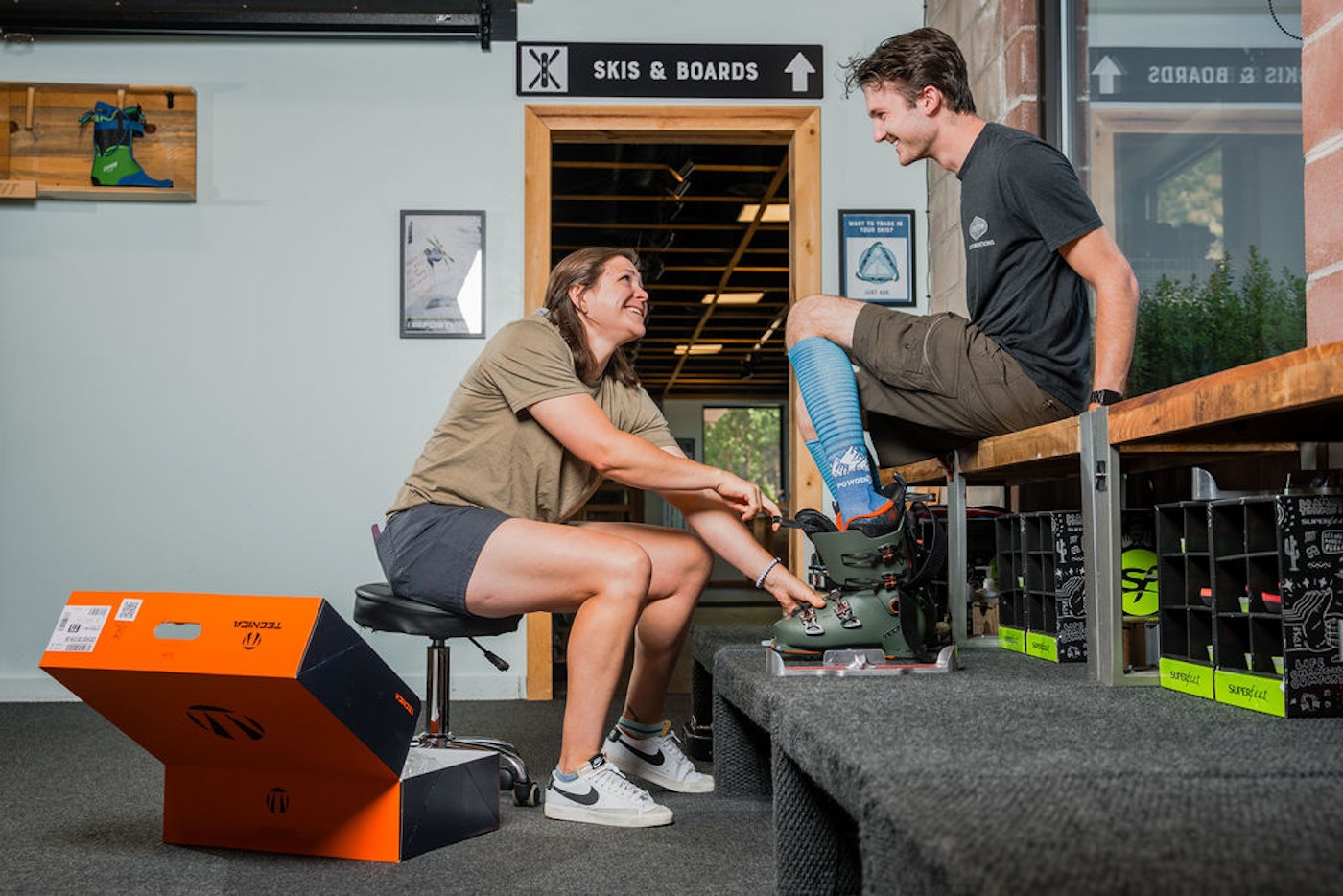
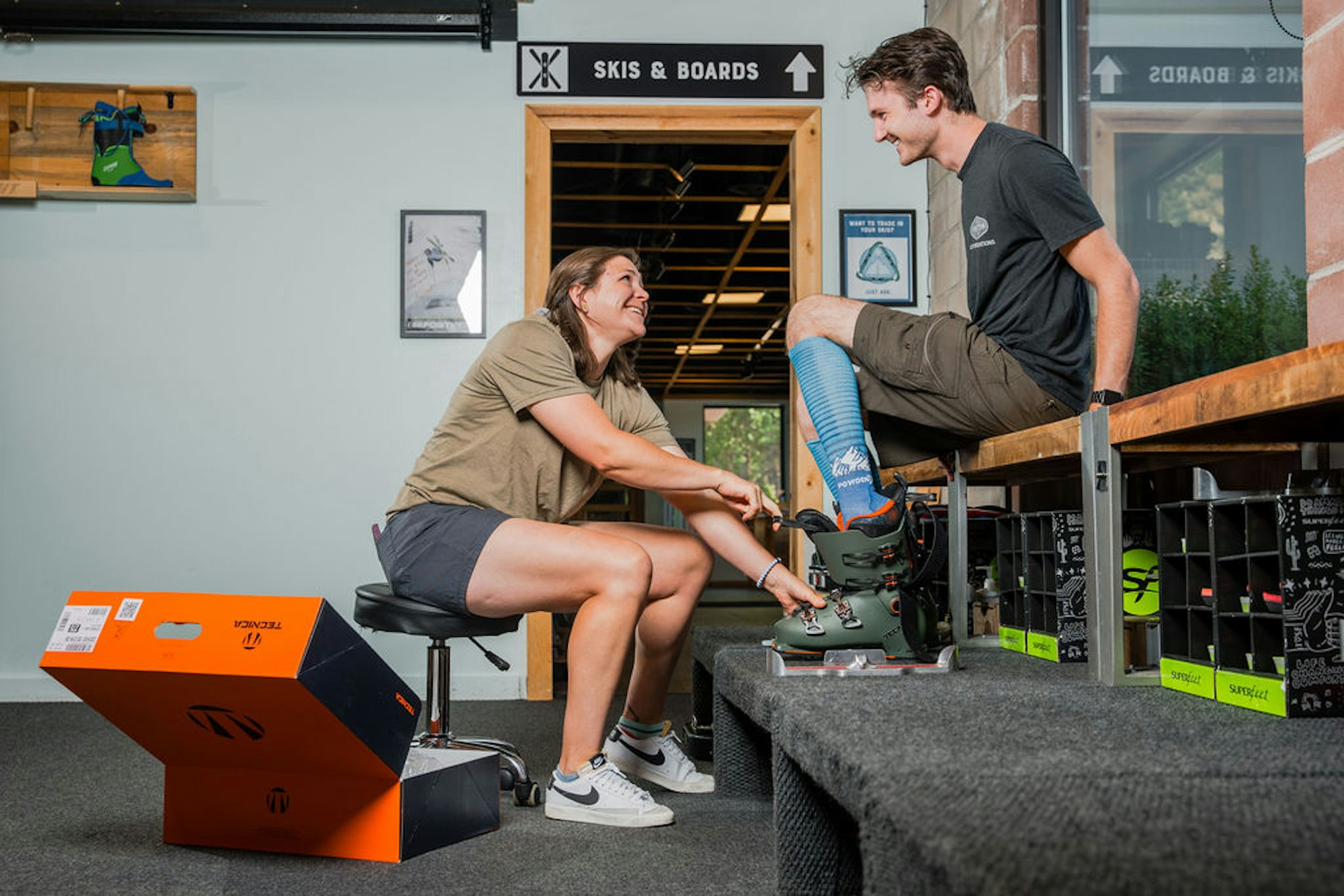
This is where the real work begins. From the outside, it might look simple: a bootfitter disappears into the back room and returns with a couple of options. In reality, choosing the right ski boot is closer to finding a needle in a haystack.
A thorough conversation allows a bootfitter to narrow hundreds of options down to a manageable group. While size, last and flex, printed on the box, are helpful starting points, they only tell part of the story. Subtle differences in instep height, toe box shape and heel pocket volume can dramatically change how a boot feels on snow.
As Chad Powers explains, “We need to know how every boot fits compared to each other. So we start by trying every boot to understand the differences.”
With that knowledge, a bootfitter can usually narrow the selection down to two or three boots. From there, you will try them on in two ways.
First is the shell fit, where the liner is removed and your foot is placed directly into the shell to assess space and alignment, once the liner has packed out or been modified. Next, you will try on the boot with the liner in place, as this is how you will wear the ski boot 100% of the time. Throughout this phase, another conversation unfolds. Your fitter will ask specific questions about pressure points, comfort and overall feel. Honesty is critical here. It is also best to arrive with rested feet, as existing soreness can mask issues and lead to the wrong decision.
At this stage, one of two things happens. Either the boot fits well right out of the box, or it does not. Given how unique every foot is, the latter is sometimes not the case.
Boot Work
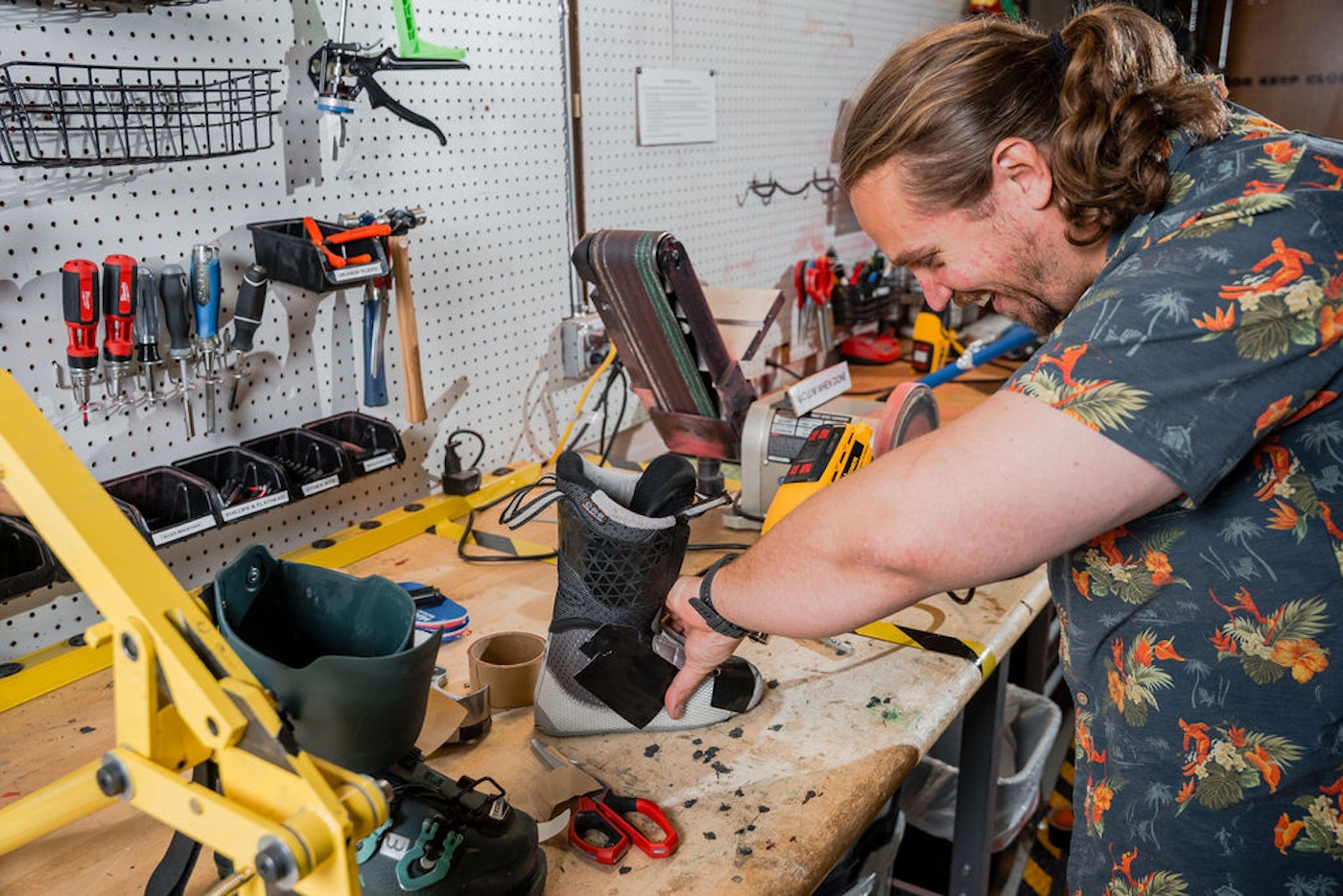
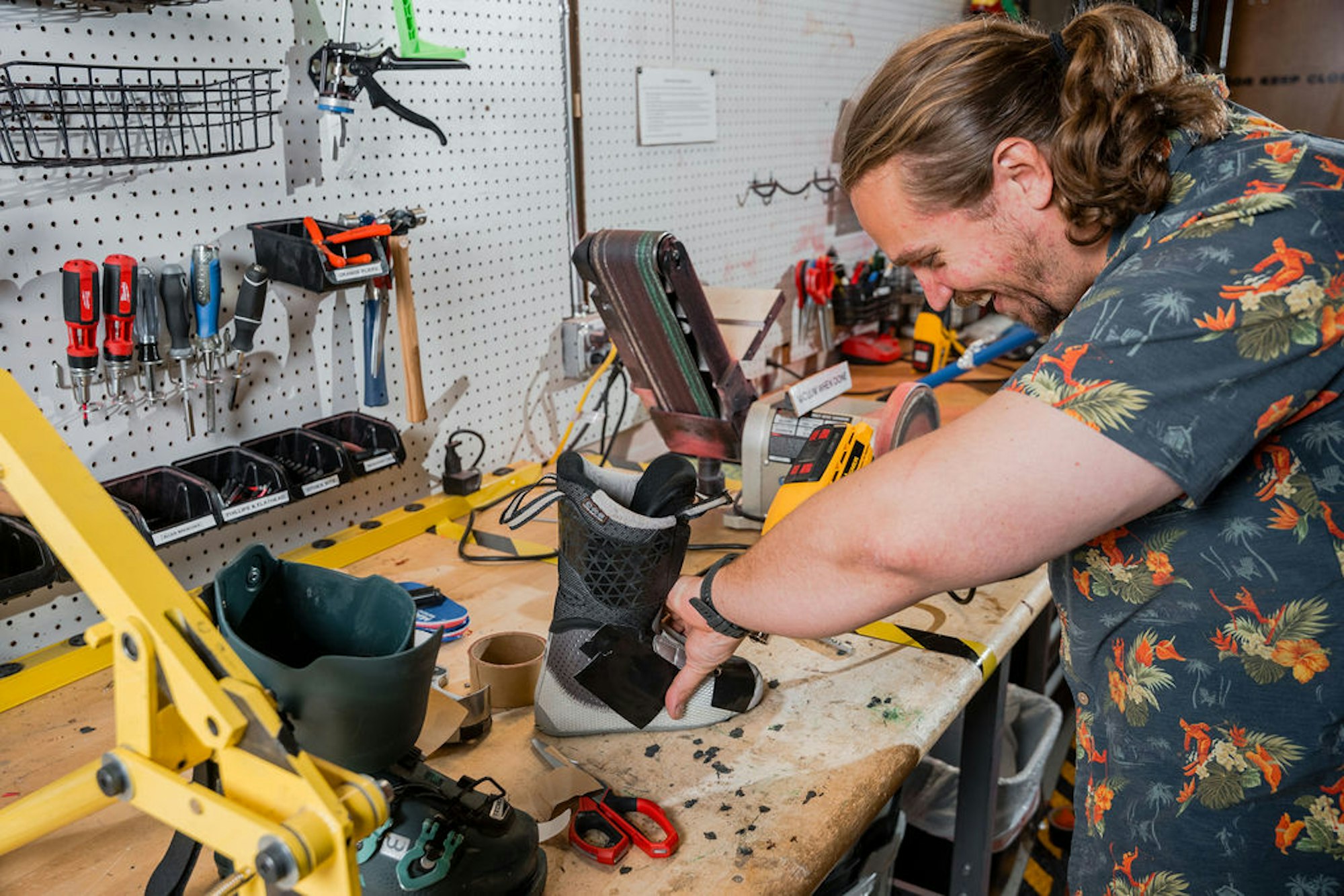
“In ski boots, millimeters are miles,” Culler says. A small punch, shell mold or minor material removal can take a boot from uncomfortable to nearly perfect.
If boot work is needed, a bootfitter will usually select the boot with the highest likelihood of success once modified. Before altering the shell, most fitters will also strongly recommend an insole. Supporting the arch can solve a surprising number of issues, including arch cramping, instep pressure and some width-related discomfort. By stabilizing the foot, an insole makes the foot smaller and more consistent inside the boot.
Some problems are easier to fix than others. Toe box pressure and minor instep issues are often straightforward, while heel and ankle fit problems are far more difficult. Experienced bootfitters prioritize the boot that presents the simplest problems, increasing the chances of a successful outcome.
Bootfitting is a trade that rarely gets the recognition it deserves. Done well, it is a blend of technical knowledge, communication and problem-solving. Many bootfitters dedicate their careers to refining this craft because they genuinely love it despite the typically poor pay.
When buying ski boots, working with a skilled bootfitter is one of the best investments you can make. The right fit does more than improve performance. It makes you want to get out on the mountain, which is the most important part.