All Images: Courtesy of Ellis
RESERVE 2026/2027 SKIS EARLY BELOW
White brush strokes coat the back corner of a closet as Kevin Schaefer, co-founder of Ellis Skis, balances on one foot and reaches to dip his brush into a container of paint. For Kevin, this was a stark contrast to the life he had built within the ski industry.
Kevin had been in and around the ski world his whole life, starting his journey as a young Boulder, Colorado local, skiing circles around Eldora and hunting tree lines at Winter Park. His love for skiing led him to pursue a Ski Industry Business degree from Colorado Mountain College in Steamboat Springs. He eventually landed a job building skis for DPS before moving on to be 4FRNT Skis’ Central Rockies sales rep. This life was all he wanted: skiing for work and immersing himself in the industry he loved from a young age.
That was until COVID flipped the world upside down and forced him to lean back into carpentry, another skill he had picked up along the way. As he crouched in that closet, covered in paint, the aspirations he’d had since he was crafting longboards as a kid came roaring back like a tidal wave. His dream was to create his own ski company. He called up his longtime friend and brand marketing master Sean O’Brien and pitched him on the idea. The two of them were on the same page and just like that, the concept for Ellis Skis was born. But there was still a very long road ahead.

Ellis Prototype Skis
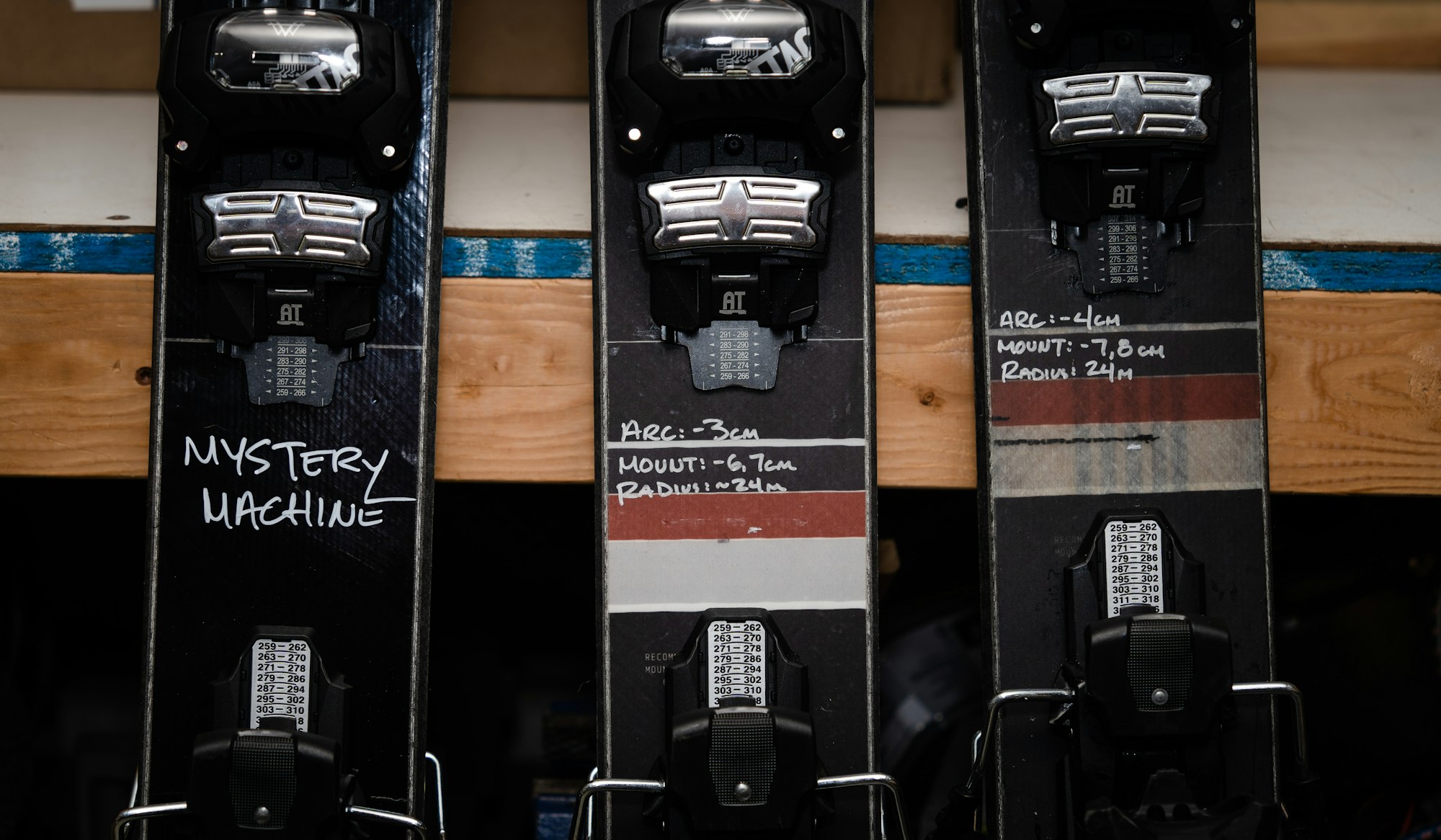
Ellis Prototype Skis
The process began with exhaustive research. Schaefer began acquiring different ski models, from brands across the industry, that he believed possessed all the qualities of a great freeride ski. He measured them meticulously, writing every last number down in his notebook. He used that to create a massive spreadsheet that compared every element, from tip to tail. When he poured over the numbers, he found exactly what he was looking for.
“When I started to compare the numbers, there were a bunch of similar measurements and trends between the skis I selected,” says Schaefer. Those similarities became the foundation for the first prototype of what is now Ellis’ best-selling model, the Kanso 106.
This was only the beginning, with the finalized Kanso taking seven iterations to get right. During the bootstrapped process, the Ellis team tinkered with rocker height, played with camber length and adjusted the core taper, isolating one variable at a time to see how it would affected the 106. This is where the brand’s big “aha” moment came.
By adding material beneath the binding, they were able to increase stability and damping underfoot while keeping the tips and tails playful, creating what Schaefer saw as the perfect balance for a freeride ski. By the end of the brand’s first season, Ellis had completed their first ski, but they weren’t satisfied just yet. The two friends would continue honing in the design, as well as developing additional widths, rather than rushing the first generation to market.
The second season was much of the same: prototypes built, tested and adjusted. Kevin spent endless hours in CAD, pouring over every measurement and eventually translating the design into additional widths—a 100, 112 and 122. Outside of CAD, Schaefer and O’Brien came together to craft something arguably just as important: Ellis’ visual identity.

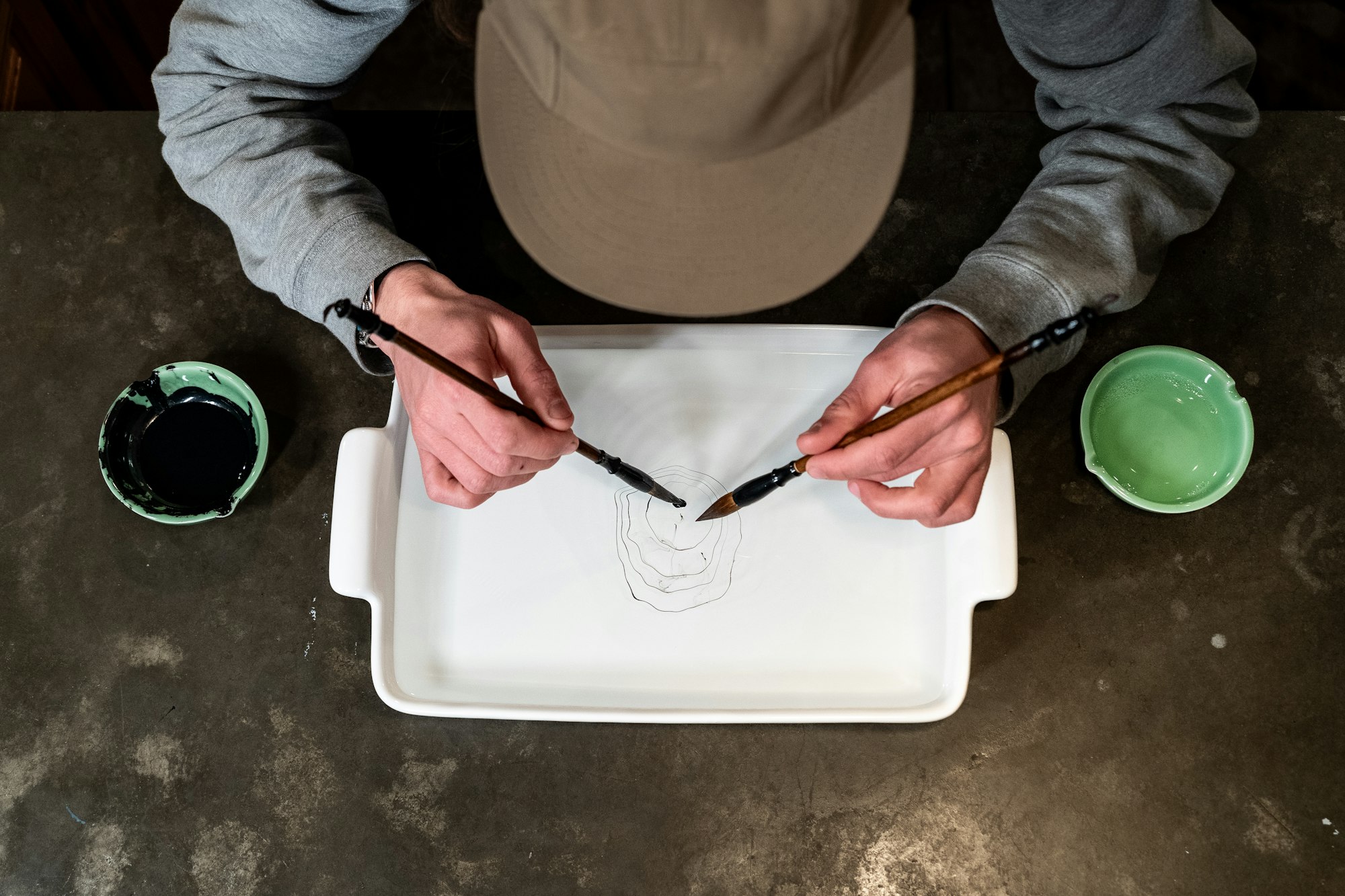
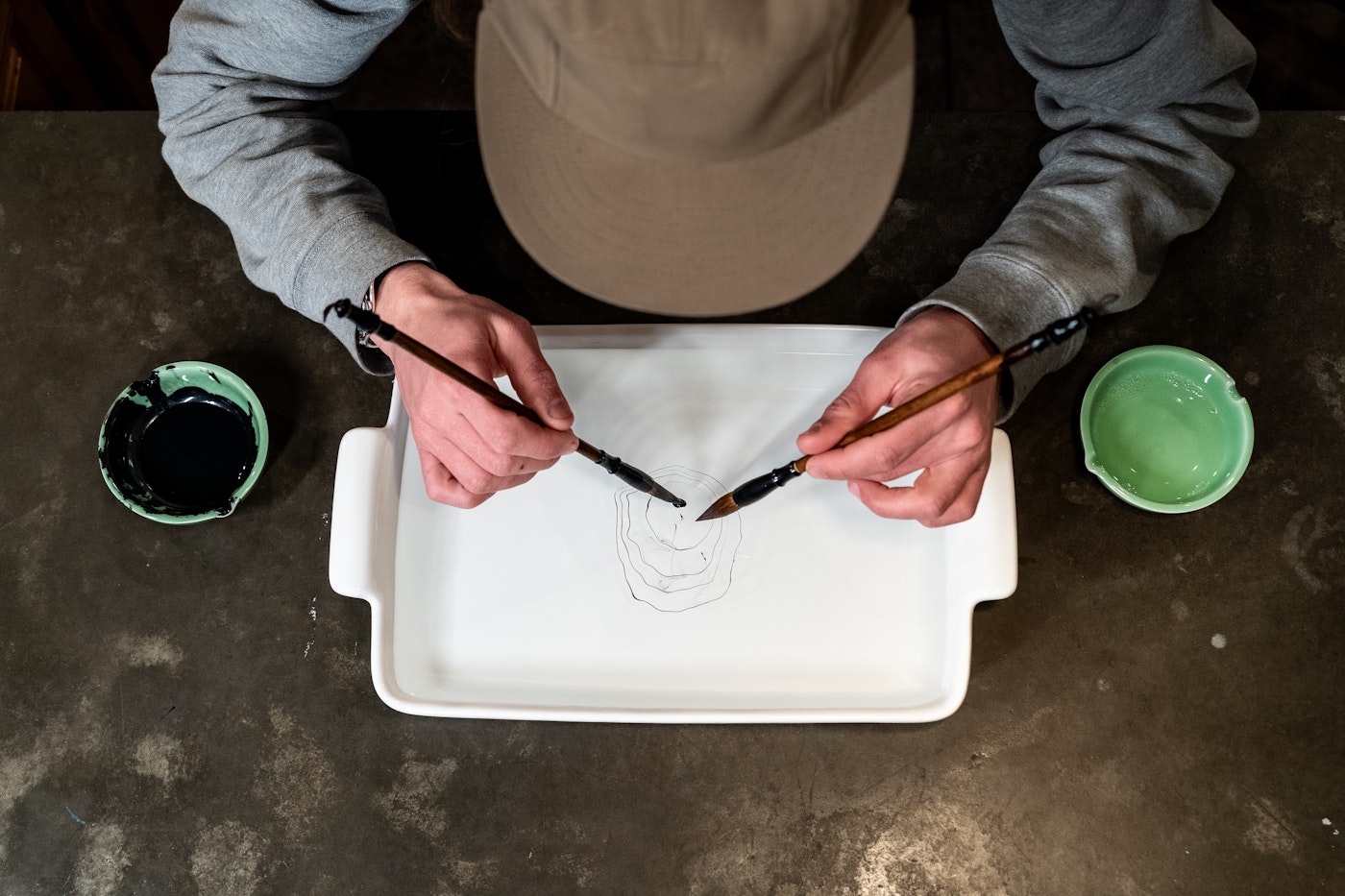
Schaefer Completing a Suminagashi
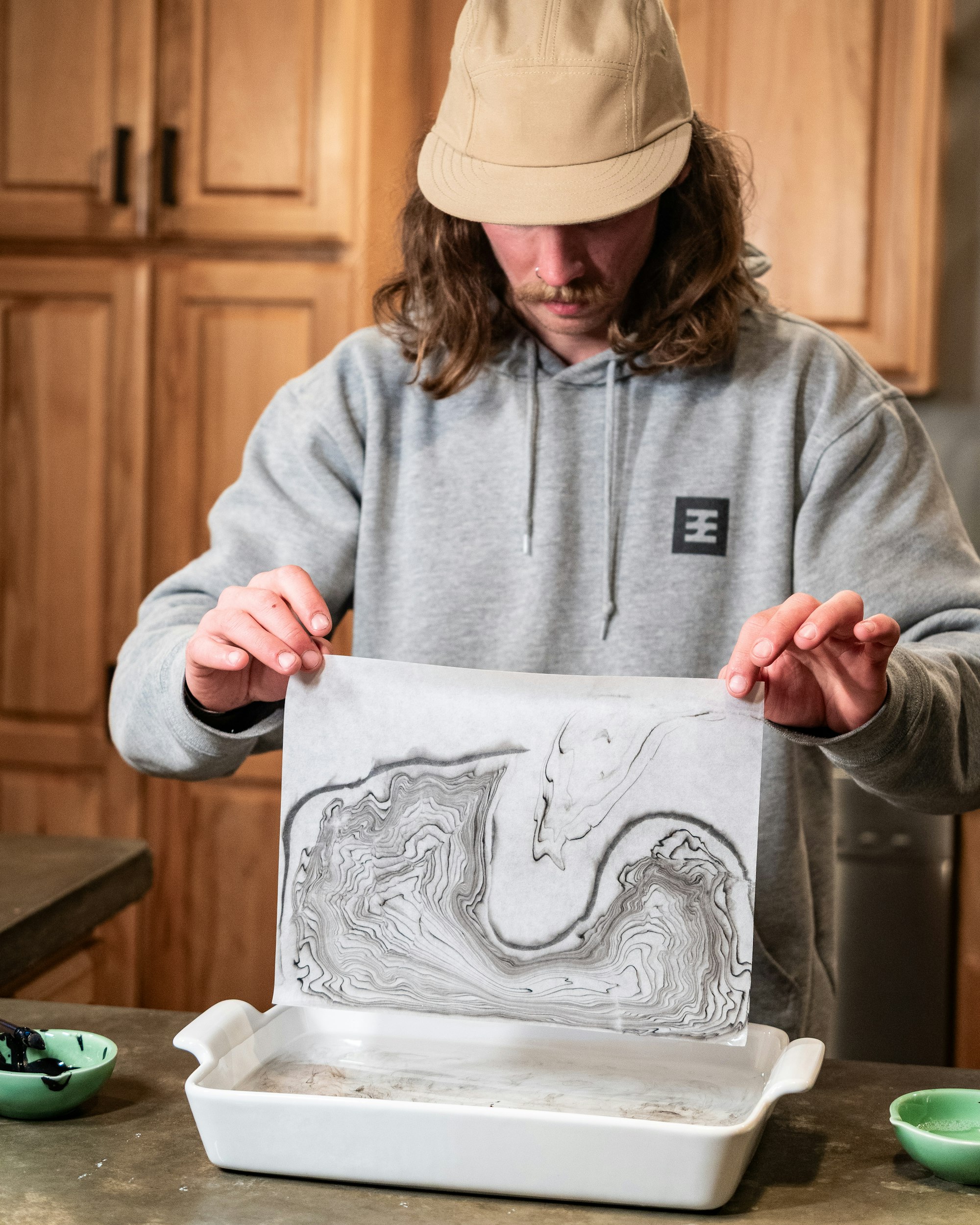
Schaefer Completing a Suminagashi
"After our numerous trips to Japan, I fell in love with a Japanese art form called suminagashi, or water marbling,” Schaefer explains. “We chose it for its balanced and free-flowing appearance and it’s honestly so fun to make.” Each suminagashi print is completely unique and is handmade by Schaefer before becoming part of the Ellis topsheet. At the culmination of the second season, the brand’s foundation was cemented, designs were ready for production and Ellis was ready for the big stage.
In year three, the partners found a US-based manufacturer to produce the first full production run and finally went to market with the 100, 112 and 122, keeping the 106 for further refinement at the beginning of the brand’s third season. This stategic effort of seeding skis to intermediate and advanced skiers provided honest feedback on the performance.
“We wanted to perfect this freeride/freestyle ski for how people actually ski,” Schaefer continues. “Not everyone is sending massive cliffs or throwing spins. The average skier spends more time on the ground and might want a slightly stiffer tail when they get thrown backseat. We’ve all been there.”

An Ellis Ski Running Through a Base Grinder
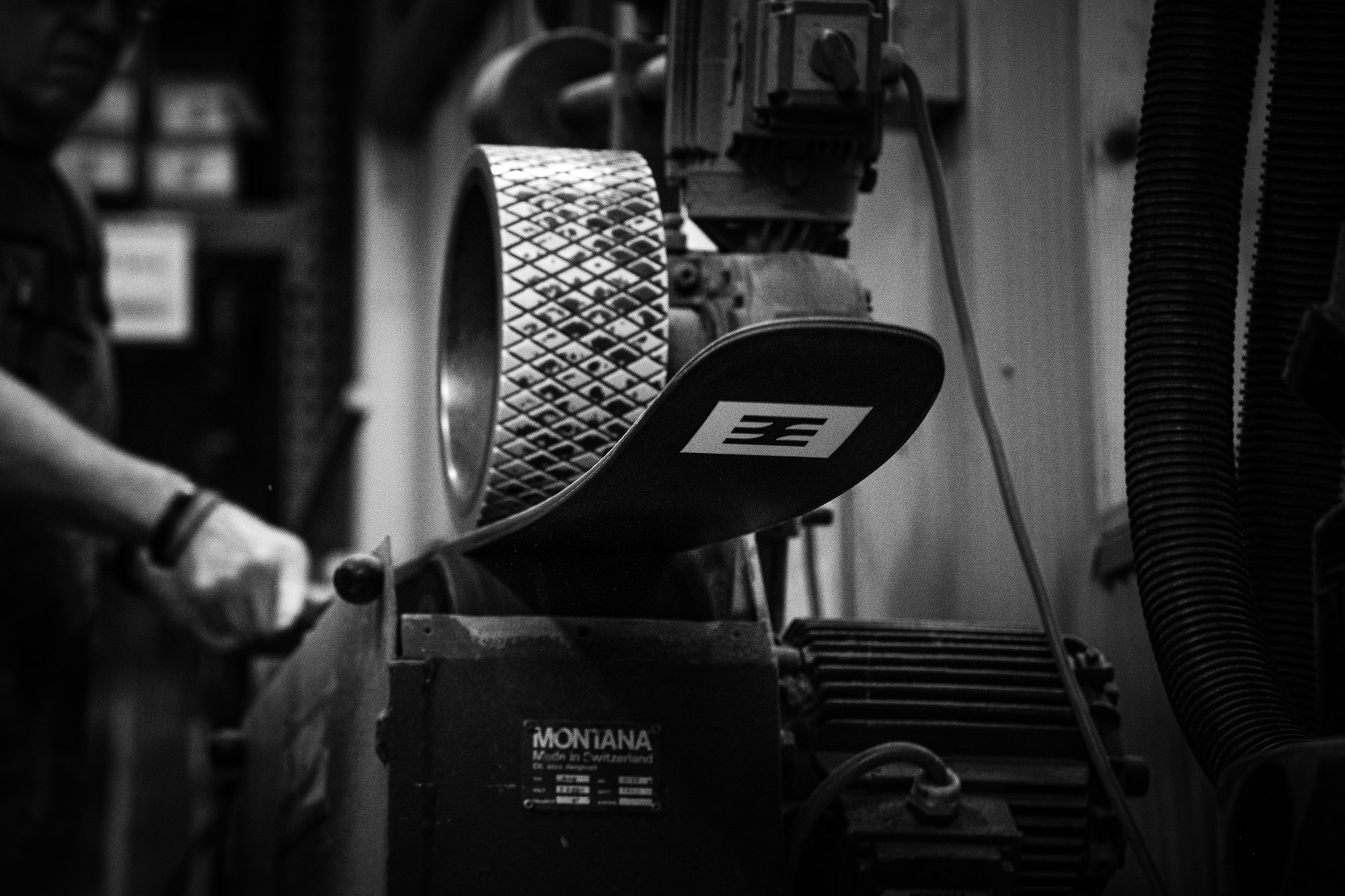
An Ellis Ski Running Through a Base Grinder
Throughout the first year, Ellis tested prototypes with skiers all over the central Rockies and documented their feedback in hopes of creating skis that were fun and intuitive for a wide range of skiers. That information proved paramount in refining the 100, 106 and 112 for an electric start to the 2025/26 ski season. The 106 sold out in October, followed closely by the 100 and 112. The ski brand that began as a dream and came to life during the wee hours of late nights, had finally found its footing.
For Schaefer, that success was built from a lifetime of hands-on experience. From building skis for DPS, to being on the front line of sales with 4FRNT and Black Crows, the lessons he learned along the way were pivotal. The result is an informed design, a feeling that skiers can connect with and performance shaped by real-world feedback. For 2027, the Ellis team is excited to cement the brand’s foundation in its fifth year of business.