
Note: This article appears in FREESKIER’s 2016 Resort Guide, Volume 18.2. The issue is available via iTunes Newsstand .
Armada. What skiing will become.
I’m not one to believe in premonitions, psychics or fortune-telling, but the original business slogan for Armada Skis couldn’t have predicted the future any better. Fast-forward 13 years to the present, and the brand’s tagline should read, “Armada. What skiing has become.”
Armada formed during a pivotal stage of freeskiing’s evolution, amidst a rebellion against racing-inspired skis and a stale image of skiing that ran rampant in the industry. As such, the brand and its co-founders have always represented revolution, on par with John Adams, Thomas Jefferson and Paul Revere. Only in this case, the proverbial patriots were Chris O’Connell, JP Auclair, Tanner Hall, JF Cusson, Julien Regnier and Boyd Easley. These cats were larger than life at the time—five of the most idolized pro skiers in the game and a well respected snow sports photographer in O’Connell.
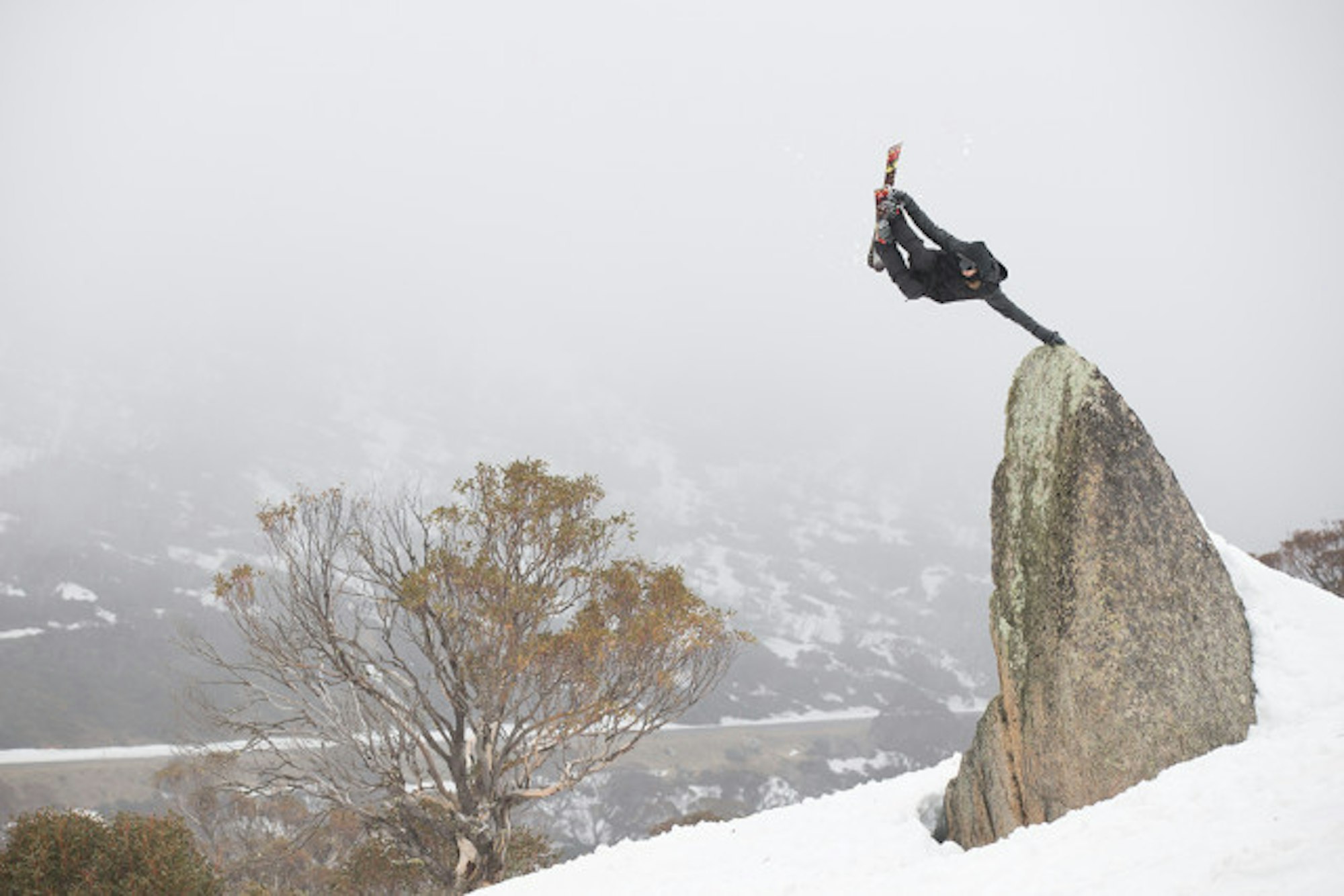
The sextuplet joined together with a group of British investors and additional co-founder Hans Smith, formerly of Oakley, in November of 2002. Armada’s first major move as a company was to upgrade from a basement operation in Truckee, California to a new office in Costa Mesa—a mecca of skate and surf. The two sports significantly influenced the new direction of skiing, from team-focused brand strategies, to the multidirectional shapes of skis, to a focus on style. Southern California just made sense.
According to Smith, Armada’s core ideals have always been to “create things that are interesting, that we think are valuable and to take our influences from places that others don’t even look. [Armada prides itself] on having outstanding athletes, people and creative minds.” It didn’t take long before the budding company had successfully built a rabid fan base of freeskiers who appreciated this take on business.
“I think we’ve always wanted to talk to our core audience—whether that’s big-mountain or park—by owning the hubs of skiing on different continents,” explains Andy Miller, who took on the role of marketing and communications manager with Armada in May of 2015. “Our team personifies what the direction of the brand is: Progression, style and they all have fun. I love watching guys like Henrik [Harlaut], no one has more fun than that dude on skis.” That statement could’ve been bestowed about any of the founding members: JP Auclair’s GT-Racer backflips that intro his segment in Poor Boyz Productions’ 2001 release, Propaganda , and Boyd Easley’s antics-driven seg’ in 2002’s Happy Dayz , set to the tune of KISS’s Detroit Rock City, are both examples of the fun attitude.
Armada was elevated by its elite team, no question; and perhaps nothing put the brand in a better position than having a talent pool hailing from different ski cultures the world over, expanding the company’s reach. Ultimately, the majority of fans—especially the younger ones—more easily identify with their favorite athletes rather than the complexities of ski, outerwear and softgoods design.
Still, producing quality product is an integral piece of maintaining skiers’ respect. Armada proved its commitment to top-notch manufacturing right off the bat, introducing the ARV and AR5 skis. While both were early twin tip designs, neither was pigeon-holed as park-specific, and were meant to excel across the entire mountain, opening their appeal to a wide market. Through the years they’d go on to produce classics like the THall—Tanner Hall’s pro model—and the JJ; the latter has been one of the most popular powder skis on the market since its introduction. As one of the first companies to solely produce twin-tip designs, Armada became a major draw to young skiers who felt the constraints of racing and mogul skiing (or could identify with the idea, at least) and who saw their snowboarding buddies getting creative in the early renditions of terrain parks.
After tremendous success with its skis, Armada delved into outerwear design for the 2009-10 season, growing its appeal even more so. From the start, Armada manufactured a wide variety of outerwear options: Ultra-technical kits, baggy, park-oriented options and price point offerings, each maintaining the brand’s fashion-forward approach. FREESKIER’s 2010 Buyer’s Guide even stated, regarding the Cosmo Down jacket and Blast pant, “Armada elevated the game in the hardgoods category, let’s see how the company shakes up softgoods.” Armada outerwear has been highlighted in every single Buyer’s Guide since—the brand did pretty damn well impacting the outerwear sector, indeed.
Few manufacturers can juggle both outerwear and ski design at such a high level. Smith cites the partnerships that the brand has made—friendships, if you will—as the reason production of high-quality gear, both softgoods and hardgoods, goes so smoothly for Armada.
“Finding the right partners to assemble the products you’re creating, those you work well with, whether soft or hardgoods, that’s a big component [of success],” Smith explains. “Forming relationships with manufacturing partners as if they’re internal employees, and treating them as we would like to be treated, that results in them going a lot further and having pride in assembling something that we’re all proud of.”
The quality of Armada’s products is certainly first-rate, as evidenced by the downpour of ski media accolades rained upon them each year. Fuse the outstanding craftsmanship of goods with a forward-thinking philosophy and brand attitude, and it’s no wonder why some of the best skiers in the world have joined Armada’s ranks.
Armada was the cool kid in high school who stayed out past curfew drinking beers and dodging the cops—the kid everyone wanted to be.
“Obviously, growing up in that era, Armada was the coolest ski company, and I was attracted to them because of that,” explains Phil Casabon, one of the marquee members of Armada’s current athlete squad. “It was because of JP Auclair, Iannic [Brouillette] and [Armada rep at the time] Mathieu Melançon. They treated me well and with loyalty along the way. I stuck with them ‘cause I believe building long-term relationships opens doors to opportunity.”
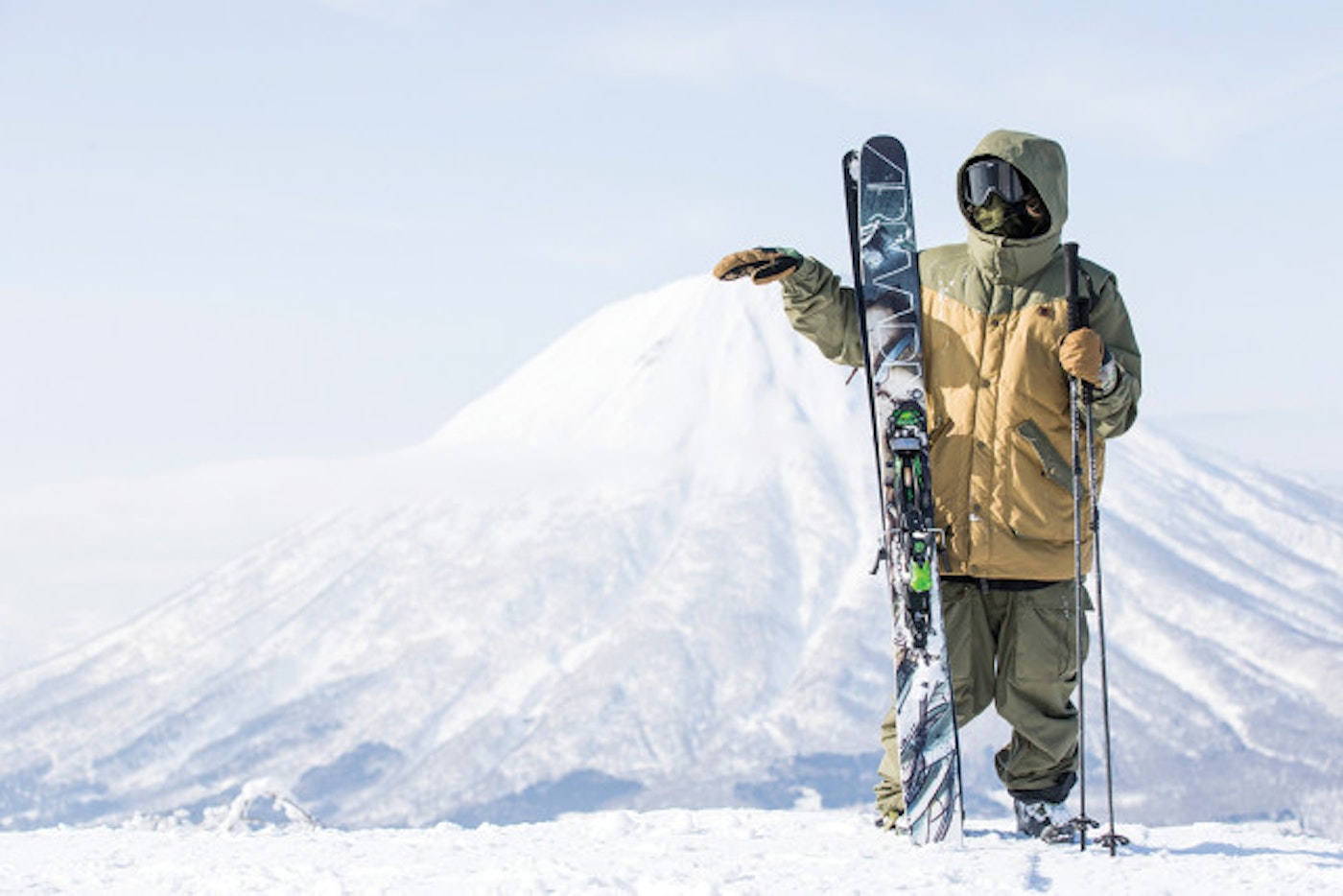
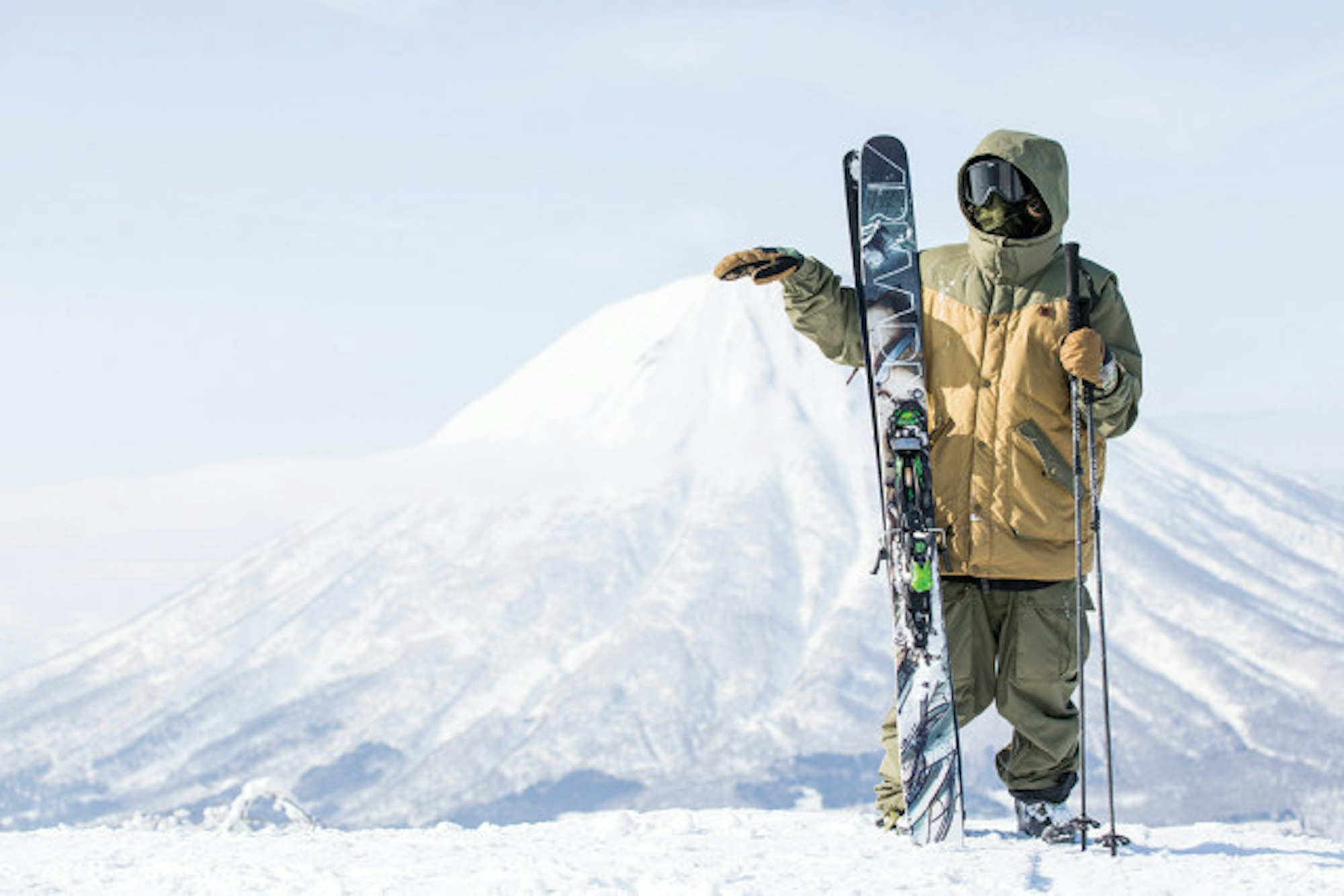
Stockholm’s longhaired, guitar-picking, big air master turned backcountry slayer Jacob Wester signed with the team in 2005; blue collar, park extraordinaire Mike Hornbeck joined in 2009; a then 15-year-old human highlight reel, Torin Yater-Wallace, of Aspen, CO, enlisted in 2010; Åre, Sweden’s Henrik Harlaut—perhaps the brand’s most recognizable star since his memorable Wu-Tang inspired Olympic performance—jumped on board in 2011; and the list goes on: Quebec’s Maude Raymond, Sweden’s Kim Boberg, Germany’s Lisa Zimmermann and British Columbia’s Riley Leboe all fly the Armada flag, to name just a few.
With everything that the brand has accomplished in a relatively short time, naturally one would wonder what’s next for Armada. That question was answered in late-2014, when the company announced it would depart its Costa Mesa home for snowier pastures in Park City, UT. But, why would a brand built upon skate and surf influences trade southern California for the ritzy, mansion-laden, mega-resort town of Park City?
“The company realized it was time,” explains Miller. “[The move] was coinciding with some growth and new hires, and it was just time for Armada to move to a mountain town.”
Trailer: “Snowcieties” by Armada
The HQ’s proximity to Park City resort is particularly advantageous, allowing Armada reps to whip up new ski designs, pack up the van, drive a quick 12-minutes up the road and be testing on-snow. The office is also in close proximity to Salt Lake City International Airport, allowing staffers to mobilize at a moment’s notice; the convenient location also allows athletes to drop by the office to preview prototypes, attend meetings, etc.
Smith stresses, in regard to the move, “the brand was founded on having the ability to generate [its] own creative outlet and represent skiing in the right way. That’s why we were based in California, to try and move ourselves as far from the ski world as possible and be influenced by areas outside of skiing.” And although the company has relocated, the philosophy certainly hasn’t changed. “We’re still centered around that ideal, we’ve tried to develop creative outlets for staff, athletes, designers, and that’s no different today than it was when we started.”
As I stand in the partially finished offices at 2700 Rasmussen Road, I’m inclined to believe Smith; the vibe here is unlike that of the many upscale, luxury-driven establishments in the area. Incomplete, yes, but the office is a skier’s domain, that’s for sure. I can only imagine what it’ll look like, and represent, once it’s finished. A shuffleboard taken from the Costa Mesa office lies to the right of the entrance, with a running scoreboard written in erasable marker on the glass wall behind it. Photos memorializing the Armada heritage—most notably of the founding team members—adorn the walls in O’Connell’s office. A dedicated showroom is included, too, where preliminary models for 2016-17 await testing.
The most inspiring item tying the office and brand to the foundations of freeskiing culture is evident upon first entering: A giant photograph of the late JP Auclair—arguably freeskiing’s most impactful figure. The image is tattooed with signatures from Armada teammates, staff members and fans who have conveyed messages like “Ski in Peace,” “G.O.A.T,” “Inspired by JP forever” and “We Love You JP.” The image serves as a piercing reminder of the pioneer’s legacy, and by extension, Armada’s, too.
“One of my proudest moments during [my time at the company] was the way everyone carried themselves [after JP’s passing]. All of our employees supported the Auclair family and Alpine Initiatives,” explains Smith. “The reason behind that is because of the influence JP had on every single person that ever met him. The values of treating people well, working hard and remaining humble are instilled in everyone here. Going forward, I think that will have a huge effect, ensuring that all of the products and initiatives we’re putting forth would make JP proud.”
And rather than shun the surrounding skiing community, Armada will seek to embrace it as the company hopes to host a DIY ski-building clinic sometime this fall. The intention is to spread a love of ski design—just as Auclair would have wanted.
The clinics are a prime example of Armada’s commitment to having fun, thinking outside the box and connecting with people. This passion for blazing new trails has propelled the brand into skier’s hearts and will solidify its image for years to come. While handfuls of manufacturers have come up short in maintaining production of high-quality product while sustaining a cool, core image, Armada has not. Armada is the skiing lifestyle, and it’s here to stay.