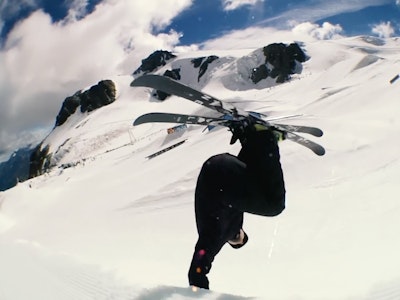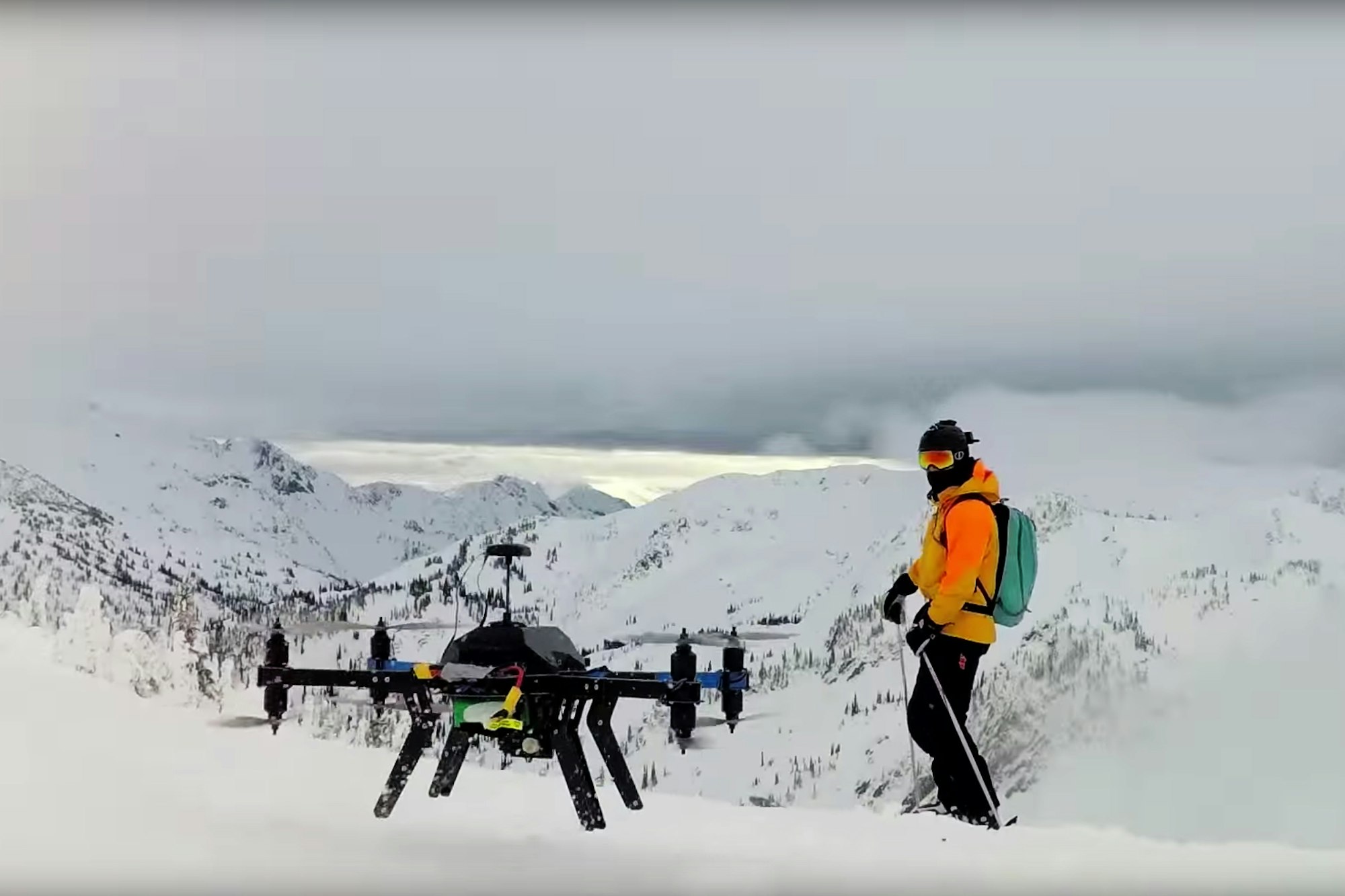
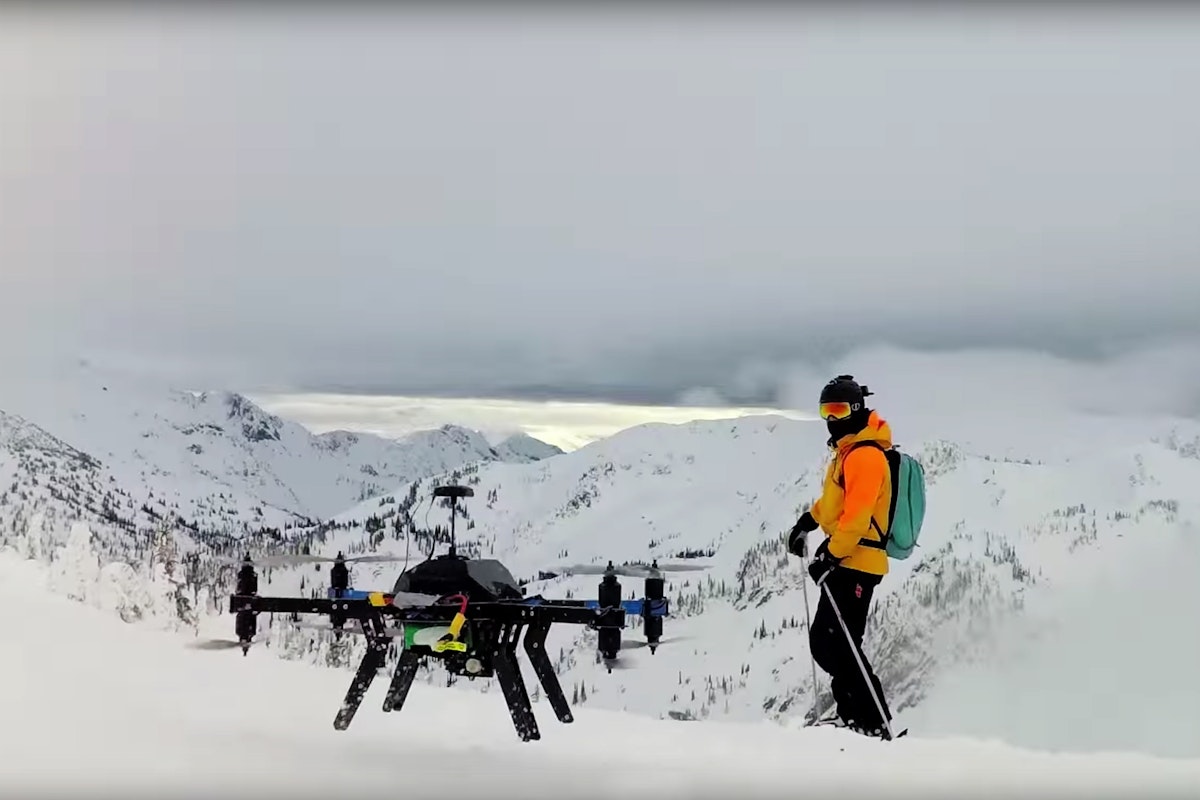

Content is king. The evidence: Beginning this winter, several North American resorts will be offering personal drone video services, through partnerships with Cape Productions, to the public. Cape Productions—a brand made up of former Google employees as well as Stanford-educated engineers—will be offering drone packages for about $150, which will include overhead and follow cam footage of three runs, with a professionally edited minute-and-a-half to two-minute video being produced as a result. Customers will then have the edit emailed to them for their social media sharing pleasure.
This is sure to bring about concern from some skiers. The drones are automatically wired to remain a safe height away from the ground and avoid obstacles including trees, chairlifts and busy areas of the mountains—like bats utilizing sonar to dip and dodge through the air in search of juicy insects. Additionally, the drones will only operate on shorter ski trails dubbed “drone zones” to keep them farther from the public eye. However, one can’t help but wonder if, while standing atop a favorite line at the local ski hill this winter, a drone will be hovering above your head as it captures Little Joey weaving intermittently between pizza and french fry.
This is something Cape co-founder and CEO Jason Soll is confident can be prevented. “As you go skiing with the drone, it will follow you as you go down that specific run, but if you go off into the trees, it won’t follow you,” explains Soll. “Frankly, as someone who loves losing himself, literally and figuratively, in the trees where it’s totally silent, I wouldn’t want to prevent that from being possible for skiers. The service is operated on these short runs, and that’s it.”
There’s also the safety issue. Drones, like any technology, can fail. A plummeting drone could do serious physical damage if it hits someone. In a June article on freeskier.com, Sierra-at-Tahoe director of sales and marketing Dave Amirault told FREESKIER, “It’s a safety and density issue. It’s not the most reliable technology. They can fall out of the sky, get lost, hit someone or hit a lift. While amazing, there isn’t a place for them at ski areas.”
Cape does, however, have a solid safety record, which played a huge role in getting them the permit to operate in Canada. Following a testing period with CMH Heli-Skiing in Revelstoke, and “operating well over 1000 missions with the drones without any issues and a perfect safety record, Transport Canada gave us full permission to operate commercially.” Cape also had successful beta testing at Big White Resort and at Momentum Ski Camps in Whistler.
The U.S. Forest Service (USFS) and Federal Aviation Administration (FAA) have jurisdiction over the recreational use of Unmanned Aircraft Systems (read: drones) on USFS land, which is where a bunch of Cape’s partner resorts have permits to operate on. Ski areas in the United States have banned drone use by individuals on ski resort property, but Cape Productions has been working with the USFS and the Federal Aviation Administration to achieve the United States’ first commercial drone permit for ski areas.
“We have spent the last couple of months building off of the Section 333 exemption that we’ve already received in order for us to be able to operate in these resort environments,” Soll explains. “It’s something that hasn’t been done before [in the United States] and so we are in the final stages of being able to finalize that.” As soon as that happens, Cape plans to announce launch dates for resorts that the service will be operating at.
https://www.youtube.com/watch?v=UTIPHHPc1Oc
Introducing Cape Productions
At $150, the package—which will be offered at Winter Park Resort, Copper Mountain, Timberline Lodge, Mount Hood Meadows, Powder Mountain, Homewood Mountain, Mountain Creek, Fernie and Schweitzer—is certainly geared toward clientele with disposable income. It will be interesting to see if the drones being used, presumably by non-locals, vacationers, tourists, etc., will have any impact on the skiers frequenting the resorts on a more consistent basis. “I suspect there will be some guests, even if Cape is offered on a single run, that will say ‘I don’t want any drones on my beautiful mountain,'” surmises Dave Byrd, director of risk and regulatory affairs for the National Ski Areas Association. “But I don’t think that’ll be the case because it’ll be very limited to the drone zone area.”
Cynical apprehensions aside, what can’t be ignored is the demand for personal video production on the ski hill—the hordes of POV camera-toting skiers in lift lines at any resort in the world are evidence of that. And, some of the best video content on the Internet comes from action cameras, produced by some of the best athletes in the world. GoPro even announced that it will be producing a quadcopter drone set to hit the market in 2016. “We recognize that there is this generation of skiers that love being captured on video,” says Byrd. “I think [Cape] is a great kind of middle ground for a lot of ski areas, to allow this video drone service offered up as a concession service to guests, while limiting where it is out on the mountain and still providing an amazing opportunity to catch cool, high-quality video footage for their guests.”
The common issues that come with capturing your own video content—dealing with your camera while out on the hill, making sure it’s turned on, adjusted to the correct settings, adjusting it to the correct angle—are taken care of by Cape. Editing is also a challenge for novice users, but Cape will also handle that. The appeal of having to worry solely about shredding is certainly a pro for this drone service. And, let’s be honest, drones are pretty frickin’ cool; they can capture angles that nothing outside of an actual chopper can.
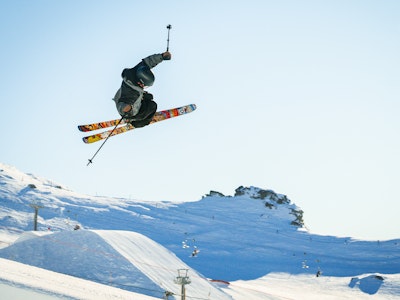
Additionally, while the logistics haven’t been completely finalized as to which runs will be drone zones, certain resorts are kicking around the idea of using the service in the terrain park. In that case, there’s certainly the possibility of some interesting content to be produced, especially by the most talented frequenters of the resort. That is, if they can afford it.
In the future, Cape hopes to “deepen [its] relationships with our partner resorts and be able to offer the service to a wider range of customers, by adding it on different runs throughout the resort.” A single run is one thing, but multiple runs is quite another. This could open the door for the drones to intrude upon guest experience at the resort. The success of the drone service remains to be seen.
You might also enjoy: Uncharted Airspace: Ski resorts prep for impending drone invasion
On the non-content creation end of the spectrum, Winter Park hasn’t ruled out using the drone service for better efficiency in resort operations, such as lift inspection.
What are your opinions on drones at ski areas? Leave your thoughts in the comments section below.
Press Release by Cape Productions:
Launching Winter 2015, Cape Productions offers its drone video service to skiers and snowboarders to capture their favorite runs in professionally edited videos. Available at select resorts across North America this season, Cape has created a new way to use autonomous drone technology to beautifully capture people’s favorite memories without taking them out of their experience or requiring any additional work. Backed by some of the nations leading venture capitalists, Cape’s first official winter season follows successfully filming hundreds of customers in Canada last season, in addition to aiding the U.S. Ski Team with their training in New Zealand this summer.
Resort partnerships include Winter Park Resort (CO), Copper Mountain (CO), Timberline Lodge (OR), Mount Hood Meadows (OR), Powder Mountain (UT), Homewood Mountain (CA), Mountain Creek (NY), Fernie Alpine Resort (British Columbia), and Schweitzer Mountain (ID). Launch dates for each resort, as well as new resort locations, will be announced in November and continue throughout the season.
While personal drone use is banned across most major resorts, Cape has worked with government and resort officials to safely bring their drone video service to the public. “Since its founding, Cape has worked closely with ski resorts, as well as NSAA, to create the new gold standard for safe drone operations at ski areas for both winter and summer recreational activities,” said Dave Byrd, Director of Risk and Regulatory Affairs for the National Ski Areas Association. Cape’s drones automatically fly with you to record your favorite moments on snow. Customers sign up, meet Cape on the mountain, and get filmed by the drones while riding, then receive a professionally edited and published video online to share with friends and family. Cape’s proprietary drone technology can fly up to 40 mph, staying ahead of even the most hardcore athletes. The drones automatically maintain safe distance from the ground and all major obstacles like trees, chairlifts and crowded areas while withstanding the treacherous weather conditions and high altitudes found at mountain resorts.
“Time with friends and family in the outdoors is sacred. Capturing video of these experiences and managing camera equipment takes us out of the moment, and video editing is both difficult and time consuming. Today, we are excited to announce the start of a new chapter in drones and consumer video as a whole, ” said Jason Soll, CEO and co-founder of Cape. “We’ve taken a completely different approach by doing all of the hard work for our customers in a way that is fast, affordable, and beautiful. To make this possible, we spent the last year and a half building one of the safest large-scale drone operations in the world.”
For their first on-snow camp of the 2016 season, the U.S. Ski Team partnered with Cape to capture training sessions with Olympic gold medalists Lindsey Vonn, Mikaela Shiffrin, Ted Ligety and other U.S. Ski Team athletes at the picturesque Coronet Peak in Queenstown, New Zealand. “The unique camera angles we got and the stunning footage provided our coaches and athletes with a great experience and those images sent to our fans inspired us all. Our experience with Cape was exceptional and I have no doubt they will be successful in both the consumer and professional space with their technology and customer service,” said Mike Jaquet, Chief Marketing Officer for the U.S. Ski and Snowboard Association.
Cape’s team includes Google alumni and Stanford engineers, along with world class athletes – including a former U.S. Ski Team member and former pro snowboarder. Their mission is to offer everybody the ability to have amazing videos made for them without carrying and managing additional equipment or enduring the hard work of video editing and publishing. Their goal is to develop technology that disappears and makes people’s lives easier and more enjoyable.
With over $10 million raised from investors, including funds from the world’s largest venture capital firm, New Enterprise Associates, Cape is expanding its team and operations rapidly. For more information about Cape, along with access to discounts for the service, visit www.cape.com.