
Your enjoyment on the slopes often boils down to the right boot choice. To aid in this all-important decision, here are a few key details about the plastic shoes that make it all possible.
Sizing Systems
The Mondopoint system serves as the universal standard, measuring the length of your foot in centimeters—if your foot measures 26.5 centimeters, you’ll wear a size 26.5 boot. It’s also important to note that there are no half sizes in ski boots, so a 26 and 26.5 are the same size. Despite this standardization, actual sizing varies between manufacturers, so a 26.5 from one brand might fit differently than another. Additionally, the boot sole length (BSL) measurement is stamped on the heel, showing the shell length in millimeters—such as 302 mm. This measurement is important for mounting and adjusting bindings because not all boots of the same Mondopoint size have the same BSL.
Flex Rating
Flex ratings range from 70 to 130-plus. They indicate how stiff a boot is and how much force it will take to engage your ski. Generally speaking, stiffer boots in the 120-plus range are well-suited to advanced skiers as they provide better control at high speeds, while boots rated 80-110 offer a softer feel for those learning how to better drive a boot or those who prioritize freestyle skiing. While these ratings are somewhat correlated across the industry, they’re not exactly the same, as each manufacturer uses their own plastics and molds. One brand’s 130 might not feel like another’s due to differences in shells, liners, buckles and power straps.

Image: Rachael Zimmerman
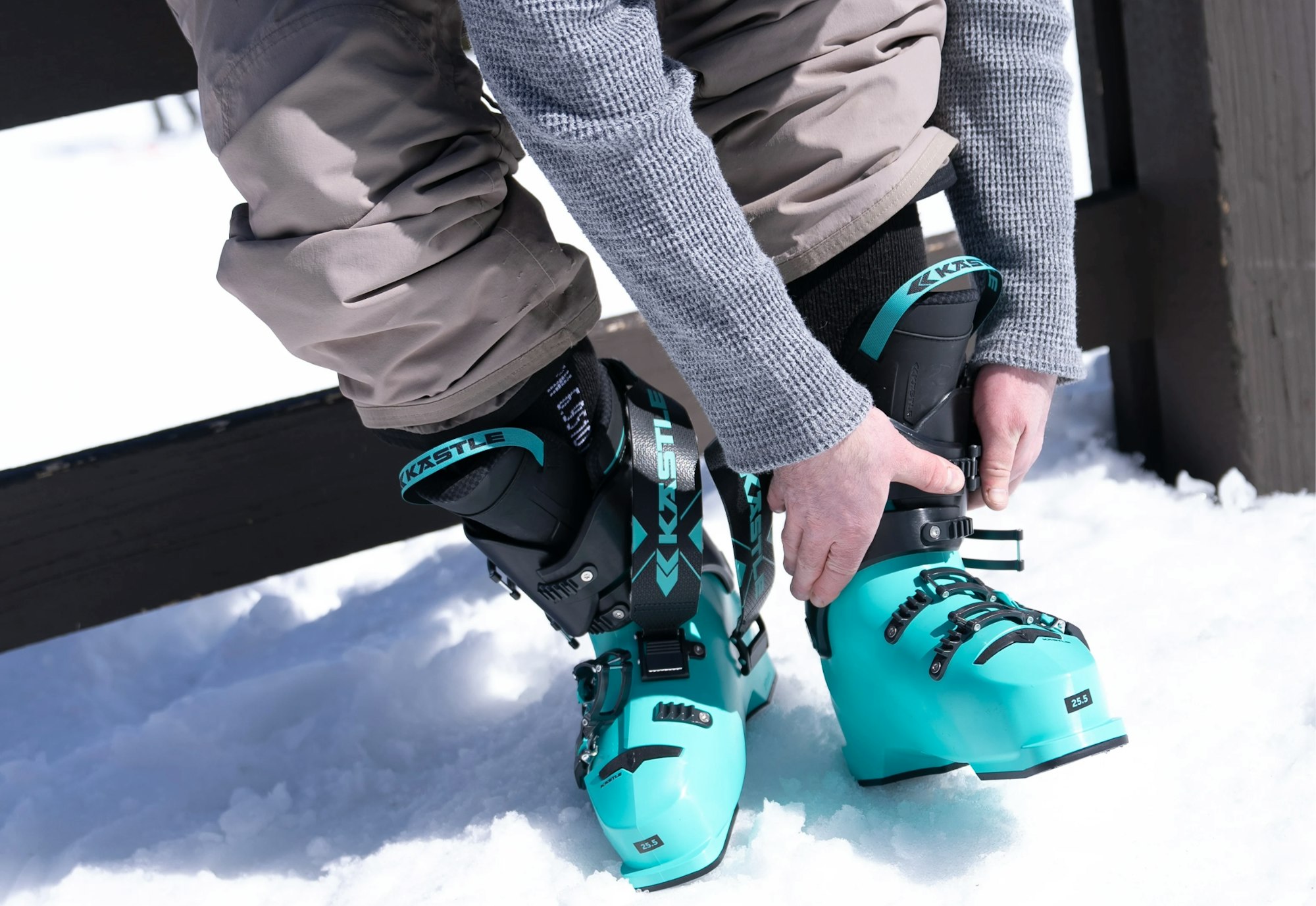
Image: Rachael Zimmerman
Sole Compatibility
Boot sole compatibility refers to the interface between a boot and binding, and is a critical component to a safely functioning setup. Traditional alpine soles work with most bindings, but rockered soles like Walk-to-Ride, and the increasingly common GripWalk, require specific bindings. Touring soles generally work with multi-norm certified (MNC) or GripWalk-certified bindings. Always verify boot and binding compatibility before mounting and when in doubt, consult your shop or the manufacturer.
Construction Types
Ski boots are built using three primary designs. Two-piece overlap boots feature a traditional shell design in which the lower piece encapsulates your foot while the upper piece wraps your leg. This design derives power from the rear spine as this is the main structural component connecting the upper cuff and lower shell. Three-piece boots, also known as cabrio boots, are designed with a lower shell, upper cuff and distinctive plastic tongue. The rivets connecting these pieces together sit lower on the shell when compared to overlap designs. In cabrio boots, power comes primarily from the plastic tongue, creating a more progressive flex pattern. This progressive flex starts soft and gets stiffer as you push harder into the boot, providing a more predictable ski experience. You can think of this tongue like a spring, wherein the more you lean into it, the more resistance it builds.
Forward Lean and Customization
Professional bootfitting and customization can transform an off-the-shelf boot into a personalized performance tool. Bootfitters offer numerous modifications, starting with basic heat-molding of shells and liners to mold them to the shape of your foot. Additionally, they can grind down areas of the shell to create more room around certain pressure points and re-shape boot boards to accommodate unique foot shapes. For alignment issues, bootfitters can angle the cuff laterally to match your natural leg position (referred to as canting), add heel lifts to adjust forward lean and ankle flex, or install custom footbeds that support your arch and secure your feet.
The customization process typically begins with an assessment in which bootfitters analyze your foot shape, stance, flexibility and skiing style. They might use specialized tools like shell fit gauges, pressure mapping systems, or stance assessment platforms to identify issues. Common modifications include thinning out or building up areas of the liner, adding padding to eliminate excess volume, or using specialized materials like cork and neoprene to fine-tune the fit. For skiers with circulation issues, bootfitters can also create channels or pockets to relieve pressure on specific nerves or blood vessels. While these services require an investment of time and money, the resulting comfort, performance and injury prevention make professional bootfitting one of the best services available at your local ski shop.
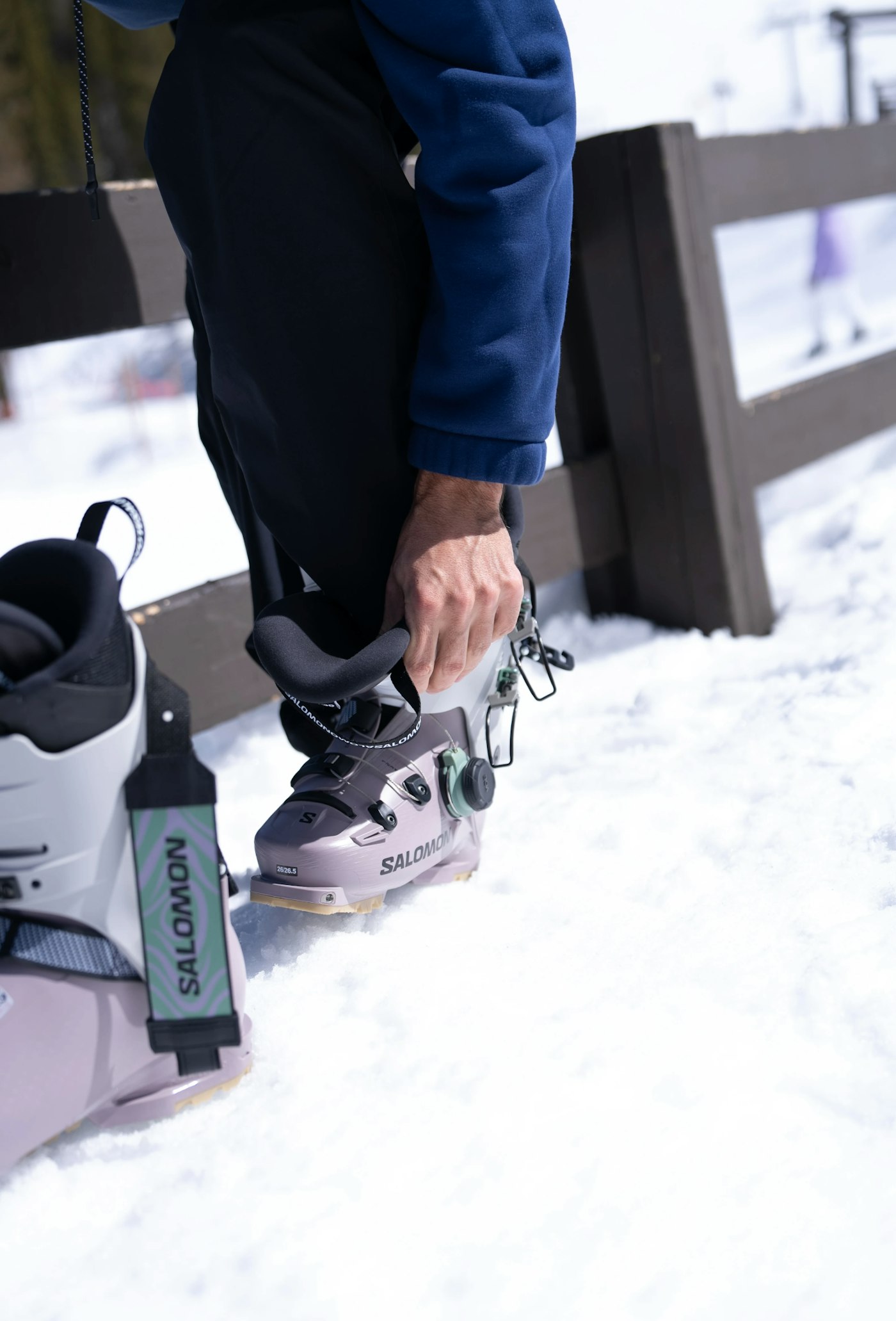
Image: Rachael Zimmerman
Image: Rachael Zimmerman
Liners
Boot liners range from basic to highly customizable and provide insulation from the cold, in addition to cushioning and performance. Standard liners work well for average foot shapes, but most high-end boots now include heat-moldable liners that can be shaped specifically to your foot’s contours, providing enhanced comfort and control. For skiers with unusual foot shapes or who log countless days on snow, fully custom, aftermarket liners like Intuition and Zipfit offer the most personalized options but also come with a requisite price tag.
Last and Volume
The last refers to the width measurement at the forefoot, typically ranging from 94-105 mm. Narrow lasts suit narrow feet while wider lasts accommodate broader feet, but this single measurement doesn’t tell the whole story. Two boots with identical 100-mm lasts can feel completely different because the last only measures the widest point—it says nothing about heel width, instep height or overall volume. The three-dimensional shape of each shell creates different volumes, making it critical to try boots on rather than shopping by numbers alone. Variation between manufacturers makes online boot shopping particularly challenging and highlights the importance of seeing professional bootfitters at your local shop.
Instep Height
Your instep—the top part of your foot, just forward of your shin—plays a crucial yet often overlooked role in how your boots fit. Blood flows through this area en route to your toes, meaning too much pressure can slow that flow and lead to numbness and cold feet. Generally, four-buckle boots accommodate higher insteps well, while cabrio boots work better for lower insteps. Unlike last width, instep height isn’t commonly measured or advertised, requiring you to try multiple brands to find what works. A simple trick for managing instep pressure: unbuckle your boots on chairlifts and between runs to restore blood flow.
Image: Rachael Zimmerman
Image: Rachael Zimmerman
Advanced Features
Modern ski boots offer several advanced features that enhance performance and convenience. Moldable shells, found on higher-end models, can be heated and shaped like liners, proving especially useful for skiers with two different-sized feet. While walk/hike mode has long been an option in the ski boot world, recent advancements have minimized the “play” in these mechanisms that once compromised downhill performance, making them viable for aggressive resort skiers who also enjoy backcountry touring. Power straps located on top of the cuff have also evolved from simple Velcro straps to sophisticated systems with cam buckles and elasticity, providing a better wrap around the shin to enhance performance. Aftermarket options like the Booster Strap can greatly upgrade your boot.
Pro Tips and Common Mistakes
-
The biggest mistake skiers make is automatically choosing the stiffest boot available. While 130-flex boots often feature the most premium materials and construction, softer flexes offer real advantages, including easier turn initiation and ankle mobility.
-
Another common error is assuming that oversized boots provide more comfort. In reality, boots that are too big cause as much pain as those that are too small because you’ll curl your toes and strain your feet trying to control your skis.
-
Finally, many skiers fail to take advantage of customization options available at their local shop. Getting boots properly fitted and customized before the season starts can transform your skiing experience from day one.