


All Photos: Courtesy of Kari Traa and Jeremy Bloom
Olympic athletes have a certain je ne sais quoi about them. They are the cream of the crop, the one percent that rises to the top. To achieve this level of athletic success takes immense dedication, discipline, sacrifice and tunnel vision for the task at hand. Such intense singular focus, however, can leave professional athletes at a loss when it comes time to retire from competition without a source of income or a sense of purpose.
No athlete is immune to the pressure of“what’s next?” but there are some skiers who have navigated their next chapter with as much success and fluidity as their career-best comp run. Kari Traa and Jeremy Bloom are two prime examples.
Practically born with skis on her feet in the town of Voss, Norway, Kari Traa earned the title of one of the most successful freestyle moguls skiers of all time. Over her 17-year professional ski career from 1990 to 2007, Traa collected 37 World Cup wins, four World Championship golds and three Olympic medals—one of which, gold, came from the 2002 Salt Lake City Games.


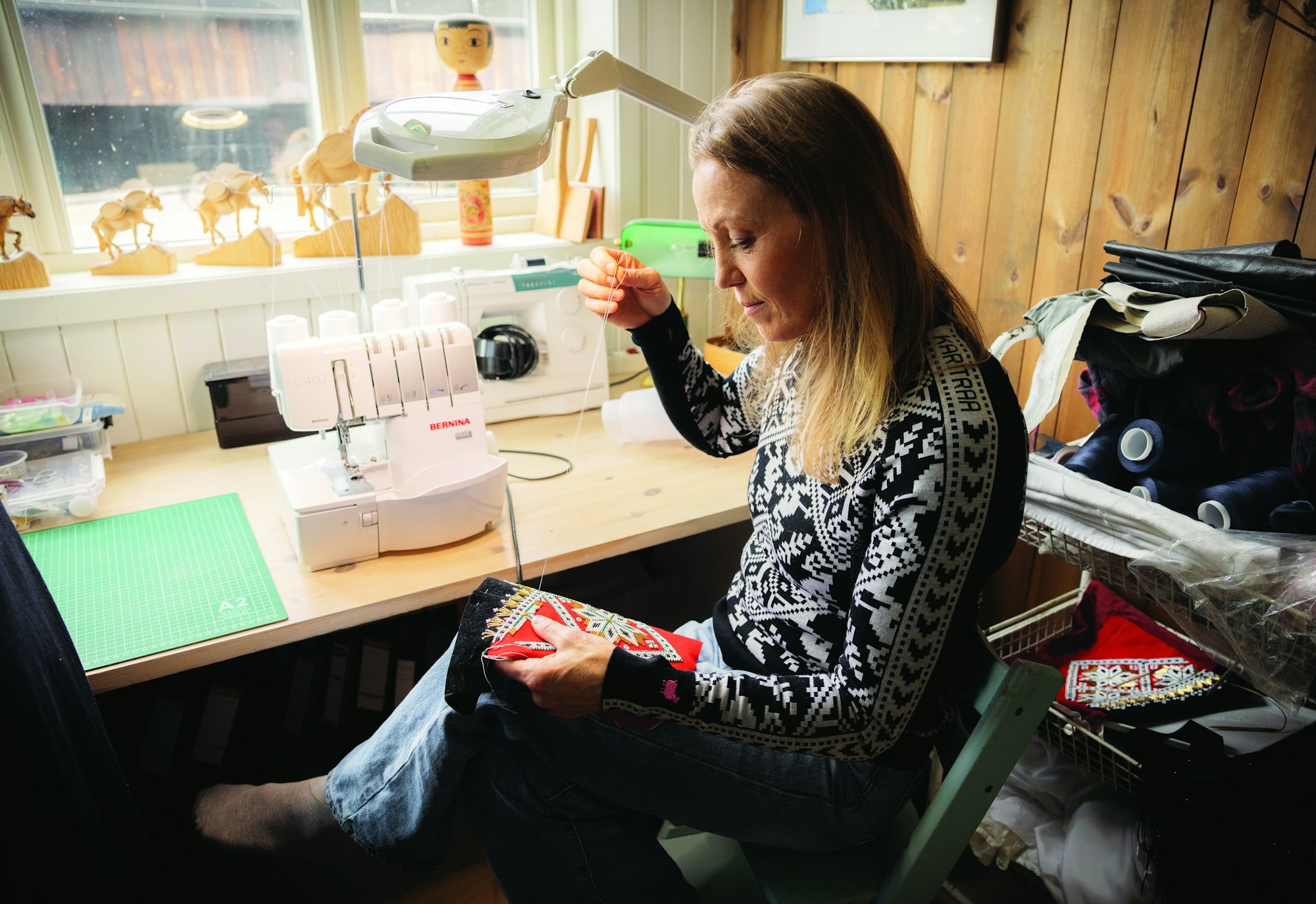
Grateful to her sponsors for supporting her ski career, Traa quietly updated her gear with personal touches like painting flowers on her ski boots, altering her outerwear and knitting beanies for herself and her friends. “I didn’t want to complain... but my sponsors always gave me the ugliest clothes,” Traa laughs.
The beanies were such a hit, Traa decided to launch her namesake business the same year she won Olympic gold. As of 2025, Kari Traa is sold across North America and Europe and continues to set itself apart from other sporting apparel brands by designing technical products solely for women, utilizing iconic Norwegian designs and vibrant colors.

Around the same time as Traa, Jeremy Bloom was making a name for himself in the United States as the youngest athlete to make the U.S. National Freestyle Mogul Team at 15 years old. In 2002, at just 19 years old, he became the youngest World Cup champion and competed in his first Olympics in Salt Lake City.
That same year, Bloom entered his freshman year at the University of Colorado, Boulder as a punter and wide receiver for the Division I football team. By the end of his ski career, Bloom acquired 11 World Cup gold medals, three World Championship titles and two Olympic appearances, as well as an invitation from the NFL to play for the Philadelphia Eagles.


While playing for the NFL, Bloom took advantage of the league’s MBA scholarships and attended Wharton School of Business at the University of Pennsylvania. His interest was piqued, and after retiring from the NFL, Bloom co-founded the enterprise software company, Integrate, in 2010.
“I knew that’s what I wanted to do after football,” The Olympian-to-entrepreneur pipeline is not a far-fetched one, with current professional athletes like Ferdinand Dahl founding Capeesh Supply as well as the Jib League comp circuit and Eileen Gu doubling as a high-fashion model.
The Olympics are the pinnacle of sport, but an athlete’s life is far from over when the competition season ends for good. It’s an opportunity to discover a new passion and channel that competitive drive to win into the next pursuit.
“You have to take chances to succeed, and the worst that can happen is that it doesn’t work out,” Traa says. “It’s better to regret that it didn’t go well than to regret not trying.” Bloom tells me. “To reinvent myself and move to Silicon Valley, start back at the bottom of a mountain I didn’t know how to climb, and try my hand as a tech founder.” In 2022, Bloom sold that business for nine figures and in 2024, became the new CEO of X Games.


Though Kari Traa and Jeremy Bloom’s business ventures are drastically different, the origin stories run parallel to each other. Both athletes pursued other passions while skiing, whether that was consciously or subconsciously, to set up for the next venture in their lives. They utilized their notoriety as Olympians and personal brands to attract market interest and leaned on the innate belief in themselves to succeed. Traa and Bloom also leveraged the lifeskills they acquired from Olympic-level competition, heavily crediting the ability to persevere through the roller coaster of performance and working through big losses.
“As an athlete, you learn a lot about the ups and downs of life and about not giving up until you reach your goal,” Traa says. “My sports career taught me that trying and failing can be a smart thing to carry with you in life.”
While discussing what makes a business successful, Traa and Bloom noted that fulfilling a market need is an absolute necessity. In Kari Traa’s case, there was not a single apparel ski brand dedicated solely to women in 2002. In Integrate’s, Bloom found a tech niche that proved invaluable to marketers. Coming from a sports mindset, the two former Olympians are also quick to credit the teams they built around them, who understood the goal and what it took to achieve.
The Olympian-to-entrepreneur pipeline is not a far-fetched one, with current professional athletes like Ferdinand Dahl founding Capeesh Supply as well as the Jib League comp circuit and Eileen Gu doubling as a high-fashion model.
The Olympics are the pinnacle of sport, but an athlete’s life is far fromover when the competition season ends for good. It’s an opportunity to discover a new passion and channel that competitive drive to win into the next pursuit. “You have to take chances to succeed, and the worst that can happen is that it doesn’t work out,” Traa says. “It’s better to regret that it didn’t go well than to regret not trying."
![[GIVEAWAY] Win a Full 26-27 Ski Setup from Fischer](https://www.datocms-assets.com/163516/1790101711-00012060-edited.jpeg?w=200&h=200&fit=crop)


![[Q&A] "Actually, It Is Rocket Science," with Tim Durtschi](https://www.datocms-assets.com/163516/1791320016-keegan_rice-0073.jpg?w=200&h=200&fit=crop)


