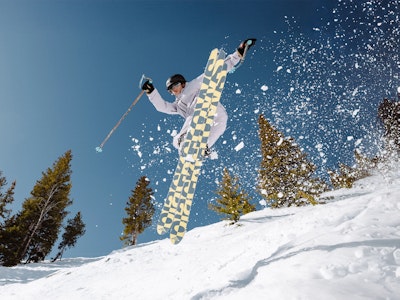
All Images: Courtesy of Salomon
The original Salomon QST launched in 2017 as a consolidation of two ski lines, the Q and Rocker 2 series. This enabled the brand to focus on a singular set of high-performance skis for freeride consumers. The fourth generation, which launched this winter, is the most radical change yet. Infused with a playful new attitude and shaped by direct feedback from the U.S. market, it aims to capture the imagination of a new generation.
“The first QST was all about versatility, but the line continues to evolve because the consumer is changing,” says Joe Johnson, Salomon’s Head of Marketing for North America. “The original was a more traditional, directional ski. The next two generations had an updated construction and shape, but this time we saw an opportunity for a big revamp.”
While most major brands opt for small changes each season, particularly to flagship lines like the QST, Salomon was betting big, and that came with risks. If the skis missed the mark, they could alienate customers, lose retailers and send sales plummeting. But risk was necessary as the industry was changing quickly, with older skiers aging out and few brands focused on the younger generation.
“It felt like a perfect storm,” Johnson says. “QST had gotten a little long in the tooth. It had been mostly the same for six or seven years and didn’t really stand out anymore, so we needed a change. At the same time, Salomon as a brand was evolving to appeal to younger customers. It was a completely new creative direction, a new way to work with athletes, and even a new way to sell a ski.”
For such a move, Johnson needed buy-in from headquarters in France. “When you’re a global brand based in Europe, you have to balance goals in both markets. It’s not tension, but more of a chess match,” says Johnson.


Enter Quentin Boutry—the Category Manager for Salomon Alpine. Boutry, who has worked for Salomon for the last seven years, lives in France but spent six months traveling around the US, visiting specialty shops, skiing with athletes and talking with skiers at resorts to educate himself on the market.
“The goal was to see an entire winter in the US and meet the full spectrum of skiers across the country. We wanted to see the terrain, the mountains, the cultures, and make a new product that was right for all of them. Without that much time in the US, it wouldn’t have been such a radical change,” says Boutry.
The biggest “a-ha” moments, he says, came from female skiers, East Coast die-hards, and conversations with North American Salomon athletes. “The east side of the country is where some of the biggest insights came from,” says Boutry. “The ski culture on the East Coast is maybe stronger than in the West. People are so passionate about skiing and so into it, whatever the weather. What we heard, repeatedly, was that people wanted the QST 106 for the East. A narrower ski with high performance. So that became a big goal.”
Boutry returned home with two notebooks full of scribbled insights and specific requests from the people he’d met along the way. Living just outside Chamonix, he has world-class skiing out his backdoor and Salomon’s Annecy Design Center less than an hour’s drive away. “We make 400 prototype skis for athletes and testing each year. We can make modifications in an afternoon and ski them the next morning, which allows us to iterate really quickly.”
His primary focus at this point was the evolution of performance across different waist widths. Previously, the 92 was focused on beginners, the 96 was geared toward intermediate skiers, the 106 was designed for advanced riders, and the Blank, the largest, was for the experts and pros. This tiered system was tossed out the window and replaced with even performance across the board. The goal was to build the very best ski at every waist width.
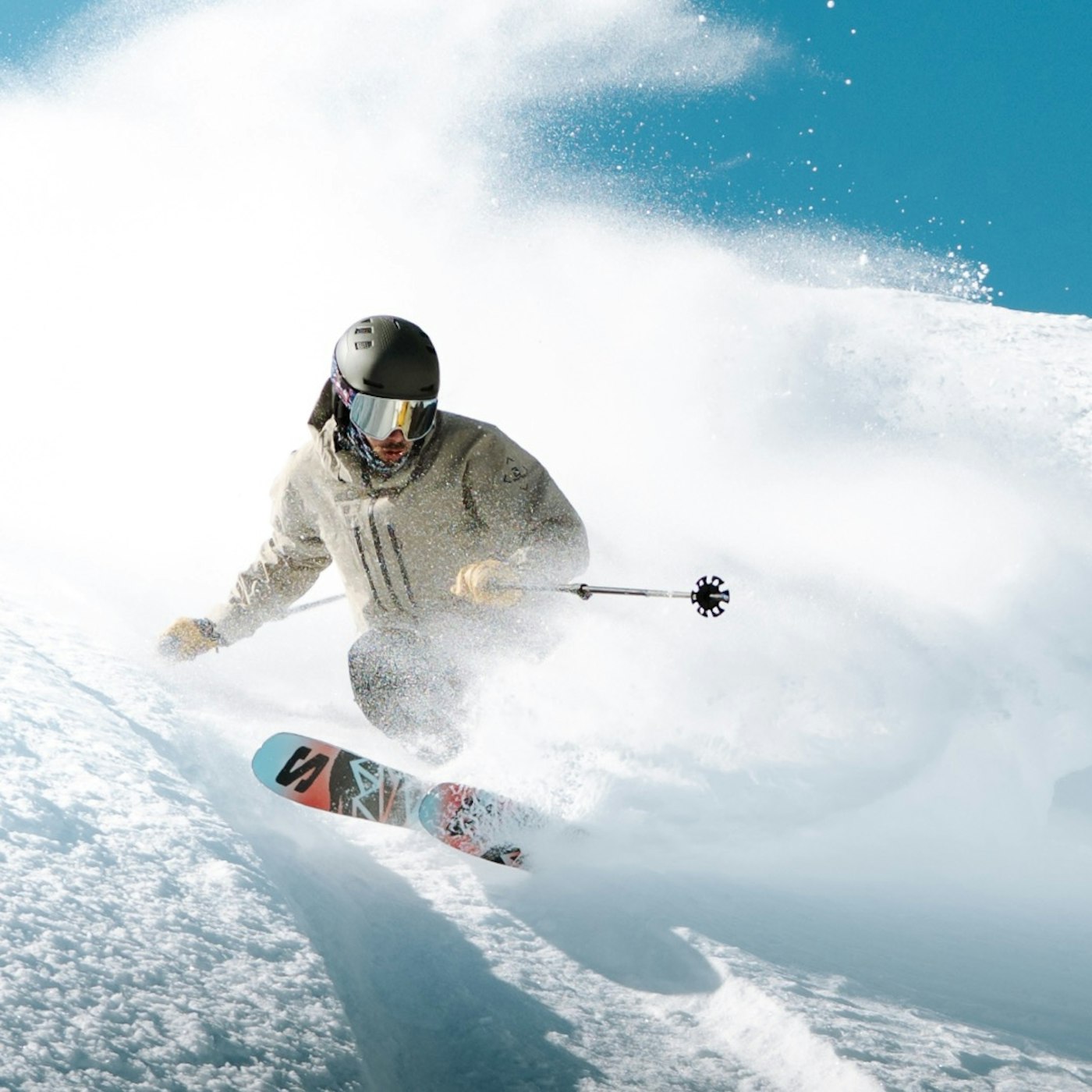
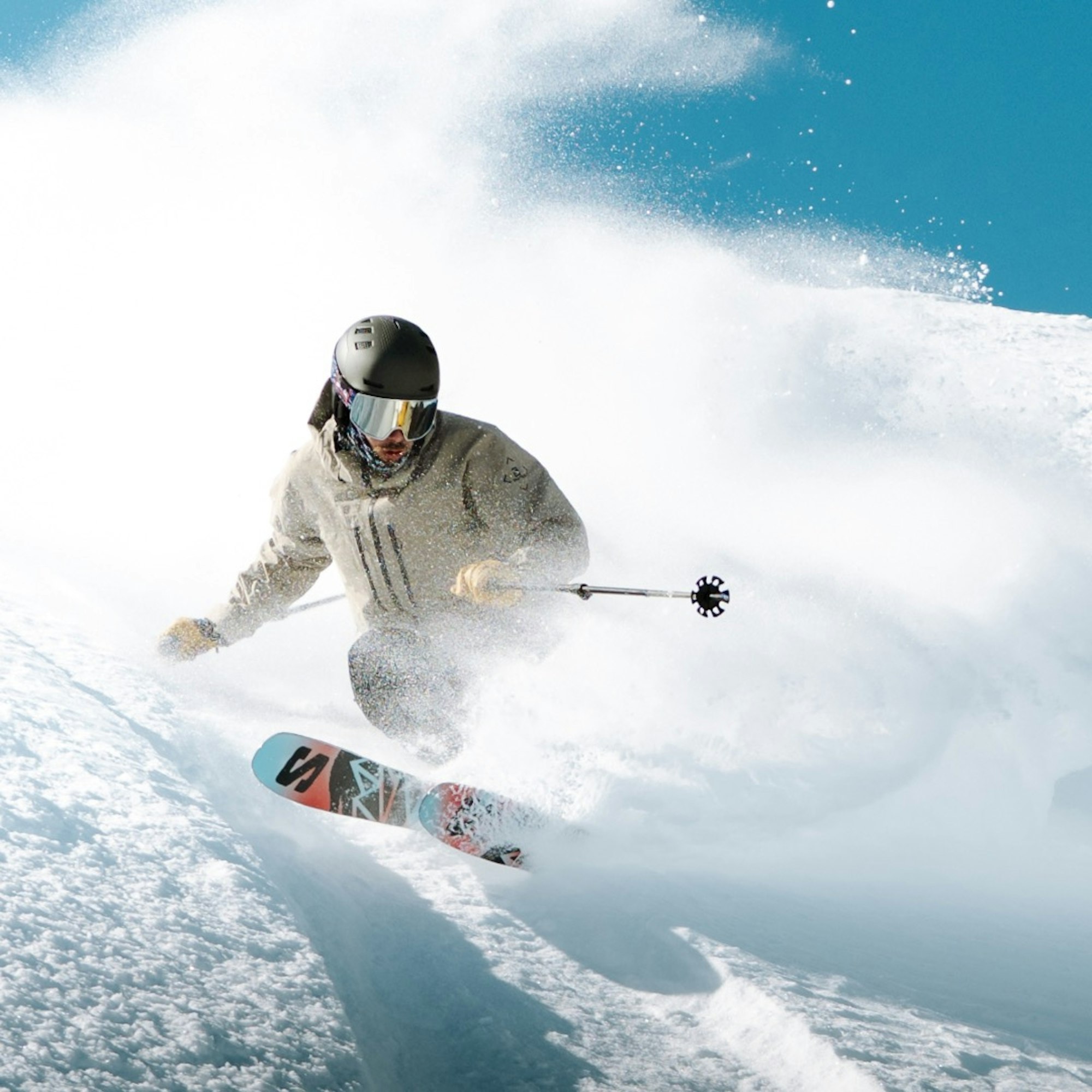
Each of the four widths went through three different shapes and 15 unique constructions, testing different blends of wood cores with new fibers. “We have an innovation mindset and a big enough company to support it,” says Boutry. “Of the 250 ski brands in the world, only six or seven have their own factories, like us. Some small brands are pushing the industry forward with unique DNA, but we can make something completely new.”
Now, all four models now have the same internal construction, with a tip-to-tail poplar core, cork inlays to reduce vibration and a fiberglass-and-basalt blend to provide power and stability. All are driven by the same freeride philosophy, with lofty tip rocker for easy turn initiation and better flotation. The tails, however, are uniquely designed for the type of terrain that each model is meant to be skied in.
The biggest downside of this level of individualization is the cost, Boutry explained. “We have different molds for every waist and length ski, over forty in total, and each one costs around $15,000. Not every brand would be able to do that.”
That wasn’t the only major investment that Salomon sank into the new line. Boutry collaborated with a material supplier to develop the aforementioned blend of basalt and fiberglass for the QST, which is proprietary to Salomon. He also found a new way to blend cork and TPU together, injecting them into the skis as a singular material. These new technologies are used across the entire line of skis.
The two widths that changed the most are the 94 and 100. Talking with younger skiers who only have the money for one ski, Boutry decided the 100 would be a playful twin tip, while the 94 would be a bridge between frontside and freeride, which he calls a free-carving ski. It pops between turns and is oriented toward skiers that are tired of traditional, heavy-metal skis, preferring a more playful ride instead.
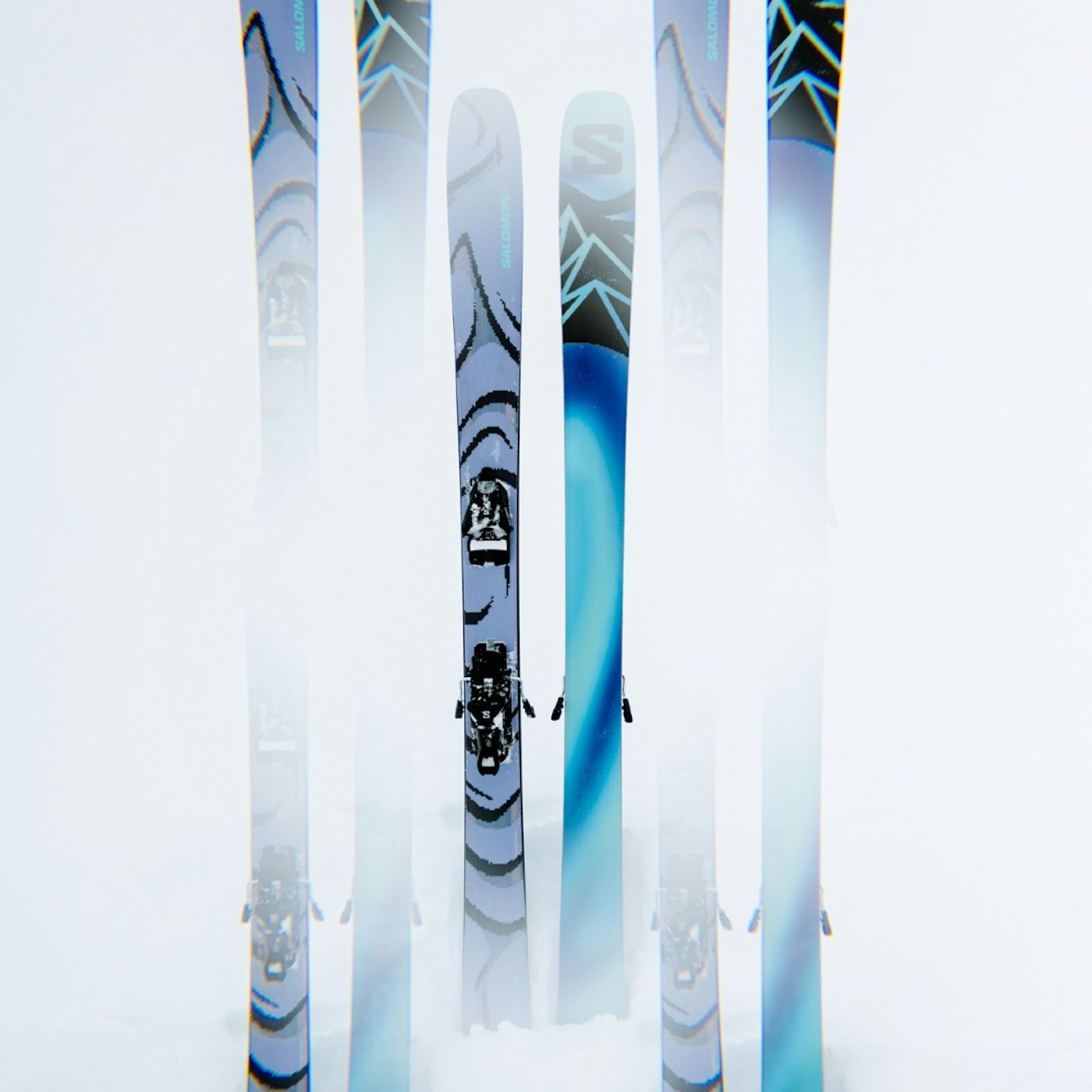
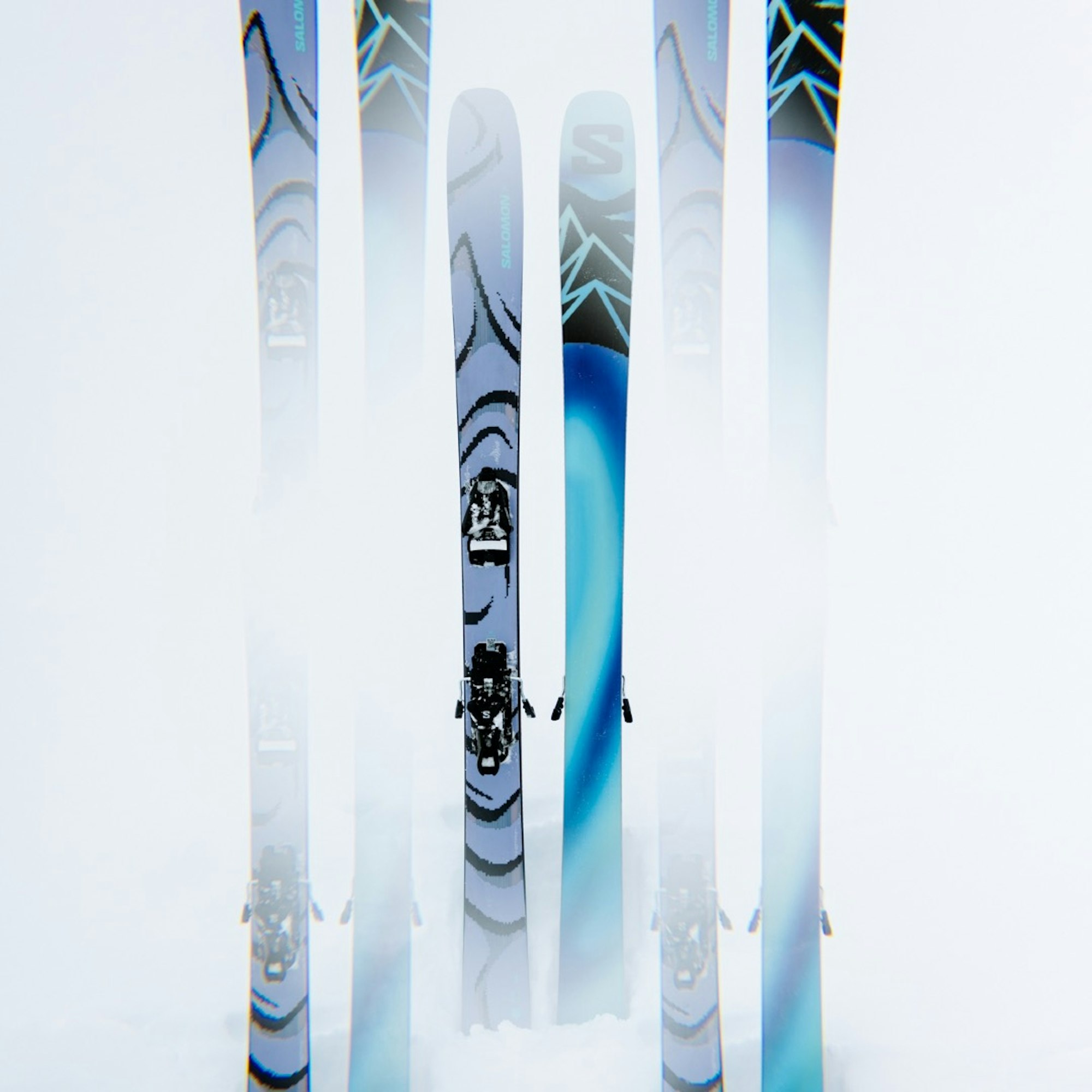
A small but important change that’s worth noting is that the new QST Blank is moving under the S/LAB umbrella, Salomon’s de facto sandbox for new and innovative products. Most of the products in S/LAB are designed by and for athletes, representing the cutting edge of innovation, design, and materials.
“We use S/LAB as a way to test and roll out new products each year, which trickles down to other products in the coming years,” says Johnson. “The S/LAB is our secret sauce, enabling continuous innovation and forward-thinking products. It allows us to take on niche products and try wild ideas, and test and iterate on them, like the new QST.”
Ultimately, Salomon’s 2027 overhaul of the QST line represents a calculated gamble to modernize their offering for a younger, evolving demographic. “Without Quentin, his expertise, and willingness to see the big picture, it wouldn’t have been possible,” adds Johnson. “He lived in the US for months to make it happen.” That commitment to gathering deep, on-the-ground insights across the U.S. and shifting from a tiered skill approach to a unified, high-performance construction, the brand has successfully leveraged its massive R&D capabilities to create a more cohesive and responsive freeride collection.