
Words & Images: Andy Cochrane
In final days of July, 2025, writer and photographer Andy Cochrane headed south to Portillo, Chile. A renowned destination for steep, alpine skiing, Portillo is home to a thriving ski culture that has endured, evolved and managed to stay true to its roots. From the unique experience of riding a slingshot lift to steep turns down the Super C Couloir and everything in between, Cochrane recounts his recent travels and shares a few insights he picked up along the way.
I tucked the frisbee-sized seat in between my legs, grabbed the metal bar, and looked over at my partner, Jenny. Already seated, she smiled back, well aware of what the next sixty seconds had in store. I turned to the lift operator, said “listos” – Spanish for ready – and before I looked forward, we launched uphill.
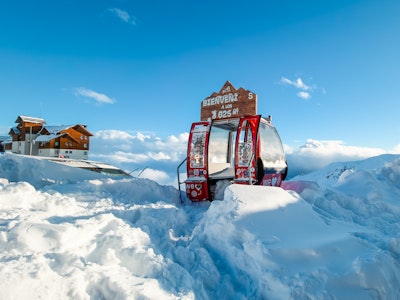
Explaining the slingshots at Portillo takes careful wordsmithing, as they’re unlike every other ski lift in the world. Saying too much about them feels rhetorical, but saying too little means you’re not doing them justice. This remote outpost in the High Andes is home to the only four in existence, manufactured in 1960 by Poma, a French company, and kept alive by the industrious operations team at the resort.
Slingshots were designed to haul skiers up avalanche chutes where standard chairlifts wouldn’t survive, unlocking terrain that would otherwise require a long skin track or bootpack. Moving at max speeds of nearly 30mph (according to my watch), the best way to describe a slingshot is a t-bar on steroids.


The famous slingshot lifts are worth a second look... and a second lap
While slingshots are a major draw for guests, they are an even better metaphor for what makes Portillo so special. Time at the resort moves both fast and slow. Ski days fly by, with new lifts and powderfields to explore, apres in the hot tubs and delicious dinners in the rustic dining hall at the base. But, at the very same time, no one – guests, instructors, patrollers, waiters or even the slingshot lifties – is ever in a rush. Jenny and I assimilated to this slower speed of life within hours of arriving, enjoying the simple pleasures that come with it.
A Lucky Storm Cycle
A day earlier, we had landed in Santiago as a three-foot storm put the final touches on a white blanket over the Andes, which created some unpredictability without travel plans. Uncertain if the road to Portillo would be open, we booked an extra night in Santiago, just as a contingency.
Fortunately, luck was on our side. The Chilean police opened the road an hour before we got to the blockade, letting just shuttles to Portillo up the road, while other tourists and semis had to wait another couple of days. Sitting in the back as the driver took corners at speeds that nearly made us carsick, we weaved up the famous 30 hairpin switchbacks of Caracoles, all the way to the resort. Despite the nausea, we arrived eager to ski, thanks to almost perfect conditions. Portillo had been dry for all of July, until the faucet turned on a few days before our trip.
Portillo sits at 9,400 feet, close enough to the Argentina-Chile border that you can see the customs building and a line of cars waiting to cross. It’s a two-hour drive from Santiago, barring issues with traffic or closures. After touching down at 7 AM local time, we grabbed our ski bags and found our driver outside, allowing us to arrive at Portillo around lunchtime.
Learning The Ski Terrain
Instead of eating, Jenny and I threw on our boots and walked out the back door of the hotel and found ourselves staring at Lago del Inca, a glistening blue lake surrounded by a steep cirque of peaks that rise more than 5,000 feet above the hotel, including a few higher than Mt. Whitney.
While you don’t have to be an expert to ski Portillo, it’s a lot more fun if you are. Accessing most of the sidecountry requires confidence in tight turns on variable snow in exposed terrain, not to mention having the right safety tools, namely a beacon, shovel and probe.


An impending storm means its time to pray for pow and hunker inside the iconic Hotel Portillo
These skills open up a ton of terrain, from the aesthetic Lake Run to the famed Super C Couloir. As one of the most famous lines in the Andes, we had heard of the Super C from Chris Davenport and other friends, but honestly didn’t think much about it before the trip. This was our first visit to Portillo, so everything was new, including the snowpack and avalanche danger.
So, Jenny and I agreed to play it safe, especially because the huge storm fell on a sun crust layer, which typically doesn’t bond well and is a poor combo for avalanches. He had heard about Daron Rahlves skiing Super C the week before, but no one had been up since. Without reliable beta on snow conditions, we planned to give it a couple of days, while skiing similar aspects in less consequential areas to test the snow.
Infrastructure From Yore
Much like racing my childhood friends around our tiny Midwestern resort, skiing at Portillo is an old-school experience. A large reason for this is the simplicity of the resort itself. Instead of high-speed lifts, fancy gondolas and new buildings, the owners haven’t changed any of the infrastructure in the last half-century, which creates a feeling of another era of skiing.
Back on the slingshot lift, Roca Jack, Jenny and I arrived at the top and I held the brake line while Jenny and our other compatriots dismounted in sequence, then I pivoted my edges and hopped off, happy that we all made it this far. From our vantage point, we could see a couple of thousand feet downhill and only a dozen skiers, leaving us almost endless terrain to explore.
The Place All To Yourself
With 1,200 acres of skiable terrain – just a fifth of the largest resorts in North America – one might assume Portillo is a crowded resort, but that couldn’t be farther from the truth. Because the hotel has space for around 400 guests, we often felt like we had the place to ourselves.
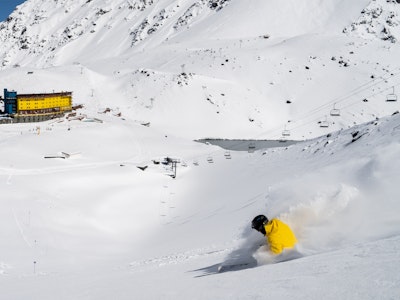
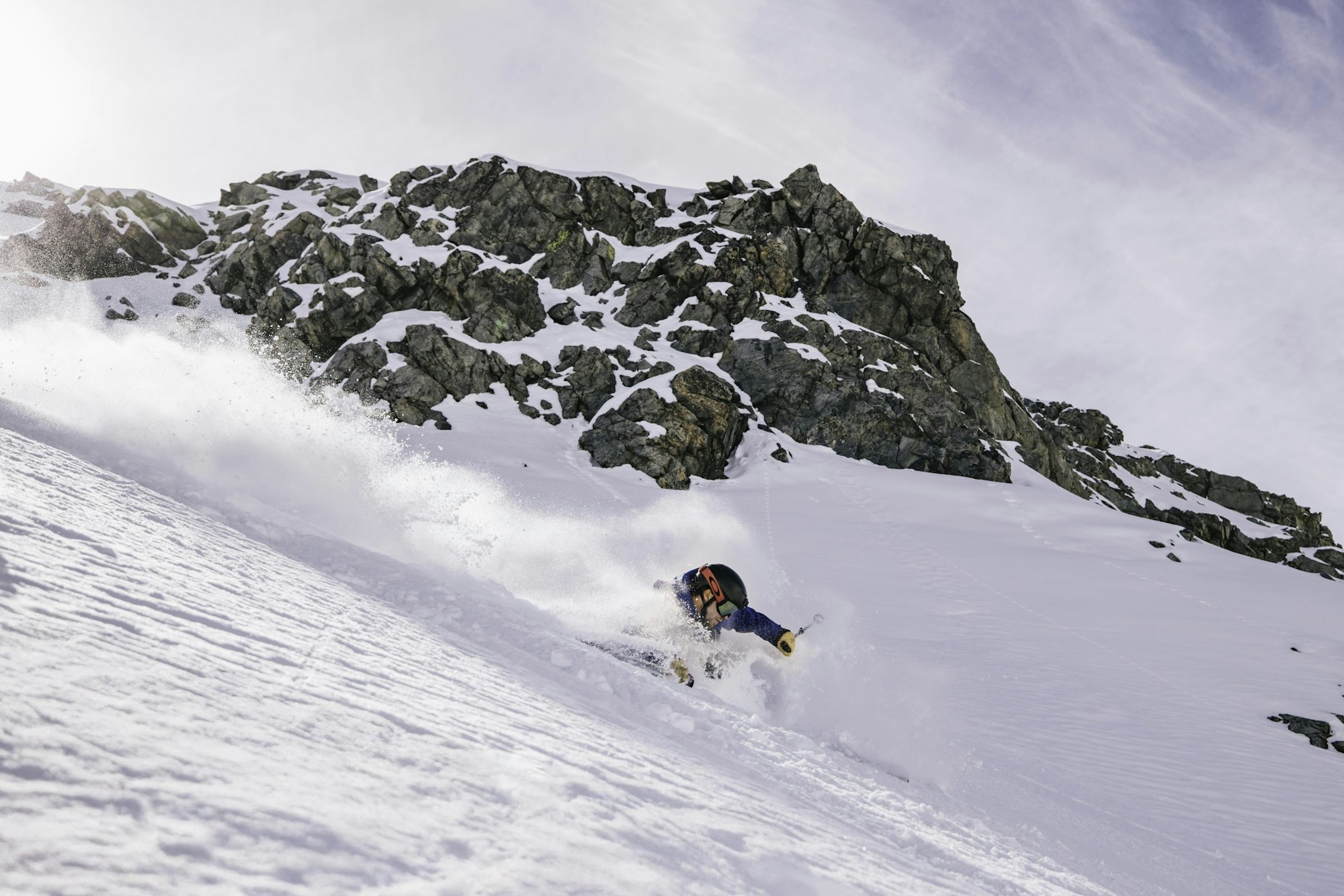
The bright yellow building is visible from almost the entire ski terrain, with the only exception being where we ended our first day, the bottom of the Juncalillo lift. Tagging along with a few off-duty ski instructors on an off-piste run called Stadium, we had to rush to get back to the lodge before the lifts closed at 5 PM.

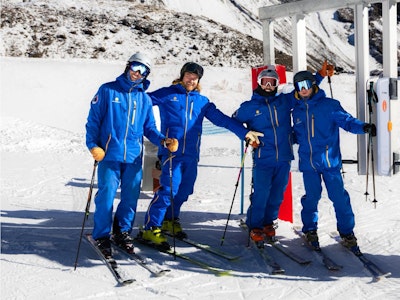
Declan Kelly, one of the many talents off-duty instructors
Declan Kelly, one of the many talents off-duty instructors
After dropping our boots with the valets, we got our first bearings inside the hotel, which feels more like a time machine or history museum than anything else. The walls of every hallway and each room are filled with old film photos of long wooden planks, wool sweaters and misfits skiing deep snow with reckless abandon. Each photo has its own story, as we would soon learn.
Meeting the Cruise Director
As we walked up a level, we were greeted by Felipe Lopez, the self-titled “Cruise Director of the big yellow boat.” Felipe has been at Portillo since 1976, but his main responsibility now is to make sure guests feel comfortable, which he does with a wide smile, deep laugh, and an insatiable amount of positive energy.
After an impromptu tour of the dining room, lounge, gym and basketball courts, we settled into our room, a quaint abode no larger than a college dorm. Without a TV or other amenities, it’s abundantly clear where the priorities of Portillo lie: skiing and community. Everyone else gets thrown by the wayside and I can’t emphasize enough how special this reduction is.
With dinner not until 7:30 PM, we had ample time to relax in the large hot tubs overlooking the lake, to enjoy pisco sours with new friends, and then fully appreciate a slow meal together.
Fresh Tracks On The Super C
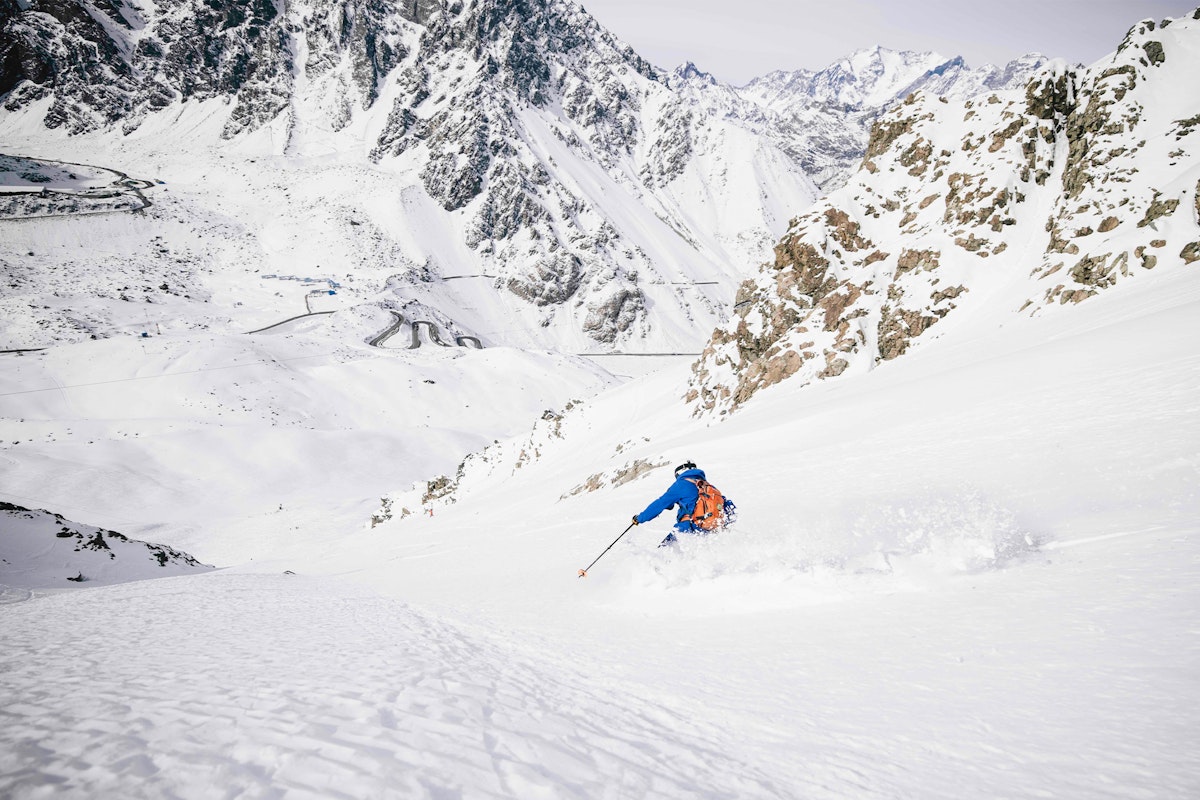
On our fourth day, Jenny and I decided to go for it. We were the first on the Laguna lift and second up the Roca Jack, behind a few patrollers. We threw on skins at the top of the slingshot and made good time heading up to the crux traverse, stopping briefly to enjoy views of Aconcagua, the highest mountain in the Western Hemisphere.
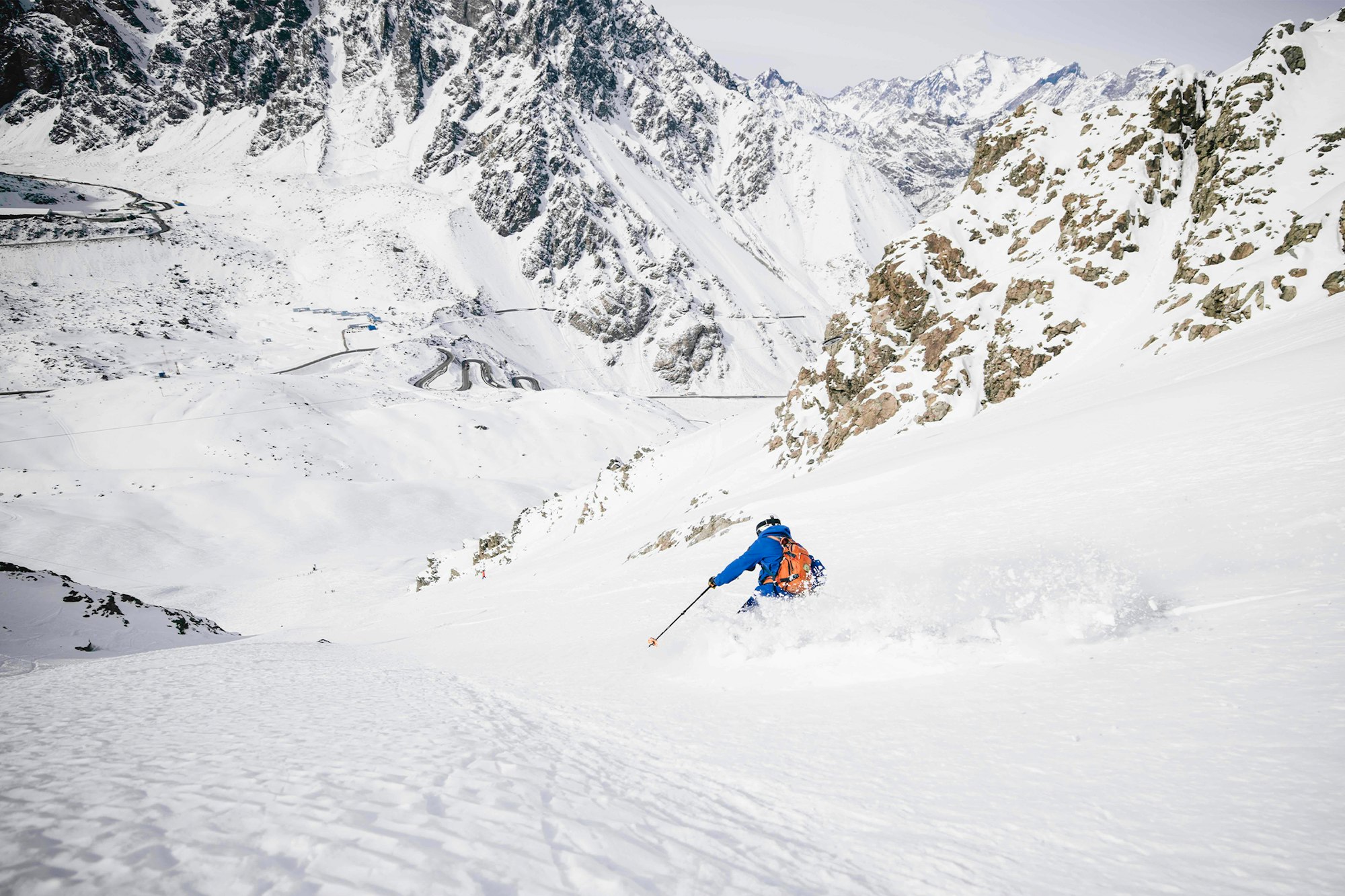
We grew optimistic as we climbed higher, observing no cracking or concerns with the snowpack. At that point, we knew we had a chance to score a run of a lifetime: a four and a half thousand foot descent through a 30-foot-wide couloir. That’s something you don’t get very often and we didn’t want to waste it.


At Portillo, it's usually worth the climb
The last thousand feet of the ascent was a grind, swimming in waist-high snow up the 45-degree slope. An hour later, we gained the ridge and despite being sweaty and tired, we were excited for what came next.
A few ski cuts produced no reactivity, but unearthed a new problem: a thick wind crust. The crust forced us to ski the first thousand feet slowly and methodically, but gradually the snow improved, allowing us to open up our turns and enjoy the rest of the line with much more freedom.
The Magic of Portillo
Our surprise score of Super C sums up Portillo well as a whole. There’s a magic that goes beyond the slingshot lifts, pisco sours, hot tub views, and empty lift lines. It’s hard to put into words, but easy to feel. Like many of the best things in life, you have to experience it firsthand to truly understand.
The magic of Portillo reveals itself most readily to those who show up at the resort with an open mind and embrace what the moment gives you, whether it be new friends, hot laps down powder fields, or fresh tracks on one of the most famous lines in the world. Portillo, more than anything else, is a reminder of why we all love skiing: it’s a resort that makes you feel like a kid again.
![[GIVEAWAY] Win a Full 26-27 Ski Setup from Fischer](https://www.datocms-assets.com/163516/1790101711-00012060-edited.jpeg?w=200&h=200&fit=crop)
![[GIVEAWAY] Elevate Your Ski Season With a Custom Ski Boot Upgrade from Surefoot](https://www.datocms-assets.com/163516/1790362417-surefoot-remedy130-leaderboard-2240x1520.jpg?w=200&h=200&fit=crop)