
The idea of connecting Squaw Valley and Alpine Meadows isn’t a new one. Talk of fusing the two Lake Tahoe resorts has been circulating among the locals there for decades. The dream began over sixty years ago with one of Squaw’s original founders, Wayne Poulsen. Monday’s agreement between Squaw Valley Ski Holdings, LLC and private landowner Troy Caweldwell shouldn’t come as a huge shock to anyone.
The resorts have been under the same season pass and branded as Squaw Valley Alpine Meadows for awhile. Since Wirth’s 2010 arrival in North Lake Tahoe and the 2011 acquisition of Alpine Meadows, he and Caldwell have been formulating a game plan for the connection. The blueprint circulated around Caldwell’s 460-acre piece of land between the two ski areas, 75 acres of which is leased to Squaw Valley by the longtime local.
Watch: Squaw Valley and Alpine Meadows gondola connection.
Thanks to a deal struck in 1990 with the Southern Pacific Railroad, Caldwell is owner to some prime real estate. The land he leases to Squaw Valley includes KT-22, a mountain that Wirth describes as “not just a key part of the Squaw Valley experience, but arguably one of the key epicenters in all of North American big-mountain skiing.”
Prior to 2011, Caldwell underwent heavy legal battles and litigation with Squaw Valley Ski Corp. over disputes on the lease as well as Caldwell’s plan to develop his land into a small ski area dubbed White Wolf Mountain. That all changed when Wirth came to town that year.
“For basically fourteen years there were lawsuits and different negotiations for settlement, and luckily [in 2011] Andy Wirth took the helm at Squaw Valley and we hit it off,” Caldwell tells me on the phone as he drives over Donner Pass. “We knew what we needed to do: connect these areas. It was the best thing for my project, the economy and their company. We shook hands maybe three years ago, said ‘let’s get this done,’ and we did it. The formalities are now taking place.”
Upon arrival at Squaw Valley, Wirth wanted to make it clear to Caldwell, and all parties involved, that he wasn’t planning to go about this issue in the same manner as his predecessors. Prior to the purchase of Alpine Meadows in 2011, Wirth “sat down with Troy and his wife, and made it clear to them well in advance of the closing of the acquisition, that it would be our intent to purchase Alpine Meadows,” he explains. “The next round of conversations centered around, ‘hey what do you think? Can we actually connect these two mountains?’ He immediately embraced it. By that point we were friends and quickly found alignment in the vision of connecting Squaw and Alpine.”
And so began the road to where the proposed connection stands today. The duo toured ski resorts around Colorado, Utah and Wyoming for research on how to successfully complete the project. “We took a look at some other projects that existed in the Mountain West, went on tours and we learned,” Wirth explains. “I showed him certain projects and got his opinions. We shared notes on what we thought worked well and what didn’t.”
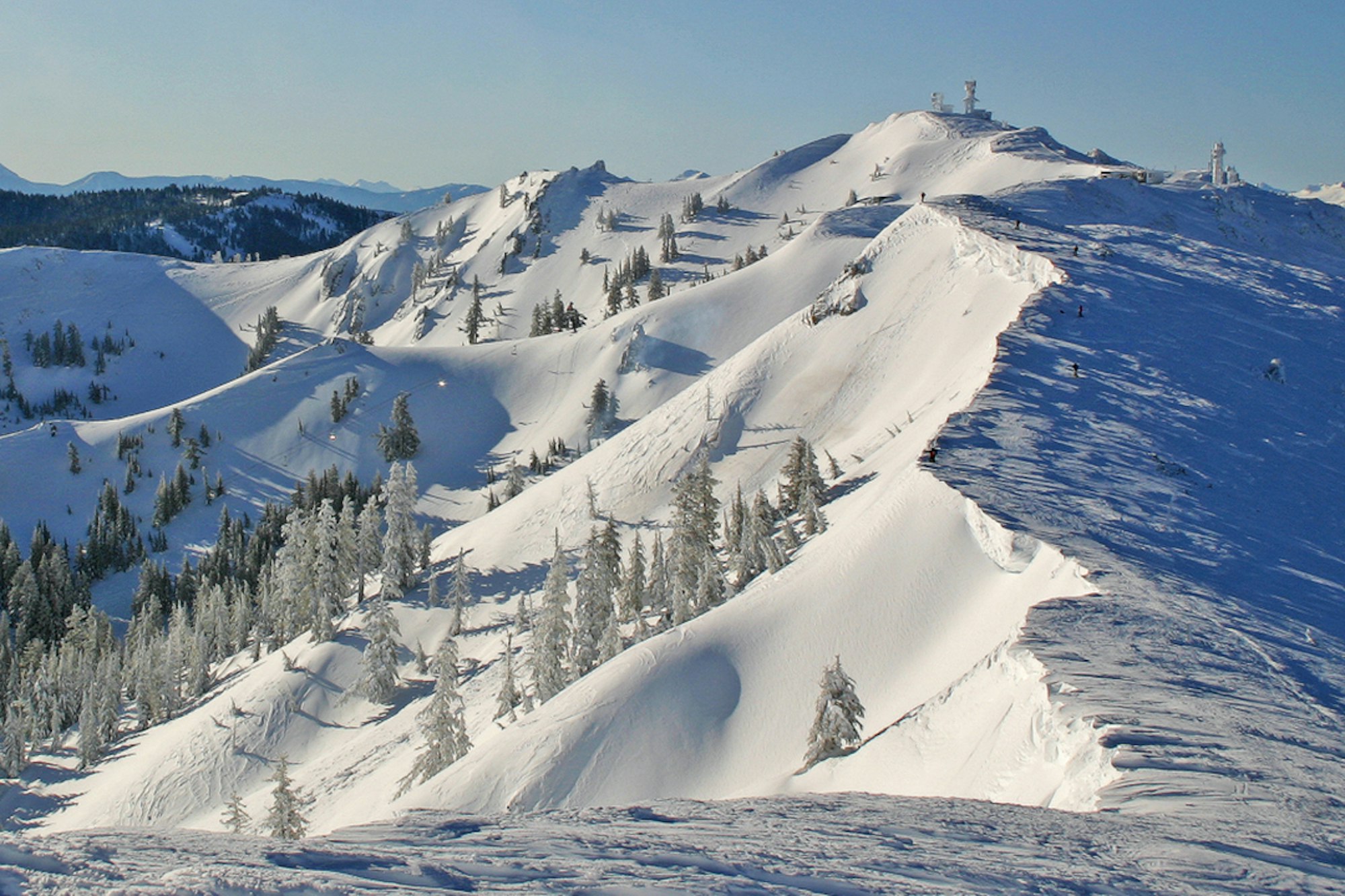
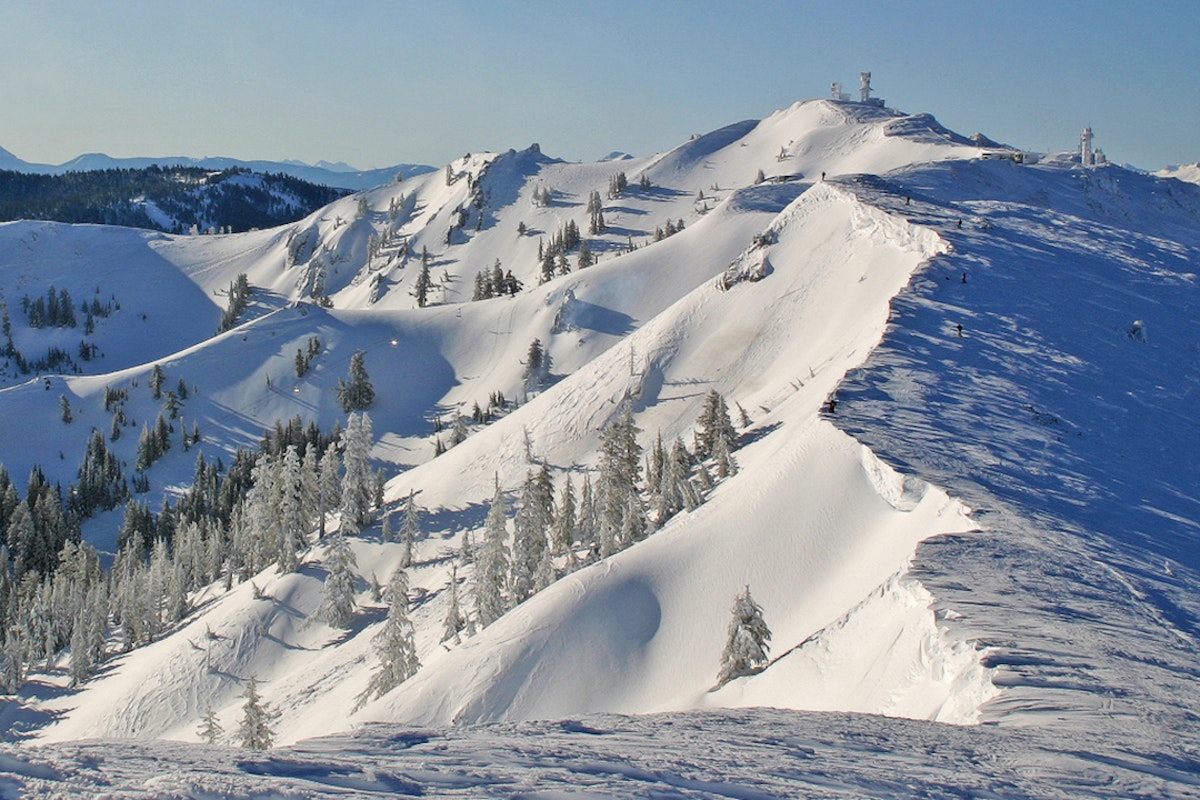
The biggest benefit from the connection is obvious: a combined 6,000 acres of world class terrain, accessible via a 13-and-a-half minute gondola ride with load and unload stations situated at the peaks of both mountains, giving skiers more freedom of choice on where to shred.
Meetings ensued. Wirth is glad to say the majority “were up on the mountain, on skis, hiking, trekking around the entire area.” The two came up with ideas and reviewed 28 different scenarios on how they could connect the areas by chairlift, while at the same time keeping business terms surrounding a long term lease in mind. And so came Monday’s announcement of an agreement between the two. “That’s the announcement; it’s that we’ve executed these leasing agreements that allow us to move forward on trying to connect the mountains,” says Wirth. “We’re really prideful that this is a connection of two great mountains that is not being born out of lawyers, vitriolic filings in court and judges’ decisions. This is a connection being born out of a friendship, out of many hours and days spent up in the mountains.”
The next step for the connection development will come this summer, when Squaw Alpine submits its plans to the U.S. Forest Service and Placer County.
While the majority of feedback concerning the development has been positive, this news comes at a time when Squaw Valley is in the midst of a proposed expansion of its base area. The proposal has been met with considerable pushback from the community, and the Squaw Alpine connection has also brought up certain concerns.
“Certainly there’s understandable concern. It’s news to folks and involves change,” Wirth explains. “We’re going to engage with everyone who has a constructive thought on how we can make the best out of this very positive situation.”
A big question is the impact on the high alpine environment. The planned gondola line will rise up from the base of Squaw Valley, continue along the ridge between the ski areas and end at Alpine Meadows’ base area. The line will butt up against the Granite Chief Wilderness Area, which is of course, not developable. Within the Granite Chief area sits Five Lakes, one of Tahoe’s most trafficked backcountry zones in the non-winter months. Wirth, a former wilderness ranger for the USFS in the San Pedro Parks Wilderness Area of northern New Mexico, shares these environmental concerns.
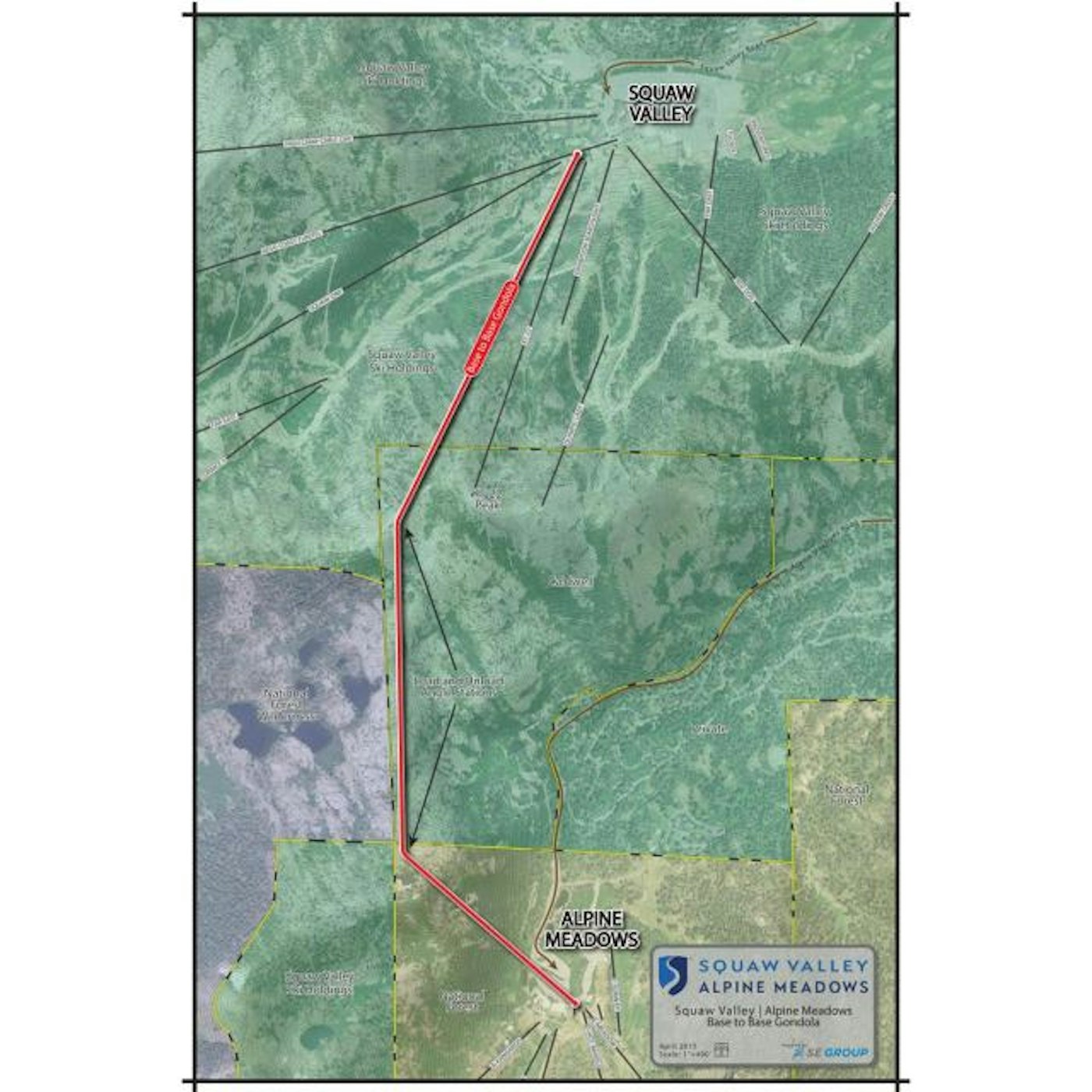
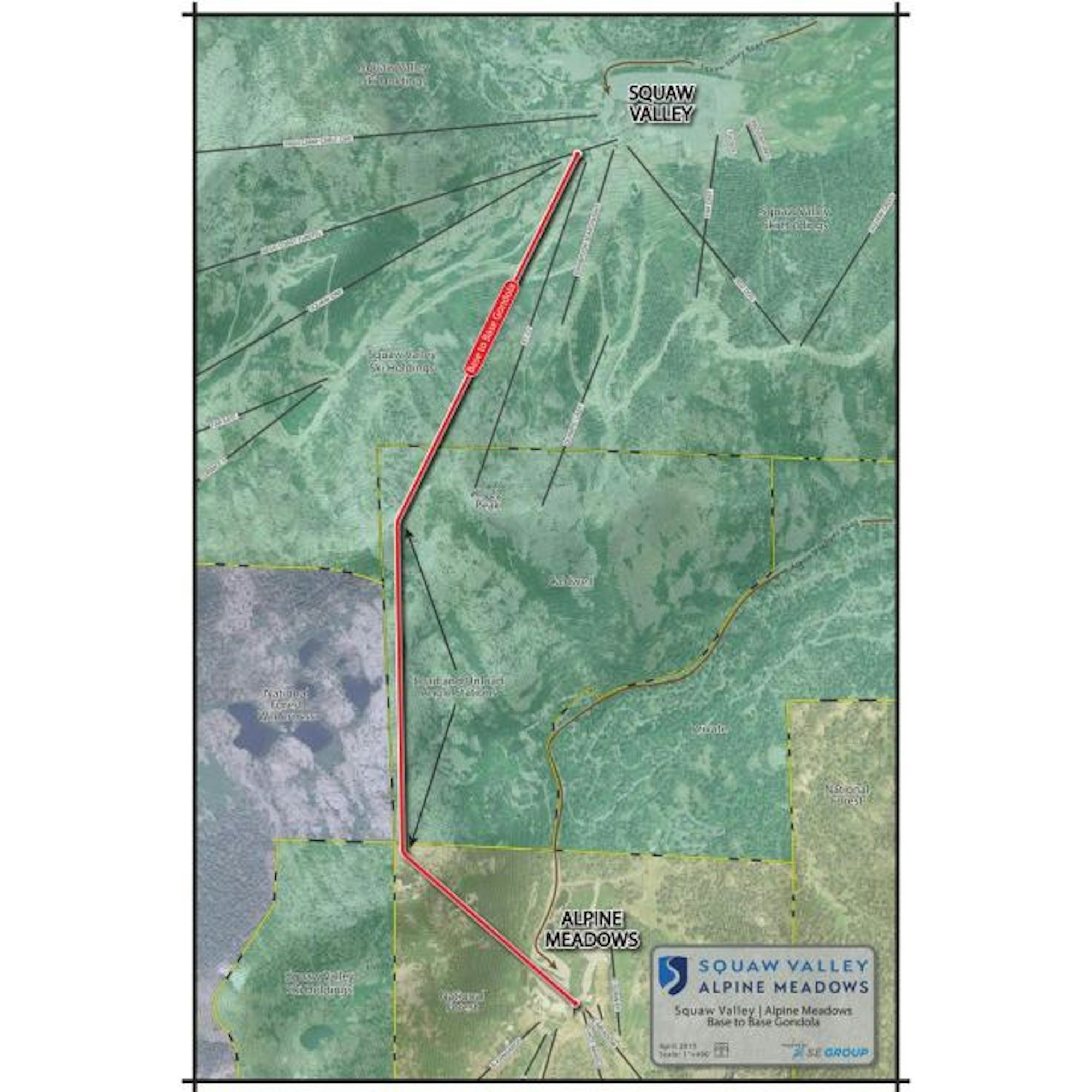
The plan is to have a lower capacity gondola, and construct the line with the shortest and least amount of lift towers as possible. Wirth explains that over 85-percent of traffic along the Five Lakes Trail occurs in the summer months. In turn, he’s contemplating ceasing gondola operation in the summer and pulling the gondola cabins down.
“I’ve spent a great deal of time back there, and it’s with that personal experience, backed up by some initial design and engineering drawings, that indicate that you’ll have a very difficult time seeing the gondola from any part of this Five Lakes component of the area.”
Working through the environmental and aesthetic issues will entail the participation of the nearby community—something both Wirth and Caldwell understand. Recently, Caldwell took several trips to Europe in an effort to gain perspective from the massive resort communities across the pond. “I was trying to evaluate how different communities connect and still keep their same identities. We’ve gained a lot of intel and hopefully will be able to implement them into our project here.”
“We’d like to go back to that place, back to where our mountains used to be in people’s minds and hearts. And we think this is going to enable moving us one step closer to that.”
Getting the community on board will entail many public forums and meetings, and the assurance that the new developments won’t compromise the integrity of the area, as well as the individual ski areas.
“We’re going to be hosting a great number of community engagement sessions. We’re going to be asking our customers and folks that live here what they think the key characteristics are that define each mountain and we’re going to listen intently,” explains Wirth. “We’ve been doing that for the past three years and see very clearly what made Alpine Meadows so attractive from an acquisition perspective. It’s not just that it’s next door to Squaw and that there is the prospect of connecting the mountains, but it offers our guests something different. We celebrate the fact that they have distinct heritages, types of skiing and vibes.”
Caldwell, who was sponsored by Alpine Meadows in his time with the US Freestyle Team and has lived in the area for 43 years, will aid in getting the community on board. “I’m kind of a local influence and I’m very grateful to have that position,” says Caldwell. “I’m knee deep in the whole activity because I understand the mountain so much. I’ll be the eyes and ears on the ground as far as a timeline to when we can start the project rolling.”
The goal, in Wirth’s mind, is to return Squaw and Alpine to the glory it had way back in the 1960s, 70s and 80s, when, Squaw Valley in particular, was thought of “as one of the preferred destinations in all of North America. We’d like to go back to that place, back to where our mountains used to be in people’s minds and hearts. And we think this is going to be and enable moving us one step closer to that.”
For Wirth, the connection of the mountains represents the fulfillment of a dream that started with Squaw Valley founder Wayne Poulsen over 60 years ago. “This was one of [Poulsen’s] original dreams and visions, and we truly stand on the shoulders of giants,” explains Wirth. “We’re respectfully in this position of being mountain stewards. There’s an emotional element involved with this that has to do with where we call home, the mountains, the dreams and visions of those who proceeded us.”
Related: Squaw Valley and Alpine Meadows release plans to connect via base-to-base gondola