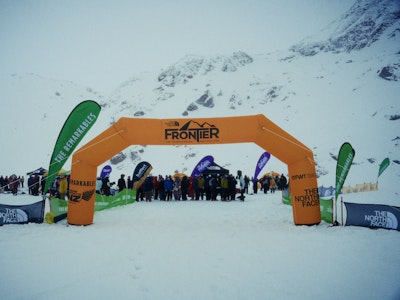
Once synonymous with mountain lifestyle, the Gore-Tex brand is now more prevalent in metropolitan areas such as New York and San Francisco than it is in mountain communities like Jackson Hole or Crested Butte. Salomon, known for revolutionizing ski bindings in the 1950s and later pioneering the first twin-tip ski, is now more widely recognized as a sneaker brand than a ski manufacturer—by a mainstream audience that has never heard of freeskiing legend and Salomon athlete Mike Douglas . And The North Face, once defined by expedition-grade tents and parkas, is now best-known for collaborations with fashion brands like Gucci and Supreme.
Collaborations like these, once seen as radical departures from outdoor industry norms, are becoming increasingly common as urban consumers adopt products specifically built for elite mountain performance. The result is a shift in design functionality, aesthetics and marketing, as companies welcome a new demographic of consumers and attempt to balance priorities between the massive upside potential of mainstream consumers and the demands of authenticity and performance from the outdoor community.
Thankfully, bringing the mountains to the city does not necessitate a compromise in quality. This new consumer segment wants high-end gear that they can adorn as a quiet status statement, and they’re willing to pay for it.
Success lies in translating mountain-born credibility into urban environments without diluting the performance and purpose that built it. Arc’teryx is a prime example of this evolution and a somewhat fitting one, given the name. The brand’s moniker is derived from Archaeopteryx Lithographica: a prehistoric species that bridged the gap between dinosaurs and birds (now you know what that logo is that you’ve been staring at all these years). The name literally stands for radical evolution and the Arc’teryx’s Veilance line is just that. A product line that was born in the mountains and adapted to cities—preserving the primary functions while adopting new traits to succeed in the urban wild.
Veilance distills alpine heritage into pure function and conveys a quiet legitimacy that earns trust in the cityscape. But instead of lowering the price point to lure in these new customers, Arc’teryx appears to be doing the opposite. A quick glance at its website shows the top end Arc’teryx PRO jacket selling for $1,000 and a Veilance down jacket garners a lofty $1,800.
While brands like Arc’teryx and The North Face approach the market from mountain roots, younger brands were built on this very culture and thrive in the ecosystem that surrounds it. The luggage company now known as Db was created to cater to ski travel but evolved to meet the needs of content creators and consumers who wanted more than just luggage—they wanted a brand that represented their own identity. Sleek and minimalist, the Scandinavian gear was a departure from typical outdoor industry luggage and quickly gained popularity among discerning consumers. They also adopted the limited “drop” model, which had been perfected by streetwear brands like Supreme.
In a world dominated by algorithmic puppet mastery, the strategy built hype created demand and forced a physical journey that drove consumers to brick and mortar stores. The success of the brand led to an investment from LVMH Luxury Ventures. As the investment arm of Louis Vuitton Moët Hennessy, this was a massive validation for the company and proof that brands that begin in the outdoor industry can later bridge the gap to much larger and more influential markets.
On the far end of the spectrum, Capeesh is one of the most modern examples of a “for us, by us” brand that was inspired by street culture and built on the shoulders of companies like Jiberish and Saga. It began when Norwegian Olympian Ferdinand “ Ferdi ” Dahl and friends began making gear that they simply wanted to wear. The belts, hoodies and shirts were a natural fit with handrails, stair sets and Level 1 soundtracks.
The apparel company looks more like a skate brand than a ski brand, which is not a bad thing because core consumers relate to values that grow from culture, not from a boardroom. While larger brands must tread lightly in this space, brands like Capeesh bring an inherent authenticity to which consumers latch on to.
Whether coming from the top or bottom of the totem pole, there’s no denying the growing convergence of technical brands and urban culture in recent years and the massive influence it will continue to convey. The brands that get it right will dig their roots deeper, creating opportunities for people to engage and explore, crossing the geographical chasm between seasons, spaces and experiences.
This is not appropriation. It’s a natural evolution and an opportunity to deepen brand loyalty. To invite those who grew up listening to trains or traffic instead of wind whistling through trees, and show them a world where you can feel like you’re flying on two planks of wood.