Featured Image: Elise Sterck
Skis have come a long way from the crude planks once used only for transportation. Today, every pair on the wall has its own distinct personality, dictated by a precise blend of core materials, layup methods and geometry. Before you dive into the reviews, here’s a quick breakdown of ski design fundamentals, just so we’re all on the same page.
Sidecut
The curvature of a ski’s edge, from tip to tail, is known as the sidecut. Most modern skis have an hourglass shape, where the tip and tail are wider than the center of the ski. That being said, not all hourglass shapes are created equal. The amount of taper between the tip or tail and the waist of the ski dramatically affects its turning prowess. The wider the difference, the harder it turns.
Those who prefer aggressive carving and a tighter turn shape will benefit from a tighter sidecut radius. Those who enjoy long, drawn-out turns might favor a shallower curve. On more eclectic models, you’ll find a reverse sidecut, where the center of the ski is wider than the tip and tail, significantly reducing the amount of ski edge that touches the snow. This style is mostly found on powder skis, as it makes skis loose and playful.

Photo: Elise Sterck
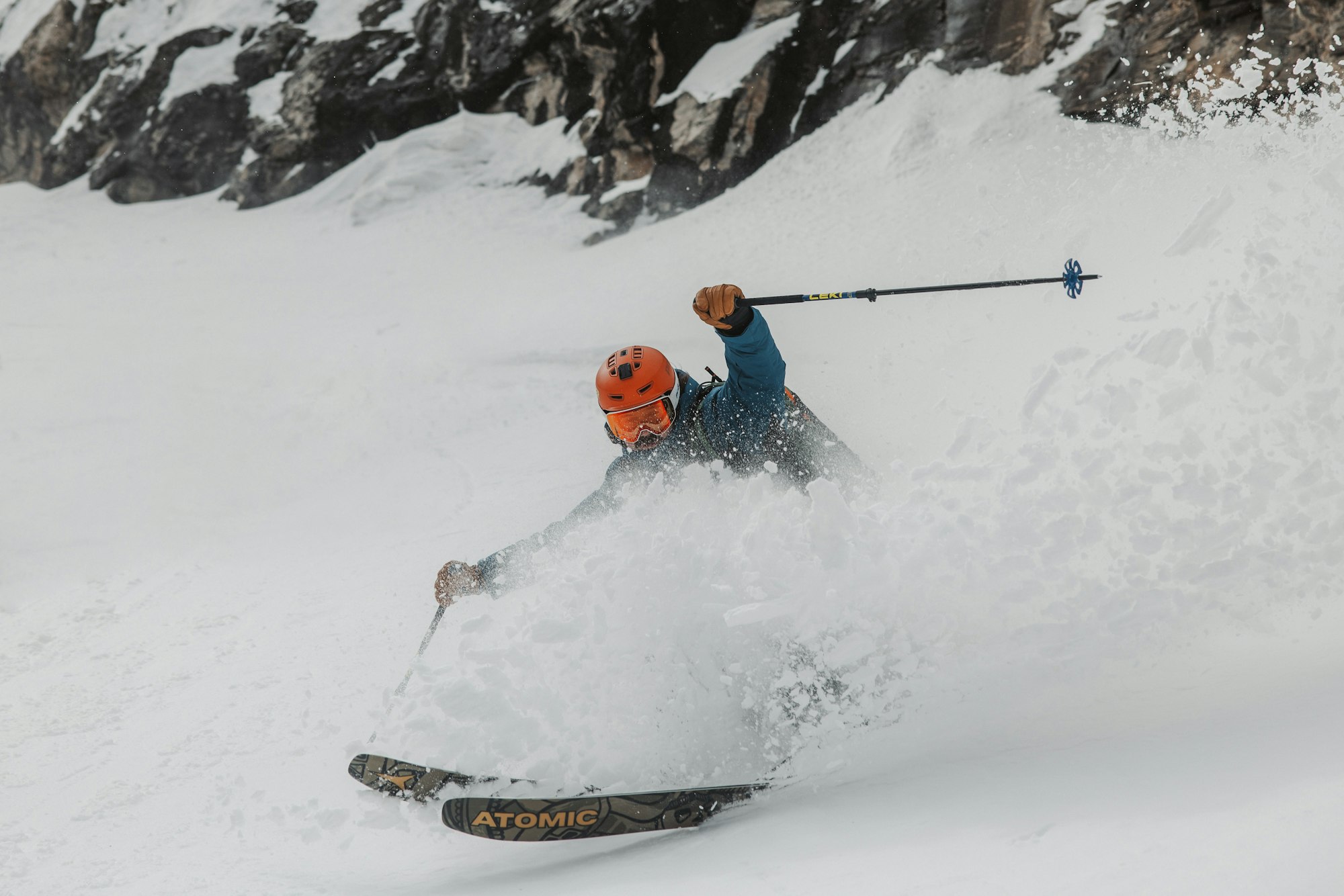
Photo: Elise Sterck
Waist Width
Measured at the center and typically the narrowest point of the ski, waist width generally indicates the type of terrain the ski will be happiest in. As a general guideline: 75 to 95 mm for park, pipe and firm frontside skiing; 95 to 104 mm for all-mountain; 105- to 115 mm for big-mountain and off-piste skiing; and 115 mm or wider for powder hunting. That’s not to say you can’t ski a 110-mm waist in the park or that you won’t have a blast crushing powder with a 102-mm waist, but these guidelines are a good place to start.
Ski Types
Directional skis typically feature a wide tip and a narrower, flatter tail. These skis are designed for one-way skiing and traditionally appeal to skiers focused on carving and smooth turn transitions rather than freestyle endeavors. A great example of this ski type is the Stance line from Salomon.
Twin tip skis feature identical tip and tail profiles, allowing you to ride them both forward and switch. They have a substantial amount of tip and tail rocker, which enables easy pivots, butters, switch skiing and quick turn releases. While they do sacrifice some of the charging power and stability of directional skis, twin tips excel in the terrain park, powder and anywhere your creativity takes you. A great example of this type of ski is the Atomic Bent Decode.
Directional freeride skis split the difference between rockered, twin-tip skis and directional boards, offering a slightly more symmetrical profile while retaining a wider tip than tail. These work well for all-mountain skiers who want versatility without a full commitment to a freestyle-focused ride. A great example of this type of ski is the Blizzard Rustler 10.

Photo: Elise Sterck
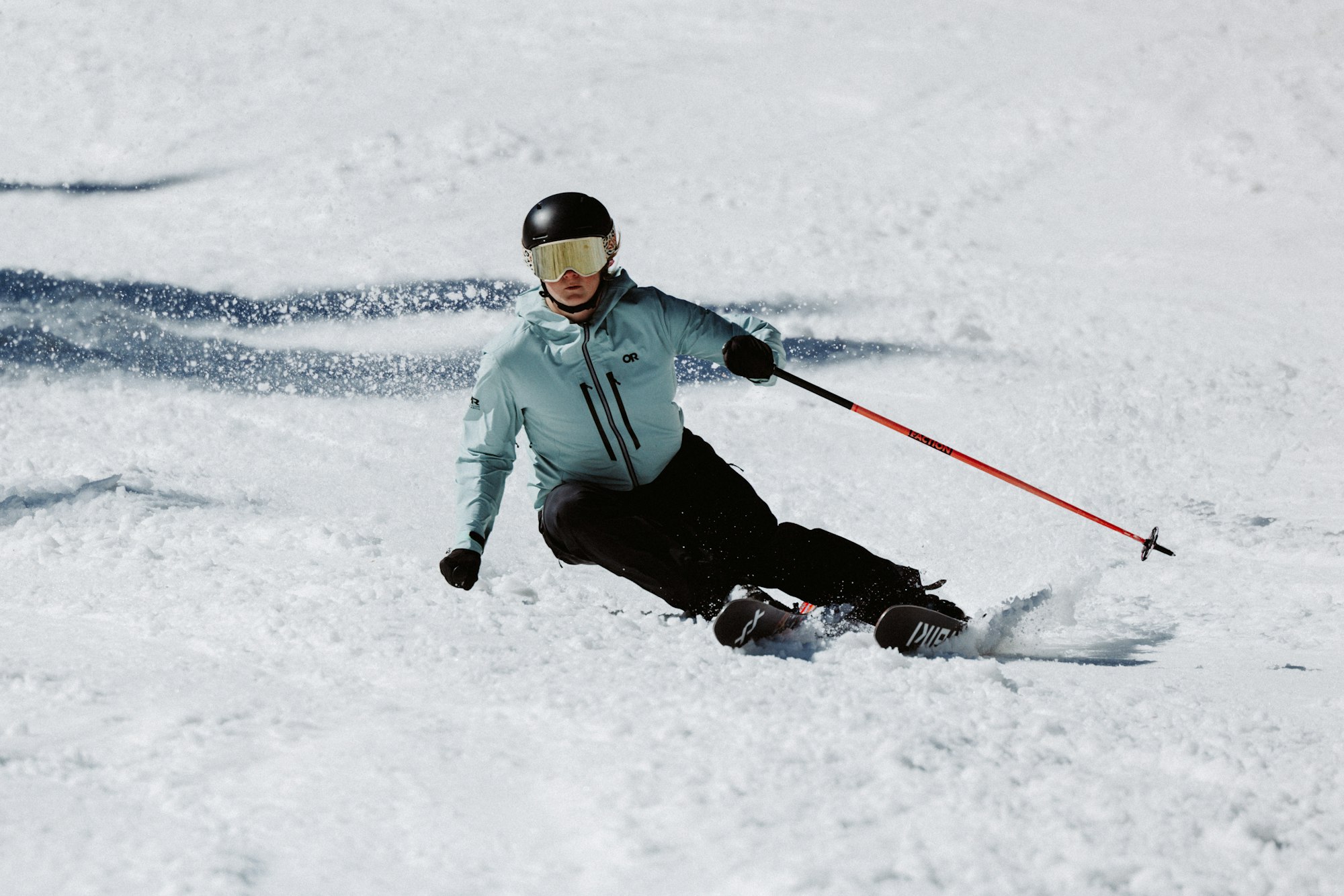
Photo: Elise Sterck
Turn Radius
If you were to ski a perfect circle around a center point using several different ski models, you’d create circles of varying sizes. While we typically don’t ski in circles, we make half-circle shaped turns. Turn radius refers to the size of that half circle. The larger the radius, the longer the arc and vice versa.
Skis with a shorter turn radius, typically 16 meters and below, feel quick and snappy. Models in the 17- to 22-meter range are generally designed for versatility across varying terrain and turn shapes. On the higher end, skis with a radius above 22 meters excel at high-speed, providing stability and long, arcing turns on steep faces or wide-open groomers.
While these numbers provide a solid baseline, a ski’s flex pattern can heavily influence how it actually turns. Softer skis are easier to bend, allowing skiers to manipulate turn shape and create tighter or larger arcs than the stated radius might suggest. Many modern skis also incorporate multiple radii along different sections of the ski to improve versatility and turn initiation. A great example is the Volkl M7 Mantra, which uses four distinct radii to create a smoother, more adaptable feel across a variety of turn shapes and terrain.
Traditional Camber
A ski with traditional camber has an arch underfoot, resembling a rainbow when laid flat on the ground. This profile allows the ski’s edges to make strong contact with the snow, yielding the best power transmission when a skier applies pressure through a turn.
Camber essentially acts like a built-in spring. As the ski bends and compresses throughout a turn, it naturally wants to rebound back to its original shape. When pressure is released, the ski snaps back to that arched profile, creating the energetic, responsive feeling that many skiers associate with strong carving performance.

Photo: Keegan Rice
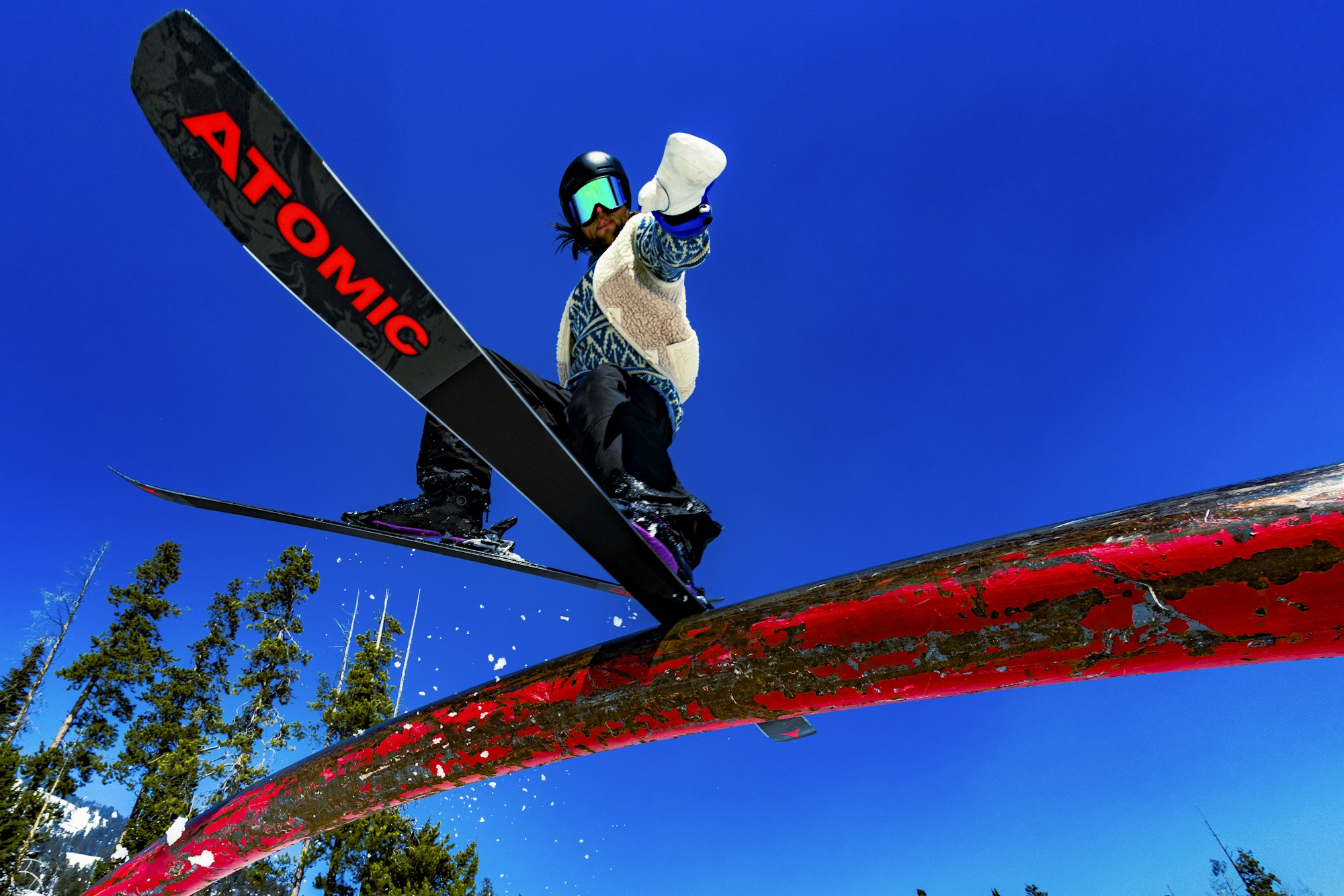
Photo: Keegan Rice
Rocker
Rocker is the opposite of traditional camber. Instead of an arch underfoot, the ski rises upward from the center, toward the tip and tail. This profile reduces effective edge contact, creates a looser, more surfy feel on snow and allows the skier to pivot, smear and slash turns.
Most commonly, modern skis incorporate rocker in the tip and tail while retaining camber underfoot. This combination improves turn initiation, flotation and maneuverability in soft snow while still maintaining edge hold and stability on firmer conditions.
Core Construction
Wood is the essential ingredient in any ski core. On one end of the spectrum, woods like paulownia and bamboo are incredibly lightweight but don’t dampen vibrations very well. In the middle, species like aspen and poplar do a great job of balancing weight and damping vibrations, while still creating pop. On the firm end, fir, ash, maple and beech are dense and thick, ensuring rigidity, stability and power, but they also require more effort to maneuver.
In addition to the type of wood used, engineers can also shape and taper the thickness of it from tip to tail, which significantly affects how a ski performs. Tapering a tip and tail will remove material and lead to softer, more buttery extremities. In contrast, a less dramatic tip and tail taper means there will be more material to provide stability and a stiffer flex.

Photo: Elise Sterck
Photo: Elise Sterck
While wood is a main ingredient in core construction, manufacturers bond various materials to thewood core to fine-tune the ski’s performance.
-
Metal: Titanal is a titanium-aluminum alloy that manufacturers use to add damping and stability. The material has been used for decades but engineers have recently begun milling it into more creative shapes to create very targeted performance in specific areas of different ski models.
-
Fiberglass: This material makes up 50 to 80 percent of your ski’s stiffness. Fiberglass sheets typically sit above and below the wood core, providing great pop when engaged, and it’s more affordable than carbon or Titanal, a primary reason ski manufacturers love the stuff.
-
Carbon Fiber: With an impressive strength-to-weight ratio, carbon is favored by backcountry ski manufacturers but often used in alpine skis to add rigidity and pop, without the weight that metal brings. It comes with a lofty price tag so it’s typically implemented in selective locations metal carries.