Featured Image: Courtesy of Atomic
Ask someone what they are looking for in a new pair of boots and the conversation often starts with flex. Flex rating has become synonymous with performance, with the assumption that a stiffer boot automatically translates to better skiing. But the reality behind that number is far more complicated.
There's an urban legend of sorts that a 130-flex boot got its rating because it took 130 Newton-meters of force to push the boot's cuff 10 degrees past neutral forward lean. But there’s no science or testing to back that up.
"The current flex numbers presuppose a precision that is just not there," says Matthew Manser, Global Product Manager of Alpine & Touring Boots at Atomic.
And as someone who’s spent his entire career looking at ski boots from every angle, Manser says that the mystery around flex runs deep. Before moving into product management, Manser was a bootfitter, working directly with professional skiers for years, including Doug Coombs. Today, he manages Atomic's alpine and touring boot range from Austria.
That means working with research and development teams, guiding design decisions and collaborating with marketing and sales, helping bring products from the earliest concept stage through final production and onto the retail floor. He says flex represents only a small piece of the engineering and testing that determines how a boot performs. The challenge is that the ski industry has built an entire marketing landscape around flex ratings without establishing a universal measurement for what those numbers mean.
The Rise of the Three-Digit Flex System
The three-digit flex system has become so ingrained in skiing that most consumers assume the numbers represent a standardized measurement. A 130 from one brand should, at least in theory, compare directly with a 130 from another.
The numbers became common because retailers and consumers needed a way to understand where boots sat within a product range. As brands moved away from broad categories like soft, medium and stiff, the three-digit system offered a more specific way to position models.
The issue is that the industry adopted the terminology without creating a shared testing method or a common benchmark. "The number has no relation to anything," Manser said. "It's not a measurement of force or degree."

Photo: Elise Sterck
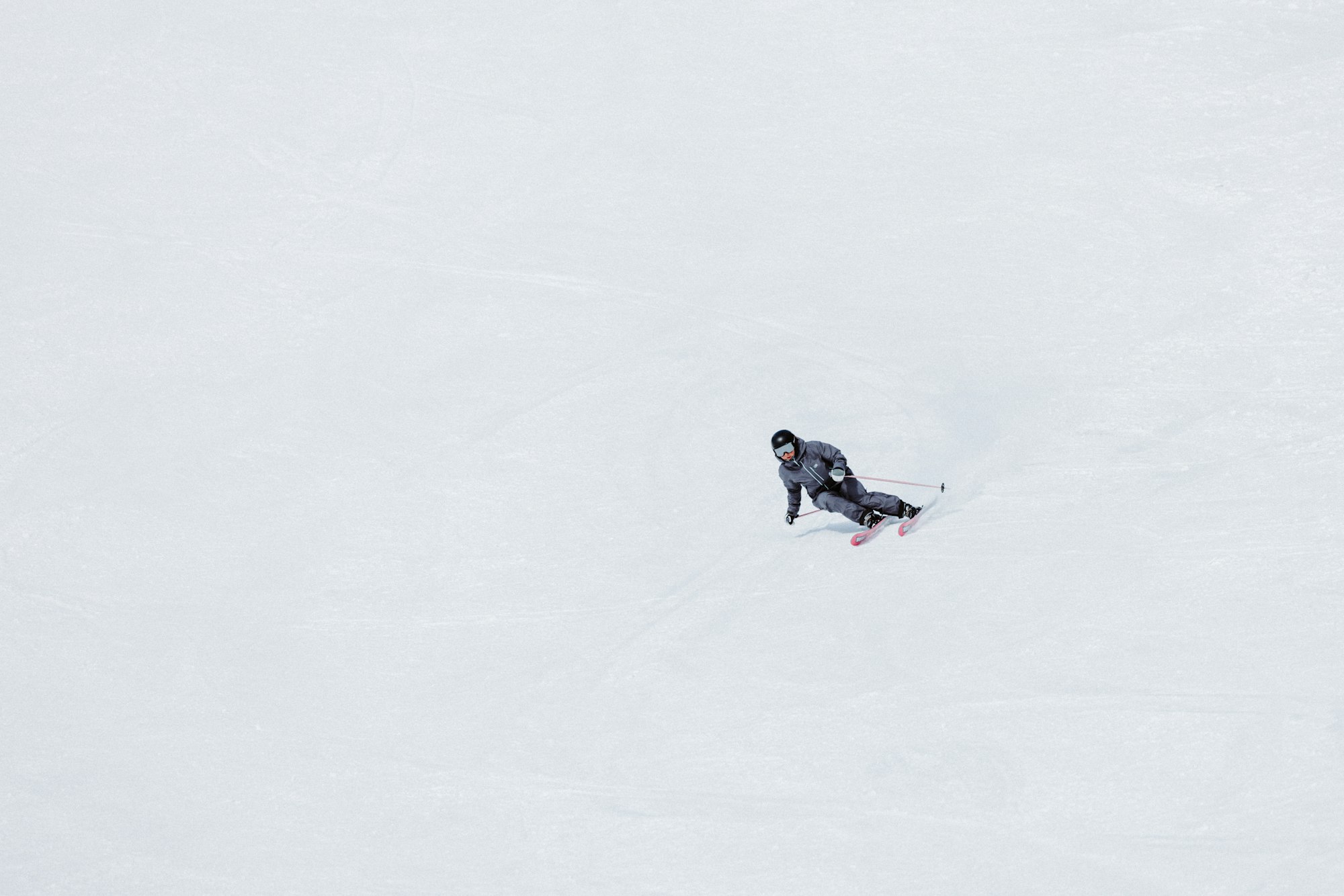
Photo: Elise Sterck
The origins of the modern flex system trace back to the period when brands began moving away from one-to-ten stiffness scales during the 1990s and early 2000s. Race boots, meanwhile, ran on a separate system entirely, labeled soft, medium or stiff, with no numbers at all. As manufacturers looked for a way to distinguish models more precisely, three-digit flex indexes became increasingly common across both categories.
According to Manser, Lange was among the first major brands to put a 130 designation on a boot with the Lange Comp 130 LV/MV in the early 2000s. Nordica used Flex Index 130 branding around that same period, including models such as the Speed Machine 14. By the middle of the decade, the three-digit system had become widely accepted, and by the late 2000s and 2010s, nearly every major brand had adopted some version of it.
The benefit was obvious: A skier could look at a boot and immediately understand where it fit within a brand's range, especially in relation to their own personal use. The limitation was that the number described a position in a lineup, not a standardized measurement of performance.
"Brands started to align the numbers," Manser said. "But the values behind those numbers were never aligned."
How Brands Evaluate Flex
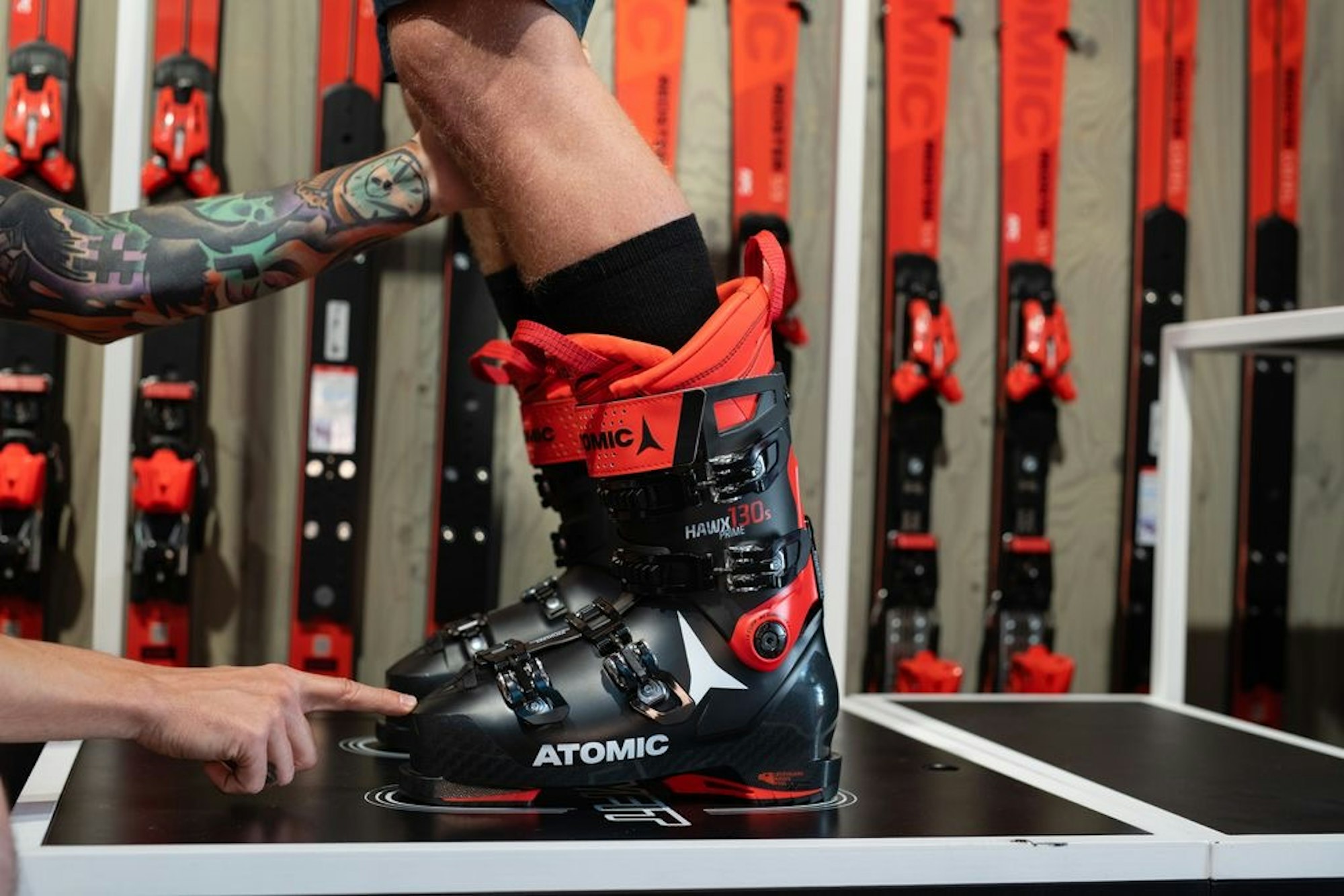
When Atomic develops a new ski boot, the process starts by understanding how the boot compares with competing products and how it behaves through testing. Engineers line up comparable boots and evaluate them side by side. A collection of medium-volume, 130-flex models, for example, will not all have the same sensation. Some will feel softer, some stiffer and some will transmit pressure differently because of construction choices.
"We go and buy the competitors," Manser said. "We do a carpet test, like people would do in a store."
Those boots are then tested on snow. Temperature obviously changes the characteristics of plastic, and a boot that feels one way standing in a warm shop can behave differently during a cold day on the mountain.

Photo: Courtesy of Atomic
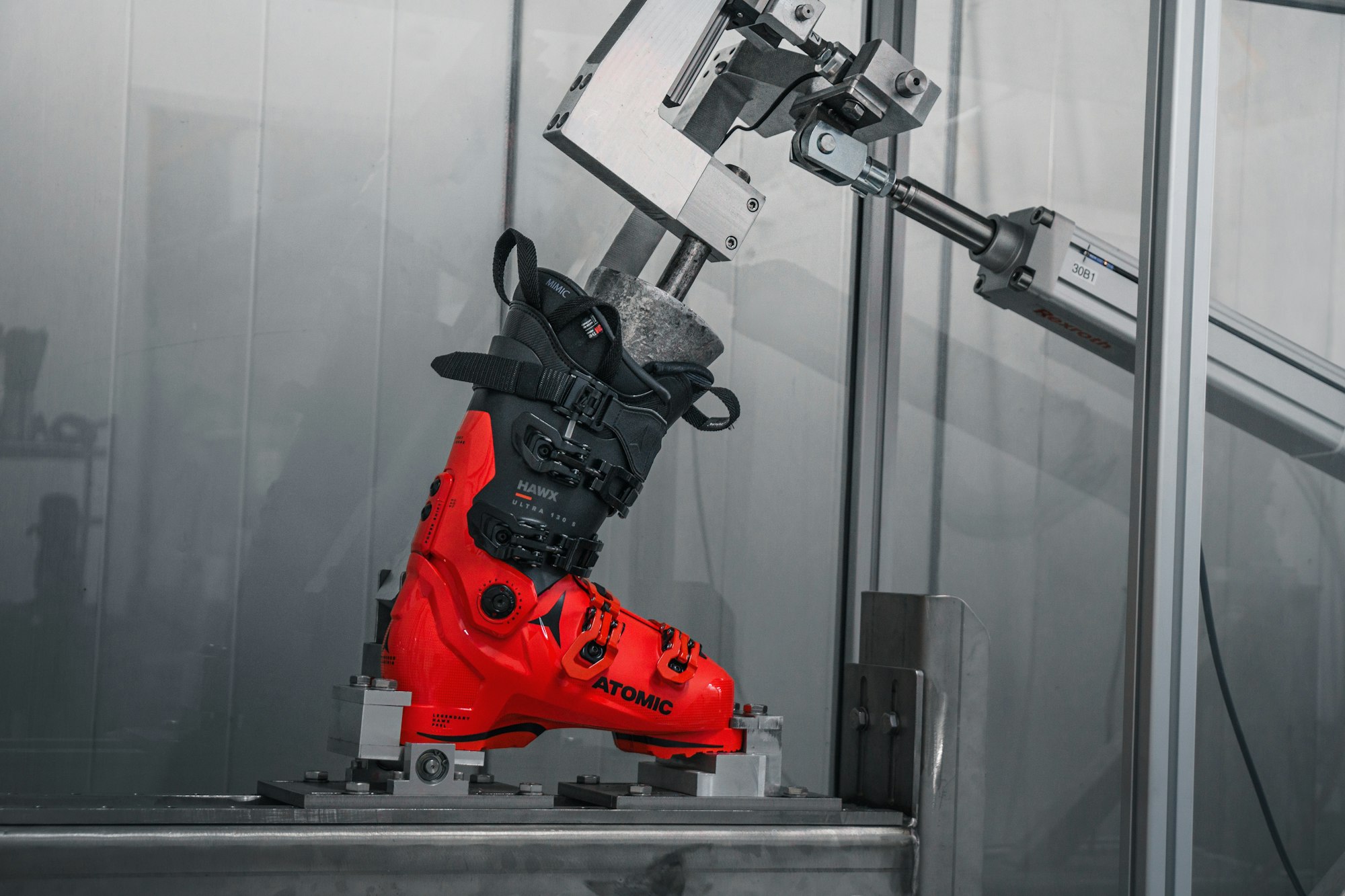
Photo: Courtesy of Atomic
Atomic also uses robotic testing systems to measure flex behavior in a controlled environment. Boots are mounted into a machine that measures the amount of force required to move them through a specific range of forward lean.
"We measure the force it takes to flex the boot from zero degrees (the boot's natural forward lean) to 16 degrees passed forward lean," Manser explained. "The measurement produces a flex curve every step of the way from zero degrees to 16 degrees. That's the consistent point we push all the boots to, and we measure how much force it takes to get there."
Those measurements allow engineers to compare boots against one another, but not against a universal flex scale; flex is influenced by nearly every aspect of the boot, from the materials used to the shape and construction of the shell, to the foot inside it.
The Engineering Behind Flex
When designing an overlap ski boot, product developers are primarily working with two variables: plastic thickness and material hardness, according to Manser.
Shell thickness is determined by the mold. Plastic thickness is essentially the gap between where the last shape ends, and the outer mold begins. The injected plastic fills that gap and when it’s removed from the mold, it has the thickness that you see, touch and hold in your hands. A World Cup race boot uses thick plastic because it is designed for maximum power transfer and precision. A lightweight touring boot uses thinner materials because reducing weight is a priority. But thickness and hardness work together. A thicker shell can use a softer plastic while still creating a powerful, supportive boot. A thinner shell requires a harder material to achieve similar stiffness characteristics. The result is that two boots carrying the same flex designation can have very different personalities on snow.

Photo: Keegan Rice
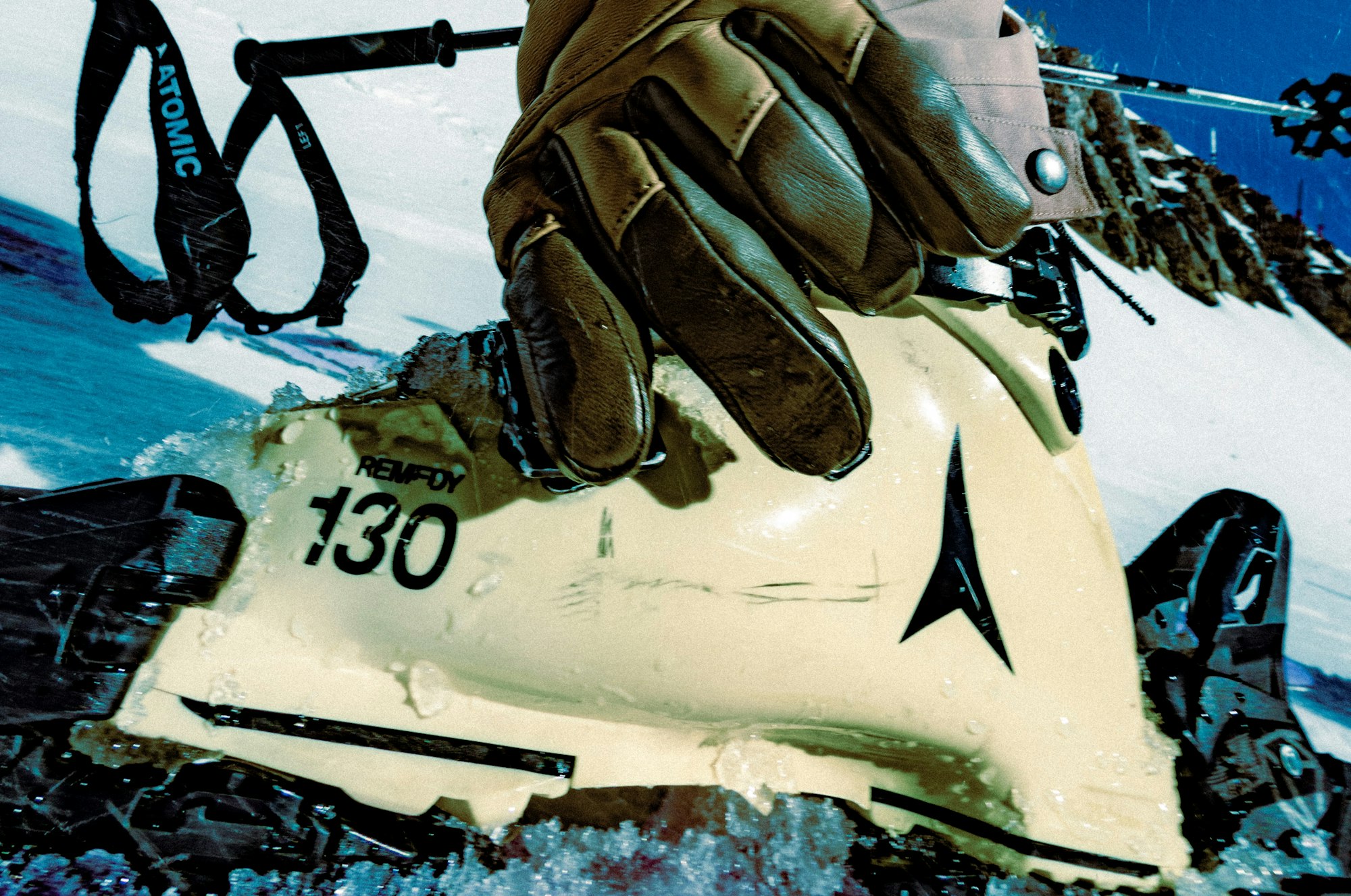
Photo: Keegan Rice
Atomic's Remedy 130, for example, is built from a World Cup race-inspired mold with a thick shell construction designed around stability and power. A lightweight touring boot trying to reach a similar flex relies on thinner plastic and harder materials to achieve the necessary support. The challenge is finding the right balance between weight, stability, comfort and responsiveness. Every decision creates a tradeoff, and according to Manser, because thicker boots use softer plastic, they tend to flex and feel smoother, more plush, damper and have more suspension. Since thinner boots use harder plastic, they tend to feel more springy, less damp and more vibration travels through them, so they may ride a little harsher on hard snow.
Construction style adds a further twist. Two-piece overlap boots, the standard buckled shell most alpine skiers know, trend toward what Manser calls a progressive flex, one that gets stiffer the deeper it's pushed. Three-piece cabrio designs, which add a separate tongue piece to help share the load, tend to flex more linearly: meaning constant resistance from start to finish.
"At Atomic we're trying to make progressive flexing boots," Manser said. "Soft in the beginning, and the more you push into it, the more power goes into your skis."
The values engineers use when developing ski boots are different from the numbers consumers see on the cuff. When Atomic works with plastic suppliers such as BASF, engineers are looking at material characteristics such as MPa, or megapascals, which measure the stiffness properties of the plastic.
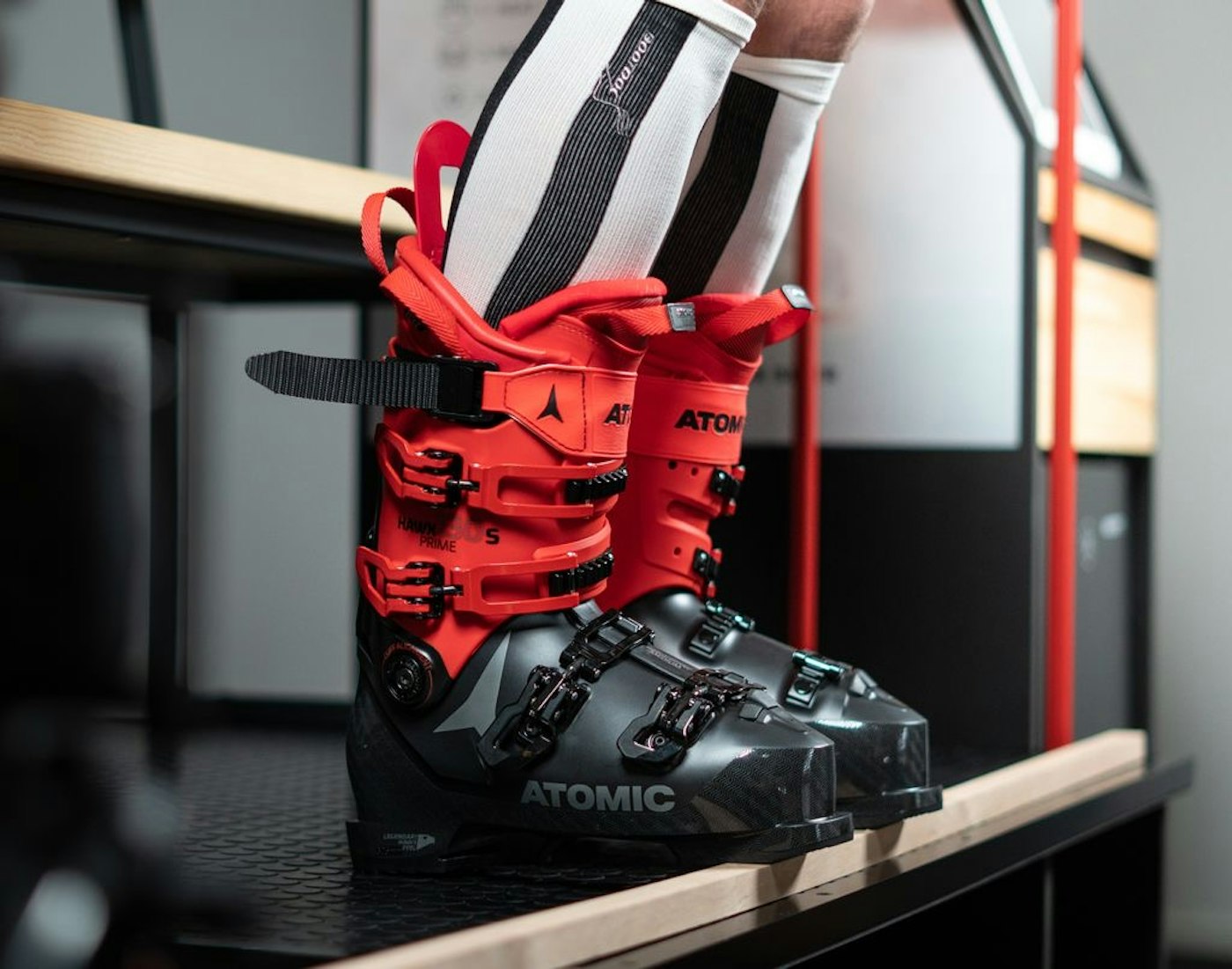
Photo: Courtesy of Atomic
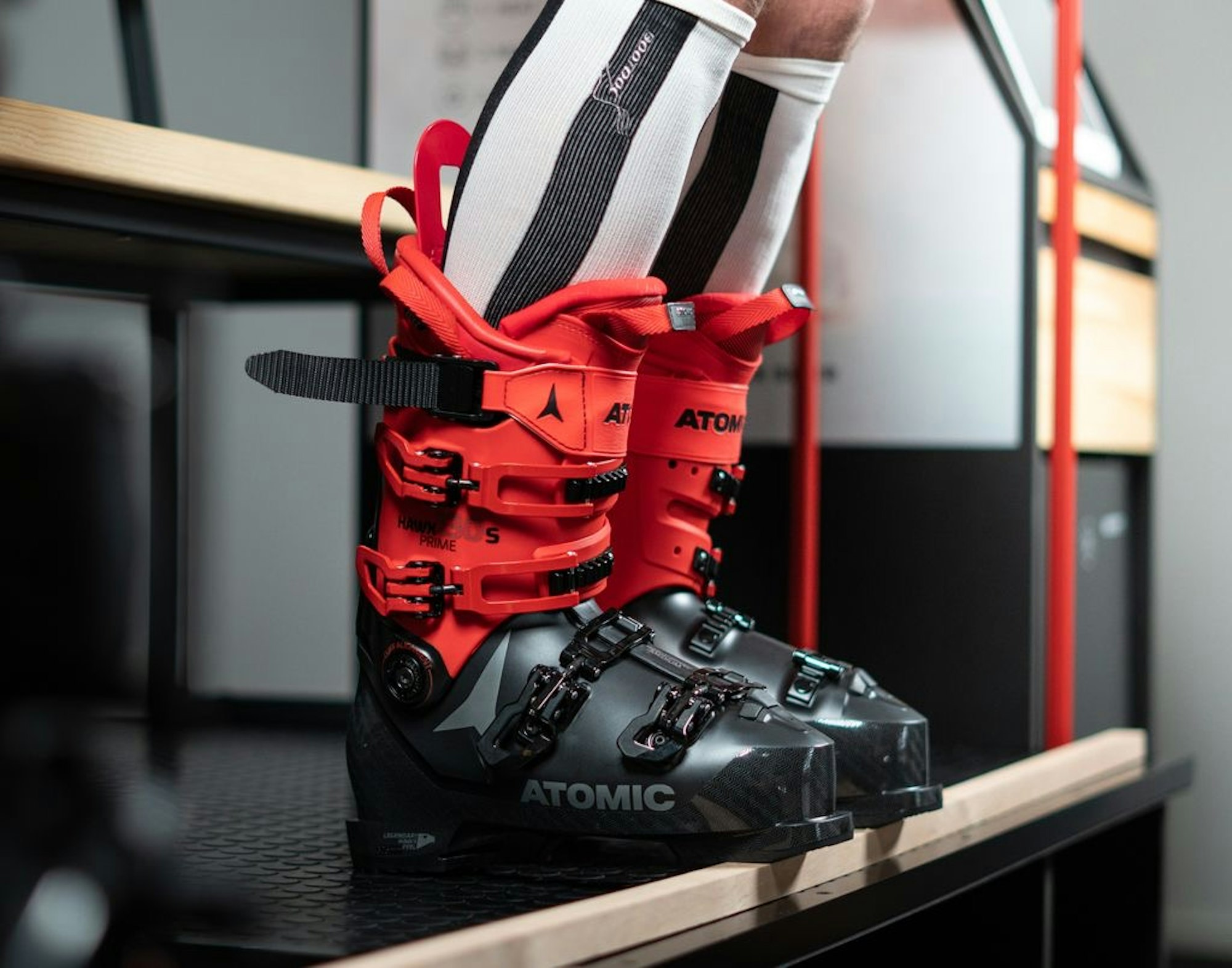
Photo: Courtesy of Atomic
Those numbers influence how the shell behaves. A freeride boot like the Remedy 130 can use thicker plastic with a lower MPA value because the construction provides support through material volume. A lighter boot with thinner shell walls requires a much harder plastic to reach similar performance characteristics.
"The Remedy 130 has an MPa of around 240 in the lower shell," Manser said. "The Hawx Ultra is over 800 because it's thinner, and the shell of a super light touring boot like the Backland Carbon is about 4,000 MPa."
The difference also affects how a boot can be modified. A thicker race-inspired shell gives boot fitters more material to work with for punching, grinding and adjustments. A lightweight touring shell offers far less room for customization. These details play a significant role in how a boot ultimately performs and is marketed.
The Flex Brands Are Chasing
The conversation around flex has also changed as brands have tried to balance performance with usability. A true race-derived 130 boot can be difficult to put on, or to walk in, and designed for a relatively small group of skiers who generate significant force.
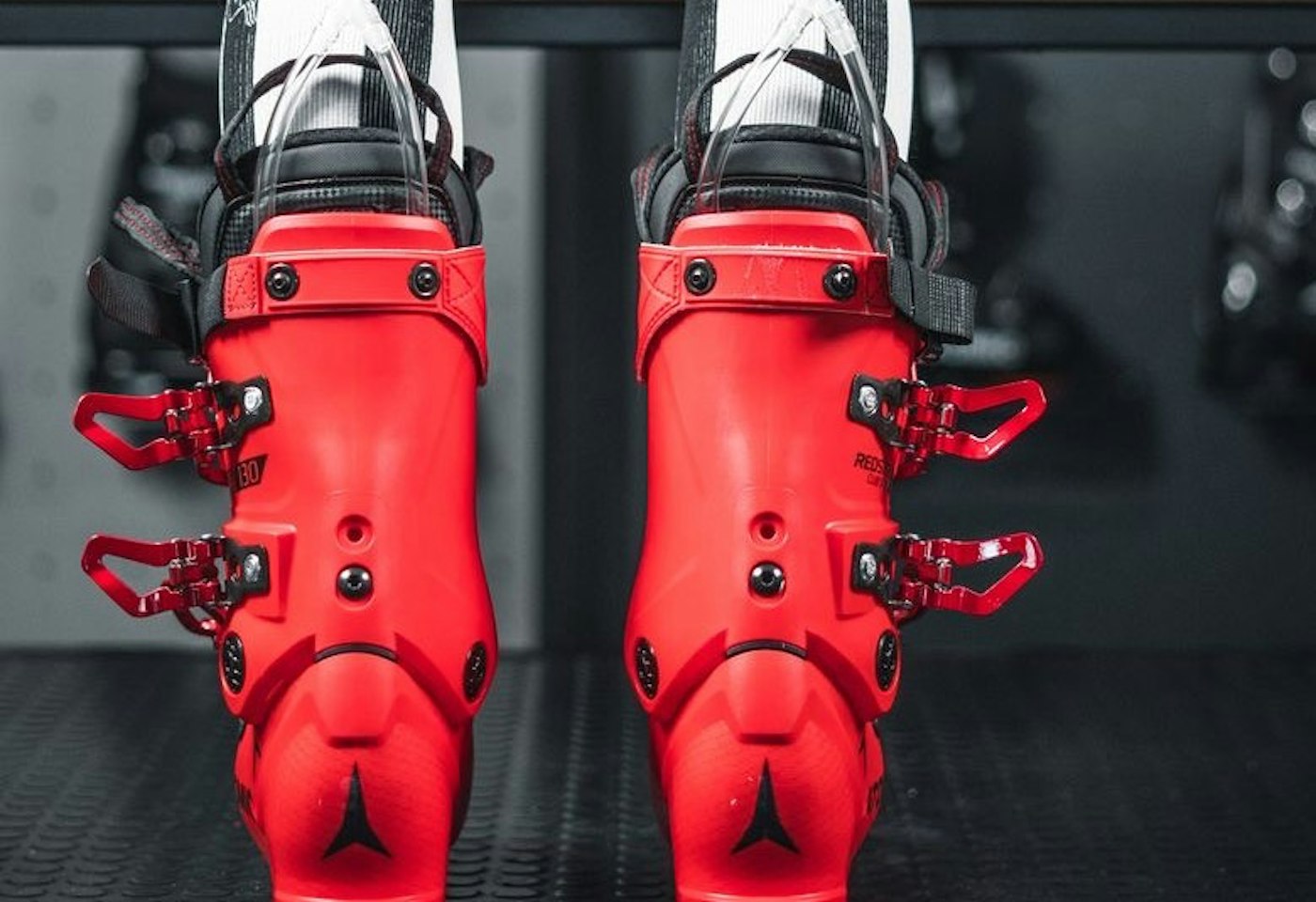
Photo: Courtesy of Atomic
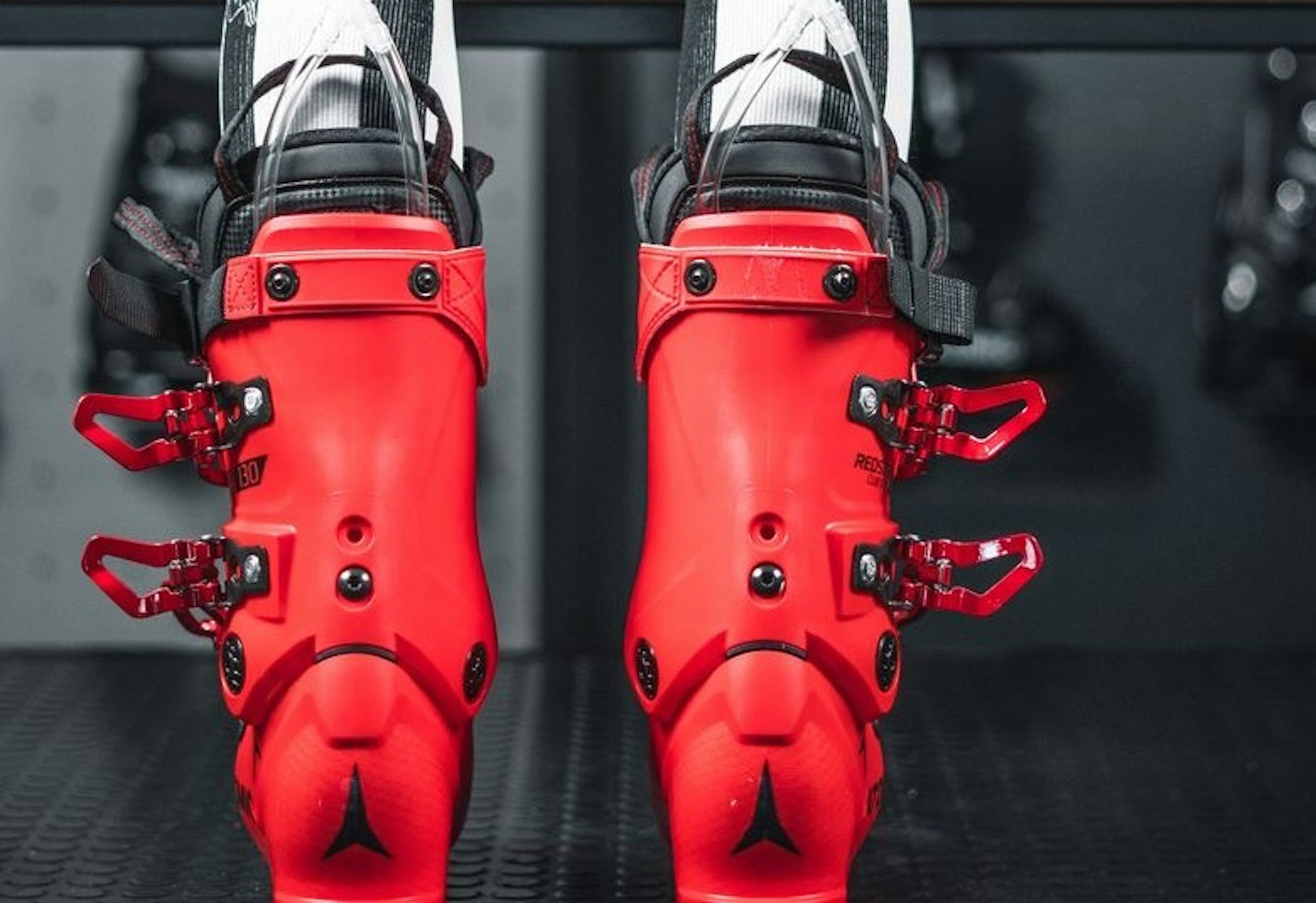
Photo: Courtesy of Atomic
But many skiers still want the confidence associated with seeing "130" in the name of the boot, and that creates a challenge for brands. They need to produce boots that deliver the performance associated with a higher flex rating while also making them approachable for a wider range of skiers. One example, Atomic's Hawx Ultra 130, represents that balance as a serious performance boot, with a design that reflects the broader industry movement toward boots that are powerful without being unnecessarily punishing. The number matters because consumers recognize it and shops can talk about boots in a linear manner, but the construction and your personal skiing style matters much more.
Why Standardizing Flex Remains Difficult
Creating a universal flex standard sounds logical, but several factors make it nearly impossible. The first challenge is the material itself. Atomic works closely with suppliers to develop plastics with specific characteristics, but even those materials have natural variation.
"If we order a material with an MPa value of 500, at very best they can only give us a plus or minus seven percent tolerance," Manser said.
Manufacturing introduces another layer of complexity. Injection molding is not a perfectly identical process, and producing thousands of boots means there will naturally be variation between individual pairs.

Photo: Keegan Rice
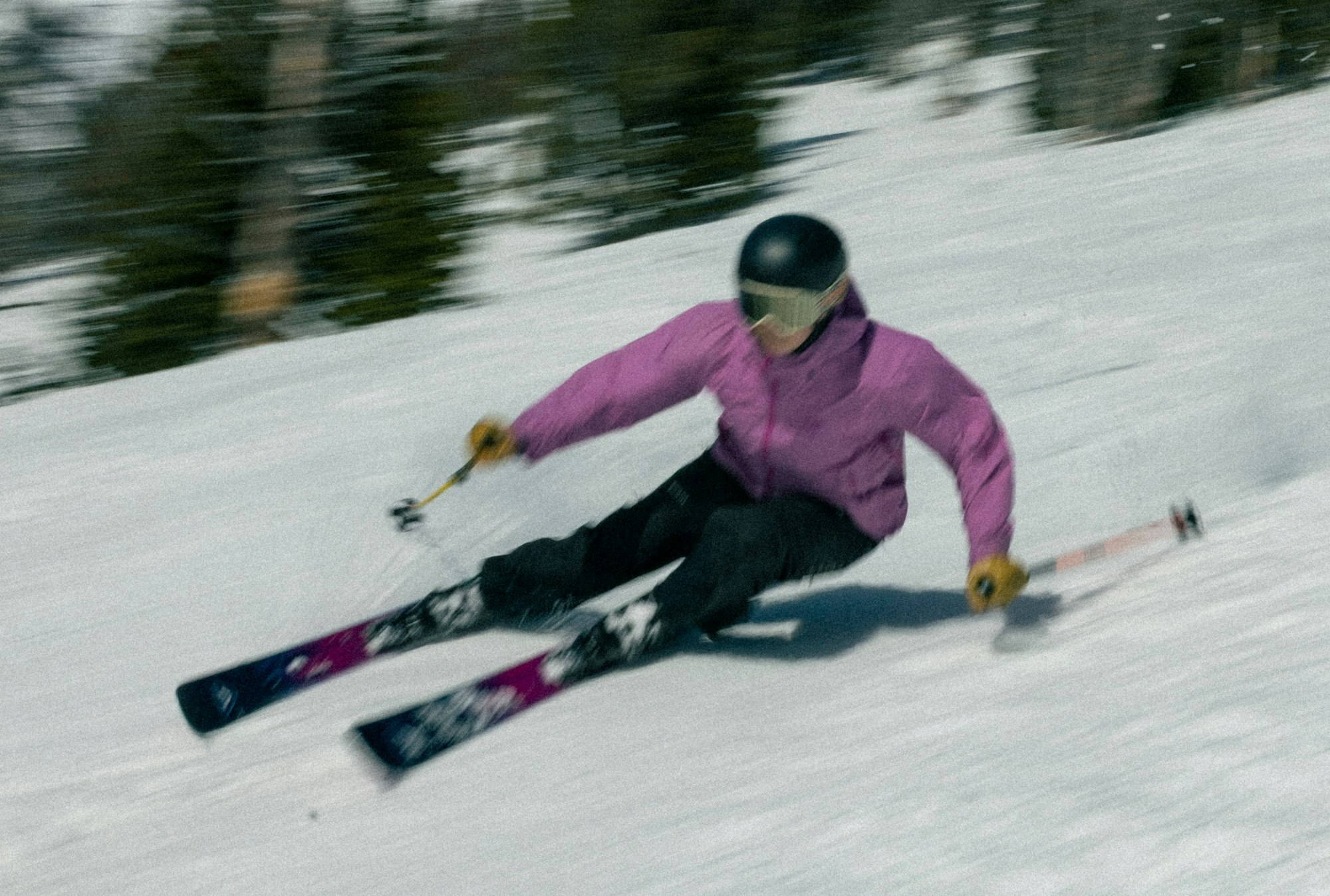
Photo: Keegan Rice
Then there is the skier. A ski boot does not flex independently, it flexes around a foot, and fit changes the way forces move through the shell. A high-volume boot designed for a wider foot will not behave the same way if a skier with a narrow foot has excess space inside the shell, Manser explained.
A true industry-wide standard would require agreement on everything from the test method to the benchmark boot, whether a 130 should be based on a race boot, a freeride boot, or an all-mountain model. Those questions are exactly why brands continue to approach flex in their own way.
Beyond the Number
The most important thing to understand is that a flex rating is only one part of the equation. A ski boot does not know how experienced a skier is; it only responds to the forces being applied to it.
Flex should reflect the skier's size, strength, style, terrain and the way they move through a turn. A skier who cannot properly flex a 130 may lose performance because they can’t access the boot's intended range. A powerful skier who overwhelms a softer boot will have the opposite problem.
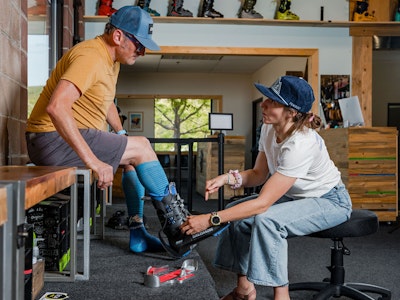
In the shop, if the lower shell collapses easily under pressure, the skier may need more support. If they can’t move the boot at room temperature, it is very unlikely to become easier once they are on snow.
For all the complexity behind ski boot design, the goal remains straightforward: Create a connection between the skier and the ski that feels precise, supportive and predictable. The flex number remains part of that conversation because it gives skiers and retailers a common reference point. But understanding what is happening behind that number, the materials, construction, fit and compromises involved in creating the boot, is what ultimately reveals how it will perform for you and what each skier needs to figure out on their own.