
[juicebox gallery_id=”81″]
This article originally appeared in the 2014 Photo Annual issue of Freeskier, Volume 16.5. The below interview was conducted prior to the 2014 Winter Olympics in Sochi, Russia. Freeskier Magazine is available via the iTunes newsstand .
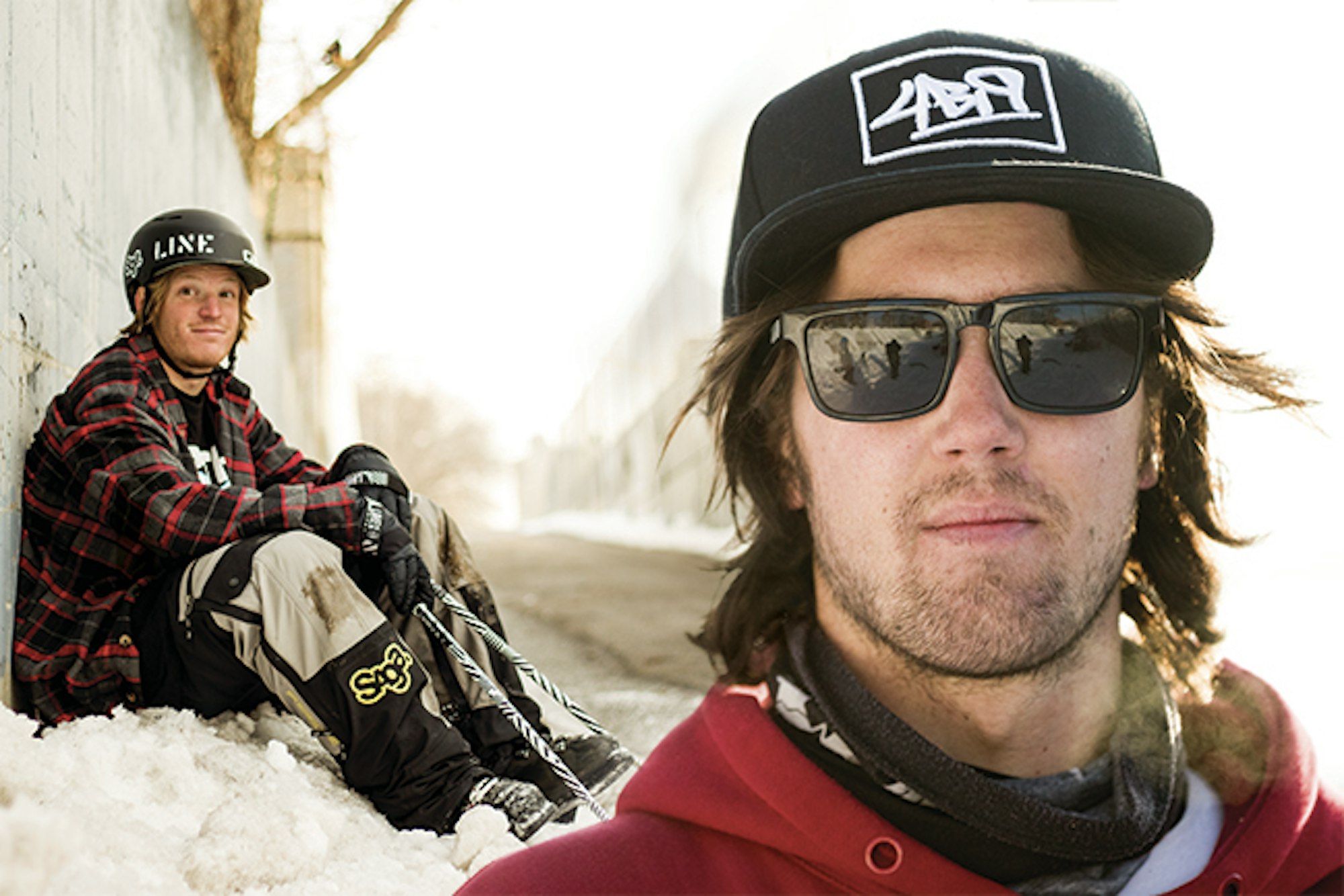
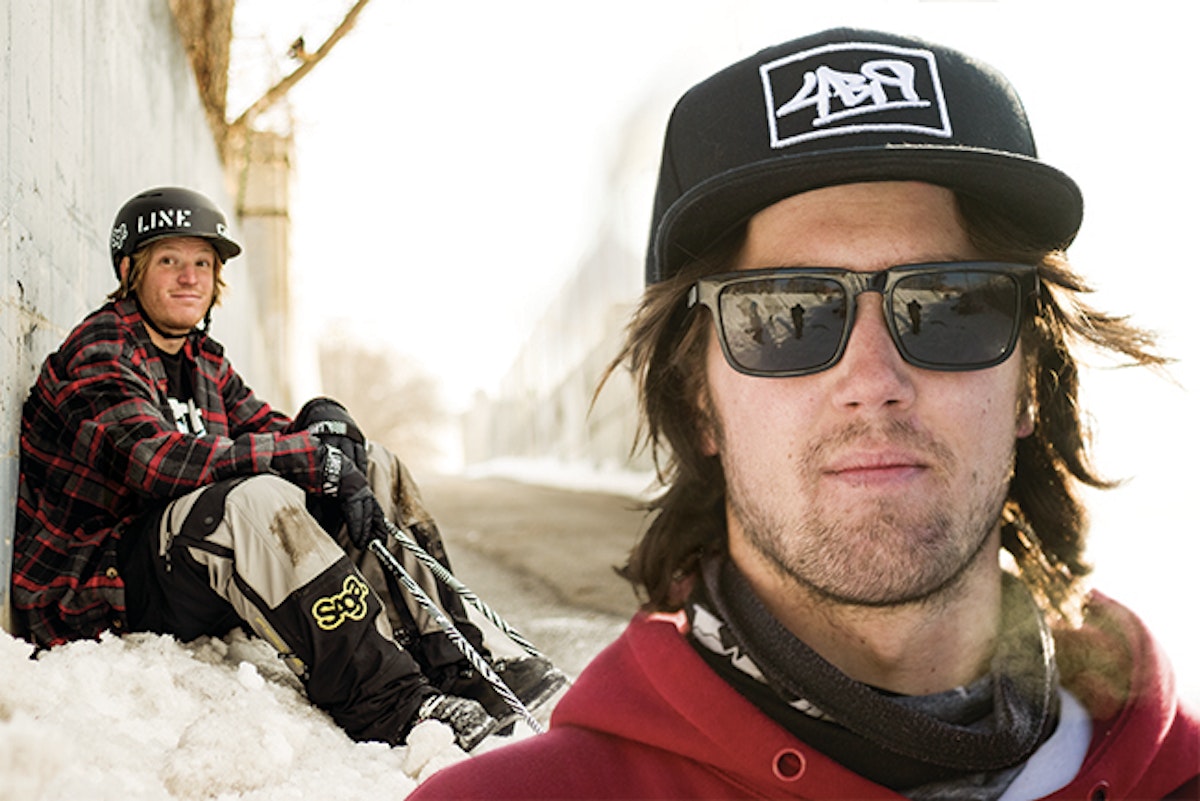
It’s hard to imagine that LJ Strenio or Tim McChesney could be flying under the radar, considering both have had standout urban performances in Level 1’s Partly Cloudy and Sunny , and were regulars in the competition scene up until last year. But many film-focused athletes like Strenio and McChesney have been pushed out of the professional skier spotlight by Olympic coverage. For that reason, we decided to let the two friends interview each other on topics like filming versus competing, style and the state of the industry.
On the phone:
Tim McChesney:
How was your season, comin’ back after the big injury, John?
John Strenio:
It was much better than expected. I didn’t think my knee would be able to handle all of the impact required. But it did its job, and I feel like [the injury] kind of never happened.
Two years ago, even just the beginning of last year, the US Ski Team coach was hittin’ you up like crazy for drug tests and contests. I think you were top twenty, not only among Americans, top twenty slopestyle skiers. You were probably more on course than most of the people that are trying to be on the US team now.
Tim:
I wouldn’t say that.
LJ:
Skogen [Sprang] thinks so. I would say you were a full Olympic hopeful this time last year, as far as the US team coach was concerned. What was the catalyst for you not competing at all last year and just putting out some really banger segments?
Tim:
I pretty much just got sick of the whole competition format, traveling around to go ski in shitty weather. I decided I’d rather just go do what I want to do for a season. I enjoy filming a lot more because you’re just hanging out with your friends and traveling to cool places. I want to do what I want to do with my skiing and not have someone tell me if I’m skiing good or bad, like a judge in contests.
What about you? You were top-dog competition man for a while, and now you’re leaning toward the filming aspect as well.
LJ:
I think with that injury—really with the [Association of Freeskiing Professionals] it’s like a sick organization because I definitely see how they want to keep everything organized, but the way it’s run now, it just seems like you really have to dedicate your season to competing to get anywhere. If you’re injured, if you don’t compete all season, you can’t compete the next year because half the events are invite only. It seemed much more simple and fun when you went to an open [event] here, you went to an open there, you competed and it wasn’t going towards a score.
Tim:
Like [TJ] Schiller did.
LJ:
Yeah, Schiller competed at X Games, won slopestyle, and then was like, “I’m going to go ski powder for two weeks.” That’s not really a possibility now. If you want to be a slopestyle skier, you can’t really be an urban skier too. I think Tom [Wallisch] is probably the only exception to that, really. There are a few other guys who are killing it, but unless you’re [Tom], you kind of have to start to make decisions, which is a bummer. I’m still an advocate of AFP, and I think the Olympics are sick—it’s the biggest sporting event in the world. But you definitely have to pick what you love if you want to be on top of one aspect of the sport.
“I pretty much just got sick of the whole competition format, traveling around to go ski in shitty weather. I decided I’d rather just go do what I want to do for a season.” – Tim McChesney
Tim:
I see a lot of the big snowboarders who solely do film parts have big sponsors backing them, and in skiing you don’t see nearly as much of that. Do you think that’s going to change after the Olympics? Or do you think it’s going to lean more towards the competition side?
LJ:
I think after the Olympics happen, hopefully, a lot more people will be trying our sport so a lot more of the product is going to be bought. In general, as long as the companies involved with the sport are selling more product because of the Olympics, then hopefully, the money is going to get pulled into all of [skiing]. I was just talking with the Line Skis global marketing dude today, Josh Malczyk, about how more companies are backing independent projects, which I think is a great thing for the sport. I think the more inclusive part of the sport, the more enjoyable part of the sport, is the side of the sport you and I are involved in. 4BI9 is a perfect example of a startup company that was founded by a bunch of kids that loved to ski, and now, you’re obviously filming with Level 1 as well. How do your sponsors feel about that as a specific example?
Tim:
I’m lucky enough to have sponsors that back pretty much whatever I want to do. I think they understand the marketing value of putting out good film segments, so they back both companies that I film with, and it works out pretty well. I know a lot of companies want to see a lot of podiums and competition results, and they kind of just forget about their film athletes. I see that happening with friends all the time, and hopefully that changes.
LJ:
Do you think the Olympics are going to create a big enough divergence in the sport that it’ll help identify film skiers as a separate entity that doesn’t need to be competing and still has a right in their own? Or is it going to siphon money from film skiers and put it towards competitive skiers?
Tim:
For me it kind of just makes the Olympics a bigger X Games, where it’s just another ski competition. I know it’s a huge deal, but I don’t think it’s really going to change the whole dynamic of how the industry works. I think it’ll bring a little more attention to the top people, like you’re seeing skiers on the Today show nowadays, and that’s pretty crazy. I think it’ll bring a little more attention to skiing as a sport, but I’m pretty curious to see how things change after it. What do you think?
LJ:
You know, 90 percent of the people that are involved in our sport, they’re not doing it because they want to be in the
Olympics. They do it because it’s fun and they enjoy it. When I was 9 years old, I watched the World Series and asked for a baseball glove for Christmas. I’m sure people will see skiing in the Olympics and be like, “Oh, that’s cool. Mom, buy me skis.” Come March of this year, no matter who won the Olympics, we’re still going to be able to go ski pow. What’s your plan for the upcoming season?
Tim:
I’m getting pretty old, so I’m trying to get out in the powder a little more this year. I just bought a snowmobile. I pretty much only skied in cities last year, and I did one pow trip and realized how much fun it is to be out in the mountains instead of in a crappy city. So I definitely want to do some pow skiing and do some traveling to hit some handrails in Scandinavia.
LJ:
When you’re a competitive skier, your goals are really clear cut. You want to win X Games or Olympics. So if you’re focusing on filming, what are you trying to achieve?
Tim:
You’ve got to enjoy the ride I guess. It’s pretty funny traveling with your friends to crazy places and the behind the scenes is the best part of it all. As far as achievements go, I just want to have one of those segments that kids watch and remember, like Tanner and Pep in 1242 or something like that. Growing up, I’d watch ski movies, and I’d remember segments and rewatch them. That’s kind of what made me want to start skiing and start filming. So, just to have one of those segments that people remember and stands out. What about you, what do you want to achieve?
LJ:
The older I get, the more generalized what I want out of skiing becomes. When I was 14 years old, I was like, “I want to win X Games. I want to have a cover on every magazine. I want to have a closing segment with Level 1.” All things I still want, I suppose. But now my mentality towards that has changed. Those are all really specific goals that don’t really mean anything. What all of those things really add up to is, I just want to make my mark on skiing. It sounds similar to what you’re saying, to have something where I influenced the sport and have people look back and be like, “Yeah, he was one of the many small steps in making skiing whatever it is today.”
Tim:
Have you got any big trips planned or places that you want to go this winter?
LJ:
Nope! [Laughs] I’m realizing that I just need to enjoy the fact that I don’t have a job right now. My job is to go have fun skiing. If there is anything to achieve in skiing, that should be the goal. When I’m out of skiing, I’ll be battered and bruised and my body will be all messed up, but hopefully I’ll have five or ten years where I got to ski. Fuck accomplishments, I got to go skiing for ten years without a job. I don’t really have anything planned except ski a ton and have fun. I feel like the Olympics are creating a climax in the competitive world. Are you just done competing now?
Tim:
No, I wouldn’t say that I’m done at all. I definitely want to do some competitions or something, but I just dropped out of the whole FIS thing because it was getting expensive and pointless for me. But some sort of open slopestyle competition, I would definitely be into doing that.
LJ:
So are you against the global categorization and labeling of every skier that skis? I feel like you can look up any slopestyle skier now and their value is, like, a number.
“My job is to go have fun skiing. If there is anything to achieve in skiing, that should be the goal… Fuck accomplishments, I got to go skiing for ten years without a job.” – LJ Strenio
Tim:
I don’t know. It’s hard as you were saying earlier, you can’t really compete these days unless you’re at every single competition, and that’s expensive. I don’t have that kind of money to just travel to all these competitions and try to stay up on all of these crazy tricks.
I think [invitational events are] pretty much the coolest kind of competition ever. I went to the Sammy Carlson Invitational [in 2012], and it was by far the most fun I’ve ever had at a competition because you’re just out there with a bunch of friends and no one really cares who wins.
LJ:
I think that the two most fun times that I’ve had at a competition were probably when Jon Olsson had JOSS—I don’t even know if that’s a competition, it was an event—and it was so damn fun. A lot of people learn tricks at competitions, and I never do, but at that one I learned like five new tricks. Just basically they were like, “We’re going to build you a super sick environment to ski.” And then Orage Masters, that has nothing to do with anything, at all, and whether you’re competing in it or just watching it, everyone loves that event. I think it’s a great example of a fun time that is skiing, and it’s a competition I suppose.
Tim:
I remember one Dew Tour in Vermont, it was so windy and icy that they didn’t even know if they wanted to run us. And it’s like, do you really want to go and risk your whole season doing this competition run where there are 40-mile-an-hour winds, and you have no idea if you’re going to clear the jump? It’s kind of frustrating when you wouldn’t even be skiing on these days, and they’re trying to get you to do the craziest tricks that you can.
LJ:
None of it is intentional, it’s just with TV cameras and a schedule to follow, and it can [be] tricky. They’re sick events and so much thought and care is put into every single event that is ranked, but there are just setbacks involved that you kind of have to choose whether it’s worth it or not. I guess sooner or later it starts to seem less worth it.
Freeskier:
Do you guys want to touch on that issue of style versus technicality when it comes to the competition scene?
Tim:
There are a lot of people in the competition scene that build off of each other, and you kind of see the same tricks over and over again, with the same grabs. But there are some people, like Henrik [Harlaut], who try to do things a little different. That’s when it really makes competitions interesting for me to watch because I can’t remember a single trick that most people do in competitions, but you see the nose butter triple and you’ll remember that for awhile. But I don’t really know what anyone else did that night at X Games Big Air, just the same spins and grabs with a little bit of variation. What do you think, LJ?
LJ:
Something as subjective as freestyle skiing—it’s tricky to put definitive, hard numbers on something that can be really opinionated. To keep competitions fair, I think that style has to be less and less an aspect of competitions, and that’s just going back to the divergence of the sport once again. Slopestyle and halfpipe skiing are more technicality based already than a segment
Tim:
So you’re saying that style should be less a part of competitions?
LJ:
There are two things that you can’t combine: fairness and judging off of style. They’re just like oil and water. You can try to do them well, but if you want to have a 100-percent fair competition, then you can’t really have subjectivity in it. Unfortunately, style in itself is a subjective thing.
Tim:
So each judge, you’re saying, is subjective to different styles? Each skier’s style appeals to a different type of person?
LJ:
Yeah, basically. I know that judges have set criteria for what scores what, but when we see something we like or that we think is good, it’s not following criteria. You and I disagree ourselves on what we think looks good and what we think looks bad, and there’s nothing wrong with that. I just don’t think they mesh very well.
Tim:
I think that makes sense. It’s what kind of sucks about competitions. It forces you to put style on the back burner and focus more on technicality. That’s what’s nice about filming is that you can whatever you want and it doesn’t matter.
Who has the worst style?
LJ:
You. And you did well in so many competitions, and I was like, “What’re they thinking? It’s horrible style.” [Laughs] No, I’m just kidding. I think that I’m probably on the lower echelon of style. You can agree with that for sure. When I ski rails, I like to do technical things and usually my style hurts. I think I’m a contender there. But, to end it, I think that despite what we think or what we say or where competition skiing goes or how much fun filming is, I don’t think that any of it really matters. At the end of the day, it’s just all about what you’re trying to get out of it, and we all started because we enjoy skiing and it’s fun. If you like to compete, then good for you. If you like to go film, then good for you. If you’re a weekend warrior, that’s sick. All we’re doing is going skiing. Keeping it in perspective is key.
Tim:
That’s pretty much what it comes down to, whatever you want to do on your skis and enjoy it. There are so many different aspects of skiing so many people are into different stuff, whether it’s filming, competing or just skiing powder, and it just adds to the sport and makes it what it is. It’s cool to see in all of the movies what everyone’s been doing all year.