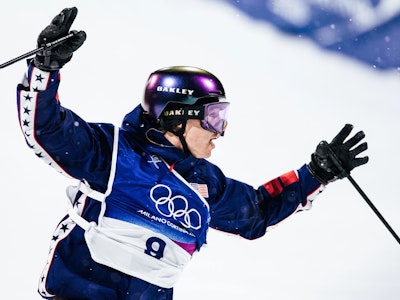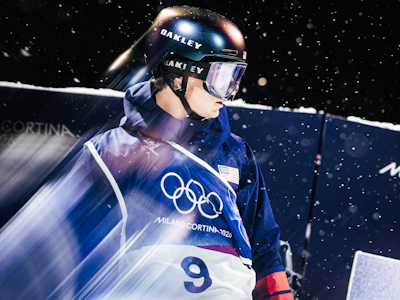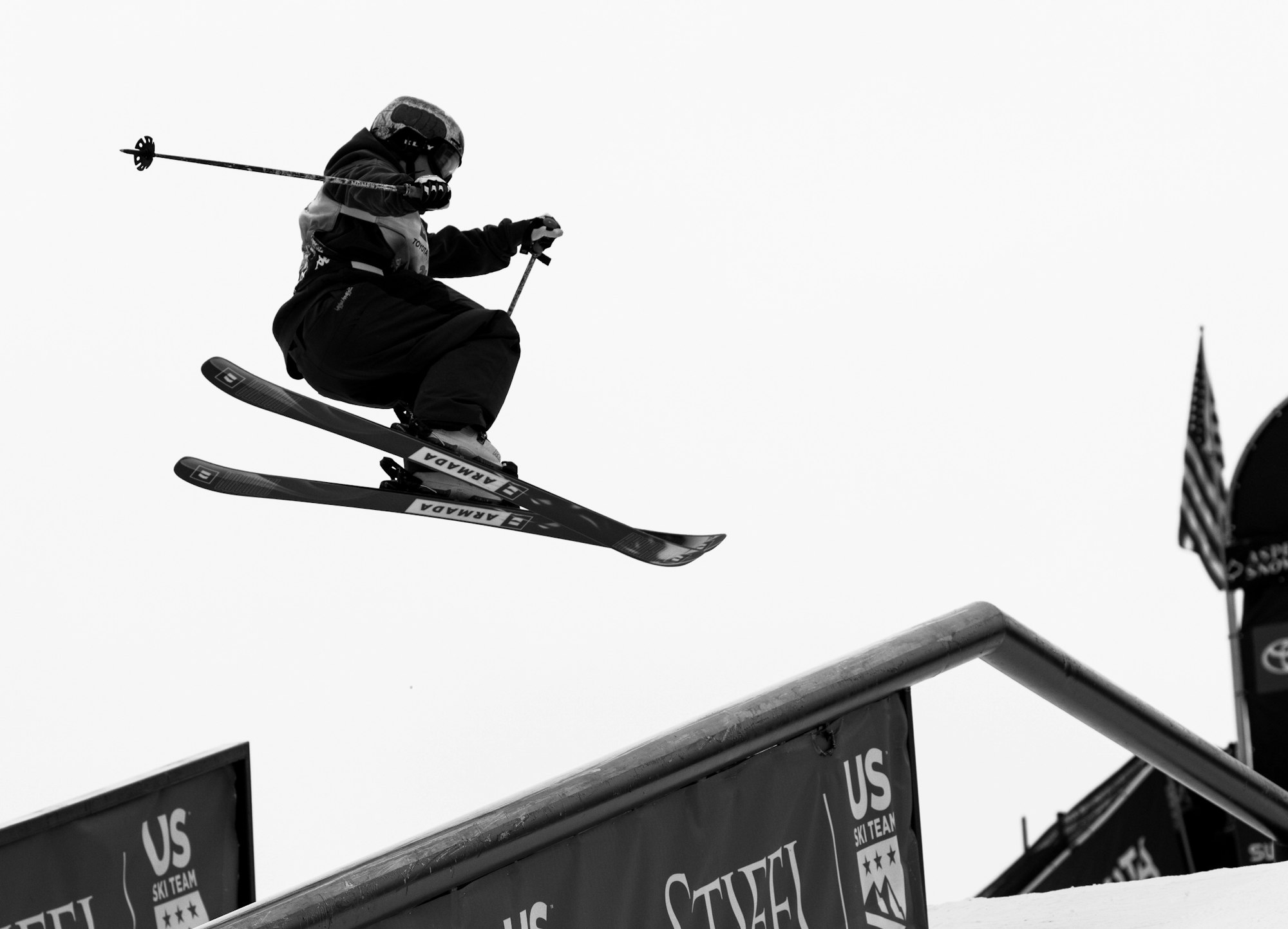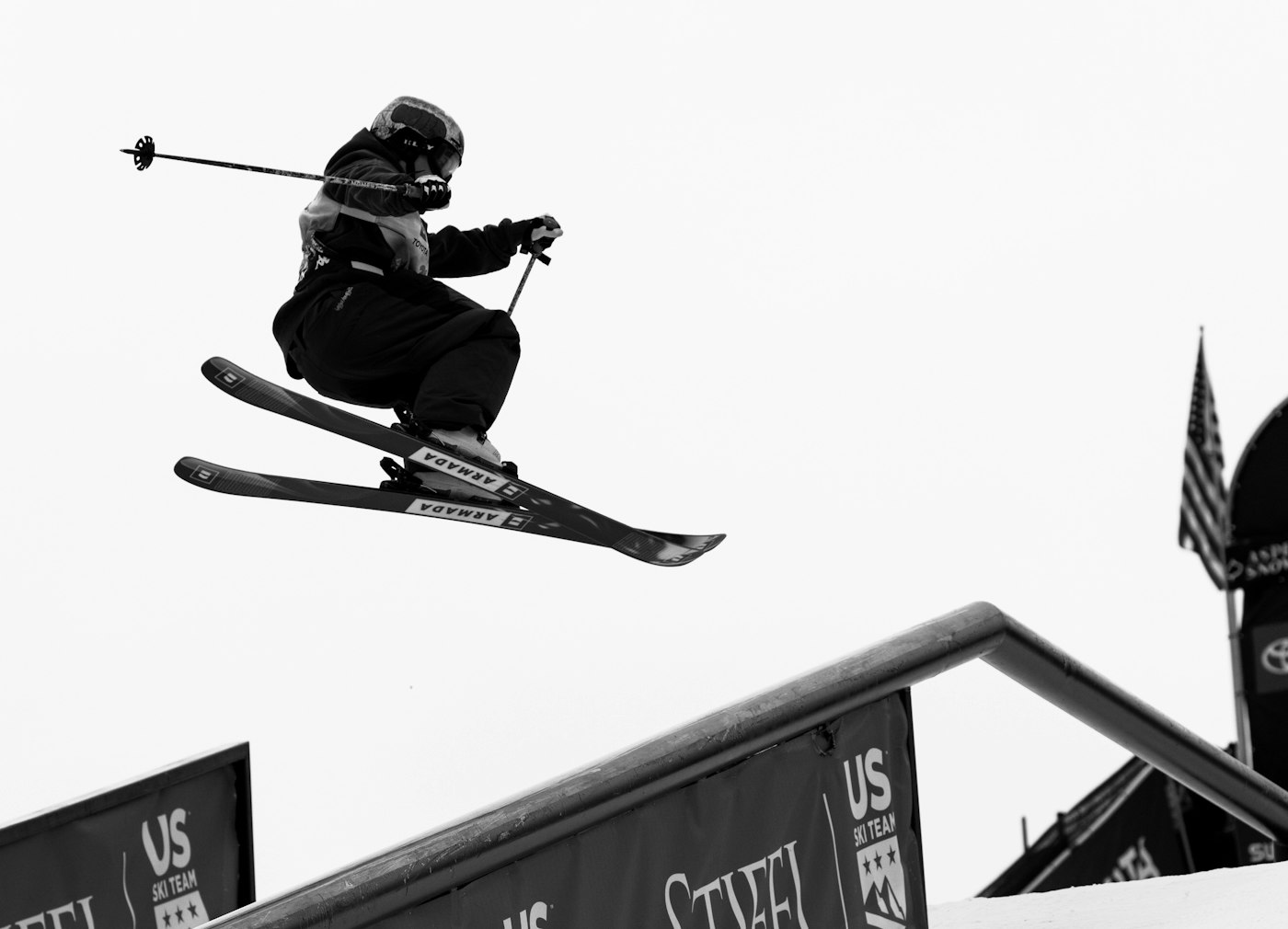
All Images: Courtesy of US Ski and Snowboard Team | Featured Image Skier: Cody LaPlante
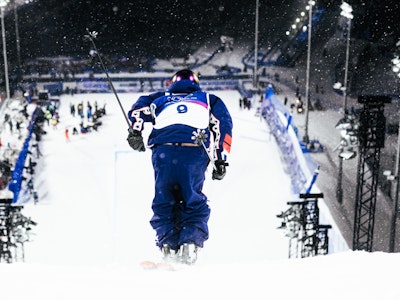
As the final rays of daylight fade, a group of Olympic hopefuls stands atop a steep in-run
that is quickly refreezing. Exhaustion has taken over, but there is still enough time for a couple more drops. The first skier chatters down the icy slope and pops off the lip without a problem. Muscle memory takes over as the skier quickly shifts their weight and reaches back to secure a tail grab. Suddenly, the wind changes direction and the trick is immediately abandoned. Skis violently slap the knuckle and a large exhale comes in unison from the onlookers. Having narrowly escaped a dangerous fall, everyone agrees that it’s time to call it for the day. Oftentimes unseen, uncelebrated and unforgiving, this is a snapshot of the Olympic qualification grind.
When the world tunes in to the Winter Games in Italy this February, we will see highlight-reel tricks flawlessly executed, and highly orchestrated ceremonies where flags and medals are raised with pride. What we won’t see, however, are the countless hours that lead up to that perfect moment. One of the only individuals who will witness every minute of those ups and downs is Dave Euler, head coach of the U.S. Slopestyle and Big Air teams.
Standing behind the athletes, Euler holds a quieter position within the massive organization of the U.S. Ski & Snowboard Team. His duty is to steer athletes through the labyrinth of training sessions and competitions that, in many ways, are harder than competing in the Olympic Games themselves. “A lot of people think the Olympics are the pinnacle of the pressure point,” Euler says, speaking to me from New Zealand, where his team has been hammering laps for most of September. “But the training and qualifying process, that’s the brutal part.”

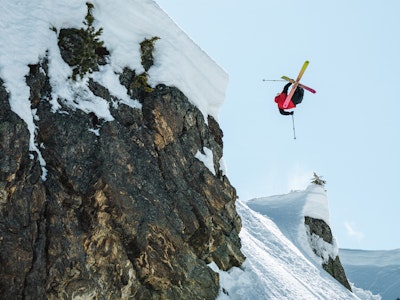
Skier: Svea Irving | Location: Copper Mountain, CO
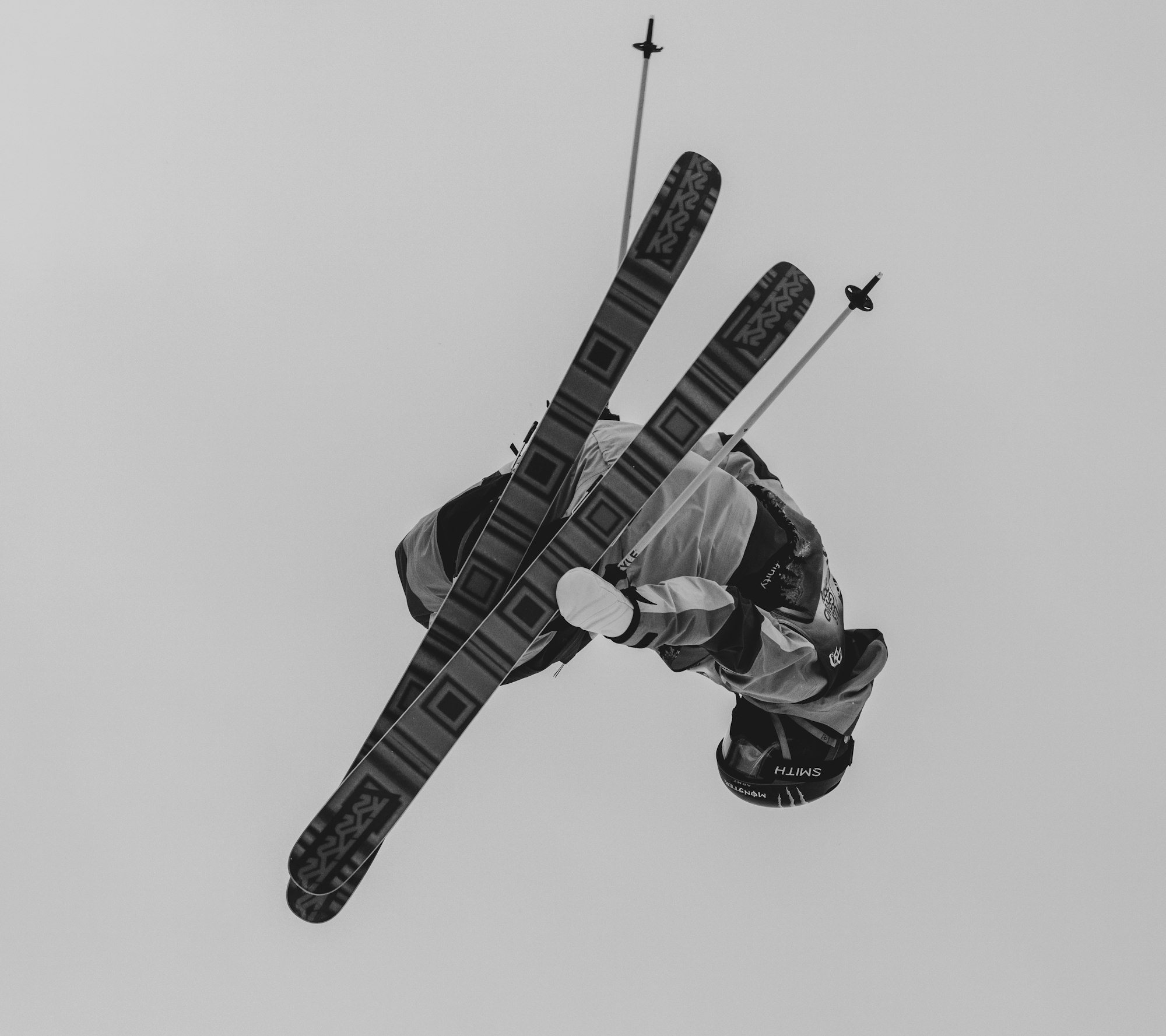
Skier: Svea Irving | Location: Copper Mountain, CO
Building Physical and Mental Strength
Whether it’s sweaty airbag sessions in Utah’s summer heat, endless training laps in Australia and New Zealand or the gauntlet of contests where a single mistake can mean four more years of waiting. Both body and mind must be prepared to endure the demands of pre-Olympic qualification.
Jumping into an airbag helps athletes dial in new rotations, then rapid repetition via Australian rope tows provides an on-snow feel. By the time the team arrives in New Zealand, the focus shifts to sharpening skills at a steady, deliberate pace. During their summer training period, progression is important, but balancing risk and reward cannot be understated. Euler says it comes down to communication. “Every day I talk with each athlete about whether it’s the right time to push for something new,” he says. “We both have to feel good about everything. Not just how their body is doing or their state of mind, but the snow, the weather and the jumps have to be in good shape too. If it doesn’t all line up, it isn’t worth the risk of getting hurt.”
Although adding new tricks to a skier’s repertoire is certainly important, the mental side of the sport holds as much weight as the physical. Visualization, breath work and time with sports psychologists are as common as gym sessions. “At this level, everyone has the physical skills,” Euler says. “What separates the ones who make the team from those who don’t is the ability to handle the pressure when it really counts.”
That’s where recovery and downtime play a crucial role. Some athletes surf with their teammates, others lie low watching movies or sleeping. Whatever they choose, the mental balance is non-negotiable to ensure they can manage the load of a full season. “It’s important that they have fun and take care of themselves on down days,” Euler says. “I tell them to do something they enjoy and not to think about skiing.”

Skier: Mac Forehand | Location: St. Mortiz, SUI
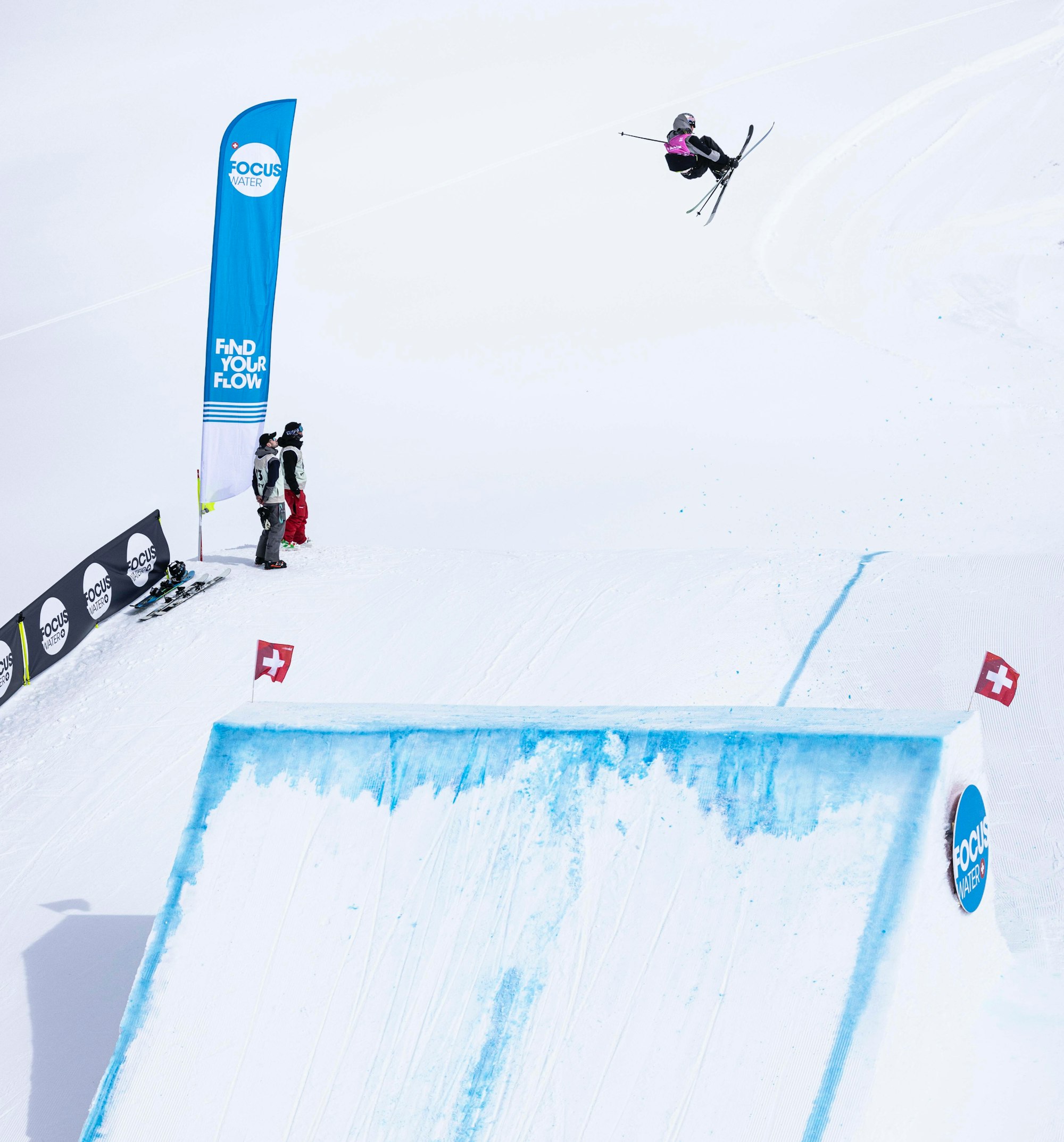
Skier: Mac Forehand | Location: St. Mortiz, SUI
Qualifiers: The Moment of Truth
When it’s time for that first comp, athletes may feel confident about their runs and tricks, but Euler has seen the same thing happen over and over during qualifiers. “Some athletes think too far ahead, visualizing the last trick before they’ve nailed the first rail,” he says. “The only thing that works is having your routine totally locked in. You have to do the same warm-up and rituals every time in practice and in comps, so it feels familiar. The ones who thrive are the ones who can stay in the moment—trick by trick, run by run.”
And then the defining moment comes. A late-season contest determines who is named to the Olympic team. The lights bright, the crowd raucous and the judges expecting the best. For those on the bubble, they know it will be their last chance to make the Olympic team. When it’s all said and done, the difference is often razor thin. That’s the part of the job Euler says is hardest. “Those conversations are never easy. It’s tough explaining to someone who’s poured years into the process that they fell short. Not because of lack of talent or effort, but because the bar was set so high by their teammates,” he says. “Unfortunately, that’s the nature of it. Everyone feels like they should be there. And honestly, most of them could be.”
When asked what separates the best from the rest, Euler doesn’t hesitate. “A true love of skiing,” he says. “The best skiers simply love to ski. No matter the conditions or the weather, they’re always stoked to be out there.” In the end, that joy is what carries athletes through the grind of long travel days, endless laps in nasty weather and the heartbreak of near misses. Talent gets them close, discipline keeps them sharp but the love of skiing is what seems to make the difference.
For those who make the team, the Olympics feel like a reward, but for Euler the real victories come along the way. It might be a new trick finally stomped after weeks of hesitation, or a dream run landed when the pressure was at its peak. “The Olympics aren’t the finish line,” he says. “They’re just the stage. The real story is everything it takes to get there.”
![[GIVEAWAY] Win a Full 26-27 Ski Setup from Fischer](https://www.datocms-assets.com/163516/1790101711-00012060-edited.jpeg?w=200&h=200&fit=crop)


![[Q&A] "Actually, It Is Rocket Science," with Tim Durtschi](https://www.datocms-assets.com/163516/1791320016-keegan_rice-0073.jpg?w=200&h=200&fit=crop)