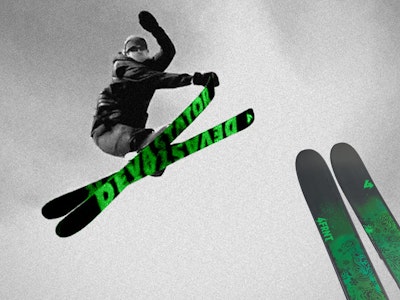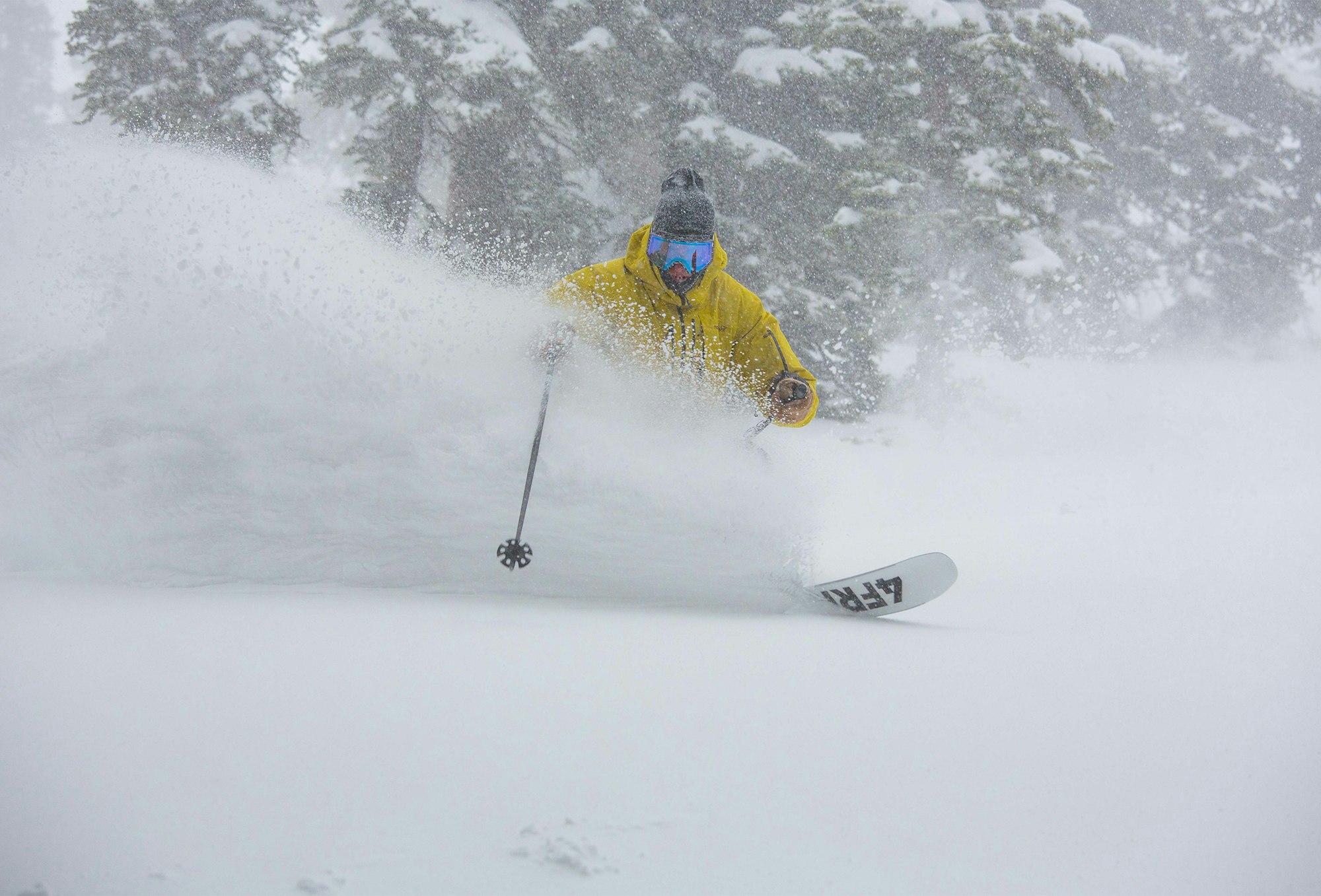
Featured Image: Sam Watson | Skier: Matt Sterbenz
Matt Sterbenz has done it all on skis, from the rope tows of Hyland Hills, Minnesota, to the world's biggest freeskiing stages to the backcountry huts of British Columbia. A skier’s skier, Sterbenz has been a mogul basher, carpenter, powder hound, skateboarder and even an accomplished dirtbiker. Since founding 4FRNT skis in 2002, Sterbenz has lived many lives and it seems all of them have led him back to his roots at 4FRNT as CEO.
After getting a degree from the University of Minnesota in 2000, Sterbenz followed his mogul buddies out to Lake Tahoe, California. He was embedded in early freeski culture as a mogul skier and then as a competitor on the global level in big air & slopestyle. Matt experienced firsthand, with his own ski sponsor at the time, how athlete input was lost in translation with the bigger, race-oriented manufacturers. Being a skateboarder in the late ‘90s, Sterbenz recognized how that industry was influenced by having skaters as the face of the brands, designers of graphics and shapers of the overall aesthetic.
“I'm looking around the park and everybody's pretty established pros, like, you know, CR [Johnson], Tanner [Hall], and Skogen [Sprang],” says Sterbenz, over the phone. “And most of them were younger than I was because they didn’t pursue an undergrad.”
As a way to preserve his career in the ski industry and to create the skis he wanted to ski on, Sterbenz left his big-name sponsor in 2002 to start his own ski brand, 4FRNT. Originally produced in snowboard manufacturing facilities in Southern California, Sterbenz and the brand found that the snowboard companies were good at making singles, but matching up a pair of skis with consistent flex and characteristics turned out to be challenging. In 2005, Sterbenz moved the company to Salt Lake City and shifted production out of North America.
“We moved production to Europe to focus on the business and let experts in ski building do the production,” explains Sterbenz. “That wasn't ever going to be our focus, anyhow. It was about designs and incorporating athletes.”

Photo: Sam Watson
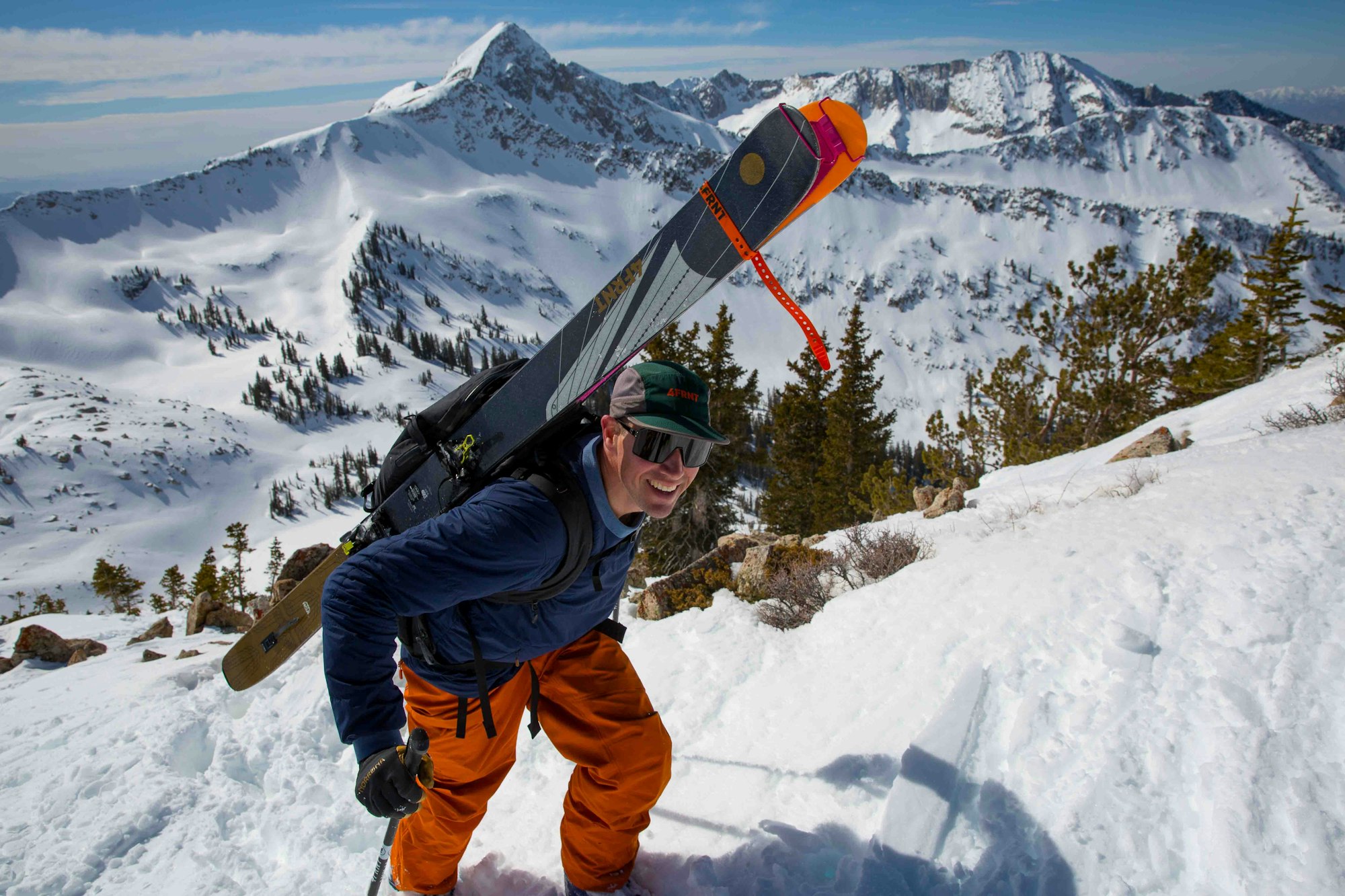
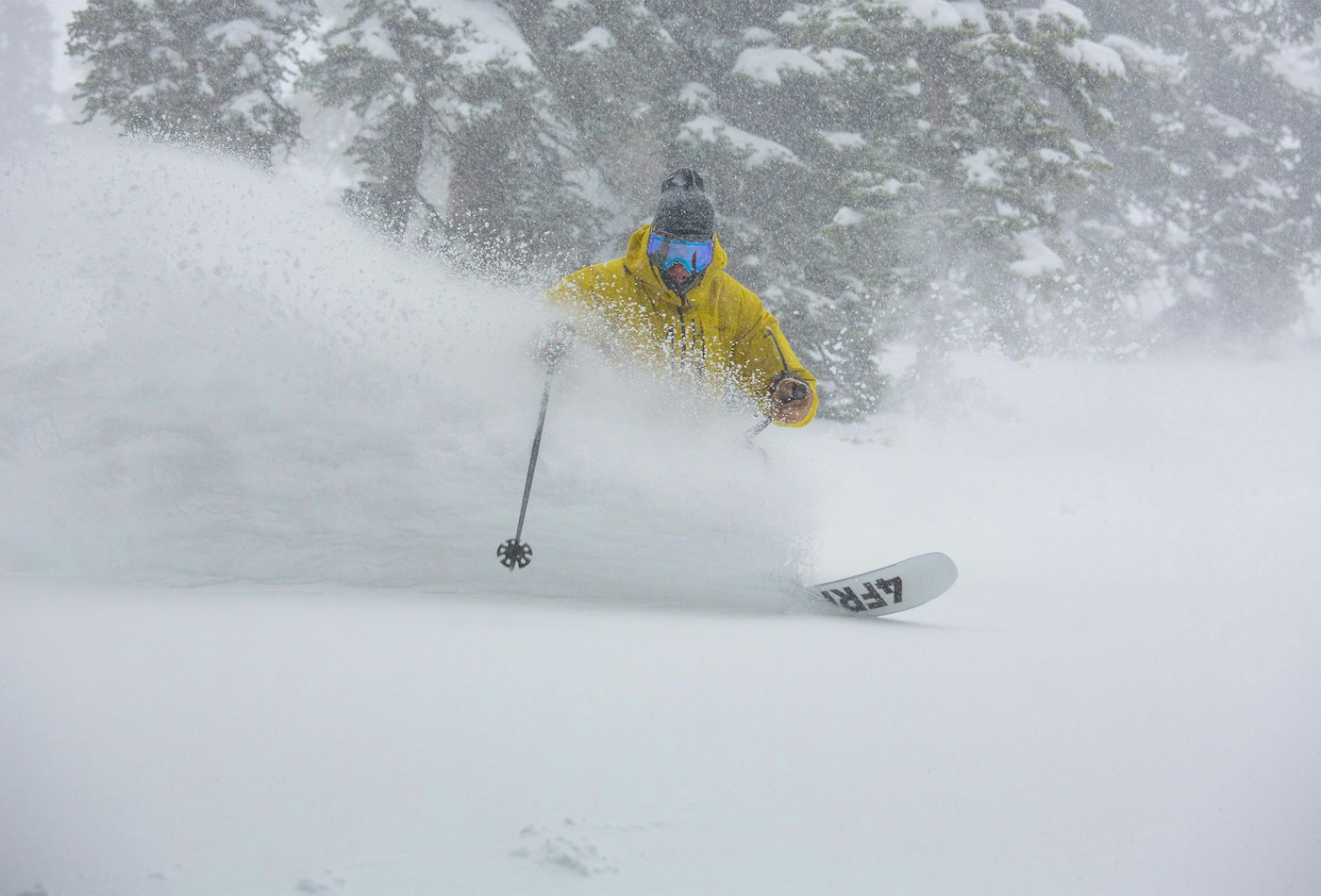
Photo: Sam Watson
Sterbenz cultivated a group of unique individuals to formulate the team, including Eric Hjorleifson, CR Johnson, Niklas Karlstrom and Vincent Dorion in the early days, followed by Wiley Miller, Thayne Rich and David Wise. He then helped bring their ski design ideas to fruition with engineer Bob Boice. At a time when big ski companies had one, maybe two, twin tipped skis, 4FRNT filled out a product line catering to the unique demands of each of their athletes. Hoji, CR and Dorion’s powder skis, EHP, CRJ and VCT, respectively, enabled playful yet powerful skiing in deep snow. Later the Renegade series, YLE and the InThayne became freeride mainstays. Niklas Karlstrom brought his park and all-mountain influence to the 4FRNT lineup in the TNK and David Wise won his first X Games Superpipe Gold on the 4FRNT Wise. A ski that had been designed just a month before the competition, when Wise joined the team.
In 2017, Sterbenz sold 4FRNT to Jason Levinthal, creator of Line Skis and later, J Skis. Sterbenz established 4FRNT through the classic distribution channel of selling to ski shops but after Levinthal sold Line to K2, he switched things up with J Skis by selling direct to consumers. After years of dealing with the same ski shops while at Line, Levinthal found it more financially viable for smaller ski brands to cut out the middle man, and enacted the same DTC model to 4FRNT when he took ownership. A business tactic 4FRNT still uses today, in addition to a limited list of retail partners.
Immediately following the sale, the 4FRNT staff in Salt Lake City was let go and the company was moved to Burlington, Vermont, where Levinthal runs J Skis. From 2017 to 2020, Levinthal hired a small team to work on 4FRNT and kept the business going. In 2020, after three years under the Levinthal umbrella, Sterbenz helped Levinthal sell 4FRNT to a buying group of three passionate skiers.
Sterbenz stayed on for a year after the original sale to Levinthal, eventually leaving to help establish WNDR Alpine in 2018. Checkerspot, a bio-tech company based in California, tasked Sterbenz with creating a proof of concept for their algae oil to hopefully gain mass adoption in the outdoor industry. Sterbenz made skis with WNDR from 2019 to 2024 but internal leadership changes led to the shuttering of WNDR Alpine in 2025.
After his departure from WNDR in 2024, Sterbenz returned to 4FRNT as a consultant to the buying group. When one of the three owners, Ebi Lange, tragically passed away in an avalanche accident in early 2024, Sterbenz reached out to the other two owners in an effort to come together and honor Lange with a few shared ski days. It was on this trip that the two remaining owners asked Sterbenz what role he would like to have at the brand.

Photo: Noah Kuhns
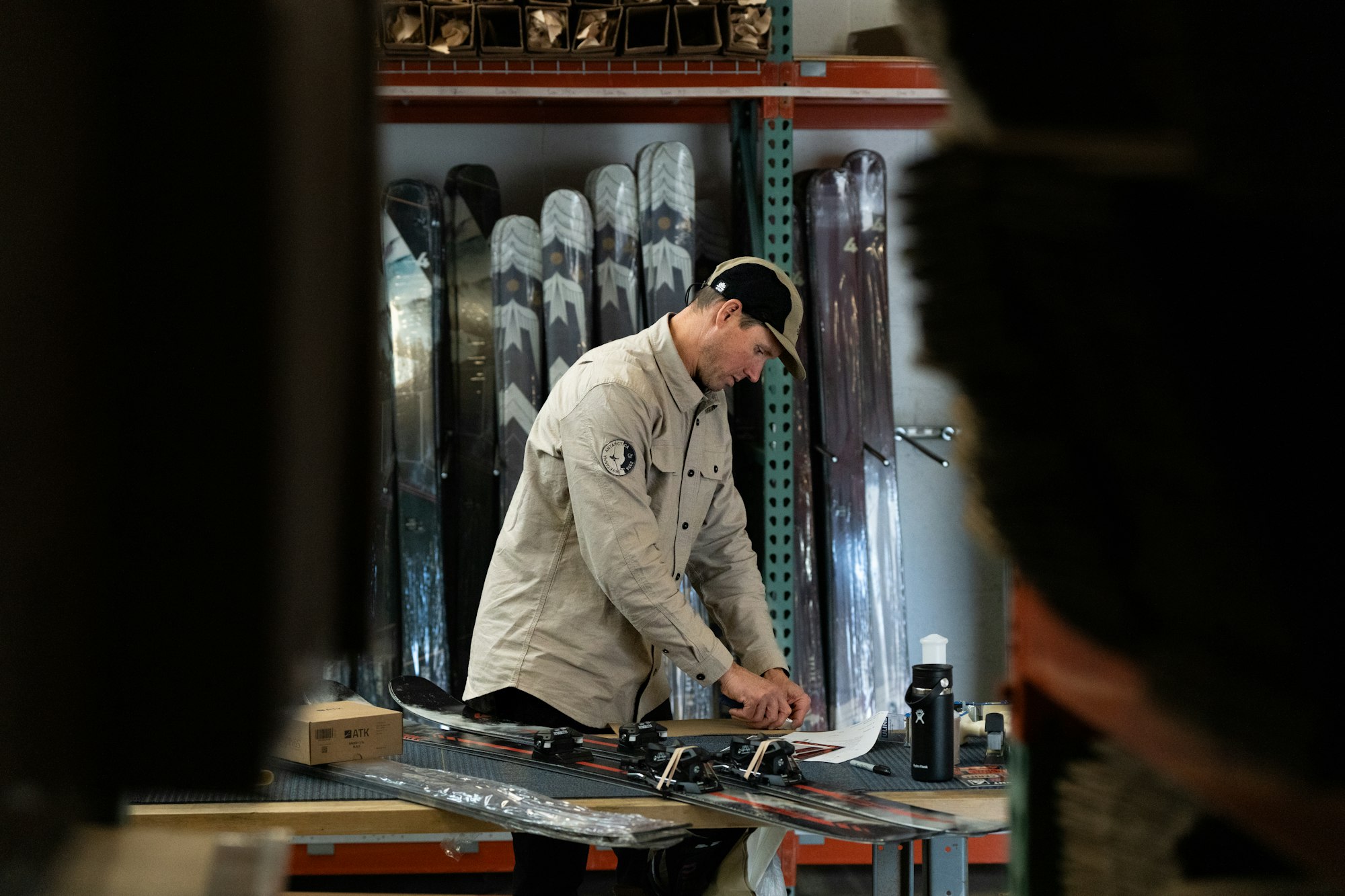
Photo: Noah Kuhns
Sterbenz humbly asked the owners if he could just get a box of skis to start, and return as an athlete. “I had been skiing on algae for five years and started to convince myself that it's the only way. I hadn't skied a metal laminate ski purposely because WNDR was so focused on growing in the backcountry space that I just kind of made concessions to ski more backcountry-centric construction skis.”
Sterbenz went up to Alta by himself to ski his MSP’s for the first time since leaving WNDR. He talked about the consistency of lift served skiing and the joy he felt being back on 4FRNTs. “It’s the same lift, the same run and quite honestly, we’re really fond of the same experience,” says Sterbenz. “But to do it on a different ski, the experience changes so much. We almost look forward to the venue not changing. I ran through the three MSP shapes and giggled after every run.“
Lange was a ski industry veteran and understood finance on a high level; he helped Rossignol get back on their feet after being sold from Quicksilver. Lange was always thinking of how to level up 4FRNT as a business and while skiing with the other owners, they all agreed that they wanted to honor Lange’s legacy by continuing to challenge the business to see where growth opportunities may be. One of those opportunities was moving the brand back to Salt Lake City.
“Being based here in Salt Lake, it became obvious that this would be a fun project for me to stand up,” Sterbenz tells me over the phone. “I have had the experience of running the company for many years, and I've had the pleasure of watching it run from the sidelines for a significant amount of time. It was seven years, throughout the entirety of my departure and watching it operate and seeing areas where there was potentially room to improve and also where things are working from a legacy perspective. The work we’re doing with Stinius and his Sinister is straight out of the playbook from when we were building and designing skis with Vincent Dorian and C.R. Johnson.“
Coming up on 25 years since 4FRNT’s inception, athlete involvement is still the guide.
“These are really progressive athletes, they need control of the ski that is specific to their desires and really opens up and unlocks potential for them as a skier. That's what 4FRNT has always stood for,” Sterbenz states with a sense of pride. “Showing images of Stinius' rad style skiing on these prototypes and then ultimately coming to market; it was just like, damn, that still remains so true and authentic to the ski community. Don't just make them a fancy topsheet and a royalty contract, but really let them get involved in the engineering side of it and challenge some of the engineering norms.”
The passion Sterbenz has for 4FRNT is arguably stronger than it has ever been and he sees his journey over the last two and a half decades as a necessary one. At times, he thought he may become a ski guide or a full time carpenter, but the draw of owning and running a ski brand has proven to be too strong to resist.
“I'm fully certain that none of which would have been nearly as fulfilling as it is today in this role, with this brand. I can look down on my topsheets and reflect on my 20s and 30s and nearly now my 40s,” says Sterbenz. “Life goes by so fast, as long as you can remember the milestones, highlights and lowlights, it's so much more fulfilling and a valuable experience when you can articulate it like that.”