Featured Image: Courtesy of Aspen Snowmass
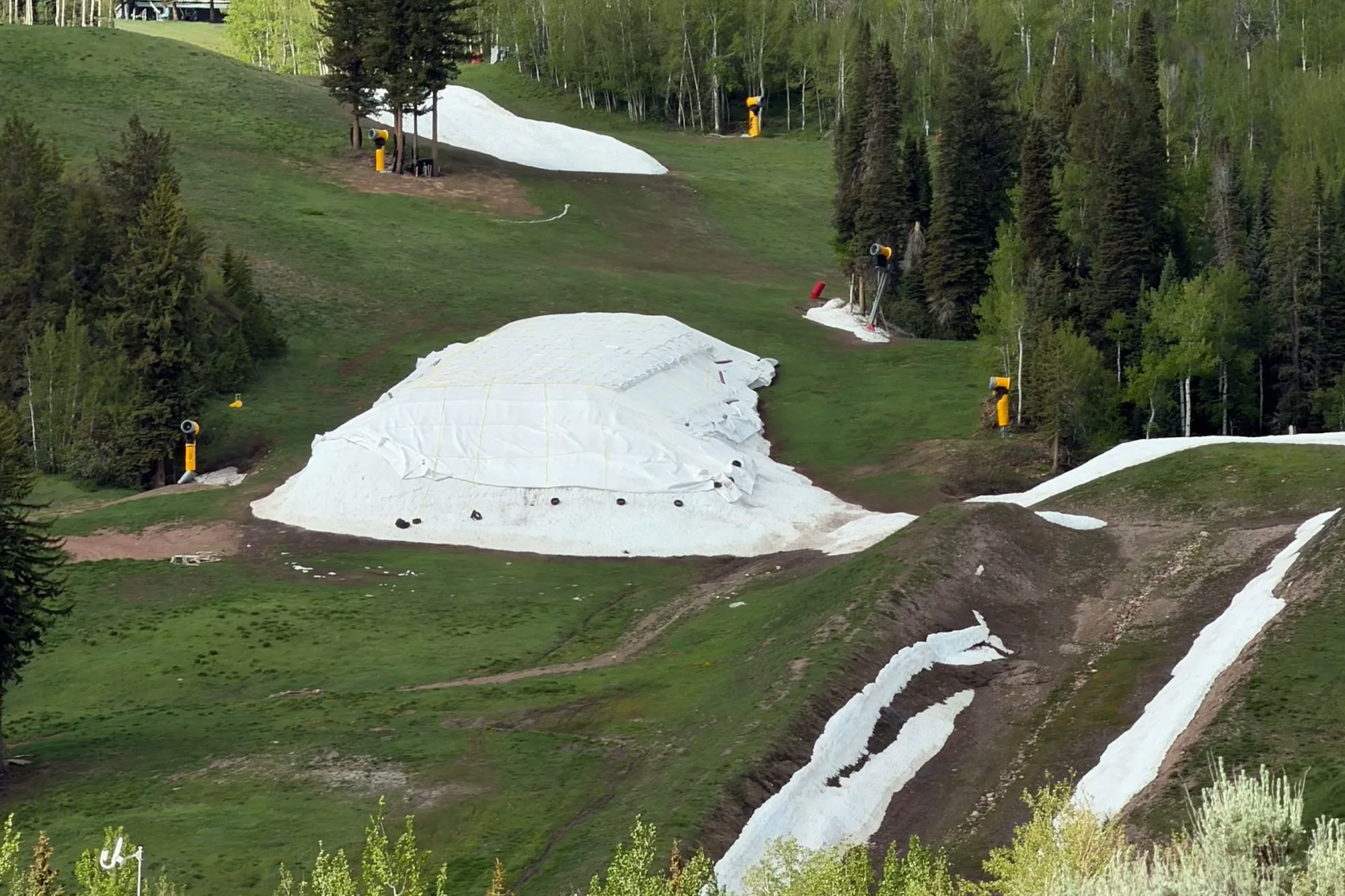
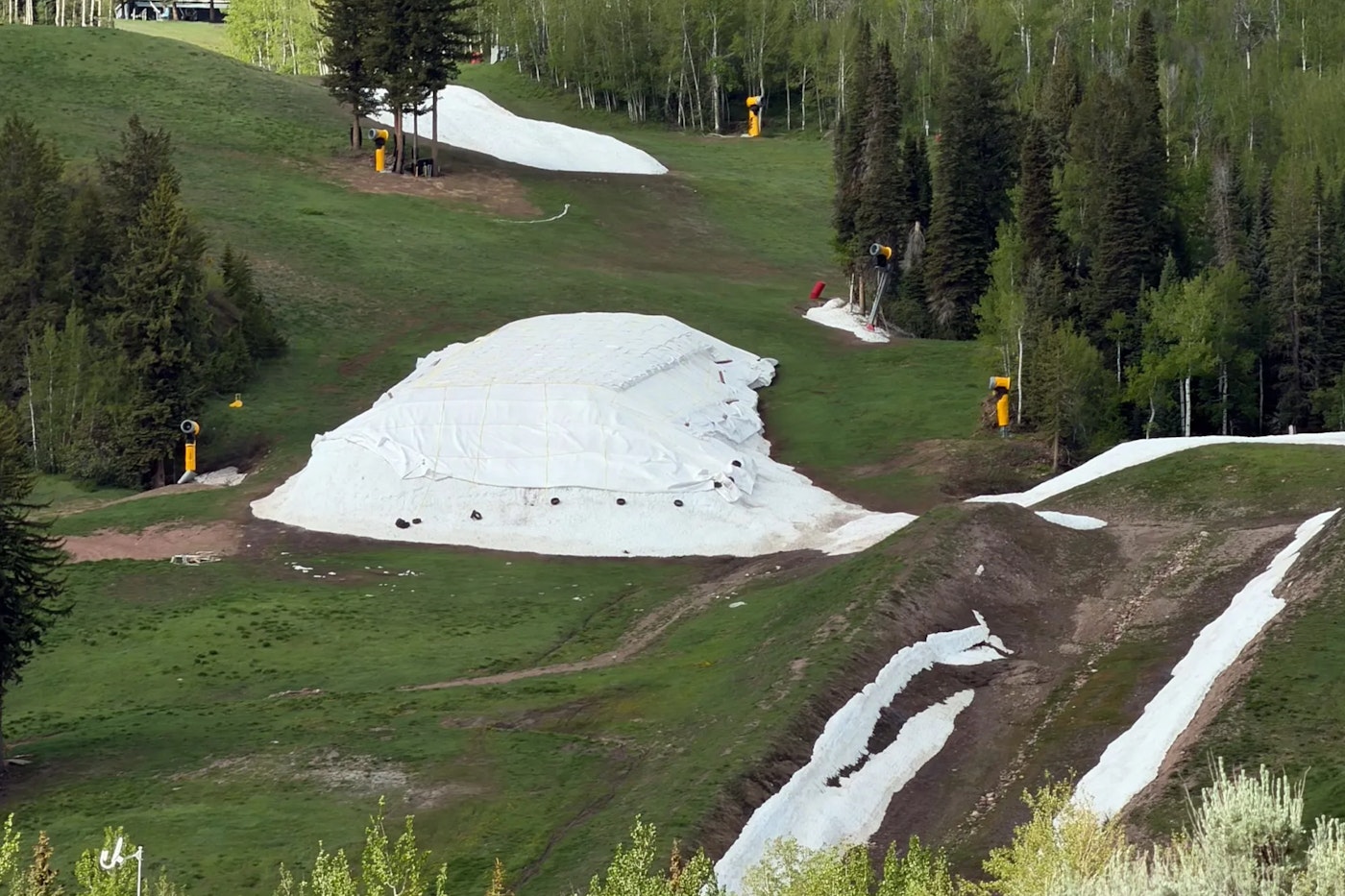
In the face of climate uncertainty, ski resorts must adapt to survive. Aspen Snowmass is attempting to do just that, as the resort is now the first in Colorado to enlist the help of Finnish company Snow Secure. Plans have been in place for over a year, with manmade snow from 2025 currently sitting tarped on both Buttermilk and Snowmass mountains.
The goal is to preserve enough snow through the summer months to let both mountains build terrain parks come winter, even if early-season conditions are less than ideal. And as wildfires rage and rising average temperatures show no sign of slowing, this is likely a technique we'll see more and more resorts employ.
Chris Miller, Senior Vice President of Sustainability at Aspen One , is optimistic about the endeavor. "This very much is a sustainability story," he said. "It’s enough snow to hopefully give us a good early-season start. In order for us to continue to ensure the world-class experience we offer locals and guests, it will require a host of tools in this climate-resilient toolbox." Aspen One is estimating that the mats are covering 3.5 million gallons of snow water equivalent.
Snow storage isn't a new idea, and resorts across America have been employing it for a variety of reasons, from summer parks to early-season access. But there's no denying that Snow Secure brings a novel approach, even having been named one of Time's Best Inventions of 2025 . The company's "white extruded polystyrene mats, laid on top of natural or manufactured snow drifts at the end of ski season, both insulate and shield from sun and rain to retain the snow when it gets warmer," according to Time.
Snow Secure CEO Antti Lauslahti says the mats tend to lose around four feet of snow per summer, with 14,000 cubic meters of snow ending up at around 10,000 cubic meters by the fall. Still, that's not bad, and even when temperatures soar to 100°F, conditions remain cool under the mats, with temps sitting at 35-37°F. Proven at resorts like Ruka, Levi and Sun Peaks, it's a product that provides something that is lacking in an industry dependent on Mother Nature: stability.
On the surface, the partnership makes sense and seems like a way to save time and money. But beneath the decision lies copious amounts of data that warn of a world facing resource shortages and a climate that is anything but predictable.
Rising temperatures, shortening winters and less snow will give rise to astronomical operating costs in the coming decades, likely exceeding what consumers are willing to pay. Aspen and its industry peers know they'll need to start saving now if they want to remain viable then. And for all our sakes, we can hope that we haven't started saving too late.
![[GIVEAWAY] Win a Full 26-27 Ski Setup from Fischer](https://www.datocms-assets.com/163516/1790101711-00012060-edited.jpeg?w=200&h=200&fit=crop)