Featured Image: Sweetgrass Productions/Nathan McBride
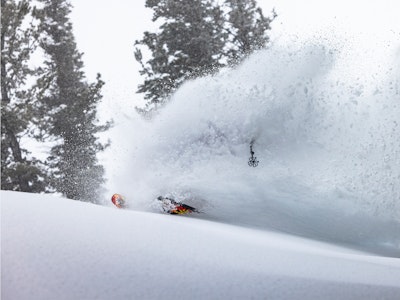
I remember the first time I skied powder, it blew my mind. Not in the sense that I instantly felt like I was floating, but that something so light and fluffy could actually be so difficult to move through. At least, that’s how my first dip into the coveted conditions went. Of course, it wasn’t the snow’s fault. It really was blower, I just had to figure out how to ski it correctly. This took time and a lot of trial and error, but eventually, it clicked. Instead of fighting my skis and the snow, I learned to move with the contours of the mountain and let my skis do their thing. Finally, I found the flow state. It truly is a feeling that I can only describe as magic. While I can’t prove it’s sorcery, there’s more to it than meets the eye.
That elusive feeling of floating in powder comes from techniques that have evolved over time. It makes you wonder, though, how did this technique start, and who figured it out? We’ve all seen the skinny skis of the 1950s and ‘60s. It’s hard to believe people figured out how to make them float in a foot of fresh snow. But they did, and much of that story leads back to one man at Alta Ski Area.

Photo: Rocky Menzyk
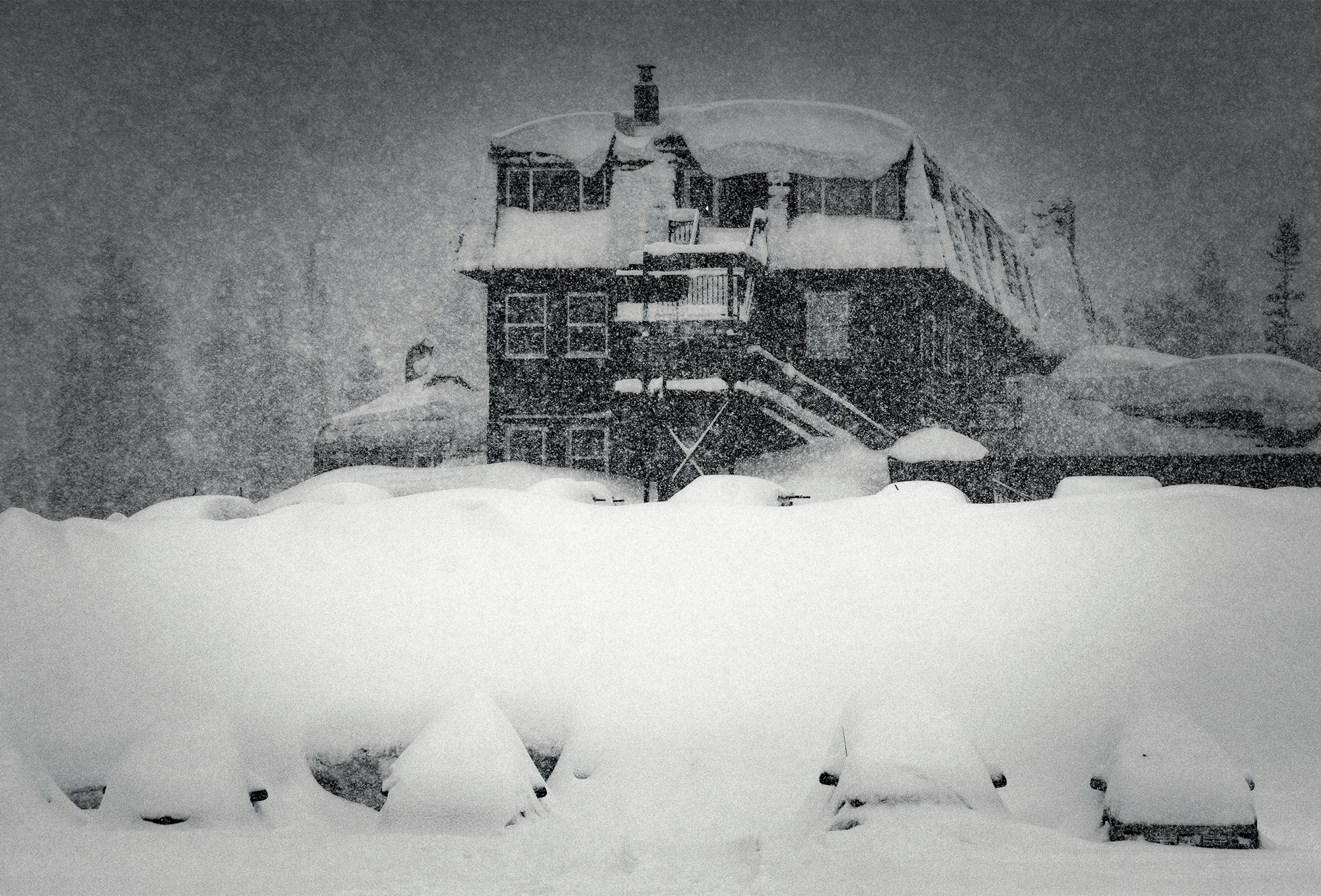
Photo: Rocky Menzyk
Alf Engen, also known as the father of powder skiing, came to Alta in 1935—initially by request of the Forest Service to survey the terrain and decide if it would be a viable ski area or not. Engen immigrated from Norway in 1929 and had already made a name for himself as World Champion across multiple ski disciplines deeply rooted in ski jumping and racing—both of which heavily depend on carving skills for firm groomers and icier slopes. But the snow at Alta left Engen, like most powder novices, at a loss of how to ski it.
“It is unusual,” said Nic Nichols, a retired Alta Ski Instructor. “I mean, the snow is a lot lighter and softer than anywhere else in the world that I have skied.”
Alta sits in Little Cottonwood Canyon in Utah’s Wasatch Mountains, just outside of Salt Lake City. Its close proximity to the Great Salt Lake contributes to the area’s unique snowfall.

Photo: Sweetgrass Productions/Luke Bredar | Skier: Ross Tester
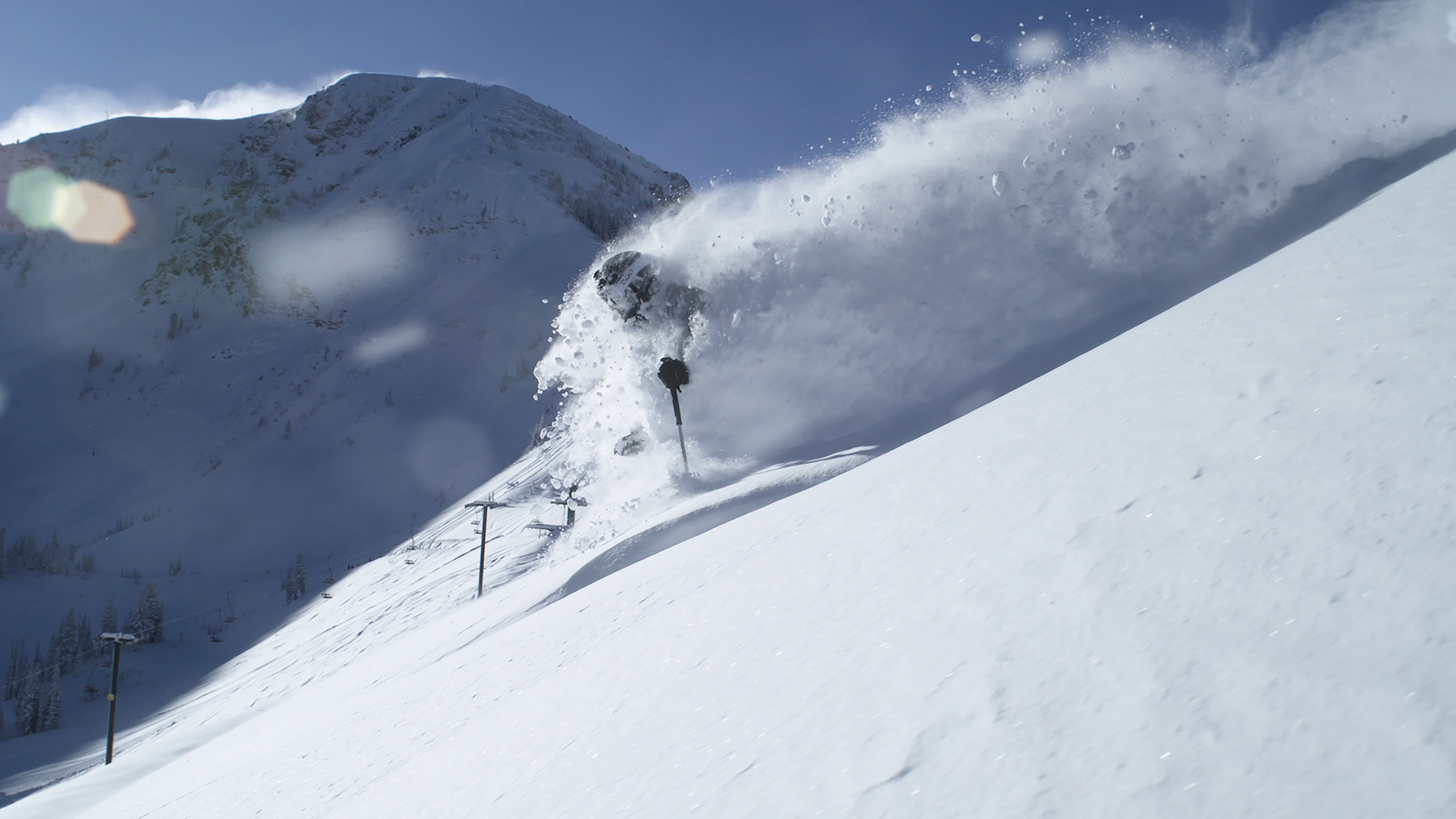
Photo: Sweetgrass Productions/Luke Bredar | Skier: Ross Tester
“It could be blue skies, and the sun is out at the mouth of Little Cottonwood Canyon with no wind, and there’s just these giant snowflakes falling up at Alta with the sun peeking through at the same time,” said Scott Mathers, Director of Alta Ski School. “I’ve never seen anything quite like that phenomenon.”
These peculiar weather patterns, along with Alta’s vertical terrain, allow for some of the best steep and deep skiing in the world. Mathers noted that about 70% of Alta’s private lessons are not on groomed trails—making them one of three ski areas in the U.S., including Snowbird and Jackson Hole, teaching that much off-piste skiing. With the majority of the mountain’s appeal lying beyond the groomers, it makes sense that a skier needs to approach this terrain with a different method than race-inspired carves.
Alf Engen Ski School and the Origins of the Powder Technique
Alta’s Ski School opened its doors the same year as the ski area in 1939. After being away for a decade in Sun Valley, Idaho, where he helped coach the 1948 U.S. Olympic Ski Team, Engen returned to the famed canyon after the Games. He took over the ski school that same year, renaming it to the Alf Engen Ski School. At the time, European ski methods and techniques still dominated the industry. But Engen soon realized Alta’s terrain and dry, cold-smoke snow were a different beast and needed to be skied as such. This led to the birth of the powder turn and the American ski technique as we know it today.
By 1968, meetings for The Professional Ski Instructors of America (PSIA) were in full swing at Alta, with Engen leading many of them. At first, these meetings weren’t about teaching people how to ski, but about creating new, American teaching methods. Engen went as far as taking the instructors out on the slopes himself to teach them how to ski this alien substance.
“He was very careful about making certain that we were able to get ourselves around and do that sort of thing because the snow was so unusual,” Nichols said. “It was basically him and us instructors going out and figuring out how to keep from standing on our heads.”
Nichols and the other instructors took notes while out with Engen. These would later benefit not only the instructors, but the skiing community as a whole.
“Alf said that was the smartest thing that ever happened,” Nichols said. “We wrote things down, since he never wrote anything down.”
Three decades later, in the early 1990s, Nichols and his colleagues came together with their collective notes to make a handbook of all the learned techniques, rather than rely on word of mouth passed down through generations. While Engen wasn’t directly involved in its creation, Nichols explained that Engen and his colleague, Eddie Morris—another early Alta instructor of the 1950s and ‘60s—had essentially created it subconsciously; when they first started figuring out how to ski Alta’s snow and shared that knowledge with others.

Photos: Alan K. Engen ski history collection & Alta Ski Area
The Handbook
The first sentence in the Alta Powder Technique handbook reads, “Skiing in rhythm with the snow describes the experience we wish skiers to have in deep snow.” While skiing and ski technology have evolved since its creation, that philosophy and the techniques behind it are still practiced to this day.
The handbook breaks down the powder technique into three key elements: the ready pole, floating and soft carving. The ready pole is a classic, deep-powder technique first used and taught by Engen and Morris. They believed an early pole swing forward would help initiate the next turn and establish a consistent rhythm for the movement that follows.
Floating focuses on specific tecniques, based on snow depth, speed and ski width, that facilitate silky turn connections.
Soft carving emphasizes keeping turns light and relaxed with equal weight distribution. Unlike on hard snow, where skiers rely on more aggressive carving. In powder, pushing the skis too hard into new snow can cause them to get stuck and punch the skier into a nose dive.
Bringing the Handbook to Life
When it comes to powder skiing, you can’t just tell someone how to do it; they need to see it in order to understand it. While the handbook is a good start, a new project in the works aims to put the lessons in motion.
For the past couple of years, Sweetgrass Productions, a Salt Lake City-based sports and documentary film company, has made at least one film a year with Alta. This partnership is rooted in a shared philosophy of telling stories about the mountain, its people and its history in a non-corporate way, with a series called “Steeped in Tradition.”
This series is a collection of short films featuring various Alta characters, including the patrollers, night crew and longtime local personalities, like the late, great Farmer Dave. The series aims to capture the true culture and community at Alta rather than just making hype reels. While working on an episode that highlighted the Alf Engen Ski School, the filmmakers came across the storied handbook, sparking the idea for a new short film in the series that focuses on the powder turn at Alta.

Photo: Sweetgrass Productions/Luke Bredar | Skier: Ross Tester
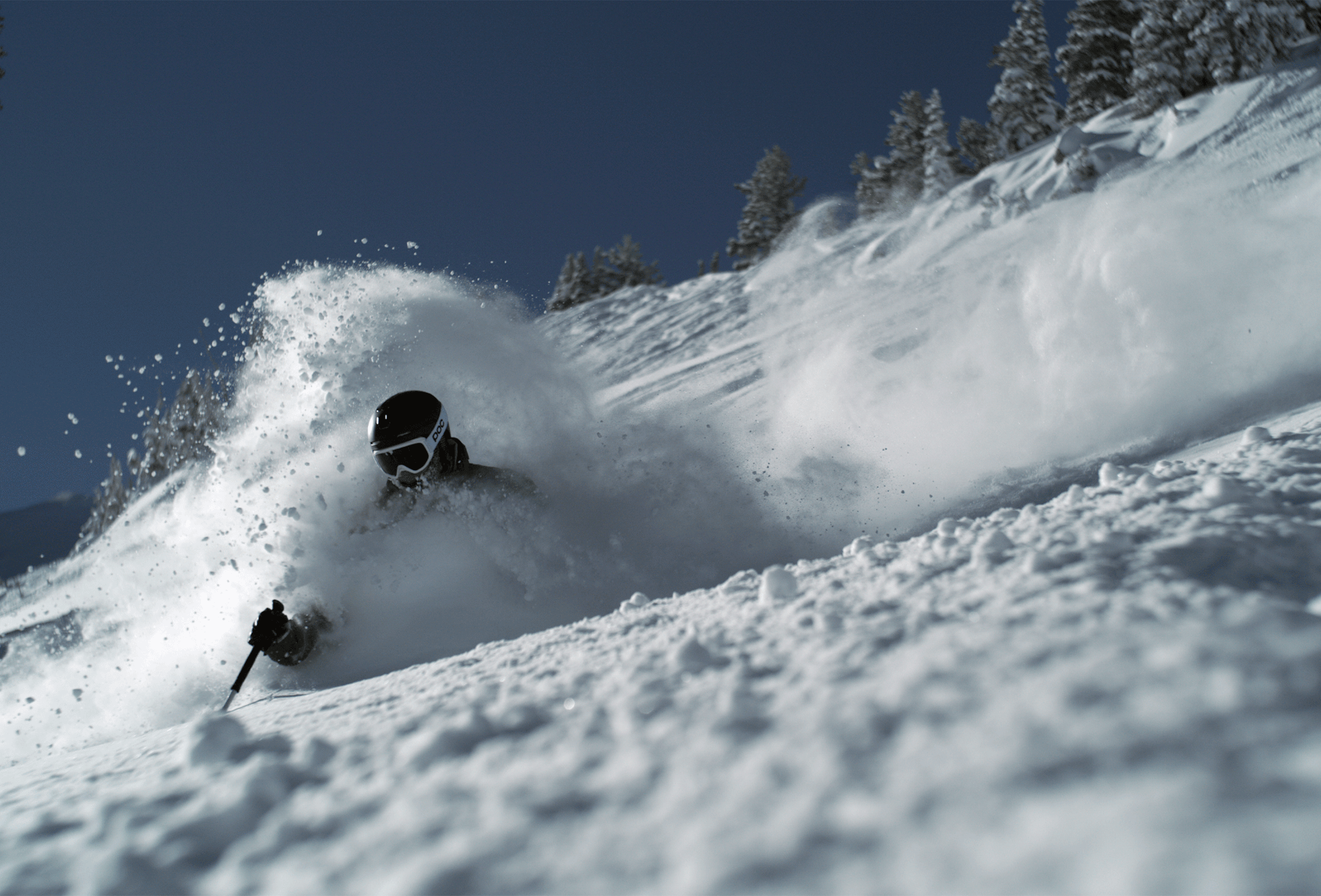
Photo: Sweetgrass Productions/Luke Bredar | Skier: Ross Tester
“As we were working with the Alf Engen Ski School, some conversation came up, and they shared the document called the Alta Powder Technique,” said Co-Owner, Director and Editor for Sweetgrass Productions, Michael Brown. “It didn’t really get included in that film , but it sort of sparked this idea of leaning into this and exploring it.”
The film was shot using Ember, a camera that can capture skiing in super-slow motion. The staggering piece of equipment is from Freefly, a company that makes drones and cameras. Ember is the company’s second iteration of their slow-motion camera and according to Brown, has helped improve the quality and relative accessibility of slow motion in filming. Older slow-motion cameras, like Phantom, used to take much longer to process footage, making them less practical for filming on the mountain. But now, with Ember, it can process that film almost immediately. Rather than showing viewers quick action shots, this camera allows viewers to really see each movement of the ski up close and how the snow reacts to those motions.
“We’re trying to show the things that you feel in a turn, but you can’t fully articulate,” Brown said.
While the handbook preserved the fundamentals of Alta’s powder technique, the experience of skiing goes far beyond a set of instructions. Just as Engen realized that Alta’s snow and terrain called for a different approach than what he learned in Europe, skiers have figured out how to adapt as they progress and find their own rhythm on this particular mountain.
That’s what Sweetgrass wanted to capture with this film, a feeling rather than a how-to lesson. No matter what level of skier you consider yourself to be, we’ve all had the ‘ah-ha’ moment on our skis when everything between our brains and bodies clicks—the experience Engen worked so tirelessly to pass on to others. Now, Sweetgrass has captured it on film.
“Skiing, especially as you progress and get into more advanced levels, is really a personal expression of how you want to do it and how you want to feel,” Mathers said. “So to me, that’s art; expressing yourself in your own way. Once you’ve mastered the fundamentals, it’s the flair you bring to it—your own style of going about skiing and enjoying the mountains.”