Featured Image: Gabe Rovick | Skier : Colter Hinchcliffe
One of skiing's most trusted forecasting tools, OpenSnow, got a major upgrade last week as the winter weather prediction giant launched PEAKS 2.0. The next step in OpenSnow's PEAKS model, version 2.0 has a few major upgrades that give it a leg up on the competition, including a 15-day forecast window.
This isn't just marketing jargon. OpenSnow put PEAKS 2.0 to the test, and it won. When comparing 20 million forecasts with some of the best forecasting models in the world, PEAKS 2.0 was the most accurate when predicting wind, temperature and precipitation.
Its competition included Google's DeepMind WeatherNext 3, models from the National Weather Service, NOAA and other heavy hitters.
So how did OpenSnow build a model that commands such a powerful lead amongst its competitors, and what does it do differently? Importantly, do these features even mean it's the right tool for you? Let's unpack the ingredients of PEAKS.

A very impressive stat line from PEAKS 2.0, outperforming the competition
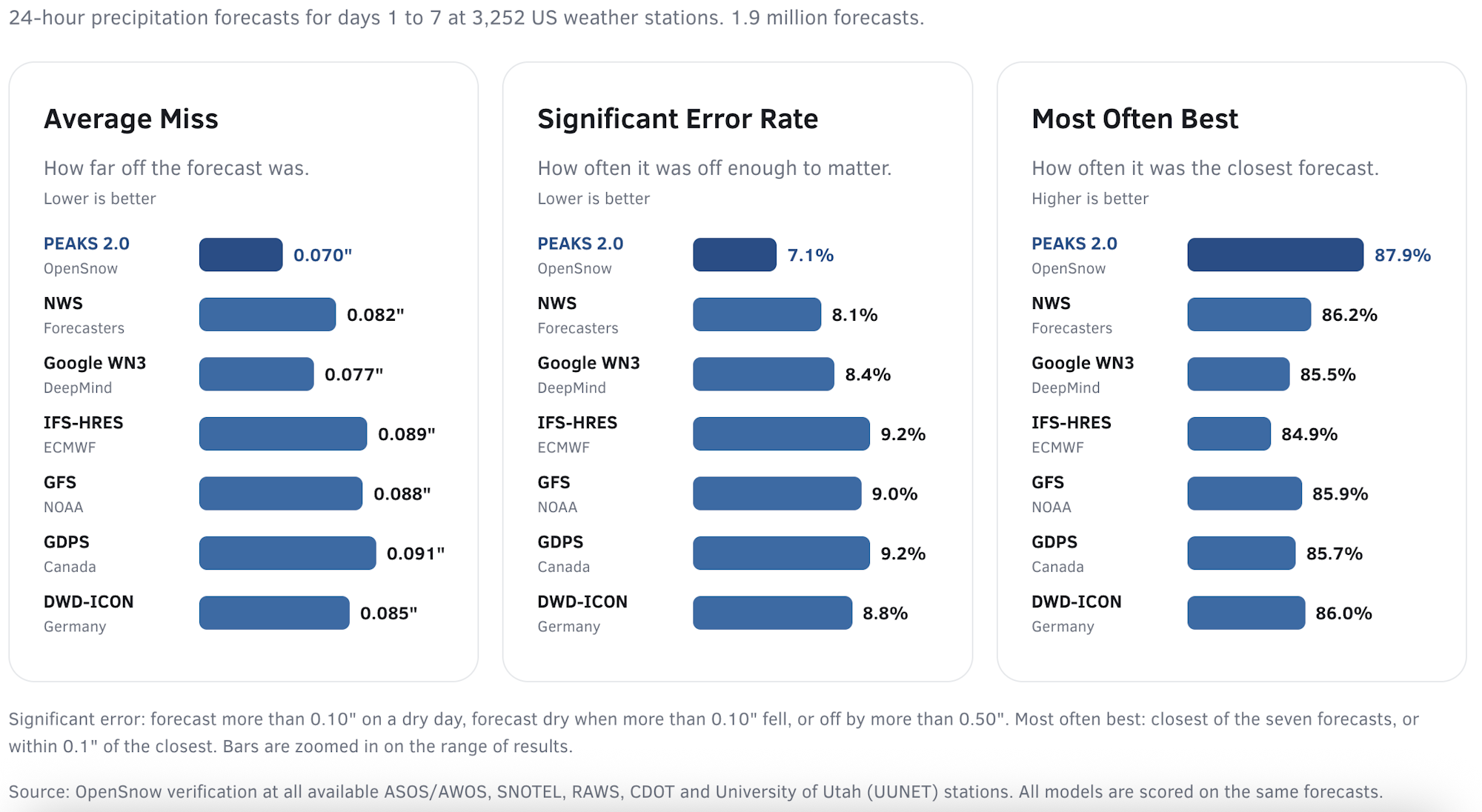
A very impressive stat line from PEAKS 2.0, outperforming the competition
According to OpenSnow, the biggest differentiator here when compared to conventional models is that PEAKS 2.0 corrects itself based on real-time data. While anyone can start with the same raw material, this machine learning program will adjust and get better at predicting patterns as time goes on.
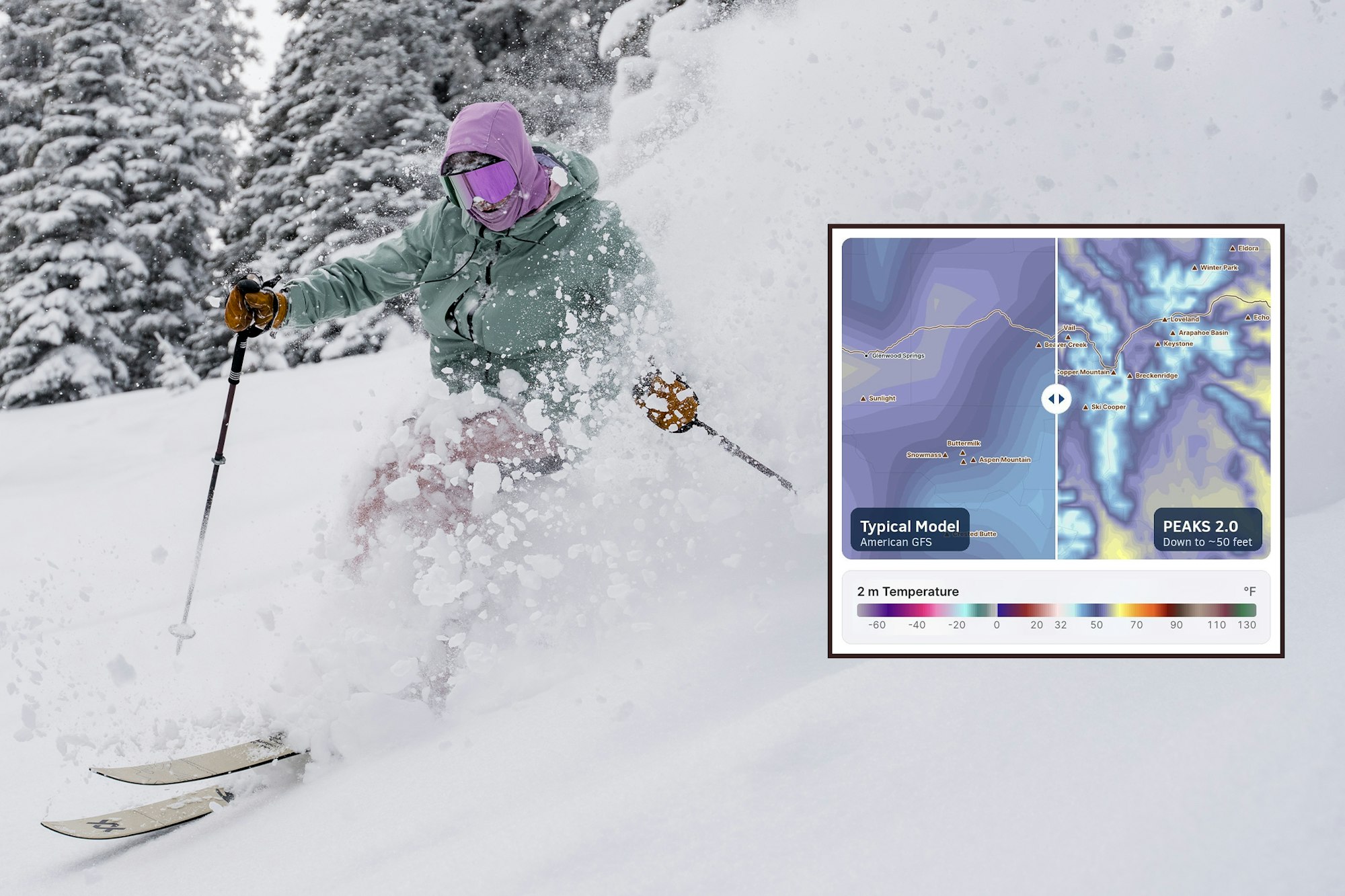
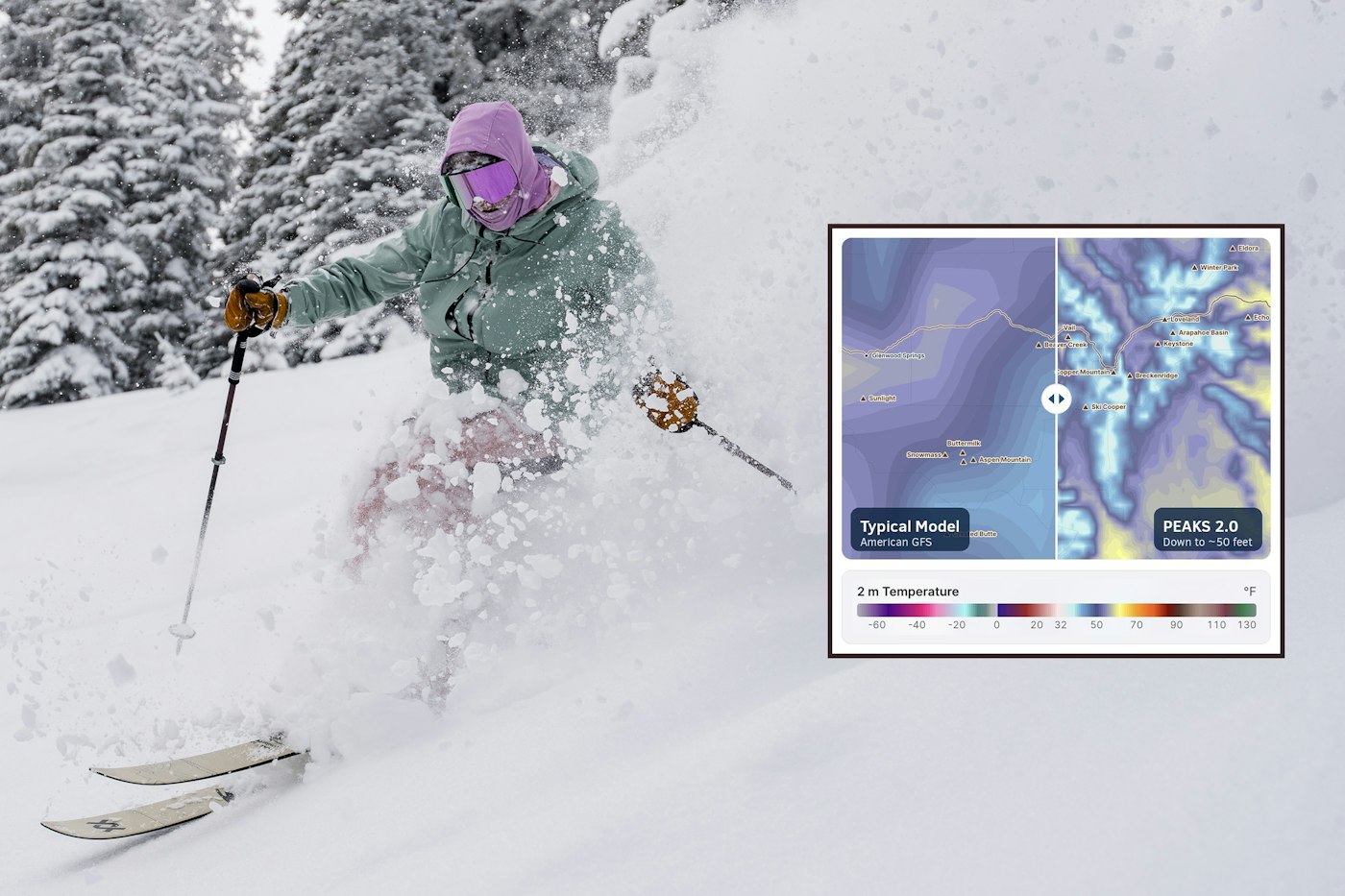
Additionally, PEAKS adjusts the forecast based on the terrain you're looking at, narrowing down observations approximately every 50 feet. It also compares estimates to real temperatures, and learns from the differences. All this compounds to create a wildly accurate and specific result that incorporates "bias" that other models miss.
A prime example of this, as outlined by OpenSnow meteorologist Andrew Brady, occurs in something called inversion bias. "Inversion bias [is when] models underestimate cold pools in valleys on calm, clear nights, leading to temperature forecasts that are too warm in the valleys," explains Brady. This is commonly found in Steamboat, Colorado, as well as Whitefish, Montana, where large valleys surround the rising mountains.
"PEAKS 2.0 attempts to fix this mistake (bias) at Steamboat and anywhere that its learned temperature inversions exist," Brady continues. Using real weather station data is at the heart of the upgrade from PEAKS 1.0 to 2.0. Where 1.0 was simply trained on historical model and estimate data, 2.0 uses real weather station data to learn and correct results.
Four Step Forecasting Process
PEAKS' ability to learn from its own mistakes is a crucial part of what makes it different, but its complete forecasting process takes place in four steps.
1) Baseline Model
Large forecast taken in about 15-mile increments
2) Emulation & Rebuilding
Model breaks down forecast into smaller, 1.5-mile grids
3) Point Forecast
Adjusts to within 50 feet of selected forecast point
4) Bias Correction
Learns from previous errors to correct and find patterns going forward (ex: inversion bias)
Machine learning programs have been the subject of more debates than I could possibly count over the last five years. The ethical and moral dilemmas involved have no end. But I'm cautiously optimistic in saying that this seems like a triumphant use of such technology, with accurate predictions that might better ensure a successful day in the mountains.
This is not to say that you need to get a big OpenSnow subscription to have fun in the snow. People have had plenty of good days hunting snow with the previously available tools, and that will still be the case in the future. But if you demand specific precision from your forecast when it comes to route planning and backcountry travel, it's a great option to consider.
As of late October, PEAKS 2.0 is the driving force behind "temperature, precipitation, snowfall, wind speed, wind direction, and wind gust elements" in all OpenSnow forecasts.