All Images: Courtesy of Steamboat Ski Resort
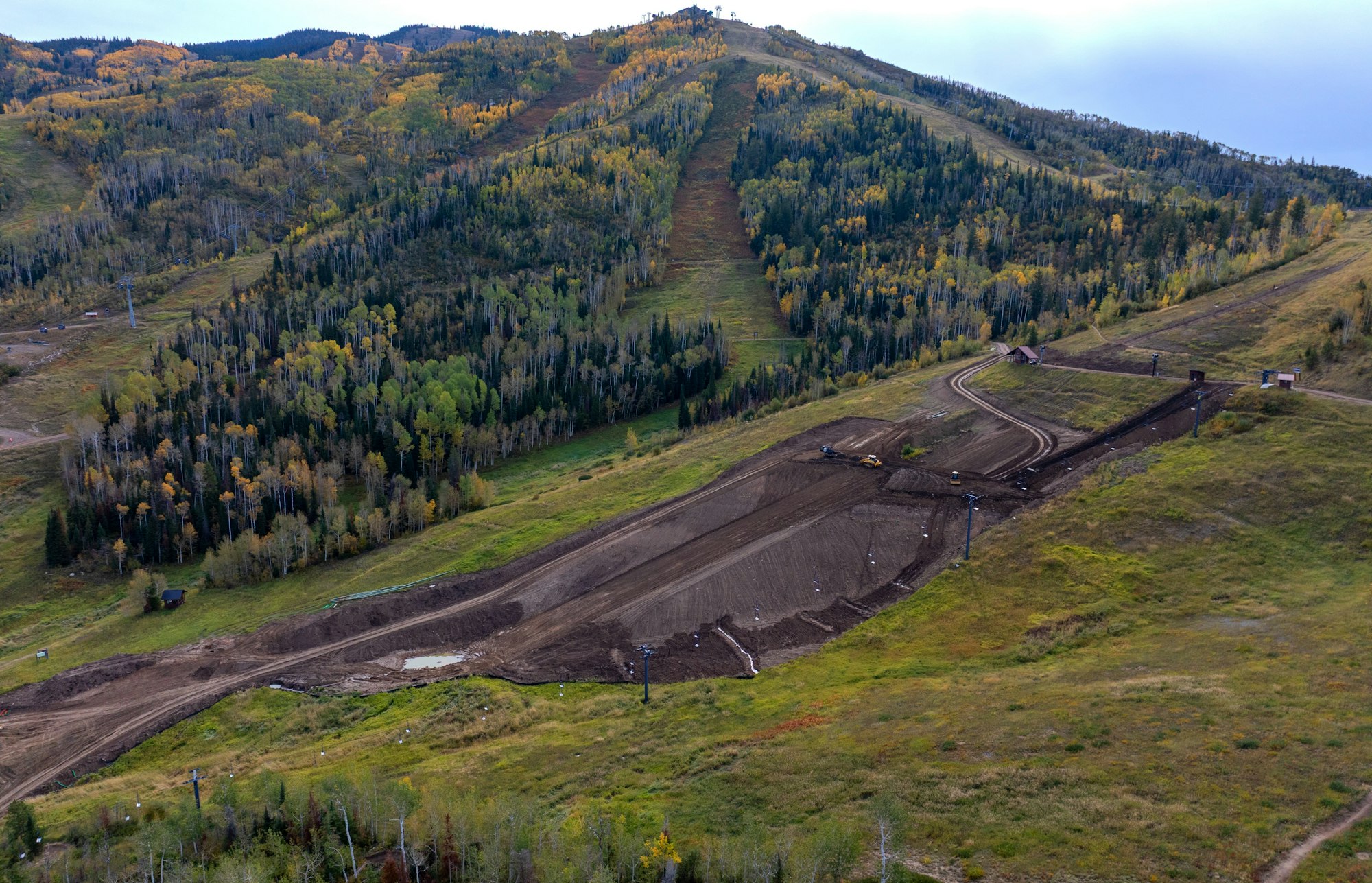
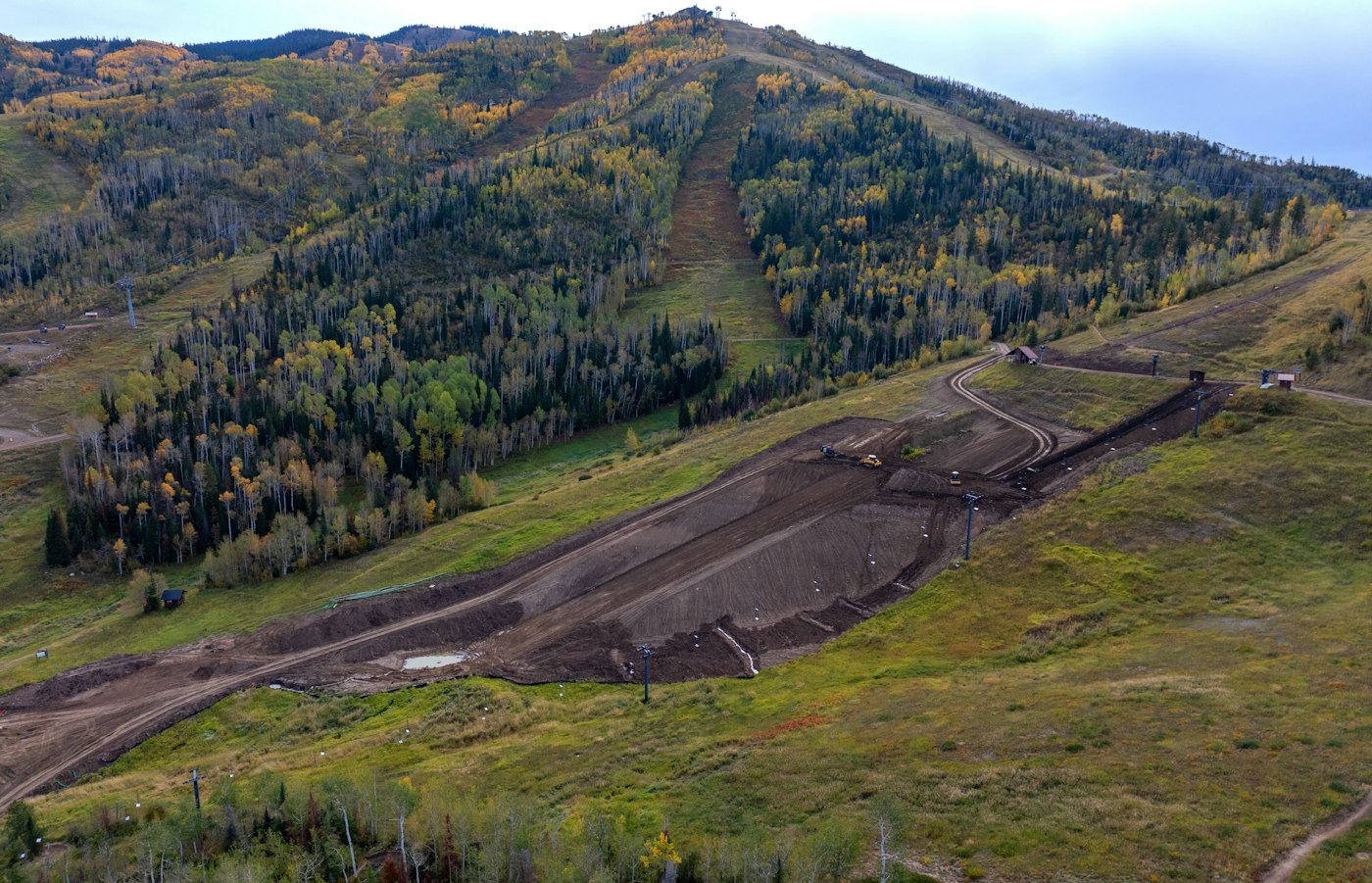
In late August, Steamboat began rebuilding the base of its Maverick Halfpipe with a goal of helping reduce the amount of snow needed to build the feature and open it earlier in the season.
The project doesn’t start with the snow though, it starts with dirt excavated from the construction of The Stockman Hotel and Residences, Auberge Collection . Rather than just seeing this as an extra dirt pile, Steamboat is repurposing the dirt to reshape the base of the halfpipe. According to Alterra Mountain Company , the new design could reduce the amount of snow needed by 60 percent.
Crews have been hauling dirt since late August throughout September, causing some trail impacts, which can be found on Steamboat's website with weekly updates. The Stockman Hotel and Residences are slated for completion in 2030. While the resort is finding ways to give excess materials a second life, the development itself has raised concerns among locals about housing affordability and the continued growth of luxury development in Steamboat.
The Maverick Halfpipe is located in the Bashor Bowl Area in the Maverick Terrain Park, Steamboat’s largest and most advanced park. The halfpipe currently measures 450 feet long and 56 feet wide, with 18-foot walls and a 22-foot transition, making it slightly smaller than some professional and Olympic competition halfpipes. It has not been announced whether those dimensions will change as part of the rebuild.

Steamboat is using the excess dirt to reshape and raise the base of the halfpipe.
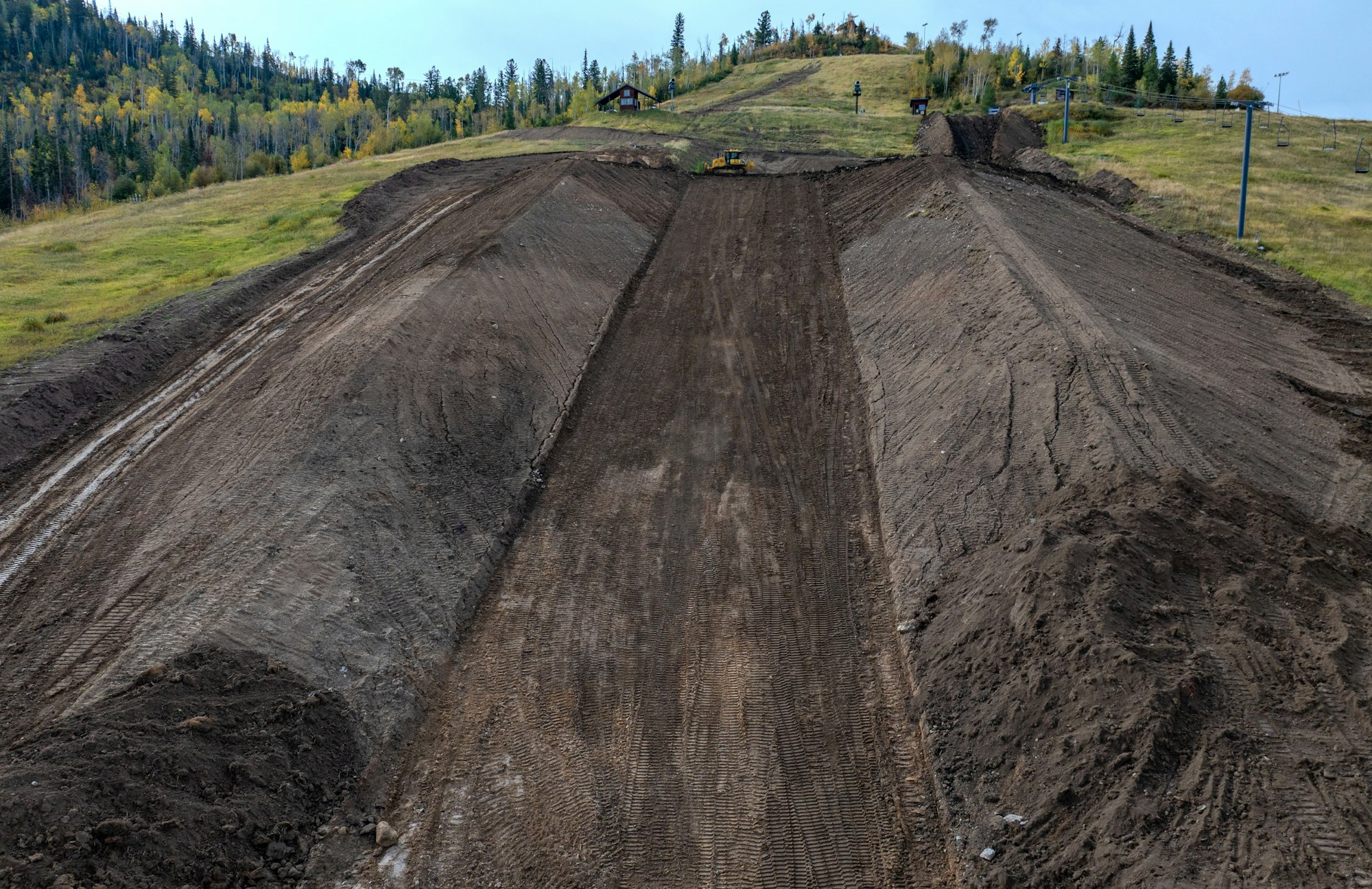
Steamboat is using the excess dirt to reshape and raise the base of the halfpipe.
What does this mean for skiers?
The biggest benefit could be getting to enjoy this feature earlier in the season. Historically, skiers usually have to wait about halfway through the season before it opens. By reshaping and raising the base, the resort can potentially build and shape the pipe with less snow, which translates to an earlier opening.
The resort also has two other terrain parks. Rabbit Ears is their smaller, more intermediate-level park with an assortment of jumps, jibs and rails, while Lil’Rodeo is the beginner park and home to the resort's Mini-Mavs halfpipe.
Reducing the amount of snow needed to build the Maverick Halfpipe could also significantly reduce water use for snowmaking. According to an article by Wavy.com , producing enough snow for a professional or Olympic-grade halfpipe can require millions of gallons of water. Steamboat’s halfpipe isn't quite as big, but this rebuild could still be a huge step for the resort's water and snowmaking conservation, especially in the terrain park.
This reconstruction is also a good example of how ski resorts can repurpose materials instead of letting them pile up and go to waste. In this case, a luxury development's unwanted dirt is another project's gold.