All Images: Matthew Tufts: | Bike-to-Skier: Cody Cirillo
Springtime goes one of two ways for skiers. It's either a time to relax and ski casual slush with your friends or a time to engage in some proper type-two fun. For backcountry skier Cody Cirillo, it's almost always the latter.
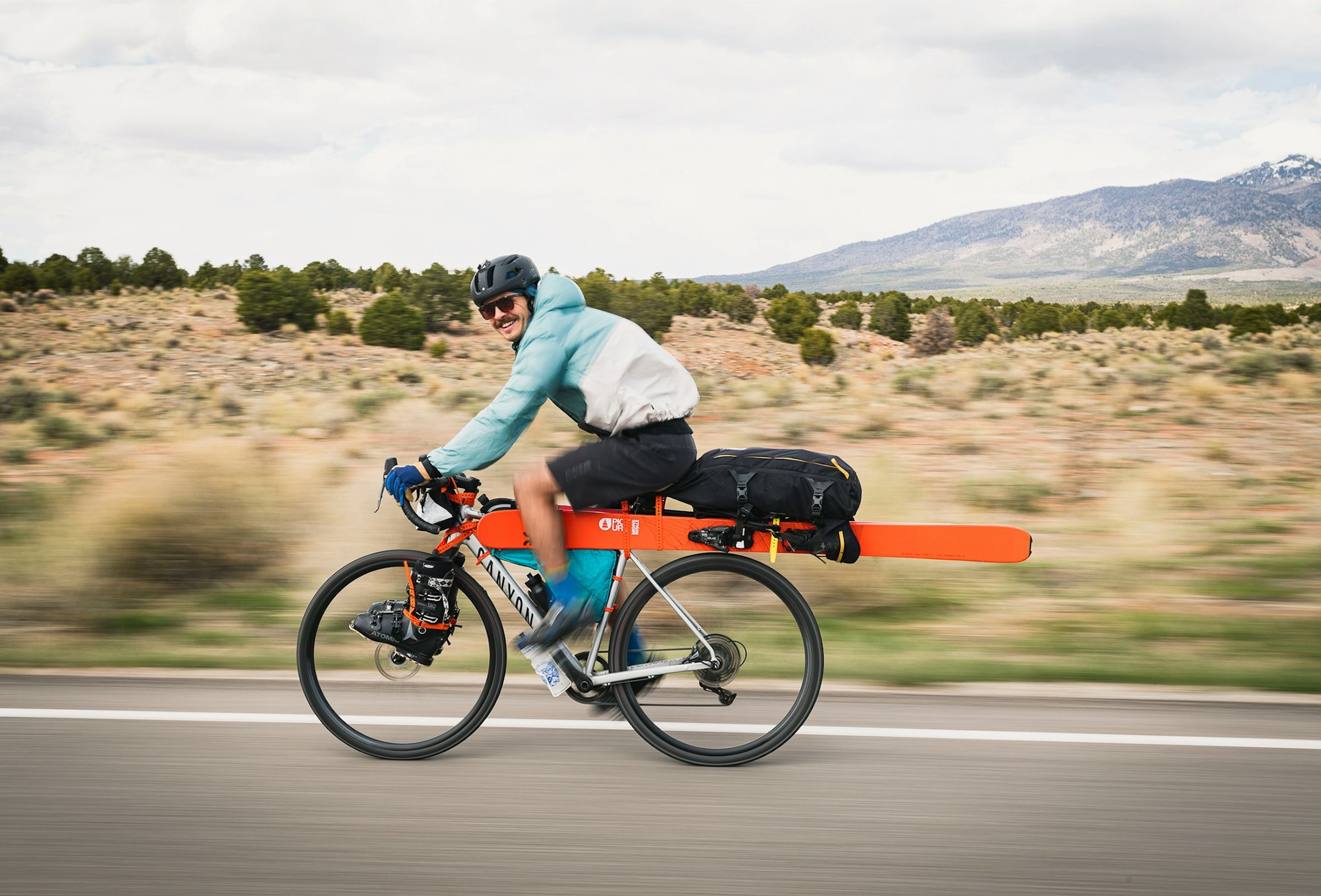
Cirillo has carved a unique lane for himself in the ski industry. Once a Dew Tour and World Cup freestyle skier, Cirillo has evolved his career to be both an athlete and the Creative Director for Faction Skis. An eternal adventurer, Cirillo is always seeking new experiences within the sport he knows and loves so much. As part of his creative exploration, the skier has become known for his wild bike-to-ski escapades.
Whether it's a single-day effort from his home in Telluride to ski a backyard line on the Fourth of July or a 35-day quest to circumnavigate the entire country of Iceland in the middle of winter, Cirillo is always conjuring up new ways to incorporate a healthy dose of pedaling, skiing and suffering into one mission.
Snowlines across the Mountain West are higher than we typically see in spring, making biking a viable option for accessing the slushy corn we all crave this time of year. Maybe you've been toying with the idea for years, or maybe it's just crossed your mind to hop on your bike because gas prices are as high as the snow line. Whatever the inspiration, we caught up with Cirillo to break down the basics of a successful bike-to-ski experience, below.

The key to every good bike-to-ski setup is a lot of Voile straps. Like, a lot.
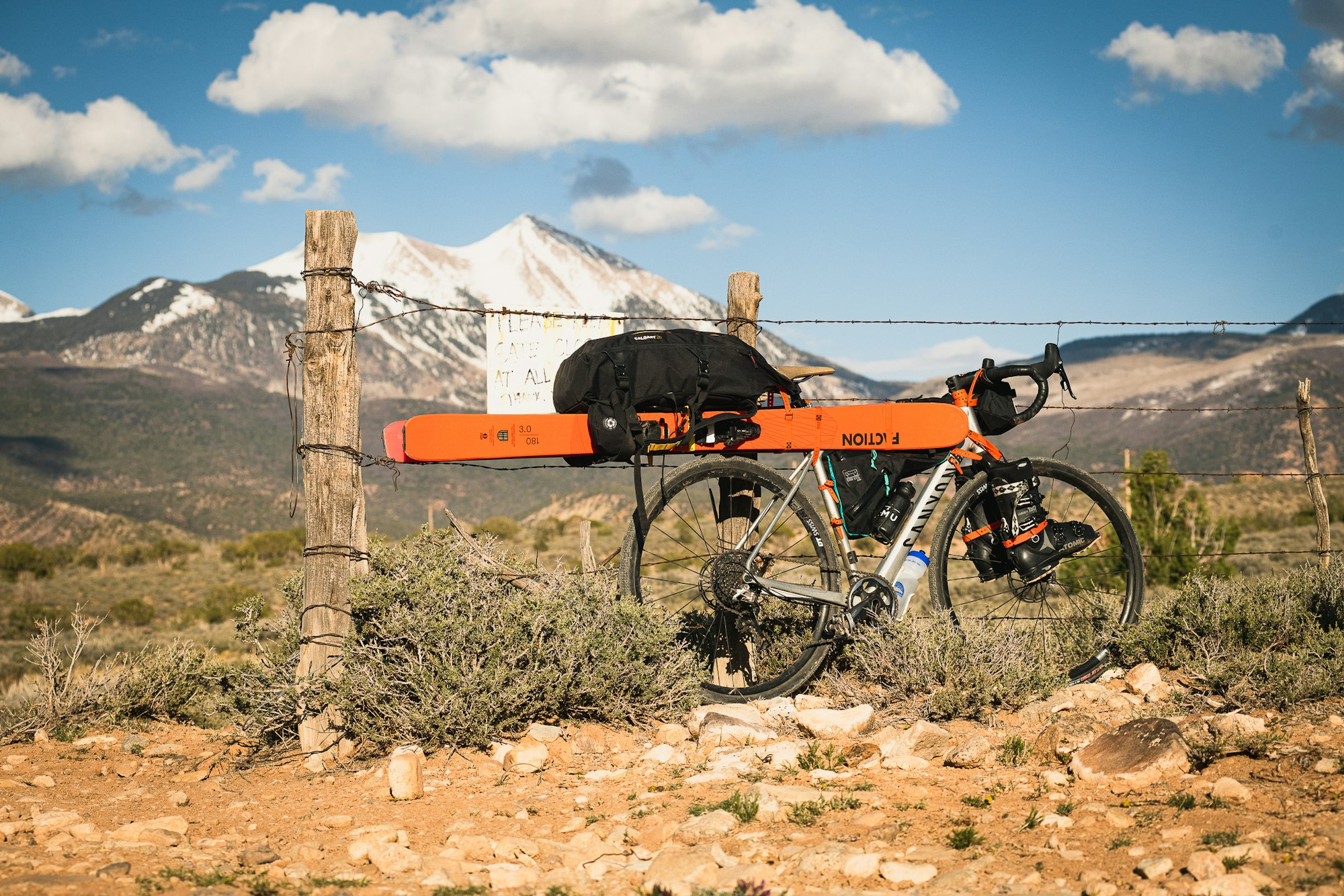
The key to every good bike-to-ski setup is a lot of Voile straps. Like, a lot.
Start Small
"I think it can be as easy or as difficult as you want to make it," says Cirillo. "Start in a way that’s just throwing your skis on your backpack and going to see what happens." As an introduction to the multisport activity, Cirillo suggests starting with a simple mission like biking from your house to your local ski resort and skinning up from there. For these single-day efforts, all you need is a bike, your backpack and a couple Voile straps to carry your skis and boots A-frame style. "As much as you think you’re in shape after a season of skiing, maybe keeping it a little more simple on the first ones will be helpful," says Cirillo, "depending on your suffering tolerance."
Secure the Goods
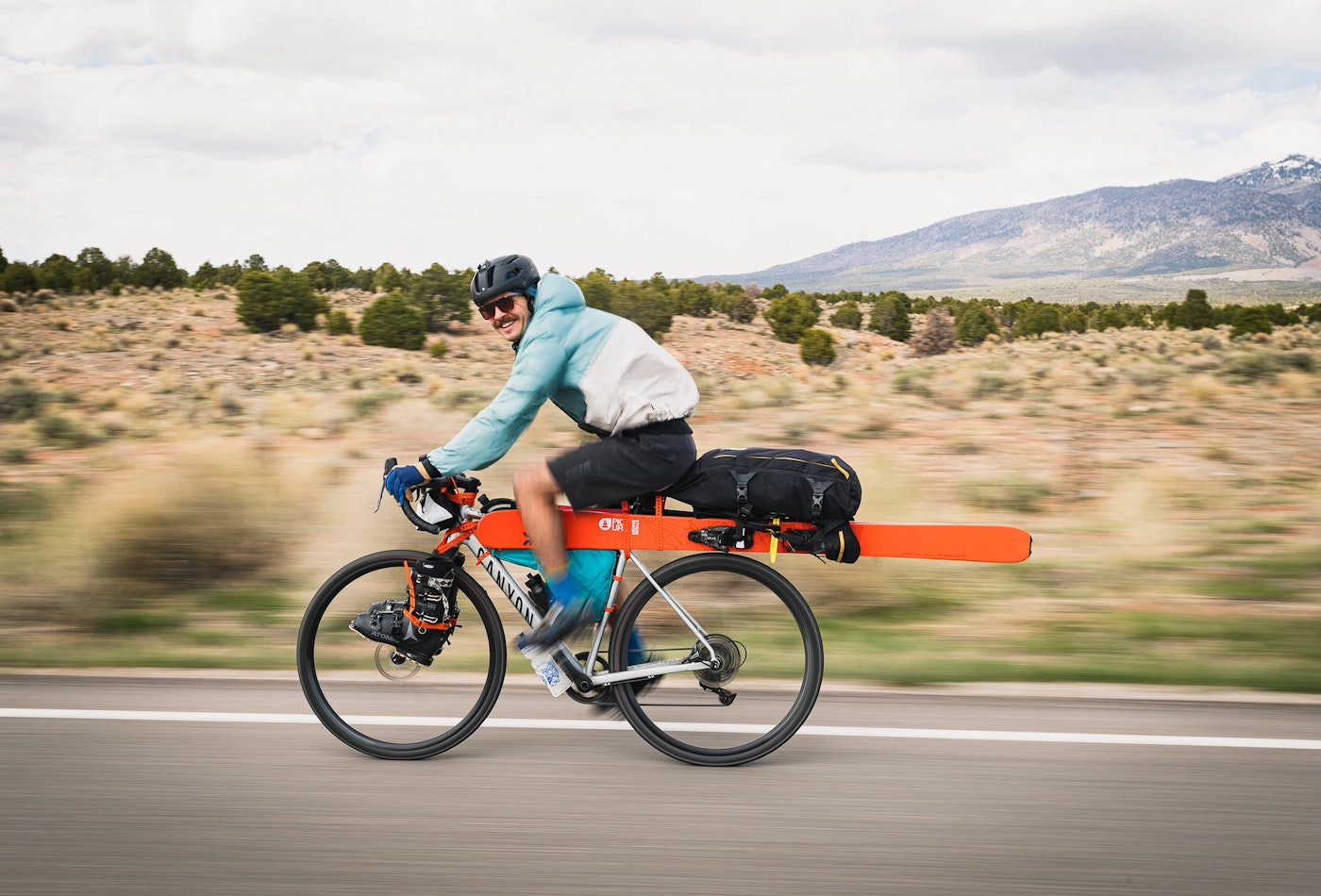
As your missions span multiple days, Cirillo suggests building a rack system on your bike to use panniers and to expand your frame for creative ski strapping. "I’ve used super cheap racks from Walmart that have worked before and I’ve used nicer, bigger racks from Old Man Mountain," Cirillo tells me. As for your skis, follow Cirillo's lead by strapping them to the top tube of your bike as tight as possible so they don't interfere with your pedal stroke and cause uncomfortable chafing. Just be sure to protect your frame underneath with a towel or thin foam padding.
"Voile straps are the secret to any bike-to-ski mission," advises Cirillo. "The first longer mission I did, Telluride to the La Sal Mountains [in Utah], I had like 20-plus Voile straps on my bike," he laughs. "People get really creative with how to attach things and then you learn along the way what’s working and what’s not. That’s the cool adventure about it. There’s no right way to do it. Just use a method to try to get there and do the best you can with what you have."

Cirillo's Iceland adventure led him to a perfect couloir directly off the road and a handy mailbox to stash the bikes.
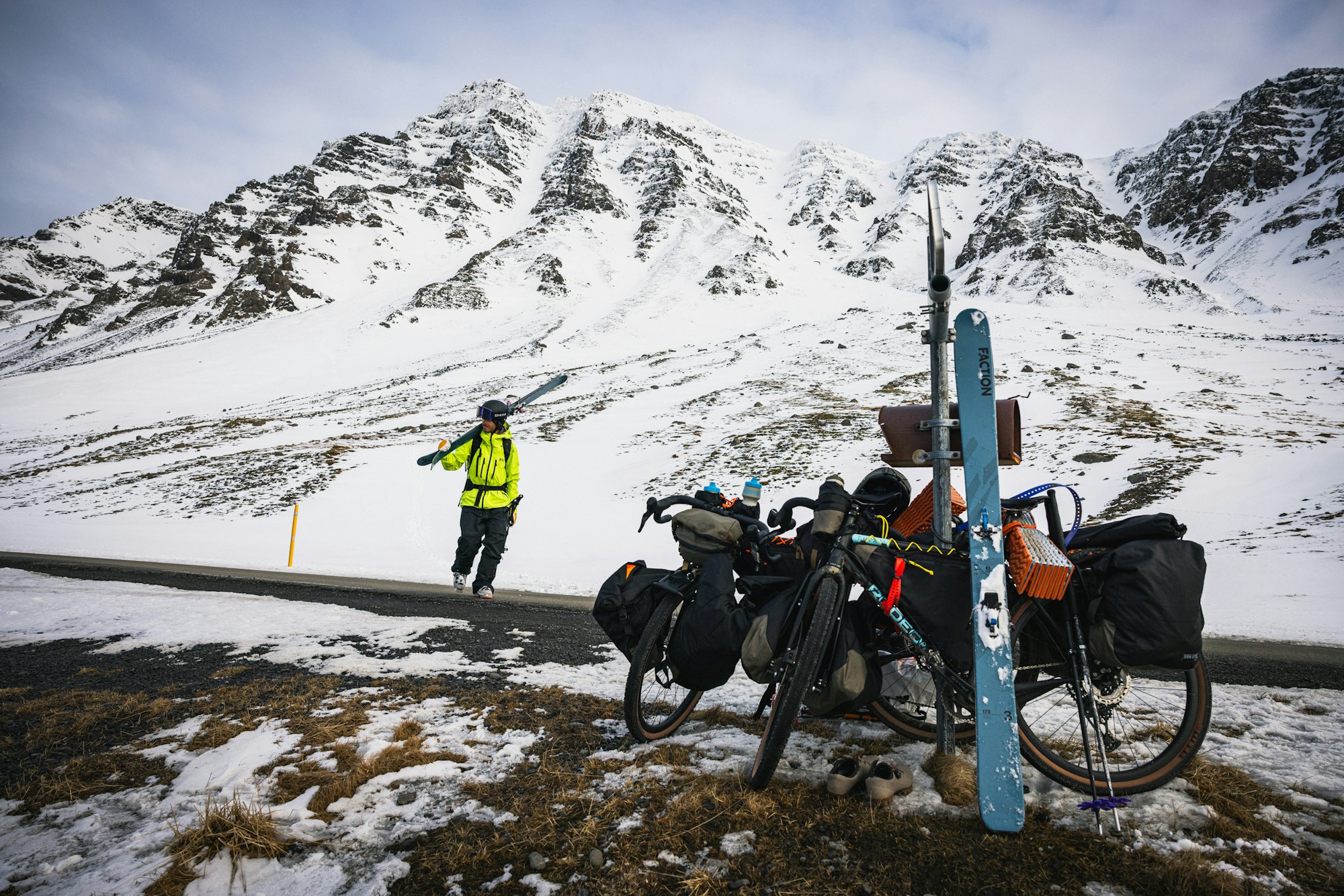
Cirillo's Iceland adventure led him to a perfect couloir directly off the road and a handy mailbox to stash the bikes.
Fuel Your Engine
"I think a lot of the time, people are used to ski touring without keeping up on ingesting fuel but on the bike, when you’re doing something more endurance-heavy, especially with ski weight, you want to make sure you’re staying fueled with snacks and drinking water," Cirillo says. Being on the bike for long periods of time can feel like a grind, so Cirillo notes the importance of having little "treats" for yourself to boost morale. Whether that's a Snickers, an ice cream sandwich, or something else is entirely up to you. For Cirillo, he tends to reach for classic "American convenience store trash," as he puts it, over energy gels or bars. "That’s what’s so cool about biking," says Cirillo. "It’s such a highly caloric-intensive activity and your body really is like an engine. You’re just throwing whatever you can into it, so you can be a little lax. Could you eat well? Sure. It’s probably nice but will it be as fun? Not all the time."
Check The Forecast
Being on the bike makes you inherently more vulnerable to Mother Nature than if you were in a plane, train or automobile. Cirillo can't stress the importance of checking the weather forecast before heading out for any length of a bike-to-ski mission enough. "You can have a good time when the wind is in your favor but you can also have a really bad time when it’s not," he advises. On one particularly rainy day on the south coast of Iceland, Cirillo remembers, "We were just soaked and freezing cold. Everything was wet; the rain found its way into every crevice in every bag. Check the forecast for rain. Don’t go bike skiing in the rain because that was pretty awful."
Be Open to The Adventure
No matter how your day ends up, whether you ski exactly what you planned or not, every bike-to-ski mission is an adventure in itself. "The vulnerability of it is one of the best parts," says Cirillo. "It can be really difficult at times but it can be super rewarding, too. I think as long as you go in with a mindset that you’re going to have an adventure, no matter how it shakes out, just starting that first pedal opens you up to something super rad. You’re going to have a time no matter what."