
Featured Image: Elise Sterck
There's a question that comes up on every chairlift, in every ski shop,and in every gear forum or comments section: When it comes to insulation in your jacket, which is better, down or synthetic? It seems like there should be a clear answer by now, and, well, there kind of is.
I've been following these materials for decades, testing in real world conditions around the globe, and the right call is almost always a mix of down and synthetic layers. Of course your choices also depend on where you ski (how humid it is), whether or not you're touring or just bumping lifts, what kind of shell you layer on the outside and where you're going. Both options have gotten substantially better over the years but here are some of the trade offs.
How Synthetic Insulation Works
Synthetic insulation typically uses engineered polyester fibers designed to mimic the loft and heat-trapping properties of natural down, while offering better performance in wet conditions due to polyester's hydrophobic nature. When synthetic insulation gets wet it retains most of its loft and bounces back quickly.
PrimaLoft is the category's standard-bearer, developed in 1983-84 when the U.S. Army Research Laboratory commissioned Albany International to create a water-resistant synthetic alternative to down for military use. The material was patented and commercialized by 1989 with L.L.Bean and Polo Ralph Lauren as the first consumer brands to bring it to market. PrimaLoft insulation was part of the layering system L.L.Bean used to outfit the 1990 Everest Peace Climb. PrimaLoft now works with more than 950 brands globally.
The science behind PrimaLoft's performance lies in fiber architecture. Its ultrafine polyester microfibers are thinner than a human hair, creating a dense network of tiny air pockets that trap body heat—the fundamental mechanism behind thermal insulation. Those fine fibers also contribute to a softer hand feel. Since the polyester fibers are inherently hydrophobic, water resistance is built into the material itself rather than relying on surface treatments.

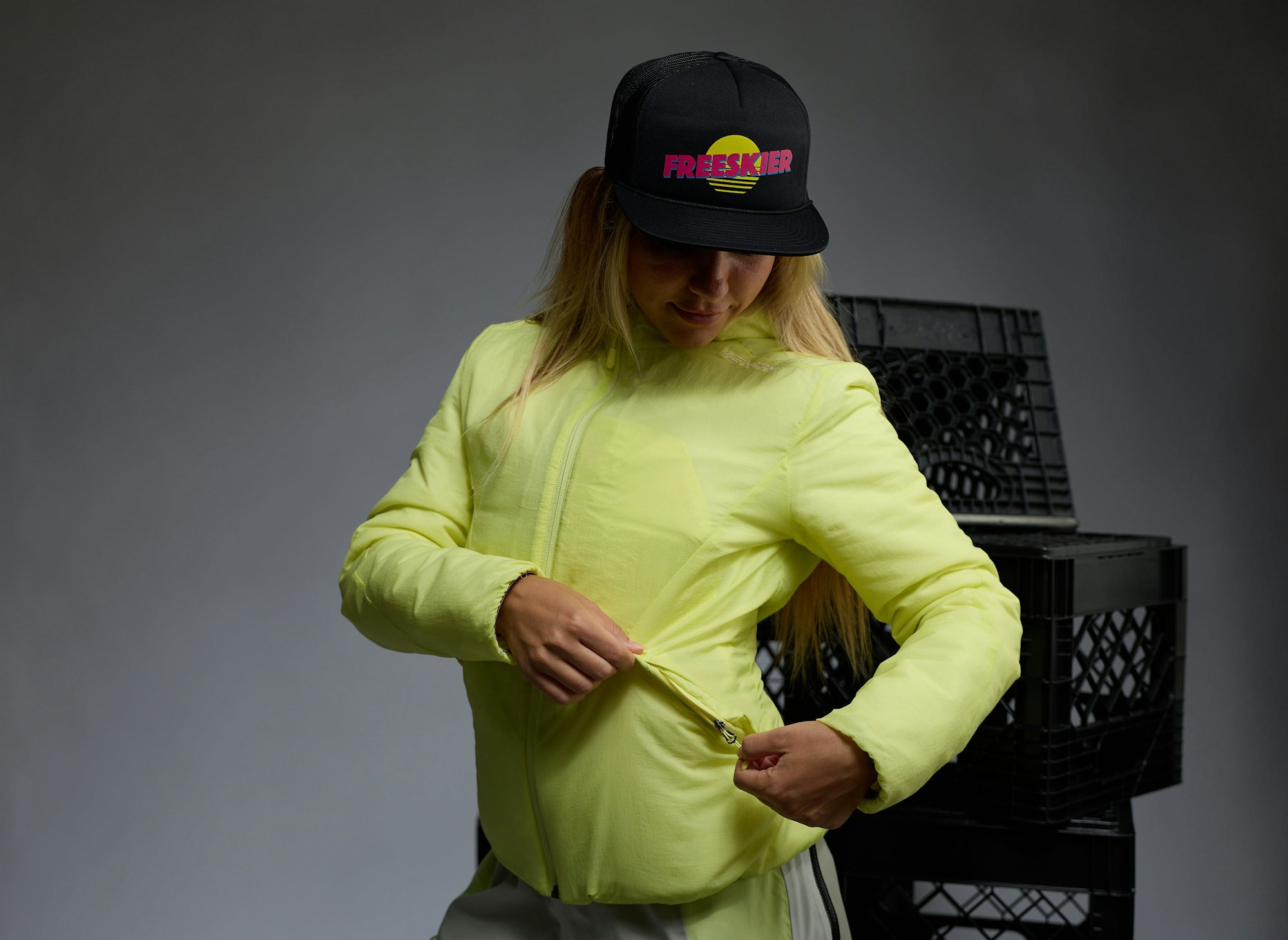
In synthetic insulation, there's no direct correlation between fill power and warmth, like there is in down. To make an accurate comparison between synthetic products or a down product, you need thermal resistance testing measured in Clo, a rather antiquated unit used to measure an insulation's thermal resistance (how effectively it traps and retains heat). One Clo is the insulation required to keep a resting person comfortable at 70°F. According to PrimaLoft, a three-layer ski outfit typically falls in the 1.8–2.4 Clo range. PrimaLoft's three main product tiers—Gold, Silver and Black—maintain 95, 90 and 85 percent, respectively, of their thermal properties when wet.
PrimaLoft and other manufacturers produce insulation in several distinct formats suited to different garment applications. Batting is a lofted sheet insulation now common in traditional puffies, trapping air effectively for high warmth. Loose fill is a blown insulation that mimics down cluster structure, used in garments intended to move and pack like down. Needled insulation is denser, better suited to high-abrasion applications; and knitted insulating fabrics, like Polartec Alpha, are structural and can be used without a shell fabric, which opens up a more breathable garment construction. Each has a place and the right format, depending on what the garment is designed to do. It generally lowers production costs as well.
How Down Works
Down is the soft plumage beneath a bird's outer feathers, typically goose or duck. Each cluster is built around a central point with hundreds of filaments radiating outward, creating a three-dimensional array of tiny air pockets. Dead air is one of the best insulators, and down clusters trap it more efficiently, by weight, than any synthetic material currently available.
The traditional measure of down “quality” is fill power, measured as the volume that one ounce of down occupies (in cubic inches) when allowed to loft freely. A rating of 600 is entry; whereas premium performance starts around 700 and high-end expedition down runs 850 to 900 fill power and above. The higher the number, the more air per ounce and the more warmth per gram. Feathers add structure and reduce cost, but lowers thermal efficiency, so this ratio matters alongside fill. A 90/10 ratio, meaning 90 percent down clusters to 10 percent feather, is where serious performance begins.
Humans have long relied on the material for keeping warm, according to Matthew Betcher, Creative Director for ALLIED Feather + Down—one of the world's largest and most respected down suppliers. The use cases of down have expanded well beyond 8,000-meter suits and polar exploration.
"Down is now truly a four-season insulation," Betcher said. "You can find lightweight vests and jackets on the streets of Los Angeles and designers have started using insulation mapping to build couture collections."

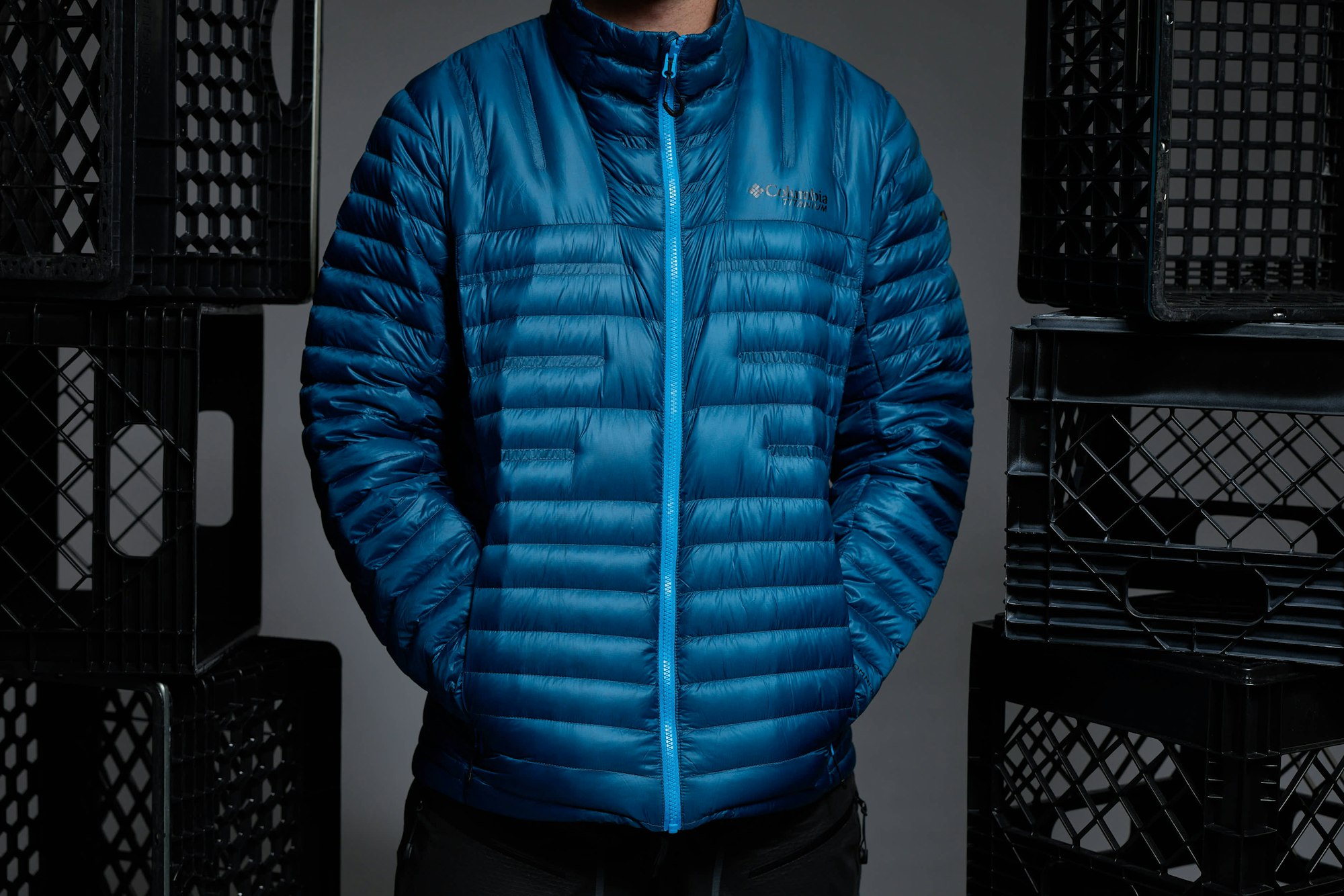
But it's achilles heel has always been moisture. When clusters get wet, the filaments collapse, along with loft. The hydrophobic treatment era of down changed this conversation. Standard hydrophobic treatments coat down fibers to resist water absorption, and while that keeps individual clusters drier, ALLIED's research identified another problem. Water droplets can still become trapped inside the insulation chamber, slowing evaporation and compromising warmth, even when down fibers remain technically dry.
Rather than coating fibers with chemistry, ALLIED’s ExpeDRY technology uses gold micro-particles to manage moisture across the entire insulation chamber, slowing the formation of water droplets and accelerating evaporation. Gold is inert, and the amount used in a typical down jacket equates to roughly two grains of salt. There are no PFAS or other forever chemicals involved, whereas traditional hydrophobic treatments relied on those chemistries. ExpeDRY has secured Oeko-Tex Standard 100 certification and Bluesign approval. Unlike a surface coating, it doesn't degrade with wash cycles, according to the brand.
Treated down buys meaningful time in damp conditions, but the gap between down and synthetic in truly wet environments hasn't fully closed.
The Breathability Question

Photo: Elise Sterck
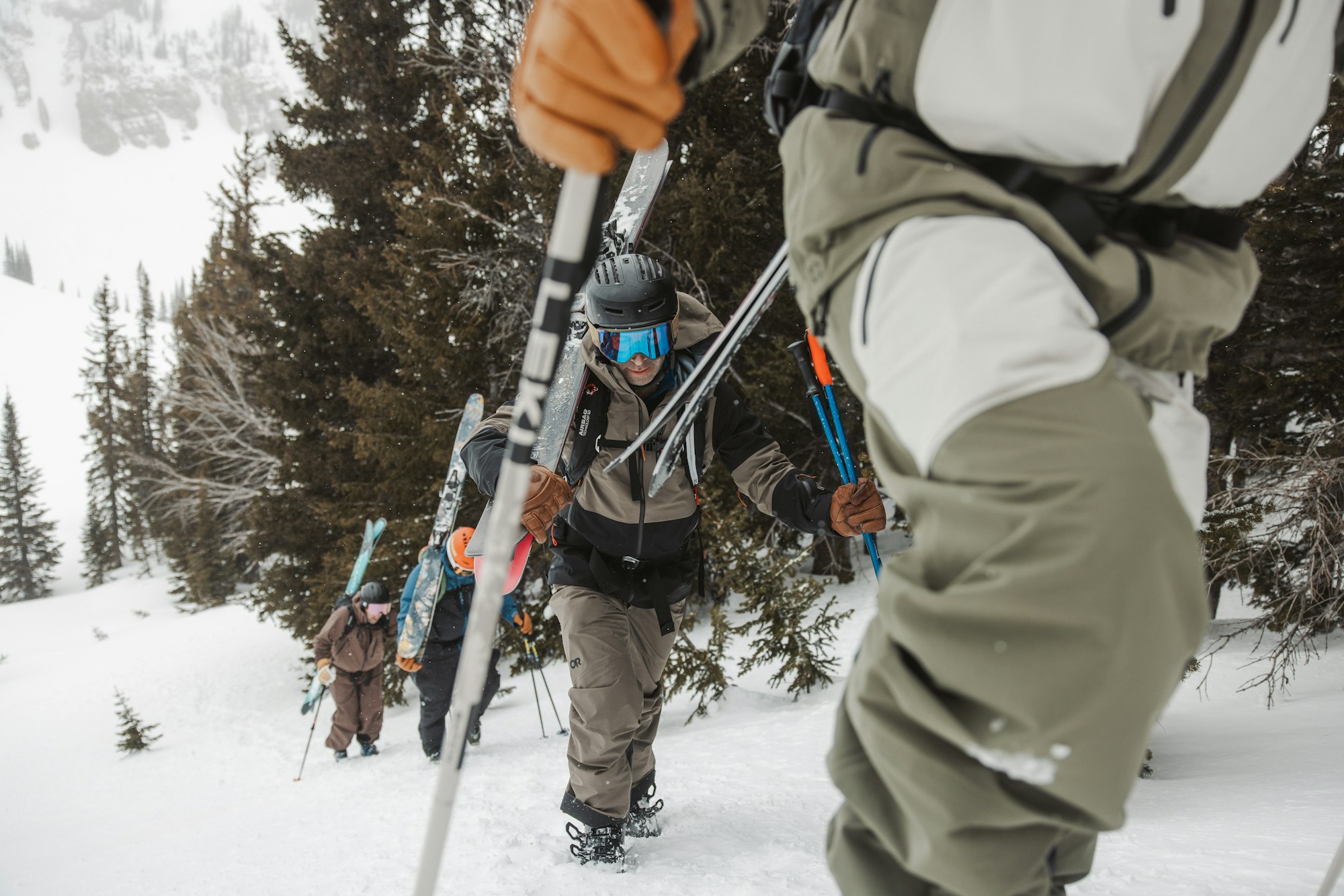
Photo: Elise Sterck
Breathability in an insulated garment is largely a function of shell fabric construction and air permeability, not the insulation itself. For years, the synthetic industry marketed against down on breathability, claiming that synthetic was better suited to high-output activities. But the reality is that down has an incredibly wide warmth range.
“It's why people tend to overheat in a synthetic comforter well before they would in one filled with down,” Betcher explained.
The shift has been garment design catching up to down's actual performance characteristics, and fabric innovations have made it a legitimate midlayer option for skiing. Still, the real breathability story in high-output activity belongs to synthetics, with Polartec Alpha being the most significant development. Introduced in 2012 after development for U.S. Special Forces, Alpha is a free-standing synthetic fiber sheet with a mesh core. That structural difference allows garment makers to use open, breathable face fabrics on both sides, enabling air exchange during exertion.
Sustainability
Neither material has a perfectly clean backstory, and the compromises are worth understanding. By the industry's own admission, even ethically sourced down is a byproduct of the food industry. At its best, RDS-certified down—a standard ALLIED helped create—guarantees no live-plucking and no force-feeding of the animals, with supply chain traceability through programs like TrackMyDown.
Traditional hydrophobic treatments have introduced PFAS and other questionable chemicals into garments (this already existed in most face fabric coatings), which is part of what makes ExpeDRY's gold-particle approach meaningful.

Photo: Keegan Rice
Photo: Keegan Rice
Synthetic insulation starts as petroleum-derived polyester, but PrimaLoft has moved aggressively toward recycled content and more efficient manufacturing. PrimaLoft Eco uses 70-percent, post-consumer recycled poly; and PrimaLoft Bio uses 100-percent recycled content engineered to biodegrade in landfill conditions. ThermoPlume, PrimaLoft's blown loose-fill synthetic, is now fully recycled.
The microplastics question—synthetic fibers shedding during wash and even during use outdoors—is one PrimaLoft is working to address. But for now, anyone against the use or consumption of animal products gets petroleum; and those willing to use animal by-products get a naturally biodegradable insulation option. There’s always a tradeoff somewhere.
Use Cases for Skiers
Cold and dry winter climates like Colorado, Utah and Wyoming are down's home turf. A high-fill, treated down midlayer or puffy under a shell is one of the most thermally efficient systems you can build, and the weight and packability advantages are real.
In the Pacific Northwest, Sierras and Northeast, synthetic is the more forgiving choice, and synthetic fill still has the edge at the extreme end of moisture bearing conditions and versatility.

Photo: Elise Sterck

Photo: Elise Sterck
Active synthetic insulation is well-suited to high-output days hiking, bootpacking,or running hard laps. An Alpha or similar active synthetic midlayer manages sweat and warmth across a range of exertion. Many experienced backcountry skiers carry two insulating pieces: a lightweight active synthetic layer for the skin track and a high-fill down piece in the pack for extended stops, summit exposure or emergencies. The synthetic handles the sustained aerobic output while protecting from wind; the down deploys when that output stops. The repeated wear-pack-wear cycle of ski touring is also hard on down when the jacket is repeatedly cycling through moisture from exertion or snow. Synthetic can be a more durable, easier-to-care-for option. But packability and weight track in down’s favor.
Care
For both natural and synthetic materials, heat reactivates the DWR on the shell fabric. So just like with your shell garments, it’s a good thing to wash your insulating layers.
Use a detergent formulated specifically for down. Standard laundry detergent strips natural oils from the clusters and kills loft. Wash on a gentle cycle in cold water and run at least one additional rinse cycle to clear all soap, as residual soap causes clusters to clump and stick. Drying is the most critical step, and the most common mistake is drying without agitation. Transfer the wet jacket carefully as saturated down is heavy and rough handling can tear baffle stitching. Tumble dry on low heat with three or four dryer balls or clean tennis balls. This mechanical agitation breaks up clumps. Pull the jacket every 20-30 minutes and work through the baffles by hand. Full drying can take several hours. If the jacket comes out of the dryer dense or uneven, run it again, because underdried down mildews. Store down loosely when not in active use as prolonged compression degrades cluster structure.

Photo: Elise Sterck

Photo: Elise Sterck
Synthetics are more forgiving across the board. Machine wash on gentle with a technical detergent and cold water. Tumble dry on low. Synthetic doesn't require multiple rinse cycles or extended drying times. Avoid high heat as polyester fibers can degrade at high temperatures.
After decades of testing and following these materials closely, it's always been simple for me: active synthetic on the skin track, on river trips, for use as a water resistant outer layer; and compressible down in the pack for when you stop moving. I’ve got several mid-weight synthetic midlayers I swear by, some with unbranded versions of fill, which seem to work just fine. I’ve got a Ghost Light down puffy from Mountain Hardwear that lives in my pack permanently; and I’ve got a Black Diamond Solution hoody filled with Primaloft in there as well. Experiment for your body type, personal preferences and use cases, and over time you’ll land on the perfect combo for any day on the hill.