
Photos by Christian Pondella
There it is. The line you’ve spent weeks studying via maps, trip reports, word of mouth and guidebooks. Countless hours of planning and preparation have brought you here, on top of your dream backcountry run. You gaze at your surroundings. Last night’s storm has deposited a fresh couple of inches on the slope. Howling winds have caused cross loading. Your line funnels straight into a heavily wooded area. A cornice breaks to the left of you. Whumpfing sounds ring in your ears. Do you drop in or turn back?
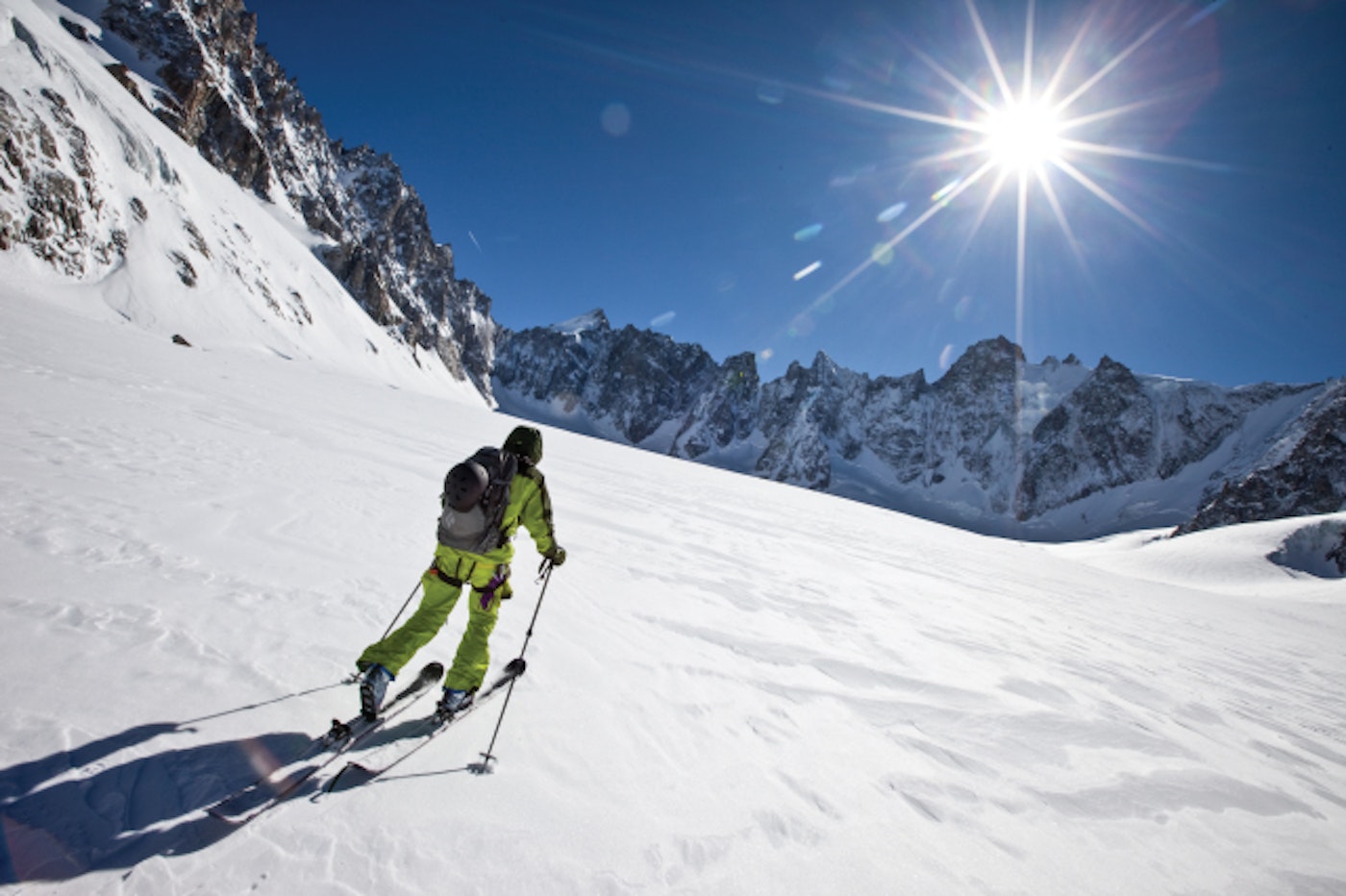
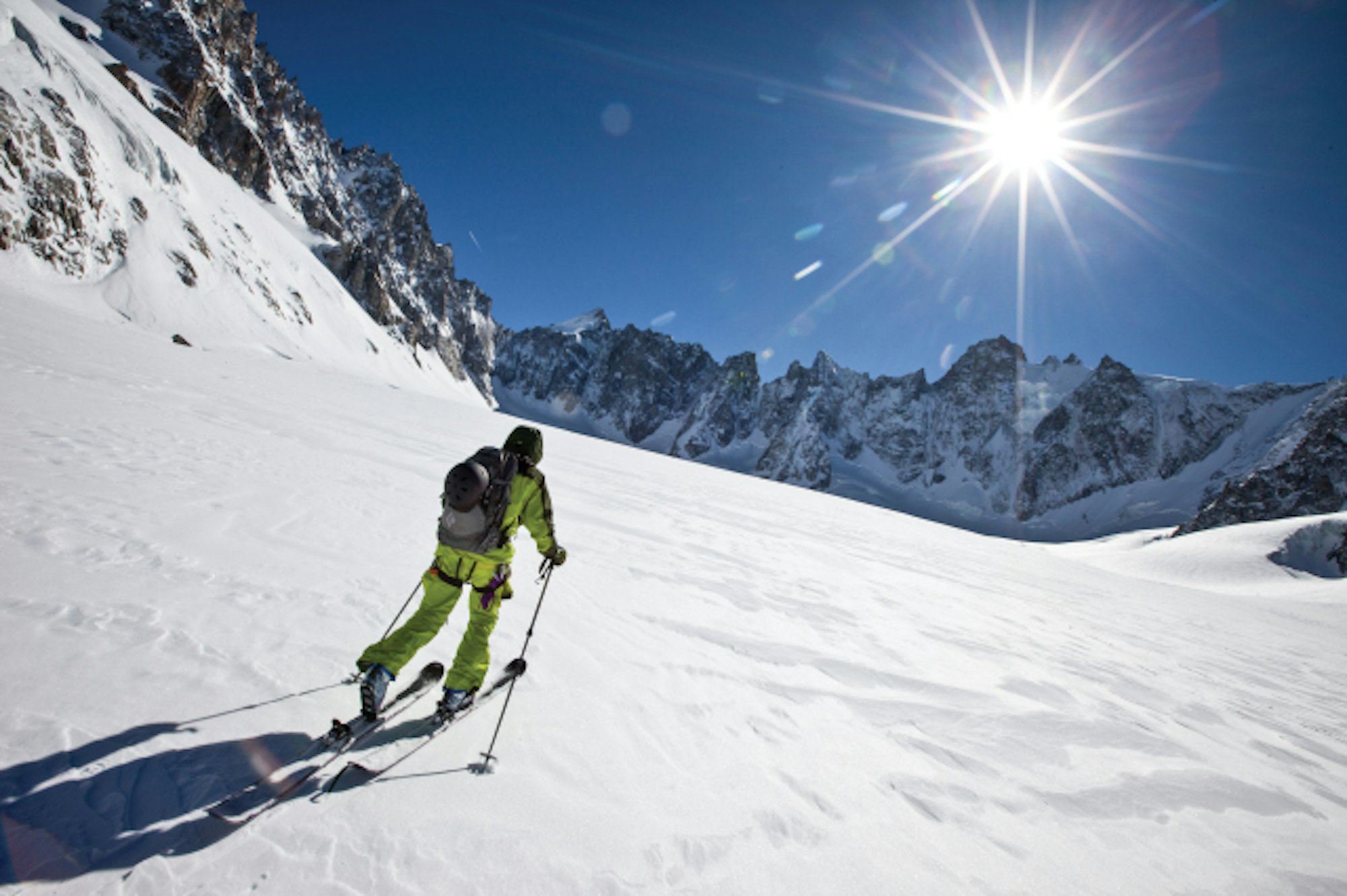
For someone like Seth Morrison, who has spent the majority of his 20-plus-year ski career honing his skills deep in the mountains, turning back is a fact of life. Countless determinants come into play during any jaunt into the backcountry and ultimately help him decide to march forward or make the not-so-easy decision to scrap plans.
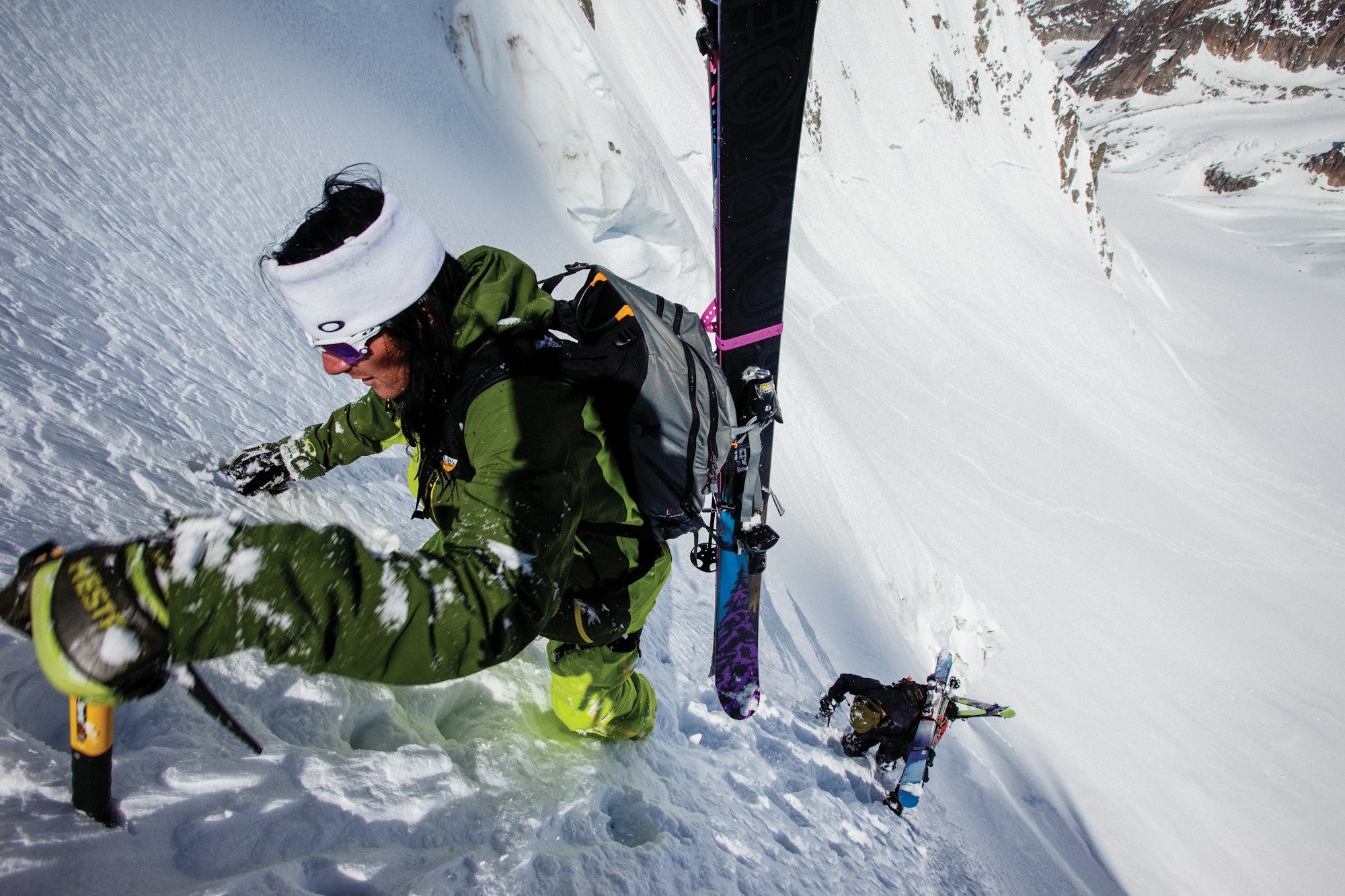
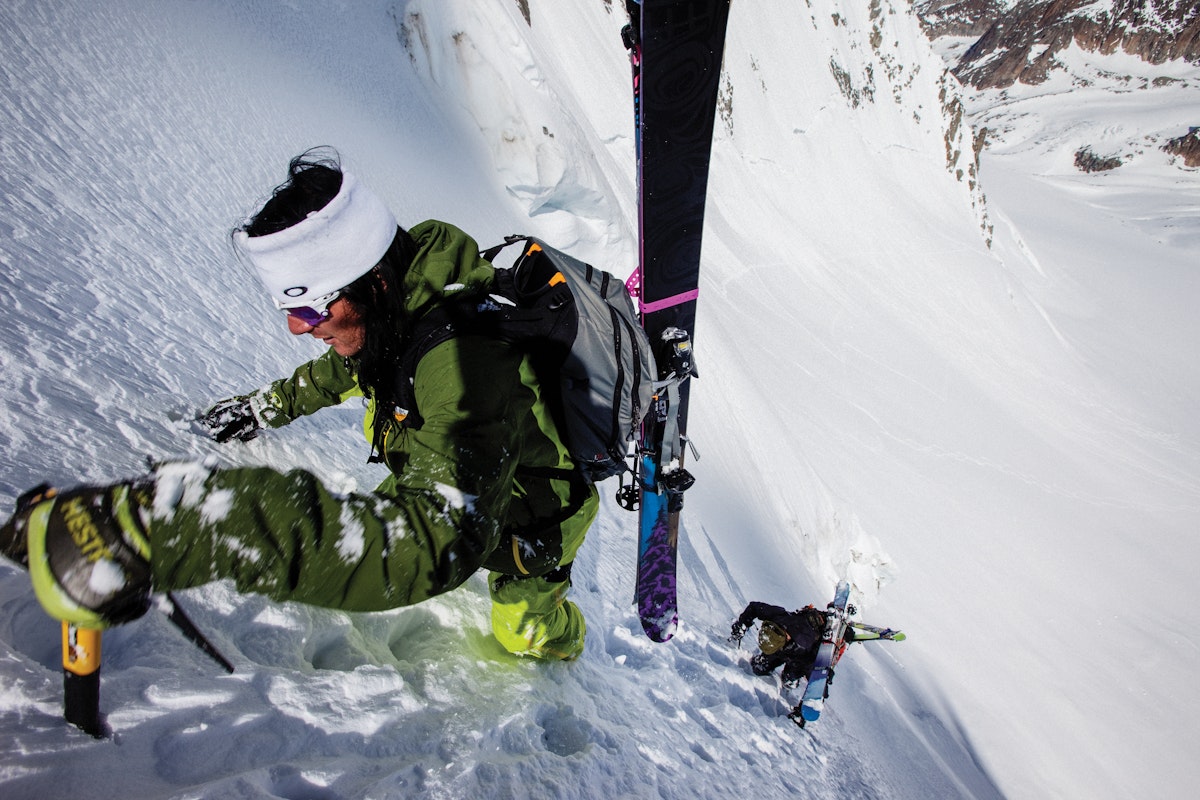
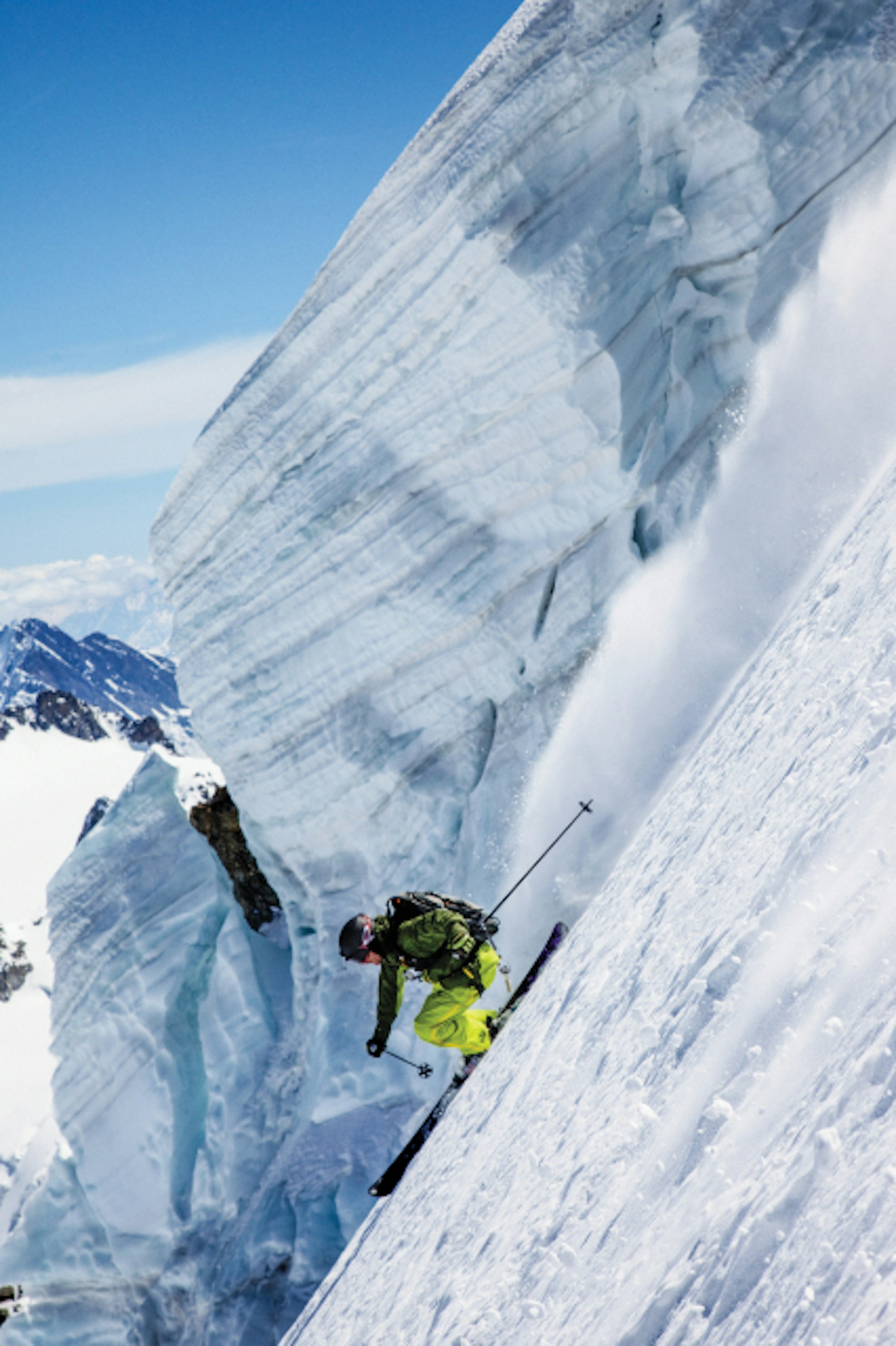
In 2011, while filming for his documentary, The Ordinary Skier , Morrison and Nate Wallace, along with a cast that included skiers Kye Petersen and the late JP Auclair (at different points throughout the journey), made several attempts to climb and ski the Col des Courtes, a 50-degree, ultra-narrow couloir on the Glacier des Courtes in the Chamonix region of France.
Despite efforts to ski the line over two seasons spent in Cham’, Morrison and crew were forced to abandon the objective time and again. Of the repeated decisions to turn back, Morrison says, “Sometimes heading out to this line, we were too tired; other times there were bad conditions, including deep snow on top of ice and strong winds.”
In each case, it was crucial for Morrison and company to make judgments as a team. And indeed, decisions to turn away from the Col des Courtes were mutual more often than not. “We would be a group of six to eight, or more, and each time the configuration would be different, with different people,” says Morrison, “So either it would be painfully obvious that we had to turn back, or there would be a collective decision made.”
For Morrison, heading into the wilderness usually involves a cast and crew of filmers, skiers and photographers, which adds to party size, inevitably changing group dynamics. When film projects or photo shoots come into play, getting the shot can all too easily become the priority and lead to negligent decision making.
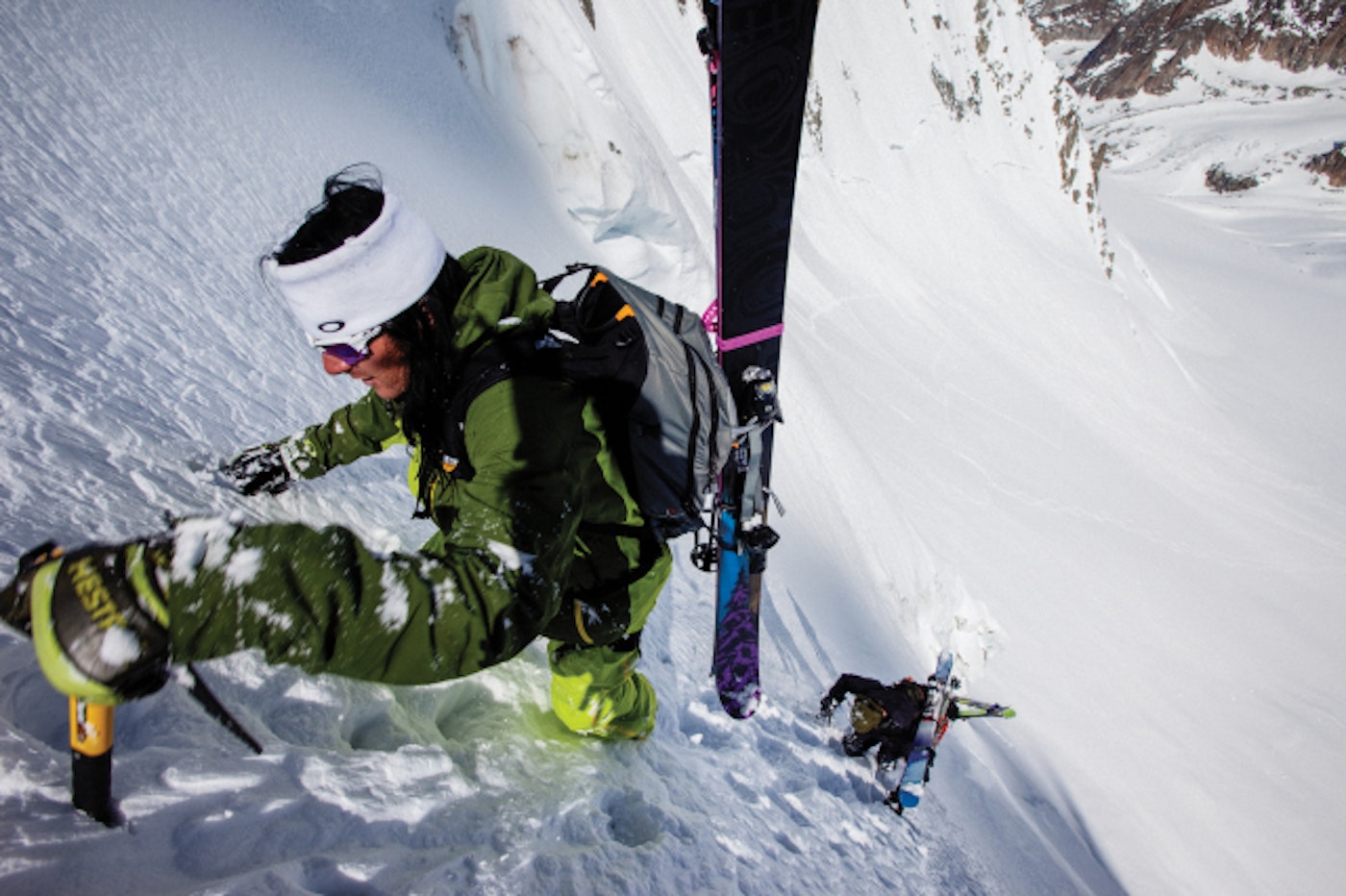
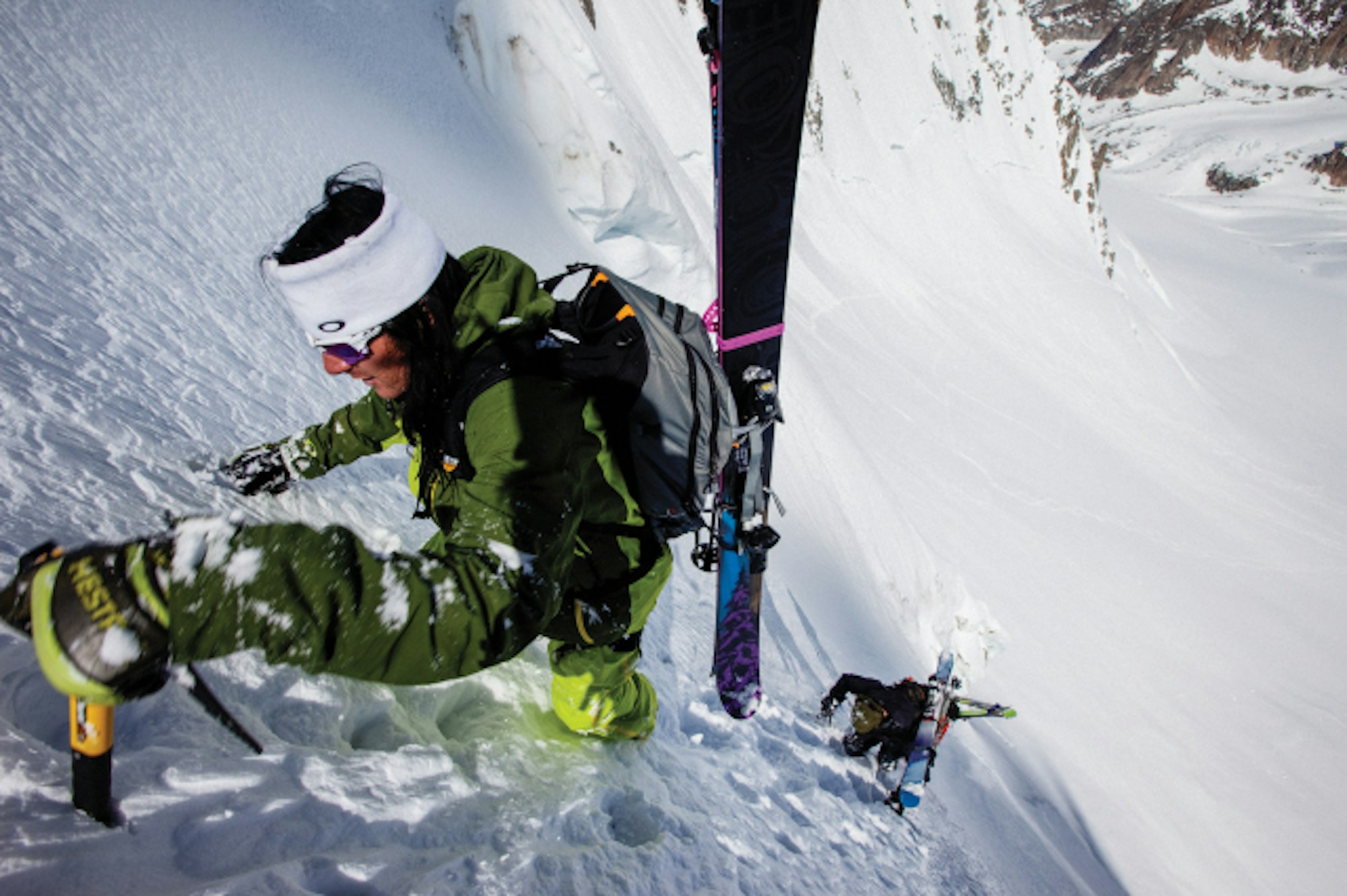
“Guys running the camera sometimes talk you or others into doing things that are questionable at times. I’m out most of the time with a lot of alpha males, and it can be hard to deal with these groups,” he says.
Whether dealing with a large troop or traveling in a smaller group or even a pair, backcountry skiers must take into account other outfits that may be attempting to tackle goals in the same area. In this case, the idea of “social proof” can come into play—the perception that because others have skied or are skiing in a particular area, it must be safe.
In other scenarios, different groups trying to tackle the same objectives can potentially lead to dangerous situations. During their attempts of the Col des Courtes, Morrison’s crew would often see others in the same region, and on one picture perfect day saw another squad scaling the same line. While conditions were prime, Morrison notes, “There were too many people on the face for us to be climbing up below them with all that slough coming down.”
Being mindful of nearby activity is essential. Assessing slope conditions, though, proves paramount in regard to decisions about whether to burn or bust. Lucky for us, we’re living in the information age. For almost any locale, there’s a plethora of information available that should be careful studied prior to a skiing excursion. For a place like Chamonix—a mecca in the sport of ski mountaineering—if you don’t know, you simply can’t go.
“There is so much history of accidents on these [lines], and along with general mountain knowledge, you have information others provide from testing the limits in the mountains and also social media reports. You have a lot to compute on the go,” Morrison explains.
On yet another attempt of the Col des Courtes, the analysis of current conditions was the catalyst in the decision to abandon the line. Morrison’s party was along on the face, but sizable slough was raining down on them from above. “If we were thirty minutes earlier in our attempt, we would have been on an ice climb when the slough ran, so that added to the decision to retreat. You’re just trying to make the best decisions you can as you go along.”
Location should also be strongly considered when assessing the status of a mission. If a party has made its way to a remote area, rescue can be close to impossible. Cell service is sparse. Helicopter rescues exist in the event of an emergency, but sans reliable phone coverage, the group had better hope that another individual knows their position, and moreover, they’d better hope they have access to a satellite phone.
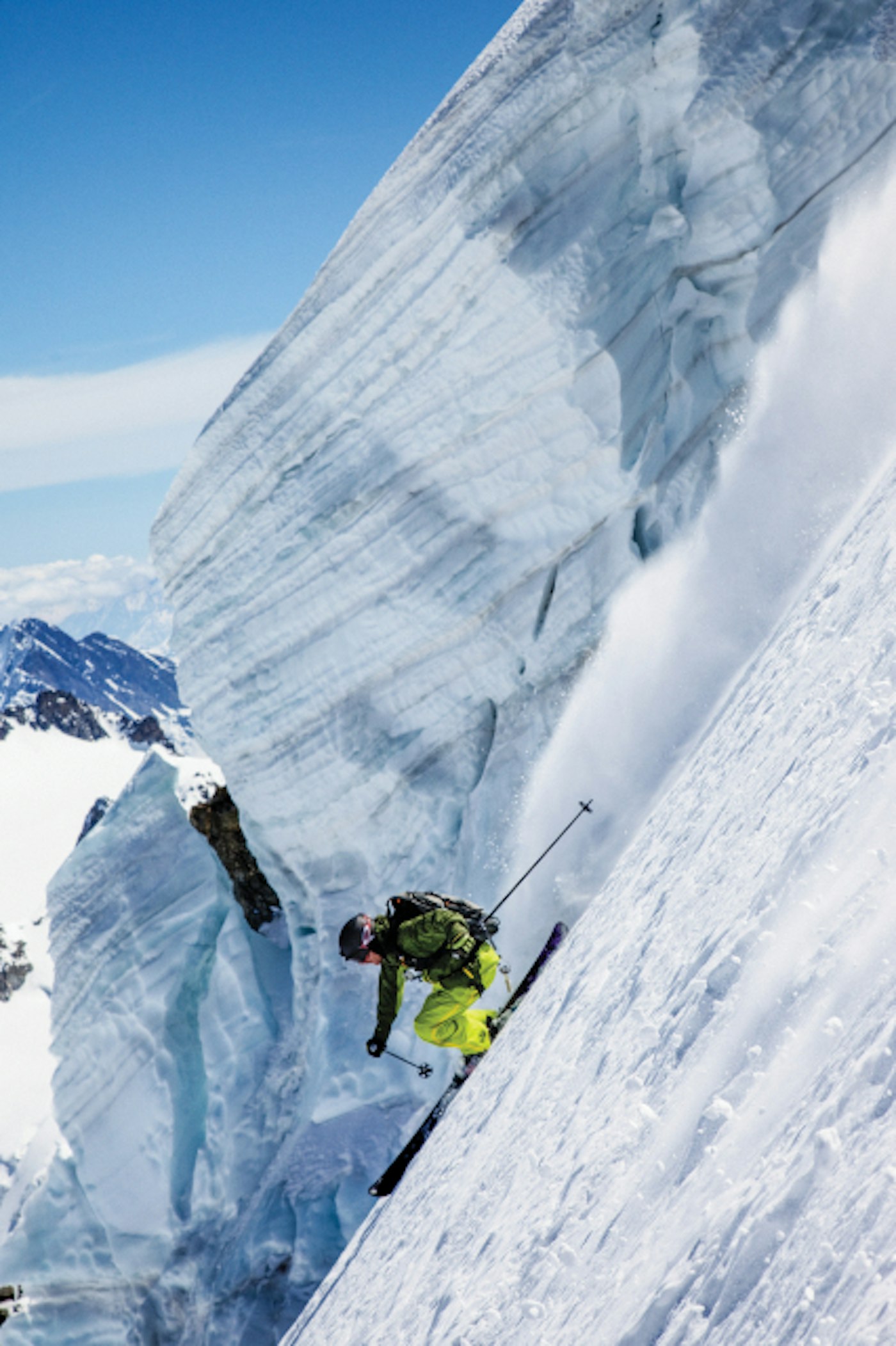
All of these factors come into play, but perhaps the most dangerous form of hubris in the backcountry is the issue of commitment. That is, the idea that “We’ve come this far, we can’t turn back now.” The thought of having to bail on an expedition that has required much time, effort and planning can often cause skiers to throw caution to the wind.
Turning back is usually a sound decision but can have its repercussions on the human psyche. Without instantaneous proof that the conditions would’ve outmatched the skier, a “What if?” mentality can set in—enough to drive a person mad.
“Never has there been a time where it was like, ‘Good thing we turned around because look what happened after we left,'” explains Morrison. “The first time you turn around, you feel defeated. You invested all that time and physical effort, but you have to accept it and avoid a ‘should’ve-could’ve’ mentality after the fact.”
More often than not, decision-making skills are what form the boundary between life and death in the backcountry. Assessing additional variables such as wind speed, slope angle, slope aspect, new precipitation and warming temperatures should be on every skier’s checklist before deciding whether a line should be skied. And yet, even when you do everything right, there’s a chance that unforeseen circumstances can cause things to go awry. It’s all about risk mitigation and doing the best that you can.
The lines and faces aren’t going anywhere. The opportunity to tick them off the list will always remain, and returning home safely should always take priority. As Morrison says, when facing the decisions to turn around, “There’s nothing wrong with saying, ‘Fuck it,’ and going to the bar.”
Note: This article appears in FREESKIER magazine Volume 17.4, The Backcountry Issue. The issue is available via iTunes Newsstand. Subscribe to FREESKIER magazine .