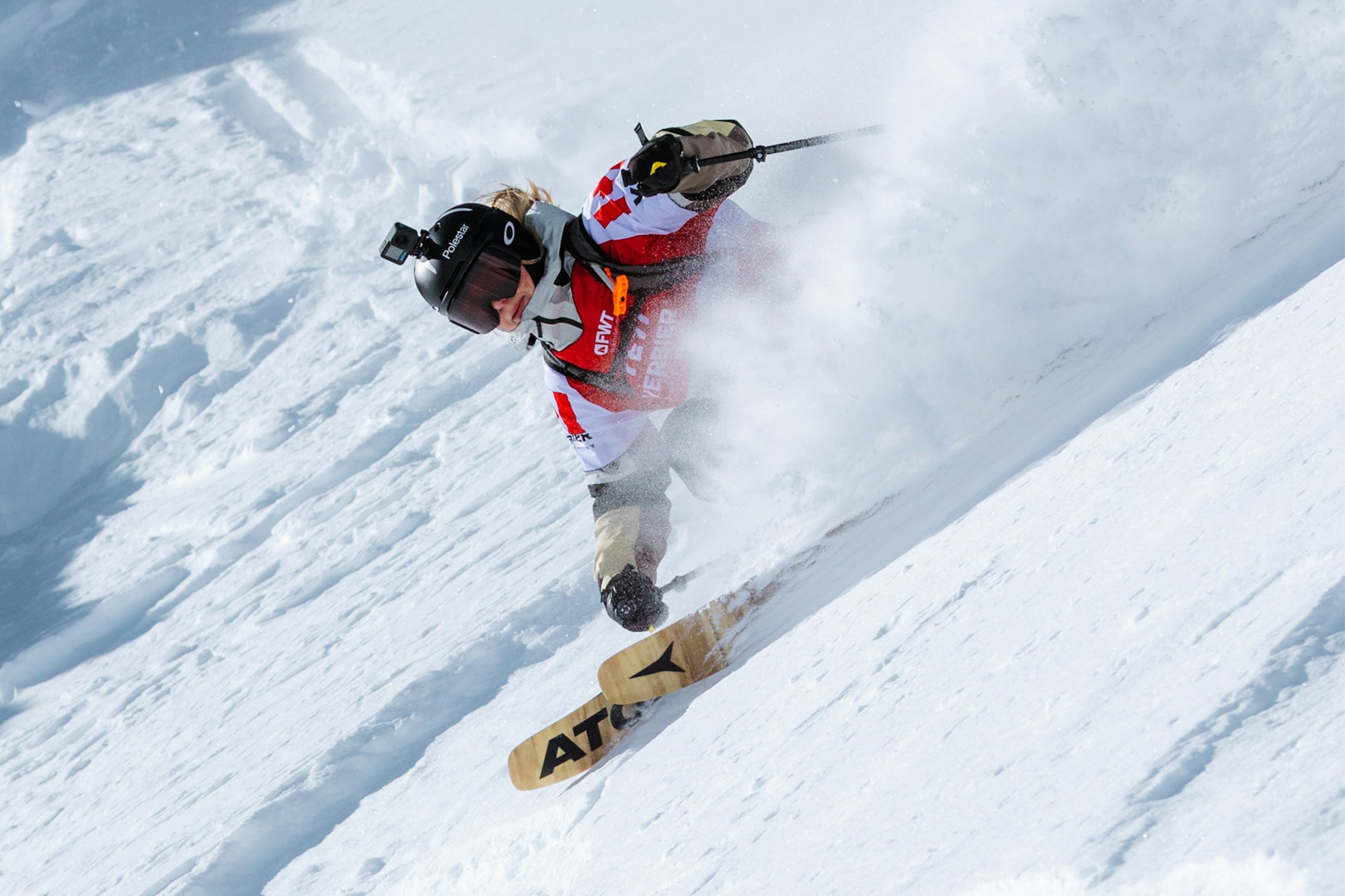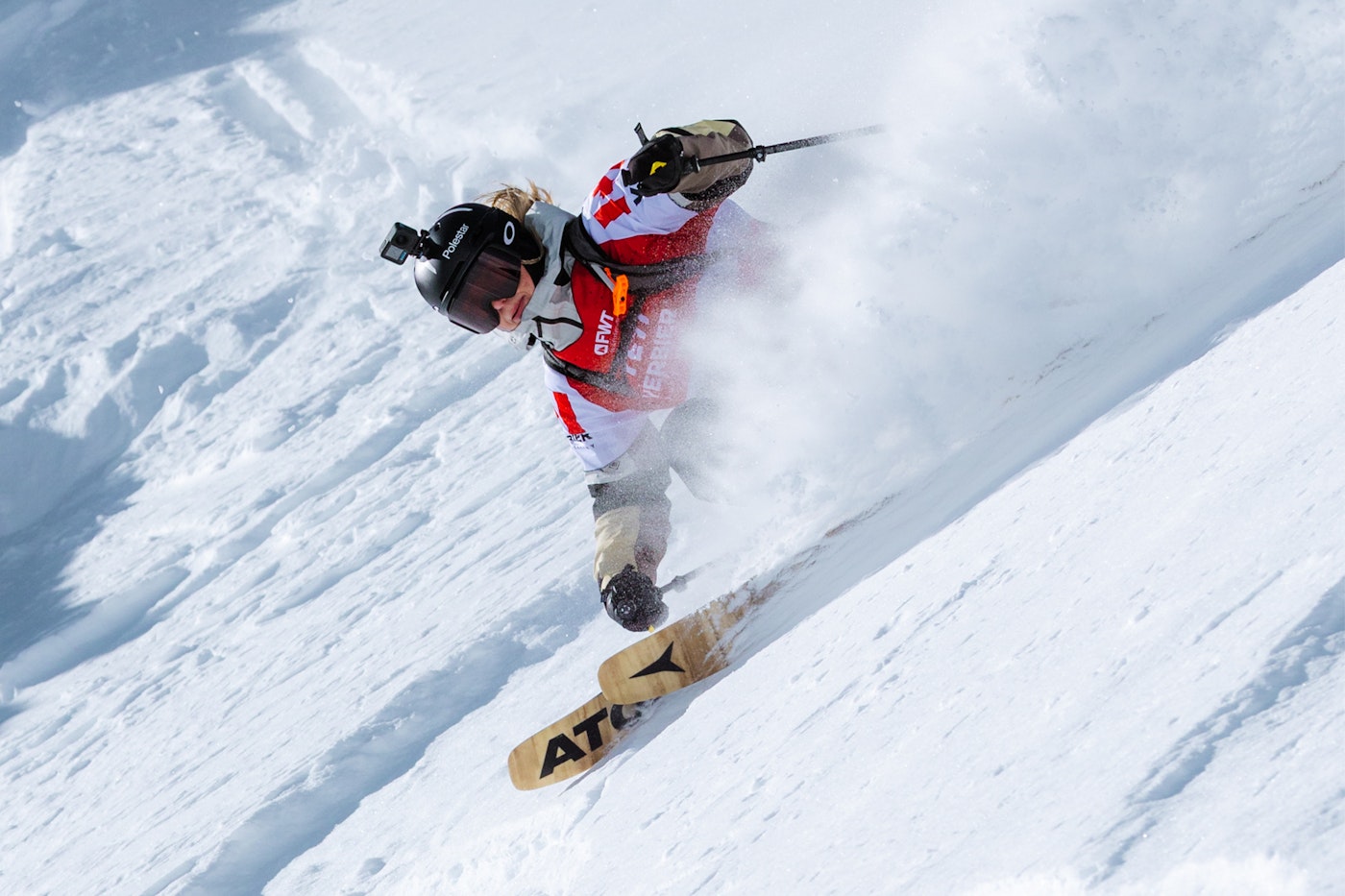
Featured Image: Jeremy Bernard, Freeride World Tour | Skier: Justine Dufour-Lapointe
The past two weeks have sparked ample debate within the freeride community following the announcement that freeride will make its Olympic debut at the 2030 Winter Games. Some argue this is an opportunity to showcase freeride talent on the world's biggest stage, while others have said the inclusion goes against the core values that give freeride its identity.
Unlike many Olympic disciplines, freeride is known for creative freedom, style and line choice over rigid technical standards. After all, the sport was created as a way to rebel against the traditional judging systems employed in ski racing. But the Olympics have evolved in recent years, welcoming other sports known for individuality such as surfing, skateboarding and, of course, freeskiing.
While the five interlaced rings fly over these competitions, they've thus far been judged on their creativity and style rather than a “perfect” run, though critics are quick to point out that slopestyle, big air and halfpipe have become more standardized every year. But the question of how freeride will be judged at the Olympics, and how the Freeride World Tour's judging system might change in the coming years, remains to be seen.
But many of the world's top freeriders are optimistic. FWT stars WeiTien Ho, Justine Dufour-Lapointe and Marcus Goguen all have a more positive outlook on this news. Each hails from a unique background, giving them different perspectives on the future of freeride. Both Ho and Goguen are part of a younger generation who see this as an opportunity to strengthen freeride through sponsorships, funding and global exposure.
Dufour-Lapointe brings a unique perspective, as she is already an Olympic moguls medalist and has seen firsthand how the Games have positively impacted her skiing career. Above all, these skiers are hopeful that this will help bolster freeride culture rather than hinder it.
Editor's Note: In the interview below, athletes are referred to by initials. WeiTien Ho (WH), Justine Dufour-Lapointe (JDL) and Marcus Goguen (MG).
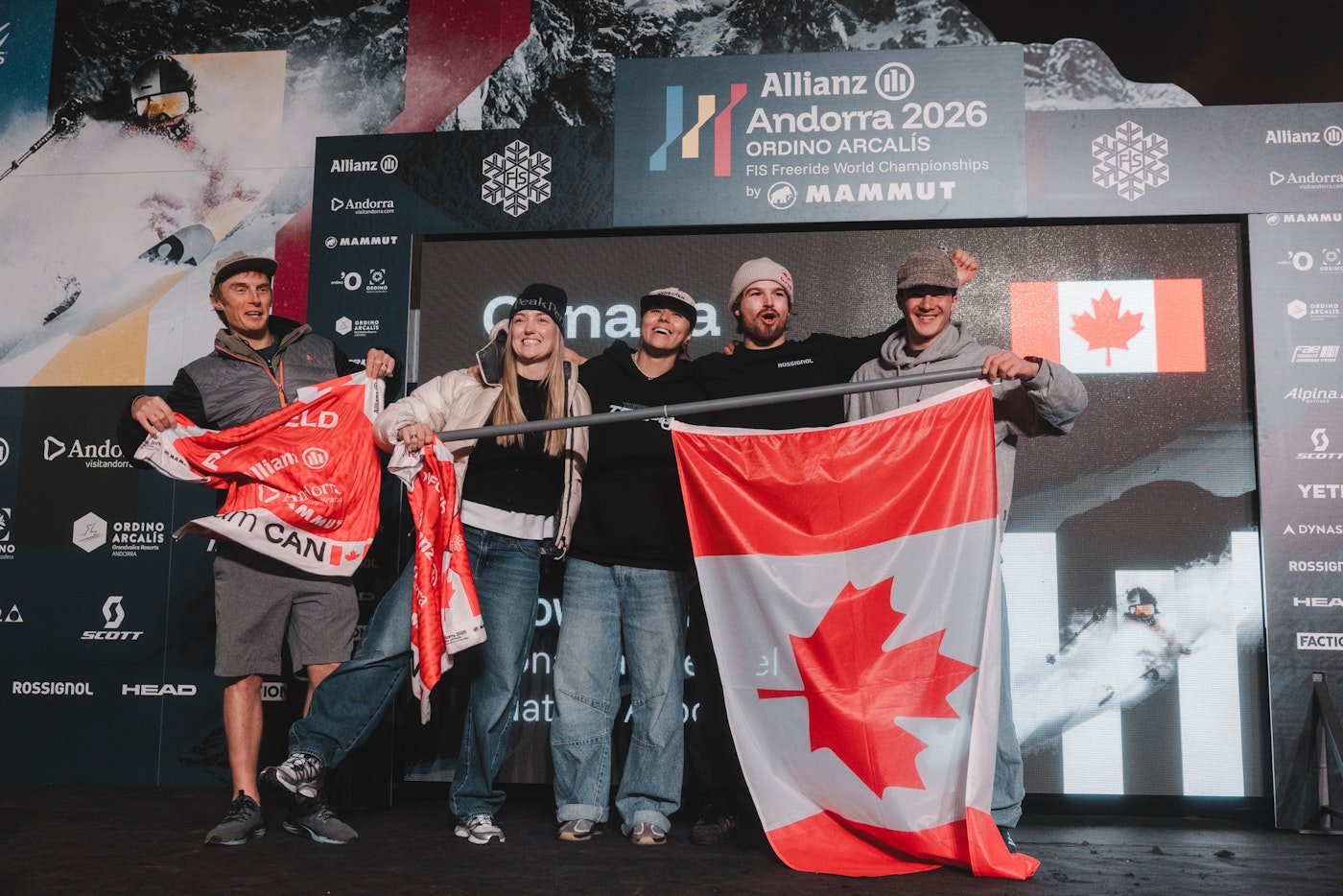
Team Canada at the 2026 FIS Freeride World Championships in Andorra
Photo: Jeremy Bernard, Courtesy of Freeride World Tour
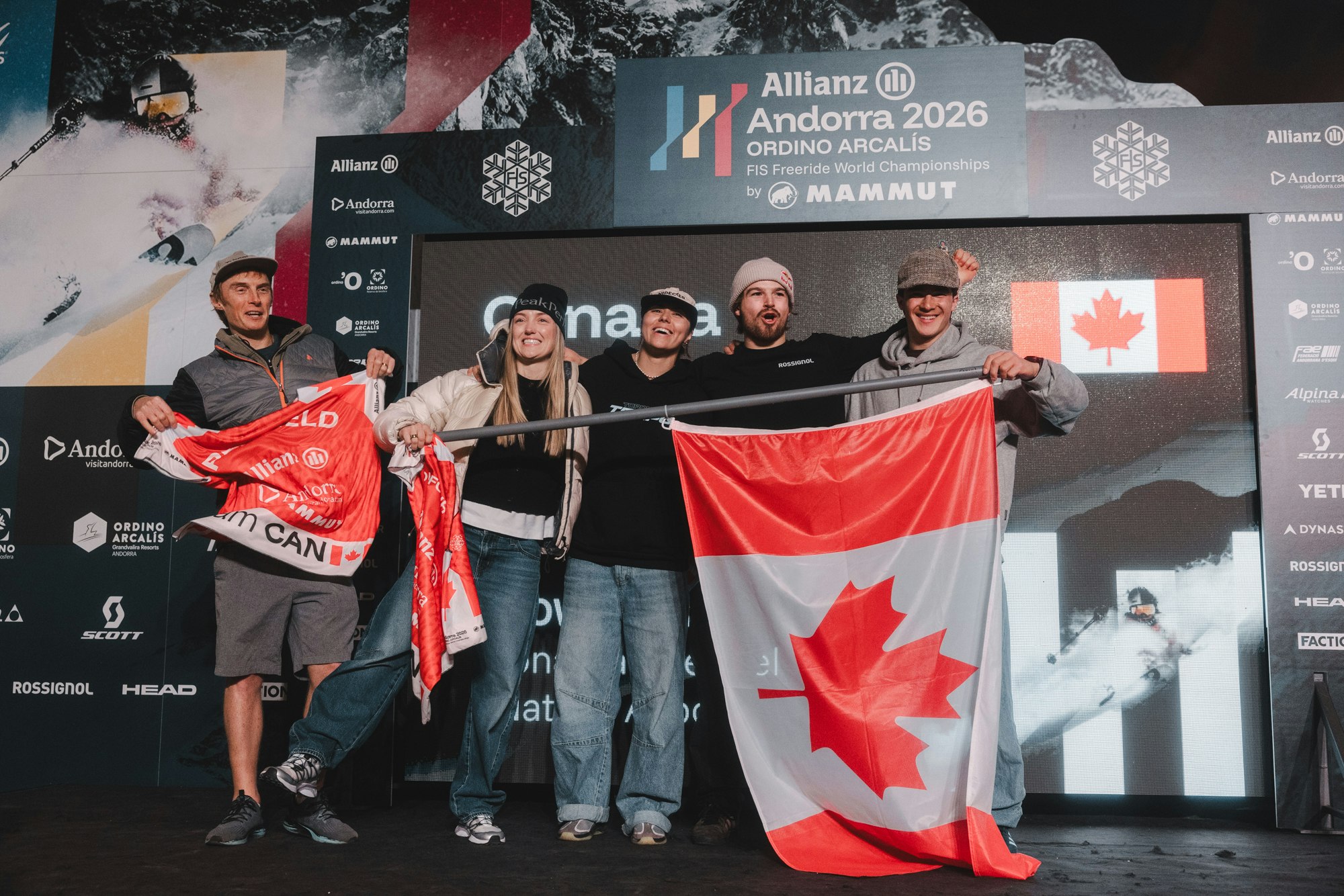
Team Canada at the 2026 FIS Freeride World Championships in Andorra
Photo: Jeremy Bernard, Courtesy of Freeride World Tour
FREESKIER: Thanks for chatting, guys. Freeride has always been built around the idea of creativity, individuality and freedom. Do you worry that freeride being incorporated in the Olympics could change these core values?
WH: I think it was a little naive of me not to know that there was going to be a lot of backlash from people, but I was still a little surprised. I see why people are afraid of losing that core essence of freeride, the creativity aspect of being able to be out in the mountains and pick your own path, so to speak. But I don't think this will eliminate that. [The Olympics] are a natural part of a sport as it develops, and it could create new opportunities.
For me, I feel alot of excitement. There are going to be those battles when you get incorporated with these big corporations that are now taking the reins in certain ways. We as athletes have a role to play in trying to hold on to as many of our values as we can and keep the spirit of freeriding alive. The goal is to make sure that the "free" in freeride always survives. You can still go make film segments and do whatever you want, with no coaches and no judges whatsoever.
We come from a sport where there's not a ton of money in it right now, so this should be an exciting time for a lot of people. I hope this will open up a whole new window of opportunities because more people will know about freeride, more brands will get involved and that can bring a lot of new opportunities for everybody across the board.
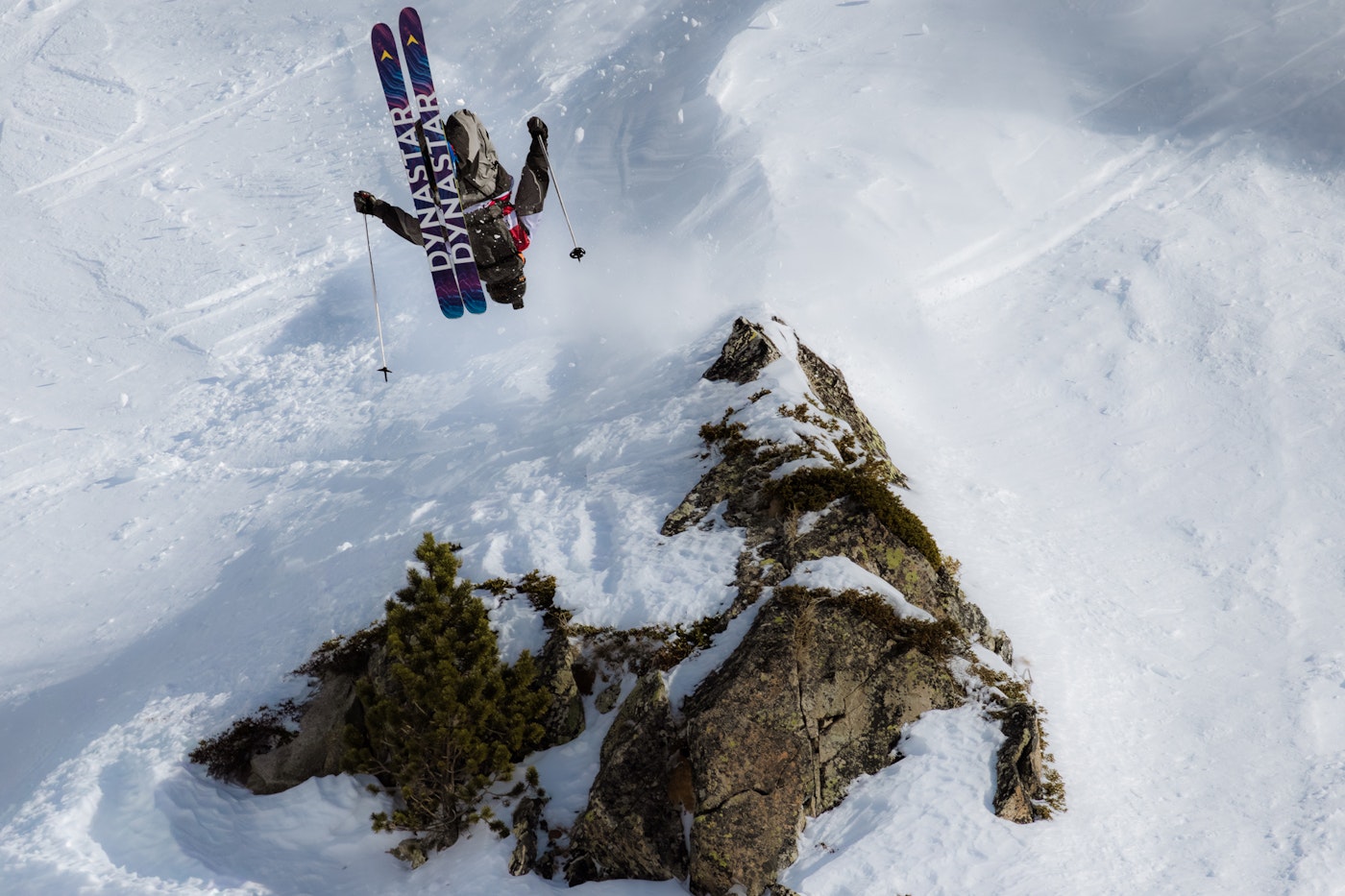
Photo: Jeremy Bernard, FWT | Skier: WeiTien Ho
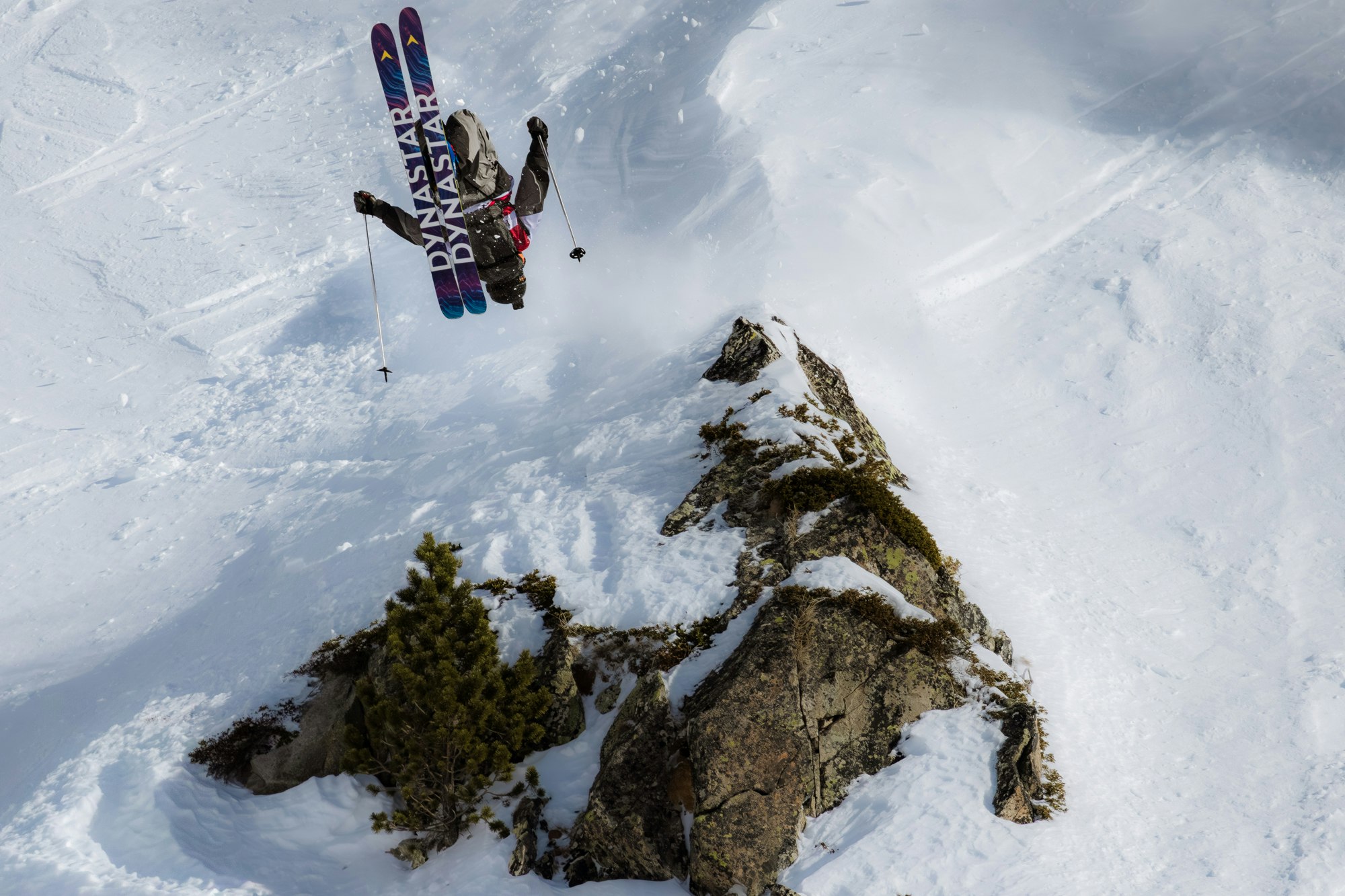
Photo: Jeremy Bernard, FWT | Skier: WeiTien Ho
Elaborate on that. What are some opportunities the Olympics could help create for this next generation of free riders, or just freeride in general?
WH: The more we can share freeride with people, the more they'll understand it, be impressed by it, and be drawn in. Freeriding is already quite impressive if you watch it, and once you start to really understand what's happening, it gets evening more astounding. I don't think most people fully understands that, so with more resources, you'll be able to broadcast it further and get a wider audience.
I understand that opinion isn't shared by everyone, but at the end of the day, it will deliver more resources, and if we as skiers use those resources right, it'll help guide the sport in a good direction. Right now, we're seeing that even on the FWT curcuit, it's hard for people to get the finances and resources to do a whole competition year, let alone train to try and perform at their best. So if funding comes in and allows these athletes to do so, that would bring the level even higher because you wouldn't have to work another job and could fully put your life towards this.
What do you hope the public takes away from watching freeride at the Olympics, or what do you hope they understand about freeride?
WH: There are two sides to it. One is just falling in love with the competition itself. Competing in sports is such a beautiful thing, and I feel super fortunate to have that in skiing. Look at the [FIFA] World Cup. I find it so beautiful how it brings so many people together - people who aren't necessarily interested in soccer, for example, but who find meaning in it anyway. I hope that with happens Olympic freeride, even if it's just a small fraction of that.
I would love for this to serve as a way to inspire people to get outside, get into the mountains, and try something that's scary, even if that's not skiing. Our sport is expensive, and there are a lot of barriers to entry. So the more we can increase awareness, increase accessibility, and get people excited, that would all good news to me.
What are some of those core parts of freeride culture that you hope never change, regardless of this inclusion?
JDL: There are no limits to creativity and everything is possible, which is what freeride is all about. I also really love that the sport is promoting and valuing creativity over perfection, because I think some sports in the Olympics are always focused on perfect 10 out of 10 scores, and that's why freeride is so special; it's not about being perfect.
Of course, a good run has quite a perfect blend, but it's not so polished in a way. That's what I love the most. The judges have this way of balancing taking risks over being polished, and they acknowledge that. You did something a little bit crazier here, and maybe it wasn't as perfect as someone else's, but you tried and went in a different direction; we will give you points for that. So I guess that's something that I would love to keep going. In a way, that's also why it gives such a great show.
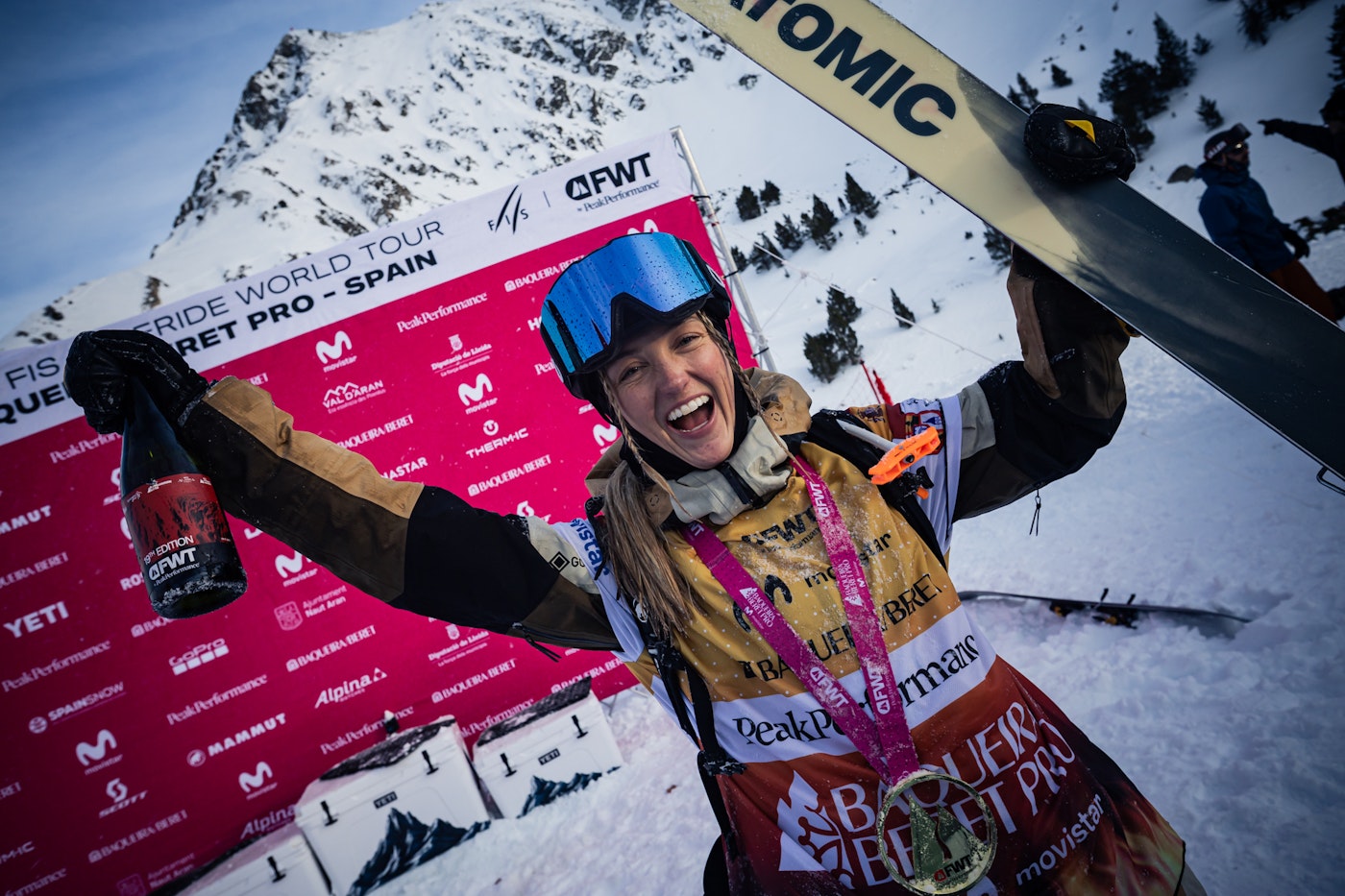
Dufour-Lapointe celebrates after taking first at Baquiera Beret this winter on the FWT
Featured Image: Dom Daher, Courtesy of the Freeride World Tour
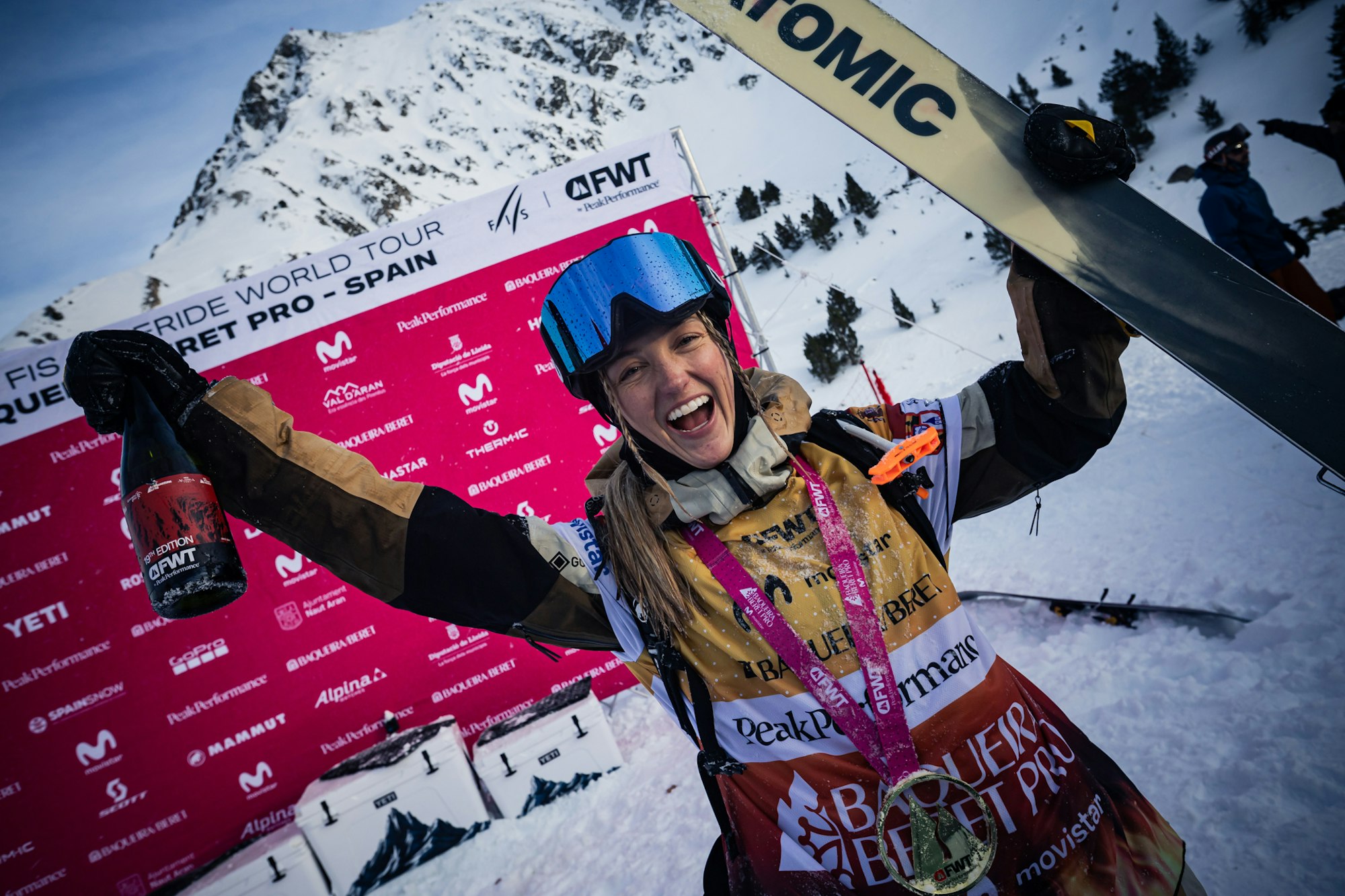
Dufour-Lapointe celebrates after taking first at Baquiera Beret this winter on the FWT
Featured Image: Dom Daher, Courtesy of the Freeride World Tour
Will those core values of freeride that you just mentioned help steer the Olympics in a positive direction?
JDL: I think it's possible. The IOC wants to include sports that the younger generation loves to watch. That's their main goal: to influence people to play sports and move their bodies. That's like the whole reason the IOC exists. So, in a way, they need to provide society with the sports young people watch. It's that simple. With that, they want to keep the sport's fans engaged, and that includes preserving culture.
It's not perfect, but I think they try their best to keep it as close to the original sport. When I watched skateboarding last summer and all the new sports that got into The Games, it was quite cool, and I think it's fun to see that they are always trying to listen to what kids want, what young people want and I think they're more open-minded than we think.
As a former Olympic mogul skier, what do you say to those in the community who have no Olympic experience and are scared of what this might bring?
JDL: The world of freeride seems a little sacred, and I get it. I get that there might be different perspectives on this news, and I saw some people being super excited and some people being super mad. But for me, I am always optimistic and I always try to see the bright side. I know that being an Olympian changed my life for the better, and I'm so grateful to be one. I know for a fact that it will do the same for others. They won't ever regret chasing this dream of pursuing their passion for a bigger goal, and I think that's what people who have never experienced it cannot know.
This can be a beautiful moment to connect with the whole world. Even for just one second, it's cool to have people you'll never know appreciating your work. To be part of something bigger than yourself, that's quite incredible.
I read in another interview that your family always joked that freeride is kind of like the “dark side” of skiing. How does that make you feel about freeride being incorporated in the Olympics?
MG: It's funny in that all of the extreme sports are kind of frowned upon by the more structured communities, and so in bringing freeride to the big stage, our goal is to bring this vibe and culture to the world rather than to let the outside world have its way with freeride.
There are many ways we can do this, and one of those ways is letting real skiers help make decisions. I'm lucky enough to sit on the Freeride World Tour board with other skiers, many of whom are my good friends. We work with the FWT to shape what the competition looks like. Currently, the FWT is the main decision-maker in freeride. They don’t answer to anyone. They pretty much have full control, and that’s important. Being able to give the athletes direct contact with the Tour commissioners is vital. My goal is to bring the freeride culture to the world rather than bring more structured criteria to freeride.
And would you say the IOC has been working collaboratively with the freeride community so far?
There hasn't been much interaction yet. I don't think there's going to be any changes to the physical side of it. Obviously, there are still a lot of questions to be answered and a lot of things to be put in place. Nothing is going to change directly with how our sport operates. I would say it's going to be very similar to how any Freeride World Tour event runs; we'll have our weather window and we'll make do with it.
We won't let it end up like skimo, where the whole sport was changed, the course was shortened and everyone in that community felt shortchanged. But I don't think it's even possible to do that with freeride. So I have high hopes in that aspect.

Photo: Ben Jean | Skier: Marcus Goguen
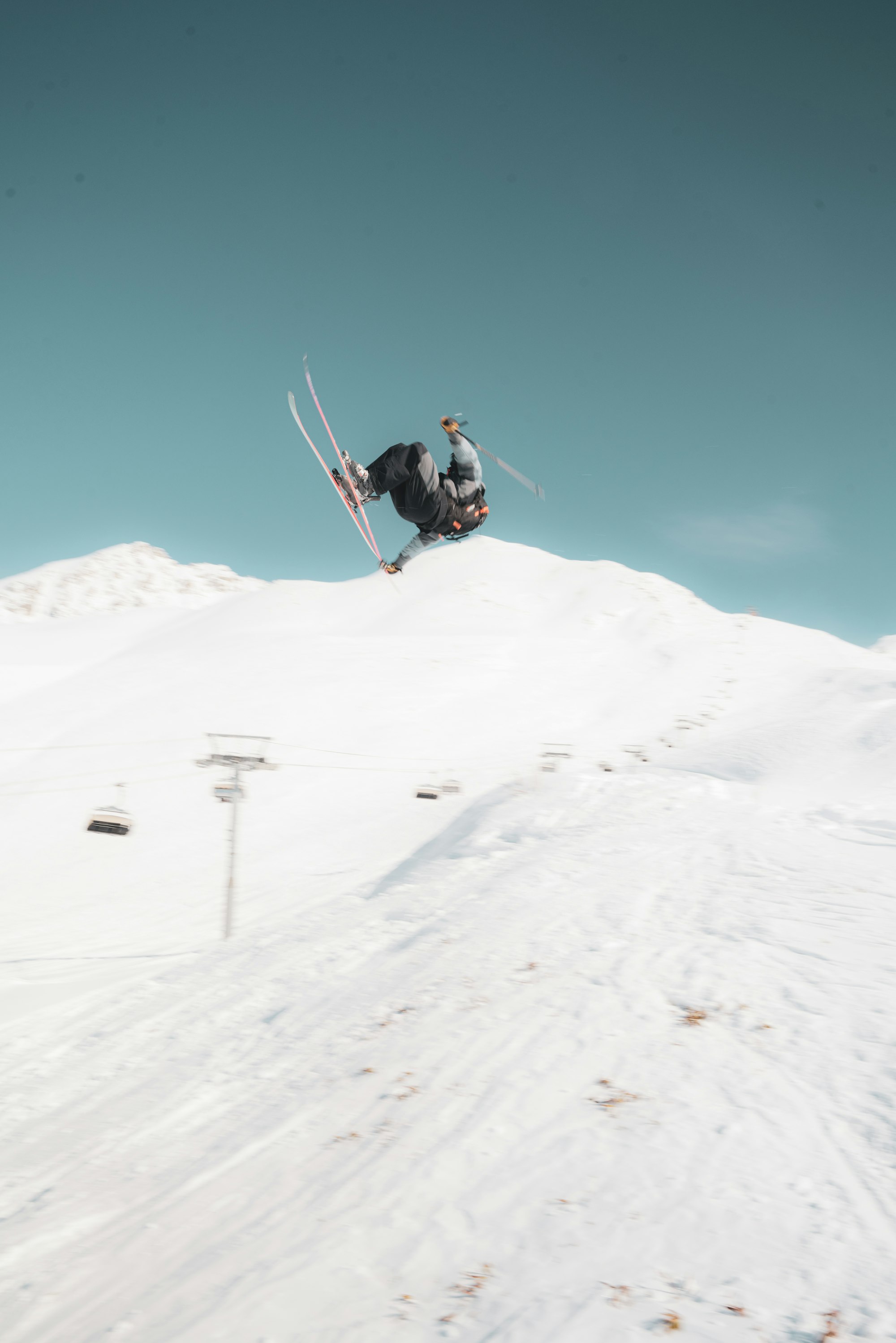
Photo: Ben Jean | Skier: Marcus Goguen
You're a big proponent of hitting the gym to prevent injuries and improve your skiing. Would training facilities, club teams and more be areas where more structure would be good in freeride?
MG: For sure. Having new or more established clubs will help make the younger generation safer and give them a more finely tuned eye for freeride, because right now I definitely see that the hype is high and the sends are even higher. We hosted the Send-of-the-Year contest, and I think we got 13 triple backflip submissions, so people are absolutely hucking, which is awesome. With that, I'd like to see some structure to it and some logical thinking behind these stunts so people can ski as long as possible and not just physically burn out in five years.
Does knowing there's an Olympic opportunity change how you're thinking about your career and ambitions as a professional freeride skier?
MG: It definitely adds a new component, but I wouldn't say it changes who I am as a freerider whatsoever. I have the same motives and same goals. I want to keep pushing this sport and my own ability and, ultimately, have fun with it. What's most important is showing the world that what we do is really cool, really fun and we all do it with a great group of people. It's cliché, but inspiring others through that is what it's all about. The Olympics are just another avenue for that in my mind.
My goal is definitely to become an Olympian and follow in my family's footsteps. But for others, maybe their goal is to continue filming segments. Both are great, and we need to make sure there are pathways for everyone in the sport. I don't think [the Olympics] need to just become the dream for every skier. Freeride is about shredding powder, hopefully with your buddies, and we're still going to be able to do that.