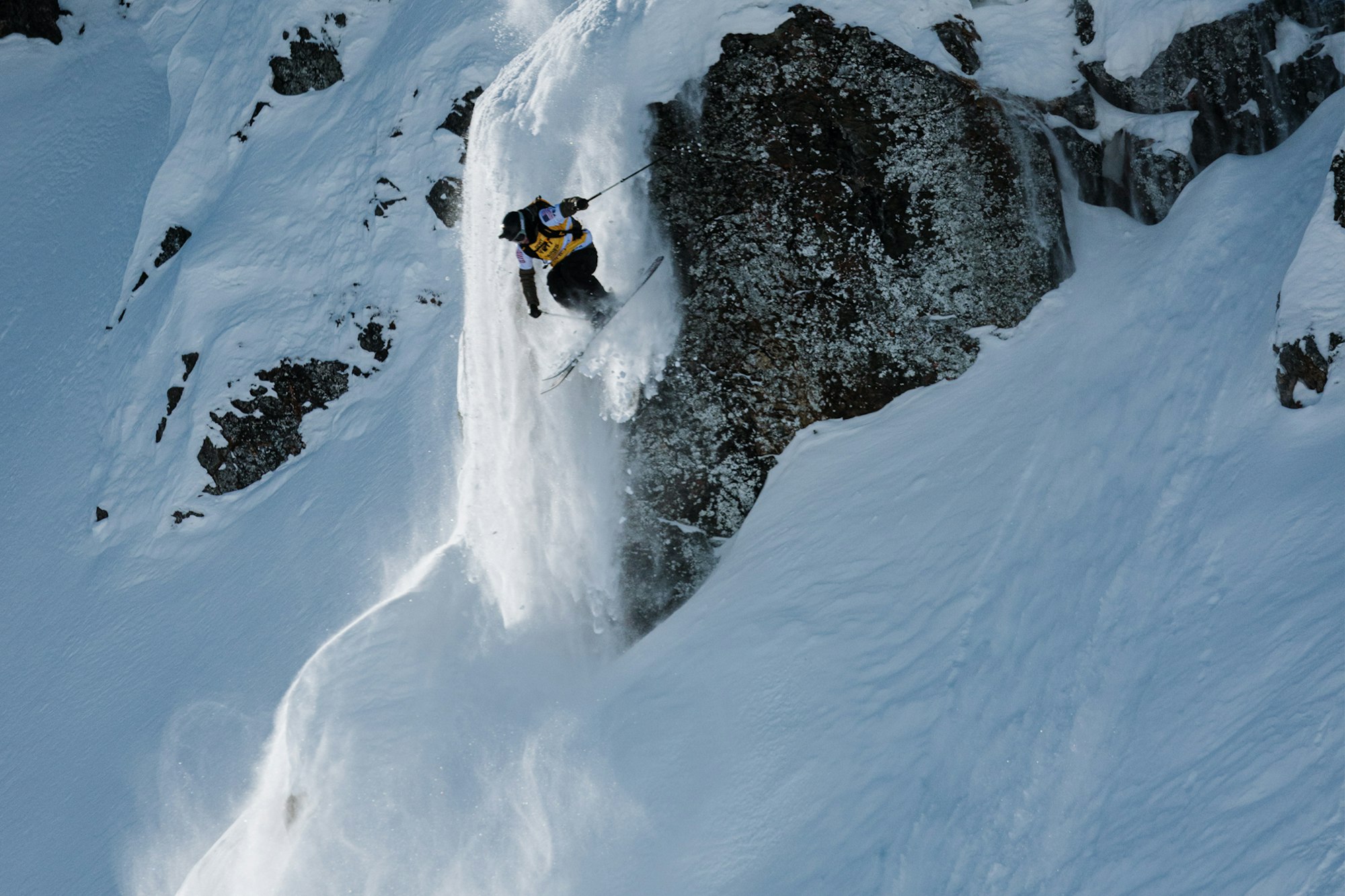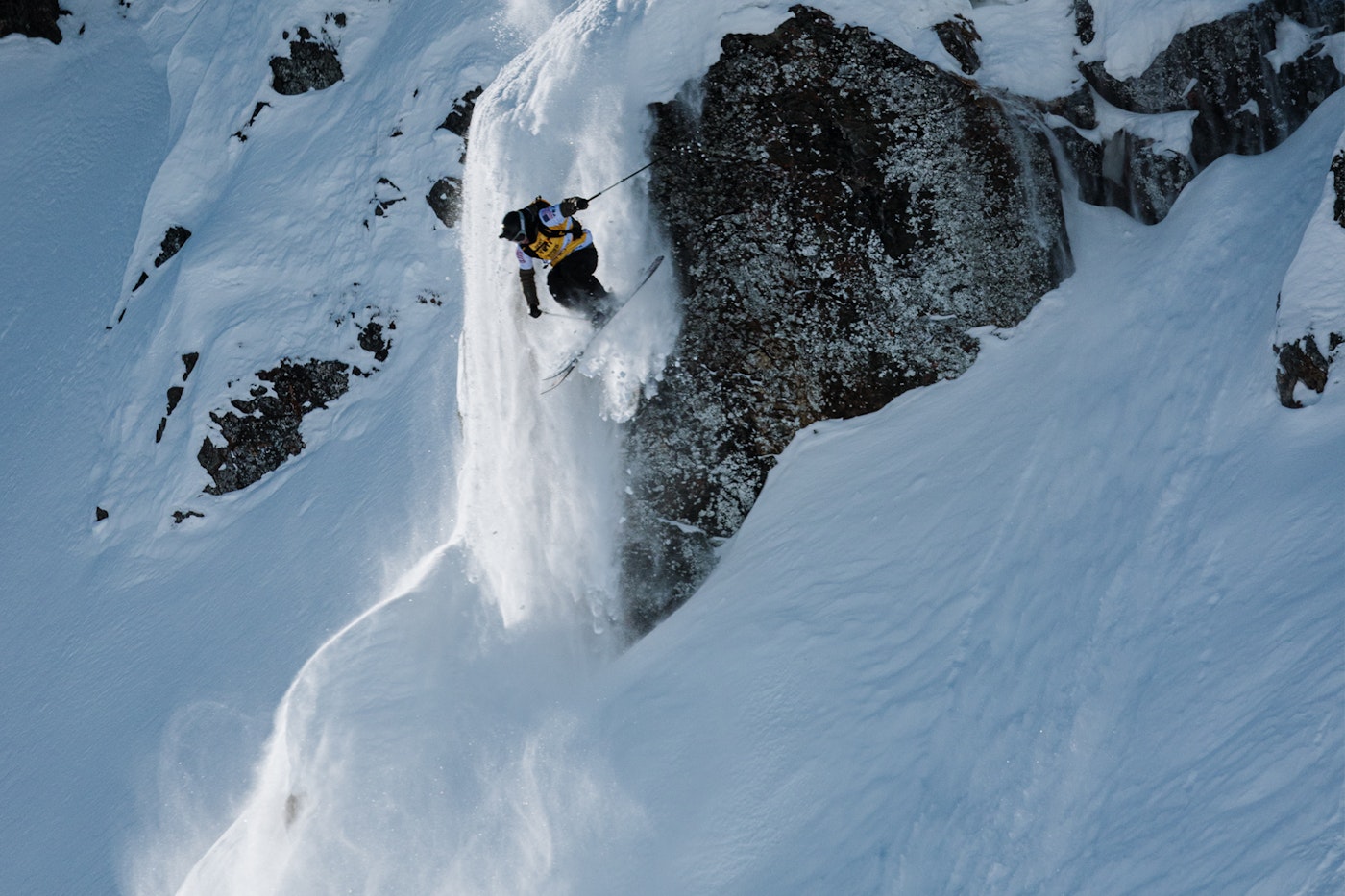
Featured Image: Jeremy Bernard, Freeride World Tour
Unless you've been nestled under a rock for the last 48 hours, you know that freeride skiing and snowboarding have been included in the 2030 Winter Olympics . As with any big change, social media is buzzing, opinions are strong and nuanced discussions aren't exactly taking a front seat. Amidst all the noise, one voice caught our attention: Mike Douglas.
The unofficial official Godfather of Freeskiing, Douglas needs no introduction. (And if you don't know who I'm talking about, take a moment to do some homework before continuing. This , this and this should get you started.) He's seen every extrapolation of freeskiing since its inception. Without exaggerating, he helped create the damn thing.
He was one of a handful of visionaries who believed skiing had more to offer the world besides time stamps and medals. Now, over thirty-five years later, he's watched one of the last bastions of competitive freeskiing become engulfed by the powers that be. While acknowledging the upsides of this announcement, he didn't hesitate to voice his concerns.
"It makes me a little sad," Douglas said when I asked him about his initial reactions to Olympic freeride. "I've slowly watched all the 'free' sports, the ones without a strict rule book, where there aren't national teams and where style is what you make of it; all of that has been consolidated. At least in the circles that I follow in skiing, [freeride] was the last major pillar of competition left standing."
His tone wasn't angry, but rather melancholy. It's understandable, considering how, when Douglas was growing up, mogul skiing wasn't even in the Olympics. Though he took a run at the Winter Games with the Canadian National Mogul Team in 1994, he stressed that medals were never what appealed to him about the sport.
"The competition side of moguls, or any freeskiing event, was never what I loved most, but I always enjoyed it," Douglas continued. "It's a great way to test yourself and to bring people together. But over the last three decades, most major competition outlets and events have been assimilated and standardized, or left to the wayside, often left without funding. [Olympic freeride] won't destroy those core values, but it certainly changes it, and anyone who thinks it won't maybe doesn't quite appreciate where we came from."


The Godfather's been at it longer than you've been alive
Photo: Salomon (left), Brock Johnston (right)
This sense of anxiety isn't exclusive to Douglas. He's not the lone wolf, arguing like Saul Goodman for the sake of arguing. Prominent voices such as Tanner Hall, Sammy Carlson and Markus Eder have all expressed hesitation regarding the announcement, some more eloquently than others. An article recently published by Outside.fr discusses Eder's apprehension in relation to other freeride faces.
Many on both sides have approached the debate with hard-hitting emotions. Thoughts of presenting freeride to the world and winning on the biggest stage imaginable have captivated prominent riders, and understandably so. Budgets could increase for those in the limelight, and gender equity, something freeride needs to address, will be at the forefront leading up to the 2030 Games. These are all good things, and Douglas was quick to say he's excited for all of these additions.
But his hesitancy lies in a pragmatic thought. He stresses that this is about resources. "What's happened in the past is that these decisions create a sort of vacuum," he says, drawing on decades of experience watching the IOC and FIS absorb most major pieces of competitive freeskiing, from moguls to halfpipe. "Money and attention inevitably go towards the Olympics, and the avenues that get a skier there. And let's face it, there's a finite amount of resources out there to put on events and fund projects, especially within our side of skiing."
There's plenty of data to back this point. Look at the grand experiment of slope, halfpipe and big air skiing in the Olympics. Brands seem less interested in funding events like the Jon Olsson Super Sessions ( JOSS ), or Superpark , Cold Rush , Winter Dew Tour , West Coast Sessions ... you get the idea.
Someone will be quick to point out that X Games is not FIS-associated, and the event is still a dominant force in freeskiing (despite Jeremy Bloom's controversial rebrand, skyrocketing ticket costs and AI judging). And yes, Natural Selection Ski and The Snow League have been exciting thus far. You'll still find Level 1's SuperUnknown and Kimbo Sessions going strong, and comps like Sugar Bowl's The Silver Belt are gaining traction. But the point is that these events are not the standard. They are the anomalies, and the majority of them are not circuits, but events held once a year for primarily skiers at the highest level.
So what about the young skiers who want to compete, but can't afford or don't want to do so in highly structured, rigid systems with coaches, handbooks and the like? Isn't this what freeride was created to be an alternative to? Douglas explains, "If a kid doesn't want to go down this Olympic-level competition road, with the big rule book and all that, do they have opportunities to still compete just for the sake of building community and pushing themselves? Losing that is what concerns me."
The idea of competing without chasing the highest level leaves many of us scratching our heads. But that is the very essence of what made the idea of freeride so radical. At its core, it's about competing knowing that there isn't one right answer, one fastest time, or one rotation that will seal the deal. It's about learning what you like, creating your own answer and executing a vision that's entirely yours. Any parent will tell you those are important life skills.
And standardization is inevitable when it comes to the Olympics. You need a strict rule book so that skiers from around the world are all on the same page when it comes to what gives you a good shot at winning. Douglas provides mogul skiing as a prime example here. "I identified with [freestyle moguls] as a teenager far more than I do now, because there used to be so much creativity and style that was needed. Now it's more about pure performance . I still have the utmost respect for the athletes, for anyone at an Olympic level, but that's not what called to me as a young skier, and I hope there are opportunities for kids today who share that feeling."

2026 FWT Ski Women's champion Lou Barin finds her way down the Bec des Rosses at the Xtreme Verbier just a few months ago
Photo: Jeremy Bernard, Freeride World Tour
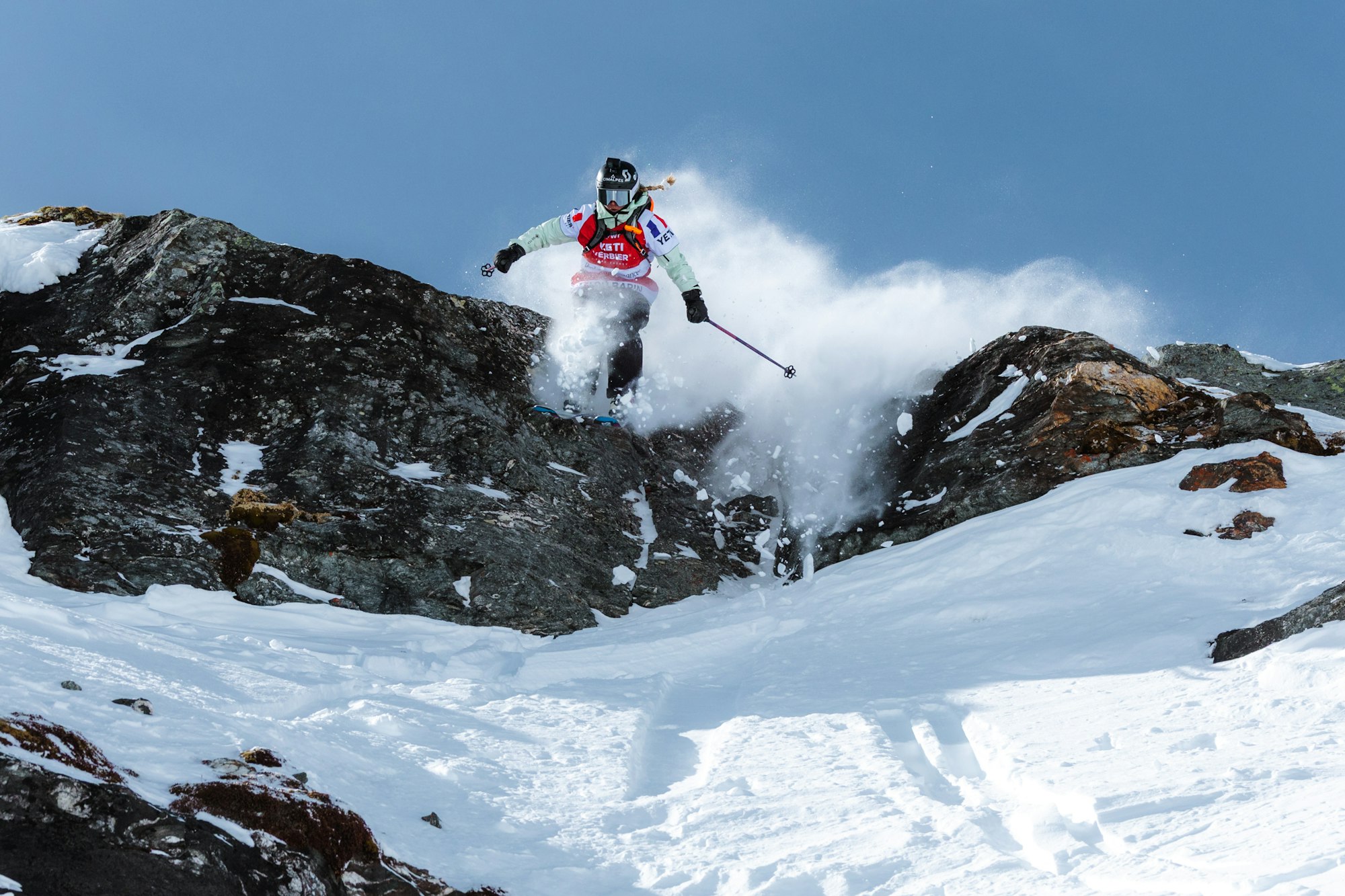
2026 FWT Ski Women's champion Lou Barin finds her way down the Bec des Rosses at the Xtreme Verbier just a few months ago
Photo: Jeremy Bernard, Freeride World Tour
"I want there to be a path for everyone," repeats Douglas adamantly, "and we should ask ourselves if everything needs to funnel to the highest level of performance, of optimization, if you will. Is that the only way we define success?"
This reflects a broader societal trend that's caught my eye recently. For years, optimization has been seen as the ultimate goal. We streamline schedules, refine diets and craft workouts down to the second to optimize our time. And lately, that philosophy has been questioned, from Men's Journal to niche outlets like Roca News .
And when it comes to freeride, Douglas's point is not that peak optimization is bad, but rather that there should be options for those of us who have different ideas of success, especially in a sport and culture that prides itself on welcoming the idea that there are many great paths down the mountain.
No matter where you stand on the Olympic freeride debate, one thing remains consistent: we all believe that freeride lives and dies with us as skiers. And for all his warranted concerns, Douglas pressed that the bottom line is simple: skiing is still skiing. "The freeriders at the top of the game today are so good, and they're truly great people. If they're happy, so am I," he said confidently. "I have so much respect for all of them, and I'm sure that no matter what, there will always be those looking to push freeskiing into the future, for the betterment of the sport and culture."
In closing our call, Douglas left me with a positive reminder. "Whether freeride remains an Olympic sport or not, I'm still going to root for these incredible skiers, and I'll still be out there having fun just for the sake of sliding down a mountain on snow."
The Godfather's words ring truer than ever. As freeride begins a new chapter, it's up to us to ensure a culture of individualism and creativity isn't lost as the rule book lengthens and the stage grows larger.
![[GIVEAWAY] Win a Full 26-27 Ski Setup from Fischer](https://www.datocms-assets.com/163516/1790101711-00012060-edited.jpeg?w=200&h=200&fit=crop)