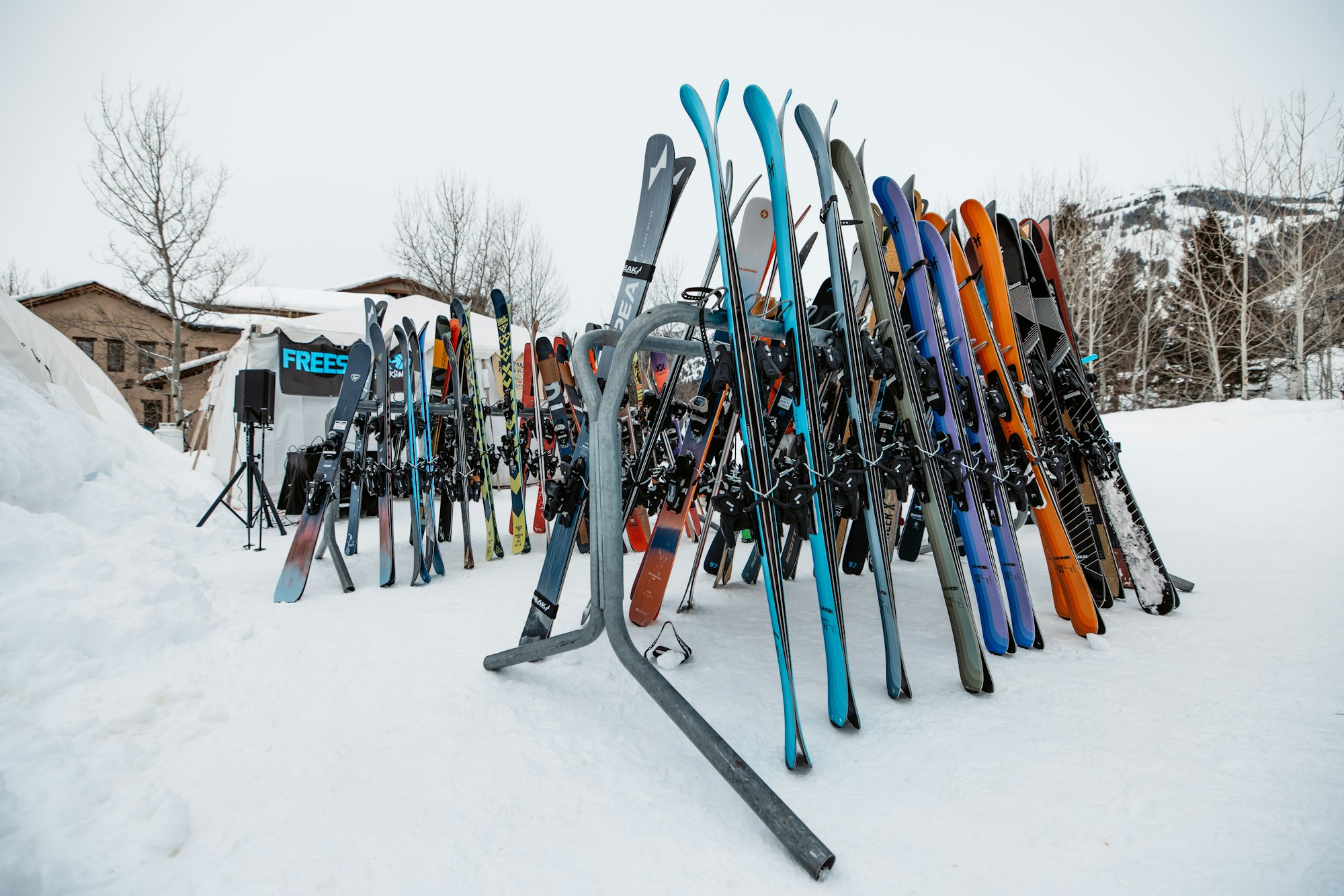
Many skiers only ever buy brand-new skis and bindings from their local shop or an online retailer. But that is far from the only option. If you have ever browsed Facebook Marketplace or wandered through a ski swap, you know there are hundreds of perfectly good skis being sold for a fraction of the price. Used gear can be the perfect solution if you want to add another ski to the quiver on the cheap, dip your toe into skiing without a huge investment or simply do not care about having the flashiest new setup.
Bottom line: you save money and can still walk away with a setup that rips, as long as you are not inheriting someone else’s problems.
I have picked up plenty of used skis over the years. Some were absolute gems, others were… character-building. After enough ski swaps, forum hunts and parking lot handoffs, I learned what actually matters, what does not, and how to avoid getting burned.
There are endless places to shop for used gear: Facebook Marketplace, local swaps, ski forums and friends with quiver overflow. The catch with all these options is the same: you have no idea how the previous owner treated their gear. Maybe they tuned them religiously. Maybe they skied rocks for fun. Maybe they tossed them into the truck still dripping after slush laps. The condition is a mystery until you look closely.
How to Examine Used Skis:

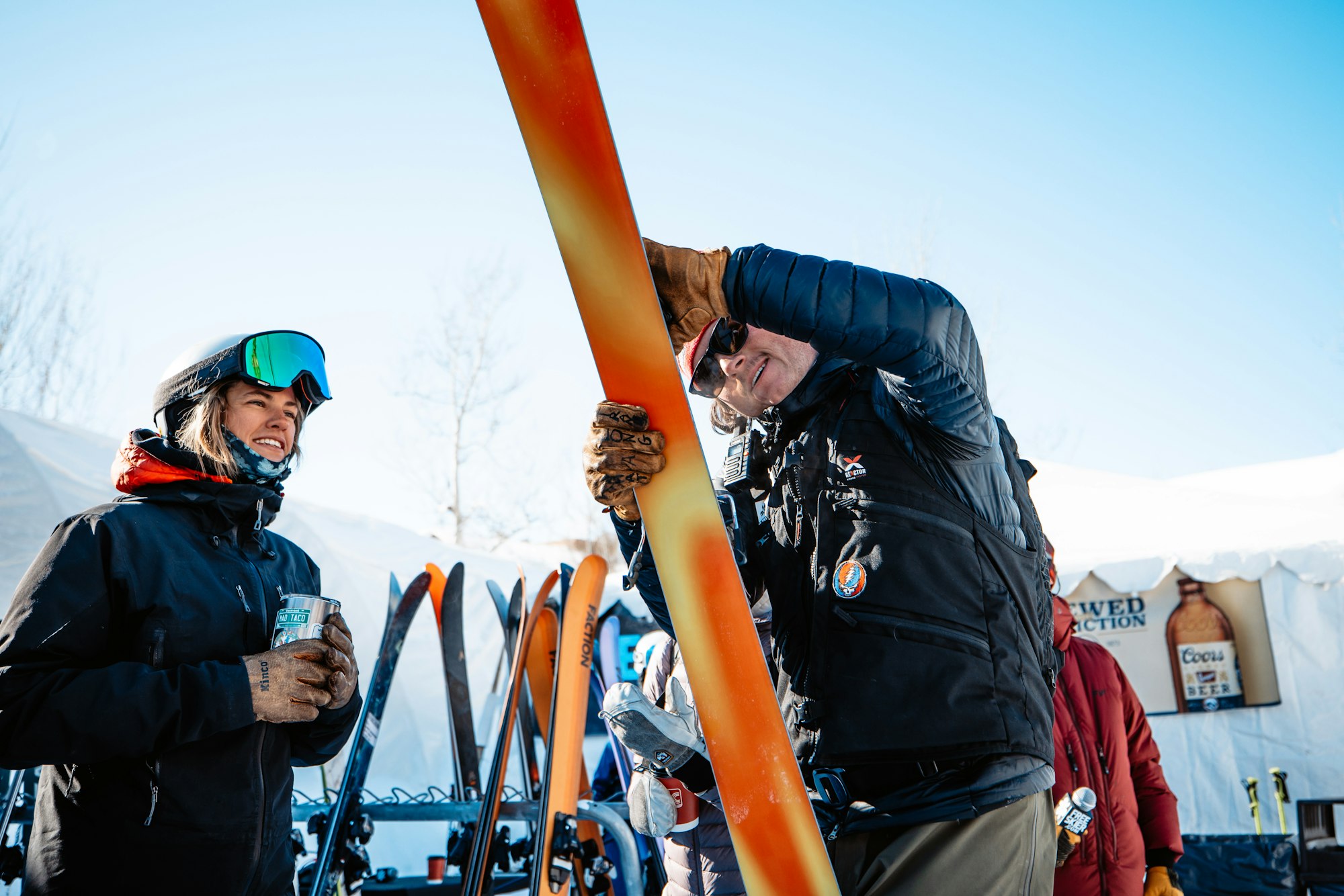
Start with a quick vibe check. Do the skis look tired? Are the bindings worn or sloppy? Does anything feel off at first glance? And ignore topsheet stickers. They peel off. I promise.
Bases
Flip the skis over, because the bases reveal the real story. You want smooth, hydrated bases, not dry, chalky ones. Extremely dry bases run slow and can feel like they are sticking to the snow. Next, look for core shots and make sure the repairs were done cleanly.
Good base repairs will feel smooth when you run fingers over them and look fused to the material around them. Any open or visible bad repairs invite water into the core, potentially compromising the entire ski. You may also run into skis with bases that are just extremely scratched. This isn’t a total deal-breaker, but if you want the bases to look brand-new, you’ll need a pricey ski tune.
Edges
Edges matter just as much. Light rust or mild rounding is normal. What you want to avoid are edges that look paper-thin, bent, rippled or partially pulled out. Metal does not grow back—if it is gone, no tune will fix it.
Sidewalls
Sidewalls are often overlooked but can tell you a ton. Solid and sealed is the goal. Cracks, bulging, missing material or rough, uneven repairs point to moisture or deeper issues. A proper fix should blend into the ski, rather than stand out.
Topsheets
Topsheets matter the least for performance, but definitely still take a look. Chips and scratches are cosmetic. Large delams or bubbling are not! They usually mean moisture has worked its way inside, completely compromising the ski.
Binding and Mounting history
If bindings are included, scrutinize them. Check for cracks, worn contact points, and loose hardware. Bindings older than about 7 years are often no longer indemnified, meaning a shop will not service them. Sometimes you will run into skis with demo bindings. You can tell they are demo bindings by their larger size and the list of numbers right below the toe piece. While Demo bindings are safe, they are heavier and bulkier than standard models, which is why we typically avoid them.
Mount history is another big factor. Always, always ask about mounting history, even if the bindings are still on the ski! Skis can only take so many drill holes before the structure weakens. A good rule of thumb is that skis can only be mounted three times before ski shops won’t touch them. When buying a used ski, they almost always need a remount to fit your boot, so only one binding mount is ideal. Two previous mounts are risky because once the shop makes the third set of holes for your bindings, that ski is now yours forever. Finally, if a ski has already had three mounts, politely decline and walk away.
There is a Better Way with Powder7
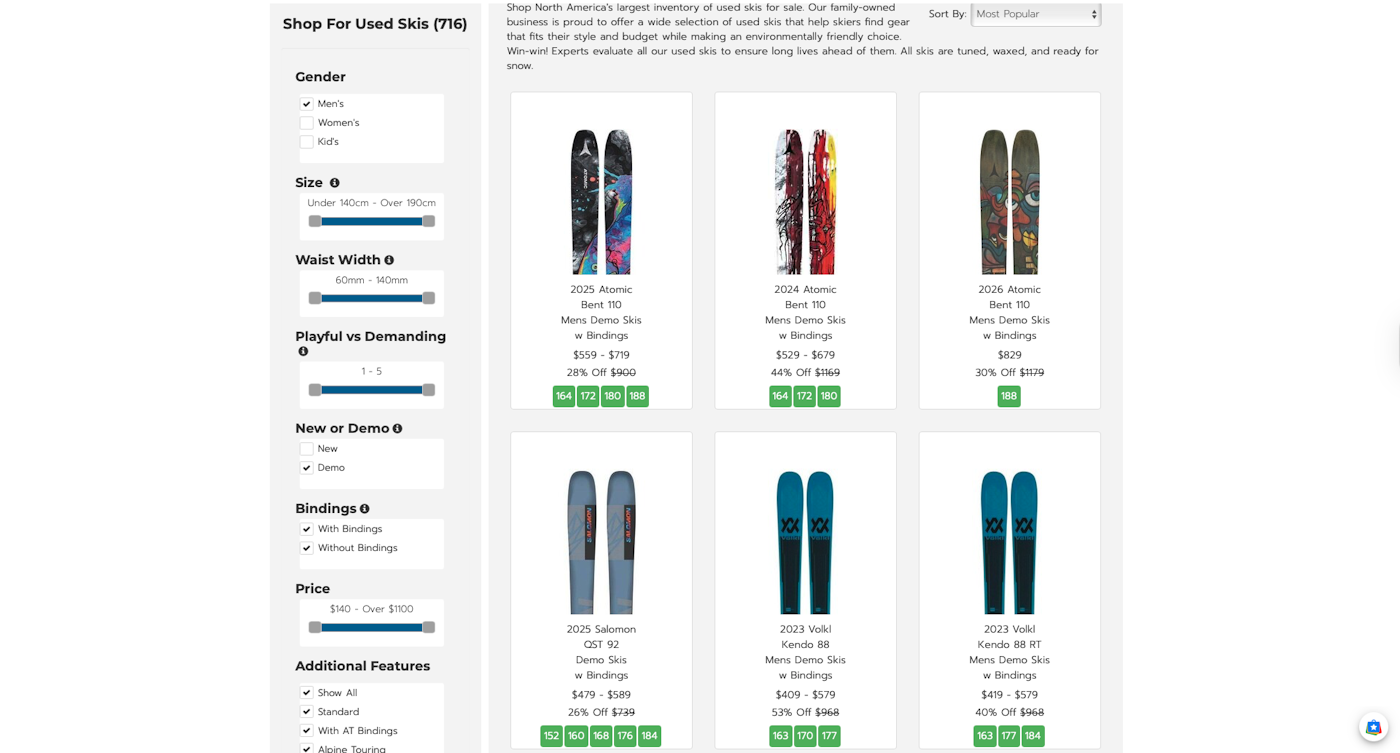
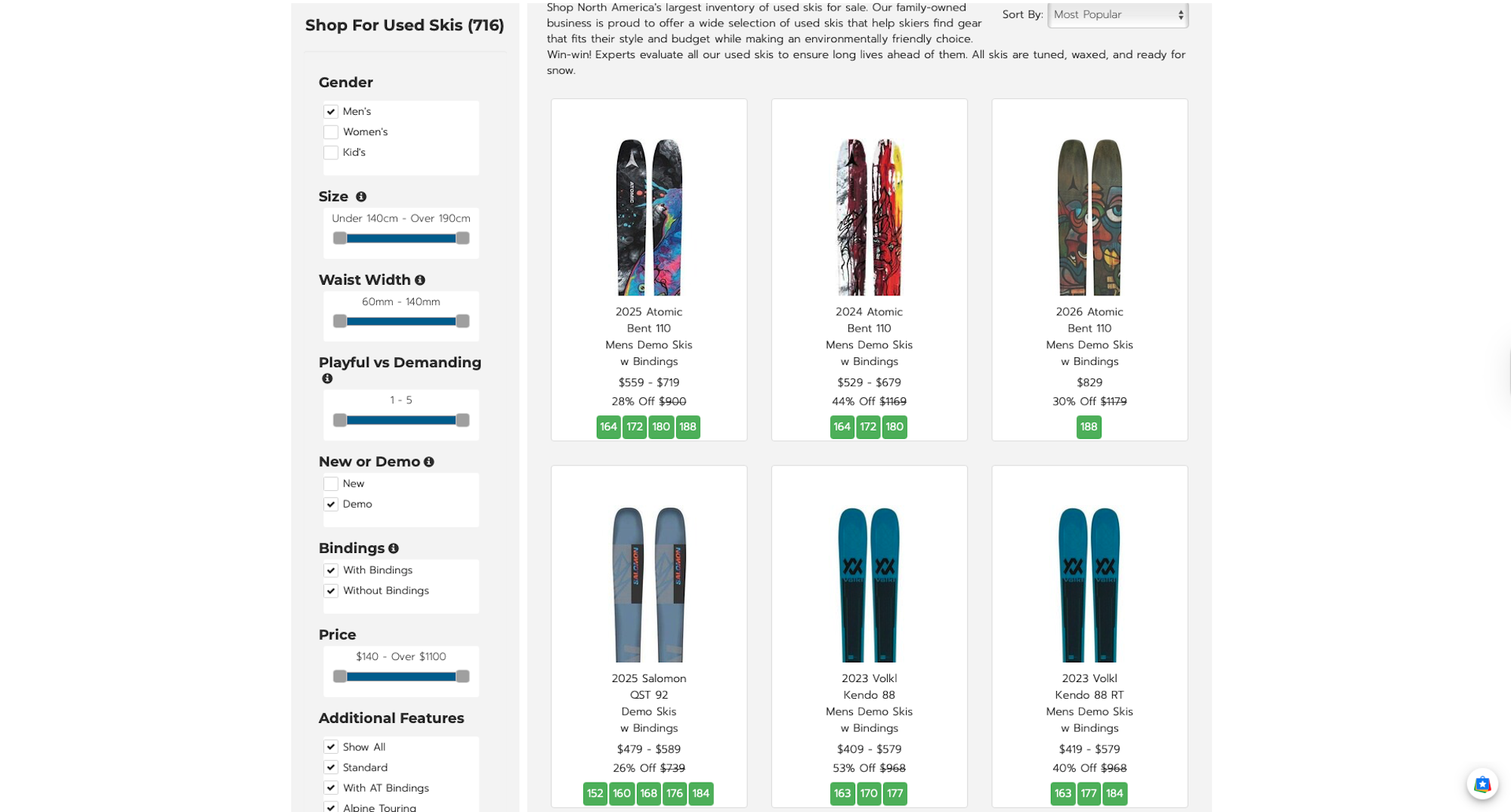
Buying used skis from a private seller is really hard, and honestly, you really have to know what you are looking at, to avoid getting screwed. Powder7, an online retailer and local shop in Golden, Colorado, has observed this issue and taken the guesswork out of buying used skis through their Used and Demo Ski Program. They source skis from resort demo fleets and from skiers trading in old gear through their ski trade-in initiative.
Every ski gets inspected, graded, and tuned by technicians who know exactly what to look for. Every listing includes clear condition notes for bases and topsheets, so you know what is coming your way. And if the skis show up and you are not feeling them, Powder7 offers free returns (as long as you don’t ski on the skis). Another plus, given that Powder7 sells new skis too, they can provide great ski recommendations through their online ski recommendation quiz and in person from their numerous ski experts.
They will also buy your old skis through their Instant Trade-In Program. Fill out a quick form, get an instant quote, shop for new or used gear, and apply your credit right away. Drop off your old skis or ship them in.
Buying used skis can be a fantastic option for a wide range of situations. That said, be careful when purchasing from a private seller, as there are so many variables that can turn a good deal into a disaster. So take the tips we have presented here and do a ton of your own research. Now, if this feels at all overwhelming, Powder7’s used ski program takes all the guesswork and stress out of buying used skis and while you may be paying around $100 more than the deal you might find on Facebook Marketplace. Trust me when I say, it’s 100 percent worth it.