All Images : Courtesy of Amy Jimmerson
For some, working with a camera is a frustrating challenge; for others, it becomes a passion they cannot shake. That is what happened to ski photographer Amy Jimmerson. She grew up moving all over the West Coast and has always been surrounded by and in love with the outdoors. From a young age, she began bringing a camera on outdoor adventures with her family, and her passion grew from there.
But photography carries a stigma in this world as an impractical profession, and that is what everyone told her. So she went to college to do the “normal” and more “practical” thing instead of pursuing photography right away. That didn’t stop her from pursuing her passion, though. When she was about 30, she decided to attend the Rocky Mountain School of Photography in Missoula, Montana.
There, she completed a five-month intensive photography program to improve her skills and become more serious about photography. After graduating from photography school, she went on to photograph the Freeride World Tour (FWT), North Face Masters and the Park and Pipe Open Series. Since then, Jimmerson has made a name for herself in the outdoor and ski photography world. She has traveled the world photographing professional skiers such as Lynsey Dyer and Veronica Belle and has established her base in Jackson, Wyoming, where she has lived for the past 20 years.
If you have a passion for ski photography but don’t know where to start, not to worry; FREESKIER sat down with Jimmerson to talk about the tips and tricks that beginner ski photographers should know.

FREESKIER: For someone who wants to start photographing skiing, what would you say is the most important skill to develop first?
AJ: Mastering exposure is really important, so understanding your shutter speed, f-stop, ISO, and how they relate to each other is key to developing skills in that first year. Being able to shoot in manual will be your most basic and valuable skill with your camera. Skiing is so fast, and you have to understand that. You could just set the camera to shutter priority with a high shutter speed forever, but I think exposure for snow can vary with lighting conditions as well. So I think it's pretty important to understand exposure and be able to expose when using manual functions.
What's one mistake you made when you were just starting out that became a big learning point?
Honestly, one of my dumbest things that I did for years, and that I have finally gotten better at, was when I was taking shots, I wouldn't zip up my camera bag. I shoot for Jackson Hole Mountain Resort, and much of the content they need is in-bounds. So you're racing everybody else to get to a good spot and the powder starts to basically just get Pac-Man eaten up around you and you're like, ‘Okay, we've got to go fast. So I would leave my pack unzipped, and inevitably somebody would come by and slash me, or you know, the athlete I'm shooting with would maybe hit me with a big wave of snow and my pack would fill up.
In that type of environment, things get really wet and cold. There are times when you're perched on the side of a hill or a rock and if your bag goes for a tumble and you don't have it closed, you're gonna have a new type of mess on your hands. So yeah, I think just being smart about managing your equipment in a cold, powdery environment is pretty important.
Do you always have multiple backup cameras because it's such a threatening environment for technology?
I actually don't normally have a lot of backup cameras, unless I'm shooting something like Kings and Queens Corbets, because that one is on top of the mountain, so if your body fails you, you're stuck. But normally every day when I'm out I take one body, and my camera is pretty darn weatherproof. I've used it long enough, but I have good faith in it. So I guess my answer is only if it's a very consequential shoot I can't recreate, like Kings and Queens, where I won't be able to come back next week. But I'm pretty considerate of my pack weight; I try not to ski or, you know, shoot too much with a super heavy pack. I don't want to overdo it, so I trust my camera (Jimmerson uses the Canon R5), and I think some of the higher-end DSL bodies these days can really handle a lot of environmental conditions; they are pretty darn waterproof. I've done some stuff where I'm like, this camera should not work now, but it does, so I have a good bit of faith in my equipment.
How important is lighting in ski photography?
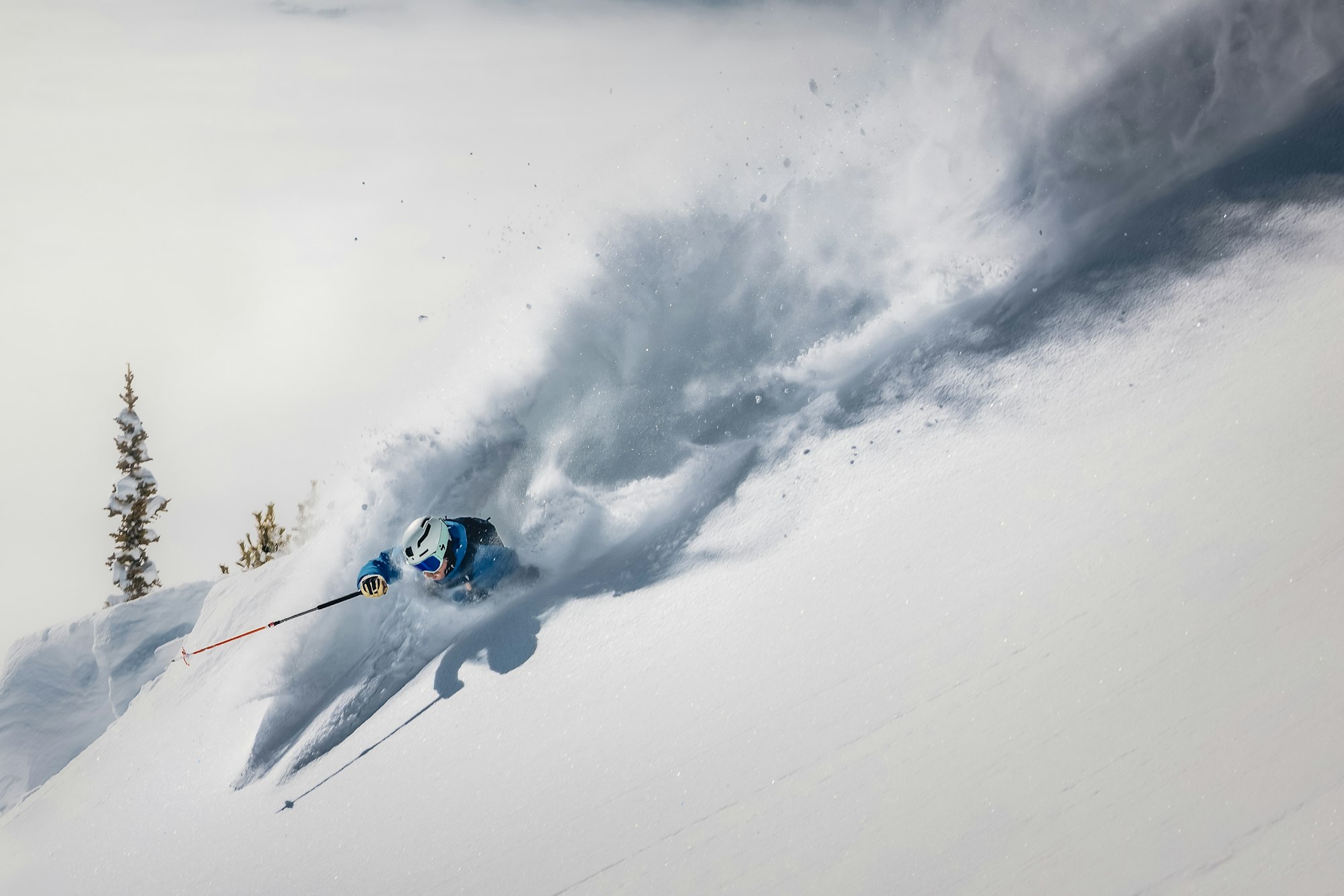
If you can be patient, there is a huge difference between flat-light ski photos and photos taken with even a little bit of light. There was a day when I was out, and we were sitting at the top of this wall in Jackson, and we were watching people ski down, but this cloud was hanging just on the edge of the wall, and we were just barely in the shadow. But we were patient, and the photos that came out of it were really beautiful, and I was like, ‘God, this would have been a nothing photo that you would throw away if we hadn't waited that extra 10 minutes.’ So yeah, it's the difference between a really gorgeous photo and something that's going in the trash.

For Amy Jimmerson, lighting is everything. Look no further for the evidence
How do you think equipment matters compared to creativity and timing, and just understanding the sport in general?
I always go back to what one of my photography instructors said: ‘The best camera is the one that you have on you.’ In action sports, it is nice to have a higher frame rate and good autofocus tracking because you're gonna miss fewer shots with a higher-end camera. But I think the most important thing is just to be taking photos. I think you can get out there with a point-and-shoot or with a film camera and still take really beautiful photos. Creativity is a huge factor; your eye is a big factor, and yeah, I think understanding and loving the sport outweighs really expensive gear.
What advice would you give to a young photographer trying to build relationships with athletes and earn the trust of those high-profile people in the ski industry?
It happens somewhat organically if you're out on the hill and in the ski community, because it is still kind of a tight-knit community. So I think that if your photos are good and you are producing good stuff, people will find out about it, and you will meet people as you go. I don't think there's anything wrong with reaching out to athletes or whatever on social media and saying, ‘Hey, I'm around if you ever want to shoot.’ I think that's a good way to go about it if you're trying to move up. But, honestly, it's kind of one of those things where I do find that aspect a bit challenging personally, because I am shy. Through doing a lot of work, spending a lot of days on the mountain, and meeting people that way, you'll find your group and you'll find people that you mesh with well, which is great, and that'll kind of spread from that.
What initial steps would you recommend to somebody in their first year of taking photos to help set themselves up for success?
I would say take a ton of photos in a variety of conditions. I shoot a lot in Jackson and we have a lot of great days. Shooting on a grade A forces you to be more creative, like incorporating trees and rocks, and that sort of stuff. In that first year, I think it's really important for photographers to develop their own eye and not look at everybody else's ski photos, but to kind of find what appeals to them in images and develop that further. So yeah, I would say take a ton of photos and try to figure out your specific look; that's what'll set you apart from other photographers.
What skills would you say from that summer photography kind of help you better your ski photography?
In the summer, I do a lot of wildlife and landscape photography, which is very different from ski photography. But the contrast allows different parts of my brain to work. It's a very nice complement to my winter season because it is slower and more intentional. I do think that when I'm doing ski stuff, I get a little scrappy and I go really fast, because it feels like you're competing for fresh snow and all that sort of stuff. So I think landscape alters my brain or my eye when I'm shooting speed photography. My favorite photos are the ones I take when I see a really beautiful scene or landscape in front of me, and then I put a skier in it. That's how that photo is created. I'm like, ‘Oh my god, I'm in love with this composition over here, we need to put a skier in there.’ So I think the summer stuff reminds me to slow down, look around me, find that really beautiful spot that I'm in love with visually, and then put somebody in there, as opposed to just like, ‘Oh my god, we have to go and get a ton of power shots.’ Summer photography slows me down and makes me more aware of what I'm looking at.

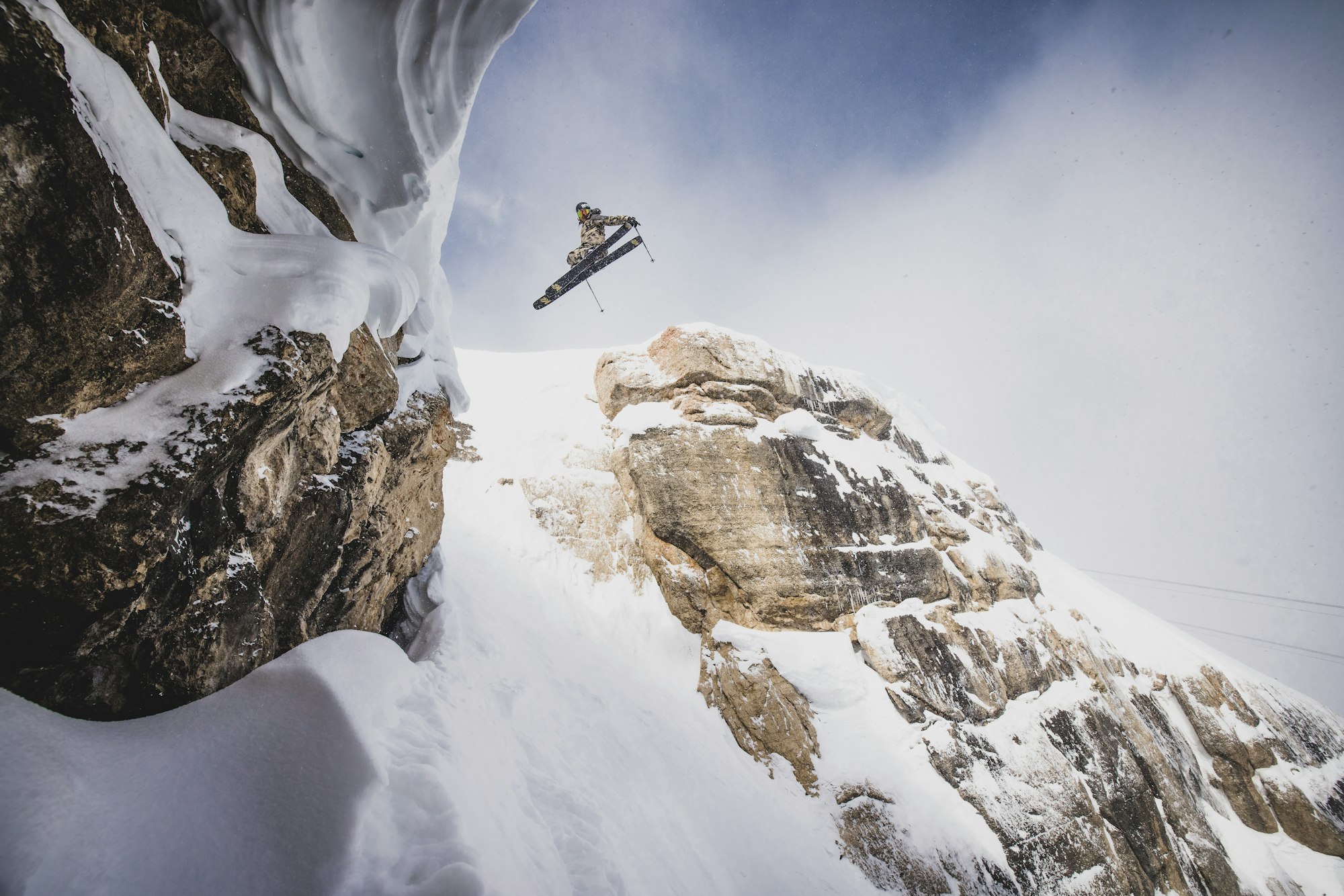
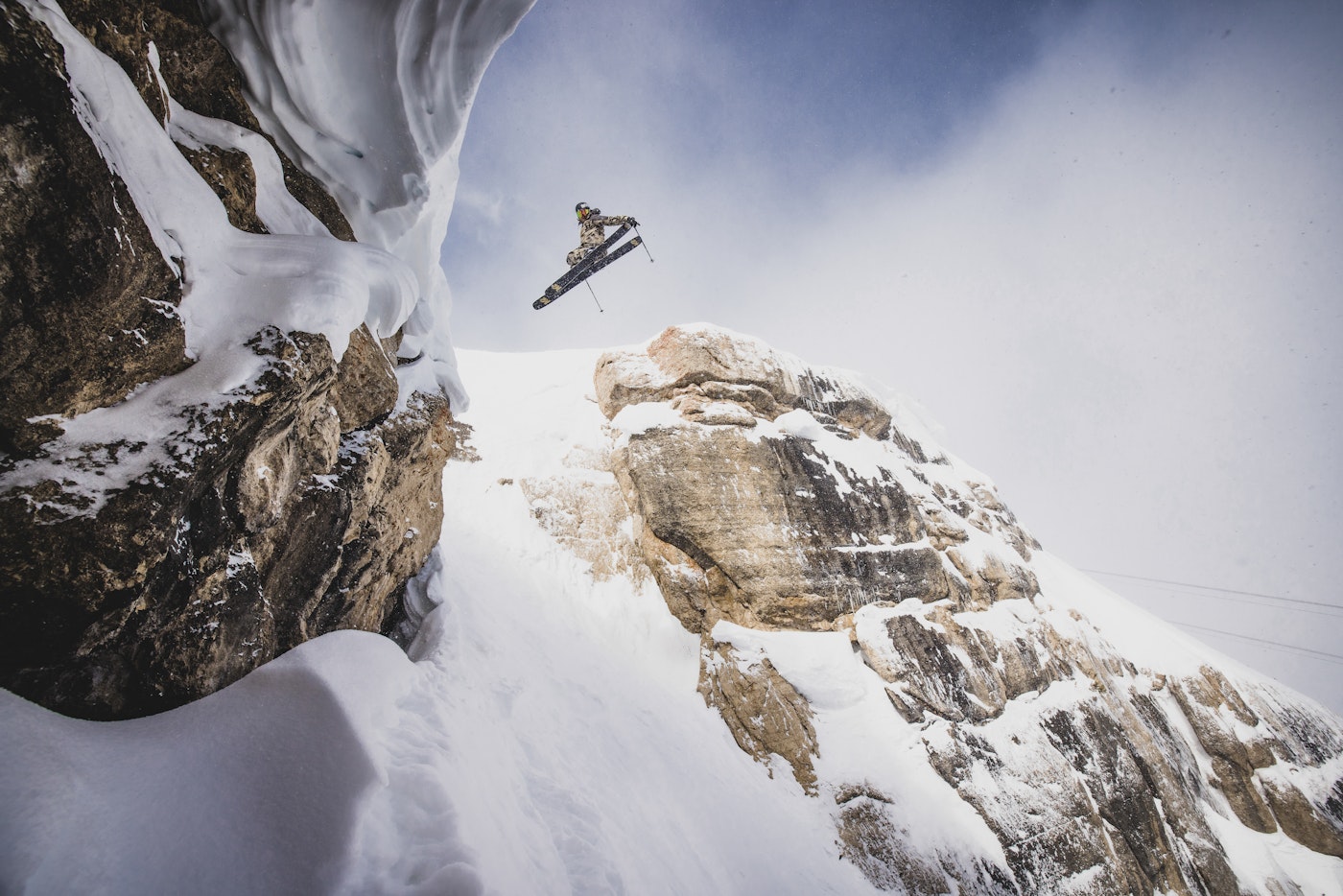
Lalo Rambaud puts on a show for Jimmerson's camera during Kings & Queens of Corbet's
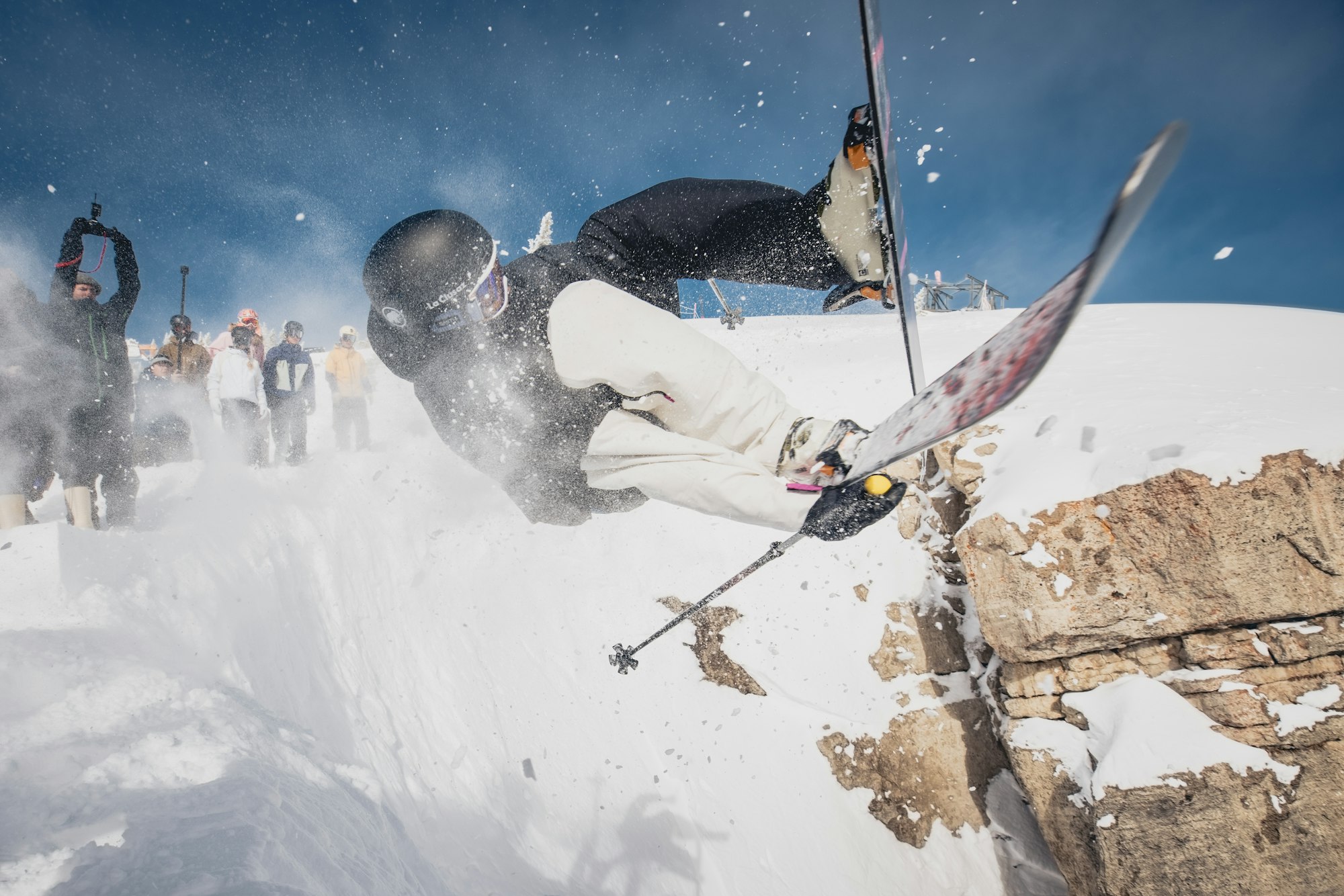
Lalo Rambaud puts on a show for Jimmerson's camera during Kings & Queens of Corbet's