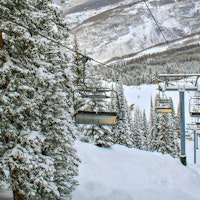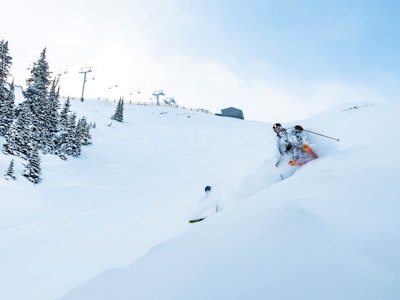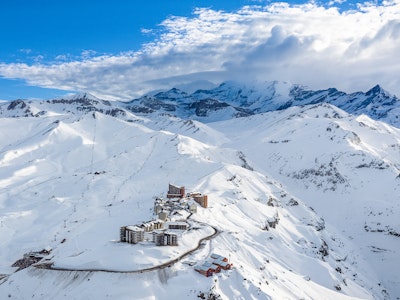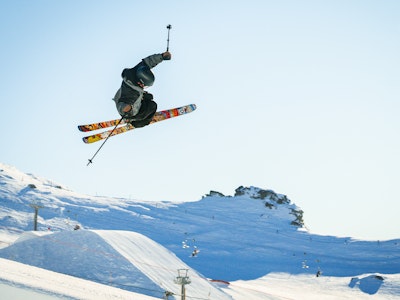

All Photos: Montana Department of Commerce
The text came through at 11 p.m. on a Tuesday: “Discovery’s reporting two feet. Limelight face is going to be all-time. You down or what?” By 6 a.m. the next day, I was cranking espresso shots and heading east on Interstate 90, chasing winter through one of my favorite states—one that simply refuses to let skiing become relegated to a rich person’s sport.
The nation’s fourth-largest state, Montana, has 15 ski areas spread across an area larger than some European countries but is dominated by two in particular: Big Sky Resort and Whitefish Mountain Resort . These giants, although they are amazing ski areas that I’ll always say yes to, tend to leave the state’s other mountains operating in relative obscurity. This is just how many locals like it—spontaneous and accessible powder missions without the lift lines or need for dinner reservations made months in advance.
Montana is an antidote to a modern ski industry and the overpriced parking, $28 grilled cheese sandwiches and lift lines that have become all too common. Here, you can pull up right to the base lodge just minutes before the first chair and be harvesting freshies before the lifties at the big resorts are even nestled into their high-speed chambers.
Here, beyond the shadow of Colorado and Utah, lie lesser-known ski areas where lift tickets hover below $100, powder stays untracked for days and you can rub elbows with multigenerational locals in welcoming, laid-back restaurants and affordable cowboy bars.

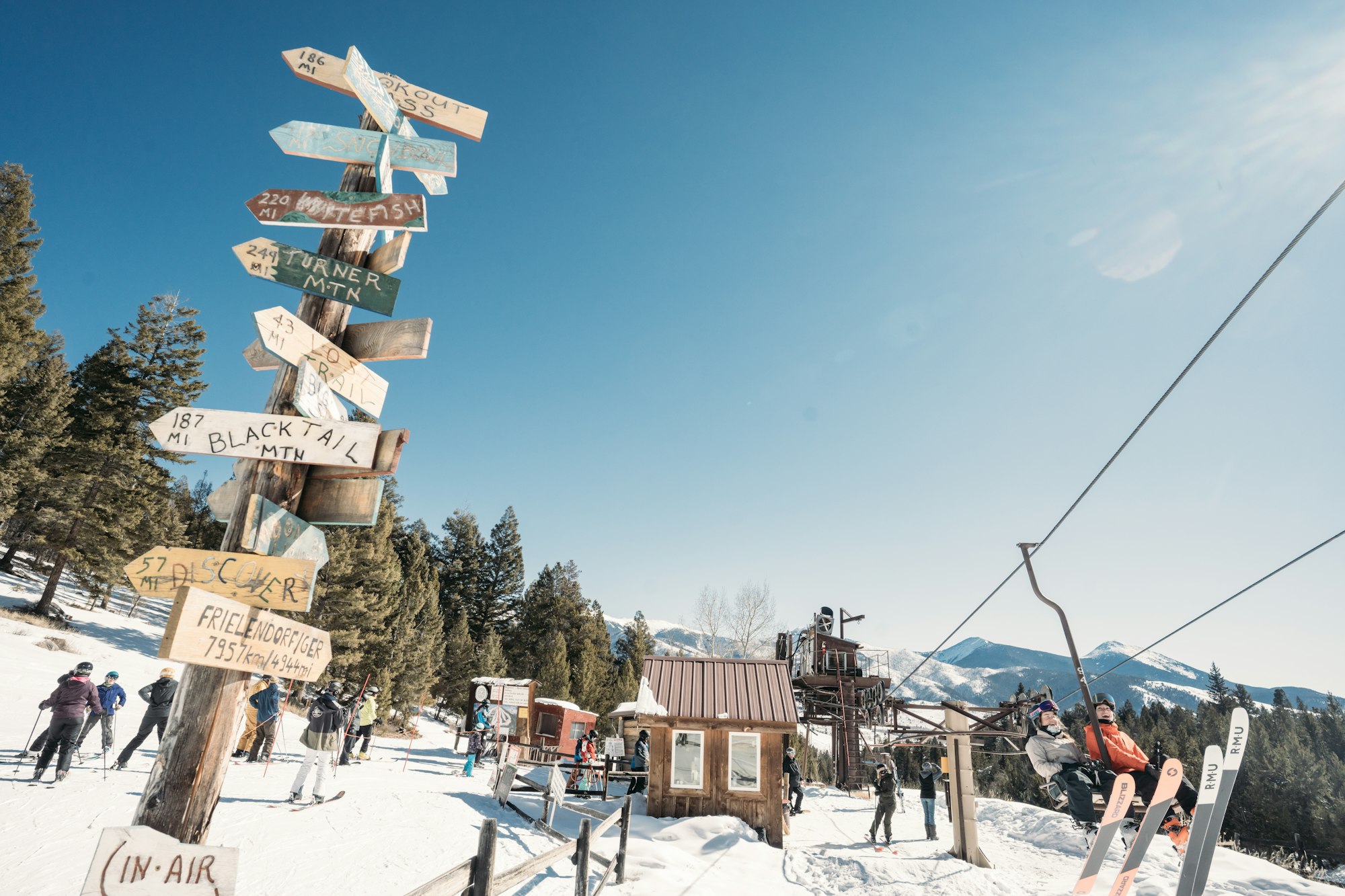
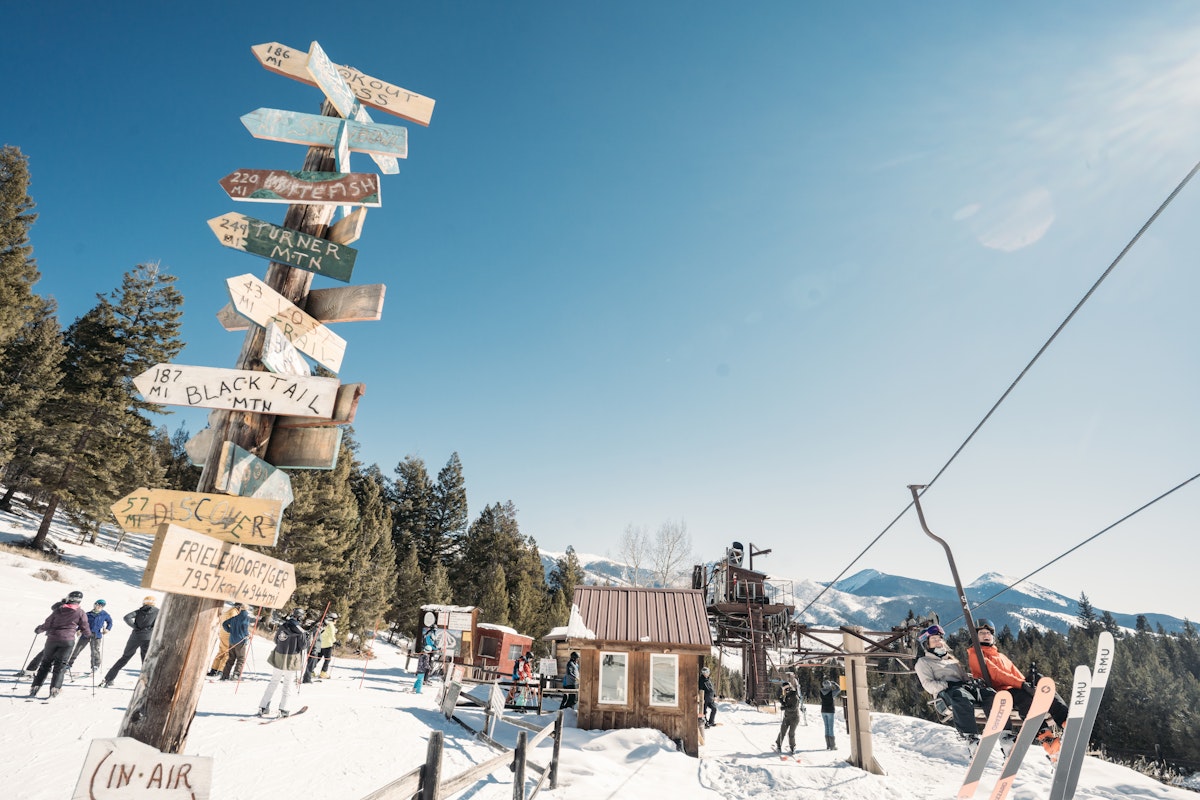
Location: Maverick Mountain
Location: Maverick Mountain
The Road Trip Strategy
Montana’s ski areas fan out from three main airport hubs. From Bozeman, Bridger Bowl is 20 minutes north, and Discovery (known to locals as “Disco”) sits 90 minutes west toward Anaconda. Red Lodge Mountain is two hours southeast, Showdown is two hours northeast in the Little Belt Mountains and Great Divide is 90 minutes northwest near Helena.
From Missoula, Montana Snowbowl is just a 30-minute drive; Lookout Pass lies 90 minutes away on the Idaho border off I-90; Lost Trail is about two hours south on Highway 93; Blacktail Mountain is two hours north near Flathead Lake; Whitefish is two and a half hours northwest; and Turner Mountain near Libby requires about a three-hour drive for those dedicated to finding empty slopes. Discovery is also easily accessible from Missoula.
Great Falls provides access to Showdown, just over an hour south, Teton Pass Ski Resort under two hours west and Bear Paw Ski Bowl on the Rocky Boy’s Reservation, just over two hours to the northeast.
Southwest Montana
Discovery: The Super Sleeper
Discovery Ski Area sits between Anaconda and Philipsburg, about 90 minutes from both Bozeman and Missoula. The mountain boasts 2,200 acres of terrain spread across 67 runs—and minimal crowds. The Limelight lift serves sustained 40-degree faces, while the glades between Charity and Jubilee hide powder stashes for days after a storm. On the backside, expansive bowls deliver expert terrain that rivals anything in the Rockies.
Day tickets remain under $80, and season passes—just $665—keep skiing accessible for locals. In the base lodge, you’ll find homemade comfort food like chicken and dumplings and the mountain’s locally famous chocolate chip cookies. Nearby Philipsburg, a historic mining town, offers cozy lodging at the Broadway Hotel , a beautifully restored 1890s building with modern amenities and themed rooms. Philipsburg Brewing Company , just downstairs, provides the perfect après-ski stop.
Lost Trail: Down-Home Family Adventure
Tucked deep in the Bitterroot Mountains on the Montana–Idaho border, about 90 miles south of Missoula, Lost Trail is the kind of ski hill that raised generations—and still feels like home. It’s family-owned, family-run, and family-skied. The locals who learned to link their first turns here now bring their kids, and everybody knows everybody. Don’t let the friendly vibe fool you, though—this hill’s got teeth. With 1,000-plus acres and 52 trails, there’s plenty of legit terrain hiding behind the mom-and-pop charm.
The mountain spins Thursday through Sunday and stacks more than 300 inches of snow each year. The volunteer ski patrol—made up of diehards who spend as much time fixing fences as they do for fending injuries—keep things safe and spirited. On “double-duty” weekends, potlucks break out in the patrol shack, and come summer, you’ll find the same crew trading ski boots for river rafts.
Lost Trail might not be massive, but it punches way above its weight. Hollywood Bowl dishes out cliffs and steep lines for the show-offs, while South Face and Thunder offer wide-open powder fields that stay fresh for days. Since the lifts sit still Monday through Wednesday, locals have a ritual: “Powder Thursday.” If the storm gods deliver, it’s the best day of the week—bar none.
Keeping true to its roots, Lost Trail keeps skiing affordable. Adult tickets were under $70 last winter, and that’s exactly how the owners like it—skiing for everyone, not just the elite. After the lifts stop spinning, head to nearby Jackson Hot Springs , where you can soak in the natural pools, grab a beer at the bar, and relive the day’s turns with whoever’s lucky enough to be sitting next to you.
Lookout Pass: Border Snow Magnet
Straddling the Idaho–Montana border and sitting right off I-90, Lookout Pass is one of the snowiest spots in either state—and one of the most affordable, too. It’s also about as easy to reach as ski hills get: just an hour and a half from Missoula, Coeur d’Alene or Spokane.
A recent expansion, mostly on the Montana side, doubled the size of the resort to more than 1,000 acres and 1,650 vertical feet spread across 52 trails and three distinct faces that wrap the cone-shaped peak.
Lookout turned 90 in 2025, and after nearly a century, it still feels like a locals’ hill that knows how to have fun. You can ski free on your birthday, and the calendar is packed with community events —teacher, first responder, military, and senior appreciation days; a cardboard box derby; even a full-blown Hawaiian luau. Kids get free ski school lessons, and with weekend lift tickets at just $69 for the 2025/26 season, it’s proof that skiing doesn’t have to break the bank.
South-Central Montana
Bridger Bowl: The Worst-Kept Secret
Just 20 minutes from downtown Bozeman, Bridger Bowl delivers 2,000 acres of skiable terrain and 2,600 feet of vertical—without the corporate polish. This nonprofit hill has been spinning lifts since 1955, keeping prices down and the soul of skiing intact, all while serving up terrain that can hang with the big dogs.
The Ridge is where legends are made. A 400-vertical-foot bootpack above the Bridger lift unlocks 450 acres of expert-only terrain—lines like the Nose, Bridger Gully, Hidden Gully and the Apron’s sustained steeps. It’s the kind of terrain you’d expect to find in Alaska, not minutes from a college campus.
Each January, the Cold Smoke competition celebrates pure Montana skiing: rowdy, fast and unapologetically local. The parking lot says it all—beat-up Subarus and old pickups outnumber luxury SUVs ten to one. When the lifts stop spinning, downtown Bozeman takes over the après shift. Grab a burger the size of your head and a pitcher of local brew at the Haufbrau , and you’ll fit right in.
Red Lodge: Cowboy Country
Two hours south of Bozeman, Red Lodge Mountain is where cowboy culture meets big-mountain skiing. Two peaks connected by a ridgeline deliver 2,400 vertical feet and 1,635 acres of terrain that range from mellow groomers to legit steeps off Grizzly Peak. When storms roll out of Yellowstone National Park, they unload here, keeping the snow stacked and soft all season long.
Red Lodge isn’t trying to be a destination resort—it’s proudly, stubbornly authentic. The town still feels like the Old West, with hitching posts, neon signs and more flannel than fleece. After last chair, head straight to the Snow Creek Saloon , where ski bums and cowboys trade stories over cheap beers and loud music.
Affordable motels line the main drag, and you can still snag a room for around a hundred bucks a night. It’s proof that you don’t need deep pockets to ski big lines and have a damn good time doing it.
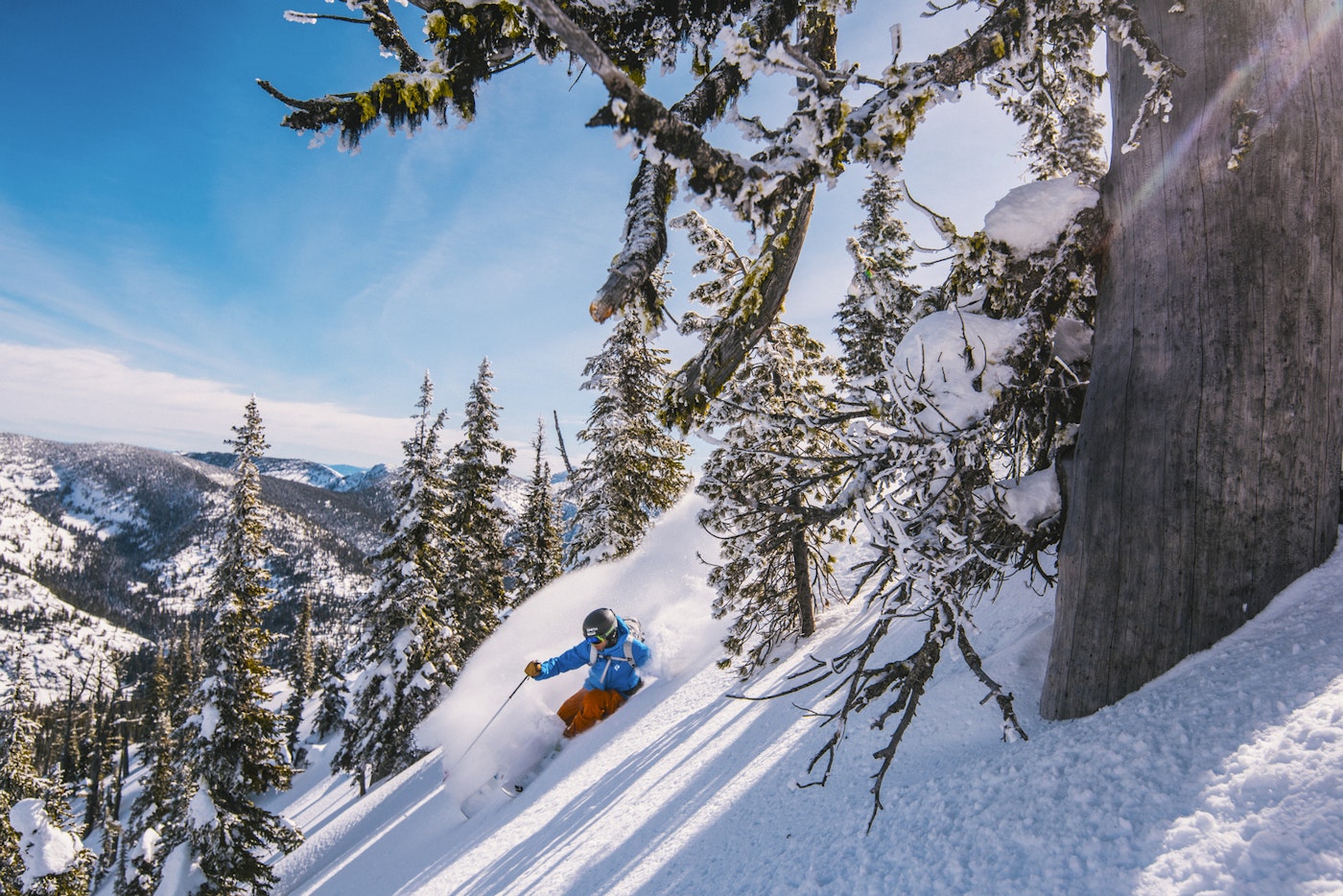
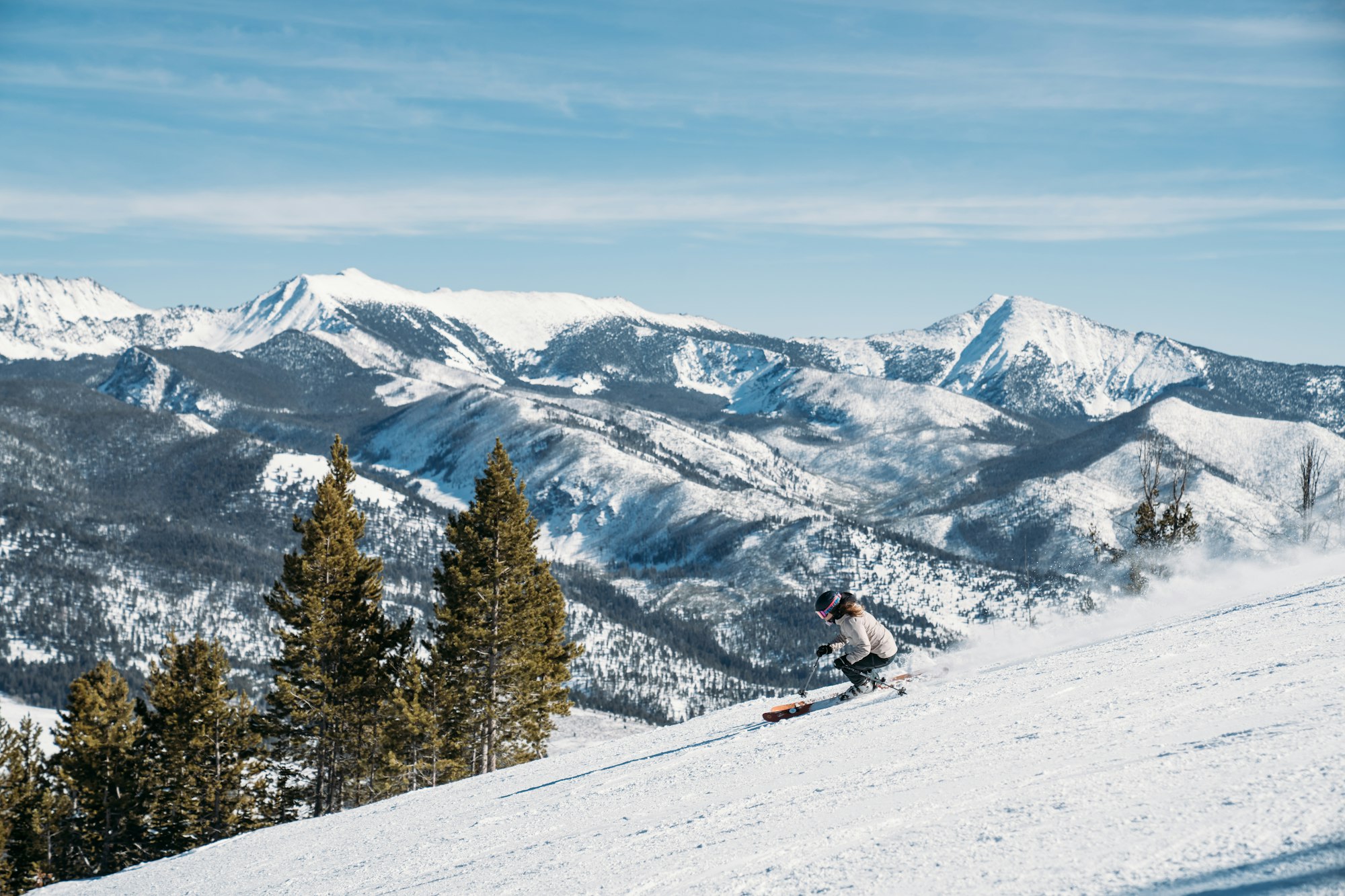
Location: Montana Snowbowl
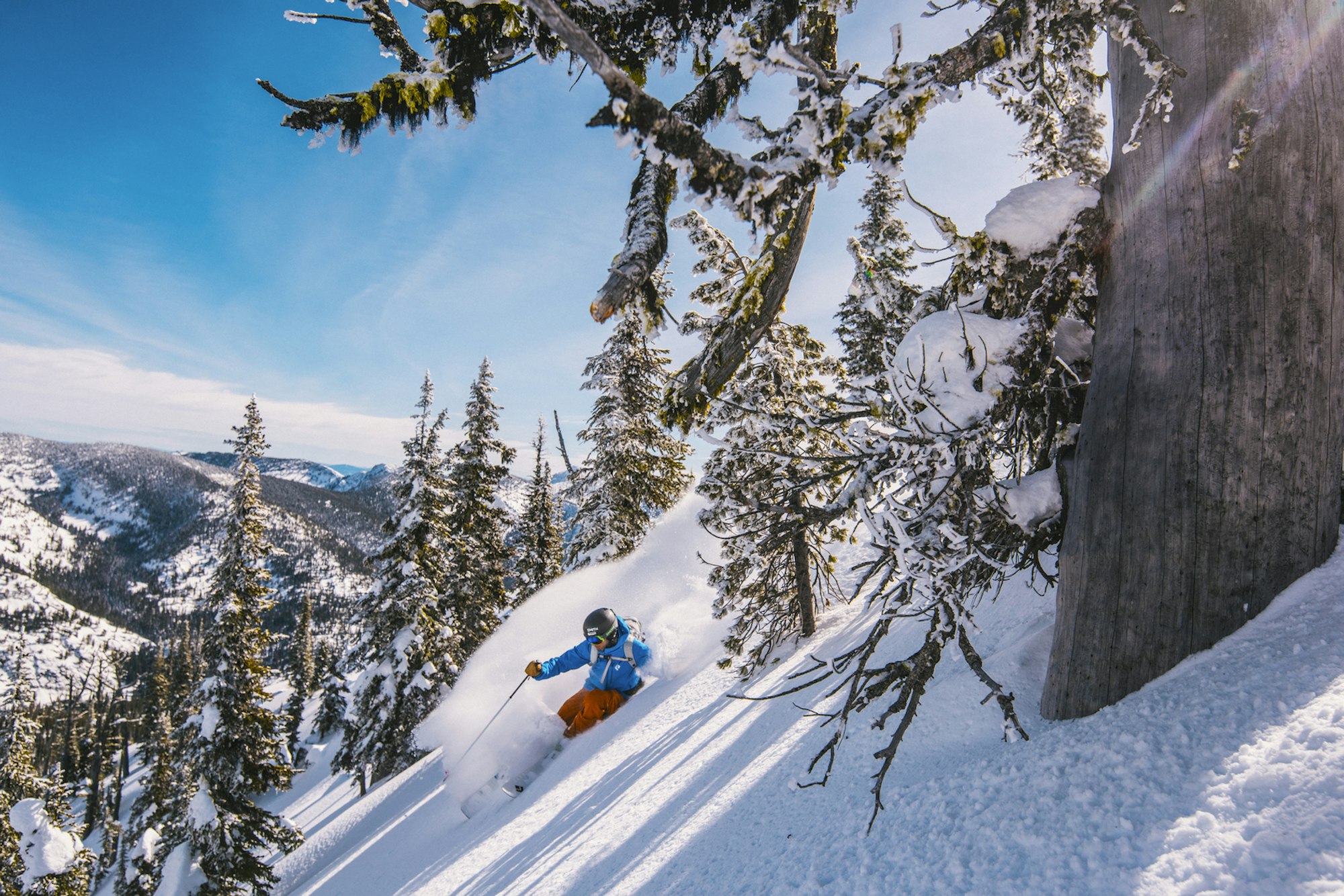
Location: Montana Snowbowl
The Northern Reaches
Snowbowl: Where Locals Get Rad
Just a half hour from downtown Missoula—a college town buzzing with craft breweries, indie art and river rats—Montana Snowbowl blends laid-back local charm with the kind of terrain that makes your quads shake. It’s got the real stuff: rocky chutes, steep fall-lines, rowdy tree shots and a full 2,600 feet of vertical. And when your legs give out, the base lodge bar’s waiting—warm, wood-paneled, pizza oven blazing and packed with die-hard regulars.
Snowbowl’s terrain has bite. Off the north-facing backside, 45-degree couloirs drop into TV Bowl and Grizzly Chute—backcountry-style skiing without leaving the ropes. The old Grizzly Chair still clanks its way to the upper mountain, and the base area hangs on to its vintage soul.
The locals here are loyal as it gets, but not territorial. They’ll happily show you their secret stash and tell you why this place beats anywhere else. Snowbowl’s Snowsports School doubles down on that community vibe, with programs that grow Missoula’s next generation of skiers—from Ski PE for school kids to For Women Only, a six-week women’s program, to the University Program, where Montana students can literally earn college credit for shredding.
Lift tickets stay refreshingly sane—$76–82 for adults and $73–78 for students and seniors for the 2025/26 season. And after you’ve torched your legs, head to the Last Run Inn for wood-fired pizza and mason-jar bloody marys. No parking reservations. No frills. Just 4WD, good snow and the kind of vibe you can’t fake.
Whitefish: Low-key, High-Stoke
Whitefish Mountain Resort sprawls across 3,000 acres on Big Mountain, serving up 2,353 feet of vertical and a network of high-speed lifts to keep you lapping all day. It’s more developed than most Montana hills, but lift tickets still max out at $115—well below what you’d pay at the big names out west. When storms roll through, the glade skiing is world-class, with soft turns lingering for days.
Downtown Whitefish keeps things authentic, lined with local restaurants, cozy lodges and a laid-back après scene. The Great Northern Bar is the go-to spot when the lifts stop spinning—pitchers on the table, boots on the floor and live music most nights. With cabins, inns and B&Bs scattered around town, it’s easy to feel right at home.
Blacktail: Views for Days
Blacktail Mountain Ski Area, perched above Flathead Lake, is one of those funky resorts where you park at the summit and ski down for your warm-up run. Originally family-owned from its 1998 opening until 2021, the hill serves up 1,440 vertical feet across 1,000 acres, all with sweeping views of Flathead Lake and Glacier National Park. When the lifts stop spinning, the party moves to Muley’s Bar & Grill , where Friday night live music, cold drinks and hearty lodge fare keep the vibes high, long after last chair.
Turner: As Out There as it Gets
Turner Mountain Ski Area, just outside the town of Libby, proudly holds the title of “most remote ski area in the Lower 48.” Four hours from Missoula, it’s got one old-school double chair—installed in 2001 to replace a 1961 T-bar—serving 400 acres and 2,110 vertical feet of untouched fall line. The mountain runs Friday through Sunday, powered almost entirely by volunteers, and even on a busy day you’ll be lucky to share the hill with 100 people. Lift tickets? Forty-five bucks. Cash only, soul included.

Location: Showdown Montana
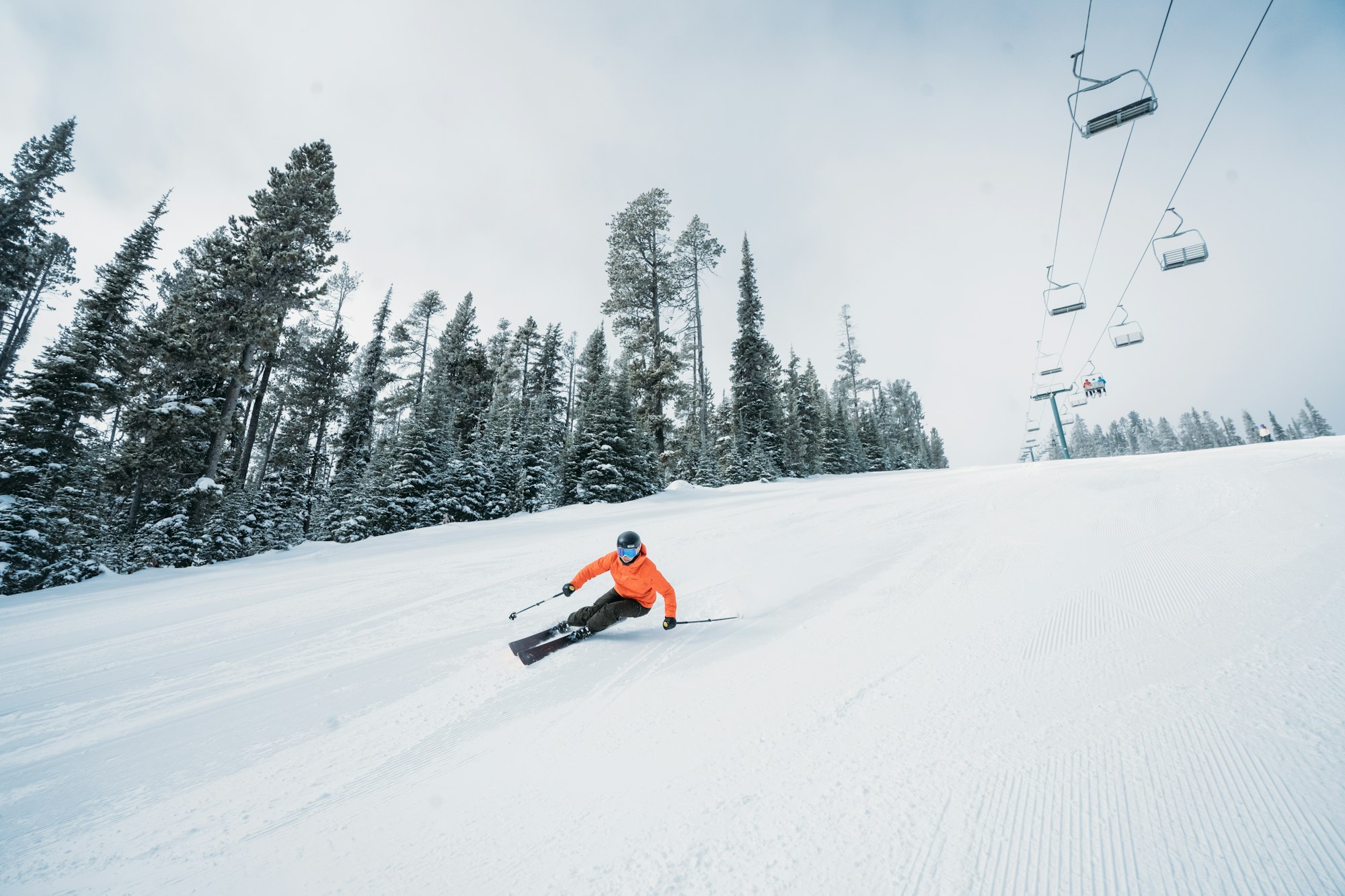
Location: Showdown Montana
Central Montana's Hidden Gems
Showdown Montana: Little Belt Legacy
Deep in the Little Belt Mountains near Great Falls, Showdown, Montana, has been spinning lifts since 1936, making it the state’s oldest operating ski area. It’s now run by mother-daughter duo Katie Boedecker and Avery Patrick—the only team of their kind running a ski resort anywhere in the world. The mountain has stayed in the same family for nearly 50 years, ever since George Willett bought it in 1973 and later passed it down to Katie in 2020.
Showdown has always stood for accessibility and community. The base sits at 6,800 feet and rises to 8,200, giving it one of the highest base elevations of any public ski area in Montana—higher even than most destination resorts. That altitude keeps the snow cold, dry and consistent across 640 acres and 1,400 vertical feet that ski far bigger than the stats suggest.
There’s no snowmaking here—never has been. Everything is natural, and Mother Nature usually delivers more than 200 inches of snow each year. Lift tickets stay refreshingly low, with the resort’s legendary $30 Thursdays drawing locals from every corner of the state. Inside the base lodge saloon, the crowd is pure Montana: ranchers in Carhartts, park kids in baggy pants and everyone in between swapping stories over burgers and beers.
On New Year’s Eve, the community gathers for a torchlight parade that snakes down the mountain at dusk, followed by fireworks bursting over the pines—a tradition as timeless and heartfelt as the mountain itself.
Bear Paw: It Takes a Village
Bear Paw Ski Bowl is one of only two ski areas in the U.S. built on tribal land. Tucked into the Bears Paw Mountains on the Rocky Boy’s Reservation south of Havre, the mountain is owned by the Chippewa Cree Tribe and run entirely by volunteers—a true community operation. Lift tickets are just $25, or $15 for tribal members, making it the most affordable skiing in Montana.
At mid-mountain, the Eagle Creek Ski Patrol keeps the fire burning in the warming hut, serving up their legendary Hermie Burgers between laps. Open weekends only from 10:30 A.M. to 4 P.M., Bear Paw offers 900 vertical feet of honest, homegrown skiing. But the story here runs deeper than powder or price—it’s about Indigenous land being used for recreation, connection and community, not corporate profit.
Great Divide: Under the Lights
Great Divide, just outside Helena, delivers 1,500 acres of laid-back skiing, spread across three peaks, for just 68 bucks a day. Night skiing goes until 9 p.m. on Fridays and the proximity to the state capital provides affordable lodging and dining options, with Blackfoot River Brewing Company among the local favorites.
Maverick: A Slice of Comfort
Tucked in Southwest Montana, 40 miles from Dillon, Maverick Mountain is skiing the way it used to be—simple and soulful. One double chair serves 350 acres and 2,020 vertical feet of perfectly balanced terrain. The road there winds through forgotten mining towns and open country, setting the tone before you even click in.
Since opening in 1946, Maverick has held tight to its small-town roots and commitment to keeping skiing accessible for everyone. At the base, Thunder Bar is the social hub—locals, travelers and dirtbag ski philosophers swapping stories over live music, good food and a few beers. The on-site café is famous for its homemade pie, a slice of comfort you won’t find at any mega-resort.
Just up the road, Elkhorn Hot Springs offers ski-and-stay packages at the base of the Pioneer Mountains Scenic Byway, so you can soak under the stars and stay close to the snow. Maverick isn’t fancy—but that’s precisely the point.
Teton Pass: Throwback Glory
On the east side of the Rockies near Choteau, Teton Pass Ski Area flies under the radar—and that’s exactly why locals love it. The mountain serves up 1,000 acres of wide-open bowls, glades, and steeps with 1,000 vertical feet and zero lift lines. Family-run and community-driven, Teton Pass feels like stepping back a few decades in the best way possible. The vibe is all grit and gratitude, the snow’s dry and deep when it hits, and the day ticket won’t drain your wallet. If you’re chasing solitude, this is where you’ll find it.

Location: Showdown Montana
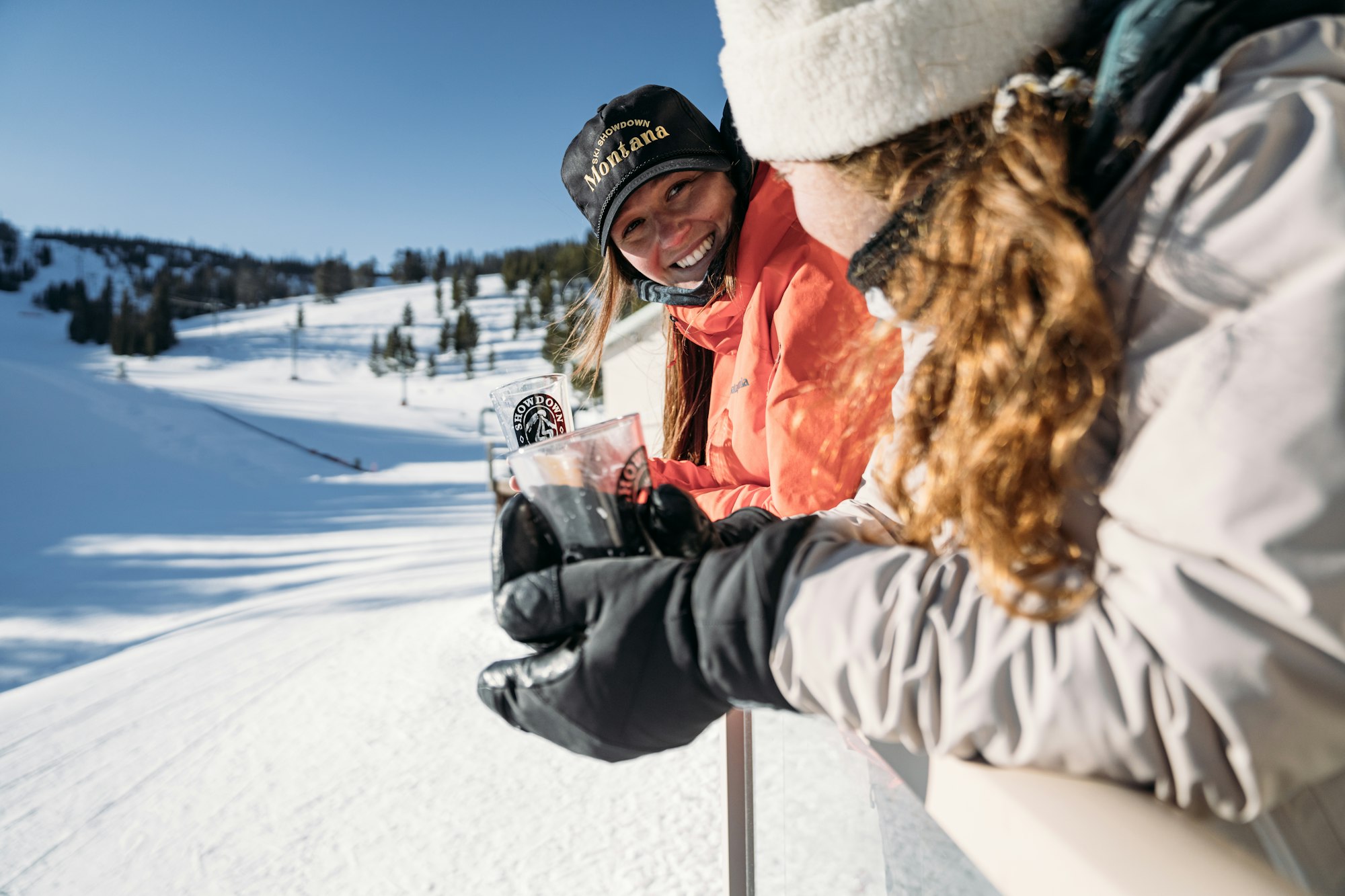
Location: Showdown Montana
Making It Happen
Bozeman, Missoula and Great Falls all receive direct flights from major hubs, making Montana’s ski country surprisingly easy to reach. Book rental cars early and spring for four-wheel drive—you’ll want it. One-way rentals between Bozeman and Missoula often cost the same as round-trips, which makes it easy to connect the dots between ski areas without backtracking.
January through early March offers the most consistent snow, though spring storms can still drop the kind of refills that make locals call in sick. Lodging across the state remains refreshingly affordable: the Sapphire Motel in Bozeman runs about $88 a night, LOGE Camps offers rooms with built-in gear storage for around $99 and there’s no shortage of wallet-friendly motels and mountain cabins scattered throughout ski country. Add it all up, and a weeklong Montana ski road trip—hitting half a dozen mountains—can come in under $2,000, including flights, rental car, gas, lodging, lift tickets and food. That’s less than what many families spend on a long weekend at a big-name resort.
Last March, standing in the Lost Trail parking lot watching the sun set over the Bitterroots, I saw some kids building a kicker while others wrapped up ski school with an impromptu downhill race. It hit me then—I was exactly where I was supposed to be. Sure, the industry’s changing. Climate shifts, rising costs, development pressures—they’re real, even here. But for now, the last frontier still exists, tucked into the mountains, fueled by community and powered by passion.
Just maybe skip the geo-tag when you find that perfect spot in the woods. Some things are worth more than impressions.
This story originally appeared in FREESKIER Magazine Volume 28 Issue 2. Click here to subscribe to FREESKIER and have print copies (yes, real print magazines!) delivered right to your door.