All Images: Courtesy of U.S. Ski Team | Skier: Hunter Hess
Sometimes Olympic competitions are defined by progression and perfection. Other days, they are defined by survival.
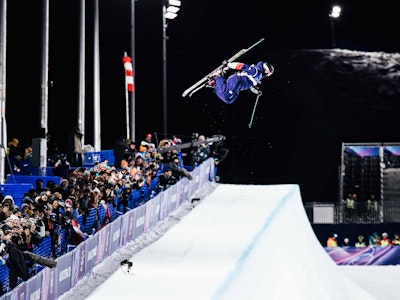
That was the story of the men’s freeski halfpipe qualification in Livigno, where heavy snowfall in the days leading up to the event slowed the pipe, muted the amplitude, and forced qualifiers and finals onto the same day. With a field of 28 skiers and only 12 moving on, the difficult speed made it a battle simply to put a run down from top to bottom.
The slow transition of the halfpipe and lowlight became a defining factor of the day. Riders who rely on speed to generate their amplitude struggled to break eight feet out, separating the field from skiers who know how to carry amplitude wall to wall. The difference in level from the last Olympic qualifier four years ago was stark. Some runs resembled the technical standard of a decade ago, with mirrored 900s and a single double, while the heavy hitters still managed multiple doubles despite the conditions.
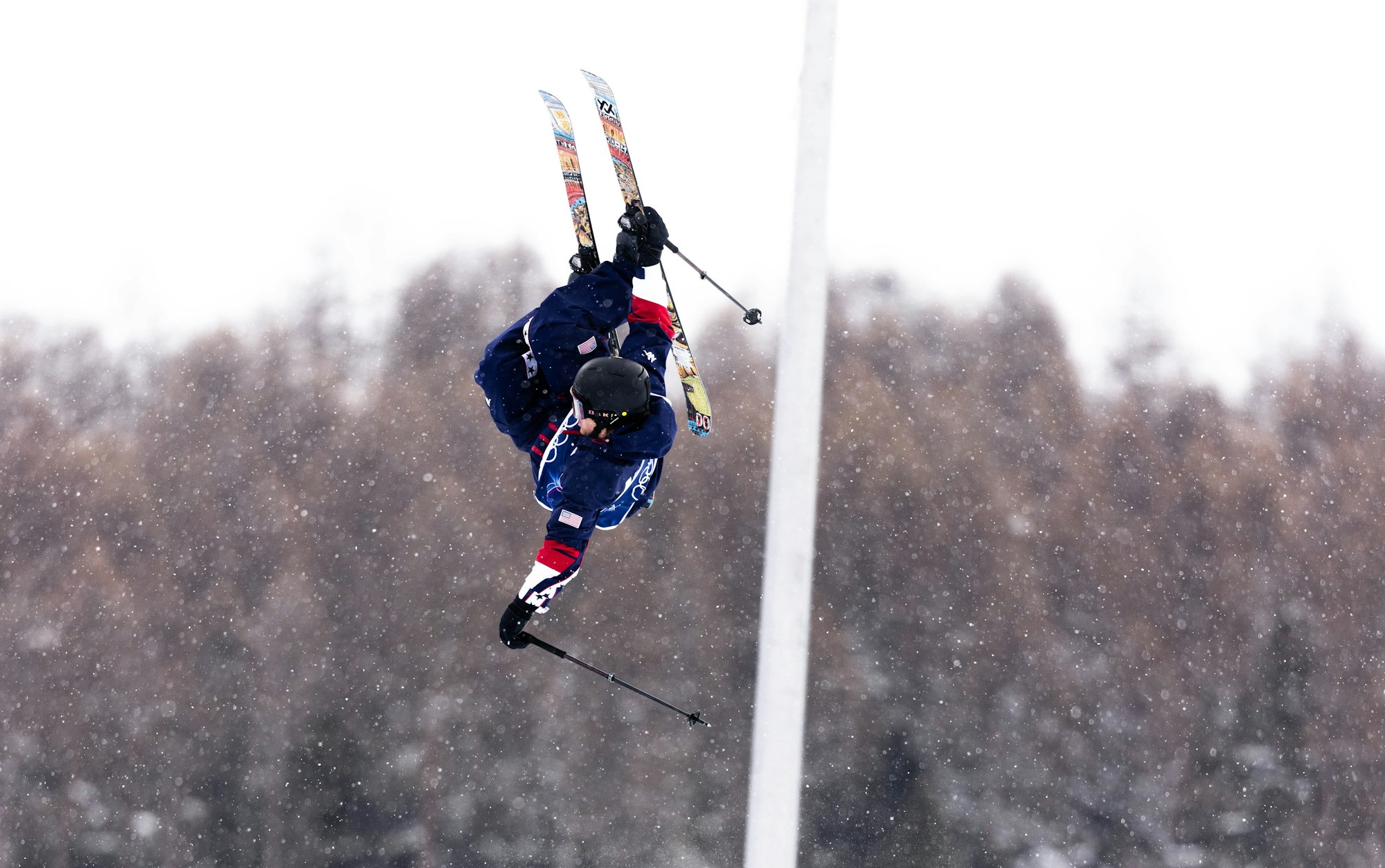
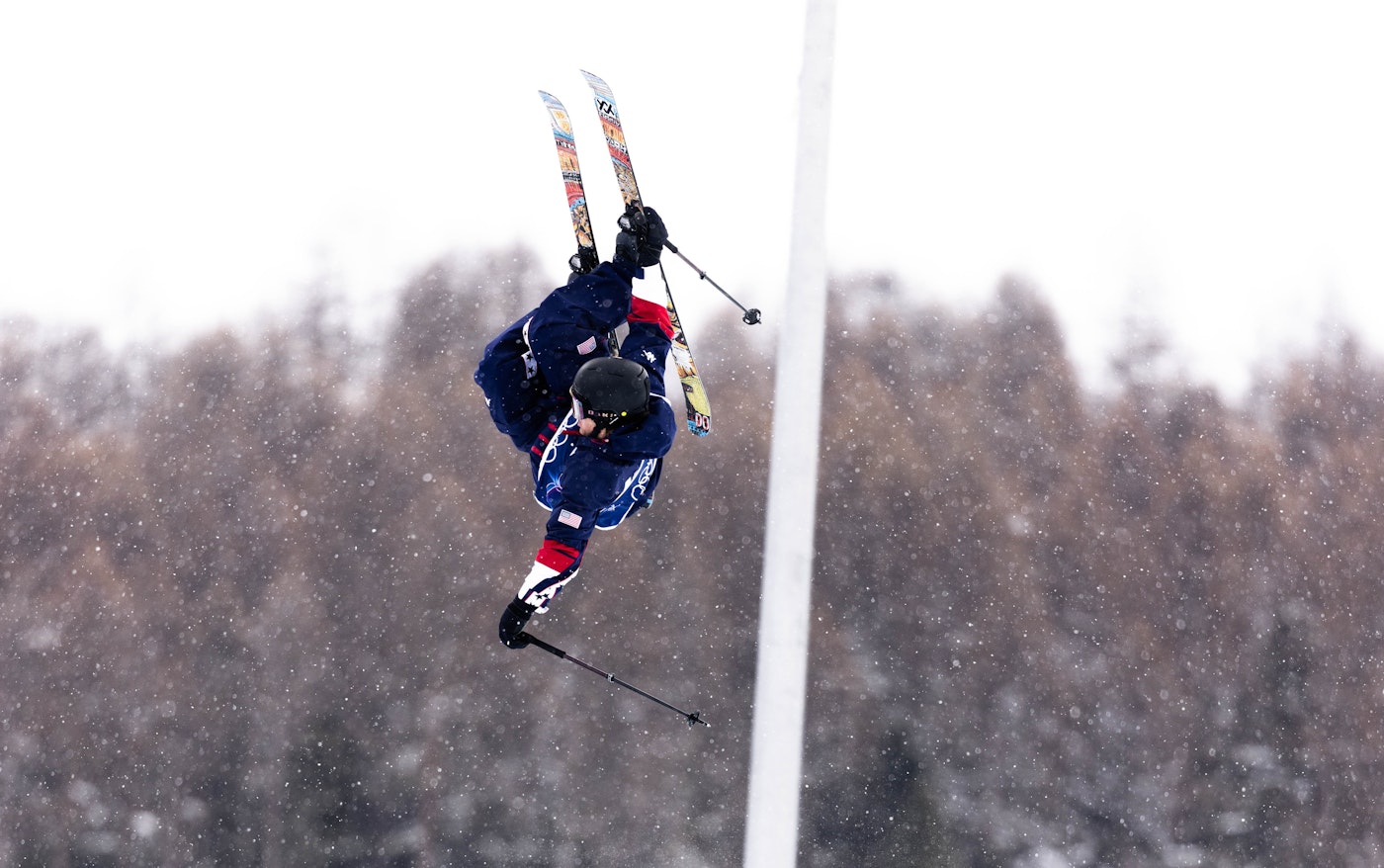
Brendan Mckay of Canada and USA’s Nick Goepper set the tone early after the first run with a composed performance that prioritized fluidity, amplitude, and a diversified variation of tricks. Behind them, the expected names began to stack up: Alex Ferreira, Hunter Hess, Gus Kenworthy, Birk Irving, and Ben Harrington, all showing they could still generate enough height to perform well-executed tricks to separate themselves from the field.
The only major shock in run one was Finley Melville Ives. The X Games champion and one of the pre-event favorites lost a ski mid-air on an alley-oop double flatspin 1440, leaving him without a score and putting all the pressure on his second run.
One of the standout performances of the day came from Henry Sildaru. Known as a true triple-threat across slopestyle, big air, and pipe, Sildaru skied as if the sun were out, linking mirrored double cork 1260s with precise grabs and carrying an average amplitude of around 12 feet. In a pipe where speed was everything, his ability to maintain flow from wall to wall comfortably placed him among the top qualifiers.
By the second run, the cut line was largely decided. Riders began skiing more conservatively, knowing that a clean run would be enough to advance.
Then came the heaviest moment of the day.
Melville-Ives dropped for his second run, looking composed, his tricks controlled and easily at a qualifying level. On his third hit, he launched into a double cork 1260 on the same wall that had been giving multiple athletes trouble due to a slight over-vert in the shaping. He landed deep in the transition, nearly in the flat bottom, and was violently pitched forward, slamming head-first into the snow.
The impact silenced the venue, and the horror felt palpable through a television halfway across the world.
In a sport built on camaraderie and shared progression, the mood shifted instantly from competition to concern. It was a stark reminder of the risk behind the spectacle and the reality that, even on a slower day, halfpipe remains one of the most dangerous disciplines in skiing.
Despite the crash, the energy at the bottom remained supportive. This is a traveling family, and the collective attitude reflected that by cheering for every rider who stood up, celebrating every clean run, and rallying around one of their own.
The same-day finals have now become a question of recovery. With the pipe skiing slow and legs already burning from two qualification runs, the playing field might equalize even more between veterans and the young guns.
If qualification proved anything, it’s that the road to these Games was, in many ways, more competitive than the conditions allowed the Olympics to be.
Finals, however, are a different story.