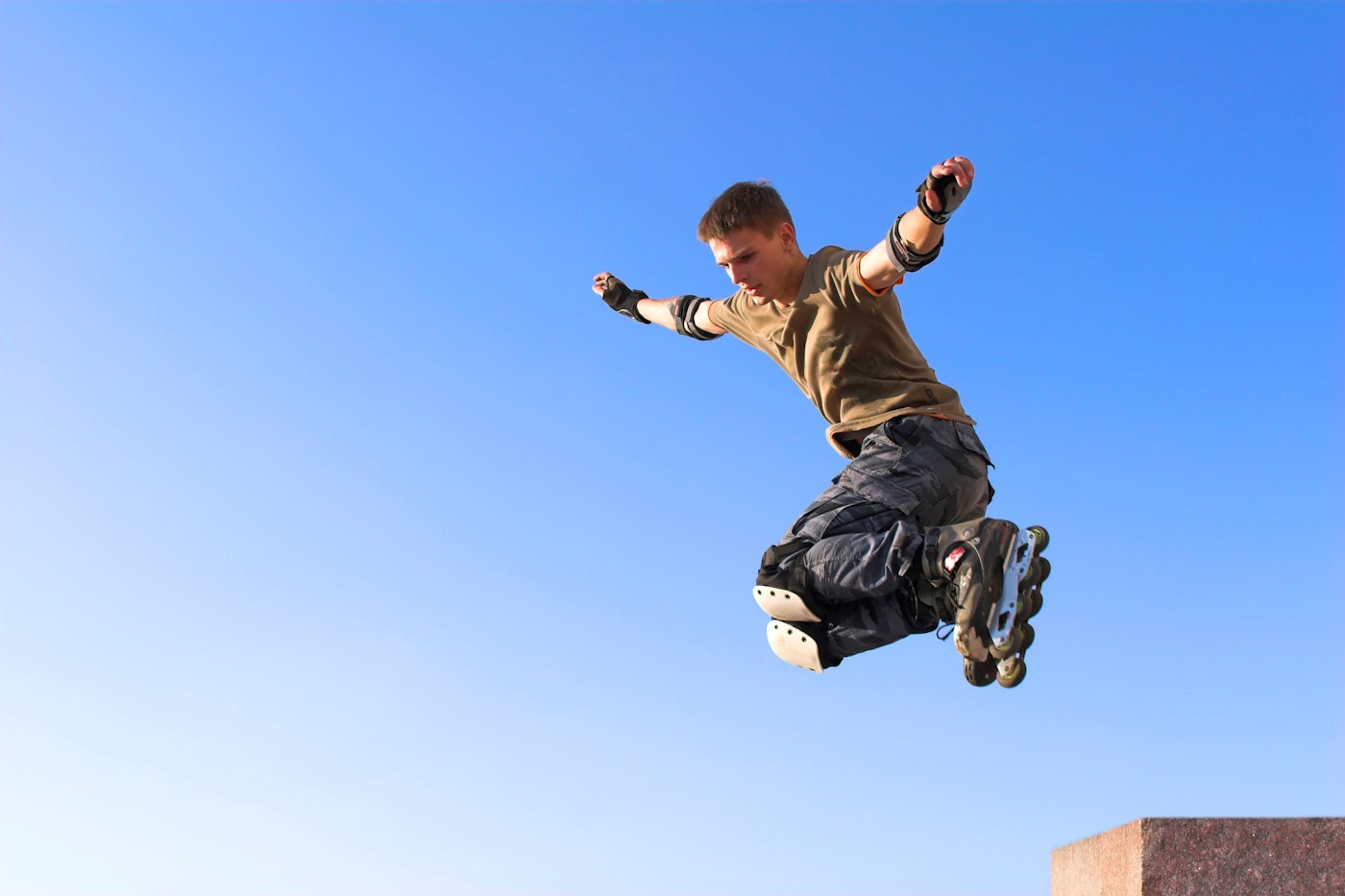
You know what this summer needs? A revival of '70s skating culture. But it’s not for the reasons you may be thinking, and no, roller skates will not be involved. While yes, wearing a neon jumpsuit with sweatbands on your wrists and forehead is all fun and games, that is not really why I am telling you that skating culture should be brought back this summer.
Inline skating has been around for four decades and is considered one of the best ways to train and replicate skiing motion during the off-season, according to the Professional Ski Instructors of America . With an uncertain future of inconsistent winters ahead of us, it is important to find ways to keep your skills and technique tuned up, even if there’s no snow to actually practice on.
What is inline skating?
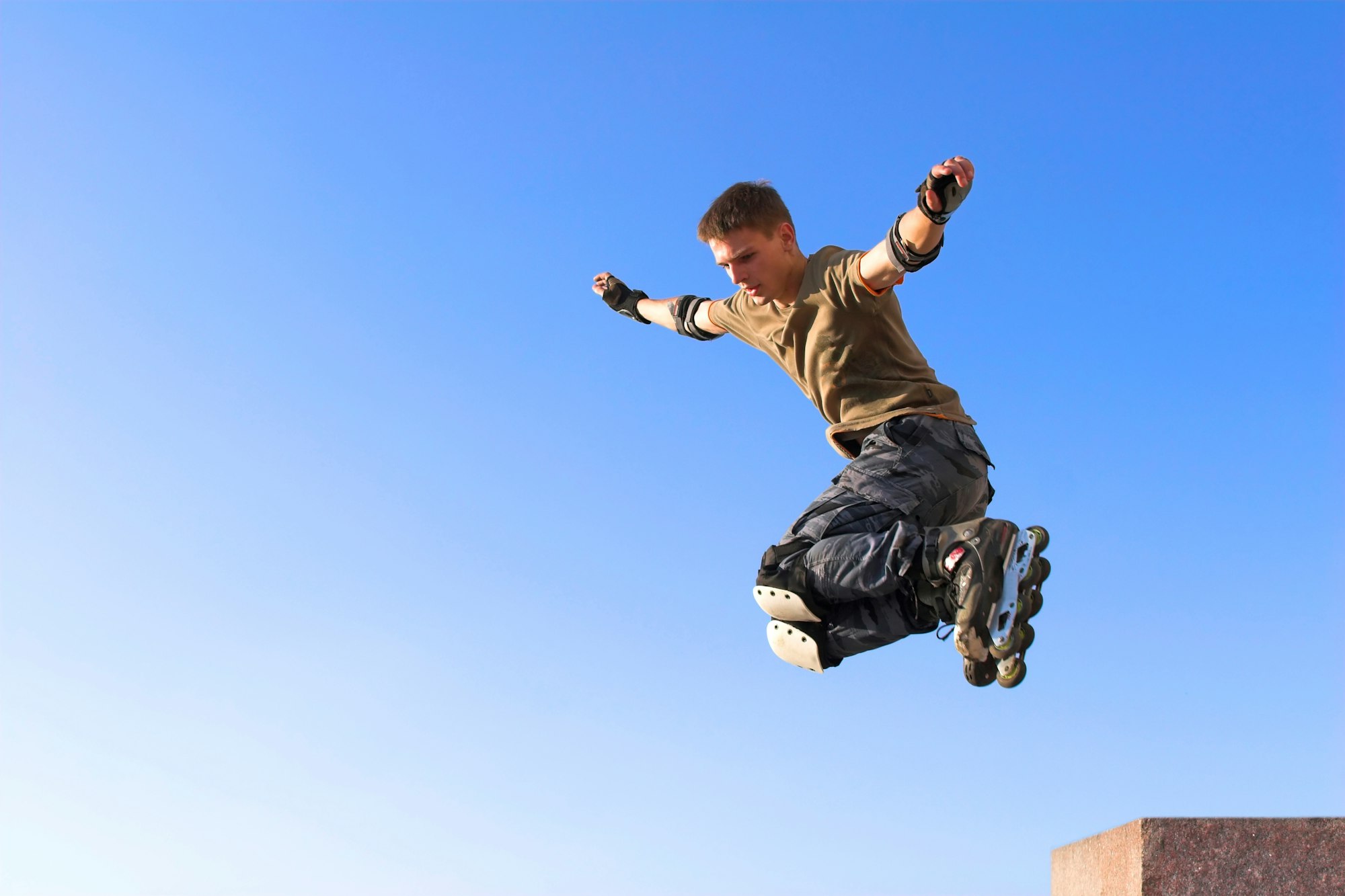
Inline skating is the term used for any kind of outdoor skate that has wheels in a straight line, so basically what most people would consider a rollerblade. But the term “rollerblades” actually refers to a specific type of inline skate manufactured by the Rollerblade brand. The funny part of this, though, is that the brand Rollerblade actually played a huge role in popularizing inline skates. So, technically, you could use the terms interchangeably, but if you want to use the correct lingo in the world of skating, now you know.
It wasn’t until the '80s and '90s that inline skating became a popular way to practice ski form and technique during the off-season. The first inline skating competition was actually hosted by the University of Colorado for a slalom competition in 1991. While many ski racers and cross-country skiers use this off-season form of practice regularly, it seems to have been overlooked by recreational skiers and other skiing disciplines. But professional athletes and ski instructors have proven that this method is one of the best ways to prepare for ski season when there is no snow.
How does it help with skiing?
1. Carving and learning to engage your edges
The reason so many ski racers use this training method is that it replicates the motion of turning on skis. Turning on inline skates requires the same shifting of weight and angling of the feet to create the edge hold that we want when carving on skis. It is also great for teaching people the feeling of putting pressure at the top of the turn, as this helps to improve a skier's energy and carve throughout a turn
2. Balance
If you have ever skied on ski blades before, then you know how hard it is to not loop out onto your back. The “backseat” position many skiers accidentally get into can be just as dangerous on skis as on skates. So you can imagine how much more unforgiving inline skates are when one is not balancing correctly. But it forces you to learn quickly what the correct balance on skis should feel like, as you need a good center of gravity.
3. Ankle Articulations
One of the best ways to practice skiing motions on inline skates isn’t necessarily on a flat surface, but also on more hilly or bumpy surfaces/terrains. Doing this teaches your ankles to make the same micro-adjustments you need when skiing for more precise control.
4. The workout
To put the cherry on top, it’s a great low-impact workout! Unfortunately, skiing is not a low-impact sport or workout, so finding a way to practice the technique without high-impact effects on the knees is a great way to give your knees a rest while staying in shape. But it still gives the legs a workout, as the turning motion you create on skates is closely related to that on skis. So that same burning sensation you get in your quads while skiing will still be there. Feel that burn; it could save you during ski season.
Putting inline skating into practice
Ski brands like K2 make inline skates and have even incorporated the now-very-famous BOA system. Most inline skates range from $100 to $300, but you could always just buy a regular pair of rollerblades, which are much cheaper. Let's be honest, you do not need the fanciest pair of inline skates to practice when you are just starting off.
The brand Rollerblade partnered with Professional Ski Instructors of America and the National Ski Patrol to create the Skate to Ski program . The program, available on the Rollerblade website, takes you through a series of videos featuring Olympian skiers like Doug Lewis, who teach you the ins and outs of inline skating for skiing practice. Many indoor ski training facilities, such as Woodward's indoor training centers and Snobahn in Colorado, have indoor ramps where people can practice ski-specific tricks on inline skates.
But practicing carving is not the only way one can use inline skating for skiing. If your algorithim has ever shown you clips from the world of inline park skating, then I'm sure you've seen freestyle skier Sam Zahner throwing 1080s on his skates. If you watch any of his inline skating videos, then you can see it is possible to get some major air to throw bigger tricks. Not only does this teach your body how to balance on the landing side but it also helps you get comfortable doing spins and jumps before you incorporate your skis.
So, if you ever miss the rush that you get from carving down a slope or spinning off a rail, grab some skates and go out on a nice, empty road and practice your technique so you can feel even more confident the next time you hit the slopes with skis.