
[juicebox gallery_id=”140″]
Making a ski movie? Not easy. Altering the landscape of women in sports? Even tougher. Lynsey Dyer found out the hard way, through her new film Pretty Faces , that real change comes with a price.
Sydney Dickinson was in the middle of an Avy 2 course in Crested Butte, CO, last winter when she got a message from pro skier Lynsey Dyer, whom she’d never met before.
It was an invite to join Dyer and fellow pro Rachael Burks for a last-minute filming trip to Retallack, a cat-skiing lodge in British Columbia, for Dyer’s new women’s ski film, Pretty Faces . A week earlier, Dickinson had won the Crested Butte Freeskiing Extremes, and a mutual friend had recommended her to Dyer as a good addition to the movie’s athlete roster. Still, Dickinson was surprised.
“I couldn’t believe they wanted me up there,” Dickinson says. “I thought, Are they sure they have the right person?”
Anyone who knows Dickinson knows she’s got a rare, natural strength and finesse on her skis. She has the skills to be a pro skier if she wanted to, but that’s never been her priority. Instead, she works a couple shifts at a ski shop in Crested Butte, does the bookkeeping for her husband’s painting company and is starting as a cat-skiing guide this winter. Her filming experience is limited to a few web videos, and self-promotion is not her thing. But the opportunity to shoot for Pretty Faces was too good to pass up.
So she booked a plane ticket using miles, got her work shifts covered and left town bound for Retallack the day after her avalanche course ended.
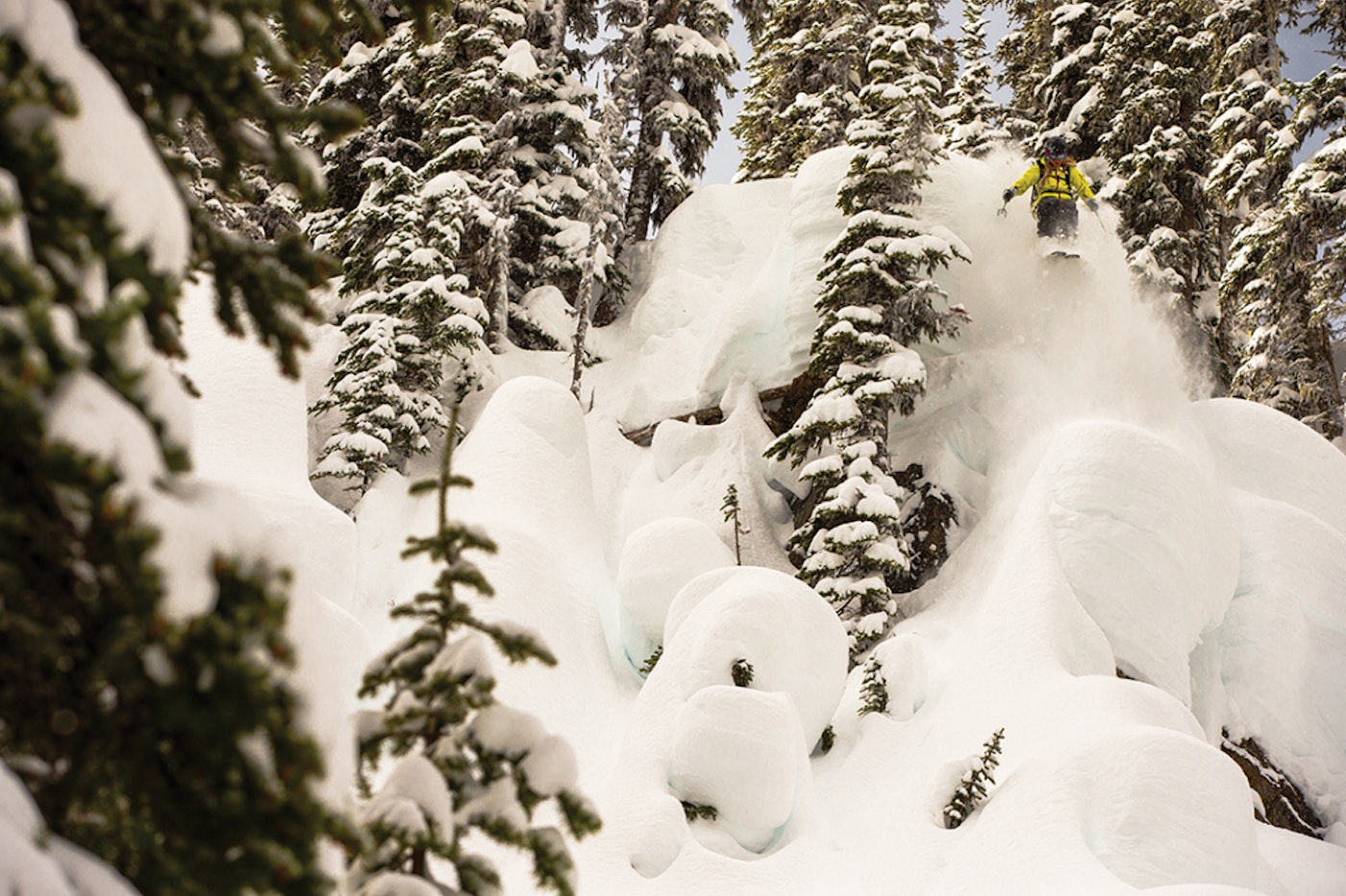
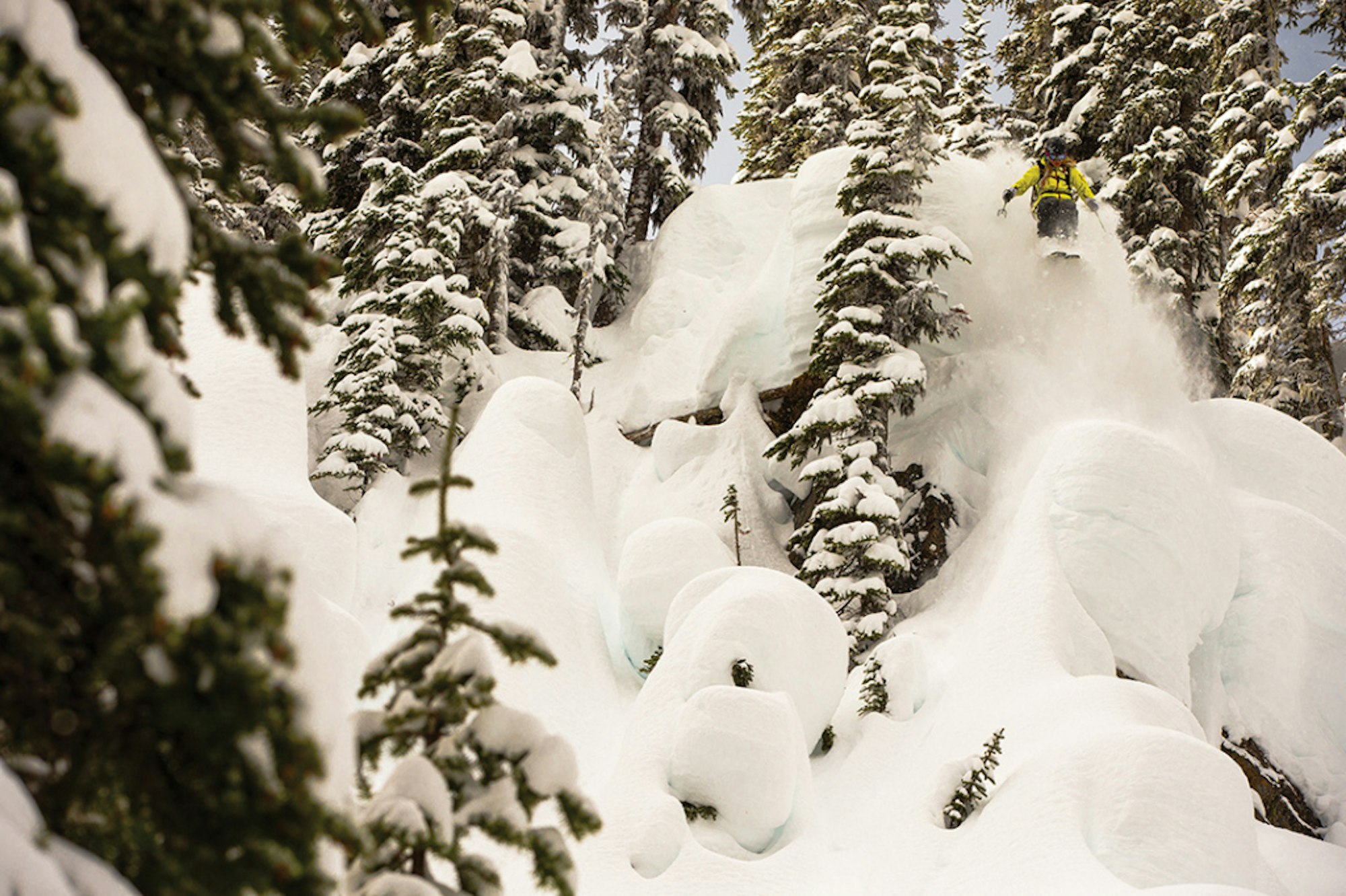
On the first day of filming, Burks scouted a gorgeous double-stacked pillow drop, while Dyer picked the face’s only other viable cliff. Dickinson was left without much of a line choice but Burks noticed her eyeing the same double feature.
“If you want to ski that, you should totally take it,” Burks said, offering up her line. “This is your week.”
“No, no. You should ski it,” Dickinson said. “You’ll do it better anyway.”
“Dude, just take it,” Burks responded. “And stomp it.”
It was the kind of social dynamic you’d only find on a girls’ trip: passiveness, flattery, modesty. Dickinson skied it, and of course, she nailed it.
“Sydney crushed more shots than any of us,” Burks said later.
This situation—where a local girl who skis hard but never receives much recognition suddenly gets the call to join a film crew and appear in a ski movie—never happens. It’s not reality in the ski industry as we know it today. Instead, major ski movies feature a microscopic number of elite female pro skiers who earn their token spots through a tremendous amount of work and alignment with the right sponsors. Less than 15 percent of the athletes appearing in major ski movies today are women.
But if Lynsey Dyer has her way, and if Pretty Faces —the film she’s spent the last two years slaving over—is a success, then perhaps all of that could change.
[Full Film] Purchase Pretty Faces now via Vimeo On Demand
In the fantasy world Dyer envisions, girls of all ages will, as she says, find their own magnificence. They’ll discover the things they excel at, whether it’s skiing or something else entirely. When others tell them they cannot do something, they’ll push harder and prove them wrong. Girls will celebrate their own successes, and confidence will come.
“I hate the word empower,” Dyer says. “It’s not about giving girls something they don’t have, but helping them recognize what they already have within them. I want to put up a mirror in front of them so they see what they are innately good at, and they remember that they have what it takes.”
If it sounds like Pretty Faces is a feel-good, feminist rant that only your 12-year-old neighbor girl would watch, think again. It’s part ski porn, part documentary. Forty five minutes of girls ripping steep lines and deep powder mixed with historical skiing figures, inspiring moments and an exceptional sense of fun. “This movie is not obnoxious, girl-power fluff,” Dyer says. “It’s about questioning yourself. It’s about showing what’s possible.”
But to show the world what’s possible, first Dyer had to pull off something that everyone said she couldn’t do, something she was entirely ill equipped for: She had to make a ski movie.
Pretty Faces isn’t a film about Lynsey Dyer. She’ll be the first to tell you that. “That would be so boring,” she says. The movie features an impressive lineup of female skiers, both well known, like Burks, Ingrid Backstrom, Elyse Saugstad and Angel Collinson, and unknown, like the 11-year-old girl who submitted GoPro footage of herself learning a new trick.
But you can’t talk about this movie without honoring the woman who’s put her life on hold for two years to create it.
Dyer, 33, never intended to become a pro skier, but she’s been one for nearly a decade now. She grew up in Sun Valley, ID, a ski racer from a young age. She won a Junior Olympic downhill title at 16 and got a scholarship to ski race at Montana State University in Bozeman, where she earned a degree in graphic design and spent a year studying art in Italy.
Her senior year in college, her cousin, well-known skier AJ Cargill, convinced her to sign up for her first big-mountain freeskiing competition. Dyer won that first contest at Red Mountain, BC, and the six contests she entered after that, taking the overall season title as a rookie.
She moved to Jackson Hole, WY and ended up filming with Teton Gravity Research for three seasons. She’s appeared in five Warren Miller films, and in 2008, she landed the cover of FREESKIER with a photo of her launching off Fat Bastard, a cliff in the Jackson Hole backcountry that, at the time, had never been skied by a woman.
But ask Dyer what she’s most proud of and none of this stuff comes to the surface. It’s She Jumps , the nonprofit she co-founded in 2007 to help get more women into outdoor sports, that means the most to her. And it’s Pretty Faces , a project she ended up pouring her heart into but only fell in with because nobody else seemed willing to take it on.
In September 2012, Dyer sent an email to over 30 female skiers—from Wendy Fisher and Grete Eliassen to ski racer Lindsey Vonn—asking for any footage they had access to. “My hope is to rally interest for a feature film,” she wrote in the email.
That November, Dyer put together a highlight reel of all the footage she’d collected and posted it to YouTube. It got 150,000 views in four days. “To see that kind of response, I felt like I had a responsibility to make a full-fledged movie,” Dyer says.
Never mind that she had no real filmmaking experience and no budget to fund the movie. Never mind that she’s never been the most organized, communicative or business-oriented person, and most of her friends affectionately call her scattered and a dreamer. While still juggling her mishmash of careers as an athlete and graphic artist, Dyer took on the role of filmmaker.
“I always imagine that Lynsey’s head is in the clouds, and a few people are lucky enough to have access to the string it’s attached to,” says Claire Smallwood, She Jumps’ executive director and an associate producer of Pretty Faces . “But remembering that she is a perfectionist makes me feel confident in this film project, even though things have been slow to develop.”
Forget all of these potential setbacks. In the fall of 2012, Dyer announced that the film, called Pretty Faces —named as a reminder that girls are more than just a pretty face and also as a nod to the mountain faces the women ski—would debut in the fall of 2013.
That winter, things didn’t come together the way she wanted. Sponsor support was limited while snow and avalanche conditions hampered plans, so Dyer pushed the film back to a two-year project, set to premiere in fall 2014. Many wondered if the movie would ever come out. Behind closed doors, people gossiped about whether Dyer could get her act together and make this thing a reality.
“It’s definitely been a mystery project, and there have been a lot of unknowns,” says skier Amie Engerbretson, who shot a few segments for the movie. “People got frustrated with how disorganized it’s been, but they have to remember how much Lynsey has taken on, how massive this endeavor really is. The whole thing would be overwhelming.”
Dyer knew that people doubted her, and that only seemed to fuel her. “It’s understandable that everyone would question someone trying to do something when they have no idea what they’re doing,” Dyer says. “But this movie isn’t about trying to make my peers happy or be cool or trying to fit into a mold.”
But when one botched trip added to the next and money and logistics became a constant source of anxiety, even Dyer began to doubt herself. “The whole time, I was thinking, I’m failing,” Dyer admits. “We’d plan a trip, then not get any shots. Or we’d spend all of our heli budget, then have to turn around because avy danger was high. I’ve never been so humbled.”
Over the winter of 2013-14, things started to look up for the once-floundering film, and the possibility of completing it finally felt tangible.
In December 2013, Dyer launched a Kickstarter campaign to raise $60,000 in crowd-sourced funding for the movie. One month later, over a thousand people had donated $113,534. Kickstarter supporters wrote in comments like, “Looking forward to showing my daughter the finished film,” and “A film like this will help show the current and next generation of little rippers what is possible.”
Corporate sponsors started to trickle in as well, with GoPro giving $10,000, and brands like REI and Eddie Bauer writing checks in support. K2 backed a couple of female trips to places like Switzerland and Revelstoke, some heliski companies donated flight time and Smith Optics coughed up the cash for a women’s cat-skiing trip in Colorado.
Knowing she’d need even more money to compete with the big-budget ski movies being made today, Dyer brought on an L.A.-based producer who said the movie could bring in $300,000 sponsorship contracts with brands like L’Oreal and Secret. But those deals never came through, and the Hollywood producer left midseason.
Still, this past winter, the film had a budget, although it wasn’t enough to cover everything. “People saw the money raised on Kickstarter and thought it was going to be dispersed to girls to put together segments,” says Burks, who’s spent much of the last two winters filming for this movie. “What people don’t realize is that it takes that much money to make a film between music rights, insurance policies, color correction, editing, production, legalities and more, so all the athletes were paying out of pocket to film.”
A crew organized a two-week film trip to Washington and Utah. They rented a RED camera and hired a filmer, who charged $16,000 for his expenses and time, but snow conditions were so bad, nearly all the footage was unusable. Dyer asked the girls on the trip to help cover costs by paying $2,000 each for the filmer. Since sponsor support for many female athletes remains limited, many had to pay out of their own pockets. “They were upset about that,” Dyer says. “People asked, ‘What happened to all the money raised?’ But $100,000 doesn’t go very far when you’re making a movie like this.”
“Everyone told me there’s no money in this…”
Professional editors charged $500 a day, movie posters cost $2,500, music licensing was around $2,000 per song, postproduction fees ran upwards of $10,000, plus Dyer bought footage from other film companies. It all added up.
When Dyer did her taxes last spring, she realized she’d lost a considerable amount of money making this film. Not that she ever planned on getting rich from it. She took an entrepreneurship course in Jackson Hole before making the movie, and she says all the various elements you’re supposed to check off when launching a new, viable business weren’t there. The market was too small, the return on investment not promising. “Everyone told me there’s no money in this, and it’s really expensive,” she says. “So I knew going in, it wasn’t going to be a money-making operation.”
On top of that, Dyer has sacrificed much of her own athletic career—putting sponsorship obligations on hold, spending more time on her computer than skiing.
So why do it?
“Every single day, I ask myself that question—why am I taking this on?” she says. “But I think that’s been my whole life so far. Every time someone says something isn’t possible, it makes me want to prove that idea wrong. It’s not like I haven’t been in this place before. Turns out, it’s fun to be the underdog.”
It’s one month before the September 30 premiere of Pretty Faces in Boulder, CO, and Dyer is stressed. She’s at the editing studio for the film, which is housed in a shared office complex in an industrial area of Jackson, WY, near a lumber yard and a propane company.
Inside the cramped editing quarters, a seasoned TGR editor named Sasha Motivala and a female trio of recent college grads with film degrees are pulling long shifts to take a mountain of footage and turn it into something people will actually watch. Mugs of herbal tea, a French press and stacks of external hard drives line a cluttered desk. The walls are decorated with a Pretty Faces poster and white boards filled with pressing reminders.
With just weeks ’til the curtain drop and a 20-plus city movie tour on the docket, the film is far from done, and the crew is waiting on music clearance to release a final trailer. Dyer, who seems to live in this room these days, is giving her mom a tour of their studio, while simultaneously taking phone calls. She hasn’t had a solid night’s sleep or worked out in ages. Her friends have stopped calling her to hang out.
It’s been a long road to this point, but the end is near. It looks likes the fantasy world that Dyer has envisioned—one where girls like Dickinson and others get calls to come film, and women are better represented in ski movies—is already becoming a reality.
“Girls are now getting invited on film trips to Alaska with major movie companies. That was such a far dream at one point, and now that’s happening,” Dyer says. “People say, ‘What are you complaining about? Girls are getting on those trips now.’ And they’re right. They are. It’s changing, and it’s been cool to watch the shift.”
Jeff Brines, a producer of Pretty Faces and a co-founder of the ski site earlyups.com , says he didn’t sign up to work on this film for the sake of girl power. That’s not his thing. “I just don’t buy that somehow anyone in this sport deserves anything,” he says. “We’re lucky to be skiers. Period.”
He says he signed on to work on the Pretty Faces project because ski movies helped him carve his identity, and he wants others to have that opportunity, too. “Ski films were the vessels that showed me a different way of life. Without the Warren Millers of the ’80s and ’90s, the MSP and TGR flicks of the early 2000s, I likely wouldn’t be living the lifestyle I have,” Brines says. “The problem is, most every film out there is for dudes, by dudes. This is why I thought this film was a good idea. To give gals out there something to hang their hats on and identify with.”
The one person whose identity—and yes, reputation—is so closely connected to this film, of course, is Dyer’s. Compared to all the cliffs she’s jumped off over the years, Dyer says making this movie is the riskiest thing she’s ever done.
But all of that stress will pay off, she hopes, when the lights darken in theaters around the country this fall and the movie she’s poured her life into begins to roll. This entire saga will all be worth it if even one girl watching this movie walks away from the theater with a better grasp of her own potential.
If one girl looks in the mirror and says, “I got this,” then Dyer will have done her job.
Note: This article appears in FREESKIER magazine Volume 17.3. The issue is now available via iTunes Newsstand. Subscribe to FREESKIER magazine .