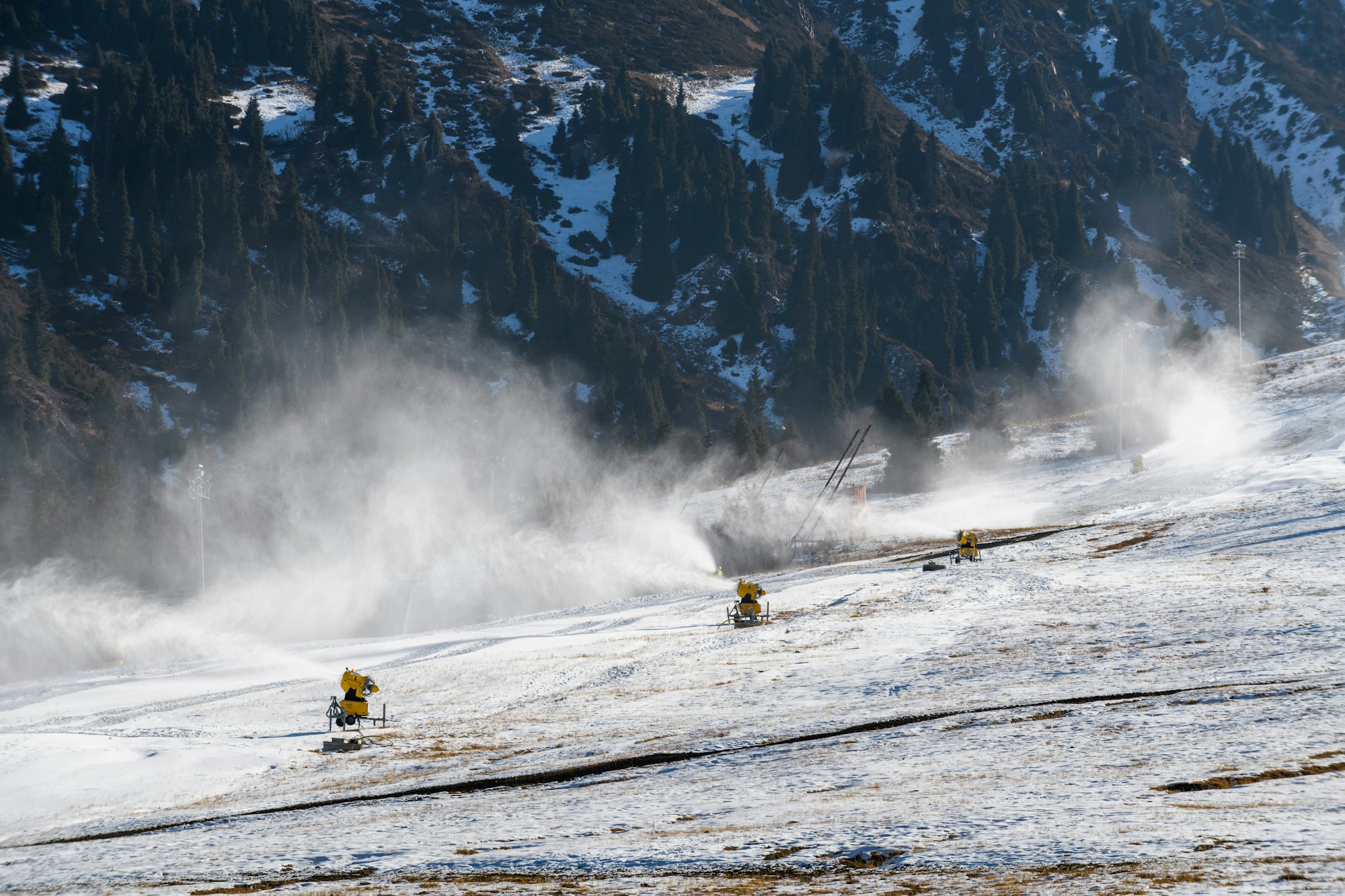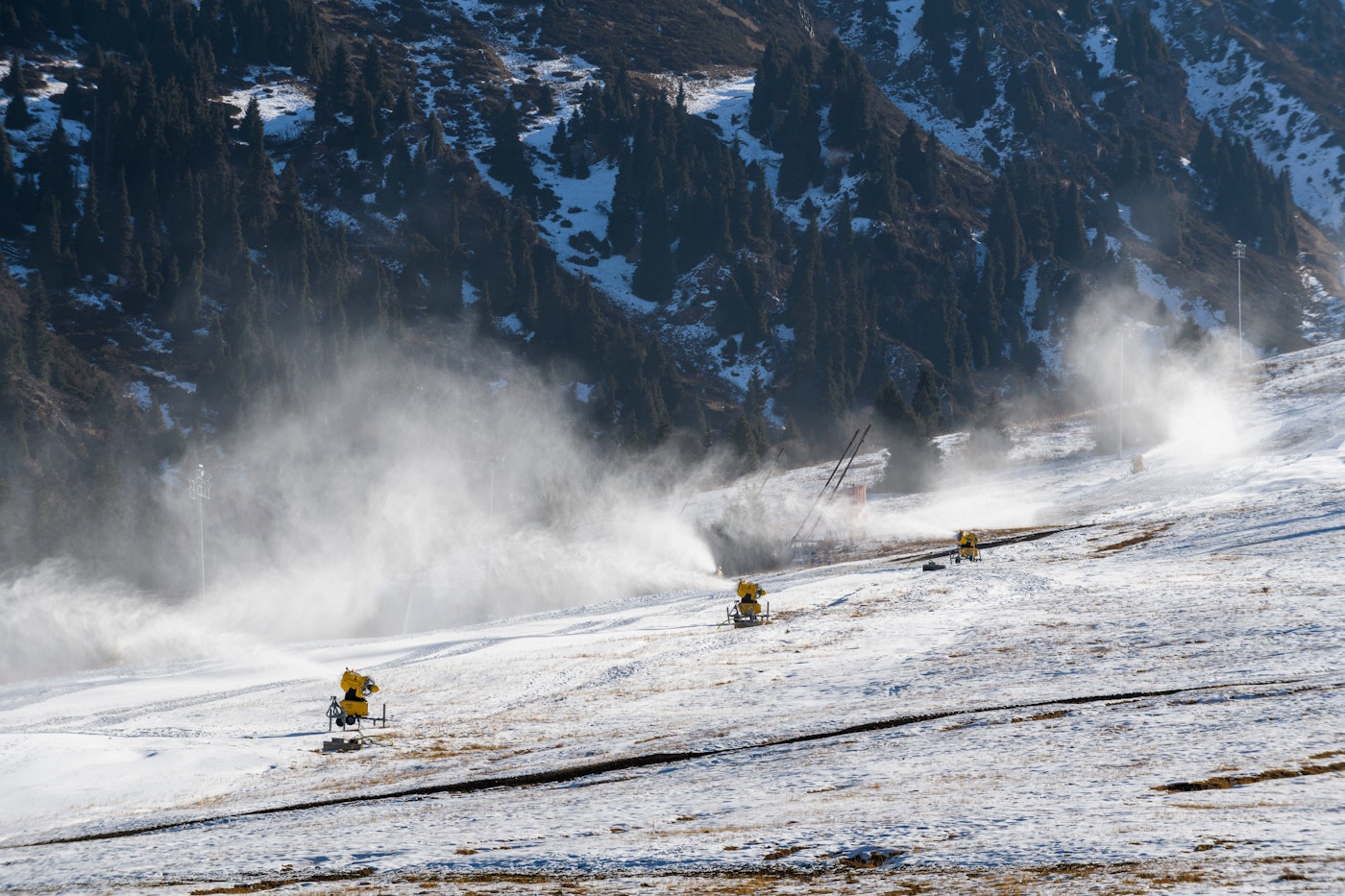
From record-breaking low snowpack to heat waves, there is no way to sugarcoat the 25/26 ski season. But the snowmakers sure did. These heroes of the night single-handedly helped save this year's ski season, and they did a pretty damn good job, if I do say so myself. But first, let's see how snowmaking began in the first place.
A History on Snowmaking
Unfortunately, Mother Nature has been warning us for decades now that global warming and climate change are not to be ignored, especially for the ski industry. Ironically, though, snowmaking didn’t even start in the mountains; it started in Hollywood around the 1930s for a movie. Modern snow-making technology didn’t emerge until the 1950s.
Before snowmakers, people used to shave ice by hand machines into fine, fluffy flakes to create “artificial snow.” It wasn’t until the late 1940s and the 1950s that we saw a “modernized” snowmaker make its way to a ski resort.
Inventors Arthur Hunt, Dave Richey, and Wayne Pierce created the first “Frankengun” snowmaker in Connecticut as a result of a dry winter. The idea was that if you could blow droplets of water through freezing air, then the water would turn into snow. They put together a paint spray compressor, a nozzle, and some garden hoses, and lo and behold, it made snow!
In 1952, Grossinger’s Catskill Resort in New York became the first resort to commercially use it. Only four years later did the partners sell their patent to Emhart Corporation. Alden Hanson was granted a patent in 1961 for a new type of snowmaker equipped with fans. His design looked very similar to the snow guns of today. But then, in 1969, the design was adapted again by three inventors from Lamont Labs at Columbia University. This design used a rotating fan blade that pulled water in from the rear. This design made the snowgun a reliable success, enabling it to be commercialized and mass-produced. By the 1970s, snowmaking had become commercialized and normal throughout the ski industry.
2026 Ski Season
Now, snowguns are a necessity among ski resorts as climate change has made its mark on the industry. Snowmaking isn’t reserved only for resorts; it's also used in the Olympics and at famous snowsport events like X Games to create giant halfpipes and slopestyle courses. But, just because there is a machine making this snow doesn’t mean that there aren’t hardworking people behind the scenes making sure that everything is running smoothly and planning precisely where to place each snowmaker so we can all enjoy skiing.
“I think in weather tough years like this, which we should all expect more of in the future, more extensive snowmaking operations are going to be important for every resort,” said Ian Mackeigan, snowmaker at Eldora Ski Resort in Colorado. “You can’t make money if there’s no snow.”
Ian Mackeigan has grown up in Colorado his whole life and grew up skiing at Eldora. The resort is located in the town of Nederland, Colorado, making it one of the few ski resorts in Colorado closest to the Front Range. But being close to the Front Range usually means warmer temperatures and lower elevation, which forces the small resort operation to master the art of snow making and Mackeigan is on the front lines of this operation.

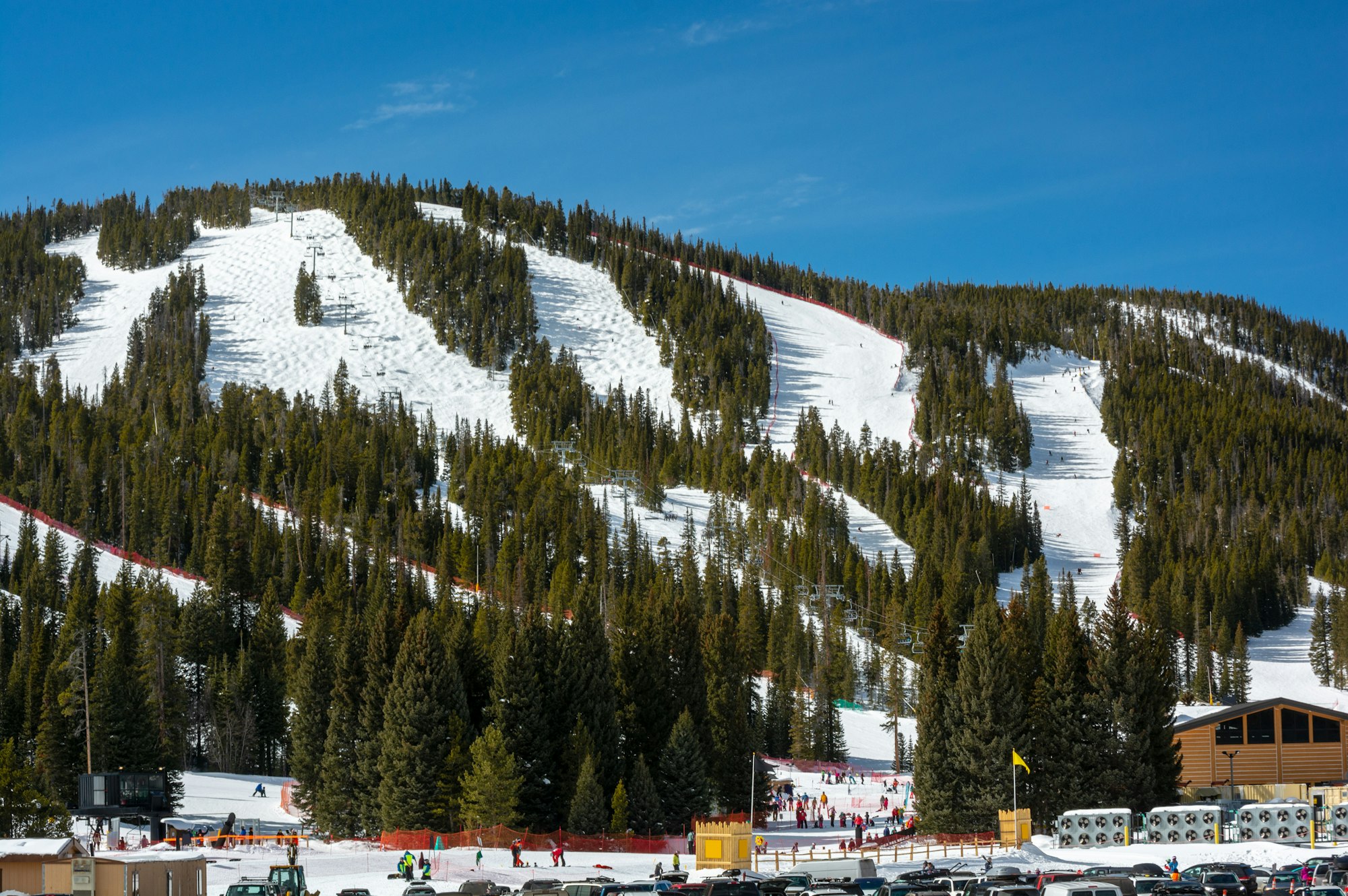
“At Eldora, we will blow snow on almost every trail that we have, and it’s a mountain that wouldn’t open without snow making,” Mackeigan said.
He continued explaining that much of the money resorts make is front-loaded (late December through early January), which is the peak for many Summit County mountains, even though that isn’t necessarily Colorado’s peak snowpack. So, in many places, snowmaking exists to supplement the snowpack that is already coming. Mackeigan explained that he thinks Eldora is ahead of the curve since they do blow snow on nearly every trail.
But for a small mountain like Eldora, it is no easy feat, as everything is done manually, unlike bigger resorts that can just press a button to fire up snowmakers. Their crew is made up of 40 snowmakers, which, as Mackeigan explained, is a pretty big number compared to bigger resort. The crews split into four groups of 10, with each group taking either a day or a night shift.
“We have to be out there in the weather doing it ourselves, so it’s a pretty labor-intensive process at Eldora, but it gives us a lot of control that other places don’t have,” Mackeigan said.
Eldora usually starts blowing snow in October, but this year they weren’t able to blow until Halloween, as temperatures were not getting cold enough even at night.
“Compared to last year when temperatures came, they kind of never let up, October onward,” Mackeigan said. “This year, it was up and down and in and out. It was hard to say when we were going to get the temperatures; it was frustrating for sure.”
Snowmaking can begin at a wet-bulb temperature of 32 degrees Fahrenheit, but snowmakers usually look for something closer to 28 or 29 degrees Fahrenheit. The web-bulb temperature is a combination of the ambient air temperature and the relative humidity. The air needs to be drier for the water sprayed to freeze before it hits the ground.
Temperature isn't the only thing putting the ski industry in a vulnerable spot; water is as well, since snowmaking relies directly on water and skiing now relies on snowmaking. So, where does Eldora get all this water? Mackeigan told me that Eldora does its best to be sustainable and recycles the water it uses. The water comes from Peterson Reservoir and a couple of other lakes where snowmelt runoff collects.
“We have the same amount of water to use as we would have any other year, but instead of blowing on what is already a four to six-inch base, by the time it was the middle of December, we were still trying to cover up rocks and trees,” Mackeigan said.
He continued by saying they were basically having to cover bare ground and make a skiable surface. Due to this year’s snowpack levels across Colorado, Mackeigan is concerned about the water supply in the reservoirs. Water, especially in Colorado, is such a valuable resource. The quote by Mark Twain explains it best, “Whiskey is for drinking; water is for fighting over.” It is past due that we, especially as Coloradans, become more aware of our water consumption habits, as this could be what helps save a sport deeply loved by thousands.
“Water is such a crazy valuable resource in this state, and has been for my entire life, and it’s only going to get more and more important that we aren’t wasteful with it,” Mackeigan said.