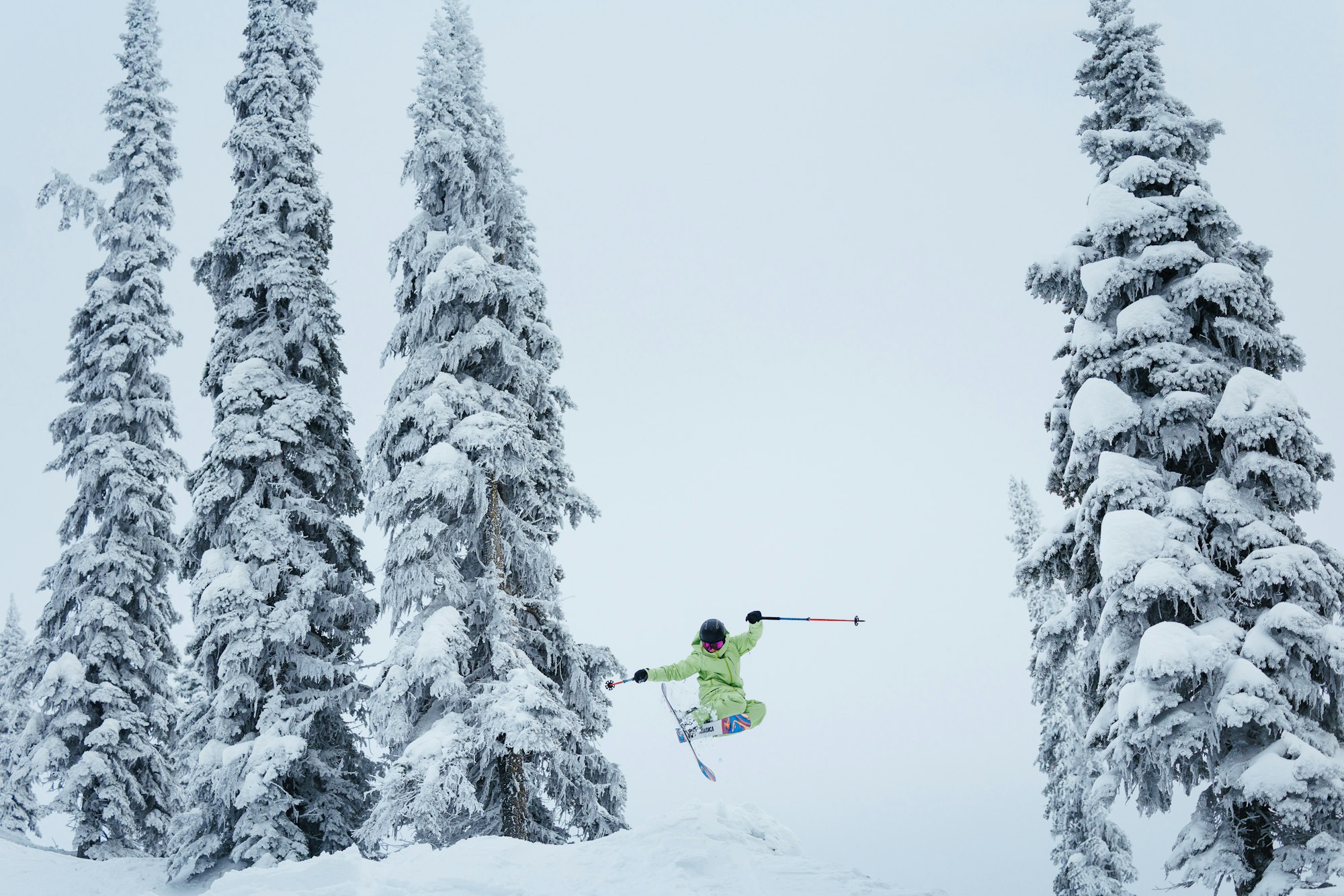
Featured Image: Courtesy of Nordica | Skier : Erin Spong
I have never understood the gendering of products . Maybe it’s because I grew up as a little sister to an older brother, whom I idolized. Everything he did and wore, I wanted to do and wear. I never considered an activity or a piece of gear as a boy’s or girl’s thing; it was just a sport played by humans. That’s actually why I never took to lacrosse, I didn’t like that the gear and rules were different by gender. I feel the same way about skis.
The ethos has always been that women’s skis are lighter and have softer flexes to accommodate for smaller statures. I don’t think that’s totally misguided but I would argue that a skier’s preference for a flex, weight, etcetera, comes more from ability level and ski style than it does from gender. I, a five-foot-nothing woman and washed-up ski racer of 14 years, actually prefer a stiffer ski than my six-foot-two freestyle freak of a boyfriend. It has nothing to do with the fact that he’s male and I’m female. I simply have a more aggressive ski style and like to drive my sticks through crud, while he prefers to play with the natural features, wash out his turns, and press the tips and tails into oblivion. Where I find a ski that might lack backbone, he sees the ability to manipulate it in creative ways.
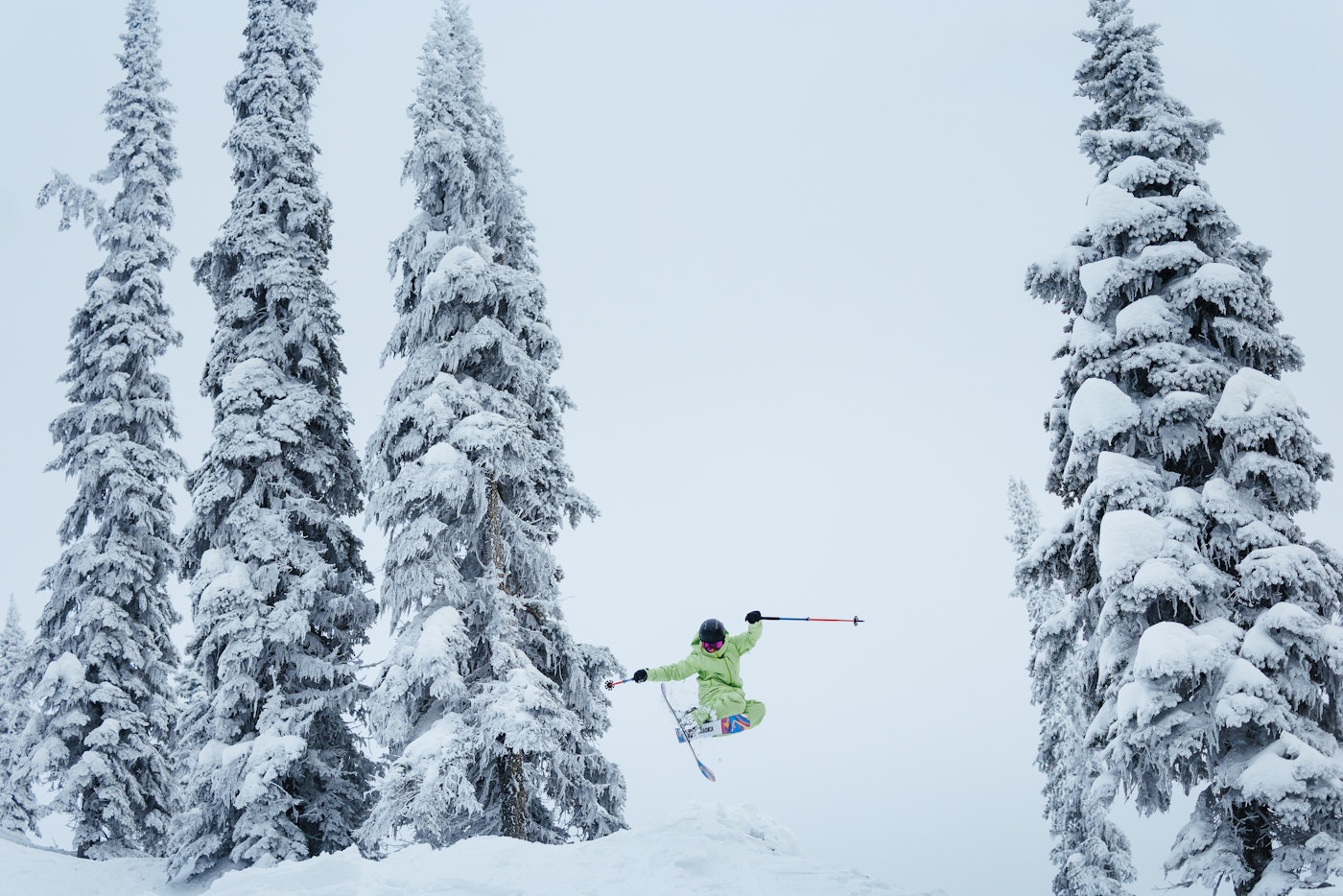
Photo: Keegan Rice / Ski: Nordica Unleashed 98 CA
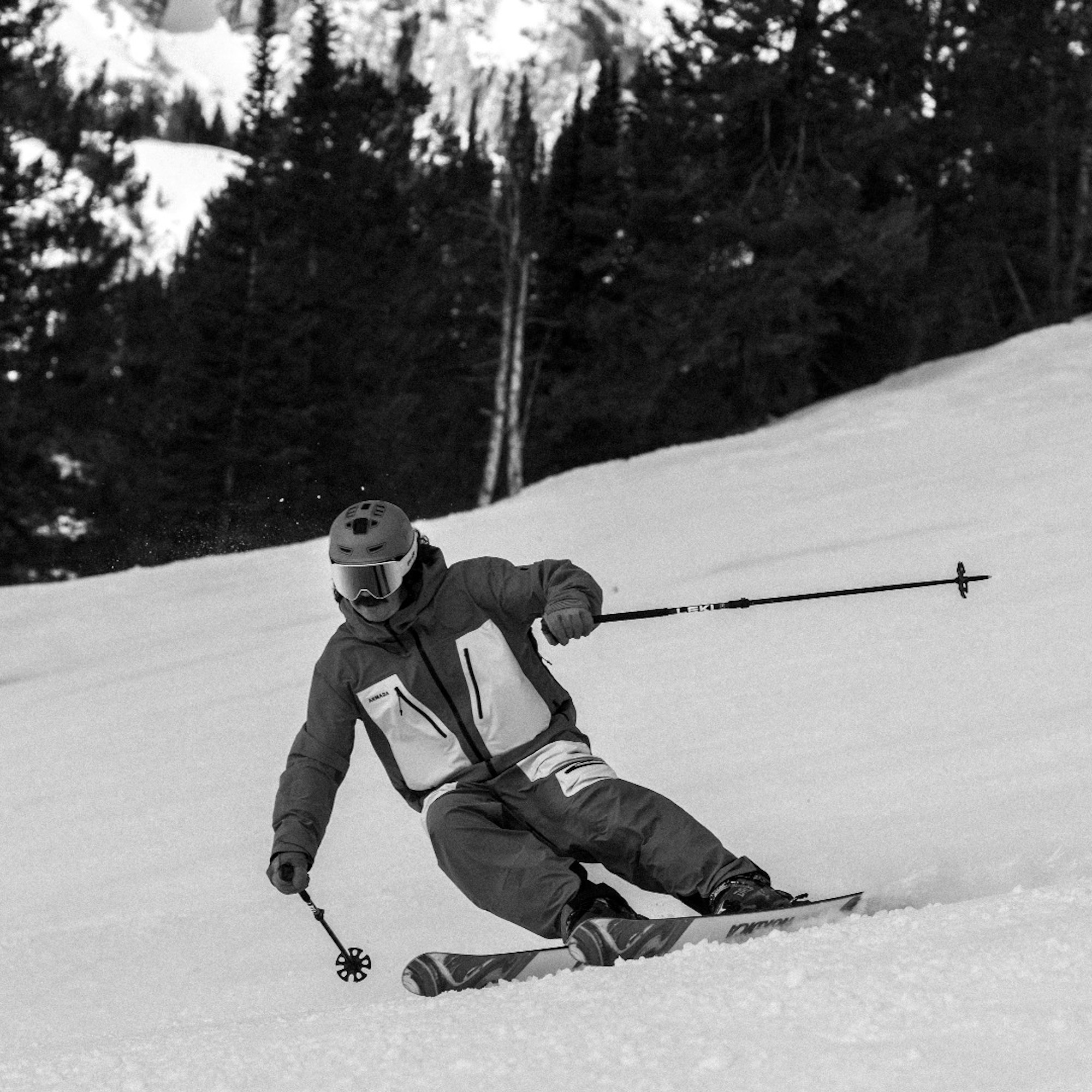
Photo: Keegan Rice / Ski: Nordica Unleashed 98 CA
We’ve watched it happen more than once in the industry where a women-specific ski becomes unisex due to its overwhelming popularity. The Elan Ripstick series was born out of the brand’s W Studio initiative, where women were directly influencing ski design. The infamous Amphibio technology we’ve come to know and love from the Ripstick, which designates a left and right ski for better turn initiation and edge hold, originated in the W Studio. Line’s Pandora collection also began as a women’s ski line before morphing into a unisex series because good ski design is appreciated by all skiers, no matter their gender. The same can be said for graphics.
Not all women-specific ski lines vary in design or materials from their male counterparts; some brands differentiate solely with lengths and topsheet graphics—a tactic commonly known as “shrink it and pink it.” I’ve never been the girl to reach for the pink skis first, but I know there are plenty of women out there who do. Based on Fischer’s hot pink Ranger a few years back, there are a lot of men out there who do, too. Tatum Monod’s custom fish graphic was only available in the shortest length during the BlackOps 118 days—174 centimeters. I disappointed a lot of men with that information.
As time goes on, and women continue to progress the sport to a level once considered only for men, the argument that all women need to be on softer, lighter skis continues to falter, and I do genuinely believe that’s translating to modern ski design. Nordica’s Unleashed collection runs directly down the middle as an unisex line, designed for freeride and freestyle skiers of all genders. Rather than differentiate with a gender-specific topsheet and lengths which could cannibalize sales, Nordica offers each width in the collection in a larger scale of lengths to accommodate every size of rider. In 2026, the brand also offers the Unleashed 98 and new 106 in regular and CA (carbon only) versions for those who are looking for a lighter, softer iteration. Every ski within the collection, however, flaunts an androgynous, psychedelic topsheet that’s unique to each width and speaks to anyone attracted to that style of art—regardless of gender. Blizzard has gone the same route with the launch of the Canvas collection: one topsheet for each width and lengths running from 162 centimeters (Canvas 100) to 192 centimeters (Canvas 108).

Photo: Rick Sorenson
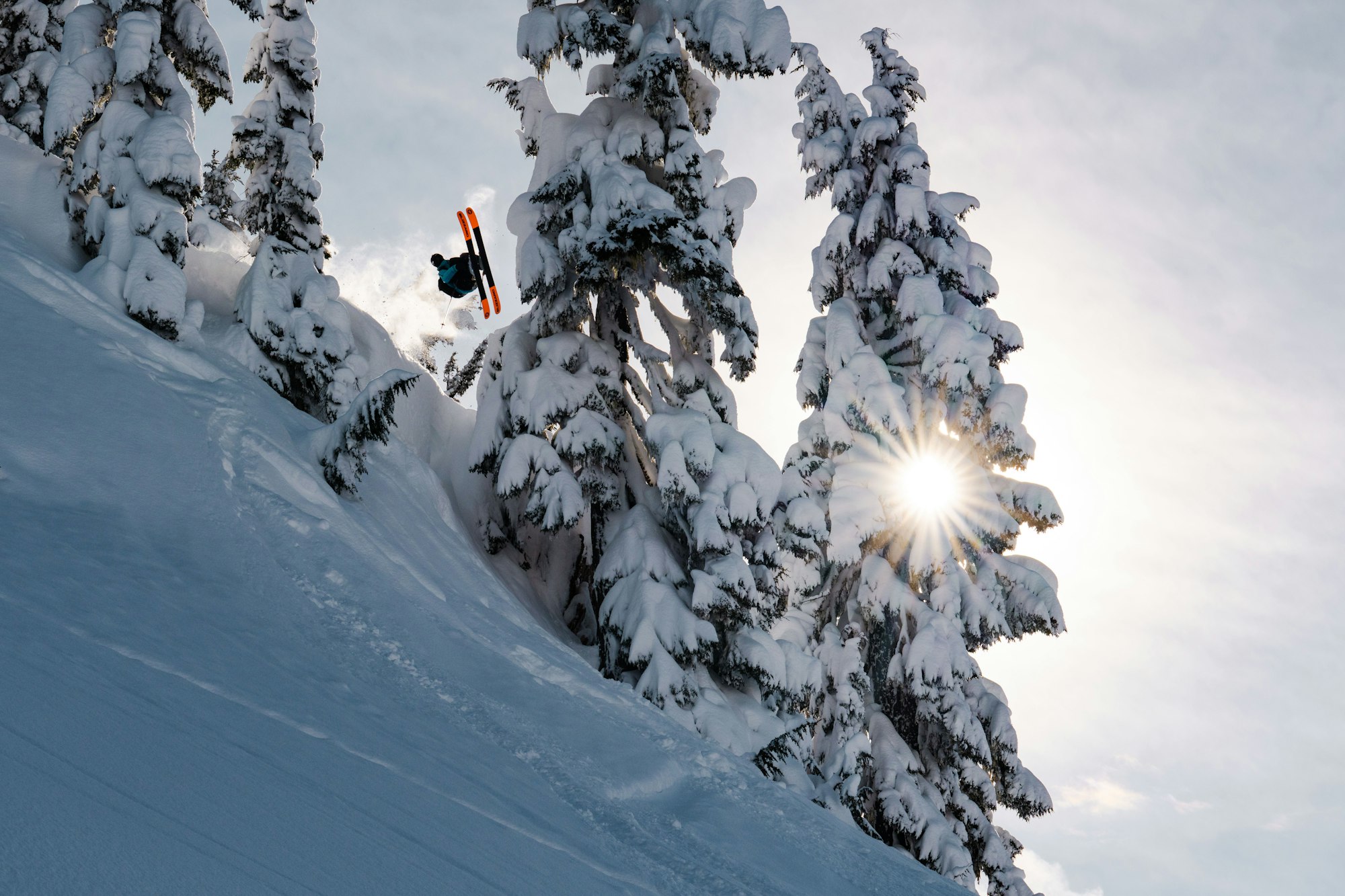
Photo: Rick Sorenson
With more and more brands developing genderless ski lines, ski shops are also beginning to adapt. Outdated are the days of separating ski walls based on men and women. If a shop is going to separate its skis based on anything, ski style makes the most sense. Group the directional, all-mountain skis with each other while the freestyle twin tips flock together on the other end of the wall. Organizing by brand also comes to mind. There are many ways to categorize skis, but as a woman living in 2026, I whole-heartedly believe it should no longer be based on gender. There’s also inclusion to consider, for those who may not fall within the traditional binary system. The ski industry, and outdoor industry as a whole, cannot afford to exclude anyone interested in the sport. If someone is forced to pick a side, they may just not join at all.
When it comes to more anatomically influenced gear, like ski boots, I’m all for women-specific design. Being as short as I am, as well as an ultra-runner, my entire calf sits within the cuff of my boot and gets squeezed to the point of numbing within minutes of buckling down. Making ski boots specifically designed for the shape of a woman’s leg makes sense to me but I’m just not convinced skis require that same kind of design ethos.



![[Q&A] Armada Skis Signs Mac Forehand, Adding to Stacked Team](https://www.datocms-assets.com/163516/1789759909-mac.webp?w=200&h=200&fit=crop)