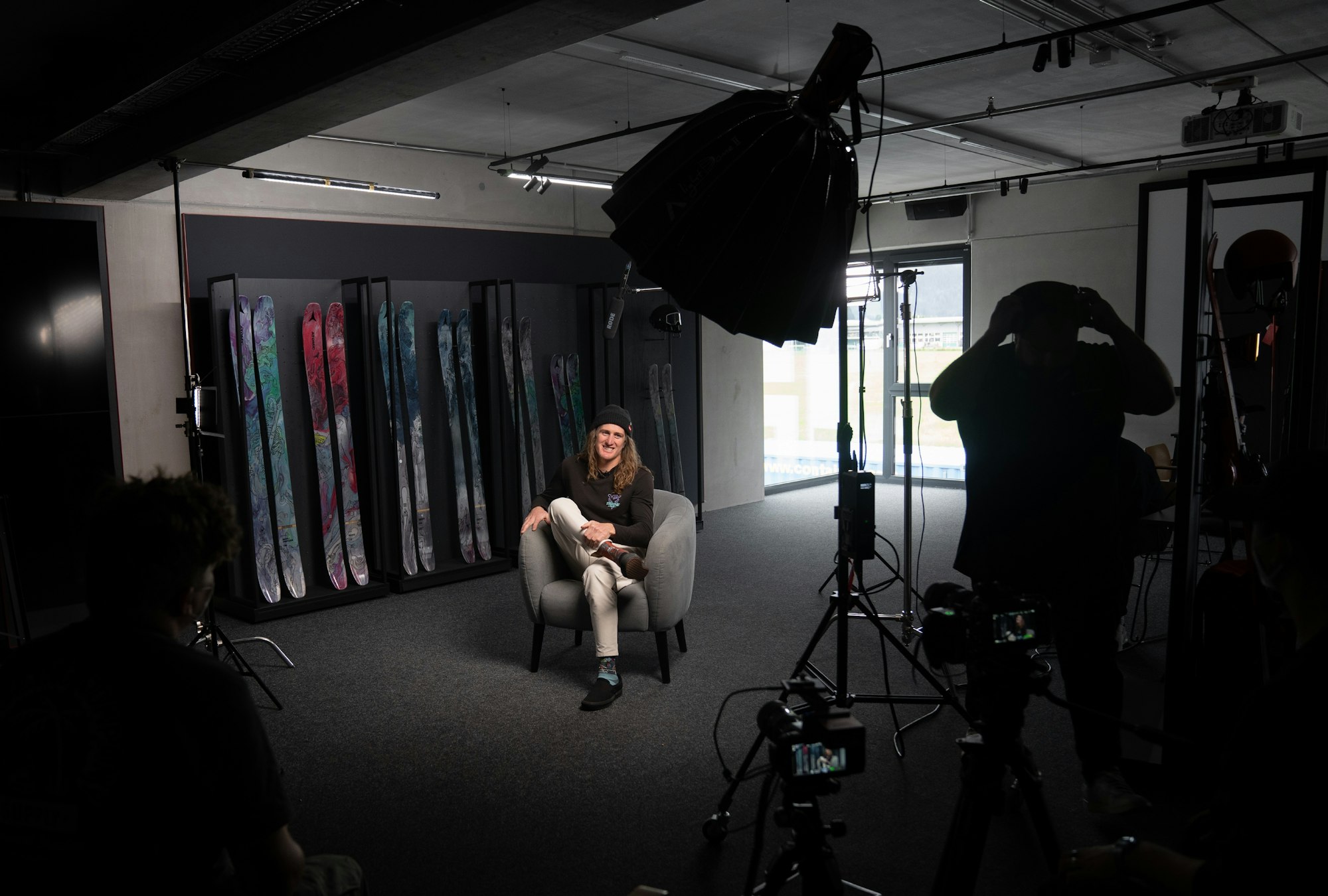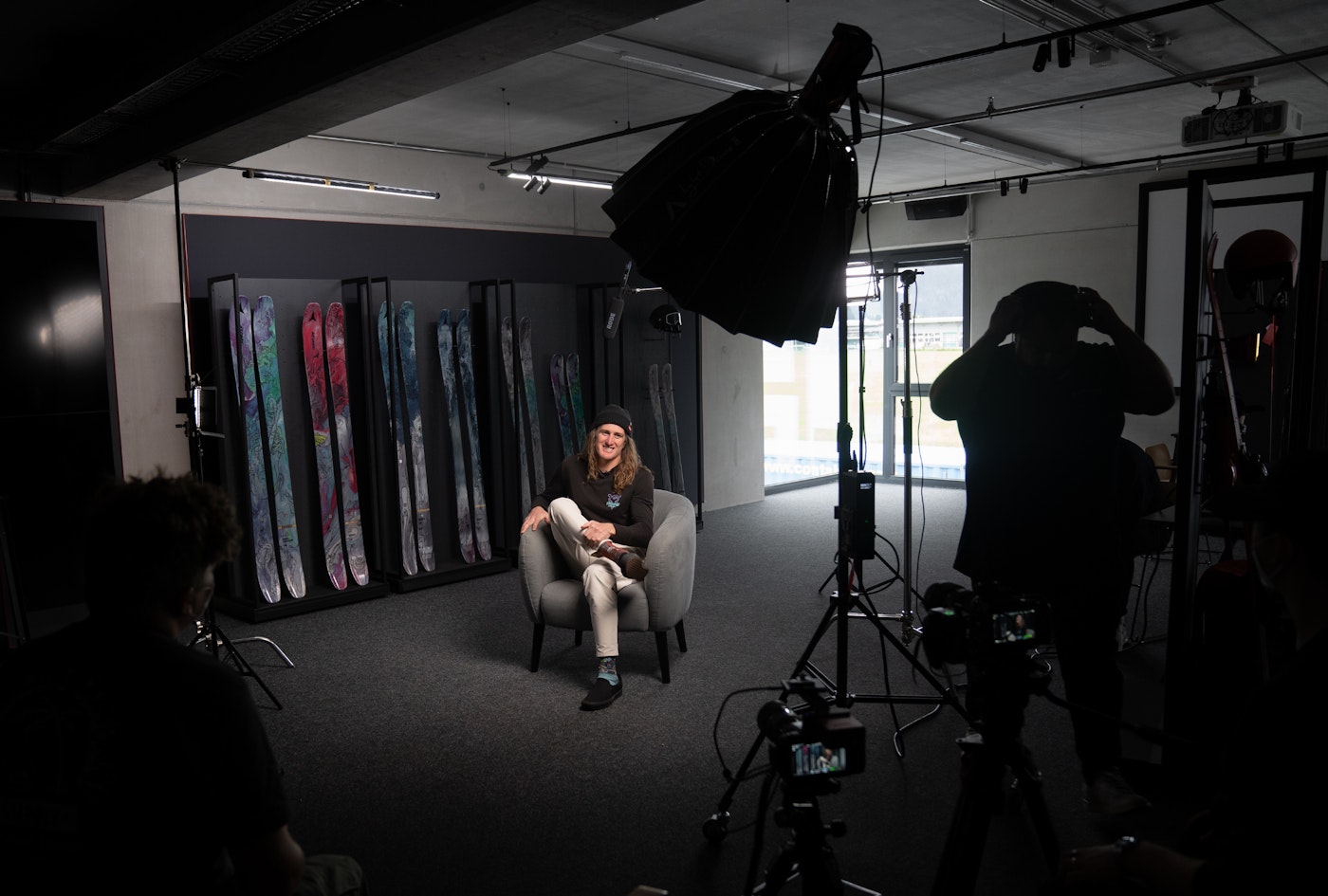
All Images: Courtesy of Atomic | Skier: Chris Benchetler
Four inches of fluffy snow blanketed the resort overnight. As you ride up the lift, you look down to see a ripping local dissecting the freshly dusted moguls and, when you reach the top, the teenager next to you makes a beeline for the terrain park. And you? You’re headed to your favorite stash in the trees. While you’re all choosing different paths, the three of you have something in common: you’re all clicked into the Atomic Bent 100—a product that has heavily influenced the way an entire industry approaches product development..
Over the past two decades, few product lines have influenced freeride skiing as deeply as Atomic’s Bent family. What began as an athlete-driven powder ski evolved into a blueprint that reshaped how brands design, market and position playful freeride skis for a mainstream audience.
The ripple effects of the Bent 100’s success are now easy to spot. From the rise of artist-backed graphics to the explosion of playful 100 mm skis built for everyday shredding, much of the modern freeride landscape’s offerings trace back to that formula. Brands like Volkl and Salomon that recognized the potential early on and adapted it in their own ways to see success, while others have continued to watch and learn.
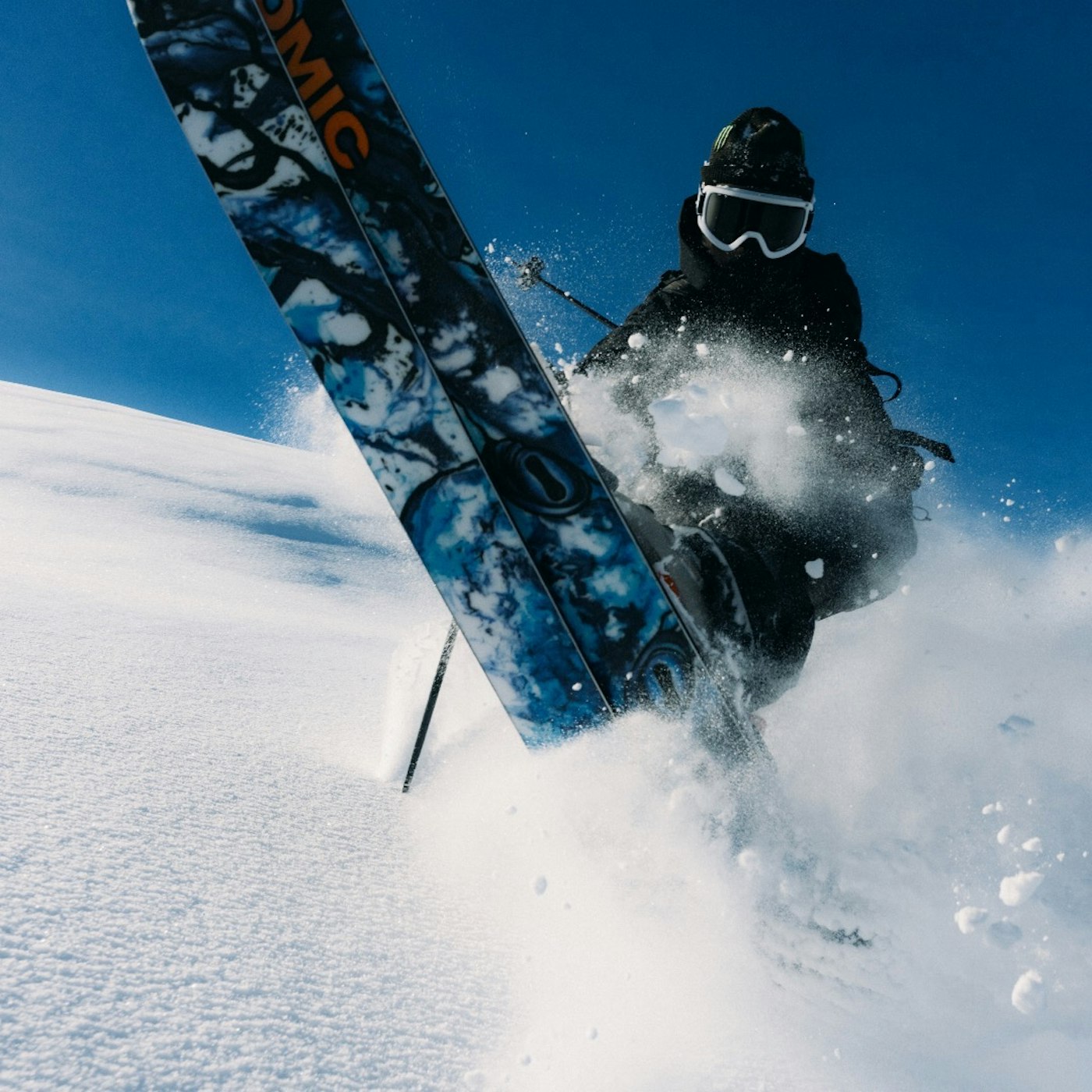
Skier: Jossi Wells
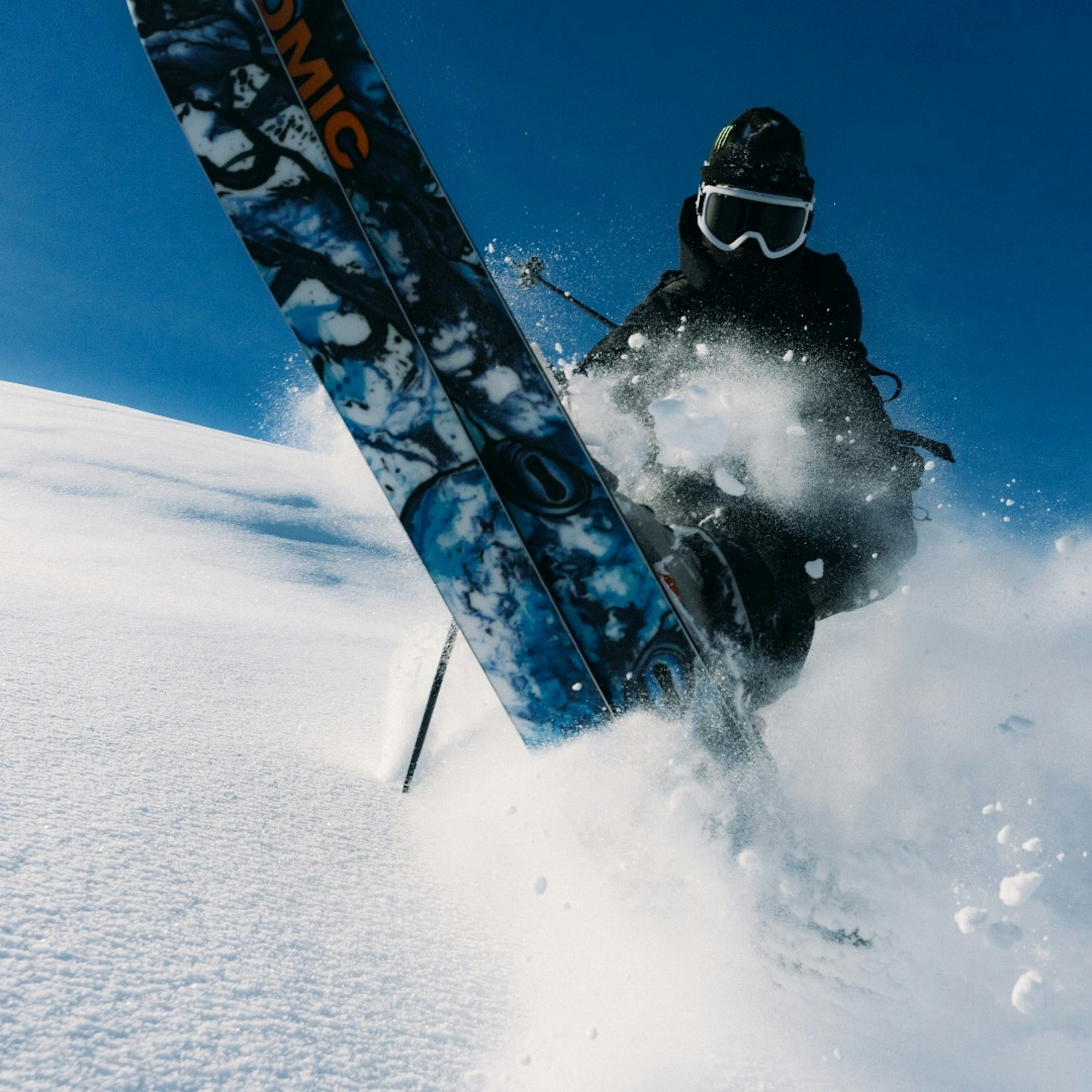
Skier: Jossi Wells
With his skiing shaped by creativity and flow across all parts of the mountain, Atomic athlete Chris Benchetler set out to build a ski that didn’t fit neatly into an established category. When he joined Atomic in 2007, he made it clear he wanted more than just his name on a topsheet. He wanted to directly influence the materials, shape, flex and feel. That deep level of athlete involvement became the foundation of the Bent line and would pave the way for athlete-driven projects across the ski world.
Blizzard’s recently-launched Canvas ski project is perhaps the best modern example of a collection that might not be here if it weren’t for the Bent Chetler line. By no means did the Austrian ski brand try to replicate the Atomic line but they did use a similar framework—starting with an athlete-first approach to the construction and pairing that with unique artwork that appeals to the freeride consumer’s desire to express themselves. The Volkl Revolt line and Nordica Unleashed collection also reflect this shift toward skis that are shaped by freeride athletes and adorned with artistic topsheets.
From Bent’s inception, graphics were treated as an integral part of the product rather than a seasonal afterthought. Benchetler’s visual creativity made the skis instantly recognizable, communicating a skier’s identity and approach to the mountain before they even made a single turn on the skis. That emphasis on graphics undoubtedly influenced art departments across the industry. Brands have increasingly leaned into artist collaborations to create visuals that speak to freeskiing consumers.

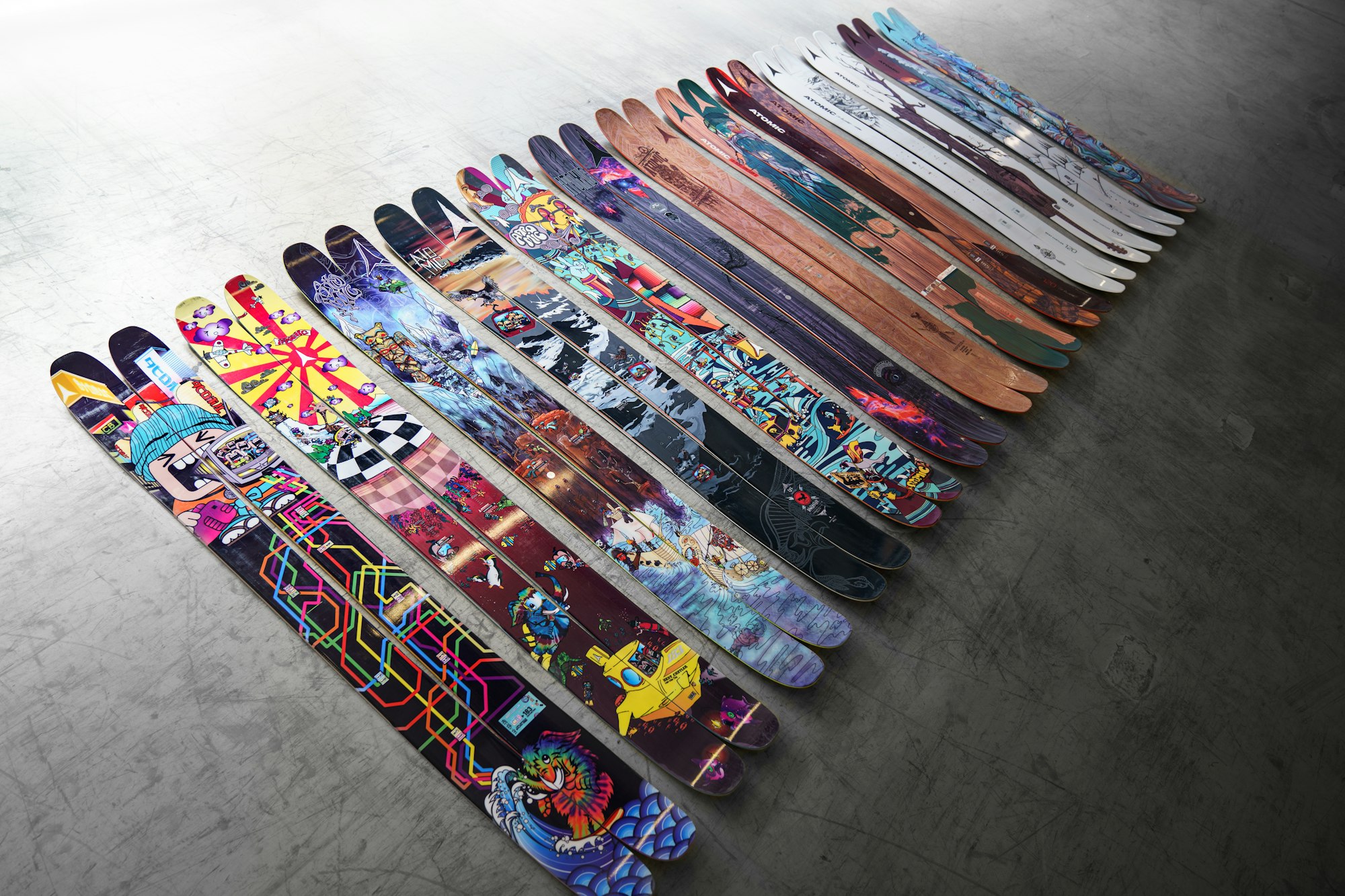
Art has also been used as a common thread woven between a ski’s graphical treatment and its under-the-hood construction, creating a cohesive story of its intended on-snow usage. This is where the Bent equation is multiplied. While 100 mm skis existed long before it, the Bent 100 defined the waist width in a different way. It showed that a playful freeride ski could dominate sales while remaining true to an aspirational vision, and not punish the skier for their less-than-pro ability. The Bent 100’s float and forgiveness works for a wide range of skiers on a wide range of days without demanding perfect technique or ideal conditions. That versatility ended up creating a category of its own.
As a result, the number of 100 mm freeride offerings exploded. Nearly every brand now offers their own do-it-all skis designed to capture the same balance of playfulness and performance. Models like the Rossignol Sender Free 100, Dynastar M-Free 100, Armada ARV 100, Icelantic Nomad 100 and Blizzard Canvas 100 all speak to this shift. Each takes their own approach, but they all operate in a space the Bent 100 validated. What unites all these skis is intent. They are built to feel approachable while inviting creativity. That balance has become one of the most valuable propositions in the modern ski market.
As the Bent lineup grew, Atomic continued to expand the winning concept. The Bent 110 filled a space between the 100 and a revised 120 powder width, offering plenty of float while slightly stiffening the flex for resort charging. Today, the Bent line functions as an ecosystem rather than a collection of isolated models. Each ski, which ranges from the newly-announced Decode competition park ski, to the 85, 90, 100, 110 and 120 mm widths.

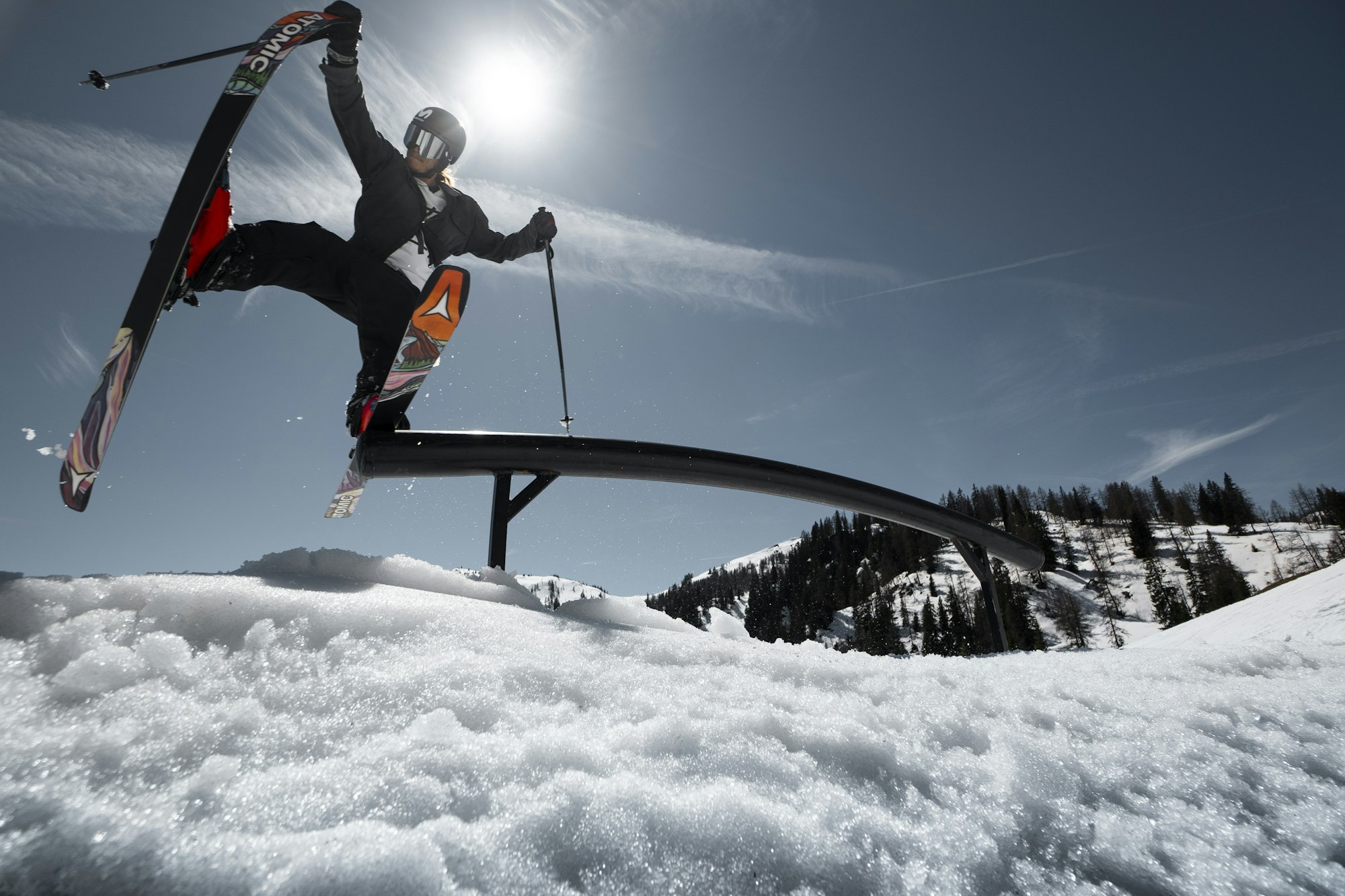
Throughout that growth, Atomic trusted Benchetler with artwork and ski performance—thus expanding the Bent brand—eventually establishing itself as one of the best-selling ski lines of all time. This approach continues to influence how other brands think about building lines from a central idea, rather than filling predetermined categories. It has also helped normalize deeper athlete involvement and a new wave of artistic topsheets across the industry.
The Bent Chetler effect began as a shift in priorities that entrusted athlete input to shape ski personality and performance. It went on to prove that consumers connect with products that feel human and intentional. Then, the ski industry took notice and listened to their own athletes and artists. This evolution