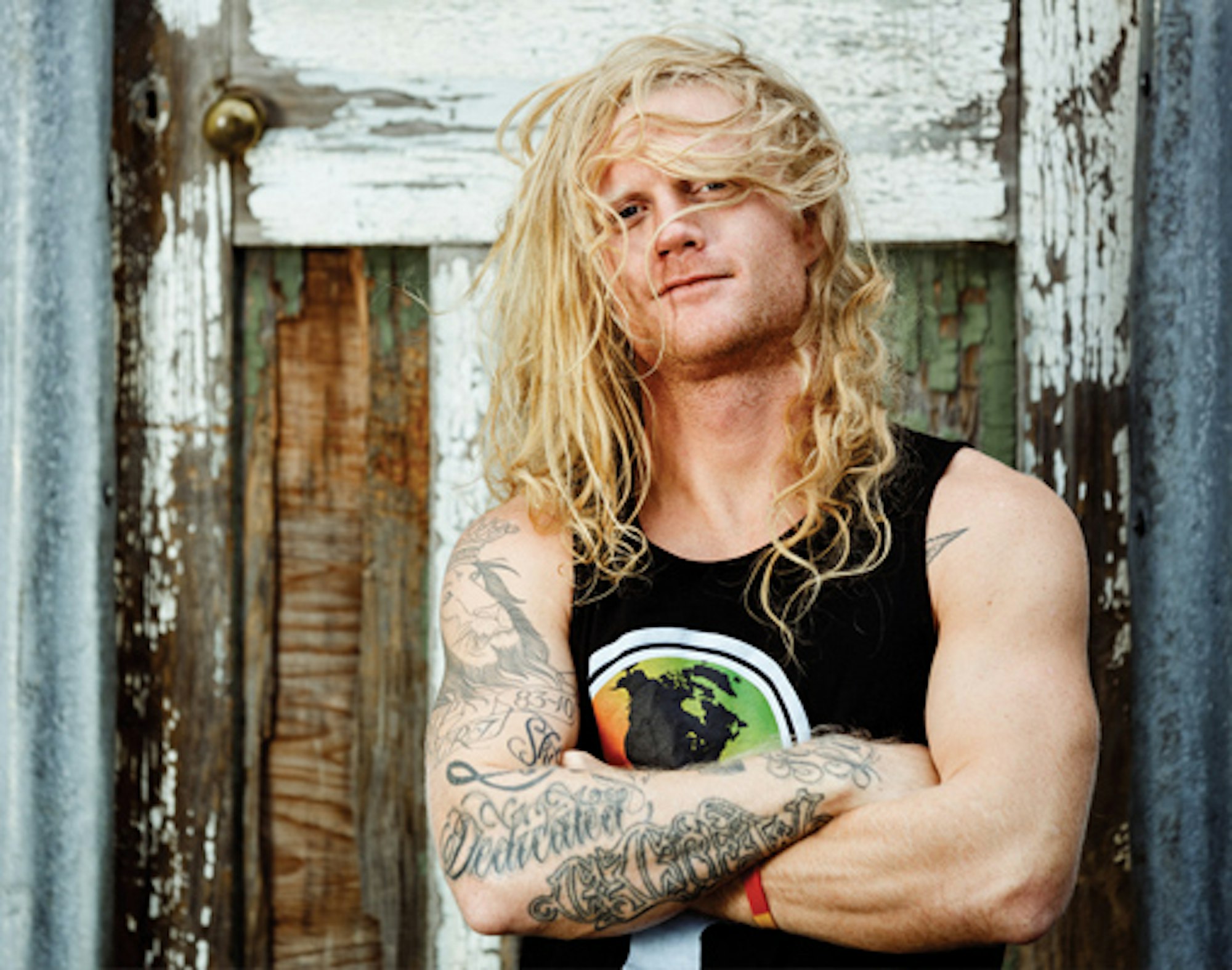

Tanner Hall’s Redemption Road
Words by Christopher Jerard. Portrait by Chris O’Connell.
“You mind stopping for some cigarettes?” the skinny 17-year-old kid with a mop of blond hair asks me from the passenger seat. We’re headed to the Freeskier offices in Boulder for a photo shoot. I swing the truck into Conoco and buy a pack of cigarettes for my new young friend. We talk about skiing. He’s just come off an awe-inspiring ski season of total domination in the fast-forming world of freeskiing. His attitude and raw talent have made him impossible to ignore. It’s 2001, and everyone is enthralled with the crown prince of freeskiing—Tanner Hall.
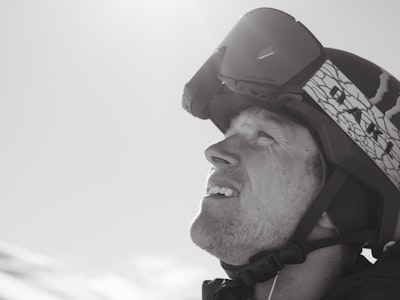
Over the course of the next decade, the rising star would become first a hero, then an icon. His achievements are unmatched. Then, at the absolute peak of his career, he fell into a numbing darkness at the bottom of pain, loss and addiction. Today, at 28, Tanner Hall has been hauling himself up and out of that hole, one agonizing step at a time. He is on a new road to redemption—beyond anything we’ve seen yet. No longer seeking only the goals of gold and silver as a professional skier, he is open about his path to personal awareness and a newfound humility that was wholly absent from the 17-year-old I picked up at DIA 11 years ago. It isn’t all about him anymore. “I want to change the world. I want to inspire people to achieve their dreams,” he says with clarity and purpose. And he’s starting with himself.


To understand Tanner Hall in 2012, you have to understand where he’s been. His story, from the X Games medals to the movie segments to the personal challenges, is well documented. (Watch the documentary Like A Lion made by Eric Iberg and read previous profiles available at freeskier.com for a detailed play by play.)
At 13 he convinced his parents, Gerry and Darla, to let him pack it up and leave Kalispell, Montana for the Winter Sports School, a private boarding school for Olympic hopefuls in Park City, Utah. He was a mogul skier with some promise. But he struggled in school, academically and socially. “School sucked. I remember days I would come home in tears,” he recalls. He was small and skinny and didn’t fit in with his peers. And those formative years had an effect on the man he is today.
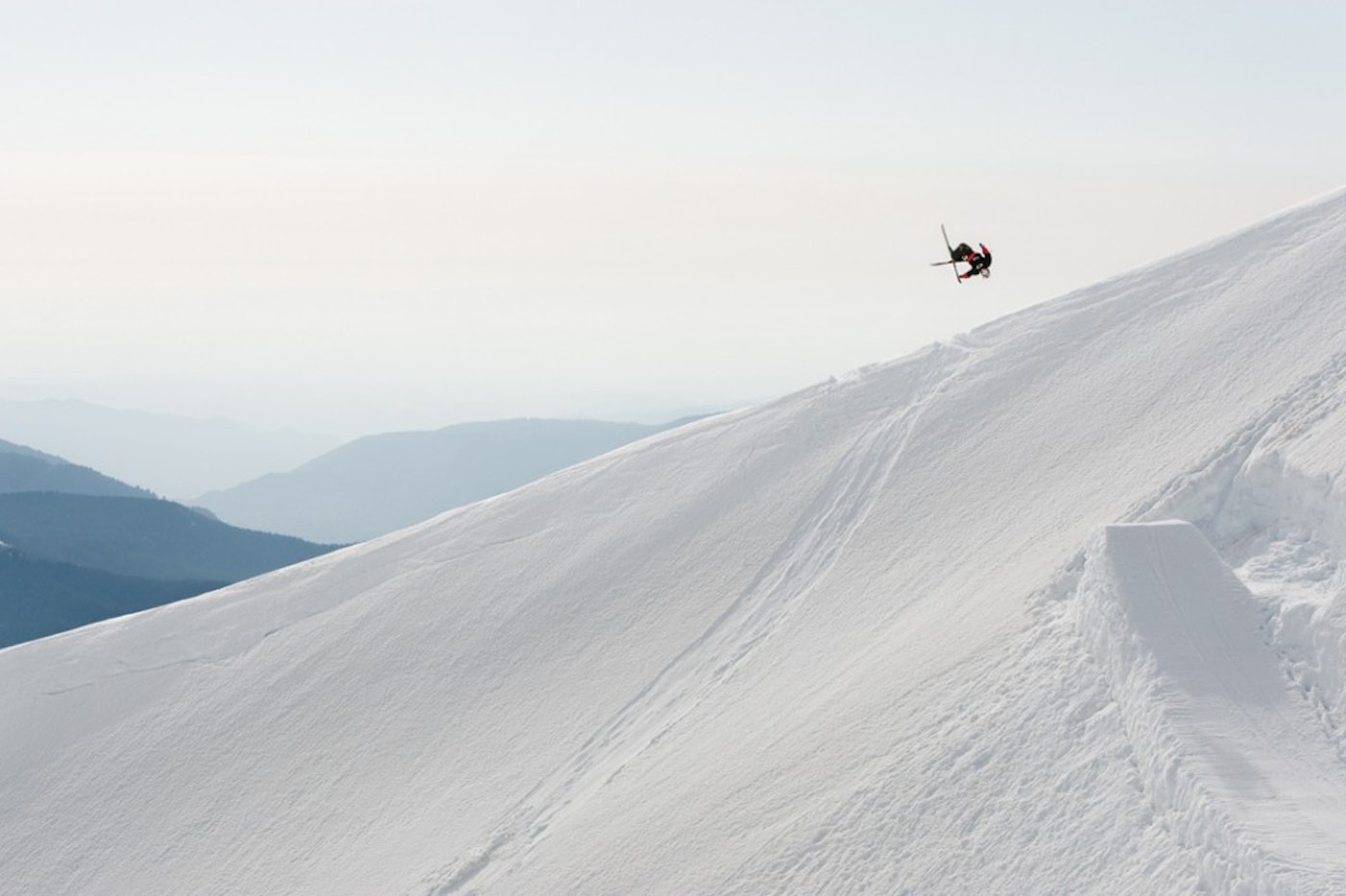
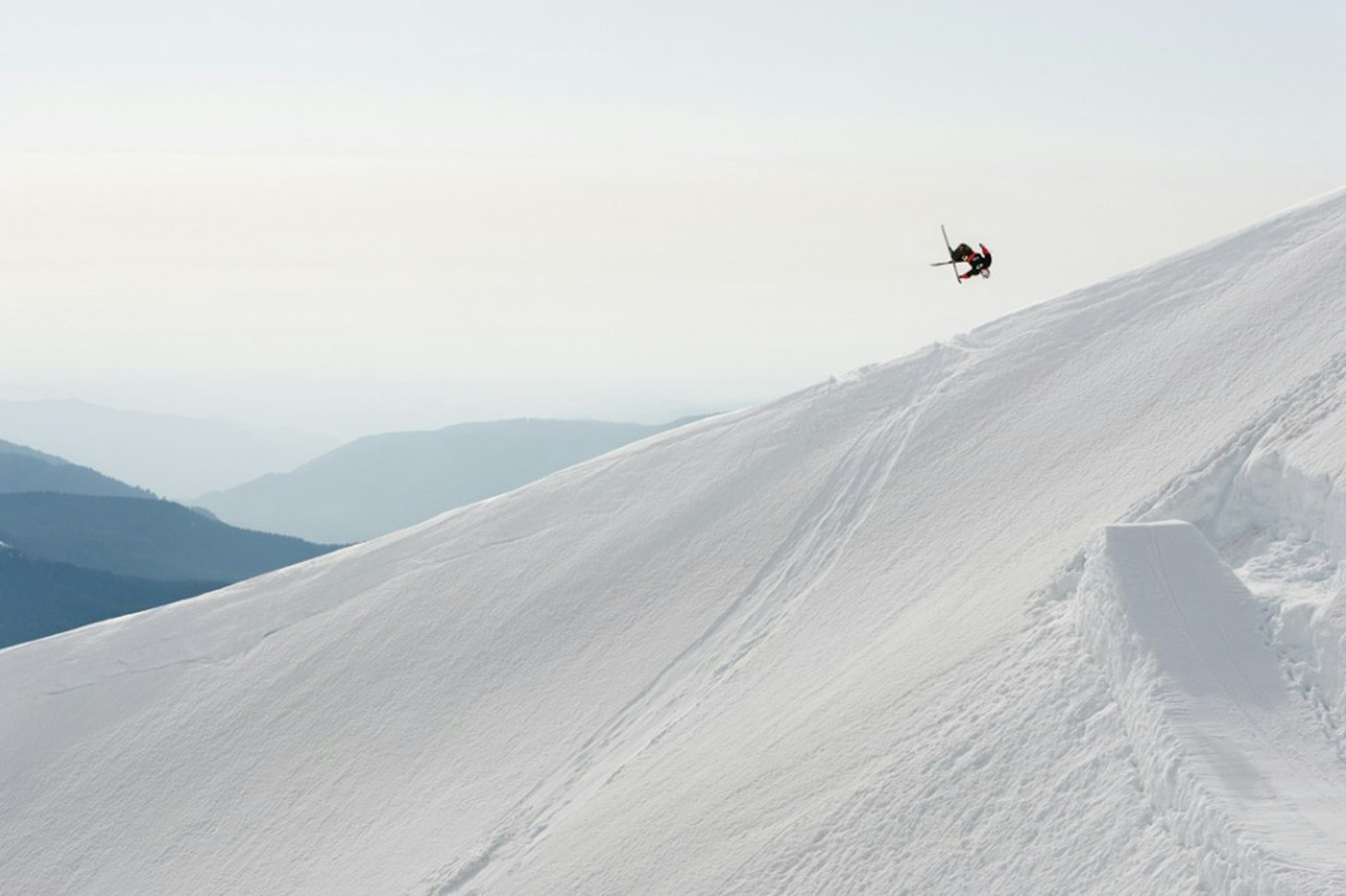
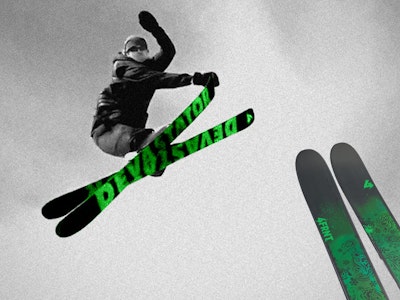
Tanner with a springtime 720 during a session filming for The Education of Style at Mt. Hood, OR. Photo by Drew Smalley.
“He hated school so much because he was harassed,” says his long-time friend and creative collaborator at Inspired Media, Eric Iberg. “Maybe because of his size. At the camps, he always spends the most time with the small kids.” But it wasn’t just his size that singled him out. Although Tanner was not a leader, he sure as hell was no follower. He did his own thing from the start—call it individuality, call it style, call it attitude—that put him in a no man’s land with his peers and his teachers. But skiing was the something that always gave back. Whatever he was willing to put into it returned, in spades. It was his passion from the start.
He dreamed of winning a gold medal in the Olympics. “He first mentioned going to the Olympics when he was about five years old,” recalls Darla. But as his skiing earned him spots in magazines and films, he struggled more with school. So he got himself kicked out, basically on purpose. This would result in a yearlong grounding for most kids, but Tanner was beginning a history of bending reality by pure force of will. After many lengthy discussions, Tanner convinced his parents to turn the expulsion from school into a one-year trial period of full-time freeskiing. “Please just give me a year,” Darla recalls Tanner’s bargaining. “If it doesn’t work out, I’ll redo all of high school.”
With something to prove and the ultimatum of all or nothing, Tanner tore through the competitive circuit in 2001. “He knew exactly what he was going to do. He had a plan, and he could back it up,” explains his older brother Tyson Hall. Still a teenager, he backed it up, right to the top of the freeskiing world. He hit some speed bumps along the way, including a career threatening injury in 2005, but for the most part Tanner, with his raw talent and passion for skiing, remained at the top of the game for almost a decade. He helped push the sport and those around him to new heights: launching Armada skis, winning 11 medals at the X Games, appearing in 30 ski movies and being named Freeskier’s Skier of the Year in 2008 and 2009. And foreshadowing his music industry future he, along with his best friend CR Johnson, took control of the creativity behind movie making.
Then, as suddenly as it had arrived, the success all seemed to be over for Tanner Hall.


In May of 2009, at the peak of his career, on a film session in the terrain park at Stevens Pass, Washington with TGR, Hall overshot a landing and dropped 40 feet out of the air to flat, demolishing his legs. “It was the equivalent of being smashed in the knees by a car going 45 mph,” says Dr. Vern Cooley, a 20-year veteran of high-profile surgeries (like Tiger Woods’), who performed multiple surgeries on Tanner after the crash.
“I thought I was done, not only done with skiing, done with life. I was at rock bottom,” Tanner recounts. “I felt explosions in my legs. I was thinking the worst. I couldn’t feel anything below my waist. I thought I was paralyzed. I just kept saying, ‘My career is over. My career is over. It’s done.’” After the initial evacuation, despite concerns of blood clots, he was insistent on going back to Park City to see Dr. Cooley, the doctor he trusted. Tanner could not fly, so his friend, TGR filmer Pete O’Brien, drove him, busted and broken, screaming in agonizing pain the 14 hours back to Park City. “It was like a bad dream. Tanner was on a morphine drip and thought he would never be able to ski again,” says O’Brien. The medical assessment was bilateral tibial plateau fractures, both ACLs torn and micro fractures on his right knee—traumatic and seemingly career ending.
Tanner pushed through surgery after surgery and excruciating physical therapy with the goal of getting back on the hill. After his first ACL repair, he had to take painkillers for months to sleep. The pain led to more drugs, and the drugs took over. “It was apparent that I had become a different person. Something was not right,” he says.
It took CR to call him out on his birthday. “You’re not healing. You’re not the same person. Let’s get you healthy buddy,” CR said to Tanner. Embarrassed and tired, Tanner denied having a problem.
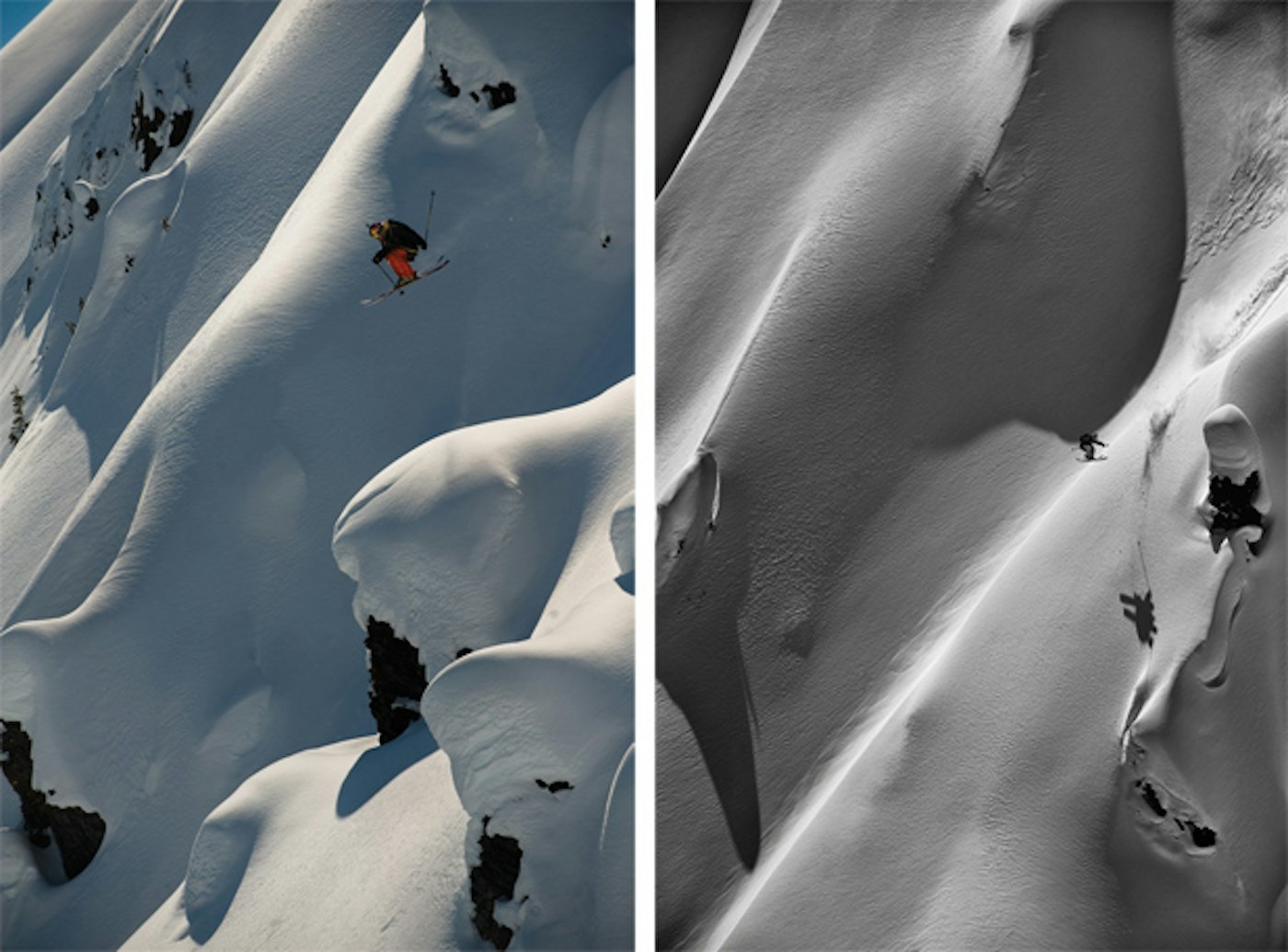
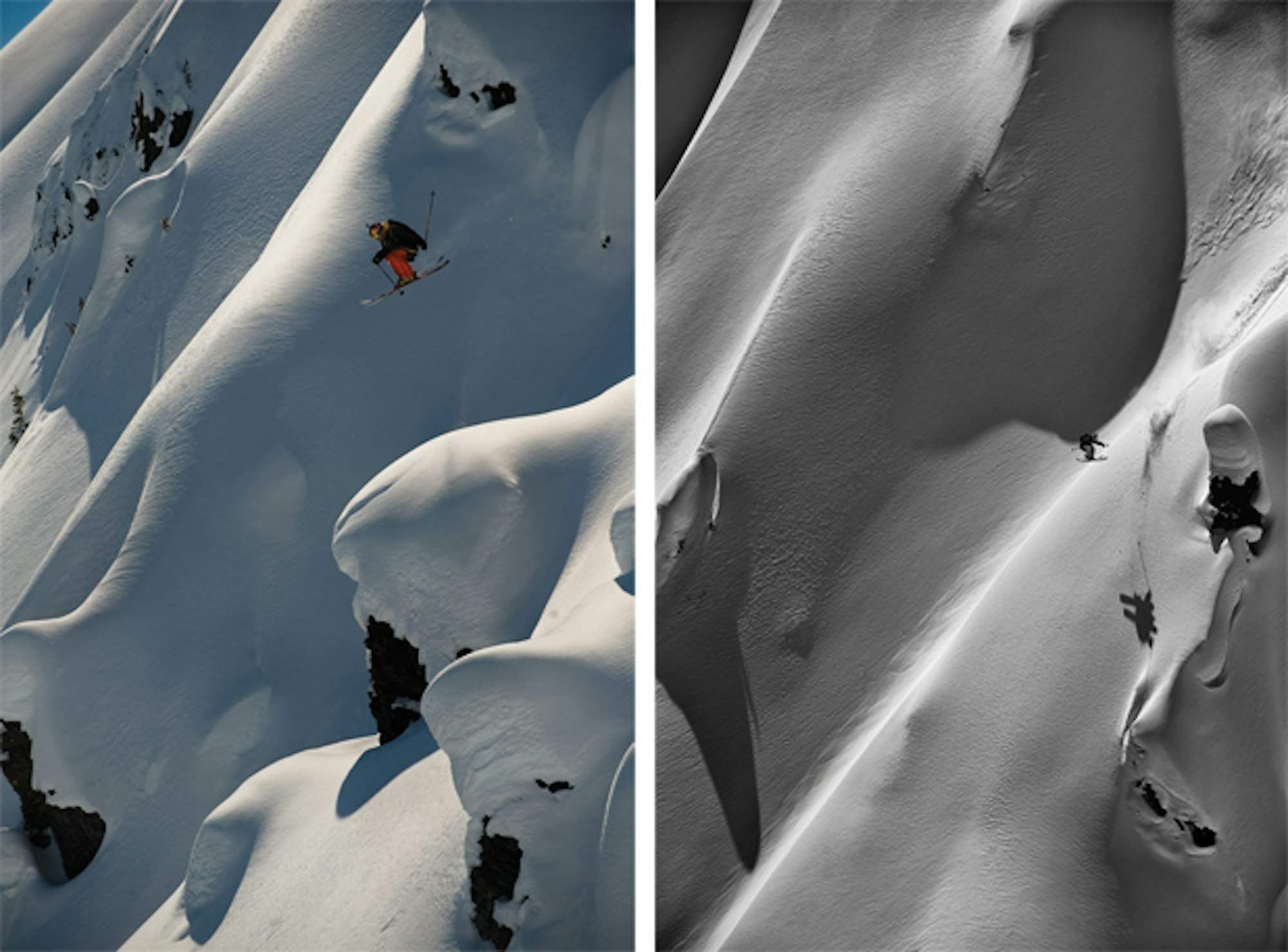
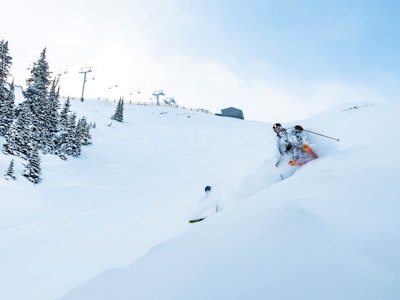
Left: Tanner blasting through a line at Retallack Lodge, BC in 2011. Right: Not a future spin, but rather a futurish mid-line 360 during filming for 2011’s Retallack: The Movie at, you guessed it, Retallack BC. Photos by Dave Heath.
But in the face of his best friend’s heartfelt concern, he broke down and finally admitted to CR, “I have a problem… and it sucks.” Getting off the pain pills was like getting hurt all over again. The first day he was off the pills, he remembers, “It felt like I broke my back.” He was irritable and angry. His mother recalls emotionally, “It was really tough to watch my son be a completely different person.”
Skiing, the thing that mattered most to him, was slipping away. He was struggling with severe addiction and crippling pain. “CR really helped him come out of that,” remembers Darla. CR’s own experience with near career ending injuries in 2005 had produced in him a profound ability to share inspiration and wisdom beyond his 24 years.
After CR’s first accident, it was Tanner at CR’s bedside for weeks, waiting for him to emerge from a coma. As CR recovered, he came out with a new, caring attitude. And CR’s outlook helped bring Tanner back to his goals. Johnson reached into the dark places of Tanner’s depression and pulled his friend out of that hole. Tanner got off the pills and began to believe he could come back to skiing. He and CR became even closer. Through traumatic injuries and a roller coaster of emotions, they had proven that they had each other’s back. Tanner was on the road to recovery. He attributes this turn almost completely to CR Johnson.
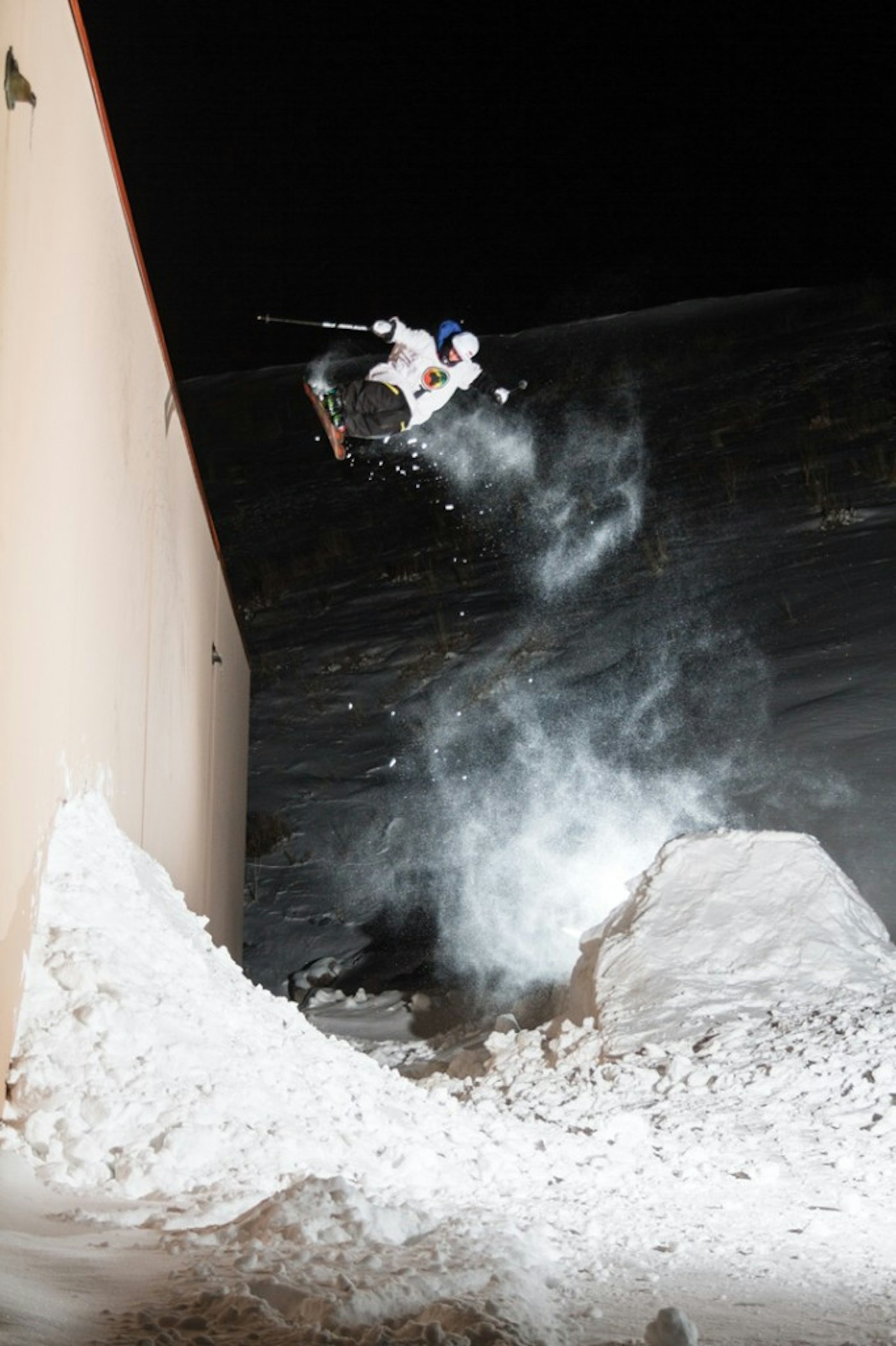
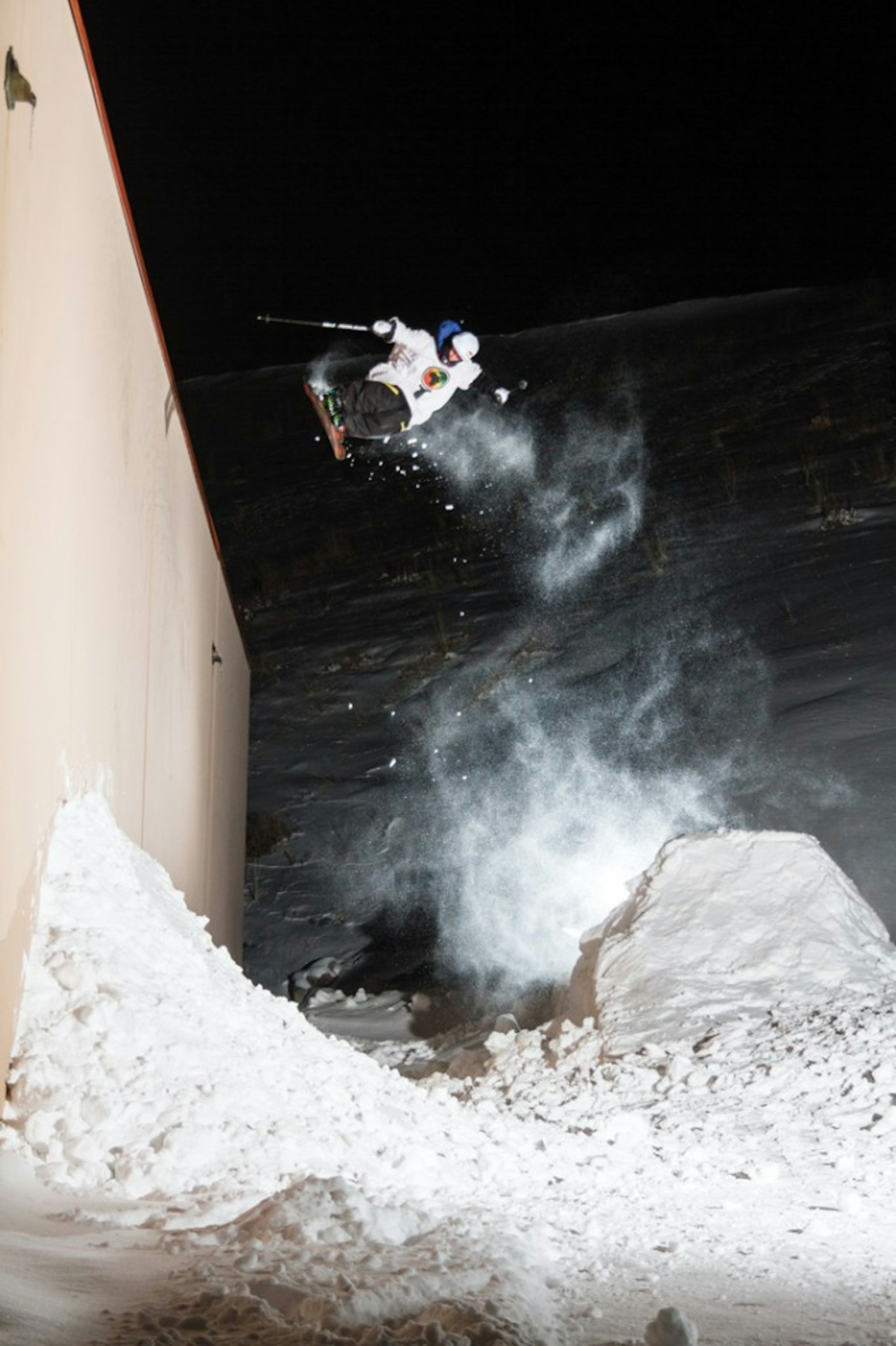
Left: If you’re going to leg press 540 pounds, hitting this gap-to-wall after the injuries Tanner has endured is a solid argument aginst being labeled a jock. Photo by Rocky Maloney.
Then, brutally and without warning, Tanner’s world crashed again. On February 24, 2010, while abroad on a trip to Jamaica to set up a new business, Tanner received word that his best friend had died while skiing. “I can’t tell you what that did. I just locked myself in the bathroom and cried.” CR had been Tanner’s lifeline when he needed it the most, the person who could reason with Tanner, the person who had saved him. And now he was gone, and it crushed Tanner. Alcohol filled the void. “CR was my savior. He had come out of his coma wise. He came back from that different. He didn’t like drinking and smoking. He treated his friends well. He treated life well. He was helping me with all of that. When he passed away, I just started drinking myself retarded.”
For more than six months, Tanner binged. Even through the making of his life story, Like a Lion . The loss of both skiing and CR pushed him to new lows. Once again, it was those around him who helped. Tanner recalls Eric Iberg drawing a line in the sand one day, “I’m pretty much over watching you kill yourself, man.”
“It was apparent that I had become a different person. Something was not right.”
The words had impact. He stopped drinking. He returned to the gym on his own. Each day he would fight through the pain knowing that one day it would hurt a little less. He was learning patience, mostly because he had no other choice. Dr. Cooley comments, “His ability to recover and stay motivated is remarkable. I’ve never had a patient with this type of injury recover as quickly and as fully as Tanner did. He is in the top one percent of athletes I’ve seen.”
As severe as Tanner’s physical trauma was, CR’s death knocked him down even harder than the crash itself. But he felt it was CR’s presence that drove him to come back. He says, “My best friend is my guardian angel.” And in June 2011, Tanner believes that CR led him to Jess Tidswell at the Center of Excellence in Park City, a meeting that would not only change the course of his recovery but help him see beyond just coming back. Tidswell would help guide Tanner to define his next goal: Sochi 2014.


In June of 2011 a reluctant Tanner Hall, used to working on his own program, walked through the door to the Center of Excellence to meet a trainer who had been working with the US team for the previous nine years. “The first day we… It was a mystical link up,” Tanner recounts of meeting Tidswell. “Something clicked. She understood my passion, and I understood her motivation for fixing people’s bodies. After one day, she was the first to say, ‘You can do whatever you want in life.’ She was the first one to put me on that path.”
Tidswell has provided more than physical guidance. She helped Tanner see his own power and purpose again by focusing him on what is possible in all aspects of his life. “He challenges me as much as I challenge him. His mental toughness goes so much deeper than the medals on his wall,” she says.
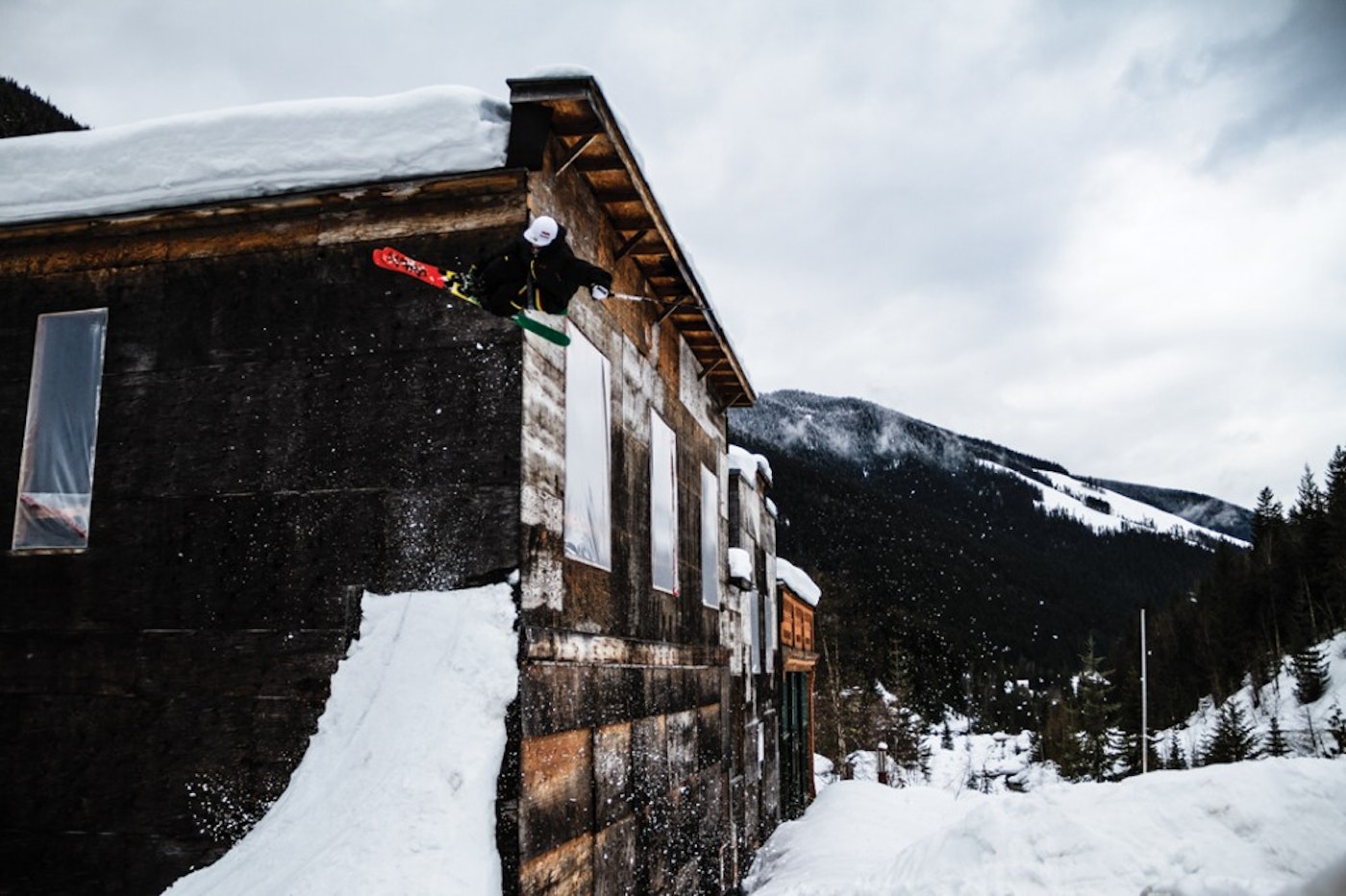
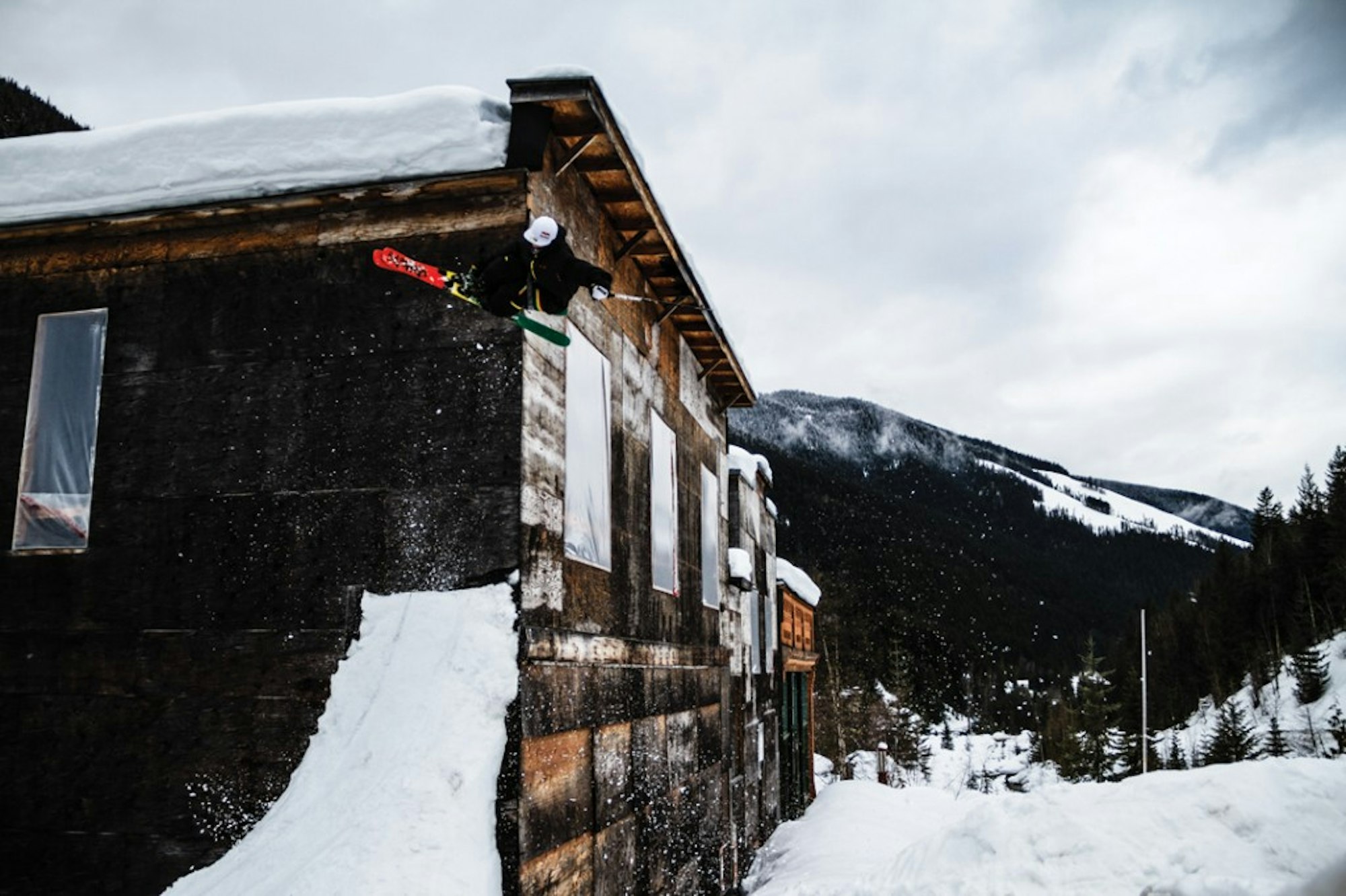
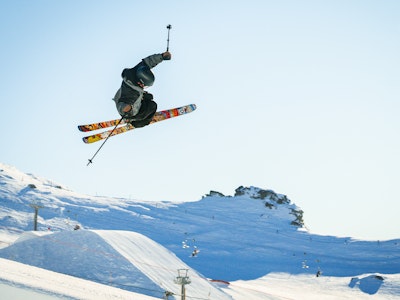
A classic Tanner Hall style flatspin to a next-generation opposite tranny landing near Sandon, BC. Photo by Jess Tidswell.
By working out more than five hours a day for a year, Tanner has put on 20 pounds of muscle. He leg presses 540 pounds. People have noticed. The skinny kid is a muscle-bound man. It seems that Tanner Hall has a higher purpose. Yes, his goal, as it was when he was five years old, is to go to the Olympics and win a medal. His ability to win at the highest level is well documented. But his contribution to the sport of skiing is less celebrated. Like his hero Glen Plake, his genuine love for the sport runs deep, far beyond money or medals.
“He wants to inspire. He wants to make the sport as big as it can be,” says Gerry Hall. “He lost ground and if he can take it to the Olympics, it is that much easier to help everyone in the sport. He doesn’t see his skiing being over after the Olympics. Going beyond the Olympics, he wants to soar. He wants skiing to be bigger than life. I think he wants to see people on snow, happy and charging and getting everything they can. If he could progress the sport to a new level he would be satisfied.” Despite the difficulty expressing himself in the public eye, the frustrations, the rehabilitation—the rollercoaster of Tanner—the motivation simmering beneath Tanner’s act is a second chance to show people that skiing is bigger than just a sport. A forum for the public to see the art and expression available to anyone who puts skis on their feet.
Although the focus is still Sochi, Tanner has not stopped sharing his view of skiing in other ways. By teaming up with Iberg to make The Education of Style , Tanner hoped to disrupt the ski-film formula and demonstrate his belief in the future of skiing through two of the most progressive skiers of the new generation, Henrik Harlaut and Phil Casabon. They set out to create a movie that is more style than high-octane stoke. Both Casabon and Harlaut say they grew up emulating Tanner’s style and creativity, but Tanner shoots back about the duo, “They are my heroes! These kids are the way it should be. Having fun and defining style.” And Tanner’s comeback to filming includes all aspects of freeskiing—urban, pillow lines, and double-corks in the backcountry—in a way that few skiers could pull off. His segment holds its own next to young-guns Casabon and Harlaut. The only aspect it doesn’t cover, Tanner is quick to note, is the one he is now focusing on again: halfpipe. Harlaut says, “I still believe he is the best pipe skier in the world.“
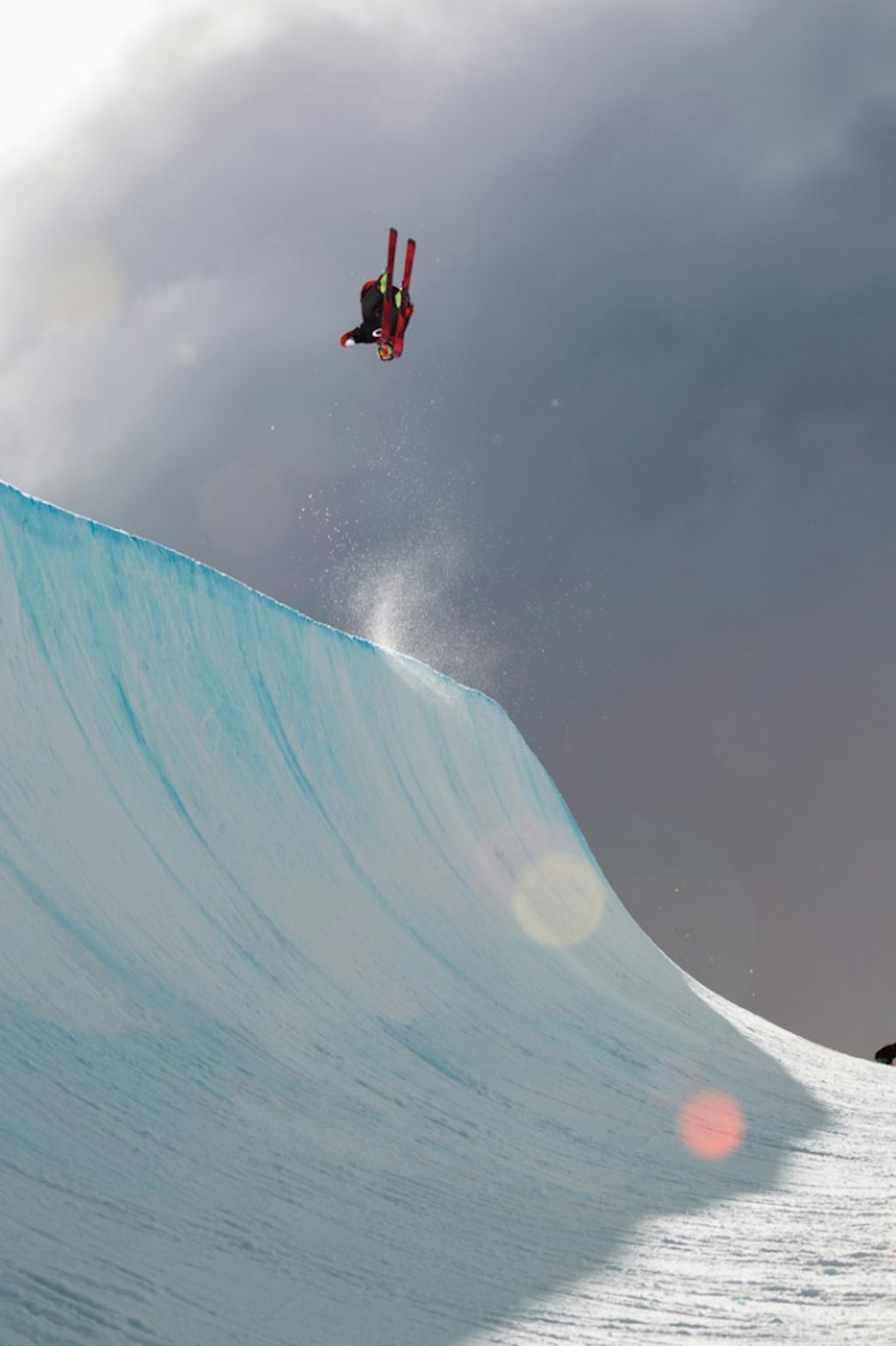
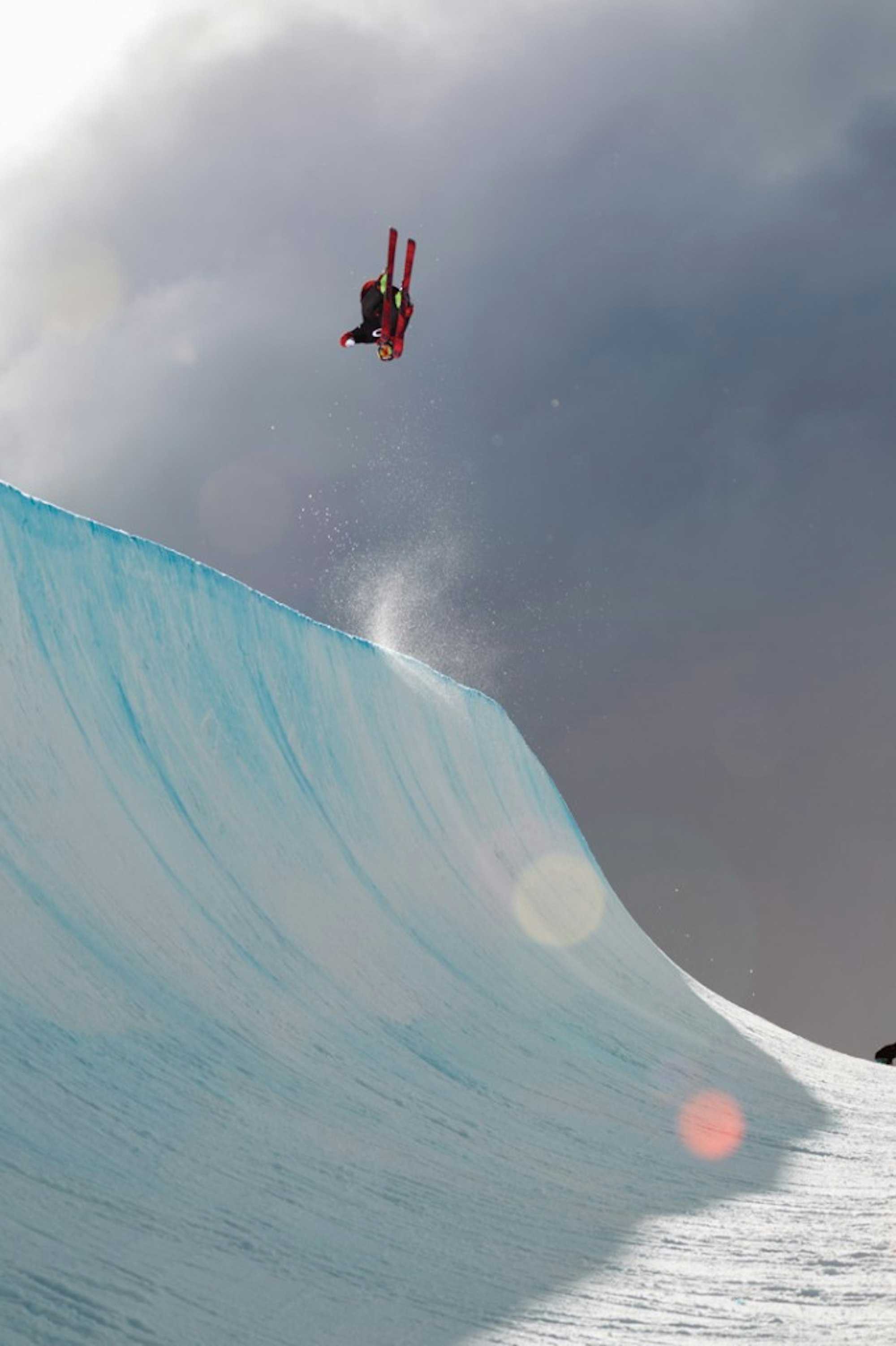
When asked about the Olympics, Tanner replies with a familiar tone of confidence, “Hopefully, I make the team. And [then] I’m going to take back what’s mine. Dedication, patience and hard work. The patience I’m still learning. It’s a different time in my life. I don’t have regrets, the stupid shit, without all that, I wouldn’t be who I am. I needed to make those mistakes and learn those lessons. And if you don’t respect yourself, you’re not living. This is what I’ve learned.”
Left: Upside down south of the equator, Tanner trained in the halfpipe at Snow Park, NZ during what was his final activity as a Red Bull athlete in August of 2012. Photo by Miles Holden/Red Bull Content Pool.
It’s a new type of self-awareness. He hopes he can convey that to the world. “For everything I’ve done in skiing, you either hate me or love me. I don’t need everyone to love me, but I would like for people to take me for who I really am.”
For right now, not everyone agrees who Tanner really is. On the eve of Tanner’s first competitive outing since his injury, he parted ways with his long-time sponsor Red Bull. Numerous confrontations and perceived slights left Tanner feeling disrespected by the drink company. As usual, he made his feelings well known to his sponsor, sometimes in public. Red Bull put him on probation. Something broke after a Red Bull training camp in New Zealand and both sides released statements that basically said it was over. “I guess I don’t fit the Red Bull image anymore,” Tanner shared with me directly. “Bigger, better, faster. It kinda hurt that they didn’t want to try another style. We could have dominated. But it’s a blessing in disguise. I want to be surrounded by people who support me and understand me. I still have great friends there, and no doubt they have done amazing things for the sport, but I have seen a lot of changes over the years.” With a rising tone of frustration in his voice, he pauses. “Life is too short,” he says. “Don’t let yourself get worked up.”
Red Bull commented for this article as well: “Tanner is an amazing athlete and a true pioneer of the sport. We spent 11 amazing years together and supported him through both the ups and the downs. As with many relationships however, sometimes they run their course. In this case Red Bull and Tanner Hall no longer saw eye to eye and felt the best course of action moving forward was to go our own way. There is no ill will towards Tanner, and we wish him the best of luck in all his future endeavors.”
“For everything I’ve done in skiing, you either hate me or love me. I don’t need everyone to love me, but I would like for people to take me for who I really am.”
Deep down, Red Bull’s decision likely motivates that part of Tanner that has always thrived in the face of adversity. It’s fuel in the engine to prove himself over and over again. True to form, the day after being dropped, at his first halfpipe competition since X Games 2009, he returned to the sport with a win. “I felt better than ever, less stressed and more calm, surrounded by some familiar faces and some new faces too. It felt right. The level of riding was high, even though guys like [Kevin] Rolland and Simon [Dumont] were not there. It gives me more fire and confidence.” No doubles were thrown in the tough weather at the New Zealand Open, so there are still questions about how Tanner will stand up against the progression that has happened in his hiatus from competition. But after this first outing, as Gerry Hall stated, “I wouldn’t bet against him.”
No one, even Tanner himself, is suggesting that he is a sure thing for Sochi or that his troubles are all behind him. It’s a long road and many people wonder what will happen to Tanner if he doesn’t make it to the Olympics. “That injury took me out of skiing for a long time. If you don’t think about anything else other than [skiing] for years and years, then you have that one thing taken away from you—the thing that defines who you are—you find out who you are. I had to learn that the hard way. CR was always thankful for his injury. I’m thankful for mine. I learned who I am without skiing. I know after skiing I’ll be good. I found the beauty of life. Friendships, family, nature, art, music—there’s so much out there.”
His family has noticed this change in Tanner. “He is committed to improving himself as a person,” Tyson explains. “He’s rewriting his story again.” Darla, always her son’s biggest front row cheerleader, chokes back tears as she tells me, “Tanner, he has always had the biggest heart. It’s so refreshing to have the Tanner I’ve always known back with us. When I see him now it’s not what can you do for me, it’s what can I do for you.”
The mop-haired kid I picked up in 2001, through raw talent, dedication, passion and unprecedented victory, became the greatest skier our sport has known. But it is through loss, pain and patience, along with some help from his guardian angel, that he is on a path to becoming a greater person. “I might not have finished high school. Never went to college. But I feel like I’m earning a degree in life. That is priceless. That’s real.”
Tanner’s story is far from finished. Many challenges lie in wait on his road to redemption. Can he really quit drinking for good, even after recent lapses? Stop smoking? The battle with substance abuse is a lifelong bout of shadow boxing. Tanner too, will continue to dance with those demons. Skiing gives just as it takes away. The skill that carried Tanner to the top also brings injuries, losses and influences that amplify his struggles. One thing is clear, the person most responsible for his redemption is the same person who can stop it: Tanner. The education of that skier, that person, continues today.