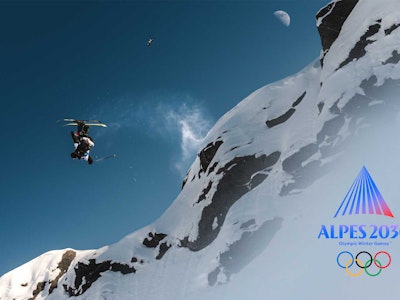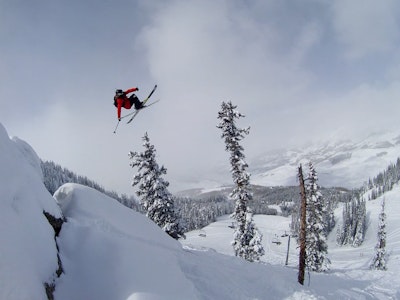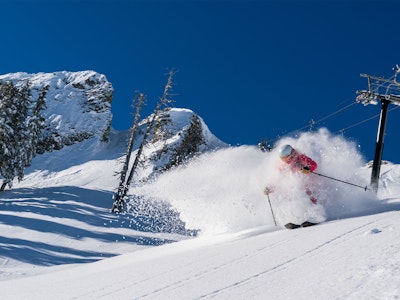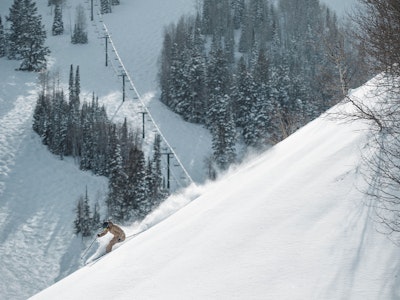
All Images: Courtesy of Jamie MoCrazy
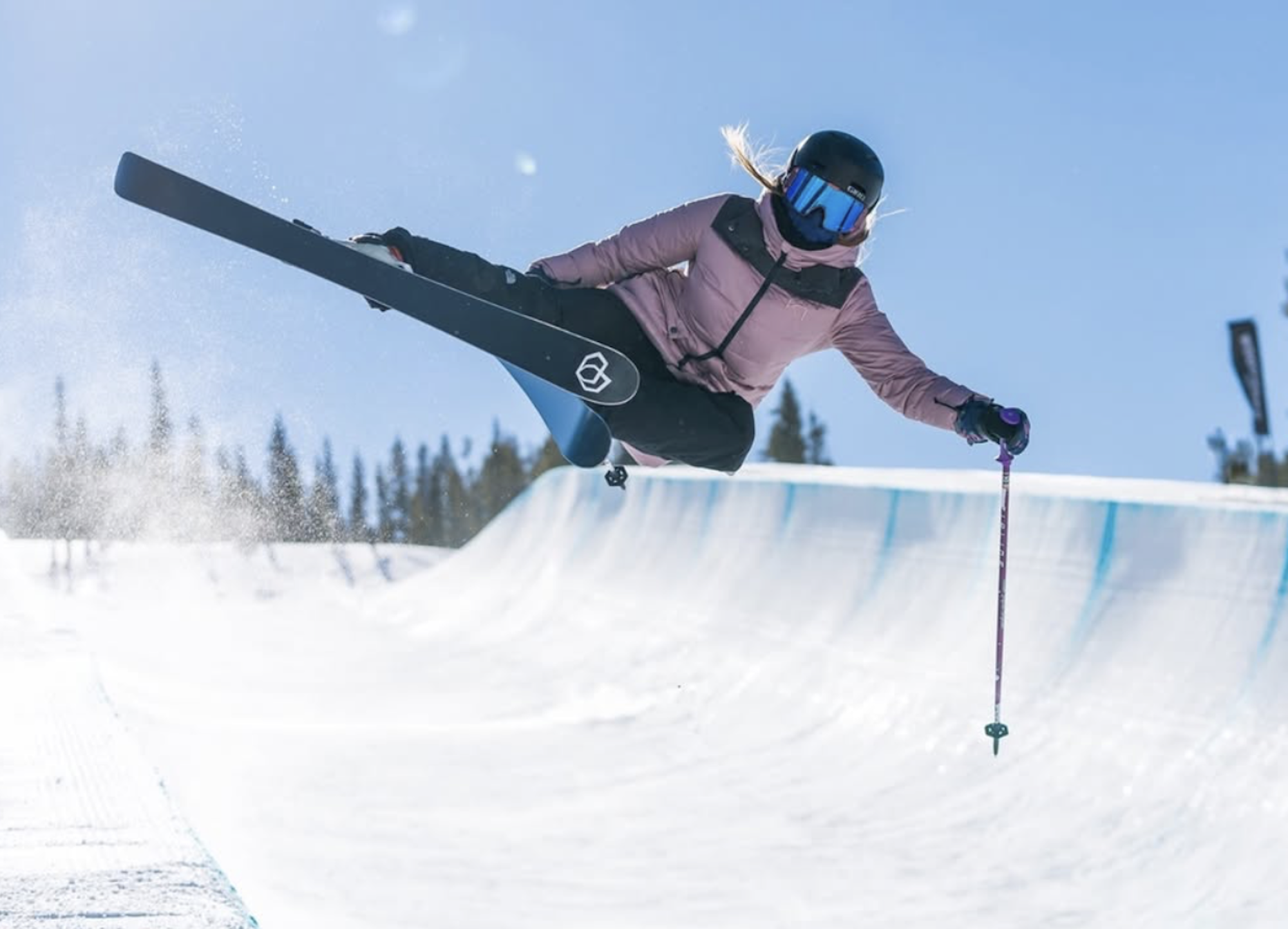
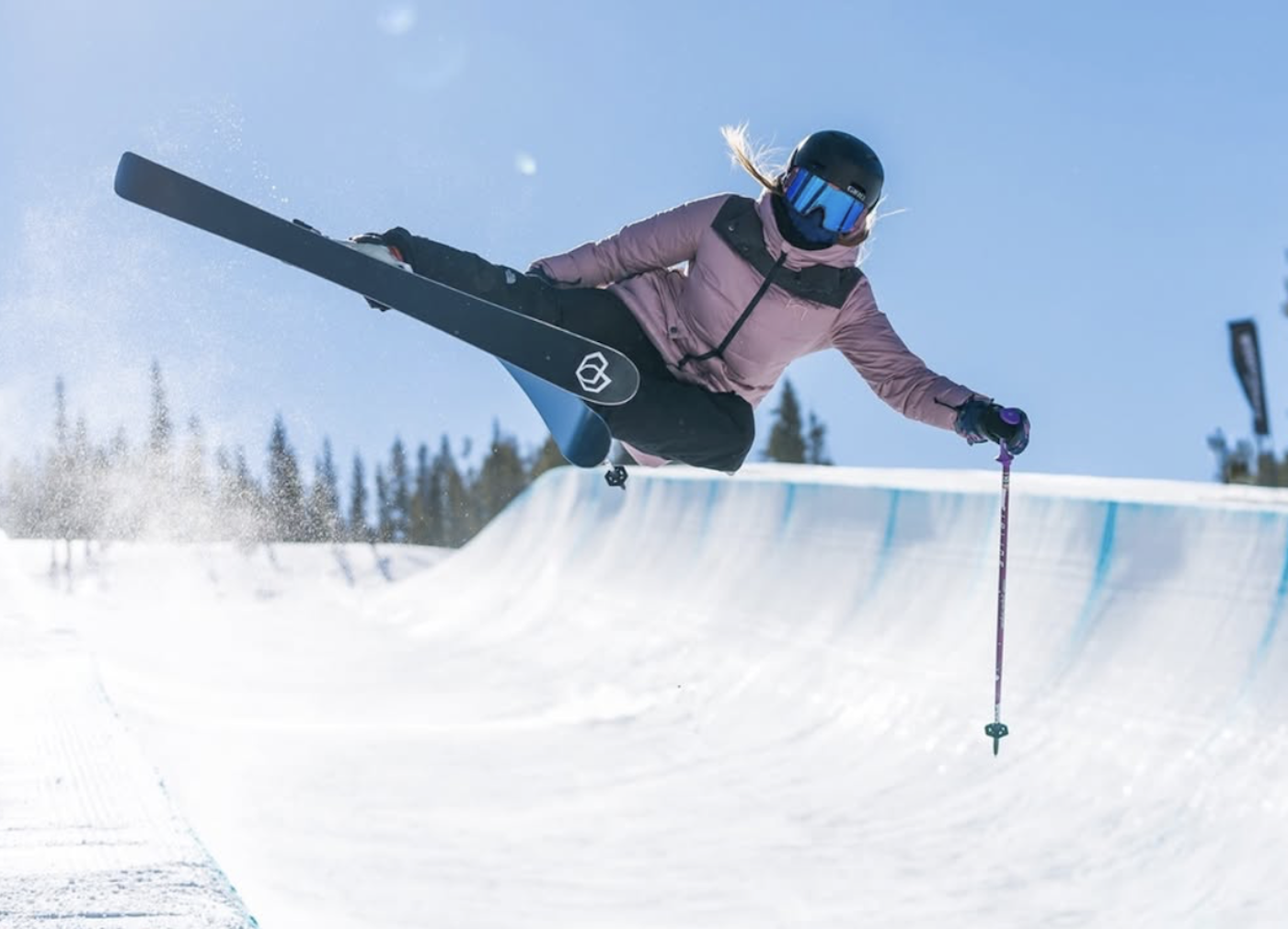
In the spring of 2015, Jamie MoCrazy (yes, that is her legal name) and her sister Jeanee Crane- Mauzy were driving up to Whistler, British Columbia, in their newly sponsored car on their way to a World Tour Final. MoCrazy felt excited as all the hard work she had been putting into skiing was showing in her results.
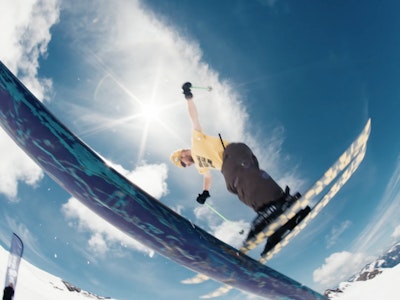
That was the last memory that MoCrazy can remember from before her crash when she was attempting a double flat. The almost fatal crash put MoCrazy in a coma for 10 days before she opened her eyes and started showing small signs of movement but ultimately was still out for the count for about another week.
Doctors and therapists told MoCrazy’s sister and family that she would “never recover, never go back to normal, never live independently, never make money, or be able to support herself as an adult because of the state of her brain.” But, MoCrazy is proving this stigma that is placed on many TBI survivors wrong every day.
“The importance of mindset, belief, and thinking that I could recover allowed me to take steps that I needed to recover, which was huge,” MoCrazy said. “Quite often than not, you're told that you are not going to recover, there’s this ceiling that’s put on you. In my past, I knew how to break through those glass ceilings, you know, being the first woman to double backflip at X Games. So it’s this same glass ceiling that’s put on unintentionally by therapists, family, caregivers, doctors, and friends because you had a brain injury.”
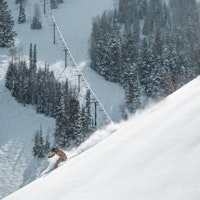
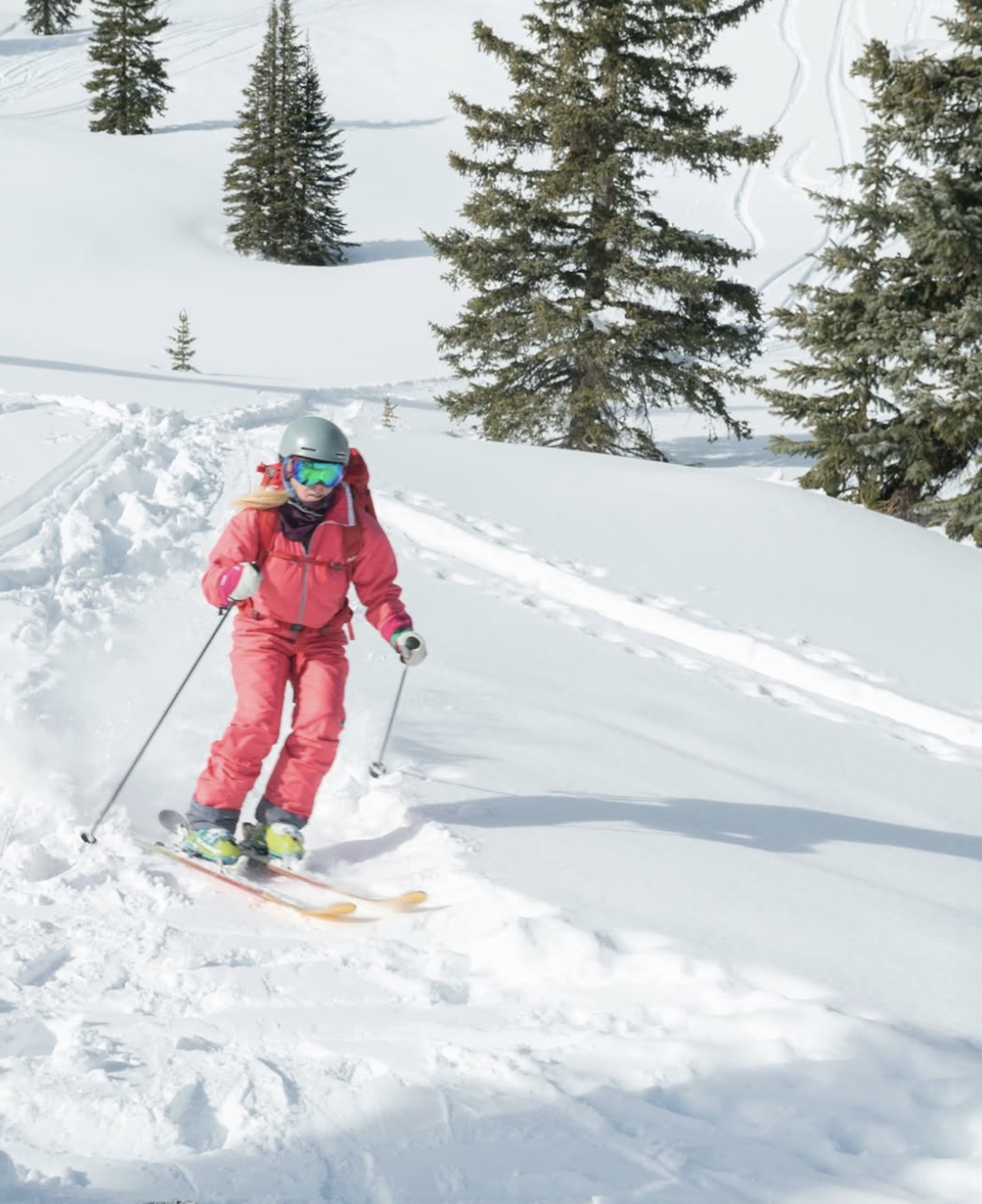
MoCrazy and her sister were both put on skis at age one and grew up in a family of East Coast skiers before moving to Park City, Utah, in 2011. MoCrazy had always loved skiing growing up, but she also loved gymnastics. Lo and behold, her love for freestyle skiing was born from this, as she could combine her two passions through the discipline.
“What I really loved about slopestyle specifically was how creative it was,” MoCrazy said. “It was really fun how you could envision your run and create a whole new thing.”
The two sisters grew up ski racing around ages 9 and 10, then both eventually got into freestyle in their teens. Crane-Mauzy competed in her first Youth Olympics in Austria in halfpipe when she was 15, and that is where her specialization in halfpipe began. MoCrazy is now 33, and Crane-Mauzy is 29.
After MoCrazy’s accident, her sister took time off from skiing and became one of Jamie's main caregivers at only 18 years old. MoCrazy was moved out of the ICU to a holding floor after waking up for about two weeks. She eventually was moved to inpatient rehab in the Intermountain Hospital in Salt Lake City and was there for 6 weeks, learning how to do everything again. Crane-Mauzy explained that she and her mother stayed with MoCrazy 24/7 when she was able to come home, as she could not be left alone.
“We had to accompany her to the bathroom, to shower, and to change because sometimes she would get lost or just couldn’t remember and freak out,” Crane-Mauzy said. “She did outpatient therapy five days a week, which included physical, occupational, and speech therapy, which lasted for months.”
The sisters explained that Utah’s Traumatic Brain Injury and Spinal Cord Fund sponsored MoCrazy's rehabilitation services, which private insurance would not have covered. But the sisters said this is the basic care that all TBI survivors should be receiving, as research has shown that those who receive more upfront care have better long-term outcomes.
Using their voice for TBI survivors
To give those who aren’t able to speak on these TBI policy issues a voice, both sisters have been going to Washington DC to talk to Capitol Hill about the TBI Act, which has been up for reauthorization for the past two years. The bill was actually created in 1996 by former Senator Hatch of Utah, so it is a Utah bill.
“It’s interesting because brain injury is one of our largest acquired disabilities in the U.S.,” MoCrazy said. “But the amount of funding and awareness is so small.”
Many social services and state funding are usually matched by federal funding, and much of that funding is not currently coming through. States are cutting many of those social services across the board for all disabilities because of this. The Federal Traumatic Brain Injury Act has not been reauthorized for over two years which means that the match that the state of Utah would be getting is no longer there.
The federal government actually has a ski caucus, chaired by Representative Moore of Utah.
“It’s an interesting thing to know that our federal government actually has a ski caucus,” Crane-Mauzy said. “They’re supposed to do stuff and pay attention to bills that have to do with skiing, where you think this traumatic brain injury bill would be a good link because there’s a lot of concussions and brain injuries with skiing.”

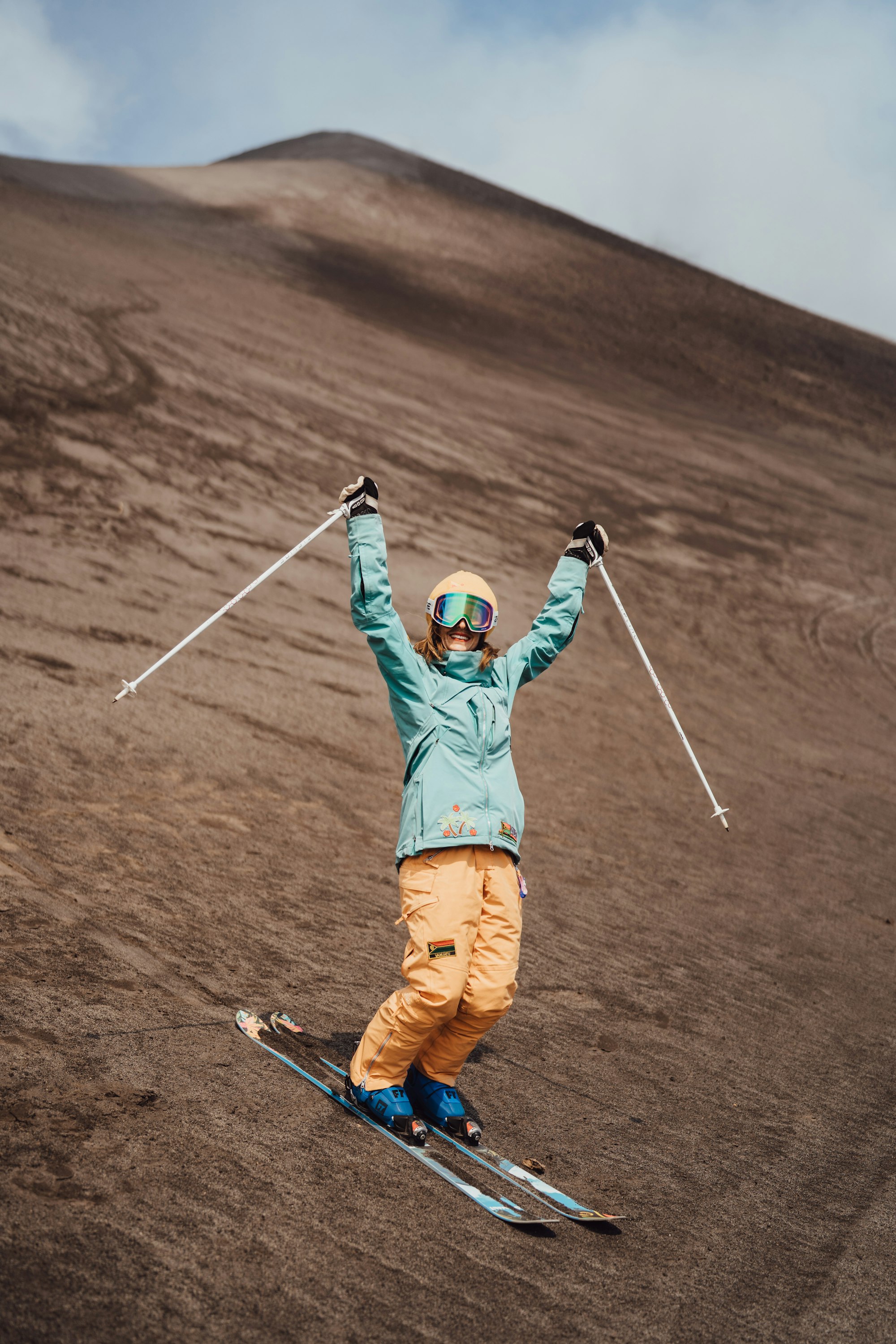
Crane-Mauzy explained that it is frustrating, though, because when she goes to Capitol Hill to speak on this issue, the members of Congress seem interested and show support, but when she goes home, no changes or progress are made on their end.
“It’s really empowering when I’m there, talking and feeling like I can make a difference, and then I am making a difference,” Crane-Mauzy said. “Then the aftermath is what’s kind of frustrating because there’s not a lot of follow-up.”
This winter, MoCrazy was a recipient of a Utah bill that was up for debate on whether to reauthorize it or close it. The sisters testified, which proved very empowering for them, and they decided to keep the bill and not cut any costs.
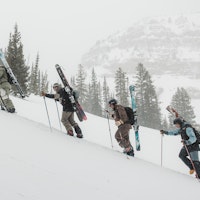
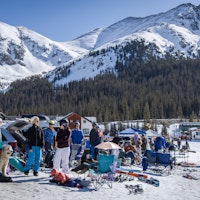
While the physical and political side of TBI recovery plays a huge role, there is another side of TBI recovery that not many talk about enough: the mental side. MoCrazy and Crane-Mauzy are helping raise awareness of this issue through the MoCrazy Strong Foundation, which was created during MoCrazy’s recovery journey. Through the foundation the sisters have created, they have organized events like Alive to Thrive, where TBI survivors can come together and tackle things they may never have thought they could do again.
“I think that’s the part that’s kind of missing still is that emotional part,” Crane-Mauzy said. “There are a lot of suicides that are still happening in the ski industry due to brain injuries and not being able to get the help. I think that’s kind of a little bit of a missing spot, is making sure that people really pay attention to their own and each other’s emotional well-being.”
MoCrazy explained to me that there are two factors in the depression and emotional side of TBI. One is that emotions are located in your head, so they are physically affected, and often the chemical imbalance changes. This leads to many TBI survivors feeling like their identity and self-worth have changed, which can heavily affect one's emotional state.
There has been a stigma placed on many people who are recovering from TBI or any injury that they need to get back to where they were before, but that is just not the case for many.
“I think the most important thing for me was to find other purposes and things that stimulated me,” MoCrazy said.
She went back to Westminster University a little over a year after her injury, which was a huge stepping stone in her recovery. Feeling like she had goals to set and achieve helped her rebuild this new identity rather than trying to get back to “normal.” As part of discovering this new “Jamie 2.0,” she legally changed her name to MoCrazy.
“So I did never go back back to being normal, but that kind of challenges that concept, because what is normal? What is a standard playbook?” MoCrazy said. “There’s no standard playbook that anyone needs to follow or be in, so that is what MoCrazy Strong does is it challenges that idea of going back to exactly who you were, but to find who you want to be and create a new life with new opportunities. Instead of being so focused on that, think about who you want to be and think about what you can do to become who you want to be, not just go back to who you were.”
Finding new peaks to climb
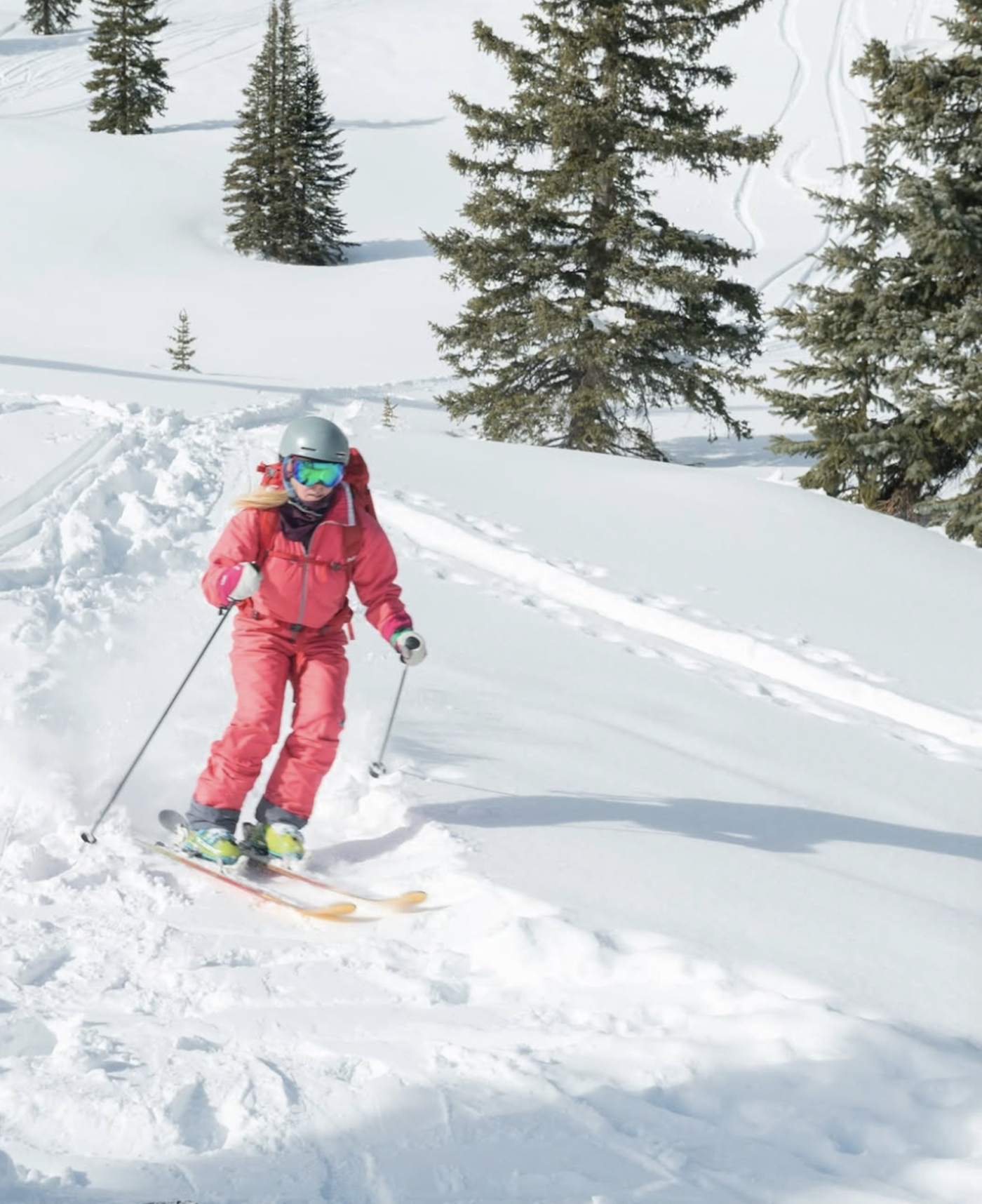
As part of MoCrazy Strong Foundations' mission to prove that TBI survivors can do things and as part of Jamie “2.0s” journey, she is embarking on an eight-day climbing expedition to Mount Kilimanjaro with a group of TBI survivors and family caregivers. The expedition will be filmed and turned into a documentary to show that, after a brain injury, anyone can make changes in their life to climb an alternative peak.
“The reason why a mountain is there is that throughout my whole recovery process, I could climb an alternative peak,” MoCrazy said. “What I mean by that is when you’re hiking up the mountain of life, and you’re caught in a metaphorical avalanche that slides you down to the bottom, you can stay stuck at the bottom and blame all your deficits on what happened, or you can make the choice and the modifications to climb an alternative peak.”
The hike is less than two months away, and MoCrazy and her mother will be hiking with the group. The two have been training together for the expedition by doing extra hikes, resting metabolic testing, VO2 max testing, and biking with an altitude-training mask. The documentary will also talk about MoCrazy Strong Foundations Alive to Thrive events. The event is centered on education about TBI, as well as activities like skiing. The sisters mentioned that someone was told they could never ski again but then ended up skiing with help from Challenged Athletes of West Virginia through the program.
As MoCrazy said, even if a ceiling is placed over you, there are ways to break through it, like it is a glass ceiling with the right mindset and support behind you, which is something these two sisters are fighting for every day, so more TBI survivors can break through that ceiling and discover a new chapter in their life.
“After you have a traumatic experience, that chapter of life is closed, but a new chapter is opened,” MoCrazy said. “And you know, it’s unwritten, and you can create it how you want it to be. So focus on the future and the growth and the new experiences you can have, and not be so invested in trying to get back to who you once were.”