
Featured Image: Elise Streck
One of the worst feelings ever for a skier is being excited for a new season, grabbing your skis from the garage, only to find they are fully rusted and dirty. So then you have to take them to your local tune shop, but of course, everyone else did the same thing you did, so you have to wait a couple of days. Finally, after a week, you can start a new ski season. But there is a way to avoid all that: store your skis properly. While of course some dust and rust might form no matter what, it won’t be nearly as bad as when skis aren't stored properly. That goes for the rest of your gear, too. Imagine it's your first powder day, and that expensive jacket you bought last season isn't waterproof anymore. Instead of ending the day soaking wet, there is a better way to ensure your kit keeps you dry.
Here are some tips and tricks for storing your ski gear this post-season so you’ll be ready for next season.
How to Maintain Your Skis
-
Clean your dirty skis!
Just like how you wouldn’t put away a dirty t-shirt in your closet, you shouldn’t store a pair of dirty skis either. First, take a look at your edges. It is a ski's nature to develop some rust over time, especially if they’ve been in a ski box or riding on top of a car for most of the season. If you see any rust, take a gummy stone or something similar and run it along the edges of your skis to remove it. Then take a clean rag or cloth and wipe the bases of the skis to get all that nasty, grimy stuff off. If you really want to get fancy, you could use a base cleaner or conditioner to help the cleaning process.

Person applying wax to ski
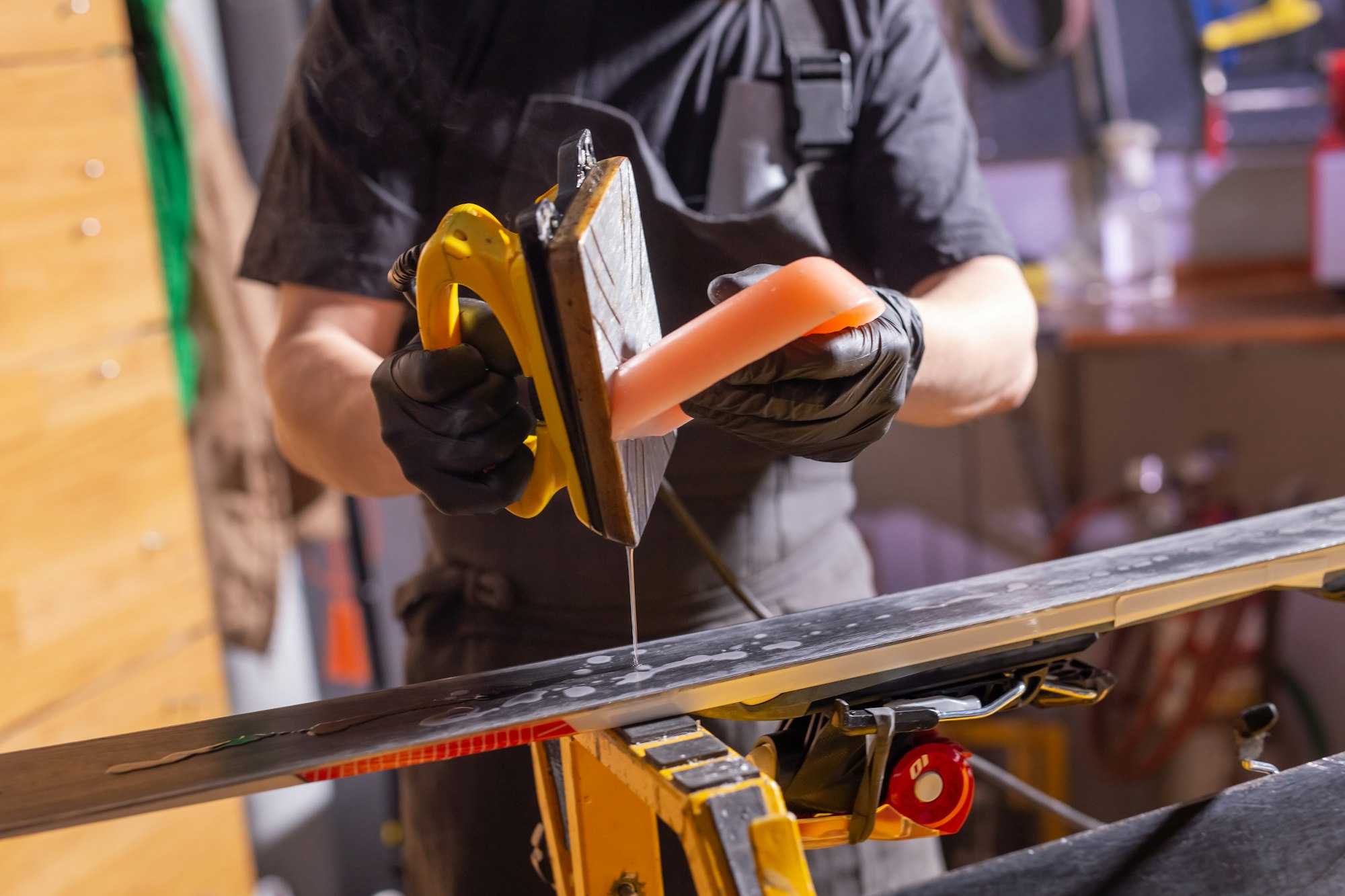
Person applying wax to ski
2. Post-season wax
One of the most important parts of post-season ski storage is applying a thick layer of “post-season” wax to them. This wax not only protects the skis from getting super dirty while they are in hibernation but also keeps the bases hydrated. This step also makes getting your skis ready for the new season quick and easy, as most of the time you just need to scrape off the excess wax, and then you are free to shred. The best part of this step is that it doesn’t really matter what type of wax you use. A simple all-temperature wax is fine to use. If you do not have the tools at home to do this, then your local ski shop will throw on a coat of wax for you.
3. Where to store your skis
Most people store their skis in a garage, but it is one of the worst places to store ski equipment, since it is usually not well temperature-regulated. Skis should be put to bed in a temperature-regulated area that doesn’t get super humid or super dry. A closet inside a house is probably your best bet. If you have a padded ski strap (or two), use them on both the tip and tail where your skis make contact. The straps protect the edges by creating a slight separation.

Person scraping wax off of ski.
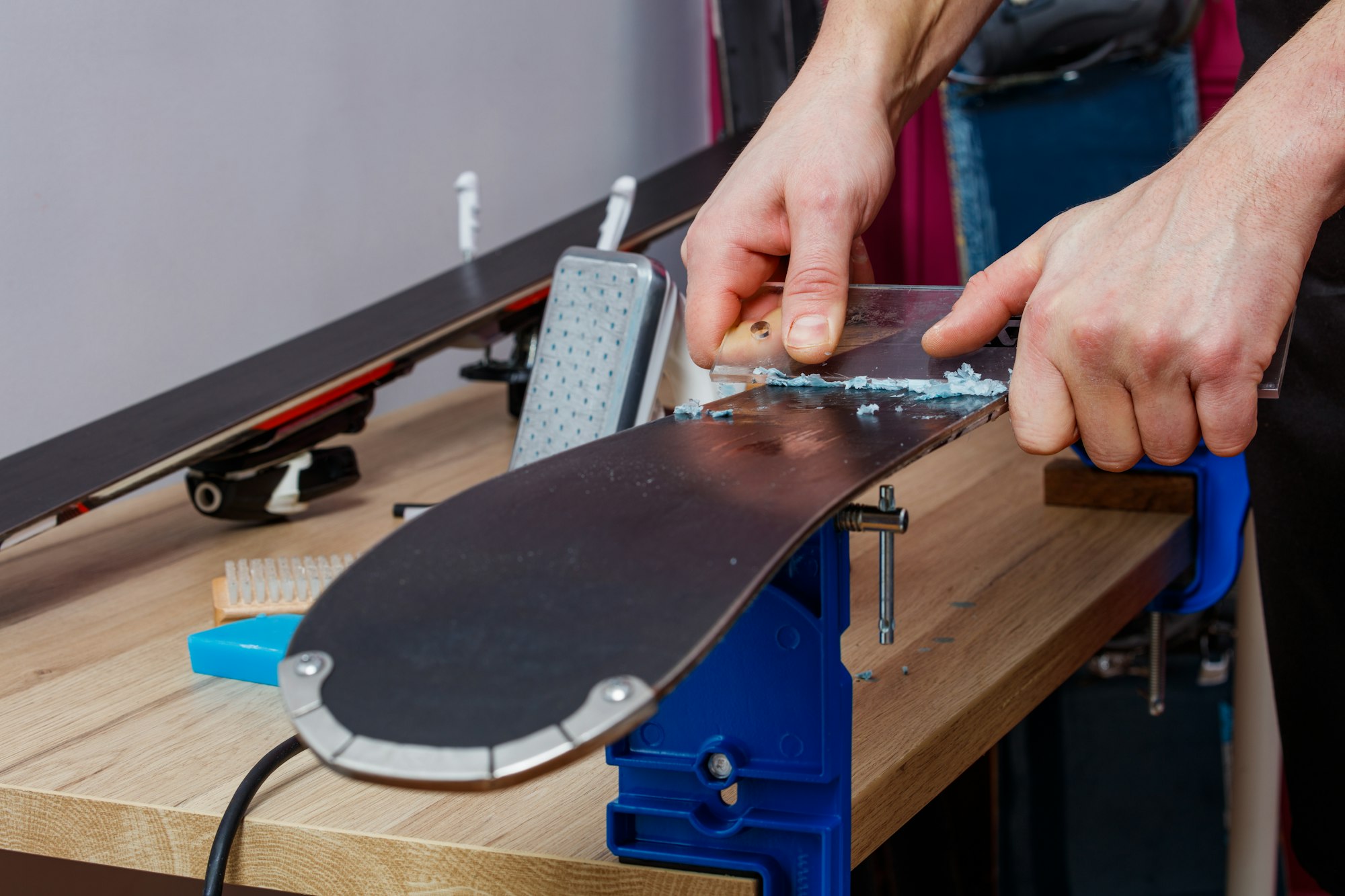
Person scraping wax off of ski.
After doing all this, your skis should be ready to get tucked in and sing a lullaby! When it is time to get your skis back out, don’t forget to scrape off that extra wax, or else the first day back might be a nightmare. Also, many people forget to test their bindings each season. I would say this is something you should do when you are waking your skis back up and about to take them for their first ride post-hibernation. Letting bindings sit for long periods can compromise the integrity of the springs. So, if you can find the time, I highly recommend getting your bindings tested, as it could save you from an injury.
How to Maintain Your Boots


Ski boots are the easiest piece of equipment to get ready for the post-season. All you need to do is make sure your liners are dry. You can take them out of the shell to make sure they are completely dry, then insert them back into the shell. Then buckle your boots back up, but not too tightly, so they retain their shape. Ideally, if you have a ski bag, store your boots in it in a cool, dry spot.
How to Maintain Your Apparel


Cleaning ski apparel can be tricky, as Gore-Tex and other waterproof materials can be ruined if not washed properly. Here are the steps to ensure your Gore-Tex and waterproof equipment is washed properly.
-
Pre-wash
Before doing anything with your Gore-Tex or waterproof apparel, make sure that you zip up all pockets and pit zips completely. This helps prevent tears in your apparel during washing. Another way to avoid damaging your apparel while washing is to turn your jacket or ski pants inside out.


2. Washing
The best temperatures for washing your Gore-Tex or waterproof apparel are warm or cold temperatures, around 105 F or 40 C. Next, use a small amount of liquid detergent. Specialized detergents like Nikwax can ensure the best results when washing ski or rain apparel. Avoid using powder detergents, fabric softeners, stain removers, or bleach. You can wash this apparel with other similar items, but try not to overdo it. Try to use a gentle washing cycle, like the rinse cycle. If you use the rinse cycle, it is best to rinse twice to ensure all detergent is washed off.
3. Drying
Once you are done washing, you can dry the apparel on a warm, gentle cycle or just use good old-fashioned hand drying to be extra safe. Once fully dry, tumble dry for an extra 20 minutes to re-activate durable water repellent (DWR). If a dryer isn’t available, you can iron the apparel on a low setting, but be sure to use a towel or cloth while ironing to protect the apparel. Do not use steam.
4. Post-wash and dry
If your ski apparel doesn’t bead or shed water from the surface, you can reapply a DWR like Nikwax's DWR spray . This comes in either spray or wash form. After applying the repellent, tumble dry for 20 minutes to activate it or iron with a towel or cloth.